- 01Lead with the credential, not the category
- 02Find the underserved demographic your category ignores and build a dedicated creative lane
- 03Use a drug or treatment side effect as a category expansion hook
- 04Build the multi-month journey arc into your creator brief
01 Snapshot
The one-glance read on who they are and how they grow. Each point is verifiable from the receipts above.
Physician-formulated vegan hair supplement for men and women experiencing hair thinning and loss, sold DTC and through Bluemercury and Amazon, with a recent expansion into a topical wash-day system.
Paid-led with creator-ambassador amplification.
~49,439 estimated monthly visits, 84,834 Instagram followers (verified), 89+ Google ads in library (18 active as of 2026-06-30), and a dense Meta ad operation running across video, image, and dynamic formats simultaneously.
Wellbel's acquisition engine runs on a single credentialing claim (Harvard-educated physician formulator) and a TikTok ambassador army posting multi-month hair journey updates with discount codes, with paid search and social converting the awareness downstream.
02 How it unfolded
The order the channels came online. Sequence is strategy: what they did first, and what they layered on once demand existed.
03 Traffic & channel mix
Estimated demand, the channel split behind it, and the keywords and referrers doing the work. Directional modeling, not audited analytics.
Traffic sources
Top search keywords
| Keyword | Volume | Weight | CPC |
|---|---|---|---|
| wellbel | 3.5k | $1.64 | |
| wellbel hair | 250 | $1.59 | |
| wellbell | 500 | $1.64 | |
| webell hair supplement | 470 | - | |
| wellbel gelée detox conditioner | 300 | - |
Closest competitors by audience
~49,439 estimated monthly visits, with a -8.2% trend over the observation window. The channel mix is instructive: Search Organic leads at 34.2%, followed by Direct at 26.9%, Referrals at 15.8%, Search Paid at 11.8%, Social Paid at 5.2%, Affiliate at 3.1%, Display at 1.1%, Email at 1.0%, and Social Organic at just 0.9%.
Organic search leading paid search signals a brand with strong branded demand, earned through influencer word-of-mouth that converts into Google lookups. The top terms they rank or bid into are all branded variants: wellbel (3,540 total monthly searches across the web), wellbell (500), webell hair supplement (470), wellbel gelée detox conditioner (300), and wellbel hair (250). There are no visible unbranded category terms, meaning Wellbel captures people who already know the name but is not yet winning cold organic discovery on terms like "hair supplement for menopause" or "hair thinning treatment."
Referrals at 15.8% points to editorial, affiliate, and influencer-page link traffic. Direct at 26.9% suggests a meaningful returning-customer base. The overall trend implies the brand is at a plateau, not in active expansion.
Closest competitor neighbors include nutrafol.com, viviscal.com, vegamour.com, sugarbearpro.com, moonjuice.com, mdhair.co, kollohealth.com, and hygee.co.
04 Organic content
The specific pages earning their organic search traffic, and the pattern behind why they rank. Adapt the format, not the topic.
Wellbel's organic search footprint is almost entirely brand-driven. The homepage alone captures an estimated 65% of their organic visits, with product pages for the women's supplement, the menopause supplement, the men's supplement, and a bundle rounding out the top five. They rank #1 for most branded variants (wellbel, wellbel reviews, wellbel women), though an Amazon listing outranks wellbel.com on the misspelling "wellbell," and the top pages are straight product and category URLs, not editorial, comparison, or education content. The pattern reveals that organic search functions as a brand-name lookup engine for people already converted by social or paid, not a cold-discovery channel. For a brand whose paid creative is deeply invested in the menopause and perimenopause angle, the absence of organic content at those high-intent unbranded keywords is the most obvious uncaptured opportunity in the channel mix.
Top pages by organic traffic
05 Channel map
Not traffic share. How much weight the growth system actually puts on each channel, with a one-line read on the role it plays.
What drove growth
06 The creative doing the work
Each exhibit shows the actual asset, an X-ray of why it works, a status, and a play you can adapt. This is the heart of the teardown.
Wellbel runs 89+ Google ads (18 active as of 2026-06-30) and a large Meta ad library spanning video, image, and dynamic formats. The longest-running active Google ad has been in market ~293 days. On Meta, the observation-date batch shows dozens of simultaneous active creatives, indicating high-volume creative testing at scale.
- Hook
- "What if I told you this is the best my hair has ever looked" + woman walking away from the camera showing her long brown hair.
- CTA / offer
- $52 OFF your first 3-month subscription
- Audience
- Women with long hair or concerns about hair growth, signaled by the 'wellbel women' product label and the visual focus on hair length and shine.
Why it works. Uses the brand name inside a before-tag instead of a generic 'before' label, tying the transformation directly to the product.
Rapid 'Before' and 'After' visual contrast (0:00-0:01). Label your before-shot with your brand name instead of the word 'before' alone, so the product gets credit for the contrast.
- Hook
- On-screen text: "More ingredients". Visual: A light beige container labeled "wellbel women" with several capsules in front of it, on a white surface.
- CTA / offer
- SHOP NOW
- Audience
- Women concerned about hair growth and ingredient safety, indicated by "wellbel women" on the product and the focus on hair growth.
Why it works. Makes an implicit competitive comparison on ingredient count without naming a rival, aimed at buyers already comparing supplement labels.
Problem-agitation hook with a bold claim (0:03-0:05): "More ingredients = more side effects" State the one spec where you objectively beat competitors, without naming them, and let the comparison imply itself.
- Hook
- "Fuller, healthier" text appears above a beige tub of Wellbel women's supplements and two gold capsules.
- CTA / offer
- $72.00 crossed out, $61.20 shown in red/orange text; 'SHOP NOW' button.
- Audience
- Women seeking hair, skin, and nail health solutions (indicated by 'wellbel women' and 'HAIR + SKIN + NAILS' labels).
Why it works. Leads with the two-word outcome buyers want, then cuts straight to the product jar with a visible discount.
Price anchoring with '$72.00' crossed out and '$61.20' highlighted (0:00). Pair a two-word benefit headline with a clean product shot and a visible discount to move straight from want to purchase.
Show 7 more exhibits
- Hook
- "Thinning. Damaged. Wellbel understood the assignment." shown over a woman with voluminous, thick brown hair running her hands through it.
- Audience
- Women experiencing hair thinning or damage who desire thick, salon-quality hair (evidenced by the text and the model's hair quality).
Why it works. Names two specific hair problems bluntly, then answers with a slang phrase that signals the brand gets its younger audience.
Negative-to-Positive Contrast (0:00 - "Thinning. Damaged.") State your customer's problem in two blunt words, then answer with the casual phrase your audience already uses in conversation.
- Hook
- "Perimeno" appearing over a woman with long, thick, wavy grey hair shown from behind.
- Audience
- Women aged 45+ (explicitly stated on product label) experiencing perimenopause.
Why it works. Opens on the fragment 'Perimeno' cut mid-word over a gray-haired woman holding the product, forcing a pause to read the rest.
Aspirational 'After' Hook (0:00): "full, healthy hair" Cut a key word off mid-syllable on screen so the viewer has to keep watching just to finish reading it.
- Hook
- "BEFORE" and "WITH WELLBEL" text overlays on a side-by-side comparison of thin vs. thick blonde hair.
- Audience
- Women experiencing hair thinning, visible in the 'BEFORE' shots showing wide parts and receding temples.
Why it works. Repeats the same labeled before/after split-screen format on a different subject, brown dry-to-shiny hair, to reinforce believability.
Side-by-side split screen with 'BEFORE' and 'WITH WELLBEL' labels (0:00-0:15). Reuse a consistent before/after label format across multiple different customers so the pattern itself becomes recognizable.
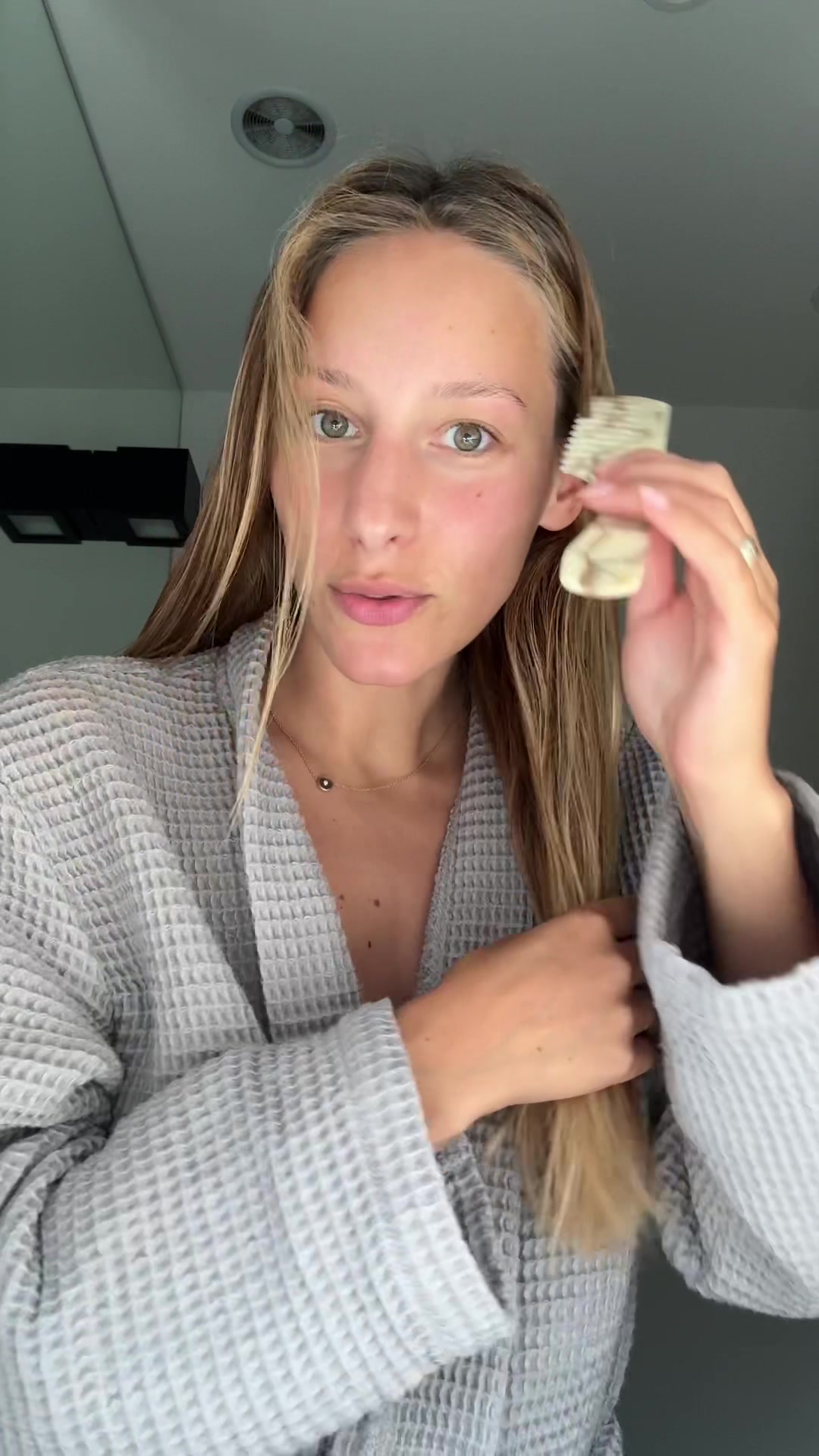
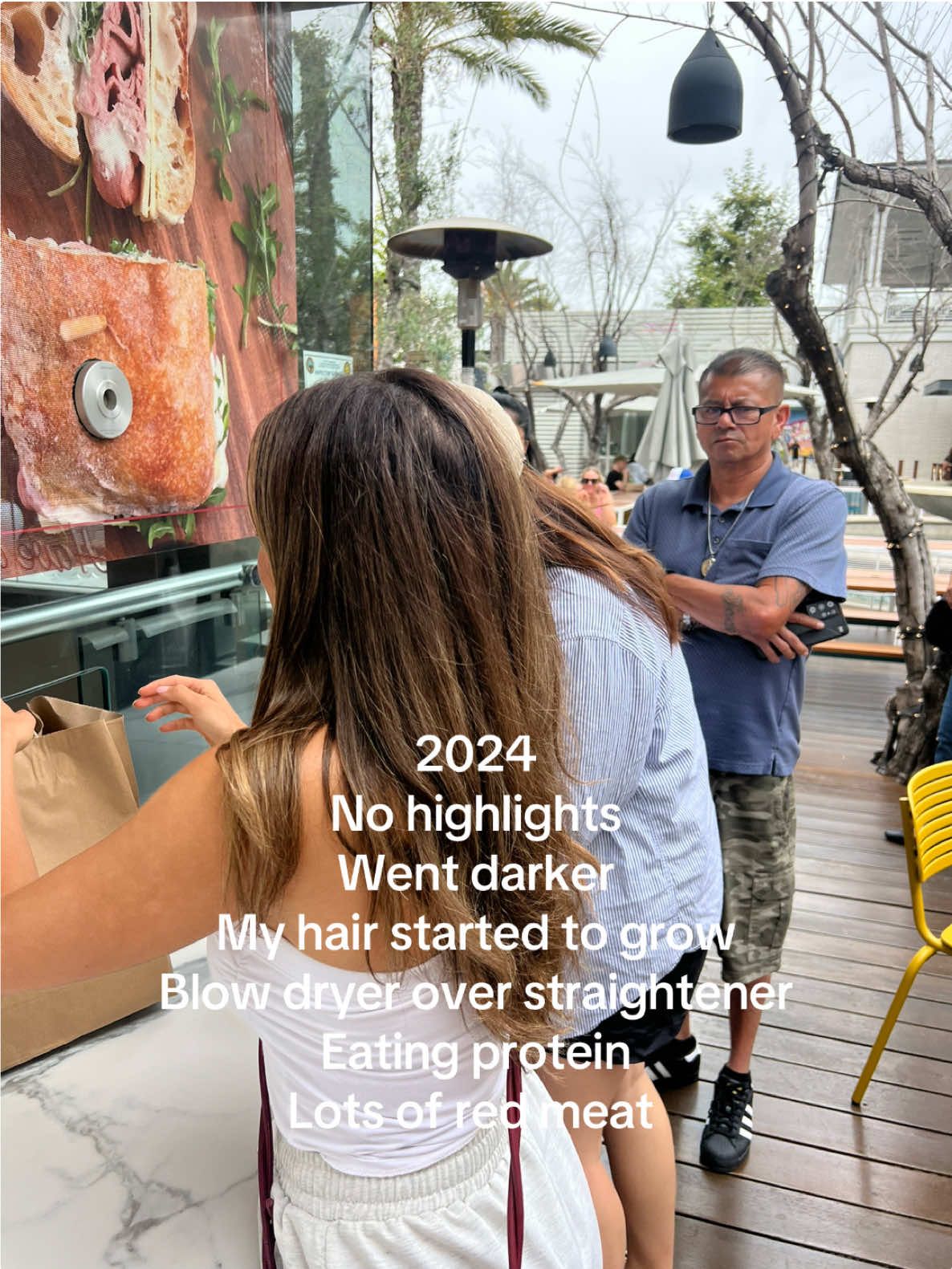
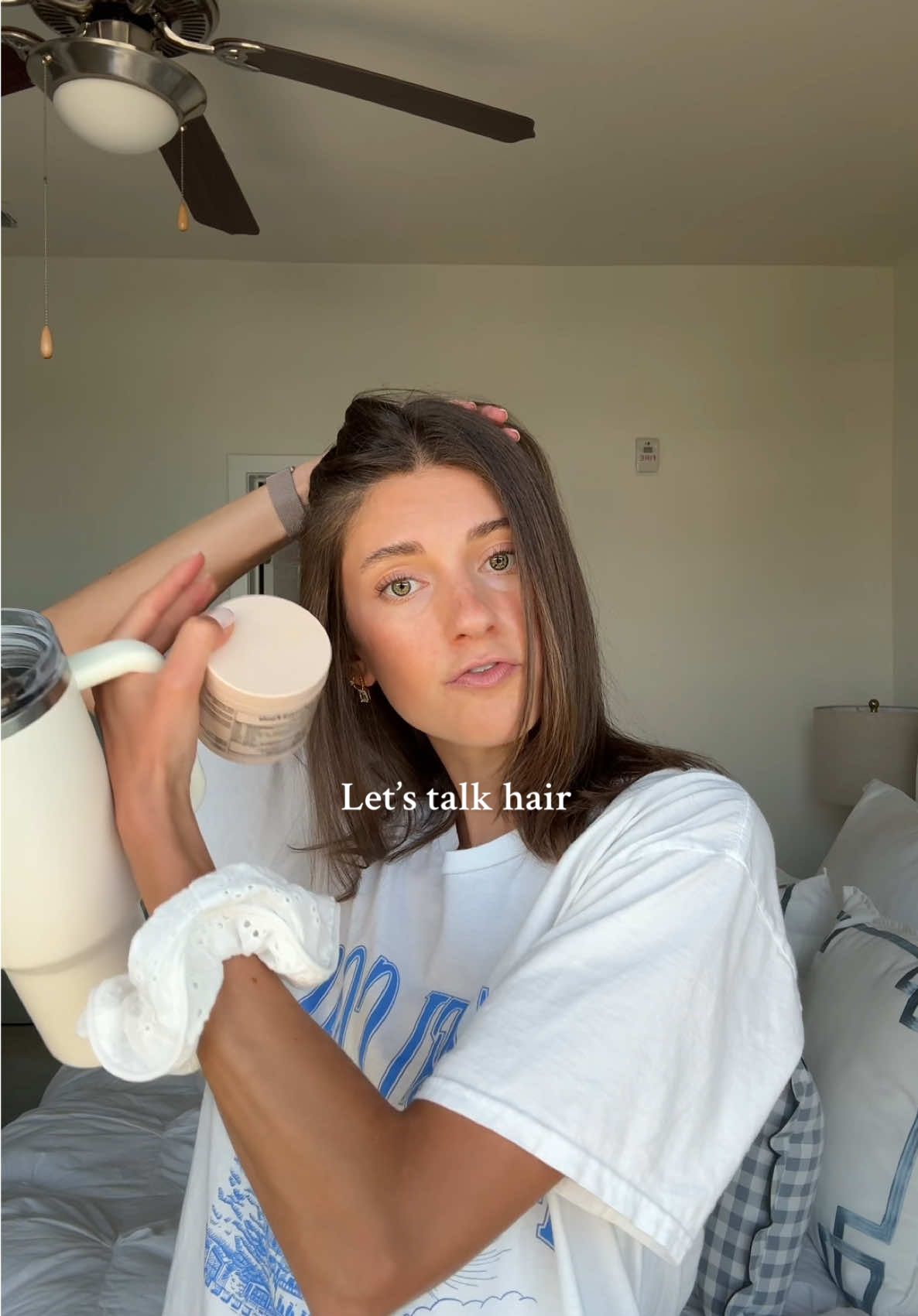
- Hook
- On-screen text: "How I completely changed my hair". Visual: A woman is seen from behind, looking into a mirror, holding a phone to take a picture of herself. Her hair is long and light brown/blonde.
- Audience
- Women with damaged or bleached hair who are looking for solutions to improve hair health and growth, indicated by the progression of hair health and specific product mentions.
Why it works. Frames the ad as a personal mirror-selfie update rather than a pitch, using a withheld result to pull viewers to the reveal.
Problem identification and relatable struggle at 0:03-0:06 with on-screen text: "2023 Dry Damaged Bleached Too much heat". Shoot your opening in a mirror or phone-camera style like a personal update, and hold the actual result until later in the video.
- Reach
- 20 upvotes · 36 comments · r/NYCinfluencersnark
A community is already discussing this in r/NYCinfluencersnark. Show up there authentically and answer the thread before a competitor does.
Who amplifies them
Danielle Bernstein (@weworewhat): The amplifier most cited in the Reddit evidence. Threads in r/NYCinfluencersnark, tracing back to her 2020 purchase, document her repeated Wellbel promotion, and the brand's own December 2023 TikTok content featured her directly. Her reach is significant enough that Reddit discussions about Wellbel consistently open with "DB is always plugging Wellbel," creating durable branded search volume even among her skeptics.
Elsa Hosk: Named in a December 2023 Route case study as a high-profile organic community member. The evidence does not confirm a formal paid partnership; the association appears earned.
@jessrosekov: Three-year Wellbel user whose journey video earned 13,326 engagements. The longevity framing ("3 years on Wellbel") is an outsized social proof signal in a category where most creator content covers 30-90 days at most.
Ari: TikTok creator whose shedding/Wellbel video generated 14,424 engagements. No discount code is visible in the evidence, suggesting organic reach rather than a paid placement.
@Lindsey Hyams (code: lindsey10): Multi-post ambassador with documented posts at month 2 and a one-year check-in arc across 2025-2026, representing the most consistent named repeat creator in the evidence.
@annie (code: ANNIEB10): Two visible posts with 1,664 and 344 engagements, including a sale alert pointing followers to Wellbel's Amazon listing.
@Morgan Stup (code: MORGANS10): Ambassador post promoting "10% off sitewide, including subscriptions."
Forefront Dermatology (@forefrontdermatology): An Instagram educational post on hormonal hair loss that recommended Wellbel by name, a medical-authority amplification channel that adds clinical legitimacy distinct from creator UGC.
The creator pool skews toward micro-influencers based on visible engagement levels, with Danielle Bernstein as the outlier with mass reach. Reddit activity confirms her promotion has durable tail: Wellbel discussions continue to reference her years after her initial mentions.
07 Organic & video
The organic content engine: the videos, creator posts, and community presence earning attention without paid spend.
Wellbel's organic social content is driven primarily by creator/ambassador TikTok posts, not the brand's own publishing cadence. The brand's most visible owned TikTok post was a December 2023 collab with Danielle Bernstein of WeWoreWhat (305 engagements). The real engine is ambassadors posting multi-month progress updates.
Read the full breakdown+5▾
The dominant format is the time-stamped hair journey check-in: creators post at month 1, return at month 2, then at 6 months or beyond. Each update re-surfaces the original content and builds a narrative arc that outperforms one-shot product reviews. @Lindsey Hyams (code: lindsey10) documented month 2, then posted a one-year check-in: "CANT BELIEVE ITS BEEN A YEAR - consistency means everything I couldn't recommend Wellbel more." @jessrosekov's "3 years on Wellbel and my hair is the longest it has ever been" earned 13,326 engagements, a high-engagement organic TikTok post, though not the highest in the evidence.
Creator @Ari's shedding/Wellbel video generated 14,424 engagements with no visible discount code, suggesting organic amplification beyond the paid ambassador base.
Sale-alert content also spikes: @larasluszniak ("WELLBEL almost never does this, you guys know I love Wellbel and it's finally 25% off!!", 575 engagements) and @masumusic8318 ("Run and grab your Wellbel while it's on sale!!", 782 engagements) created urgency content that functions as paid-equivalent reach without additional media spend.
On Instagram, Chief Medical Officer Dr. Daniel Yadegar posts from his personal account @drdanyadegar with physician-formulated positioning ("Physician-formulated, Results-driven. @wellbel"), but engagement is modest. The brand's owned account introduced its wash-day product expansion (a Gelée Detox Shampoo and Restorative Conditioner) via a reel at 146 engagements, indicating the owned Instagram audience is not highly activated.
08 Affiliate & partners
How the brand turns creators and partners into a tracked, variable-cost acquisition channel, and how the program is structured.
Wellbel runs a structured ambassador/affiliate program distributed through TikTok creators, with four distinct tracked codes confirmed in the evidence (MORGANS10, ERINF10, ANNIEB10, lindsey10). The homepage links to a Skio referrals CSS file, confirming the brand uses Skio (a Shopify subscription and referral platform) for subscription management and referral attribution.
Read the full breakdown+4▾
The mechanics: creators receive a personal 10% discount code that doubles as attribution tracking for the brand. This is a standard DTC ambassador structure where the code tells the brand which creators drive purchases, not just views.
The Amazon presence adds a second conversion surface: @annie's post directed followers to Wellbel's Amazon listing at "30%+ off," suggesting the brand uses Amazon to capture price-sensitive or Amazon-preferred buyers who may not convert on the DTC site at full price.
Affiliate commission rates, total ambassador roster size, and free-to-paid conversion rate are not visible in public data.
09 The playbook
The channels are not separate. They are one system where each stage feeds the next. Here is the read, then the plays to run tomorrow.
The inferred playbook
Wellbel built awareness through high-profile influencer co-signs, then monetized that credibility through paid Meta and Google and a cost-efficient TikTok ambassador layer.
Earning or placing Danielle Bernstein and Elsa Hosk as early promoters generated a sustained tail of branded searches and Reddit discussions that function as free top-of-funnel years after the initial mention. Even skeptical Reddit users end up searching for Wellbel.
Heavy Meta and Google creative (tested across before-after, menopause, physician-credential, and GLP-1 angles) functions as the brand's primary direct-response layer, converting the already-warmed audience that arrives via organic search and direct. Search Organic at 34.2% and Direct at 26.9% of visits suggests most buyers are name-searching after seeing the product socially, then converting through a paid or organic search touch.
Dig deeper+2▾
The affiliate program turns micro-creators into a recurring content factory. Multi-month progress update posts compound over time, generating authentic testimonial content at near-zero media cost per incremental piece. The format (time-stamped journey updates) creates a natural return loop: audiences follow creators back for the next check-in.
Organic search is almost entirely brand-name lookups. With paid creative deeply invested in the menopause and perimenopause angle, the absence of organic content at those high-intent unbranded keywords (hair thinning menopause, perimenopause hair loss supplement) is the most visible uncaptured opportunity. The brand captures people who already know it but has no visible content engine for cold discovery. ---
Lead with the credential, not the category
The proofWellbel's longest-running active Google ad (~293 days) leads with "Formulated by a Real MD" rather than a benefit headline. The Meta creative "Most hair supplements are marketing fluff. Ours was created by a Harvard-educated physician" opens by dismissing the category before presenting the credential. Both appear in the proven-winner tier while pure benefit claims cycle through faster.
The adaptationIf your product has a genuine practitioner, researcher, or licensed professional behind it, restructure your acquisition creative so the credential is the headline and the benefit is the proof. Start by writing three ad variants: one leading with the outcome ("Fuller hair in 90 days"), one leading with the mechanism ("Physician-formulated formula"), and one leading with the skeptic-dismissal ("Most [category] products are noise. Ours was built by a [credential]."). The skeptic-dismissal variant tends to outperform in high-cynicism categories, including supplements, skincare, financial tools, and legal services, because it meets the buyer's objection before they articulate it. The mechanism: buyers in skeptical categories have already been burned by marketing claims. A credential that pre-empts their doubt converts better than an outcome claim that requires them to extend trust first.
Find the underserved demographic your category ignores and build a dedicated creative lane
The proofWellbel's most distinctive Meta ad cluster targets perimenopause and menopause explicitly: "Don't settle for menopausal hair thinning," "Hormones may change. Your hair goals don't have to," and "Perimenopause doesn't have to be the end of full, healthy hair." The hair supplement category (Nutrafol, Viviscal, Vegamour) speaks primarily to women 25-45 with general thinning. Wellbel carved a distinct lane for the 45-60 hormonal-change segment with dedicated copy and product SKUs, visible as a cluster of proven-winner creatives in the Meta library.
The adaptationIn your own category, map the demographic the leading brands do not explicitly speak to in their creative. Start by reading three-star and one-star Amazon reviews of the category leader, looking for "it didn't work for me because I have [specific condition]" or "nothing addresses [specific situation]." Build one ad set that speaks directly to that underserved condition, using the buyer's own language from those reviews as the hook. The first step is writing the hook in that language: "For women in perimenopause who've tried everything else" or whatever your category equivalent is. The mechanism: demographic-specific messaging reduces perceived ad friction because the reader immediately recognizes themselves. It also frequently faces lower CPMs because few competitors are bidding on that specific audience signal.
Use a drug or treatment side effect as a category expansion hook
The proofAn active Wellbel Meta creative reads "Your GLP-1's Best Friend: Wellbel," positioning the supplement as a companion to Ozempic, Wegovy, and tirzepatide users who experience documented hair thinning as a side effect of rapid weight loss. This is a precise audience-expansion move into a fast-growing, conversation-rich demographic with a real problem Wellbel's product addresses.
The adaptationIf your product solves a problem that is a known side effect of a fast-growing drug, treatment, or intervention, create a dedicated creative and landing page that names the side effect explicitly and positions your product as the companion fix. The first step is identifying whether your product addresses a documented side effect of any intervention that has grown significantly in recent years (GLP-1 drugs, hormonal contraceptives, ADHD medications, statins, post-surgical recovery protocols, intense endurance training). If yes, write one Meta or TikTok ad set naming the intervention directly and targeting communities discussing it. Caveat: this play operates in a regulated space. Frame as supportive wellness, not a medical treatment, and do not make efficacy claims the evidence does not support. The mechanism: side-effect audiences are high-intent (they have a specific, named, documented problem), the angle is undercompeted in most categories, and the creative language comes directly from what buyers are already saying in community forums.
Build the multi-month journey arc into your creator brief
The proofWellbel's highest-engagement organic TikTok content is not brand-produced: @jessrosekov's "3 years on Wellbel" earned 13,326 engagements; @Ari's shedding check-in earned 14,424. @Lindsey Hyams posted at month 2, then again at month 12 ("CANT BELIEVE ITS BEEN A YEAR"), generating a return audience for each update. These outperform the brand's own produced content because they carry narrative arc, time-stamped credibility, and a return-viewer effect.
The adaptationWhen briefing creators or ambassadors, ask for a series commitment rather than a one-time post. Structure the brief as: post 1 at week 0 (starting the journey), post 2 at day 30 (first check-in), post 3 at day 60 or 90 (result reveal). Give each update a time-stamp hook ("Month 2 update," "90-day check-in") so each piece of content stands alone on the algorithm. The first step is messaging your three to five highest-engagement existing affiliates and asking if they would document their next 90 days in three posts. This costs nothing beyond the product already being provided; the format naturally creates three assets instead of one per creator relationship. The mechanism: progress-update content compounds because each update re-surfaces the original post in "related content," and long-journey posts (3-year, 1-year) signal that the creator is still a buyer, which is a more credible testimonial than a day-1 unboxing that could be gifted product the creator never repurchases.
Seed the "I hate the endorser but want the product" community with neutral third-party proof
The proofEvery Reddit thread about Wellbel opens with skepticism about Danielle Bernstein, not about the product: "I don't trust her for a minute but her before and after photos get me" (r/NYCinfluencersnark, 36 comments, score 20) and "I know, I know not a DB fan but I have fine hair and am feeling desperate" (36 comments, score 18). These are high-intent buyers stuck at the conversion step because they distrust the messenger, not the product. The threads reveal a large, self-identified audience one proof-source swap away from purchasing.
The adaptationIf your brand has been amplified by a polarizing influencer or spokesperson, identify where the skeptics self-congregate (subreddits, Discord servers, Facebook groups) and seed those communities with proof that does not depend on the controversial endorser's credibility. Practically: find or create Trustpilot reviews, Starter Story features, Reddit AMA posts, or dermatologist or practitioner blog mentions from people who have no association with the polarizing figure, then run retargeting creative that leads with those third-party sources rather than the influencer content. The first step is searching the subreddits where your skeptics gather, reading what proof they say would change their mind, and sourcing that specific proof type. Caveat: this play depends entirely on genuine third-party proof. Never fabricate reviews or seed fake community posts; the same communities that surface skepticism will surface inauthenticity. The mechanism: "want to believe but don't trust the source" buyers are high-intent and close to conversion. They need a different proof source, not more of the same endorsement. A single credible third-party voice in the right community can do what months of influencer spend cannot.
You just read how Wellbel does it. Tomorrow it is someone else.
Every morning we take one company that is actually growing and break down where its customers come from: the ads still running after a year, the channel doing the real work, and the play you can run this week.
Systemaic · directional intelligence. Traffic, spend, and reach figures are SimilarWeb-style estimates and qualitative reads of public data, not audited numbers. Built on real public receipts.
// teardowns with a similar GTM motion
sources & receipts (2)
Live ad libraries: meta ad library · google ad library
Traffic, spend, and revenue figures are estimates as noted in the report; the links above are the primary public artifacts.