- 01Recruit creators by posting "how to work with us" content from the brand account itself
- 02Anchor every retail availability or new product launch to a same-day post that names the specific store
- 03Insert your product into a trending recipe or wellness format as the upgrade ingredient
- 04Align your product with an organic trend community before you have any creator budget
01 Snapshot
The one-glance read on who they are and how they grow. Each point is verifiable from the receipts above.
A prebiotic soda for health-conscious consumers who still want real soda taste (18+ flavors, 2-5g sugar per can) priced at $2.19-$2.99/can at retail and $35.99/12-pack DTC with a subscribe-and-save option, generating $400M in 2024 annual revenue at a $1.85B valuation.
Creator-led retail growth: TikTok micro-creator seeding generates demand, and 65,000+ retail doors at Walmart, Target, Whole Foods, and Costco convert it at the shelf.
$400M 2024 revenue (profitable); $1.85B valuation (Series C, February 2025); 65,000+ retail doors; 457K Instagram followers; in 2021, a reported 1.3B TikTok views at $0.61 CPM and $25.4M in earned media value from a micro-creator program.
A June 2026 coordinated rebrand pushed across Meta, TikTok, and Instagram in the same week: redesigned can packaging and a commissioned "OLIPOP, OLIPOP" jingle reworking "Lollipop" by The Chordettes, deployed in paid Meta video ads and organic TikTok simultaneously.
Olipop's structural edge is retail shelf presence broad enough that TikTok virality converts at Walmart, compounding UGC-driven awareness into physical shelf velocity with no website click required.
02 How it unfolded
The order the channels came online. Sequence is strategy: what they did first, and what they layered on once demand existed.
03 Traffic & channel mix
Estimated demand, the channel split behind it, and the keywords and referrers doing the work. Directional modeling, not audited analytics.
Traffic sources
Top search keywords
| Keyword | Volume | Weight | CPC |
|---|---|---|---|
| olipop | 92k | $0.35 | |
| ollipop | 8.0k | $0.35 | |
| olipop soda | 2.6k | $0.53 | |
| olipop careers | 2.9k | $2.44 | |
| oli pop | 4.3k | $0.35 |
Estimated total monthly visits: approximately 716,196, down 33.7% over the trailing three-month window. For a brand generating $400M in annual revenue through 65,000+ retail doors, this trajectory describes the DTC channel specifically, not the business. Walmart and Costco transactions leave no fingerprint in web analytics, so the website's slope and the brand's revenue slope can diverge sharply. That context noted, the drop is real and signals that drinkolipop.com is not where the growth is being compounded.
Organic search commands 40.3% of visits, the dominant channel by a significant margin. The composition is almost entirely branded: they rank #1 for "olipop" (91,600 monthly searches across the web), "olipop soda" (2,630/mo), and "olipop flavors," but that organic volume represents people who already know the brand name typing it into Google. Direct traffic at 22.7% reinforces this portrait of an audience arriving with intent. Paid social (7.7%) and paid search (5.8%) contribute meaningfully, with email (5.1%), display (4.8%), social organic (4%), affiliate (2.9%), and Gen AI referrals (0.7%) completing the mix. A secondary keyword adds a brand-equity read: "olipop careers" draws 2,930 monthly searches, suggesting the brand has enough cultural weight that people seek jobs there as a destination.
04 Organic content
The specific pages earning their organic search traffic, and the pattern behind why they rank. Adapt the format, not the topic.
Olipop's organic footprint is brand-search capture, not a content-marketing program. Their homepage accounts for roughly 64% of the per-page organic visit estimates, driven by people searching "olipop" and "olipop soda" after encountering the brand in a store or a TikTok. The one exception in their top five pages is the FAQ post "Does Olipop have caffeine?", which ranks #1 for that query (an estimated 8,500 visits/month) by answering a purchase-blocking concern before health-conscious first-time buyers commit. A product page for Crisp Apple ranks for its own flavor name, suggesting that SKU-level search follows social content that names a specific flavor.
The pattern is narrow and downstream of awareness built elsewhere: own the brand name, answer the one pre-purchase question the health-curious audience types, and let TikTok do the discovery. There is no comparison content, no "best prebiotic soda" guides, and no programmatic page structure.
Top pages by organic traffic
05 Channel map
Not traffic share. How much weight the growth system actually puts on each channel, with a one-line read on the role it plays.
What drove growth
06 The creative doing the work
Each exhibit shows the actual asset, an X-ray of why it works, a status, and a play you can adapt. This is the heart of the teardown.
Google's ad library for drinkolipop.com contains approximately 200 ads total, with 51 active as of July 3, 2026. The most structurally telling detail: the longest-running active Google search ad (approximately 930 days) belongs to ReferDigital LLC, an affiliate; the corpus records no ad text for that entry, though a separate, advertiser-unlabeled creative sample in the library carries the headline "Olipop A Better Soda - Refreshing Healthy Olipop." A cluster of additional third-party advertisers, including multiple international resellers, has been running branded keyword ads for 8-221 days. Olipop Inc.'s own Google presence includes a video ad running since October 2025, alongside newer video and image tests from June 2026 (16-18 days old). The read: when a brand name draws 91,600 searches a month, affiliates profitably arbitrage that demand long before the brand itself builds a mature search campaign.
Meta paid creative visible in the library centers on the June 2026 rebrand and jingle launch.
- Running
- 31 days (longevity = it's converting)
- Hook
- "Lollipop, lollipop, oh lolli-lolli-lolli... Yo! Of course." + Woman in purple tank top talking in a studio.
- CTA / offer
- "Pre-save at link in bio"
- Audience
- Music lovers and fans of retro aesthetics, signaled by the studio setting and mention of "Supremes girl group world".
Why it works. A recognizable old song rewritten around the brand name gives the ad instant familiarity and turns the video into shareable music content, not just an ad.
Nostalgic Hook (0:00-0:06) - Singing 'Lollipop, lollipop'. Find a classic song whose title or hook line sounds like your brand name, then rewrite the lyric around your product.
- Running
- 31 days (longevity = it's converting)
- Hook
- A purple 'classic grape' can and a blue 'cream soda' can slide past each other on a light blue background while a repetitive jingle sings 'Olipop, Olipop'.
- Audience
- Health-conscious soda drinkers, indicated by the focus on 'Real ingredients', '6g fiber', and 'supports digestive health'.
Why it works. Shows two flavor cans side by side under the same jingle used elsewhere in the campaign, building recall across creative variants.
Rapid-fire flavor variety (0:00-0:12) showing 5 different cans. Reuse one signature jingle across multiple flavor-specific ads so repeated exposure builds recall even as the visuals rotate.
- Running
- 31 days (longevity = it's converting)
- Hook
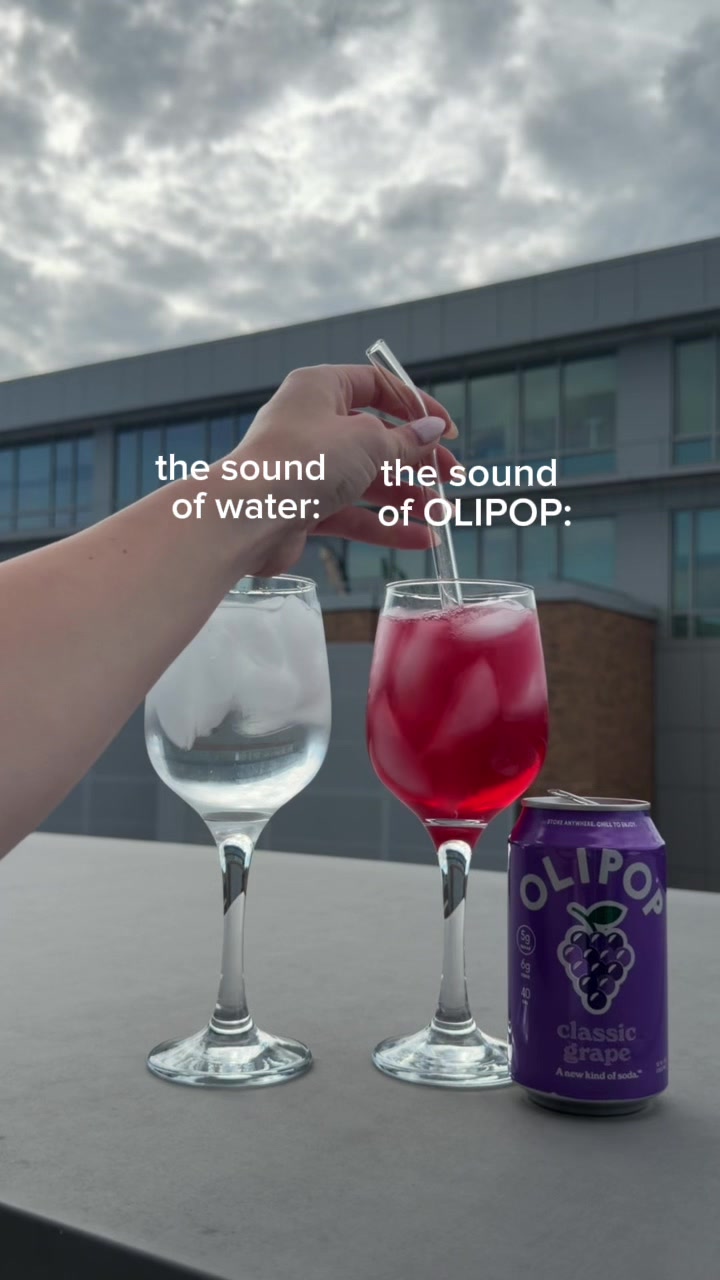
- "the sound of water:" text overlay with a hand stirring a glass of ice water using a glass straw.
- Audience
- People looking for a 'fun' drink alternative, evidenced by the comparison to plain water and the use of a classic pop song.
Why it works. Contrasting the plain sound of stirred water against the product sets up a sensory comparison that argues for excitement over a beverage most people find boring.
Sensory Anchoring at 0:00 ('the sound of water:') Pair your product with a mundane alternative in a labeled two-part comparison of sound, texture, or visual, and let the contrast make the case.
Show 7 more exhibits
- Running
- 26 days (longevity = it's converting)
- Hook
- "strawberry vanilla" text on a red Olipop can against a red and pink starburst background.
- Audience
- Health-conscious consumers looking for soda alternatives, signaled by '4g sugar', '9g fiber', and 'supports digestive health' callouts.
Why it works. Opens on fast, colorful product cuts synced to a repeating brand jingle, so the Olipop name lands as a sound cue before any claim is read.
Fast-paced product rotation with bright, contrasting colors (0:00-0:02). Cut your product shots to a 3-4 second repeating beat and pair each cut with your brand name spoken once, so the name itself becomes the hook.
- Running
- 18 days (longevity = it's converting)
- Hook
- A red Strawberry Vanilla Olipop can centered on a red background with star and strawberry graphics. Audio: 'Lollipop, lollipop, oh lolli-lolli-lolli, lollipop'.
- Audience
- Health-conscious soda drinkers, indicated by the "less sugar" and "supports digestive health" callouts.
Why it works. A single can rotates while its sugar, fiber and calorie numbers sit right on the label, letting health-focused shoppers scan the facts before reading any copy.
Fast-paced visual cuts synced to a nostalgic song (0:00-0:02, 'Lollipop'). Put your top 3 spec numbers directly on your product packaging shot, not just in a caption, so scrollers can read the value in under 2 seconds.
- Running
- 16 days (longevity = it's converting)
- Hook
- "Who has the best Tekk? 🔥" + a man in a green shirt with "OLIPOP" on it dribbles a soccer ball on a green turf field.
- Audience
- Soccer players and fans of youth sports culture, evidenced by the use of the term "Tekk," the soccer field setting, and the branded athletic kits.
Why it works. Placing the can inside a skills-competition video ties the brand to an active, in-group hobby rather than showing the product on its own.
Gamified Curiosity Hook (0:00 - "Who has the best Tekk? 🔥") Open with an insider question in your niche's own slang, then let your product show up inside that activity rather than as the subject of the shot.
- Hook
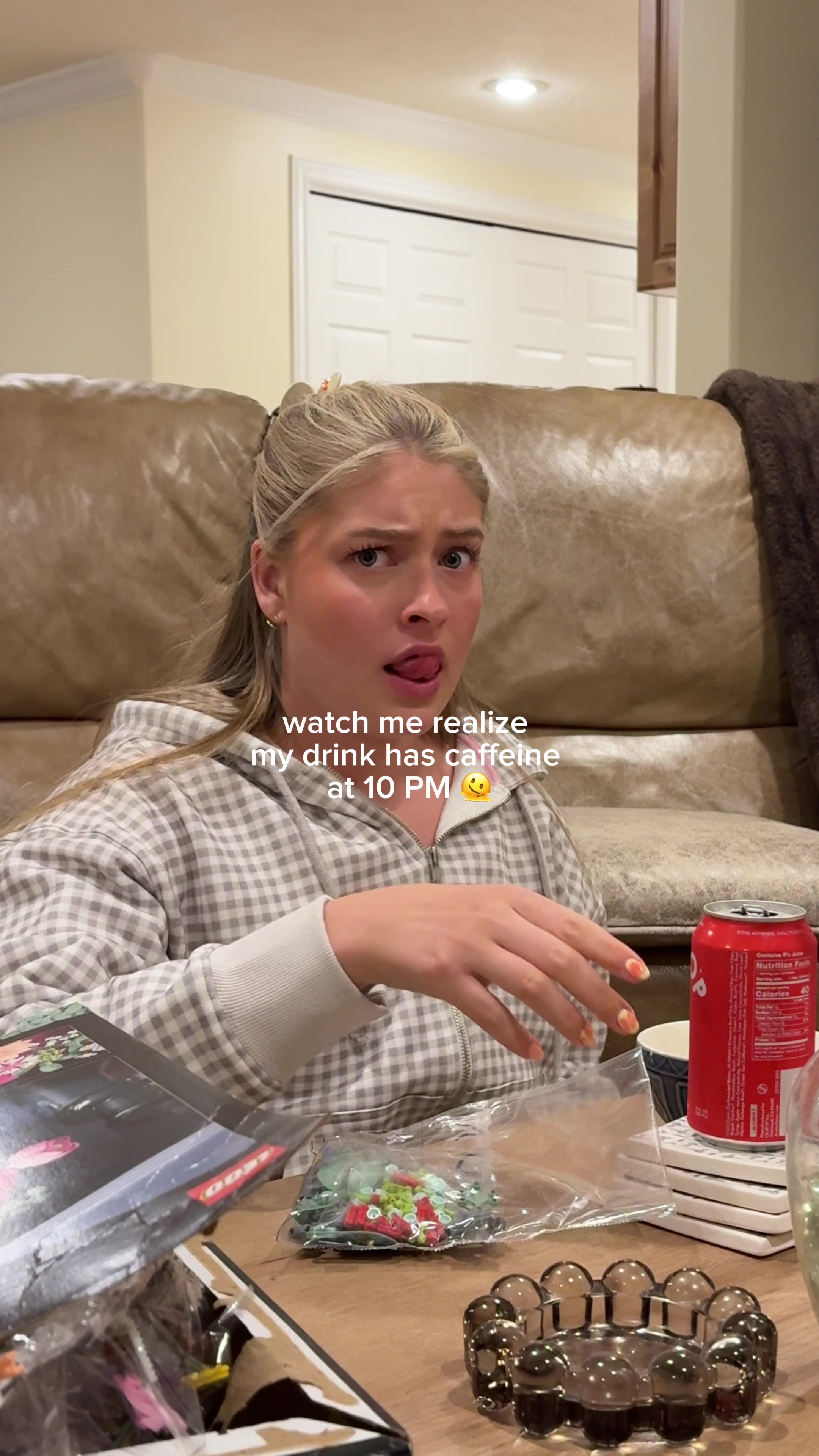
- A blonde woman in a gray and white checkered hoodie is sitting on the floor in front of a brown leather couch, holding a red can to her mouth and drinking from it. On-screen text reads: "watch me realize my drink has caffeine at 10 PM 😊"
- Audience
- Individuals who consume caffeinated beverages, especially those who might accidentally do so late at night. The casual setting and relatable scenario suggest a younger, social media-savvy audience.
Why it works. A self-deprecating late-night mishap makes the product feel like something the creator actually drinks day-to-day, not a sponsored placement.
On-screen text setting up a relatable scenario at 0:00: "watch me realize my drink has caffeine at 10 PM 😊" Open a UGC clip with a small, relatable mistake involving your product, phrased as 'watch me realize...' rather than a straight review.
- Hook
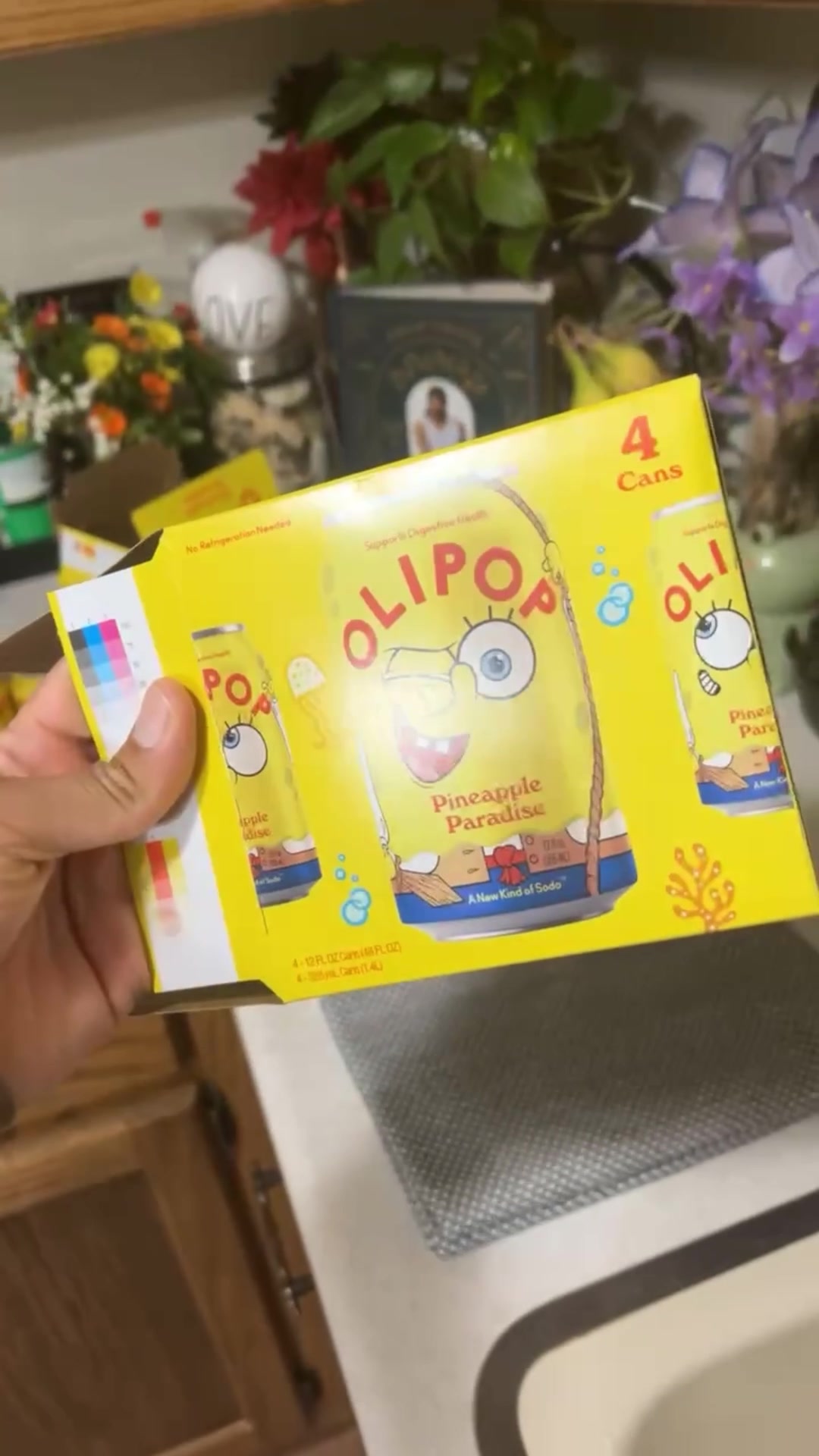
- 0:00-0:03, a hand reaches into a cardboard box and pulls out a yellow 4-pack of 'OLIPOP' soda cans featuring SpongeBob SquarePants characters. The audio is a person saying, "They literally said collect all five different cans."
- Audience
- Individuals interested in novelty food/drink items, fans of SpongeBob SquarePants, and those who appreciate humorous, relatable content about product collecting.
Why it works. An unboxing built around grumbling about a collectible mechanic turns the SpongeBob can set into a talking point rather than a plain reveal.
Directly quoting a product's call to action at 0:00-0:03: "They literally said collect all five different cans." If your product has a set or collectible angle, open your UGC clip by quoting the brand's own instruction back with a joking complaint.
- Reach
- 63 upvotes · 7 comments · r/influencermarketing
A community is already discussing this in r/influencermarketing. Show up there authentically and answer the thread before a competitor does.
Who amplifies them
The creator stack divides into three tiers. Paid partnerships visible in the evidence (tagged #OLIPOPPartner): Anni-beebo (lifestyle TikTok, 214K engagements on the blackberry vanilla review), Cost n' Mayor (fitness/lifestyle, distributed on both TikTok and Meta), Alex Ramos Training (soccer skills, Meta), and Jimmy Darts (feel-good viral, Meta). Celebrity integrations in the "Soda Stories" YouTube series: Travis Hunter (NFL), Joshua Jackson (actor), and Tanner Adell (country artist). Brand-commissioned music: @zinadelphia and @grantmichaels1, whose "OLIPOP, OLIPOP" single was seeded simultaneously on TikTok, Instagram, and Meta.
Organic unaffiliated UGC at scale: Logan Conover's flavor-ranking TikTok (182K engagements), marla catherine's unprompted viral post (435K engagements), and duskknight's SpongeBob meme (431K engagements). A post in r/influencermarketing placed Olipop among brands spending $175K-$400K/month on creators (the "heavy hitter" tier in that listing). Partnership extensions beyond social include FlyQuest (esports, announced June 2024, the brand's first official esports deal) and a collab with @nick_sturniolos (a creator with a large Gen Z following) launching branded lip balms via Space Camp Wellness, a wellness brand, promoted through an X giveaway in May 2026.
07 Organic & video
The organic content engine: the videos, creator posts, and community presence earning attention without paid spend.
Olipop's owned content spans TikTok, Instagram, and YouTube with a format mix that has evolved from straight health positioning toward cultural co-authoring. A May 2026 brand TikTok announcing the "OLIPOP, OLIPOP" jingle (performed by @zinadelphia and @grantmichaels1) generated 40.9 million engagements, the standout signal in the evidence by orders of magnitude. The behind-the-scenes narrative (the team had wanted this specific song since 2022) ran as a separate Instagram reel and Meta ad, extending a single creative idea across four surfaces from one launch moment.
Read the full breakdown+2▾
The "Soda Stories" YouTube series, running from mid-2025, pairs celebrities (Travis Hunter, Joshua Jackson, Tanner Adell) and everyday fans, including a teenager known as "OLIPOP Girl" at her school, in 60-90 second emotional shorts linking childhood soda memories to the OLIPOP substitution. Individual episode views run 600-2,000, suggesting the series feeds brand seeding and creator brief material rather than top-of-funnel reach. The 2024 "sleepy girl mocktail" YouTube video (17,405 views) shows the brand surfing a specific wellness trend by positioning OLIPOP as one of three ingredients in the viral recipe.
On Instagram, recipe-as-content is the repeating format: the "OLIPOP Pink Drink" (riffing on the Starbucks Pink Drink), the Cherry Cola Crush cocktail, and frozen drink recipe reels each place OLIPOP as the upgrade substitution in a drink the audience already knows how to want.
08 Affiliate & partners
How the brand turns creators and partners into a tracked, variable-cost acquisition channel, and how the program is structured.
A Rediem-powered referral program is linked directly from the site, indicating structured referral infrastructure. The Google ad library provides a downstream indicator of affiliate activity: the longest-running active search ad for drinkolipop.com (approximately 930 days) belongs to ReferDigital LLC, and multiple additional third-party advertisers have been bidding on Olipop's branded keywords for months before Olipop Inc. itself launched any search campaigns. When a brand name draws 91,600 monthly searches, affiliates profit from capturing that demand; Olipop's awareness engine created the arbitrage opportunity.
Read the full breakdown+1▾
On TikTok, the brand's own creator-recruitment posts from 2022 (139K engagements) and 2023 (136K engagements) functioned as an organic affiliate recruitment channel, instructing followers to pitch for paid brand deals, which turned existing fans into a self-qualifying applicant pipeline.
09 The playbook
The channels are not separate. They are one system where each stage feeds the next. Here is the read, then the plays to run tomorrow.
The inferred playbook
Olipop built a $400M brand by making TikTok the demand engine and mass retail the transaction point, so that virality compounds into shelf velocity rather than flowing through a DTC funnel.
In 2021, co-founders Ben Goodwin and David Lester cut paid advertising on every other platform and concentrated on TikTok. The structural move was hiring Sara Crane as a full-time salaried employee when she had approximately 8,400 followers, making her the consistent daily face of the brand's accounts, while running 30-40 micro-creator partnerships per month on retainer alongside her. In 2021, this generated a reported 1.3B views at $0.61 CPM, with $25.4M in earned media value representing 62% of the brand's total EMV that year.
With 65,000+ doors including a Walmart relationship described as nine figures, the brand converts TikTok attention at the physical shelf. The website is a brand hub; the store is the checkout. This is why $400M in revenue can coexist with a lighter footprint on the site itself.
Dig deeper+3▾
The June 2026 new can packaging plus commissioned jingle gave the existing creator base a fresh visual and branded audio to riff on, fed paid media with new brand-coded creative, and earned the 40.9M-engagement jingle post from the brand's own TikTok. One creative investment seeded organic UGC, Meta paid, Google video, and Instagram simultaneously.
Organic search is almost entirely branded; there is no visible content-SEO investment capturing category-level queries like "best prebiotic soda" or "gut-healthy drinks." The growth engine requires continuous creator activity to sustain awareness, and what happens if TikTok's algorithmic reach contracts is not answerable from the public data.
DTC conversion rate, retail sell-through velocity by account, creator program ROI per retainer tier, CAC across TikTok vs. Meta vs. retail trade spend.
Recruit creators by posting "how to work with us" content from the brand account itself
Olipop's own brand TikTok posted creator-recruitment videos in 2022 (139K engagements) and 2023 (136K engagements) showing creators exactly how to pitch for paid brand deals. The posts turned existing fans into a self-qualifying applicant queue: creators who find and watch the video are already familiar with the product and motivated to produce content, making the outreach cost nearly zero. Produce a 60-90 second "here's exactly what we look for in a brand partner" video from your brand account: show your submission process, what a post should look like, and what the deal structure is (product only, flat fee, or ongoing retainer). Add a link to a simple application form in bio. Replies and DMs become your first wave of qualified creator leads, pre-sorted by interest level, with no cold outreach required on your end. The self-selection dynamic means the creators who apply have already demonstrated they know your product, cutting the briefing time and improving the authenticity of what they produce.
Cost: $0 · Time to signal: weeks · Works pre-PMF: yes ---
Anchor every retail availability or new product launch to a same-day post that names the specific store
The January 2026 Shirley Temple flavor launch generated 3.5M views on X with copy that simply said "Shirley is here!! Our most requested flavor ever is now available in stores nationwide." The Raspberry Sherbet launch (May 2026) generated 683 retweets and 652 replies. No elaborate creative: naming the moment ("most requested flavor ever") and the location ("in stores nationwide") drives engagement because it functions as a personal tip. The giveaway mechanic appended to the post (comment to win) fills the reply thread with public social proof within the first 24 hours. Draft a three-sentence launch template now: "[Product] is here. [The one sentence that explains why your audience has been waiting for it]. Now at [specific retailer]." Ship it the morning of every retail placement. Pair it with a giveaway call to comment when the announcement is a major one. The conversion happens at the shelf; the post's job is to generate foot traffic, not clicks. Naming the specific retailer turns a brand announcement into a personal tip to every follower who shops there.
Cost: $0 · Time to signal: days · Works pre-PMF: yes ---
Insert your product into a trending recipe or wellness format as the upgrade ingredient
When the #sleepygirlmocktail trend was running on TikTok in 2024, Olipop posted a version with OLIPOP as one of three ingredients, earning 17,405 YouTube views by attaching the brand to an existing viral search behavior. The Instagram recipe series repeats this structure: the "OLIPOP Pink Drink" riffs on the Starbucks Pink Drink, the Cherry Cola Crush cocktail builds on the Cherry Cola flavor's existing following. In each case, the trend already assembled an audience searching for that format; the brand showed up as the better-for-you substitution in the recipe. Identify one trending drink, food hack, or wellness challenge in your category. Build a version that positions your product as the reason the recipe is healthier, more interesting, or more satisfying. Post it using the hashtag the trend already lives under. You are answering an existing search intent rather than trying to generate a new one, which is faster and costs nothing. Start by searching your category's trending hashtags and identifying the top three recipe or lifestyle formats that don't yet have a version featuring your product.
Cost: $0 · Time to signal: weeks · Works pre-PMF: yes ---
Align your product with an organic trend community before you have any creator budget
In 2021, Olipop aligned its TikTok presence with the organic #GutTok community: health-focused creators and viewers who were already discussing gut health, prebiotics, and low-sugar eating before the brand had a large following or a paid influencer budget. The community provided the audience and the context; Olipop showed up in those feeds as the product that community was already searching for. The 2021 TikTok campaign's $0.61 CPM was partly a function of demand that already existed in a niche with no beverage brand serving it yet. Identify the TikTok (or Instagram or YouTube) niche community already generating content around the problem your product solves. Map your early posting strategy to the hashtags, formats, and vocabulary that community uses. Spend time in that community before you post, identify five to ten creators who already discuss the problem, and approach them as your first outreach targets. The community's existing search volume is the distribution rail; you are placing your product on a rail that is already moving. This requires no ad spend and no existing audience. The entry barrier is research, not capital.
Cost: $0 · Time to signal: weeks · Works pre-PMF: yes ---
Hire one creator as a salaried full-time employee before you scale retainer deals
The common telling of Olipop's TikTok story focuses on the influencer program. The structural decision that made it work was that co-founders Ben Goodwin and David Lester made Sara Crane, a creator with roughly 8,400 followers at the time, a full-time salaried employee as the consistent face of the brand's accounts, not a rotating campaign participant. Combined with 30-40 micro-creator retainers per month, this structure generated a reported 1.3B views at $0.61 CPM in 2021 and $25.4M in earned media value. Full-time employment creates daily output, brand fluency, and genuine enthusiasm that retainer deals rarely sustain at the same cost per view, because a salaried creator's job is to understand the brand as deeply as a co-founder, not just fulfill a brief. Identify a creator in your category with 5K-50K followers whose content voice already sounds like the brand you want to build. Offer a full-time role (or a deeply structured ongoing arrangement with monthly deliverables, content exclusivity, and equity participation) before you run your first batch of paid retainers. The distinction between "someone who talks about us" and "someone who IS us" is what generates the content library that compounds over time. One honest caveat: the $0.61 CPM figure belongs to 2021 TikTok, when the algorithm favored new brand content more aggressively than it does. The structural principle (an embedded creator beats a rotating retainer pool) remains sound; the specific economics should not be used as a planning benchmark.
Cost: $ · Time to signal: months · Works pre-PMF: yes, if you can afford one hire --- The Walmart nine-figure retail relationship, the celebrity investor roster (Gwyneth Paltrow, Mindy Kaling, the Jonas Brothers), and the $1.85B Series C valuation are consequences of the scale Olipop reached, not tactics a reader can replicate. Every play above comes from the period before those outcomes existed.
You just read how Olipop does it. Tomorrow it is someone else.
Every morning we take one company that is actually growing and break down where its customers come from: the ads still running after a year, the channel doing the real work, and the play you can run this week.
Systemaic · directional intelligence. Traffic, spend, and reach figures are SimilarWeb-style estimates and qualitative reads of public data, not audited numbers. Built on real public receipts.
// teardowns with a similar GTM motion
sources & receipts (3)
Live ad libraries: meta ad library · linkedin ad library · google ad library
Traffic, spend, and revenue figures are estimates as noted in the report; the links above are the primary public artifacts.