- 01Trend-Hook Your Product's Benefit
- 02Recruit Micro-Creators with a Personal Code
- 03Seed an Existing Shop-Affiliate Program
- 04Turn a Distribution Win into a Content Moment
01 Snapshot
The one-glance read on who they are and how they grow. Each point is verifiable from the receipts above.
High-protein, bean-based pasta and roasted-edamame snacks riding a nationwide retail wave into Target (1,968 stores by April 2026) and Costco/Sam's Club (nationwide since January 2026).
Paid-led, amplified by a TikTok Shop creator affiliate layer.
≈163,000 estimated monthly visits (+157.5% over the last 3 months) as of 2026-07-17, 40,956 Instagram followers across 442 posts, 56+ active Meta ads, and an estimated, unverified $15-25M in 2026 revenue tied to the retail scale-up.
As of 2026-07-17, the newest Meta creative tests a bare checkout-screenshot ("$144.14 to $79.26") for price-drop proof and a stacked "$54 in welcome gifts" offer, instead of a lifestyle hook.
A proposed class-action lawsuit over protein-content labeling and a GLP-1 (the Ozempic/Wegovy weight-loss drug class) ad angle turn outside controversy and a borrowed medical trend into new-buyer acquisition, not just retail expansion.
02 How it unfolded
The order the channels came online. Sequence is strategy: what they did first, and what they layered on once demand existed.
03 Traffic & channel mix
Estimated demand, the channel split behind it, and the keywords and referrers doing the work. Directional modeling, not audited analytics.
Traffic sources
Top search keywords
| Keyword | Volume | Weight | CPC |
|---|---|---|---|
| the only bean | 2.2k | $0.54 | |
| the only bean edamame | 1.3k | $0.54 | |
| edamame pasta | 2.6k | $0.64 | |
| edamame beans | 7.9k | $0.52 | |
| dried edamame | 1.7k | $0.78 |
Closest competitors by audience
The site draws an estimated ≈163,000 monthly visits, up 157.5% over the last 3 months, a spike consistent with the Costco/Sam's Club and Target retail news rather than a single traffic channel. Direct traffic is the dominant channel at 40.7%, reflecting brand-recall from the retail press cycle and repeat shoppers typing the URL directly; organic search (17.7%) and paid search (17.6%) run neck-and-neck behind it, showing the brand bids on demand it also ranks for organically. Display ads (10.1%) and paid social (8.5%) form a secondary paid-amplification layer, while the remaining referral, email, and organic-social channels combine for under 6%. The keyword data shows they compete on the broad category term "edamame beans" (7,860 searches/month), the product term "edamame pasta" (2,630/month), and their own branded term "the only bean" (2,220/month), the last of which confirms real name recall from the retail push. Their closest named competitors are Sea Point Farms (seapointfarms.com), a direct rival in roasted edamame snacks, Explore Cuisine (explorecuisine.com), a competing bean-based pasta maker, and Lakanto (lakanto.com), a keto-adjacent brand that shares the same low-carb shopper rather than competing head-on for edamame demand.
04 Organic content
The specific pages earning their organic search traffic, and the pattern behind why they rank. Adapt the format, not the topic.
Their top organic pages are almost entirely product detail pages and the shop hub itself, not blog or comparison content: the edamame spaghetti pasta PDP (21.8% of organic traffic), the /pages/shop hub (20%), the sea-salt roasted-edamame snack PDP (19.3%), a variety multi-pack PDP (11.5%), and the homepage (7.2%). The pattern is a product-page-led SEO motion: rather than building top-of-funnel guides, they let category-defining product names do the ranking work, capturing buyers who already search the product category by name. That shows up in their keyword rankings too, holding the #1 spot for "the only bean," "edamame pasta," and "the only bean edamame," and a top-5 position for "edamame near me," meaning searchers looking to buy edamame products land straight on a purchase page instead of a middle-of-funnel article.
Top pages by organic traffic
05 Channel map
Not traffic share. How much weight the growth system actually puts on each channel, with a one-line read on the role it plays.
What drove growth
06 The creative doing the work
Each exhibit shows the actual asset, an X-ray of why it works, a status, and a play you can adapt. This is the heart of the teardown.
The brand runs at least 56 active Meta ads as of 2026-07-17, alongside 2 active Google ads, both of which qualify as genuine proven winners: the longest-running Google ad has been active roughly 667 days (since September 2024), and the current Meta wave has been live since March 31, 2026 (roughly 108 days), well past the 60-day bar for calling a bet proven rather than a fresh test. Notably, the Google ad account is registered to co-founder Brian Lai personally rather than a company entity, a small but telling sign of a still founder-run paid operation even at national retail scale.
Hook: "The way Ozempic constipation had me in a chokehold until I found this snack." Why it works: It borrows a real, widely-discussed side effect of GLP-1 weight-loss drugs to manufacture urgency around fiber and protein, killing the objection that GLP-1 users have "no room" for snacks, then closes on a crunch sound-effect cut that mimics the sensory payoff. Run this play: expanded as Play 1 below.
Hook: "FUEL YOUR WORKDAY WITH PROTEIN CRUNCH" over a color-blocked flat-lay of flavor bags. Why it works: It leads with a single quantified benefit callout instead of lifestyle imagery, letting the product's own nutrition numbers (protein, net carbs) do the persuading in a static, cheap-to-produce format. Run this play: Swap lifestyle photography for a bright, benefit-labeled product flat-lay when the product's numbers are genuinely differentiated.
Hook: "I MAY HAVE ORDERED 5 CASES." Why it works: It reframes the offer as relatable overconsumption rather than a sales pitch, pairing a confessional caption with an actual product pile shown inside a bag, which reads as organic proof rather than staged advertising. Run this play: expanded as Play 4 in spirit, but as a standalone tactic: caption a real product stockpile with a self-deprecating "I bought too much" line rather than a benefit claim.
The GLP-1-themed ads ("Ozempic constipation," "If you're on GLP-1, you need more protein") land on a dedicated advertorial page, "7 Reasons GLP-1 Users Are Ditching Protein Bars for These Crunchy Edamame Snacks," which mirrors the ad's framing rather than a generic product page, an editorial-style listicle format complete with a byline and "last updated" date to read as content rather than a sales page. The broader "Easiest Protein Hack" ad wave instead lands on "Healthy Snacking Made Easy" bundle pages, where the price architecture stacks a countdown-timer "Summer Sale," tiered discounts from 20% up to 54% off, and a "build your own bundle" mechanic offering an extra discount for adding more units, with per-unit pricing as low as $1.32-$1.42 inside bundles against $5.95-$7.99 singles and $34.98-$39.99 multi-packs. Every variant offers free shipping, a subscribe-and-save option, and a 30-day money-back guarantee, and leans on quantified social proof, a 4.9/5 rating across 1,012+ reviews on-site, separate from Costco's own listing showing 3,000+ five-star reviews as of mid-2026. The funnel does not show what happens after the first subscription cycle, covered in the gaps line below.
- Running
- 97 days (longevity = it's converting)
- Hook
- Visual: A stack of red, blue, and orange boxes of "THE ONLY BEAN CRUNCHY ROASTED EDAMAME". On-screen text: "THIS IS NOT A DRILL."
- CTA / offer
- Mix & match favorite flavors & get up to 4 gifts FREE.
- Audience
- Individuals interested in healthy snacks and deals, indicated by the product (edamame) and the flash sale announcement.
Why it works. Flash sale announcement with scarcity and bonus gifts to drive immediate purchases and clear inventory.
Lead with a strong urgency statement as on-screen text (0:00-0:03): "THIS IS NOT A DRILL." Start your ad with a bold, attention-grabbing statement that creates immediate urgency or curiosity, using all-caps text for emphasis.
- Running
- 97 days (longevity = it's converting)
- Hook
- Visual: A hand holds an open blue packet of edamame beans, showing the green beans inside. Audio: A crunching sound.
- CTA / offer
- Flash Sale, check your Coupons
- Audience
- The mention of '11g of Protein' and 'low-carb, gluten-free, vegan' on the packaging targets health-conscious individuals and those following specific diets.
Why it works. Product demonstration with scarcity and value proposition to drive immediate purchases.
Sensory appeal through sound and close-up visuals (0:00-0:03, 0:11-0:16). For food products, always include clear audio of consumption and extreme close-ups of the product's texture and appearance to trigger cravings.
- Running
- 97 days (longevity = it's converting)
- Hook
- "If you're on GLP-1, you need more protein" overlay text on a visual of a stainless steel refrigerator and double oven in a kitchen.
- CTA / offer
- flash sale now for just $1 a pack
- Audience
- Individuals on GLP-1 medication, indicated by the direct address "If you're on GLP-1" in the opening text.
Why it works. Problem-solution framing with product demonstration and a limited-time offer to drive immediate purchases from a specific health-conscious demographic.
Direct audience address and problem statement (0:00-0:03): "If you're on GLP-1, you need more protein" Identify a specific, niche problem your product solves for a clearly defined audience and state it directly in the first 3 seconds of your ad.
Show 7 more exhibits
- Running
- 97 days (longevity = it's converting)
- Hook
- "FINAL CLEARANCE SALE" on a yellow background, with "LAST 2 PALLETS AT UP TO 51% OFF + FREE SHIPPING" on a red background below it. A hand with black nail polish picks up a light blue box labeled "THE ONLY BEAN CRUNCHY ROASTED EDAMAME BEANS".
- CTA / offer
- LAST 2 PALLETS AT UP TO 51% OFF + FREE SHIPPING
- Audience
- Health-conscious individuals looking for high-protein, low-carb, gluten-free, vegan, and non-GMO snacks, indicated by the product packaging claims.
Why it works. Flash-sale scarcity combined with product variety showcase to convert value-seeking, health-conscious customers.
Prominent display of a limited-time, high-discount offer at 0:00-0:12 with the text "FINAL CLEARANCE SALE" and "LAST 2 PALLETS AT UP TO 51% OFF + FREE SHIPPING". For clearance or limited stock items, clearly state the exact quantity remaining and the discount percentage in large, contrasting text throughout the ad.
- Running
- 97 days (longevity = it's converting)
- Hook
- "Crunch like a chip, fuel like a a protein bar." A blonde woman holds a blue box of "The Only Bean Edamame Beans" and points to the text on the box.
- Audience
- People looking for healthy, high-protein, low-carb, gluten-free, vegan snack options that are convenient for travel.
Why it works. UGC product-benefit demonstration to educate and persuade health-conscious consumers about a convenient snack.
Lead with a bold, comparative claim as on-screen text and spoken audio (0:00-0:03, "Crunch like a chip, fuel like a a protein bar."). Identify your product's most unique and compelling dual benefit. Present it as a concise, attention-grabbing statement in both text and audio within the first 3 seconds of your video.
- Running
- 97 days (longevity = it's converting)
- Hook
- The way Ozempic constipation had me in a chokehold until I found this snack. 11g protein, 4g fiber, low carb seasoned to perfection. Better than chips and actually good for your gut. Get em on clearance sale rn before they're gone. (visual: a hand holding a small red package, pouring small green/yellow pieces into the palm of the hand)
- CTA / offer
- clearance sale rn
- Audience
- Individuals experiencing digestive issues, particularly those on Ozempic, and health-conscious snackers looking for high-protein, high-fiber, low-carb options.
Why it works. Problem-solution narrative with product benefits and scarcity to drive immediate purchases for a specific health-conscious demographic.
Problem-solution framing with specific pain points at 0:00-0:03, 'The way Ozempic constipation had me in a chokehold until I found this snack.' Identify a highly specific pain point or side effect related to your target audience's current situation (e.g., 'The way [specific problem] had me in a chokehold') and immediately position your product as the solution in the first 3 seconds.
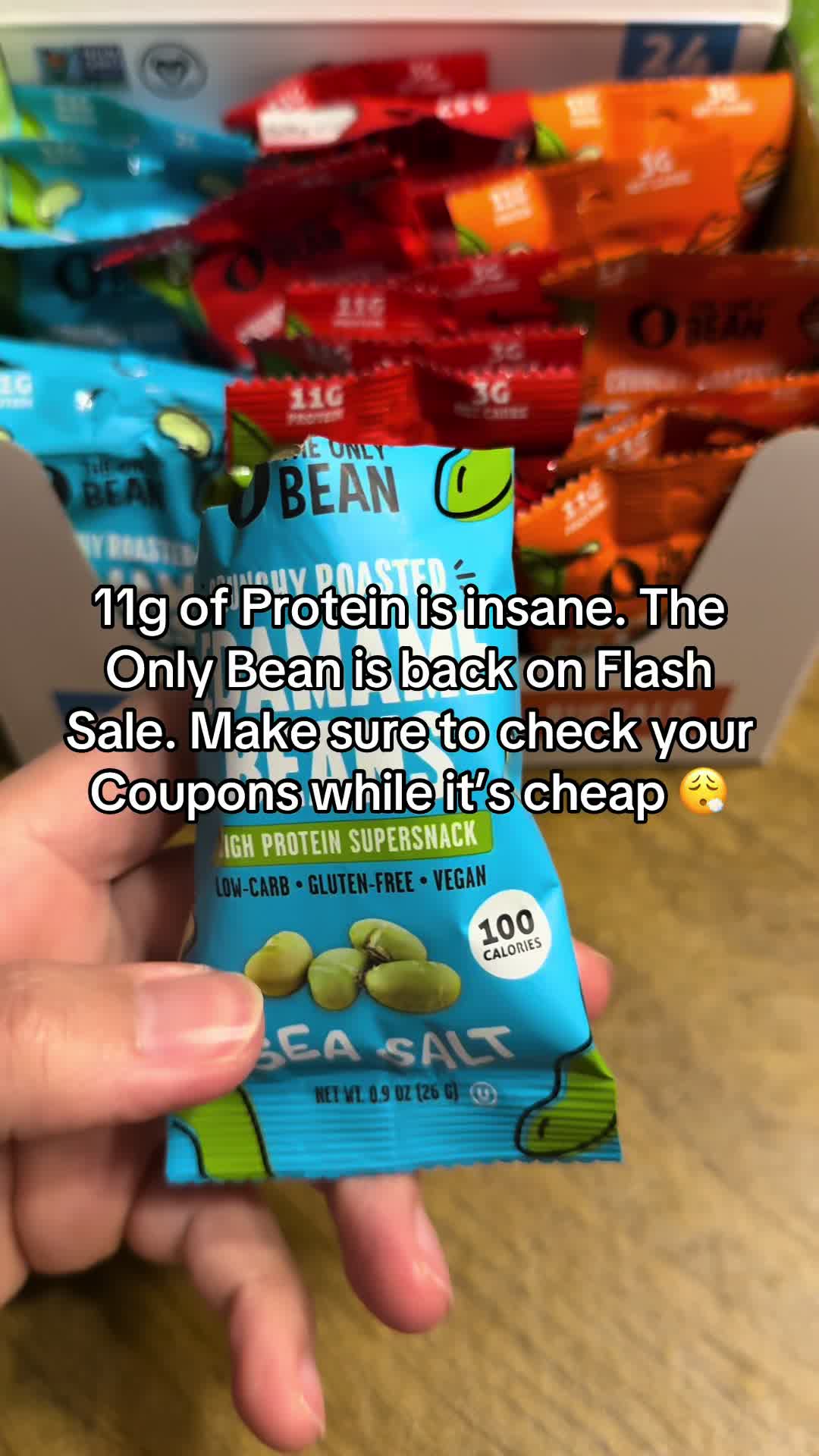
- Hook
- Visual: A hand holds a small blue packet of "THE ONLY BEAN CRUNCHY ROASTED EDAMAME BEANS SEA SALT" with a box of similar packets in the background. The packet is opened, revealing green edamame beans inside. Audio: Crunching sounds.
- CTA / offer
- Flash Sale, check your Coupons while it's cheap
- Audience
- Health-conscious individuals looking for high-protein, low-carb, gluten-free, vegan snacks, indicated by the product packaging and on-screen text.
Why it works. Sensory-driven product demonstration combined with scarcity and value proposition to drive immediate purchases during a flash sale.
Sensory demonstration of product texture and sound at "0:00-0:03" and "0:11-0:16" with continuous "Crunching sounds." For food products, always include clear audio of consumption (e.g., crunching, sizzling) and close-up visuals that highlight texture and appeal.
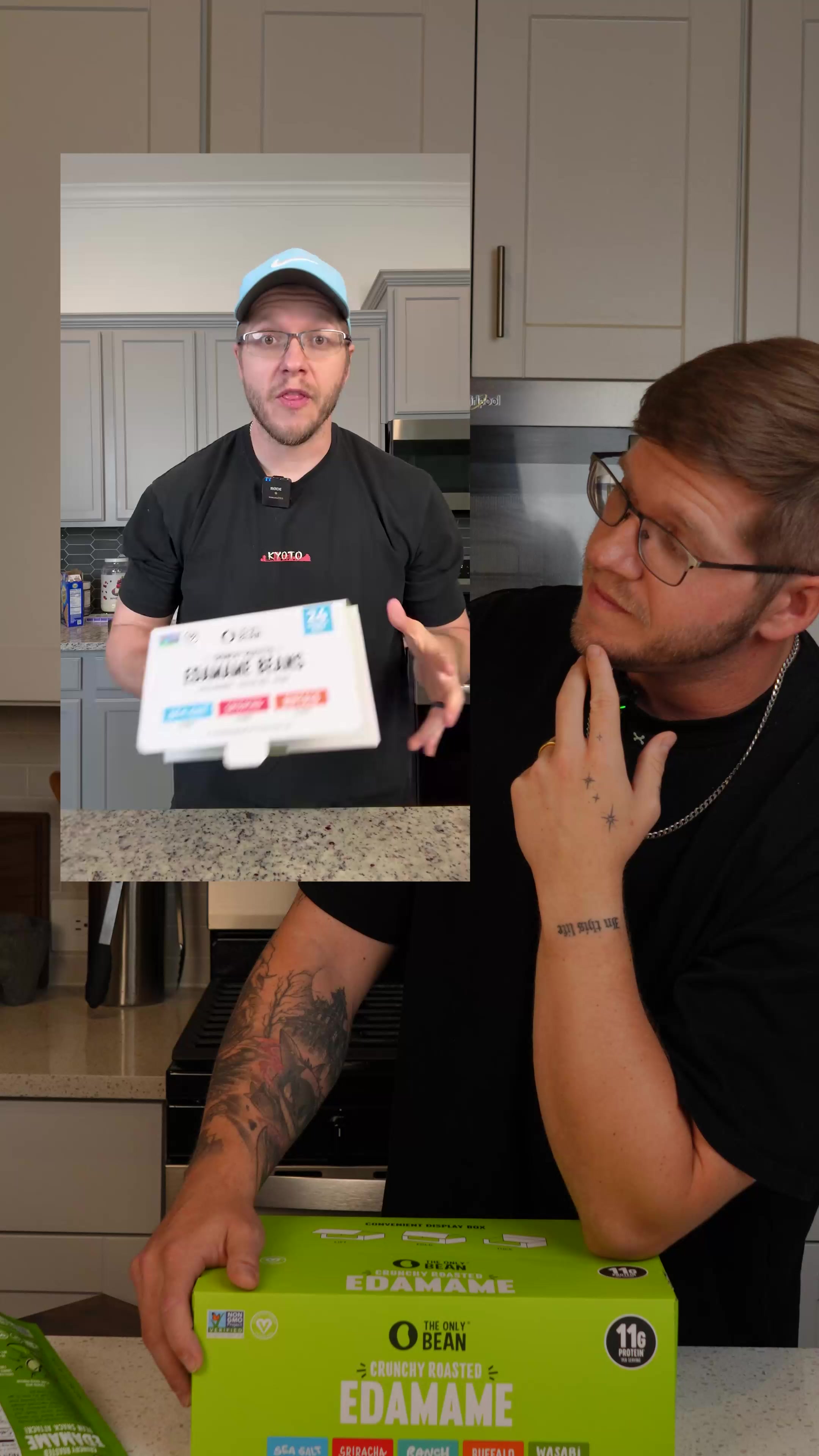
- Hook
- "I'm a professional protein snack reviewer and I found the new best one, The Only Bean crunchy edamame beans." A man in a black t-shirt and glasses is holding a green box of "The Only Bean Crunchy Roasted Edamame Beans" and looking at a smaller inset video of himself from a previous time, also holding the same product.
- CTA / offer
- up to 40% off
- Audience
- Individuals interested in healthy, high-protein, low-carb, gluten-free, and vegan snacks, indicated by the product packaging and spoken claims.
Why it works. Leverage a trusted influencer's long-term endorsement and a limited-time discount to drive immediate sales of a variety pack and individual flavors.
Influencer endorsement and long-term credibility: The creator states, "I'm a professional protein snack reviewer and I found the new best one... a year and a half later and now three years of professionally reviewing protein products, my answer on that is still the same." (0:00-0:09) Feature an influencer who has genuinely used and loved your product over an extended period, emphasizing their consistent positive experience and expertise in the niche.
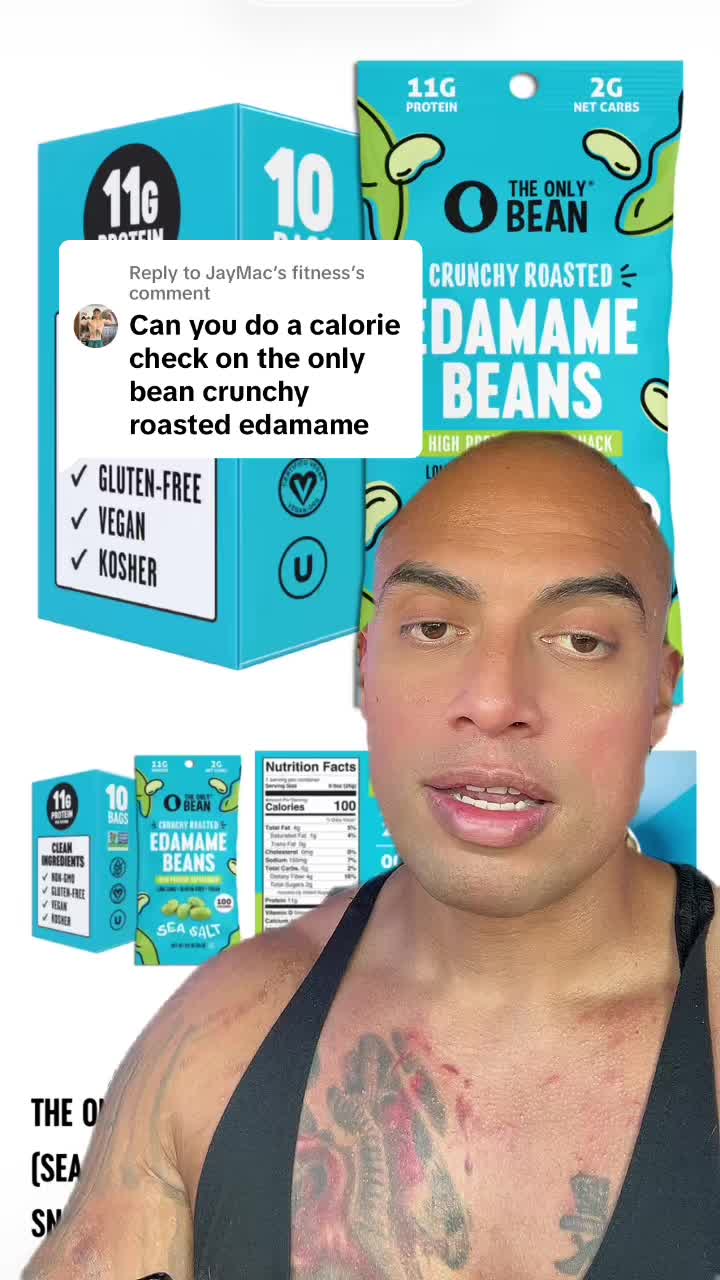
- Hook
- "Let's just go ahead and get this out of the way." A man with a shaved head and a black tank top is speaking directly to the camera, with a product image of "THE ONLY BEAN CRUNCHY ROASTED EDAMAME BEANS" in the background.
- Audience
- People interested in nutrition, calorie counting, and healthy snacking, as evidenced by the comment asking for a 'calorie check' and the detailed breakdown of nutritional information.
Why it works. Educational content to build trust and authority by transparently analyzing product claims and providing additional nutritional context, aiming to attract health-conscious consumers.
Directly addresses user comment/question: "Can you do a calorie check on the only bean crunchy roasted edamame" (0:00). Actively solicit questions from your audience and create content that directly answers them, featuring the original question prominently.
- Reach
- 84 upvotes · 33 comments · r/Costco
A community is already discussing this in r/Costco. Show up there authentically and answer the thread before a competitor does.
Who amplifies them
The heaviest amplification comes from TikTok Shop creators posting under #tiktokshopcreatorpicks and seasonal sale tags: klmketa, Former Fat Guy Fitness, Ren, 𝙅𝙪𝙡𝙞𝙤, and Mike on a Mission all posted flavor-specific reviews tied to active promotions. On Instagram, retail-launch creators like melissametrano, kristyslifestyle, and costcodeals amplified the Costco rollout, while rachelleswannie and hellolaurenashley posted disclosed #ad partnerships tied to the Target launch. A separate, smaller layer of creators, scottrovak and aasia.lyn, run personal discount codes (scottrovak15, aasia.lyn15) with no visible platform tying them together, suggesting an informal seeding arrangement distinct from the TikTok Shop program. The brand's own accounts (@eatonlybean on TikTok, the_onlybean on Instagram) post directly alongside this creator layer rather than staying silent, and no founder personal account appears in the evidence.
07 Organic & video
The organic content engine: the videos, creator posts, and community presence earning attention without paid spend.
Their own Instagram runs a steady cadence across 442 posts (40,956 followers, ~208 average engagement), mixing product shots with Target- and Costco-tagged partner content. The TikTok side is dominated by creator clips rather than brand-produced video, part of the broader "BeanTok" bean-snack trend that drew mainstream press coverage in 2026. The best-performing format is a flavor-specific talking-head review: klmketa's "Love the buffalo and sriracha flavors" post pulled 15,833 engagements, Former Fat Guy Fitness's Black Friday sale post pulled 10,155, and a reply-style review from 𝙅𝙪𝙡𝙞𝙤 pulled 3,884, with a long tail of smaller creator posts in the roughly 30-750 engagement range. The pattern across winners is specificity: naming exact flavors (buffalo, sriracha) outperforms generic "healthy snack" framing.
08 Affiliate & partners
How the brand turns creators and partners into a tracked, variable-cost acquisition channel, and how the program is structured.
There is an active but informal affiliate motion rather than a single named platform: TikTok Shop tags (#tiktokshopcreatorpicks, #tiktokshopblackfriday, #tiktokshopcybermonday) confirm creators are selling through TikTok's built-in commerce and affiliate system, and the personal discount codes used by Instagram creators like scottrovak and aasia.lyn point to a parallel, code-based seeding arrangement. No dedicated affiliate/partner program link was found on the owned site itself, meaning the recruitment and commission structure likely runs through TikTok Shop's own tools and direct creator outreach rather than a public sign-up page.
09 The playbook
The channels are not separate. They are one system where each stage feeds the next. Here is the read, then the plays to run tomorrow.
The inferred playbook
Retail wins generate the press hook, then a GLP-1-themed paid layer and a TikTok Shop creator army convert category search intent straight to the product page.
Each nationwide retail launch, Costco/Sam's Club in January 2026 and the Target expansion to 1,968 stores by April 2026, plus the protein-labeling lawsuit noted above, spikes branded search and direct traffic, which sits at 40.7% of all visits.
The Meta ad library leans on the GLP-1/Ozempic weight-loss trend as an objection-killer for a snack category that has nothing to do with the drug, landing clicks on a dedicated advertorial page built around that exact angle.
Dig deeper+3▾
TikTok Shop creators and Instagram partners with personal codes generate flavor-specific awareness, which the product-page-led SEO setup (ranking #1 for "edamame pasta" and "the only bean edamame") then converts directly, skipping any middle-of-funnel content layer.
Beyond a basic subscribe-and-save option, there is no visible loyalty or repeat-purchase mechanic, and the brand's X account has been dormant since 2019 despite an otherwise active social presence everywhere else.
DTC-versus-wholesale revenue split, retail sell-through or reorder rate at Costco and Target, and the subscribe-and-save attach rate, all key to sizing how much of the estimated $15-25M actually comes from the retail channel versus the site itself.
Trend-Hook Your Product's Benefit
The proofThe Ozempic-themed ad ties a real, widely-discussed GLP-1 side effect (see Paid Ads above) directly to a snack's fiber and protein content, then routes clicks to a matching "7 Reasons" advertorial page.
The adaptationFind one trending health or lifestyle concern that genuinely overlaps with your product's core benefit, write a single ad hook that names that concern in its first line, and build one simple "N reasons" advertorial landing page mirroring that hook rather than sending traffic to a generic product page. Ship it as one static ad or organic post first to see if the specific trend, not the format, is what pulls clicks.
Cost: under $500 · Time to signal: days · Works pre-PMF: yes, provided the trend connection is genuine and not force-fit onto an unrelated product.
Recruit Micro-Creators with a Personal Code
The proofInstagram creators scottrovak and aasia.lyn post using their own name-based discount codes with no visible platform behind them, just a simple code-per-creator arrangement.
The adaptationDM 5-10 micro-creators in your niche, offer a free unit plus a discount code built from their own handle (like scottrovak15), and track redemptions in a spreadsheet rather than waiting on a formal affiliate tool. Starting with their own name in the code, rather than a generic "SAVE15," is what makes creators willing to post it as their own recommendation.
Cost: $0 · Time to signal: days to weeks · Works pre-PMF: yes.
Seed an Existing Shop-Affiliate Program
The proofTikTok Shop tags like #tiktokshopcreatorpicks appear across dozens of creator posts, some reaching into the thousands of engagements, without the brand producing that content itself.
The adaptationList a physical product on TikTok Shop's built-in affiliate program, set a commission rate, and directly invite 10-20 creators in your category to the open collaboration list with a free sample, rather than waiting for creators to discover the listing organically.
Cost: under $500 · Time to signal: weeks · Works pre-PMF: conditional, only for a physical product with enough margin to fund a real commission.
Turn a Distribution Win into a Content Moment
The proofThe moment product hit Costco and Target shelves, deal-focused creators like costcodeals and lifestyle creators like melissametrano posted unpaid "just landed" content around the launch.
The adaptationThe next time you land any new distribution milestone, a new retailer, a new city, or a new marketplace listing, proactively pitch 3-5 deal-hunting or community creators in your category with the exact product and location before it's widely known, since these creators actively look for "just landed" finds to post first.
Cost: $0 · Time to signal: weeks · Works pre-PMF: no, this specifically requires an actual new distribution point to exist first. Not transferable at an earlier stage: landing simultaneous nationwide placement in Target, Costco, and Sam's Club took years of broker relationships and inventory scale that a pre-revenue founder won't have; adapt the trend-hook copy, the code-based creator seeding, and the shop-affiliate recruitment instead of trying to replicate the retail footprint itself.
You just read how The Only Bean does it. Tomorrow it is someone else.
Every morning we take one company that is actually growing and break down where its customers come from: the ads still running after a year, the channel doing the real work, and the play you can run this week.
Systemaic · directional intelligence. Traffic, spend, and reach figures are SimilarWeb-style estimates and qualitative reads of public data, not audited numbers. Built on real public receipts.
// teardowns with a similar GTM motion
sources & receipts (10)
Live ad libraries: meta ad library · google ad library
Researched facts: Founding year and founders: Founded in 2017 by Brian Lai, his wife/co-founder Kristine Yan · Co-founder identity: Kristine Yang is confirmed as Co-Founder of The Only Bean. · Founder's prior venture: Before The Only Bean, Brian Lai founded BOCHA, a coffee and tea b · Nationwide retail launch - Costco and Sam's Club: The Only Bean announced a nationwide lau · Nationwide retail launch - Target: The Only Bean landed a nationwide rollout at Target, de · Target milestone announcement (founder's own statement): Co-founder Brian Lai publicly ann · Headquarters location (conflicting reports): Older company bios/press place headquarters i · Customer product ratings: The Only Bean's Sea Salt Roasted Edamame Beans (18 oz) show 3,00
Traffic, spend, and revenue figures are estimates as noted in the report; the links above are the primary public artifacts.