- 01Price-per-day reframe
- 02Query-matched long-tail ad copy
- 03Name the category incumbent in your own content
- 04Discount-coded creator affiliate layer
01 Snapshot
The one-glance read on who they are and how they grow. Each point is verifiable from the receipts above.
Personalized, human-grade fresh dog food on subscription, priced per dog via an onboarding quiz, and widely regarded as the leader of the category it helped create.
Paid-led, with programmatic display and search carrying the bulk of traffic alongside a real affiliate/creator layer riding on top.
Reported ~$1.2B in annualized net revenue as of 2024 (up from ~$800M in 2023) and profitable above $10M/month as of May 2025, even as monthly visits sit at ~2.94M as of May 2026.
As of 2026-07-06, live tests include Oprah Podcast-branded social-proof creative on Meta and a shift toward video-format Google ads alongside the long-running text program.
A rotating affiliate creator army selling discount-coded first boxes supplies an outsized share of traffic, roughly one visit in seven, and it is punctuated by occasional prestige media moments, a Super Bowl spot, a NASCAR tie-in, that periodically reset what the always-on paid engine can charge to acquire.
02 How it unfolded
The order the channels came online. Sequence is strategy: what they did first, and what they layered on once demand existed.
03 Traffic & channel mix
Estimated demand, the channel split behind it, and the keywords and referrers doing the work. Directional modeling, not audited analytics.
Traffic sources
Top search keywords
| Keyword | Volume | Weight | CPC |
|---|---|---|---|
| chewy | 889k | $1.27 | |
| farmers dog | 38k | $5.08 | |
| farmer's dog | 23k | $5.08 | |
| the farmer's dog | 21k | $2.64 | |
| the farmers dog | 18k | $2.66 |
Top referring sites
Closest competitors by audience
The Farmer's Dog drew an estimated ~2.94 million monthly visits in May 2026, the latest month available, down 20.8% over the prior 3 months. The mix is dominated by Display Ads at 46.4% of traffic, the single largest channel by a wide margin, followed by Affiliate at 13.8% and Search Paid at 11.3%; Direct (9.7%) and Search Organic (6.2%) round out the meaningful channels, with a long tail behind them: Email at 5%, Social Paid at 4.8%, and Referrals, Social Organic, and emerging AI-assistant traffic each under 3%. That heavy display reliance is a plausible explanation for the traffic decline sitting alongside reported revenue growth, a 2023-to-2024 figure that predates this traffic snapshot by more than a year: a brand this dependent on programmatic display will see visit volume swing with ad-spend optimization even while an established subscriber base keeps billing steady. Among ranked and bid terms, their own brand name clusters near the top in several spellings ("farmers dog" at 38,350 searches/month, "the farmer's dog" at 21,280), but they also show up for Chewy, the large pet e-commerce retailer, which pulls 888,620 monthly searches on its own name, a conquest play to intercept shoppers already comparison-shopping the category's biggest incumbent. Referring traffic includes people.com (press pickup), consumerrating.org (a reviews/comparison aggregator, likely part of the affiliate layer), and amazon.com (comparison browsing rather than a retail listing, since the brand sells DTC only). Their closest named rivals, ollie.com, spotandtango.com, and justfoodfordogs.com, are all fighting the same human-grade fresh-food category The Farmer's Dog helped popularize.
04 Organic content
The specific pages earning their organic search traffic, and the pattern behind why they rank. Adapt the format, not the topic.
Organic search is overwhelmingly a brand-capture story: the homepage alone pulls an estimated 79.8% of their organic traffic, and every major spelling of the company name ranks #1. The next-largest pages are not top-of-funnel content but late-funnel validation pages, a cost-and-value explainer, a breed-specific personalization page, and a reviews page, each earning a low single-digit share of organic visits. The pattern reads as research-stage reassurance content: rather than chasing broad keyword volume, the pages that rank best are the ones a shopper checks right before paying $70-400+ a month, addressing "is this worth it" and "does this work for my breed" rather than trying to win new-to-category search traffic.
Top pages by organic traffic
05 Channel map
Not traffic share. How much weight the growth system actually puts on each channel, with a one-line read on the role it plays.
What drove growth
06 The creative doing the work
Each exhibit shows the actual asset, an X-ray of why it works, a status, and a play you can adapt. This is the heart of the teardown.
Google carries an estimated 4,000+ active ads as of 2026-07-06, with a genuine proven-winner bucket: the oldest active ad has run 1,714 days (since October 2021), a rare case of the same search copy staying live for over four years. Meta's visible rotation dates to March 2026, young enough (100-110 days old when collected) to call a durable winner but not yet in the multi-year league Google's search program has reached.
Hook: "$2/Day" Why it works: A subscription that can run $70-400+ a month is a hard click for a comparison shopper. Framing the entry price as a daily number instead of a monthly bill drops it into a completely different, much smaller mental cost bucket before the click ever happens. Run this play: Expanded as Play 1 below.
Hook: "Dog food should be food, not burnt brown balls." Why it works: It trades a nutrition-panel argument for one blunt, slightly crude physical description of the alternative (kibble), doing the persuasion work in a single line instead of an ingredient comparison. Run this play: Swap a features-comparison ad for one visceral physical description of what your product replaces, and let a single static image or short clip carry it rather than a benefits list.
Hook: "Fresh Dog Food For Vizslas" Why it works: Search copy that echoes the exact breed someone typed mirrors the personalization promise of the onboarding quiz itself, so the ad already feels custom-built before the click, evidently templated across many breed-name keywords at once. Run this play: Expanded as Play 2 below.
- Running
- 110 days (longevity = it's converting)
- Hook
- "Spring reset, but make it edible." A French Bulldog stands on a wooden floor looking at a white, leaf-patterned tray being placed down by a hand with red nails.
- CTA / offer
- "SIXTY PERCENT OFF YOUR FIRST BOX USING MY LINK PLUS FREE SHIPPING"
- Audience
- Dog owners who follow lifestyle trends and care about fresh, non-processed pet nutrition.
Why it works. Rides an existing internet phrase template into a seasonal cleanse angle, making fresh food feel like a trend rather than a purchase decision.
Seasonal Trend Hijacking (0:00 - "Spring Reset") Take a recognizable meme phrase structure and swap in your own product's seasonal angle for an on-screen line.
- Running
- 102 days (longevity = it's converting)
- Hook
- "Lulu is a 22 year old mutt." + Close-up of a small black and white dog looking up and panting.
- CTA / offer
- "Get 50% off your first box of The Farmer's Dog"
- Audience
- Dog owners, specifically those with aging pets, indicated by the focus on a 22-year-old dog.
Why it works. Uses one named dog's implausible lifespan as concrete proof of long-term health outcomes, more credible than a generic longevity claim.
Extreme Outlier Claim (0:00 - "Lulu is a 22 year old mutt") Open with a specific, named, verifiable result, a name, a number, a timeframe, instead of a general benefit claim.
- Running
- 102 days (longevity = it's converting)
- Hook
- "You can't teach an old dog new tricks." + George (a grey/white dog) walking slowly in a hallway with text overlays "Age: 13" and "Weight: 47 lbs".
- CTA / offer
- "Get 50% off your first box today."
- Audience
- Owners of senior or overweight dogs, evidenced by the specific age (13) and weight loss metrics (47 lbs to 18 lbs).
Why it works. Sets up a familiar idiom only to visually contradict it with an active senior dog, framing the food as what changed the outcome.
Quantified transformation (0:00 vs 0:06). Open on the cliche your product disproves, then let your visual evidence contradict it before you explain how.
Show 7 more exhibits
- Running
- 25 days (longevity = it's converting)
- Hook
- "New topper plans from The Farmer's Dog starting at $2 a day." with a white dog running on a beach.
- CTA / offer
- "Get 50% off your first box."
- Audience
- Dog owners currently feeding dry kibble who are price-conscious but want to upgrade their dog's nutrition.
Why it works. Introduces a cheaper topper tier at a concrete daily price to pull in budget conscious owners who passed on the full meal plan.
Daily Price Anchoring (0:00 - "starting at $2 a day") When you launch a lower priced tier, state the product name and its exact per day cost together in your opening line.
- Running
- 20 days (longevity = it's converting)
- Hook
- "It literally feels like we've given him many extra years of life." + A small white poodle-mix dog smiling in the passenger seat of a car.
- CTA / offer
- "Get 50% off your first box"
- Audience
- Owners of senior dogs (specifically mentioned as "Scooter, 12") who are experiencing "picky eating" or age-related decline.
Why it works. Leads with a testimonial claiming extended lifespan, the single outcome dog owners care about most, before showing the dog.
Longevity Framing (0:00): "MANY extra years of life" Open with your customer's biggest emotionally weighted outcome quote as on screen text, spoken plainly.
- Running
- 13 days (new — still being tested)
- Hook
- "No one talks about this" + a large tan Mastiff dog sitting in a black chair with its tongue out.
- CTA / offer
- "Get 50% off your first box."
- Audience
- Dog owners with children, indicated by the interaction between the large dog and the young girl playing house.
Why it works. Pairs a vague insider tease with a visually odd scene of a dog at a tea party, then closes with a discount for first time buyers.
Curiosity-gap headline at 0:00 ("No one talks about this") Open with a text overlay claiming something in your category is being kept quiet, then reveal the specific insight.
b-roll voiceover
- Hook
- "My dog started doing this random spin before meals" - A dog with brown, black, and white fur is seen from behind, walking away from the camera on a light brown wooden floor. Another dog with golden-brown fur is also visible.
- Audience
- Pet owners, specifically dog owners, who are interested in their pets' behavior and potentially their diet. The use of 'The Farmer's Dog' packaging suggests an interest in premium or fresh dog food.
Why it works. Opens with an unexplained, specific pet quirk that only makes sense once tied to the food routine later in the video.
Curiosity-driven hook with on-screen text at 0:00: "My dog started doing this random spin before meals". Open with a specific, odd behavior detail related to your product's use and let the video resolve what caused it.
product demo
- Hook
- A golden retriever dog exits a small, decorated dog house with a sign above it that reads "HAWNTED HOWSE (VERY SPOOKY) NO returns".
- CTA / offer
- 50% off your first order and free shipping
- Audience
- dog owners who care about their pet's diet and enjoy humorous content, indicated by the elaborate dog house and the focus on dog food.
Why it works. Uses an absurd haunted-house sight gag to earn a laugh before pitching fresh dog food, disarming skepticism with humor rather than a claim.
Humorous setup and reveal (0:00-0:26, "That's what's so scary?") Build a short, absurd scripted moment tied to a common pain point in your category, then cut straight into your product pitch.
- Reach
- 13 upvotes · 39 comments · r/dogs
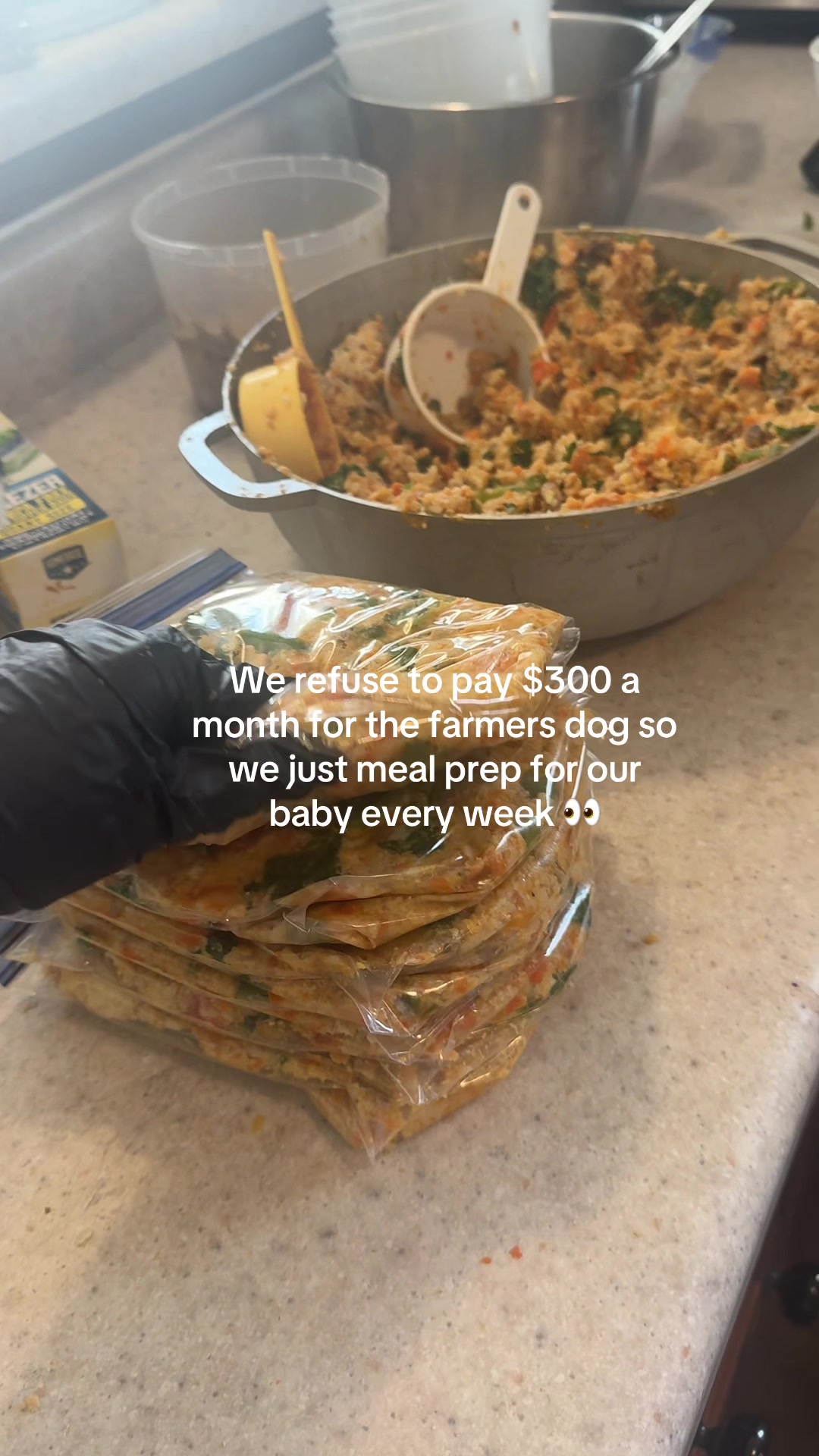
A community is already discussing this in r/dogs. Show up there authentically and answer the thread before a competitor does.
Who amplifies them
The brand account (@thefarmersdog on X and Instagram, thefarmersdogofficial on YouTube) runs the commercial library; co-founder and CEO Jonathan Regev appears personally in a co-branded Oprah Podcast miniseries partnership ("Life is Better with Dogs") rather than posting from an independent personal channel in the evidence, and co-founder Brett Podolsky is credited alongside him in the brand's own "Founders' Story" video. Amplification runs through named creators posting under the #TFDPartner tag: @brittanylynne, @hugo_themalamute, @aguyandagoldenn, @levi.s.b, @too.cute.labs, @joey.coldcuts, and @sidneymarieduke (via the LTK affiliate marketplace), alongside independent reviewers like @seansvv, @trainyouryorkie, and @thebkpets, each carrying personalized discount links. Sentiment is not universal: one TikTok from @lifeofdeeee7 describes a negative experience and urges followers not to order. Community discussion beyond paid creators is thin, limited to a single active r/dogs thread.
07 Organic & video
The organic content engine: the videos, creator posts, and community presence earning attention without paid spend.
Posting cadence on the owned YouTube channel is a steady drip of short (30-70 second) benefit-specific commercials, "Great Hair," "The Jump," "Young Again," released across 2025 and 2026, plus older customer testimonials. The standout is a clear outlier: the 2023 Super Bowl spot "Forever" won USA Today's Ad Meter (an annual audience-scored ranking of that year's Super Bowl ads) with a 6.56 score, and its YouTube upload has pulled 36.4 million-plus views, versus tens of thousands to a few hundred thousand for a typical spot in the library. That single video is the brand's biggest video asset by a wide margin and the clearest evidence of the "cross the chasm" moment referenced in company materials. Among creator clips, the format that performs is casual talking-head or demo-style review video paired with a discount code: an Instagram post from @hugo_themalamute pulled 239,192 engagements, a TikTok from @alesscabey pulled 74,843, and @mydogsdope's holiday-promo TikTok pulled 30,135, all outperforming the brand's own average organic post.
08 Affiliate & partners
How the brand turns creators and partners into a tracked, variable-cost acquisition channel, and how the program is structured.
The #TFDPartner tag is a real, active ambassador program: creators carry personalized vanity links (thefarmersdog.com/brittany60, /joeycold), a dedicated holiday landing page (/p/holiday25), and at least one participant runs through the LTK affiliate marketplace (a link-in-bio commerce platform for creators). Recruitment appears to run on rotating first-box discounts, 50% and 60% off have both appeared as the hook, rather than a flat commission rate visible in the evidence.
09 The playbook
The channels are not separate. They are one system where each stage feeds the next. Here is the read, then the plays to run tomorrow.
The inferred playbook
The core mechanics: an always-on programmatic-display and search machine buys volume, a creator/affiliate layer discounts new dogs into their first box, and periodic prestige media moments raise the ceiling the paid engine can spend against.
Display ads alone account for nearly half of the traffic mix, the largest single channel, running alongside a search program mature enough that one active text ad has stayed live for 1,714 days.
They compete for attention on the incumbent Chewy's own name (888,620 monthly searches) rather than only their own brand terms, intercepting shoppers already comparison-shopping a category leader.
Dig deeper+3▾
The #TFDPartner creator network converts through rotating 50-60%-off first-box codes and personalized links, contributing an affiliate share unusually large for a direct-to-consumer brand this size.
The Super Bowl spot covered above reset mainstream perception once; the NASCAR and Oprah Podcast partnerships read as the smaller, ongoing continuation of that same high-visibility media strategy.
churn/retention, CAC, and blended ROAS behind the display, search, and affiliate spend.
Price-per-day reframe
The proofA Google search ad kept live continuously since April 2024 leads with "$2/Day" rather than a monthly total, even though most subscriptions run far higher once dog size is factored in.
The adaptationTake your own subscription or recurring product's real price and restate it in the smallest honest unit, per day, per use, per unit, rather than the billing-cycle total, then run it as a headline variant against your current best-performing ad copy. The mechanism: a large number triggers a "can I afford this" pause before someone even reads the offer, while a small daily number reads as a rounding error, and the rest of the ad gets to do its persuasion work uninterrupted.
Cost: $0 · Time to signal: days · Works pre-PMF: yes
Query-matched long-tail ad copy
The proofOne of their proven Google winners headlines with a specific dog breed, matching the exact term a searcher typed rather than running one generic headline.
The adaptationIdentify the 5-10 highest-volume ways customers self-segment when they search for your category (by use case, by role, by size, by industry) and write one ad variant per segment that echoes that exact term in the headline, rather than one broad ad for all of them. Start by manually writing a handful of these variants for your existing highest-volume search campaign rather than building a full dynamic system on day one.
Cost: under $500 · Time to signal: days · Works pre-PMF: conditional, it needs an existing paid search program with enough volume to split-test segment-level copy
Name the category incumbent in your own content
The proofThey show up for searches on Chewy, a much larger pet retailer, rather than only their own brand name.
The adaptationWrite a comparison or "alternative to [incumbent]" page or post that names your category's biggest, most-searched competitor directly, addressing the specific reasons someone might be looking to switch. Publish it as owned content first since that costs nothing, and treat any paid version of the same targeting as a later, funded escalation once you can measure conversion.
Cost: $0 · Time to signal: weeks (organic ranking and social pickup both take time to build) · Works pre-PMF: yes
Discount-coded creator affiliate layer
The proofThe #TFDPartner network of creators (referenced above) drives a 13.8% affiliate share of total traffic through personalized links and rotating first-purchase discounts.
The adaptationRecruit a first wave of 5-10 small or mid-size creators in your niche, give each a unique trackable link or code, and offer a genuine first-purchase discount rather than a flat fee, so the incentive is aligned to actual conversions. Seed product or free access rather than paying upfront, and only formalize commission rates once a few links prove they convert. The mechanism: creators lend borrowed trust that a cold ad can't, and a personalized link makes their individual contribution measurable, which is what makes the arrangement scale past one-off posts.
Cost: under $500 · Time to signal: weeks · Works pre-PMF: conditional, it needs a working checkout and discount-code system already in place
One-time prestige media moment
The proofA single Super Bowl spot (covered above) became the brand's definitive mass-awareness event, an outcome they've since chased at smaller scale with a NASCAR partnership and an Oprah Podcast collaboration.
The adaptationLook for your category's smaller-scale equivalent of an outsized, high-visibility moment, a well-timed industry award submission, a local sponsorship, or a story pitched around a real news hook, and treat it as a deliberate, occasional bet rather than a channel to run every week. Line up fulfillment and support capacity before you take the swing, since a demand spike you can't service turns a win into a churn problem.
Cost: under $5k · Time to signal: weeks to months · Works pre-PMF: no, a demand spike like this requires fulfillment capacity that pre-PMF operations rarely have yet Not transferable at an earlier stage: the Super Bowl-scale version of Play 5, the multi-year, four-figure-day search-ad longevity behind Play 1, and the sheer near-half-of-traffic programmatic display spend are all functions of an already-large, already-funded operation; a reader at an earlier stage should adapt the underlying mechanics above at a fraction of the scale, not the specific media buys themselves.
You just read how The Farmer's Dog does it. Tomorrow it is someone else.
Every morning we take one company that is actually growing and break down where its customers come from: the ads still running after a year, the channel doing the real work, and the play you can run this week.
Systemaic · directional intelligence. Traffic, spend, and reach figures are SimilarWeb-style estimates and qualitative reads of public data, not audited numbers. Built on real public receipts.
// teardowns with a similar GTM motion
sources & receipts (2)
Live ad libraries: meta ad library · google ad library
Traffic, spend, and revenue figures are estimates as noted in the report; the links above are the primary public artifacts.