- 01Document the problem in public before the product exists
- 02Build dedicated creative for one specific physiological trigger
- 03Whitelist your best organic creator content as paid ads
- 04Build a professional referral track adjacent to your DTC channel
01 Snapshot
The one-glance read on who they are and how they grow. Each point is verifiable from the receipts above.
Divi is a clean scalp and hair health brand selling serums ($48 hero Scalp Serum), shampoos, and Hair Growth Vitamins ($68) to women experiencing hair loss and thinning, with the co-founder reporting over 2 million units of the Scalp Serum sold to date.
Founder-led to creator-led: CEO Dani Austin Ramirez publicly documented her own hair loss before the product existed, converting her personal audience into launch-day demand, then handed amplification to a distributed TikTok creator ecosystem.
Roughly 98,252 monthly website visits (+8.9% over the last 3 months); 340,200 Instagram followers; approximately 500 total Google ads in the library with 84 active as of 2026-07-01; retail presence at 1,200+ Ulta Beauty locations; minority investment from Norwest Venture Partners (announced November 2024).
On a podcast, the co-founder reported approximately $40M in revenue in the brand's first year and projected roughly $55M for 2023, with the Norwest investment framed around a stated goal of $100M by end of 2025. Whether that target was reached is not confirmed in public sources.
The entire paid and organic machine is an industrialized echo of one founder's personal story, Divi turns postpartum loss, hormonal thinning, and identity grief into ad copy, creator scripts, and clinical credibility claims that collectively do the job the founder's personal audience did on launch day.
02 How it unfolded
The order the channels came online. Sequence is strategy: what they did first, and what they layered on once demand existed.
03 Traffic & channel mix
Estimated demand, the channel split behind it, and the keywords and referrers doing the work. Directional modeling, not audited analytics.
Traffic sources
Top search keywords
| Keyword | Volume | Weight | CPC |
|---|---|---|---|
| divi | 44k | $0.86 | |
| divi scalp serum | 1.6k | $1.23 | |
| diviofficial | 1.1k | $3.27 | |
| divi hair | 1.6k | $1.58 | |
| divi hair serum | 900 | $1.26 |
Closest competitors by audience
Divi draws an estimated 98,252 monthly visits, trending up 8.9% over the last 3 months. The channel mix tells the real acquisition story: search (organic 28% + paid 27.1%) accounts for over half of all traffic, with direct at 19.6% as the third-largest source. The remaining mix: social paid 10%, referrals 6.9%, email 4.1%, social organic 2.2%, display 1.4%, affiliate 0.7%.
The pairing of organic and paid search at near-equal weight signals a mature brand-capture posture. Every top keyword they rank or bid for is branded, divi (43,980 total monthly searches/month across the web), divi scalp serum (1,650/month), divi hair serum (900/month), all at position #1. They are not winning on generic hair-loss intent queries; they are capturing people who already know the name, which means the creator and founder awareness engine is working upstream, and search is the conversion net downstream.
The 19.6% direct share reinforces the same read: strong brand recall built over years of social presence, not a typical DTC traffic profile. Closest competitors in the space include vegamour.com, actandacre.com, and scandinavianbiolabs.us, all competing on clinical hair-loss intent.
What a reader can replicate: this search profile is what a brand looks like once creator distribution has deposited enough awareness that people actively search the name. If your organic search is entirely branded, the upstream bottleneck is awareness. If it is all generic, the bottleneck is brand memorability.
04 Organic content
The specific pages earning their organic search traffic, and the pattern behind why they rank. Adapt the format, not the topic.
Divi's organic footprint is almost entirely brand-name capture, not editorial SEO. The homepage alone accounts for roughly 60% of all estimated organic visits, with the Scalp Serum product page pulling a further 12%, together handling nearly three-quarters of organic traffic. Every top-ranking keyword is branded (divi, divi scalp serum, divi shampoo, all at position #1), meaning their organic wins are a downstream byproduct of social awareness and creator coverage, not content competing on generic hair-loss terms.
The site has a blog, but no non-branded editorial pages appear in the top organic earners. The strategic read for a reader in a similar position: this organic profile will not materialize from SEO investment alone. It follows a functioning creator and social awareness engine, not the reverse.
Top pages by organic traffic
05 Channel map
Not traffic share. How much weight the growth system actually puts on each channel, with a one-line read on the role it plays.
What drove growth
06 The creative doing the work
Each exhibit shows the actual asset, an X-ray of why it works, a status, and a play you can adapt. This is the heart of the teardown.
Google carries approximately 500 total ads in the library, 84 active as of 2026-07-01, with the longest-running active ads dating back roughly 753 days. Meta shows 56 active creatives in this evidence window, running across Facebook, Instagram, Messenger, and Threads in DCO, video, and static image formats.
Google proven winners (longest-running active ads):
- Running
- 48 days (longevity = it's converting)
- Hook
- "me every night to regrow my hair after postpartum hair loss" + woman applying serum to her scalp with a dropper.
- Audience
- postpartum women (text: "postpartum hair loss")
Why it works. Frames the serum as a nightly ritual tied to a specific life stage, postpartum, which builds trust through routine familiarity for that niche audience.
Niche Problem Callout (0:00 - "postpartum hair loss") Caption your UGC routine clip as 'me every [time] to [outcome] after [specific life event]' to target one clear audience segment.
- Running
- 48 days (longevity = it's converting)
- Hook
- "Postpartum hair loss hit me HARD..." shown over a hand holding a green bottle of Divi scalp serum.
- Audience
- New mothers experiencing hair thinning ("Postpartum hair loss", "after my first baby", "as a mom").
Why it works. Opens with a specific, personal trigger for hair loss rather than a general claim, pulling in the exact postpartum audience segment.
Niche-specific problem call-out at 0:00: "Postpartum hair loss hit me HARD..." Name the specific life event that caused your customer's problem, postpartum, stress, menopause, in your opening line instead of a generic symptom.
- Running
- 5 days (new — still being tested)
- Hook
- "Itchy, irritated scalp after wash day?" + A hand with long white-tipped nails and gold rings holds a green Divi Scalp Serum box against a white tiled wall.
- CTA / offer
- not visible
- Audience
- Women experiencing scalp discomfort or hair thinning, indicated by the manicured hand and the 'thin hair' claim on the box.
Why it works. Opens with a symptom question tied to a specific routine moment, wash day, so scalp-irritation sufferers see themselves in the first line before any pitch.
Specific Problem Hook (0:00 - "Itchy, irritated scalp after wash day?") Open your ad with a yes or no question naming the exact symptom and moment your buyer already searches for.
Show 7 more exhibits
- Running
- 5 days (new — still being tested)
- Hook
- A hand with yellow nails picks up a light green bottle of 'divi scalp serum' and taps it rhythmically. (Audio: Crisp plastic tapping sounds)
- Audience
- Women interested in hair care routines (indicated by the vanity setup, manicured nails, and specific hair tools).
Why it works. Opens on a hand physically picking up the bottle with clean product sound, which builds curiosity about the object before any claim is made.
ASMR Sound Design (0:00-0:33) Film a silent close-up of someone picking up and opening your product with clear ambient sound before introducing any copy.
- Running
- 5 days (new — still being tested)
- Hook
- "About how long should the bigger bottle of serum" (on-screen comment) + hand holding a small green bottle.
- Audience
- Women with thinning hair (on-screen text: "improves appearance of thin hair", "aids against hair-thinning").
Why it works. Answers the sizing and duration question shoppers silently have before checkout, removing a common last-step purchase objection.
Native TikTok Q&A Hook (0:00 - "About how long should the bigger bottle of serum") State exactly how many days or months each size of your product lasts, comparing your smallest and largest options directly.
- Running
- 5 days (new — still being tested)
- Hook
- "Obsessed." + Close-up of the mint green Divi scalp serum bottle held by a hand with long pink nails.
- Audience
- Women (indicated by the manicured nails) with "thin hair" (explicitly stated on the bottle label).
Why it works. Leads with one repeated exclamation of extreme satisfaction before showing what earned it, holding viewers used to feature-first ads.
Repetitive audio hook (0:00-0:04) repeating "Obsessed" six times. Open your UGC video with a single, repeated emotional exclamation before you show or name the product.
product demo
- Hook
- A woman with blonde hair holds a light green jar labeled "divi to the roots hair vitamins grow + thicken". She smiles and moves the jar slightly.
- CTA / offer
- CLUB DIVI DROP 7 PM PUBLIC LAUNCH TOMORROW
- Audience
- Individuals interested in improving hair growth and thickness, as indicated by the product label 'hair vitamins grow + thicken' and the visual demonstration of taking the supplement.
Why it works. Shows a smiling customer holding and turning the product jar so the label and its grow plus thicken claim stay readable on screen.
Visual product benefit demonstration (0:00-0:03, 0:03-0:04, 0:05-0:06, 0:12-0:13): A smiling woman holds the product, then shows a handful of the capsules, and later takes one. Have your talent hold the product steady at chest height long enough for the label claim to be legible on camera.
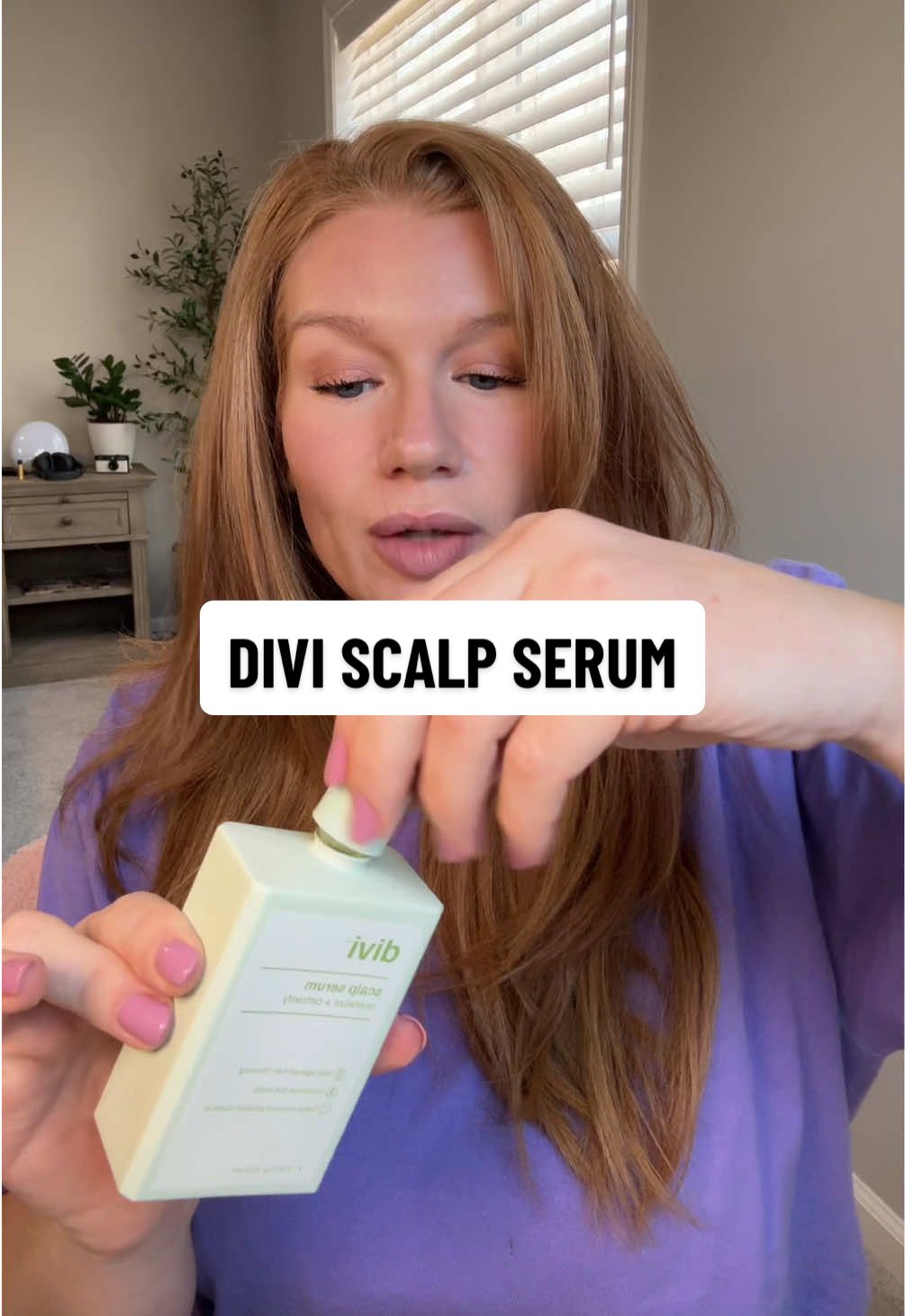
- Hook
- "Please stop using Divi scalp serum wrong." A woman with long red hair, wearing a purple shirt, is shown from the chest up. She holds a dropper bottle above her head, as if applying product to her scalp.
- CTA / offer
- Lowest price on TikTok Shop for spring sale, plus extra coupons from TikTok Shop.
- Audience
- Individuals concerned about scalp health, hair greasiness, or frequent hair washing, indicated by the speaker directly addressing these concerns and demonstrating product use.
Why it works. Targets people who already own or are eyeing the serum with a correction angle, turning a how-to into a reason to keep watching.
Problem-agitation hook: "Please stop using Divi scalp serum wrong. If I see one more person asking how long they're supposed to leave this scalp serum on their head before they rinse it out, I'm gonna lose my mind." (0:00-0:05) Open with stop using your product wrong when you have an application step buyers commonly skip or rush.
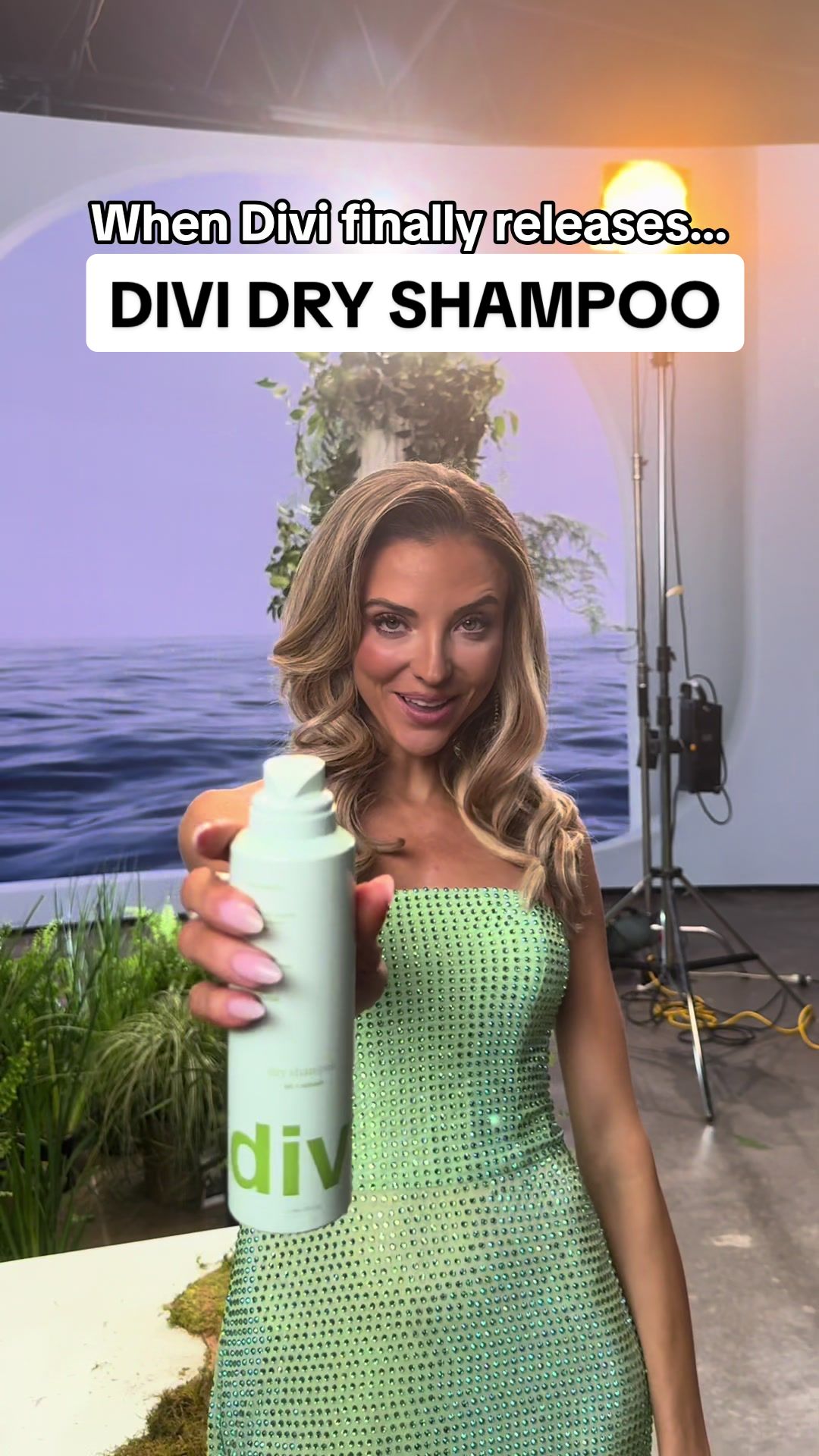
- Hook
- 0:00-0:03: "When Divi finally releases..." is displayed as text overlay. A woman with long, wavy blonde hair, wearing a light green strapless dress with small, shiny embellishments, smiles and looks up. She is in what appears to be a studio setting with a backdrop depicting an ocean scene and green plants in the foreground. A bright light is visible in the background.
- Audience
- Individuals interested in beauty products, specifically hair care, who are familiar with the brand 'Divi' or are looking for new dry shampoo options. The mention of 'Beyoncé' implies a desire for high-quality, impactful products.
Why it works. Uses an unfinished when-it-finally-releases line to frame a new product as a long-awaited drop rather than a routine post.
Curiosity-driven text overlay at 0:00: "When Divi finally releases..." Tease a launch with an incomplete when my brand finally releases line and reveal the product a beat later.
- Reach
- 103 upvotes · 122 comments · r/Wordpress
A community is already discussing this in r/Wordpress. Show up there authentically and answer the thread before a competitor does.
Who amplifies them
Dani Austin Ramirez (founder, CEO) is the brand's highest-reach single amplification asset, operating both the brand-adjacent @official.divi TikTok account and her personal @daniaustin Instagram account (2.3M+ followers). Her personal account is used for product launches and Club Divi early-access moments, distinct from the brand account in tone and trust level.
TikTok Shop creators form the distributed organic-to-commerce layer. Named creators in this evidence window: Chelsea, Darrian, KAYLA ANNE (@kaylaannedaily), lex, BRE THOMPSON, Lorien Wright, Stefeny (SAHM), Brooke (Shop Finds), Mrs. Hanvey, Madison (coastal mama), and greenday. All post independently but tag @DIVI and embed TikTok Shop purchase links.
Whitelisted Meta creators running as paid placements: @Danielle.sahmomma (postpartum angle), @Anajutorquetti (general thinning), @Christina's Detox Diary (inside-out system framing), and Dani Austin's personal ad account. Running UGC under individual handles preserves the peer-recommendation appearance while backing it with paid distribution.
Hairstylist affiliates appear in the evidence via Instagram: @enhanced_bykayleesuchy posts with a personal affiliate URL (diviofficial.com/KAYLEEDIVI), suggesting the Scalp Specialist pro program doubles as a structured affiliate track for licensed professionals.
Critical creator coverage: @organicbunny (1,012 engagements) posted a negative clean-beauty review ("Here is why I would NOT use Divi hair line"), reading ingredient labels and suggesting alternatives. This segment of the creator ecosystem, clean-beauty critics, is a structural risk for a brand with "clean" in its positioning.
The creator footprint not visible in public data: conversion rates per creator, TikTok Shop GMV split, and which creator tier (macro vs. micro) drives the most purchase volume.
07 Organic & video
The organic content engine: the videos, creator posts, and community presence earning attention without paid spend.
Divi's brand YouTube channel posts short (under 30-second) product films. "The Starter Bundle" leads with 1M+ views, with the 30ml Scalp Serum video at 216,000 and the Self Care spot at 181,000. The format that performs is an aesthetic product hero shot with a clear routine or ingredient angle, not talking-head educational content.
Read the full breakdown+4▾
On TikTok, the creator layer does the volume work. Standout posts:
- Chelsea's objection-kill video (7,383 engagements): "Stop making this mistake, Divi Scalp Serum is water-based, so you don't have to worry about it leaving your hair greasy." The format directly pre-empts the #1 abandonment reason for scalp serums: users afraid of residue.
- Darrian's tag-a-friend post (2,549 engagements): "My baldy and I thank you for the recommendation", tagging the friend who referred the product. This format mimics earned word-of-mouth in short video form and functions as a social proof loop visible to both audiences.
- KAYLA ANNE's postpartum results post (49 engagements as a standalone, recurring format with follow-up posts): Before-and-after results after four months of postpartum hair loss, with a TikTok Shop link. This creator returns repeatedly with progress updates, building a documented results narrative that compounds.
The dominant creator format is a personal-results talking-head anchored to a specific life trigger, postpartum, GLP-1 medication side effects, hormonal thinning. Creators share progress over 90-day arcs and embed TikTok Shop links, converting engaged viewers directly to purchase without leaving the app.
08 Affiliate & partners
How the brand turns creators and partners into a tracked, variable-cost acquisition channel, and how the program is structured.
Divi runs a public referral program at diviofficial.com/pages/refer with personalized affiliate URLs (the diviofficial.com/KAYLEEDIVI pattern from @enhanced_bykayleesuchy confirms individual tracking links). The specific platform powering this is not confirmed in public data.
Read the full breakdown+4▾
TikTok Shop functions as a parallel affiliate track: creators earn commissions on embedded shop-link purchases, generating organic-appearing content with economic incentive built in. This is structurally separate from the referral page and requires no direct brand relationship initiation per creator.
The Scalp Specialist pro program is a third distribution lane: hairstylists enroll with a license, receive wholesale pricing and product education, and become in-chair recommenders, a B2B2C affiliate motion without the "affiliate" label, converting professional authority into word-of-mouth of highest trust.
Commission rates, payout terms, and aggregate affiliate revenue contribution are not visible in public data.
09 The playbook
The channels are not separate. They are one system where each stage feeds the next. Here is the read, then the plays to run tomorrow.
The inferred playbook
Divi's acquisition loop runs from a founder's personal audience to a creator UGC army to paid media capture, with physical retail and a professional channel extending the perimeter.
Dani Austin Ramirez documented her hair loss publicly to 2.3M+ Instagram followers before the Scalp Serum existed. The co-founder reported a sell-out in 2 hours at launch. No paid media drove day-one demand, the audience was pre-sold on the problem before the solution was announced. This is the structural advantage that cannot be replicated on day one by a founder without an existing audience; it is named here because every other move in the playbook compounds on top of it.
TikTok Shop creators post trigger-specific results content (postpartum, hormonal, GLP-1) with embedded purchase links. Divi amplifies the best-performing organic UGC by whitelisting it as paid Meta placements, so authentic creator content acquires paid-media reach without losing the peer-recommendation register. The two channels reinforce each other: organic reach seeds paid retargeting pools, and paid reach expands organic creator content to cold audiences.
Dig deeper+3▾
Organic and paid search account for roughly 55% of all traffic combined. Because every top keyword is branded, paid search functions as a conversion-floor guarantee: anyone who hears about Divi through a creator and searches the name gets a paid result that intercepts them before a competitor does. The longest-running Google ads (now past 753 days active) are the proven levers that stay on continuously while new creative cycles through testing.
The Growth Care subscription ("Subscribe and get a FREE Scalp Reset Shampoo for life") converts single-purchase intent into a recurring revenue commitment using a permanent product benefit rather than a discount. Ulta Beauty retail (1,200+ stores) and Ulta at Target serve discovery and repurchase for shoppers who want physical access, reinforcing DTC brand credibility with shelf presence.
No editorial SEO motion is visible targeting non-branded hair-loss queries. The top of the funnel depends entirely on creator awareness and paid media, with no organic content moat against a competitor that invests in ranking for terms like "best scalp serum for postpartum hair loss" or "GLP-1 hair loss treatment." ---
Document the problem in public before the product exists
The proofDani Austin Ramirez shared her hair loss journey across her 2.3M+ Instagram following while the Scalp Serum was still in development. The co-founder reported the product sold out within 2 hours of launch with no paid advertising, the audience had been primed on the problem, not the product, for months before the product was available.
The adaptationIf you are building a product that solves a problem you personally have, start sharing the problem, the frustration, the failed attempts, what you wish existed, before the product is finished. Frame every update as progress toward a solution your audience can see you genuinely need. When the product is ready, the announcement lands with a warm, invested audience rather than cold traffic. Start by identifying the most specific, emotionally honest version of the problem in your ICP's own language ("I'm losing hair four months postpartum and every product I try sits on the surface"), then post that as a real experience, not a content strategy. Caveat: this motion requires a founder who is genuinely the target customer. Fabricated founder stories erode on first inspection. WHY IT WORKS: Pre-sold audiences bypass the trust gap that kills DTC cold-launch economics. The announcement functions as a recommendation from a peer who has documented the journey, not an ad from a brand.
Build dedicated creative for one specific physiological trigger
The proofDivi's current Meta test ads do not address "hair loss" generically. A dedicated creative runs specifically for GLP-1 drug-related hair shedding ("Don't let GLP-1 hair shedding steal your glow"), targeting people experiencing a named medical side effect of GLP-1 medications like semaglutide. This segment is growing, medically recognized, and largely unaddressed by existing beauty advertising.
The adaptationIdentify a specific, named cause of the problem your product solves, one that a person would search by its clinical or colloquial name, not just by symptom. Build one dedicated landing page and one ad creative that speaks only to that trigger, using the trigger's exact language. For a sleep product, it might be shift-worker circadian disruption; for a gut health supplement, antibiotic-related dysbiosis; for an energy product, perimenopausal fatigue. The first step is listing the five most specific sub-causes of the problem your product addresses, picking the one with the least existing marketing coverage, and testing a dedicated creative against your current generic creative. WHY IT WORKS: Named-trigger targeting reduces audience size (lowering CPM) while dramatically increasing ad relevance to that segment. People who have been ignored by generic category marketing respond to copy that names exactly what they are experiencing.
Whitelist your best organic creator content as paid ads
The proofDivi runs paid Meta placements under individual creator handles, @Danielle.sahmomma, @Anajutorquetti, @Christina's Detox Diary, rather than routing all paid spend through the brand account. These posts appear in-feed as peer content while carrying paid distribution. The postpartum talking-head and results-demo formats running under creator handles are in the proven-winner bucket.
The adaptationIdentify two or three existing organic creator posts about your product that already performed above average and feel like genuine peer recommendations. Reach out to those creators with a paid content license agreement: they keep their handle on the placement, you pay for the ad spend and a licensing fee. Prioritize emotional authenticity over raw engagement count when selecting which posts to whitelist. The first step is compiling a short list of organic posts by creators you did not commission, then approaching them about a paid usage agreement. WHY IT WORKS: Whitelisted creator ads outperform brand-account ads in DTC because they appear as peer content in feed. The trust mechanism is borrowed credibility: the algorithm often rewards the higher engagement signals, and the social context of an individual handle removes the instant-ad-recognition that causes feed-scroll.
Build a professional referral track adjacent to your DTC channel
The proofDivi's Scalp Specialist program enrolls licensed hairstylists with wholesale pricing, free shipping above $250, and exclusive product education. The program reportedly counts between 700 and 1,200 enrolled stylists, each becoming an in-chair recommender a client discusses hair concerns. The brand promotes the pro site actively via Instagram. Hairstylist @enhanced_bykayleesuchy demonstrates the downstream affiliate behavior, posting with a personal referral URL (diviofficial.com/KAYLEEDIVI).
The adaptationList the licensed or credentialed professional categories that regularly encounter the problem your product solves: dermatologists and aestheticians for skin products, registered dietitians for supplements, personal trainers for recovery products, therapists for mental health tools. Build a simple professional wholesale program: 30-40% off retail, a license-verification sign-up, and a one-page product education sheet. Create a landing page targeting that professional audience by name ("For Licensed Nutritionists"). The first step is building that landing page and running a small paid search campaign against "[your category] wholesale" or "[professional title] recommended [product type]" queries. WHY IT WORKS: A professional recommendation carries authority no ad can replicate. Professionals who use and recommend a product in their practice also become a recurring wholesale revenue stream, compounding both revenue and word-of-mouth simultaneously.
Use a perpetual product benefit, not a discount, to drive subscription conversion
The proofDivi's longest-running Meta ads promote their Growth Care subscription with the offer "Subscribe and get a FREE Scalp Reset Shampoo for life." The shampoo is a standalone-priced product, but the "for life" framing reframes the subscription as a permanent benefit unlock rather than a recurring billing commitment. The copy runs alongside a subscription-product bundle (serum plus vitamins), converting a single-item intent into a recurring multi-product relationship.
The adaptationIf you sell a consumable product with a natural replenishment cycle, build a subscription tier where the incentive is a perpetual companion benefit, a free product, priority early access, or a recurring add-on, rather than a percentage discount. Identify what exists in your product line or operational capacity that costs you little but carries genuine perceived value to the customer. Center your subscription sign-up creative on that companion benefit rather than on the savings math. The first step is A/B testing a "free [companion item] for life when you subscribe" variant against your current "save X% on every order" subscription CTA. WHY IT WORKS: "Free for life" is a loss-aversion anchor: subscribers stay to preserve the benefit, not merely to save money. This reduces churn driven by price sensitivity, which is the primary subscription-cancellation reason in DTC consumables.
You just read how Divi does it. Tomorrow it is someone else.
Every morning we take one company that is actually growing and break down where its customers come from: the ads still running after a year, the channel doing the real work, and the play you can run this week.
Systemaic · directional intelligence. Traffic, spend, and reach figures are SimilarWeb-style estimates and qualitative reads of public data, not audited numbers. Built on real public receipts.
// teardowns with a similar GTM motion
sources & receipts (8)
Live ad libraries: meta ad library · google ad library
Launch archives: Hacker News: Biden wins White House, vowing new direction for divided U.S · Hacker News: We Will Not Be Divided · Hacker News: Facebook executives shut down efforts to make the site less · Hacker News: Google Cuts Jobs in Engineering and Other Divisions · Hacker News: Fun with math: Dividing one by 998001 yields a surprising re · Hacker News: There Is No Antimemetics Division (2018)
Traffic, spend, and revenue figures are estimates as noted in the report; the links above are the primary public artifacts.