- 01Trend-jack an existing recipe search
- 02Test a joke against your explainer content
- 03Recruit named ambassadors, not affiliates
- 04Use a retail or platform exclusive as your press hook
01 Snapshot
The one-glance read on who they are and how they grow. Each point is verifiable from the receipts above.
Regenerative Organic Certified single-origin pantry staples (quinoa, beans, oils, grains, salts), founded in January 2020 by co-founders Sarela Herrada and Matt Cohen, and now sold through both direct e-commerce and major national retail.
Organic-led (recipe-content SEO plus creator and ambassador seeding) layered on top of a retailer-driven distribution engine.
15 products in roughly 3,000 retail doors and 492% year-over-year growth at Whole Foods Market specifically, both as of a September 2024 company release; ~13,100 estimated monthly site visits, up 34.1% over the last 3 months as of 2026-07-18; an estimated $5-15M in 2026 revenue (unaudited estimate, up from a mid-2025 data-aggregator estimate near $3.8M annually).
SIMPLi's core mechanic is a retailer-exclusivity wedge: each new product line launches inside a time-boxed Whole Foods exclusive window before broadening to other grocers and, since 2024, a Dot Foods broadline partnership that extends the same SKUs into foodservice accounts like sweetgreen and Just Salad.
02 How it unfolded
The order the channels came online. Sequence is strategy: what they did first, and what they layered on once demand existed.
03 Traffic & channel mix
Estimated demand, the channel split behind it, and the keywords and referrers doing the work. Directional modeling, not audited analytics.
Top search keywords
| Keyword | Volume | Weight | CPC |
|---|---|---|---|
| simpli | 8.3k | $2.79 | |
| organic lupin beans for sale | 600 | - | |
| violet witchel dense bean salad | 420 | - | |
| simpli beans | 220 | $1.86 | |
| arroz mamposteao | 620 | - |
Closest competitors by audience
SIMPLi draws an estimated ~13,100 monthly visits across all channels, up 34.1% over the last 3 months as of 2026-07-18. The available data does not break that total down by channel type, so the read here leans on search demand and competitive positioning instead. Branded search for "simpli" pulls 8,320 monthly searches, a large share of their own ~13,100 monthly visits, which given the retail footprint (3,000 doors as of September 2024) more plausibly reflects shoppers looking the brand up after a shelf encounter than pure digital discovery. Recipe-intent terms tell a second story: "arroz mamposteao" (620 searches/mo) and "violet witchel dense bean salad" (420 searches/mo) are demand for specific viral dishes, not the SIMPLi brand, meaning the site is also capturing traffic by writing into existing recipe trends. Of the listed competitors, highkey.com (a low-carb snack and pasta CPG brand) and nelstrop.co.uk (a UK grain and pulses retailer) are genuine category-adjacent matches; the rest, bakery and confectionery sites in Singapore, Japan, and Nigeria, read as algorithmic noise from a small tracked traffic base rather than real competitive signal.
04 Organic content
The specific pages earning their organic search traffic, and the pattern behind why they rank. Adapt the format, not the topic.
Their top organic pages are recipe posts built around dishes that were already trending in search, not brand-originated content: a Puerto Rican rice dish and a viral "dense bean salad" format each anchor a post, alongside a bean-focused confit recipe, the homepage, and a beans and legumes collection page. The pattern is a recipe-hijack approach: write into a dish that already has organic search demand, cast a SIMPLi product (beans, lupini, quinoa) as the hero ingredient, and let the collection page catch the resulting purchase intent. It likely ranks because the content answers a specific, already-searched recipe question rather than competing on a generic "organic pantry staples" keyword, and it earns roughly 1,600 monthly organic visits in aggregate across the top pages.
Top pages by organic traffic
05 Channel map
Not traffic share. How much weight the growth system actually puts on each channel, with a one-line read on the role it plays.
What drove growth
06 Who they’re hiring
Open roles read like a roadmap: the functions they’re staffing show where the company is investing next and what stage it’s at.
4 open roles
07 The creative doing the work
Each exhibit shows the actual asset, an X-ray of why it works, a status, and a play you can adapt. This is the heart of the teardown.
The evidence includes eight distinct pieces of ad creative running across Instagram and TikTok; no aggregate active-ad-count or run-time data was captured, so the true current library size and which creatives are proven winners versus fresh tests cannot be established here (check the live library links above for the current count). What the eight do show is a consistent creative philosophy: every one leans on organic-style UGC rather than produced direct-response ads, and none uses a discount code or urgency copy.
Hook (suitcase/travel montage, Instagram): "OUR JOB? TRAVELING THE WORLD TO FIND YOU THE BEST FLAVORS," over a shot of an open suitcase. Why it works: It reframes a commodity pantry category (beans, oils) as the output of an adventurous sourcing process, creating curiosity about where the product actually comes from before ever naming an ingredient. Run this play: Open a product ad with a process tease (what happens behind the scenes to make this) rather than a beauty shot of the finished product.
Hook (talking-head testimonial, Instagram): "HI EVERYONE. I'M SOPHIA NGUYEN ENG THE COOKBOOK AUTHOR OF THE NOURISHING ASIAN KITCHEN," introducing a SIMPLi black bean and coconut milk dessert. Why it works: Borrowing a named cookbook author's own credibility does the persuasion work a brand voiceover can't, turning the ad into implied third-party endorsement rather than a sales pitch. Run this play: Expanded as Play 3 below.
Hook (product demo, TikTok): A hand pours a creamy sauce over roasted vegetables and sausage while a trending audio clip plays underneath. Why it works: The pour is timed to land with the audio's build, so the product itself becomes the payoff of a sound viewers already associate with a satisfying moment, rather than a separate ad concept bolted onto trending audio. Run this play: Match the visual beat of a demo (the pour, the reveal) to the drop or hook of the trending audio, don't just play music under existing footage.
Also analyzed: [text-overlay montage] · "BRB WE'RE POURIN' & ENJOYIN' OUR OLIVE OILS OVER EVERYTHING" · [product pour, Instagram]; [product demo] · pinto bean and chickpea paper-bag reveals · [ingredient-sourcing angle, Instagram/TikTok]; [b-roll voiceover] · Peru sourcing van footage for the Culinary Diplomacy Project · [documentary angle, Instagram], plus a similar olive-oil tin reveal on TikTok.
Across all eight, the throughline is provenance and credibility over discounting: no creative in the sample uses a price, code, or countdown to close the sale, betting instead that "where this comes from" is the more persuasive story for this category.
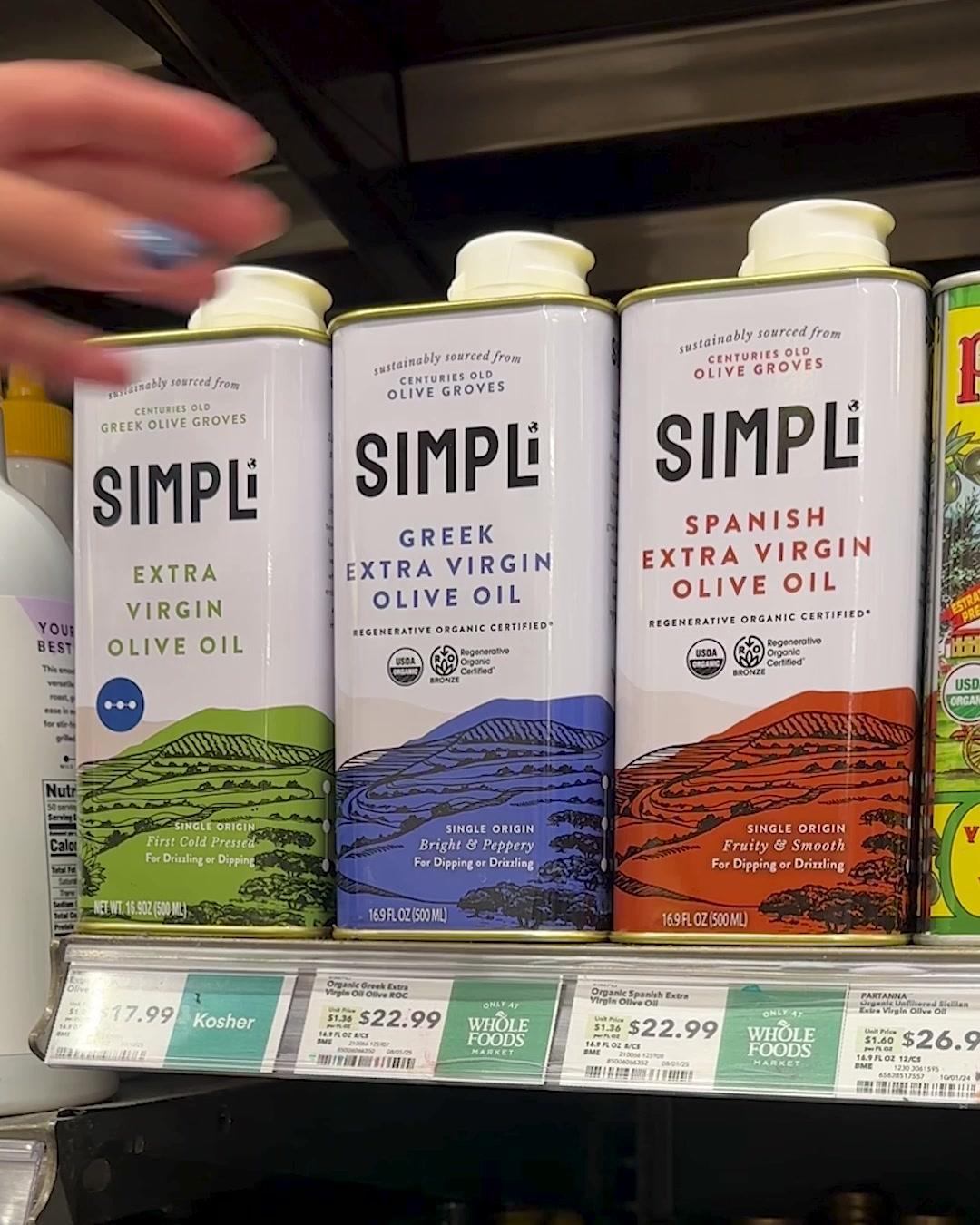
- Hook
- A hand with blue nail polish reaches into the frame from the top left and picks up a white rectangular tin of 'SIMPLi EXTRA VIRGIN OLIVE OIL' with a blue label, then places it back down.
- Audience
- Consumers who shop at Whole Foods Market and are interested in organic, single-origin, and sustainably sourced olive oils, as indicated by the product labels and visible store signage.
Why it works. A product display and interaction creative to highlight product variety and premium attributes, aiming to drive in-store consideration and purchase.
Visual demonstration of product selection (0:00-0:06): A hand picks up and places down different varieties of SIMPLi olive oil tins. Film a hand interacting with your product line, showcasing different variations or features. Use natural sounds of the product being handled to enhance realism.
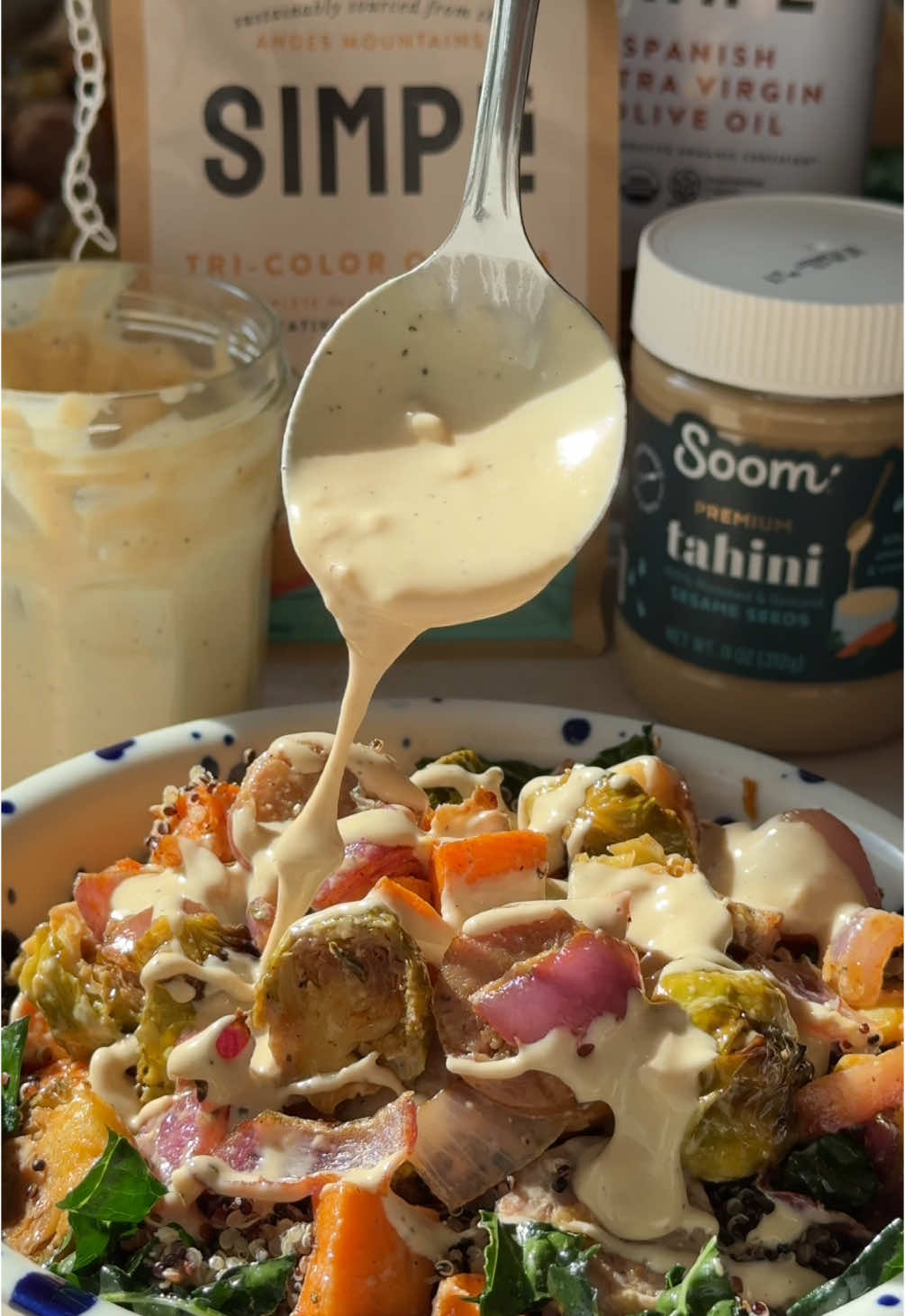
- Hook
- A hand pours a light brown, creamy sauce from a glass jar onto a baking sheet filled with roasted vegetables (brussels sprouts, sweet potatoes, red onions) and sliced sausages. Audio: "I'm fallin', fallin' for you."
- Audience
- Individuals interested in healthy, home-cooked meals, likely with an appreciation for high-quality, sustainably sourced ingredients, indicated by the prominent display of 'SIMPLi' brand products and 'regenerative organic certified' labels.
Why it works. Product-in-use demonstration showcasing a healthy, easy-to-make meal using Simpli ingredients, aiming to inspire purchase and highlight product versatility.
Visual reveal of the final dish and plating at the beginning (0:00-0:08) before showing the preparation steps. Start your recipe or DIY videos with a quick shot of the finished product to immediately grab attention and set expectations for a desirable outcome.
b-roll voiceover
- Hook
- A white van drives on a dirt road through a valley with mountains in the background. On-screen text reads "SIMPLi" and "THE CULINARY DIPLOMACY PROJECT" with "PERU" in large letters below.
- Audience
- People interested in culinary arts, cultural exchange, sustainable food practices, and travel. The presence of well-known chefs and food personalities suggests an appeal to food enthusiasts and professionals.
Why it works. Brand storytelling and partnership promotion to build brand affinity and showcase commitment to ethical sourcing and cultural exchange.
Highlighting a collaborative project with a non-profit organization, "The Culinary Diplomacy Project," and featuring multiple chefs and personalities (0:06-0:15, 0:28-1:27). Partner with a relevant non-profit or industry leader and prominently feature the collaboration in your creative, including testimonials or appearances from key figures.
Show 1 more exhibit
- Reach
- 184 upvotes · 51 comments · r/philadelphia
A community is already discussing this in r/philadelphia. Show up there authentically and answer the thread before a competitor does.
Who amplifies them
SIMPLi's brand account (@eatsimpli) drives most of the volume, with founders Sarela Herrada and Matt Cohen appearing as subjects within brand content (an Instagram post on what "co-founders Matt & Sarela are ordering") rather than posting from personal channels in this evidence. Beyond the brand account, amplification runs through a small set of named creators: Julia Sherman (@saladforpresident), explicitly credited as a "SIMPLi Brand Ambassador," cooked a kidney bean recipe; cookbook author Sophia Eng (@sprinklewithsoil) got a dedicated black bean dessert collaboration; devkennedymusic posted the sheet-pan tahini and quinoa recipe (3,953 engagements) with videography credited to @theonlypodge; and a creator identified as Carol posted from within the "beantok" niche (81 engagements). This is a small, hand-picked roster rather than a broad affiliate-seller army, consistent with a wholesale-first CPG stage.
08 Organic & video
The organic content engine: the videos, creator posts, and community presence earning attention without paid spend.
Posting cadence centers on Instagram (near-weekly farm trips, retailer wins, and ambassador recipes) with lighter TikTok and YouTube activity layered on top. The clearest finding is a format gap: their single humor-driven TikTok one-liner, "I like long walks down the grocery aisle" (45,671 engagements), outperformed their standard farm-story and demo content by roughly two orders of magnitude, most of which sits in the 30-130 engagement range. A recipe-integration post from creator devkennedymusic, pairing a Maple Dijon tahini dressing with SIMPLi quinoa in a sheet-pan dinner, pulled 3,953 engagements, and a "beantok" post from a creator identified as Carol drew 81 engagements while calling out SIMPLi as women-owned and highlighting fiber content. Between the two extremes, the pattern is that relatable, low-production humor spikes far harder than their educational, farm-to-table demo format, even though the latter is what they post most often.
09 Affiliate & partners
How the brand turns creators and partners into a tracked, variable-cost acquisition channel, and how the program is structured.
No affiliate program was detected in the site evidence (no referral link, no TikTok Shop, no PartnerStack or Rewardful-style program). At this stage, growth runs through named ambassador relationships (Julia Sherman's explicit "Brand Ambassador" title) and formal retail and foodservice partnerships (Whole Foods, Dot Foods) rather than a self-serve commission program, which fits a company still building its wholesale distribution base before investing in a DTC affiliate layer.
10 The playbook
The channels are not separate. They are one system where each stage feeds the next. Here is the read, then the plays to run tomorrow.
The inferred playbook
SIMPLi's growth engine runs on retailer exclusivity windows and recipe-content SEO rather than paid acquisition, with a thin but real creator layer that occasionally spikes.
Major launches, including the April 2023 relaunch of 8 products and the February 2026 expansion of 10 new items led by the first Regenerative Organic Certified avocado oil sold in the US, open with a 90-plus-day Whole Foods exclusive before wider retail, using the country's largest natural grocer as a proof point before broadening to chains like Sprouts and Erewhon.
The Dot Foods partnership, announced alongside the 2024 Whole Foods oils and salt launch, extends the same SKUs into restaurant accounts (sweetgreen, Chopt, Just Salad) that retail distribution alone can't reach, compounding visibility across two channel types at once.
Dig deeper+3▾
Blog content keyed to already-trending dish searches, plus a documentary-style YouTube series that reinforces the sourcing story rather than driving reach, does the digital-discovery work that the retail machine doesn't.
Ads across Instagram and TikTok run almost entirely on repurposed organic-style UGC rather than tested direct-response creative, and the named-creator roster is small relative to the retail and foodservice engine, meaning consumer digital demand generation still trails the wholesale distribution motion. Four open roles (three in retail and foodservice sales leadership, one in sourcing) at a company reported around 34-38 employees point the same direction: continued investment in the wholesale side, not a digital-marketing buildout.
DTC conversion rate and average order value on eatsimpli.com, the wholesale-versus-direct revenue split, per-SKU sell-through velocity behind the 492% Whole Foods growth figure, and current active paid-ad spend or run-time longevity for the analyzed creative.
Trend-jack an existing recipe search
The proofSIMPLi's top organic pages target dishes that were already trending in search (a viral bean salad format, a specific regional rice dish) rather than starting from a generic brand keyword, pulling in roughly 1,600 monthly organic visits across the top pages.
The adaptationFind a dish or use-case search that is already climbing on TikTok or Google Trends and sits adjacent to your product category, then publish a recipe or how-to post within days that uses your product as the hero ingredient, titled with the exact phrase people are searching (dish name plus descriptor, the way "dense bean salad" and "arroz mamposteao" work here) rather than your own brand terms.
Cost: $0 · Time to signal: weeks · Works pre-PMF: yes.
Test a joke against your explainer content
The proofA single humor-driven TikTok one-liner from SIMPLi outperformed their standard farm-story and product-demo posts by roughly two orders of magnitude in engagement.
The adaptationAlongside your normal educational or behind-the-scenes content, post one short, culturally-fluent joke tied to a real moment of using your product (a shopping habit, a routine annoyance it solves), publish both in the same week, and shift future posting toward whichever format actually spikes rather than the one that explains the most.
Cost: $0 · Time to signal: days · Works pre-PMF: yes.
Recruit named ambassadors, not affiliates
The proofSIMPLi gives niche recipe creators like Julia Sherman an explicit "Brand Ambassador" title and co-creates recipe content with them, rather than running a commission-based affiliate program.
The adaptationSend product directly to three to five creators already publishing in your category (a niche recipe blog, a small community-focused account), offer no commission, and instead give them an explicit named title they can badge in their own content in exchange for one co-created piece, the same trade SIMPLi makes with its ambassadors.
Cost: under $500 · Time to signal: weeks · Works pre-PMF: yes.
Use a retail or platform exclusive as your press hook
The proofSIMPLi's product launches open with a time-boxed exclusive at one flagship retailer (Whole Foods) before widening distribution, turning the exclusivity itself into a story worth covering.
The adaptationBefore a broad launch, offer one influential retailer, marketplace, or newsletter a 60-to-90-day exclusive window on a new product or variant, then pitch press and your own list on the exclusivity angle itself ("only available here until [date]") rather than the product alone.
Cost: $0 · Time to signal: weeks to months · Works pre-PMF: conditional, it requires at least one retailer or platform relationship willing to grant the window.
Layer a broadline distributor onto proven retail traction
The proofSIMPLi's Dot Foods partnership extended its already-proven retail SKUs into foodservice accounts like Just Salad and sweetgreen, adding a second channel without building a foodservice sales team from scratch.
The adaptationOnce a product has demonstrated real sell-through in one retail or online channel, take that sell-through data to a category-relevant broadline distributor (the foodservice-equivalent middleman for your category) instead of hiring a direct sales team first, using the existing proof as the pitch.
Cost: under $500 to start the outreach, scaling to dedicated budget or hire once a distributor relationship is live · Time to signal: months · Works pre-PMF: no, this play depends on sell-through data that only exists after initial retail or DTC traction. Not transferable at an earlier stage: the Whole Foods and Dot Foods relationships themselves, and the scale of retail buildout behind the 3,000-door footprint, assume existing retail credibility and a sales team a pre-revenue founder won't have; the underlying mechanics (exclusivity-as-story, trend-jacked content, ambassador trades) still transfer, the specific partners do not.
You just read how SIMPLi does it. Tomorrow it is someone else.
Every morning we take one company that is actually growing and break down where its customers come from: the ads still running after a year, the channel doing the real work, and the play you can run this week.
Systemaic · directional intelligence. Traffic, spend, and reach figures are SimilarWeb-style estimates and qualitative reads of public data, not audited numbers. Built on real public receipts.
// teardowns with a similar GTM motion
sources & receipts (20)
Researched facts: Chipotle's Cultivate Next venture fund made an investment in SIMPLi as part of a six-compa · SIMPLi partners directly with regenerative organic farmers across multiple countries for i · SIMPLi was founded in 2020 by husband-and-wife co-founders Sarela Herrada and Matt Cohen: · Co-founder Sarela Herrada's regenerative-agriculture perspective traces to her family's or · SIMPLi grew nearly 500% (492%) year-over-year at Whole Foods Market across all products: 4 · SIMPLi launched 10 new Regenerative Organic Certified pantry staples, its largest product · SIMPLi's 2021 seed round coincided with a Whole Foods Market launch in 49 stores across se · SIMPLi relocated its headquarters from Baltimore to Philadelphia: Move completed by early · SIMPLi packages its pantry staples in compostable, hand-sewn bags and recyclable tins as a · eatsimpli.com offers free shipping on orders of $75 or more: Free shipping threshold: $75 · SIMPLi is a woman-owned, minority-owned company focused on transforming the food system to
Milestone sources: 2021-12: SIMPLi becomes the first South American ingredients brand to earn Regenerative Or · 2022-11: SIMPLi co-founder Sarela Herrada joins the board of directors of the Regenerative · 2023-04: SIMPLi expands nationally at Whole Foods Market, launching eight Regenerative Org · 2024-06: SIMPLi co-founder Sarela Herrada is named an EY Entrepreneur Of The Year 2024 Mid · 2024-09: SIMPLi reports nearly 500% (492%) year-over-year growth at Whole Foods Market and
Community threads: Brand site customer reviews (eatsimpli.com): Customers repeatedly flag SIMPLi's lupini bea · Brand site customer reviews (eatsimpli.com): On amaranth, buyers accept a premium price sp · Thingtesting (product discovery/review community): An independent shopping-community revie · Bubble Goods (curated grocery marketplace, customer review): A subscription snack-box revi
Traffic, spend, and revenue figures are estimates as noted in the report; the links above are the primary public artifacts.