- 01Seed creators with zero strings attached
- 02Run one branded search ad and never touch it
- 03Turn one static image template into your standing ad format
- 04Film every new distribution win as a discovery moment
01 Snapshot
The one-glance read on who they are and how they grow. Each point is verifiable from the receipts above.
Single-origin extra virgin olive oil in signature squeeze bottles (Sizzle, Drizzle, Frizzle, $14-20 each), now extended into mayo/aioli and potato chips.
Creator-led at launch, now a brand-run meme voice on social layered on top of an always-on paid-search net.
As of 2026-07-05: $140M+ 2025 revenue (up from $48M gross sales at the end of 2024), 208,502 Instagram followers, and a Google search ad still running after 1,257 days.
As of 2026-07-05, Google's proven-winner video search ad has been running continuously since 2024-04-15 (about 785 days), while Meta pushes creative for the new mayo line and a roughly 20%-off site-wide sale.
Graza's highest-engagement organic content is pop-culture bait posted from the brand account itself, not outside creator UGC, meaning the loop now compounds on Graza's own comedic timing rather than the launch-era creator seeding that started it.
02 How it unfolded
The order the channels came online. Sequence is strategy: what they did first, and what they layered on once demand existed.
03 Traffic & channel mix
Estimated demand, the channel split behind it, and the keywords and referrers doing the work. Directional modeling, not audited analytics.
Traffic sources
Top search keywords
| Keyword | Volume | Weight | CPC |
|---|---|---|---|
| graza | 28k | $0.76 | |
| graza olive oil | 16k | $0.57 | |
| kareem rahma | 48k | - | |
| grazia olive oil | 580 | $0.57 | |
| grazza | 930 | $1.89 |
Top referring sites
Closest competitors by audience
Graza pulls an estimated 246,631 monthly visits, down 30.4% over the last 3 months. The evidence doesn't say what drove the pullback, whether it's a comp against a stronger prior quarter, retail sales absorbing demand that used to come through the DTC site, or reduced paid-search efficiency, so treat the number as a real signal worth watching rather than an explained trend.
Three channels dominate: Search Organic at 38.5%, Direct at 18%, and Search Paid at 15.5%, together over 70% of all visits, meaning the site converts people who already know the brand name rather than winning new shoppers through display or social. Social Paid adds another 8.9%, tying directly into the Meta ad library below. The rest, social organic, referrals, email, display, and affiliate, together total under 20%.
Branded demand dominates what they rank and bid for: "graza" pulls 27,890 searches/month and "graza olive oil" pulls 16,020/month, both terms this domain already ranks #1 for organically. Among referring sites, navbar.gallery is a web-design showcase, meaning designers study Graza's site, not shoppers buying from it; 1800dtc.com and itsfundoingmarketing.com are DTC-marketing commentary sites, meaning operators study the Graza case study rather than converting off it. On competitors, brightland.co and kosterina.com are direct rivals in the same premium-EVOO-in-a-cool-bottle category, while heatonist.com is an adjacent premium-condiment DTC brand competing for the same pantry-gift shelf rather than a head-to-head substitute.
04 Organic content
The specific pages earning their organic search traffic, and the pattern behind why they rank. Adapt the format, not the topic.
Graza's top organic pages are almost entirely commercial, bottom-funnel pages, not blog or comparison content: the homepage alone pulls an estimated 16,912 organic visits/month (59.7% of the site's organic total per this per-page estimate), followed by the combo-pack product page, the collections page, and the standalone Sizzle and Drizzle product pages. Every top ranking keyword is a branded or near-branded term ("graza olive oil," "graza," "graza sizzle olive oil," all ranking #1). This is a brand-equity SEO pattern, not a content-marketing one: the pages rank because years of press, viral posts, and retail coverage built enough backlinks and search demand around the Graza name itself, so the product and collection pages capture that demand directly without needing how-to or comparison content to do the work.
Top pages by organic traffic
05 Channel map
Not traffic share. How much weight the growth system actually puts on each channel, with a one-line read on the role it plays.
What drove growth
06 The creative doing the work
Each exhibit shows the actual asset, an X-ray of why it works, a status, and a play you can adapt. This is the heart of the teardown.
Graza runs a large, multi-platform ad footprint: a Google library sized at roughly 200 ads (directional, from a capped sample), with 40 still active as of 2026-07-05; a Meta library sized at roughly 255 ads (directional, from an 80-ad sample) as of the same date; and 2 LinkedIn ads. The real proven winner is on Google: a text ad first shown 2023-01-24 has been active continuously for 1,257 days, by far the longest-running creative in the dataset. Every visible Meta creative, by contrast, is under 48 days old (the oldest dates to 2026-05-18), so Meta doesn't have a longevity-proven winner yet, it's a current push built around the Costco two-pack and the new potato-chip line.
-
Hook: "Sizzle and Drizzle with Graza - The FRESHEST Olive Oil," a static Google search headline. Why it works: Freshness is Graza's core differentiator (a harvest date on every bottle), so the ad answers the exact question a comparison-shopping olive-oil buyer is already searching, at near-zero production cost since it never needs new creative. Run this play: expanded as Play 2 below.
-
Hook: "NOBODY ASKED FOR OLIVE OIL IN A CAN," over a shot of someone pouring oil from a can into a squeeze bottle through a funnel. Why it works: It borrows the internet's own "nobody asked for this" meme format to pre-empt skepticism about an unusual SKU (a canned refill), turning an objection into the hook itself. Run this play: Reader can lead with the exact objection a new product invites and answer it inside the headline rather than hiding from it. Cost and effort are minimal: one bold-claim static image.
-
Hook: "My new favorite potato chips," a static text-overlay image from a chip-launch montage. Why it works: The simple text-overlay claim implies confidence in the new product without a voiceover or actor, and Graza has reused the same static image across at least two variants, a cheap, repeatable production template rather than a one-off shoot. Run this play: expanded as Play 3 below.
- Running
- 45 days (longevity = it's converting)
- Hook
- "Best costco find 💚 @GETGRAZA" text overlay as a hand reaches into a cardboard display box of olive oil.
- Audience
- Costco shoppers and home cooks looking for value on premium brands.
Why it works. Mimics an organic "look what I found" post, tag included, so it reads as a shopper's discovery rather than brand-placed content.
Retail-specific headline overlay at 0:00: "Best costco find 💚" Tag your own handle inside a "best [retailer] find" caption so the post reads as user-found rather than brand-posted.
- Running
- 37 days (longevity = it's converting)
- Hook
- "Your new favorite potato chips" + close-up of a massive volume of yellow potato chips falling from a vibrating metal tray into a stainless steel funnel.
- Audience
- Snack enthusiasts and existing brand fans looking for a premium version of a staple food.
Why it works. Pairs a confident superlative claim with satisfying high-volume factory footage, using production scale itself as the evidence.
High-volume sensory 'food porn' (0:00-0:09) When teasing a new product, pair a confident one-line claim with slow-motion footage of it in large-scale production.
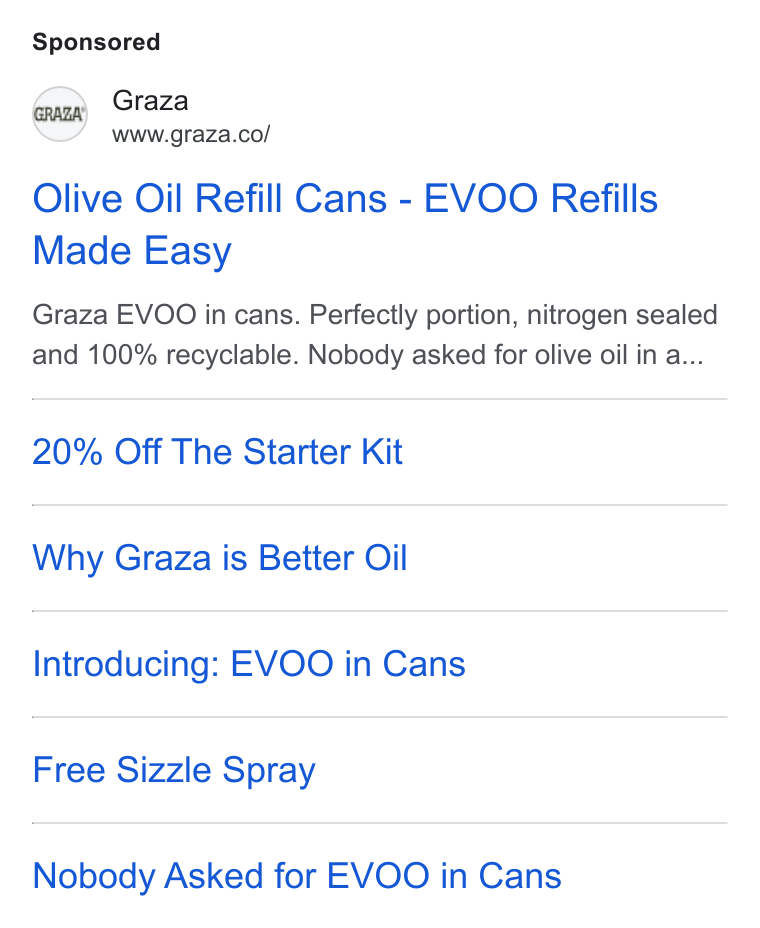
- Running
- 785 days (longevity = it's converting)
- Hook
- Sponsored - Graza logo and text "Graza www.graza.co/" - "Olive Oil Refill Cans - EVOO Refills Made Easy"
- CTA / offer
- 20% Off The Starter Kit
- Audience
- Individuals interested in cooking, olive oil, sustainability, and potentially new product formats, indicated by the focus on 'EVOO Refills Made Easy' and '100% recyclable'.
Why it works. Targets refill and replenishment search intent, turning a mundane restocking task into a named product feature instead of a generic listing.
Headline stating a unique product proposition: "Olive Oil Refill Cans - EVOO Refills Made Easy" If you sell a subscription or refill component, give it its own headline calling out ease of use, not just the container.
Show 7 more exhibits
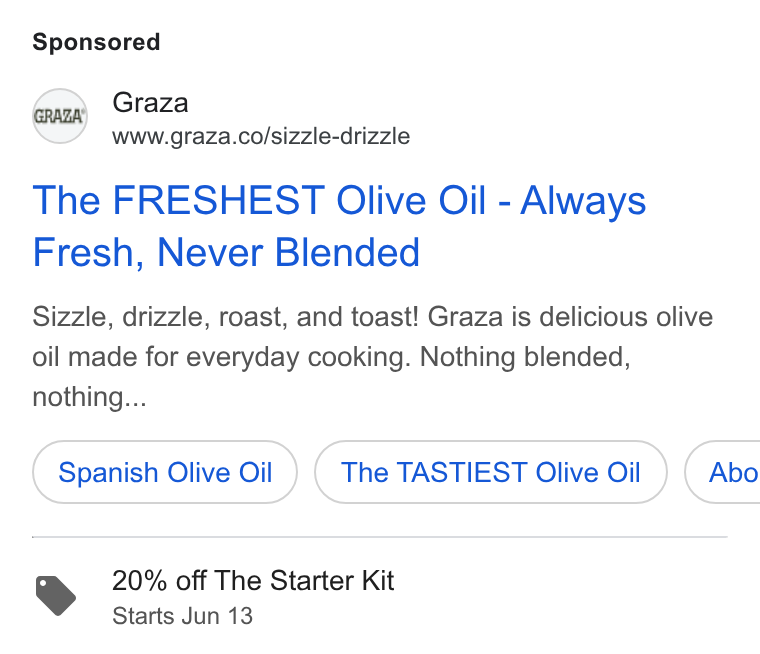
- Running
- 517 days (longevity = it's converting)
- Hook
- Sponsored. Graza. www.graza.co/sizzle-drizzle. "The FRESHEST Olive Oil - Always Fresh, Never Blended"
- CTA / offer
- 20% off The Starter Kit
- Audience
- Home cooks and food enthusiasts looking for high-quality, unblended olive oil, indicated by phrases like "everyday cooking" and claims of "FRESHEST" and "TASTIEST".
Why it works. Backs a quality superlative with a specific process claim, addressing buyers who assume commodity olive oil is cut with cheaper oils.
Headline with a bold, unique selling proposition: "The FRESHEST Olive Oil - Always Fresh, Never Blended". Back up any superlative claim with the one specific practice that makes it true, like 'never blended,' not just the adjective alone.
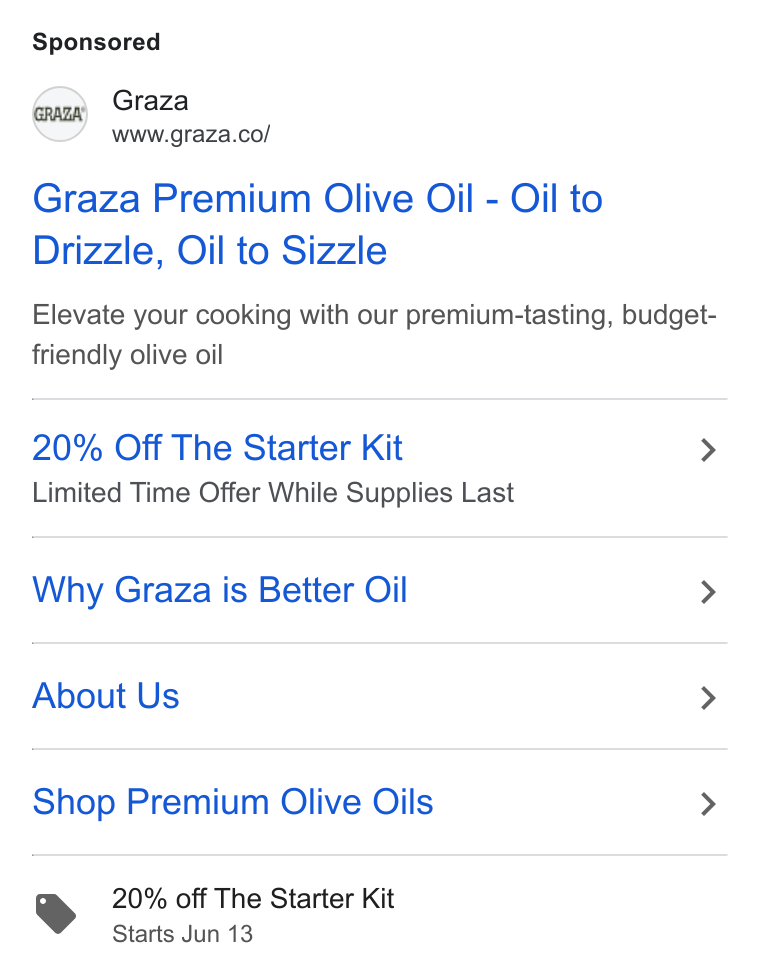
- Running
- 501 days (longevity = it's converting)
- Hook
- "Sponsored" text at the top, followed by the Graza logo and company name "Graza" with its website "www.graza.co/". Below this is the headline "Graza Premium Olive Oil - Oil to Drizzle, Oil to Sizzle".
- CTA / offer
- 20% Off The Starter Kit
- Audience
- Home cooks and food enthusiasts looking for premium, budget-friendly olive oil, indicated by phrases like "Elevate your cooking" and "premium-tasting, budget-friendly olive oil".
Why it works. Compresses the brand's core product education, two oils for two jobs, into a memorable rhyme that doubles as the value proposition.
Headline emphasizing product versatility and benefit: "Graza Premium Olive Oil - Oil to Drizzle, Oil to Sizzle" If your product solves two distinct use cases, name both in a short rhyming or parallel phrase instead of listing features.
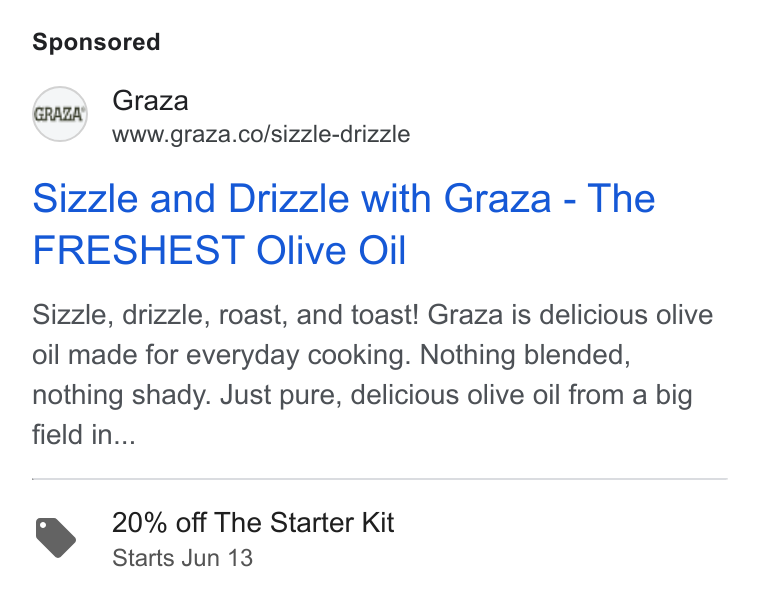
- Running
- 400 days (longevity = it's converting)
- Hook
- Sponsored GRAZA Graza www.graza.co/sizzle-drizzle Sizzle and Drizzle with Graza - The FRESHEST Olive Oil
- CTA / offer
- 20% off The Starter Kit
- Audience
- Home cooks and food enthusiasts looking for high-quality, pure olive oil, signaled by phrases like 'everyday cooking' and 'pure, delicious olive oil'.
Why it works. Combines the brand's two product-line names as verbs with a freshness claim, likely a variant testing whether stacking both messages beats either alone.
Headline with a bold claim: "Sizzle and Drizzle with Graza - The FRESHEST Olive Oil" A/B test combining your product name used as a verb with your strongest quality claim in one headline instead of running them separately.
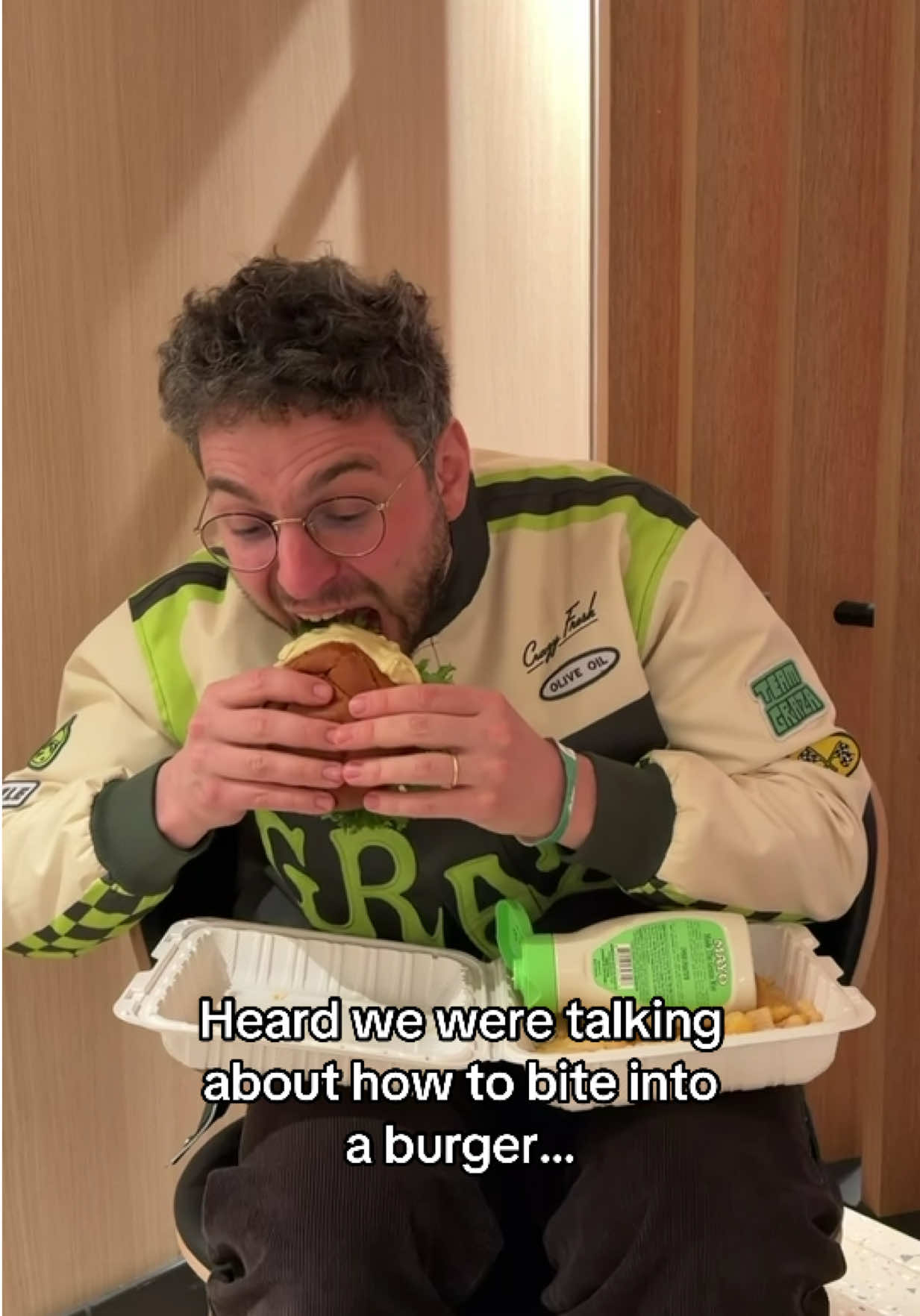
- Hook
- "Heard we were talking about how to bite into a burger..." overlay text, a man in glasses and a racing jacket squeezes a white sauce bottle onto a burger bun with lettuce and a patty.
- Audience
- Individuals who enjoy humorous content, food-related discussions, or relatable everyday situations (like eating a messy burger). The casual setting and UGC style suggest a younger, social media-savvy audience.
Why it works. Frames the product demo as overheard gossip mid-conversation so it plays as entertainment before it registers as an ad.
Exaggerated action with on-screen text setup (0:00-0:06): The man applies an excessive amount of sauce to the burger while the text 'Heard we were talking about how to bite into a burger...' appears. Open your UGC clip referencing a vague ongoing conversation before showing the product itself.
- Reach
- 3 upvotes · 2 comments · r/CPGIndustry
A community is already discussing this in r/CPGIndustry. Show up there authentically and answer the thread before a competitor does.
Who amplifies them
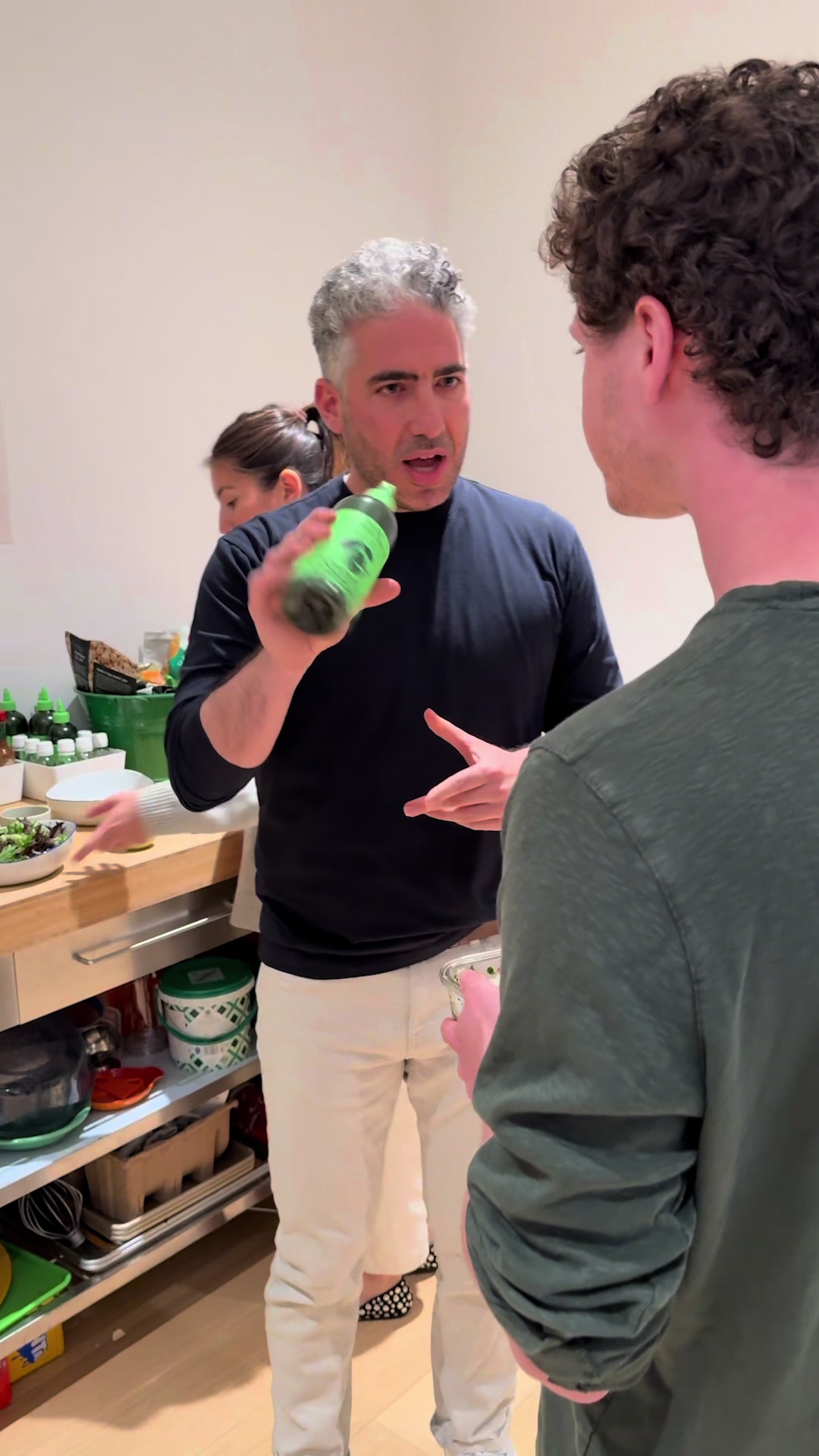
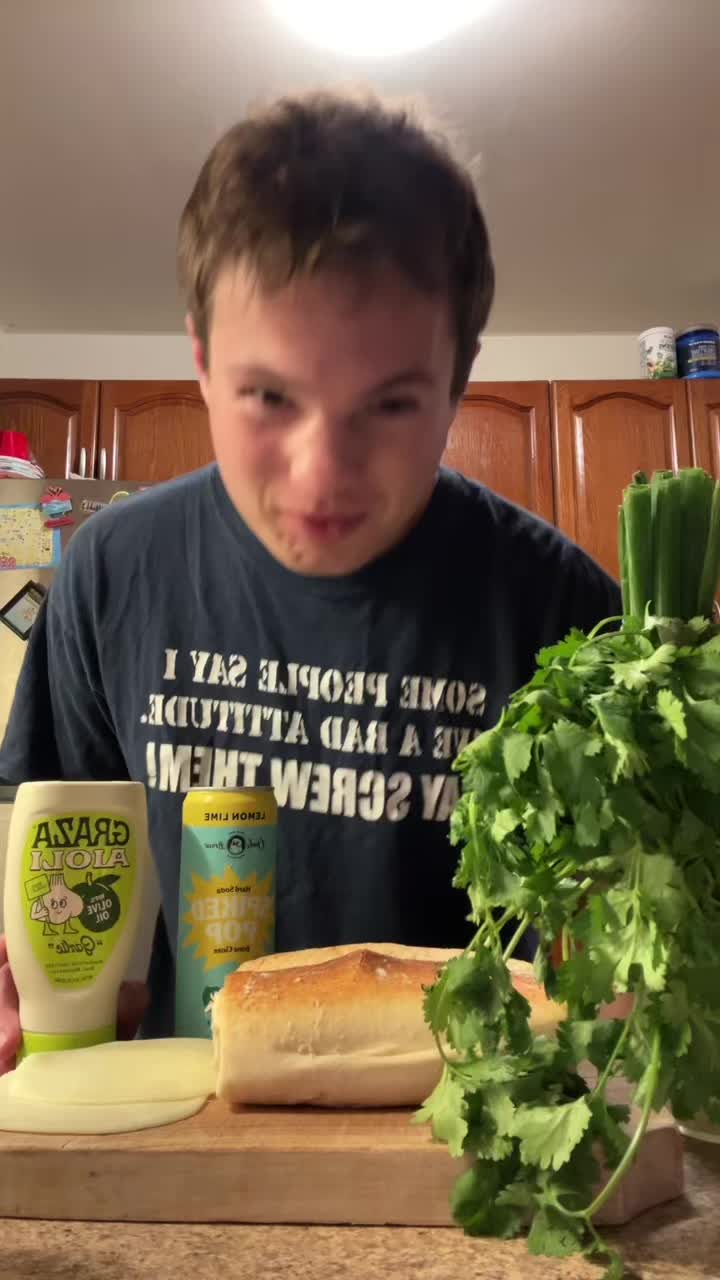
A wide bench of food and lifestyle creators feature Graza organically. Wellness creator @bennybellson posted a lemon-olive-oil "depuff" routine using Graza that pulled 120,926 engagement and included a ShopMy affiliate commerce link. Brand-strategy creator Nico analyzed Graza's origin story (creator seeding, zero paid contracts) to 103,133 engagement, and food creator CAM posted a Philly-cheesesteak recipe tagging @getgraza to 125,856 engagement. Smaller but notable: Sarah Chase framed the brand's founder story as startup advice (3,297 engagement), cat.janice posted a bottle-opening fix that went unusually wide at 89,959 engagement, and CPG-focused creator Nate Rosen covered the glass-bottle launch to 16,789 engagement. Not every voice is positive: creator Ji (posting as "non-toxic city girl") publicly rated Graza's Sizzle and Drizzle two stars, arguing the premium price pays for marketing rather than quality, a live counter-narrative the brand's own copy doesn't address directly. There's no evidence of a verified personal founder social account publicly; co-founders Andrew Benin and Allen Dushi appear only as characters inside the brand account's own content, not as posters in their own right. Community presence is thin: the sole Reddit signal is the r/CPGIndustry thread on the mayo extension, not an organized fan community.
07 Organic & video
The organic content engine: the videos, creator posts, and community presence earning attention without paid spend.
Graza's brand-run social account alternates two registers: polished short films and meme-timed bits. On the cinematic side, "The Harvest," a 31-second Super-8-style film posted 2026-03-05, pulled 816,998 views, and a companion piece, "Testing Twins," pulled 349,783 views the same day. On the meme side, a TikTok riffing on a McDonald's-adjacent "CEO who loves this product" joke tied to the mayo launch pulled 333,106 engagement, and a "Devil Wears Prada" bit featuring co-founder and COO Allen Dushi pulled 165,640. The pattern is clear: short, high-production brand films and pop-culture-literate jokes posted from Graza's own account consistently out-earn straightforward product demos, the account performs as a creator channel rather than a broadcast one.
08 Affiliate & partners
How the brand turns creators and partners into a tracked, variable-cost acquisition channel, and how the program is structured.
Graza runs a lightweight creator-affiliate motion rather than a formal seller army: at least three creators (audrey leonard, Carebycara, maliabeats) tag their Graza content with a #grazapartner hashtag, and wellness creator @bennybellson's post carries a live ShopMy affiliate commerce link. That points to an open, low-friction partner tag rather than a gated ambassador program, closer to "anyone can tag along" than a recruited seller network.
09 The playbook
The channels are not separate. They are one system where each stage feeds the next. Here is the read, then the plays to run tomorrow.
The inferred playbook
Graza's loop starts with the brand account itself generating the highest-engagement content through pop-culture bait, converts that attention into retail-shelf discovery moments (Costco, Target, Whole Foods) that creators then re-post as "found in the wild" UGC, and backstops all of it with a Google search ad that has run unchanged for 1,257 days to catch anyone who searches the brand name directly.
the highest-performing UGC and ad creative are overwhelmingly about where to find Graza (the Costco two-pack, Target chips, Erewhon smoothie bar) rather than the product alone, meaning every new door the brand adds is itself a content trigger, not just a distribution win.
a single static Google ad running since 2023 (covered above) sits underneath 38.5% organic-search and 15.5% paid-search traffic share, a nearly maintenance-free way to own branded intent once it exists.
Dig deeper+3▾
mayo and potato chips extend the squeeze-bottle identity into new categories, but they launch into the same audience that includes a public "you're paying for marketing, not quality" critique (covered above), so the extensions have to earn trust independently rather than borrowing it automatically from the olive oil line.
the DTC model is straight paid retail, not subscription, three EVOO tiers, Drizzle at $20 (500ml finishing oil), Sizzle at $15 (750ml cooking oil), and Frizzle at $14 (750ml high-heat oil), plus bundles from $37 to $65 and standalone refill cans, positioned as a premium but accessible everyday pantry swap rather than a luxury one-time gift.
DTC-versus-wholesale revenue split, repeat-purchase or subscription-equivalent retention, and paid-ad return by channel.
Seed creators with zero strings attached
The proofGraza's pre-launch gifting to micro and nano food creators with no posting obligation drove a 7.91% site conversion rate off Instagram bio traffic and $100K in revenue in its first week, with no paid ads running yet.
The adaptationBuild a list of 30-50 creators genuinely embedded in your category (not just big followings), ship them your product for free with no contract and no required post, and let whatever they post stand on its own. Post it as a shipment, not a partnership announcement. The mechanism: a creator who owes you nothing posts like a fan discovering something, which reads as organic to their audience instead of scrolling past as an ad.
Cost: under $500. Time to signal: weeks. Works pre-PMF: yes, provided the product is distinctive enough that an unpaid creator would want to show it off unprompted.
Run one branded search ad and never touch it
The proofGraza's longest-running Google ad has stayed active for 1,257 days (covered in Paid Ads above), a static, low-maintenance capture of demand for its own brand name.
The adaptationWrite one plain search ad tied to your own brand name and top two or three branded terms, set it live, and revisit it only quarterly to confirm a competitor hasn't started bidding on your name instead. The mechanism: branded search is demand that already wants you, so the ad rarely needs new creative and the margin on it stays high for as long as it runs.
Cost: under $500. Time to signal: weeks. Works pre-PMF: yes, though it only pays off once some baseline brand-name search volume exists to capture.
Turn one static image template into your standing ad format
The proofGraza's potato-chip launch creative ("My new favorite potato chips," covered in Paid Ads above) reuses the same static text-overlay image format across its chip-launch montage as one of its top current creatives.
The adaptationDesign one clean product shot with a simple text-overlay claim, no video shoot needed, and reuse that same format with different on-screen text for each new SKU or promotion. The mechanism: a recognizable static format implies confidence without asking the viewer to trust a claim, and one good shot becomes a template you can recut indefinitely instead of a one-time production.
Cost: under $500. Time to signal: days. Works pre-PMF: yes.
Film every new distribution win as a discovery moment
The proofGraza's Costco "obsessed for months and they finally sell a two-pack" and Target "Zesty Caesar available at Target" creative (covered in Paid Ads above) turn shelf placement itself into the ad.
The adaptationThe next time your product lands in a new store, marketplace, or integration, film the moment of finding or announcing it, caption it as a discovery ("wait, you can get this at X now"), and boost whichever version performs best. The mechanism: a "found in the wild" moment reads as third-party validation that a produced ad can't fake, since it implies someone else already vetted you.
Cost: $0. Time to signal: days. Works pre-PMF: conditional, it only works once you have at least one real placement or integration to point the camera at.
Open your affiliate tag to anyone, not just picked partners
The proofat least three creators tag content #grazapartner and one uses a live ShopMy affiliate link (covered in Affiliate & Partner Motion above), suggesting an open tag rather than a gated program.
The adaptationCreate one simple branded tag or hashtag anyone can use to signal they're a partner, skip the application process, and pair it with a plug-and-play affiliate tool (ShopMy, LTK, or a basic referral code) so any genuine fan can monetize a mention. Announce it once in your bio or newsletter as an open invite. The mechanism: removing the gatekeeping around who counts as an affiliate turns your existing customer base into an uncapped distribution surface instead of a hand-picked handful of paid creators.
Cost: $0. Time to signal: weeks. Works pre-PMF: conditional, it needs an existing base of genuine fans willing to post before there's anyone to open the tag to. Not transferable at an earlier stage: the retail-door content loop (Play 4) and the brand-run meme voice covered in Organic & Video both depend on infrastructure Graza already has, actual shelf placements and an account with an existing large, culturally-tuned audience, neither of which a reader can manufacture before they exist.
You just read how Graza does it. Tomorrow it is someone else.
Every morning we take one company that is actually growing and break down where its customers come from: the ads still running after a year, the channel doing the real work, and the play you can run this week.
Systemaic · directional intelligence. Traffic, spend, and reach figures are SimilarWeb-style estimates and qualitative reads of public data, not audited numbers. Built on real public receipts.
// teardowns with a similar GTM motion
sources & receipts (4)
Live ad libraries: meta ad library · linkedin ad library · google ad library
Launch archives: Hacker News: Graza Olive Oil co-founder Andrew Benin built the business
Traffic, spend, and revenue figures are estimates as noted in the report; the links above are the primary public artifacts.