- 01Put a customer's own number in the ad hook
- 02Put the #1 objection literally on the ad image
- 03Build one page per named competitor, targeting their own brand query
- 04Test founder-to-camera organically before paying to boost it
01 Snapshot
The one-glance read on who they are and how they grow. Each point is verifiable from the receipts above.
A Visa-powered fleet fuel and expense card plus spend-management platform for European vehicle fleets, built by a Y Combinator Winter 2025 team out of Berlin.
Paid-led (LinkedIn and Google), layered on a thin conquesting-SEO base, with the paid engine dark as of the observation date.
≈13,300 estimated monthly visits (+196.9% over the last 3 months), a $500K pre-seed round raised in 2025, including Y Combinator's W25 batch investment, and 16 total ads run across LinkedIn (6) and Google (10) with zero active as of 2026-07-25.
Co-founder Thiago Peres framed the UK push as relationship-first: "We're not taking a traditional sales-first approach... What we're looking for in the UK is what we call design partners" (source).
Rally spent months buying trust with named-customer proof in paid creative (AUTO1, Burgermeister), then let the entire paid engine go quiet while a five-page SEO layer quietly keeps compounding underneath it.
02 How it unfolded
The order the channels came online. Sequence is strategy: what they did first, and what they layered on once demand existed.
03 Traffic & channel mix
Estimated demand, the channel split behind it, and the keywords and referrers doing the work. Directional modeling, not audited analytics.
Top search keywords
| Keyword | Volume | Weight | CPC |
|---|---|---|---|
| rally tankkarte wer steckt dahinter | 110 | - | |
| logitisk fuel card europe yc | 90 | - | |
| rally europe b.v | 70 | - | |
| rally card free | 70 | - | |
| rally: smarte plattform für flotten-manager | 70 | - |
Rally draws an estimated ≈13,300 monthly visits, up +196.9% over the last 3 months, though a full channel-by-channel percentage split isn't available in this data set. The clearest signal comes from what people search for once they've seen the brand: "rally tankkarte wer steckt dahinter" (German for "who's behind the Rally fuel card," 110 searches/mo) reads as skepticism-driven brand curiosity, plausibly stoked by the paid campaign volume covered below, while "rally card free" (70 searches/mo) points to price-sensitive shoppers and "logitisk fuel card europe yc" (90 searches/mo) shows some searchers explicitly tying the product to its YC batch rather than the category. No referrer or competitor-domain data is available to name specific sources here.
04 Organic content
The specific pages earning their organic search traffic, and the pattern behind why they rank. Adapt the format, not the topic.
Rally's organic footprint is small but tightly patterned: five pages carry the load, and the top two, both "best fuel card" comparison listicles, account for the large majority of that traffic (53.7% and 31.2% respectively). The rest of the pages are direct conquesting content: "alternative to" pages built against named competitors (Allstar, UK Fuels) and a general fuel-card comparison hub. The conquesting angle shows up in the rankings too: alongside #1 positions for "best fuel cards uk" and "best fuel card," Rally ranks #7 for "allstar fuel login," a competitor's own navigational query, meaning the alternative-to page is intercepting people who already typed a rival's name into Google.
Top pages by organic traffic
05 Channel map
Not traffic share. How much weight the growth system actually puts on each channel, with a one-line read on the role it plays.
What drove growth
06 The motions doing the work
For founder-led SaaS the breakdown shifts from ads to traction: where the first users came from, how the founder grows it in the open, and the compounding organic surface.
Rally's opening moment traces to the founders' own Y Combinator debut rather than a maker-community launch, and every feature since has shipped straight into paid social instead of a discovery platform.
The first banking-backed fleet card went live to paying customers in January 2025, and co-founder Thiago Peres announced the founding story from his own X account (@thiago_peres) rather than a company channel.
DriverLink, a WhatsApp-based tool letting multiple drivers share one fuel card, entered paid rotation via a LinkedIn campaign starting September 19, 2025, and Rally Charge, an EV-charging extension, launched the same way on January 21, 2026, with the ad copy itself reading "Wir launchen Rally Charge" and framing it as the "#1 Customer Request."
Dig deeper+1▾
Named enterprise wins, AUTO1/Autohero and food chain Burgermeister, appear as case studies inside the paid ads themselves starting October 15, 2025, turning large-account signings into acquisition creative rather than a press release.
Rally's build-in-public signal runs almost entirely through co-founder and CTO Thiago Peres's personal X account rather than a managed brand handle.
Peres's post describing quitting his job, starting "a bank," and getting into YC after building with Cursor, an AI coding tool, claiming "99%+ of the code is AI written," drew roughly 905 likes and 207K views (source), tying Rally's founding to the AI-coding-tools narrative circulating at the time.
Beyond that one post, the public story runs through trade coverage and a technical case study, Fleet News on the UK design-partner motion and a Supabase engineering write-up describing the MVP going from first line of code to a fully licensed fintech live in about three months (source), rather than a regular personal posting cadence.
Dig deeper+1▾
What social traction exists is founder-concentrated: no distinct brand-account amplification is visible in the evidence, so the whole narrative asset rides on one founder's credibility and one high-reach post.
Rally's organic content plays a narrow conquesting game while its real top-of-funnel volume, for most of the observed period, came from paid.
The alternative-to pages and comparison listicles covered above are real but small next to the sustained multi-platform ad spend running alongside them, meaning paid, not content, likely carried most of the top-of-funnel volume during this window.
Nothing in the owned-site evidence points to a referral or affiliate lever, so distribution here is a two-lever system (paid plus a handful of SEO pages), not a multi-channel flywheel.
Dig deeper+1▾
Across LinkedIn and Google, 16 total ads have run, with zero active as of 2026-07-25. The strongest hooks address the category's core objection directly on the image: a Google ad shows a card-in-hand product shot with "Keine versteckten Gebühren" (no hidden fees) as the headline, while the AUTO1 and Burgermeister LinkedIn case-study ads lead with a named customer's own scale stat (Burgermeister's 1M+ orders/year) as trust proof. A third ad claims "9 von 10 Unternehmen zahlen zu viel für Kraftstoff" (9 of 10 companies overpay for fuel), pitching an AI pump-price comparison tool as the fix. The pattern reads as demand generation aimed at skeptical fleet buyers, not defensive brand-term capture.
07 Paid ads
This founder-led SaaS also runs paid acquisition. Here are the live ads doing the work, each with the X-ray and a play you can adapt.
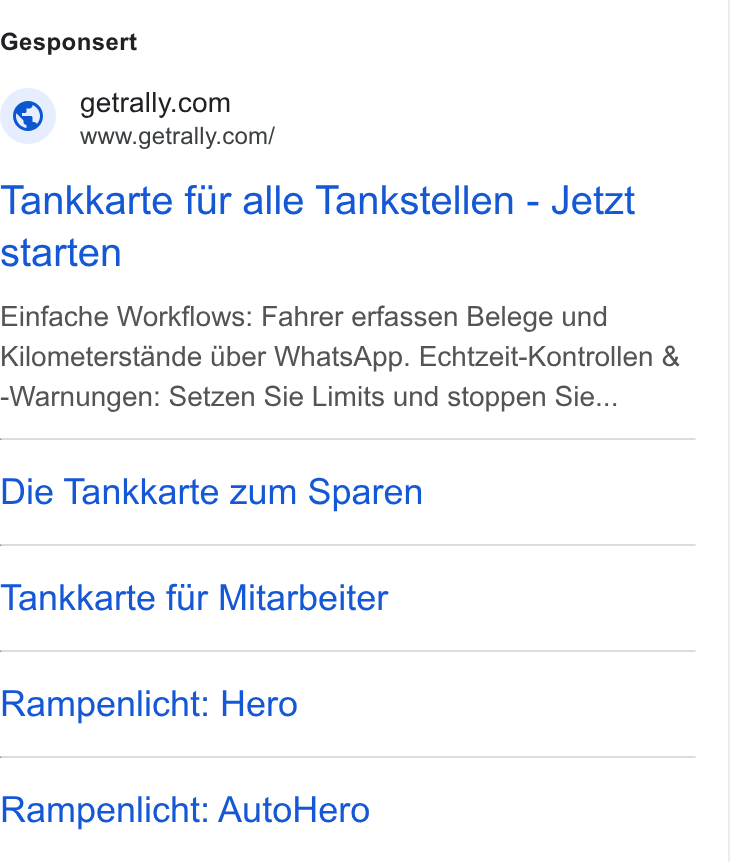
- Running
- 66 days (longevity = it's converting)
- Hook
- Gesponsert getrally.com www.getrally.com/ Tankkarte für alle Tankstellen - Jetzt starten
- CTA / offer
- Tankkarte für alle Tankstellen - Jetzt starten
- Audience
- The text mentions "Fahrer" (drivers), "Belege und Kilometerstände" (receipts and mileage), and "Echtzeit-Kontrollen & -Warnungen" (real-time controls & warnings), indicating a target audience of businesses managing vehicle fleets.
Why it works. Search copy leads with the fuel card's core differentiator before asking for the click, matching what someone typing a fuel-card query is already looking for.
Headline: "Tankkarte für alle Tankstellen - Jetzt starten" In search ads, put your core differentiator in the headline and end with a direct start-now command rather than a vague learn-more.
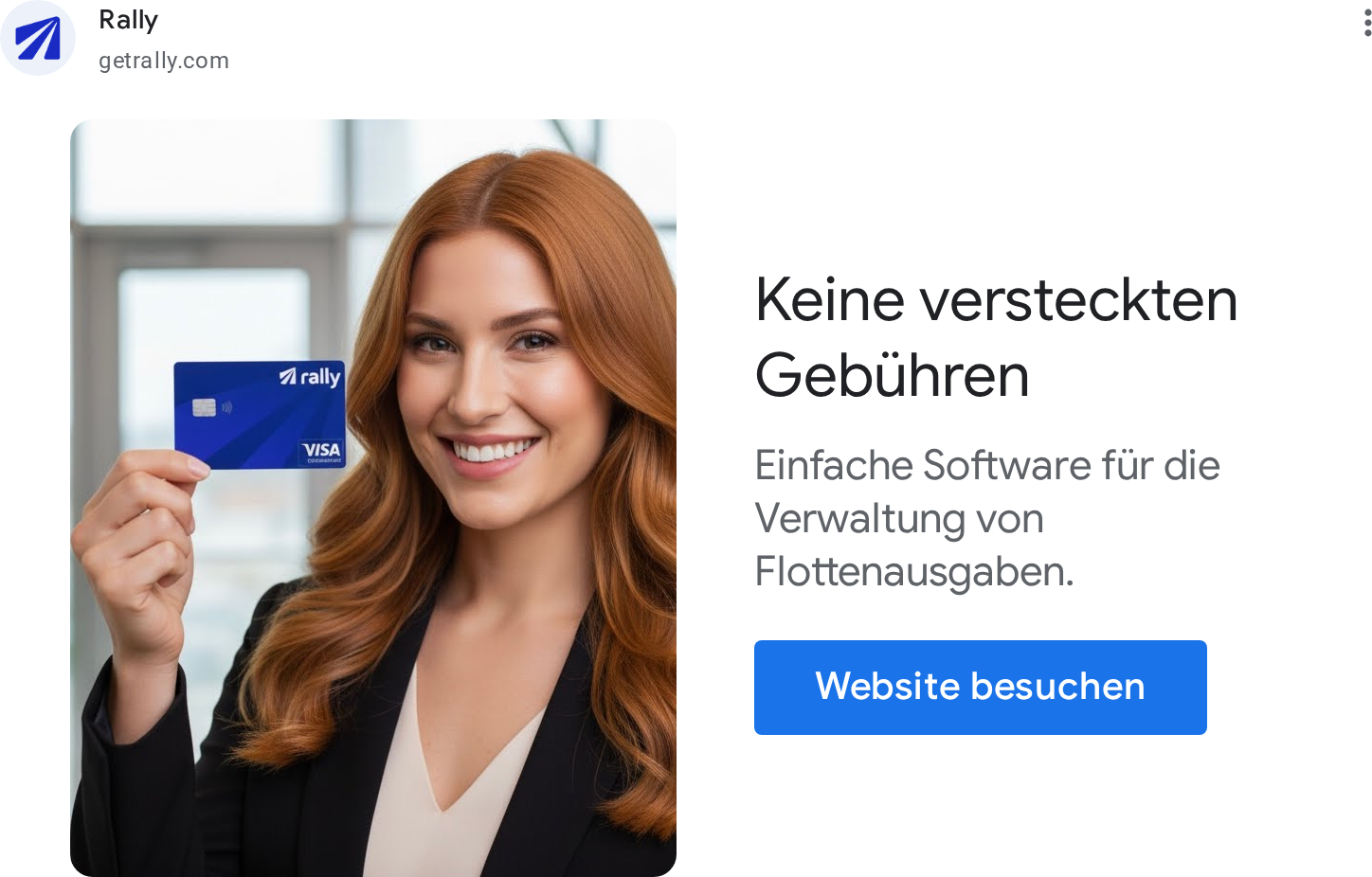
- Running
- 64 days (longevity = it's converting)
- Hook
- A woman with long, wavy red hair, wearing a black blazer over a white top, smiles directly at the camera while holding up a blue credit card with the word "rally" and the Visa logo. To her right, the text "Keine versteckten Gebühren" is visible.
- CTA / offer
- Website besuchen
- Audience
- The text "Einfache Software für die Verwaltung von Flottenausgaben." clearly indicates the target audience is businesses or individuals managing fleet expenses.
Why it works. Puts a no-hidden-fees promise next to a smiling person holding the card, addressing the trust gap that keeps finance buyers from switching providers.
The headline "Keine versteckten Gebühren" is prominently displayed next to the image. Name the one hidden cost your category is known for and deny it directly next to a photo of a real person using your product.
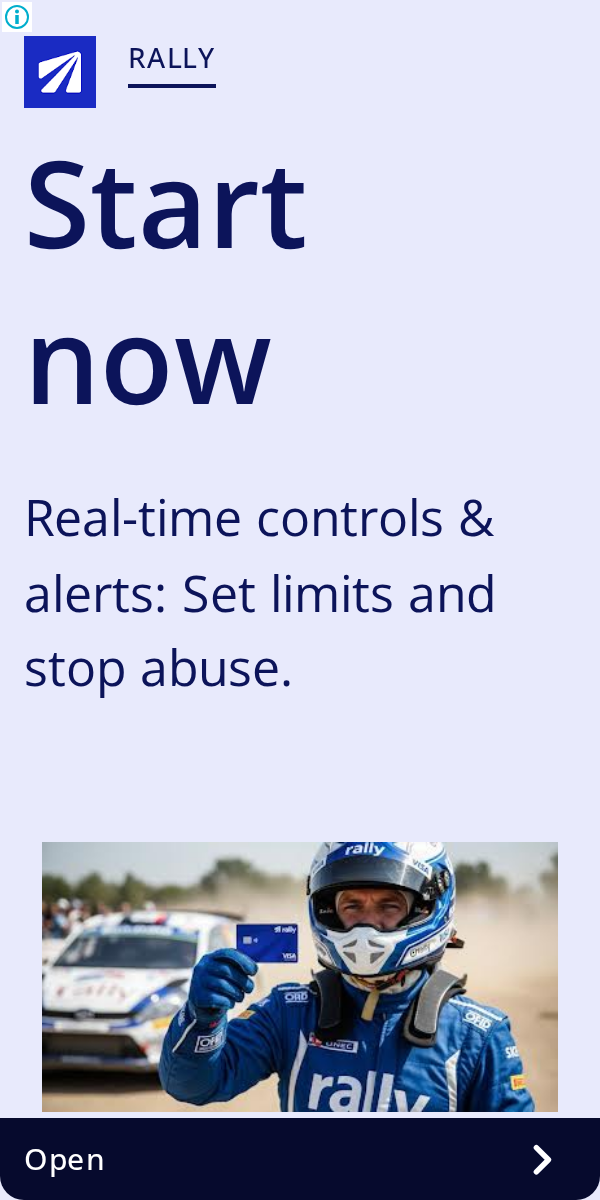
- Running
- 55 days (longevity = it's converting)
- Hook
- RALLY logo and text, followed by large text "Start now".
- CTA / offer
- Open
- Audience
- Fleet managers or business owners concerned with financial control and preventing misuse, indicated by the text "Financial OS for Modern Fleets" in the advertiser context and "Real-time controls & alerts: Set limits and stop abuse" on the image.
Why it works. Anchors the ad on the Rally logo and a single action prompt, a minimal design that reads as a house-brand reminder rather than a first-touch pitch.
Prominent, action-oriented headline: "Start now" is displayed in large, dark blue font. Use a large, bold, and clear call-to-action phrase as your primary headline to immediately prompt engagement.
Show 3 more ads
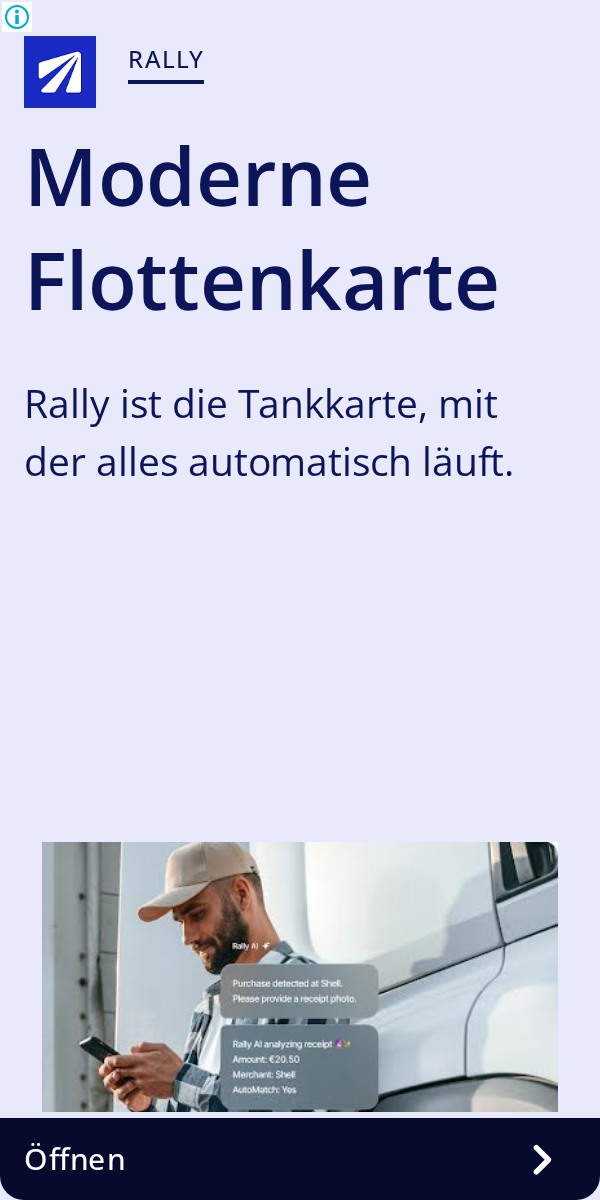
- Running
- 55 days (longevity = it's converting)
- Hook
- "Moderne Flottenkarte" with a blue and white logo featuring a stylized 'A' or arrow.
- CTA / offer
- Öffnen
- Audience
- Fleet managers or business owners who manage vehicle fleets, indicated by the terms 'Flottenkarte' (fleet card) and the focus on automation for fuel purchases.
Why it works. Uses a two-word product-category claim as the entire headline, betting on recognition of the 'Flottenkarte' term to pull in fleet operators already searching for one.
Headline and sub-headline: 'Moderne Flottenkarte' and 'Rally ist die Tankkarte, mit der alles automatisch läuft.' Reduce your headline to two words, a differentiator plus your product category, and let the reader fill in what the old version looked like.
- Running
- 53 days (longevity = it's converting)
- Hook
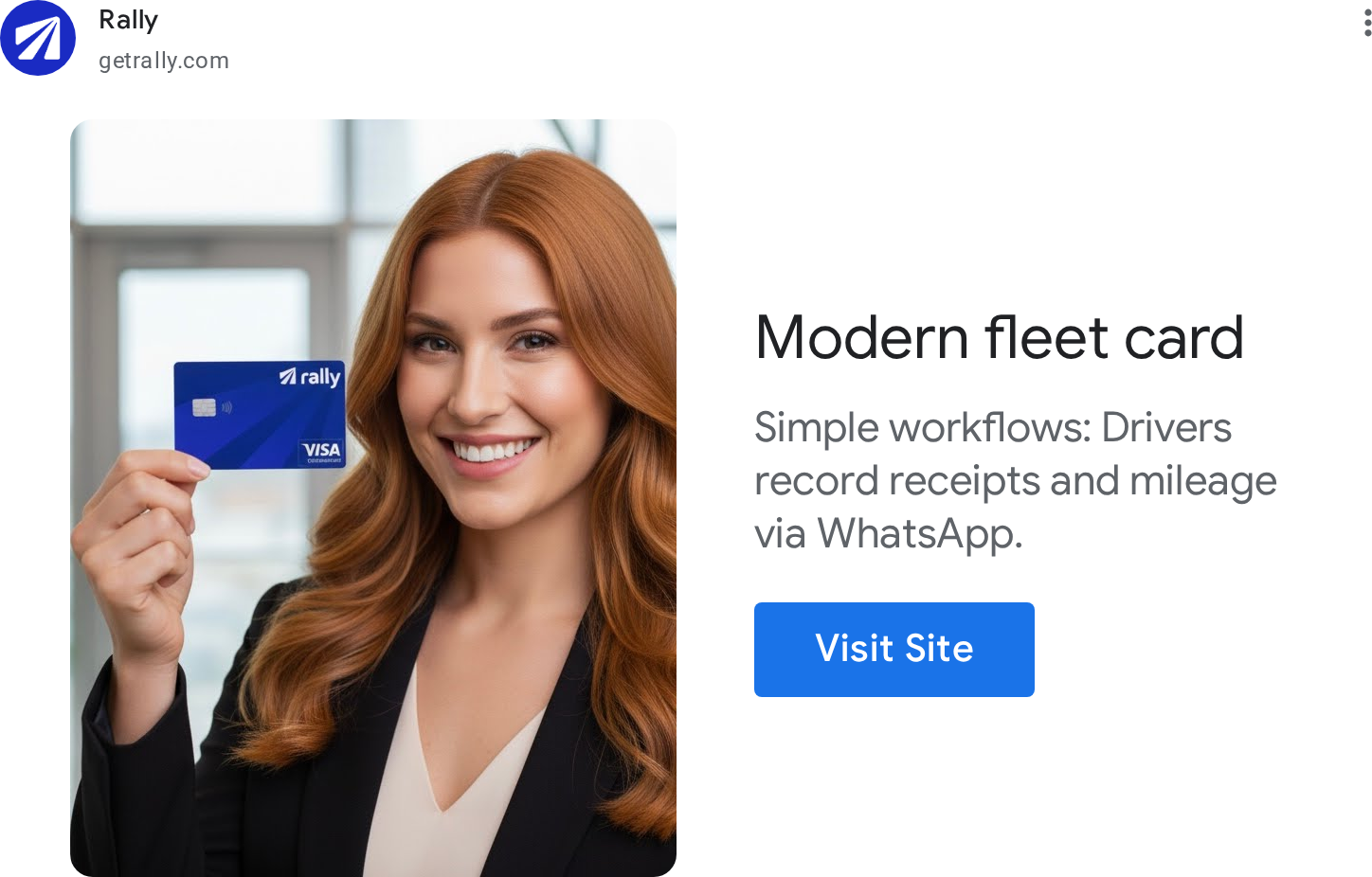
- Visual: A smiling woman with long red hair holds up a blue Rally Visa card. On-screen text: "Rally getrally.com" and "Modern fleet card".
- CTA / offer
- Visit Site
- Audience
- The phrase "Modern fleet card" and "Drivers record receipts and mileage via WhatsApp" targets businesses or individuals managing vehicle fleets who are looking for streamlined financial and administrative processes.
Why it works. Shows a smiling real person holding the physical card, giving fleet managers an immediate sense of what they'd hold in hand after signing up.
Visual product demonstration and human connection: The image shows a smiling woman holding the blue Rally Visa card prominently. Photograph a real person smiling while holding your physical product and pair it with a short category-plus-modifier headline like 'modern fleet card.'
- Running
- 64 days (longevity = it's converting)
- Hook
- "Gesponsert" at the top left, followed by a blue globe icon and "www.getrally.com/". Below that, the headline "Rally – Moderne Flottenkarten" in blue.
- Audience
- Fleet managers and drivers ("Chefs und Fahrer") in Europe, indicated by "Europas moderne Flottenkarte" and the mention of fuel, EV charging, and all costs.
Why it works. States brand and category together as the headline, useful for prospects who already recognize the Rally name from other channels.
Headline clearly states the product and its key differentiator: "Rally – Moderne Flottenkarten". Test a headline that pairs your brand name directly with your product category (Brand: Category) for audiences who already know you.
08 The playbook
The channels are not separate. They are one system where each stage feeds the next. Here is the read, then the plays to run tomorrow.
The inferred playbook
Rally's loop starts with paid, converts through a high-touch relationship motion, and has no organic engine strong enough to replace paid now that it has gone quiet.
LinkedIn and Google ads, fronted by named customer wins and objection-first copy (both deconstructed above), are the evidenced top-of-funnel origin for a buyer market that is wary of hidden card fees.
The UK expansion explicitly recruits "design partners" rather than running a self-serve signup funnel, per Peres's own framing above, implying a founder-involved, one-to-one close even while ads ran at volume.
Dig deeper+2▾
The five-page SEO layer is real but small (454 organic visits/mo) against a paid engine that is now fully dark (0 of 16 ads active as of 2026-07-25), leaving a gap between the volume paid once delivered and what organic alone carries.
Design-partner-to-paying-customer conversion rate, per-driver card attach rate across a signed fleet, blended CAC now that both ad platforms have gone quiet, and account-level churn or retention among fleet customers.
Put a customer's own number in the ad hook
The proofRally's LinkedIn ad for Burgermeister ran 31 days by leading with the customer's own scale stat (1M+ orders/year) instead of Rally's product features.
The adaptationIdentify your best logo customer, get permission to use one verifiable stat of theirs (revenue, output, users), and build a single ad structured as "[Customer] does [stat]. Here's how they run on [product]." First step: email that customer for a one-line permission to quote their number, then boost the resulting post with a small daily spend.
Cost: under $500. Time to signal: days to weeks. Works pre-PMF: conditional, it requires at least one committed paying customer willing to be named.
Put the #1 objection literally on the ad image
The proofRally's Google image ad puts "Keine versteckten Gebühren" (no hidden fees) directly on a card-in-hand product shot, addressing the exact complaint leveled at incumbent fuel-card providers.
The adaptationMine your last 10 sales calls or support tickets for the single most repeated objection phrase, and write that phrase nearly verbatim as the on-image headline of your next paid creative test, rather than burying the rebuttal on a pricing page. Start by pulling those 10 transcripts and circling the one phrase that recurs.
Cost: under $500. Time to signal: days. Works pre-PMF: yes.
Build one page per named competitor, targeting their own brand query
The proofRally's Allstar-alternative page ranks #7 for "allstar fuel login," a rival's own navigational search term, per the ranking data above.
The adaptationPick the single competitor prospects mention most often in sales conversations, and build one comparison page targeting "[competitor] alternative" and "[competitor] login" query patterns as a direct feature-by-feature table. First step: write that one page for that one competitor before building a broader comparison hub.
Cost: $0. Time to signal: months. Works pre-PMF: yes, though it takes months to show organic signal, so it shouldn't be the only channel a pre-PMF team relies on.
Test founder-to-camera organically before paying to boost it
The proofRally runs a founder-to-camera video as paid LinkedIn creative, the founder speaking directly into camera about the product.
The adaptationFilm one 20-second phone clip of the founder explaining the exact problem in one plain sentence, post it to the founder's own personal account first, and only spend paid budget boosting the version that already clears normal organic engagement for that account. Start by filming that single clip with a phone, no crew.
Cost: $0 to start. Time to signal: days. Works pre-PMF: yes.
Write the origin story around the one surprising build constraint
The proofCo-founder Thiago Peres's post about quitting his job, building with Cursor, and having "99%+ of the code" AI-written drew roughly 905 likes and 207K views from his personal account (the origin story tweet above).
The adaptationDraft one candid post around the single most surprising resource constraint of your own build, not a generic "excited to announce," naming the exact tool or shortcut involved, and post it from the founder's personal account rather than the brand account. First step: write down the one fact about how you built your MVP that would genuinely surprise a stranger, and lead the post with it.
Cost: $0. Time to signal: days. Works pre-PMF: yes, provided the story is genuinely surprising or contrarian; a bland "we launched" post won't get the same pickup. Not transferable at an earlier stage: the design-partner, relationship-led sales motion in the UK depends on already having enterprise logos like AUTO1 and Huel to open doors, and running paid ads across two platforms simultaneously for months assumes the cushion of a completed pre-seed round, neither of which a pre-traction founder has yet.
You just read how Rally does it. Tomorrow it is someone else.
Every morning we take one company that is actually growing and break down where its customers come from: the ads still running after a year, the channel doing the real work, and the play you can run this week.
Systemaic · directional intelligence. Traffic, spend, and reach figures are SimilarWeb-style estimates and qualitative reads of public data, not audited numbers. Built on real public receipts.
// teardowns with a similar GTM motion
sources & receipts (20)
Live ad libraries: linkedin ad library · google ad library
Launch archives: Hacker News: Activists rally to save Internet Archive as lawsuit threaten · Hacker News: SoftBank unmasked as ‘Nasdaq whale’ that stoked tech rally · Hacker News: Why is the stock market rallying when the economy is so bad? · Hacker News: About 2M People Rally in Hong Kong Weekend Protests · Hacker News: Remastering Colin McRae Rally 3 with SilentPatch · Hacker News: U.S. physicists rally around plan to build fusion power plan
Researched facts: Company tagline/positioning: Financial OS for Modern Fleets · Founders and roles: Nick Telecki — Founder & CEO; Thiago Peres — Founder & CTO · Reported revenue milestone: ~$770K in revenue as of September 2025, with a 7-person team ( · Technical build story: MVP went from first line of code to a fully licensed fintech proces · Named customers: Thermondo and Huel are listed as Rally customers on the company's own cus · Pricing model: Flat monthly per-active-driver/per-card fee; no deposit, no credit check, n · Network acceptance / card rails: Visa-powered card accepted at 1,000,000+ fuel stations, 5 · Early customer sentiment: A Trustpilot reviewer with 30+ years of fuel-card experience (in
Milestone sources: 2025-02-15: Co-founder Thiago Peres publicly launches Rally as part of Y Combinator's Wint · 2025-04-15: Rally ships its Spring 2025 product update, adding features to simplify fleet · 2025-08-14: Rally publishes a customer spotlight on Autohero (AUTO1 Group's retail arm), a · 2025-10-07: Rally launches DriverLink, a WhatsApp-based feature letting multiple drivers s
Traffic, spend, and revenue figures are estimates as noted in the report; the links above are the primary public artifacts.