- 01Name the drop inside the ad itself
- 02Build one signature shot and reshoot it per SKU
- 03Run a sitewide code and a separate first-order capture at the same time
- 04Seed a customer referral link instead of building an affiliate network
01 Snapshot
The one-glance read on who they are and how they grow. Each point is verifiable from the receipts above.
DTC women's swimwear and resortwear (bikinis, one-pieces, an expanded "Monday Body" activewear line) in sizes 00-16 and AA-G cups, backed by a Forbes 10-year anniversary feature and a new SoHo flagship opened April 2026.
Paid-led, creator-amplified: an always-on Google and Meta ad budget runs alongside heavy unpaid TikTok and Instagram creator hauls.
An estimated 549,302 monthly visits (+20.2% over the last 3 months) as of 2026-07-29, an estimated $26M in trailing six-month e-commerce sales per third-party tracker Particl, and a Google ad library with 27 of 46 ads still active, the oldest running about 846 days as of 2026-07-29.
As of 2026-07-29, the newest experiments are a Google video ad launched 2025-11-09 and a "Signature Collection, High Summer '26" campaign shot in Sardinia running across Meta.
An 846-day-old, never-refreshed Google text ad funds a machine where organic creator hauls, not the brand's own paid creative, do the actual trust-building, from Reddit fit reviews to a celebrity Instagram shoutout from Chrissy Teigen.
02 How it unfolded
The order the channels came online. Sequence is strategy: what they did first, and what they layered on once demand existed.
03 Traffic & channel mix
Estimated demand, the channel split behind it, and the keywords and referrers doing the work. Directional modeling, not audited analytics.
Monday Swimwear pulls an estimated 549,302 monthly visits across all channels, up 20.2% over the last 3 months as of 2026-07-29. No channel-by-channel split, ranking keywords, or referrer and competitor list came back in this data pull, so the acquisition read below leans on the paid, organic, and creator evidence rather than the traffic mix.
04 Channel map
Not traffic share. How much weight the growth system actually puts on each channel, with a one-line read on the role it plays.
What drove growth
05 The creative doing the work
Each exhibit shows the actual asset, an X-ray of why it works, a status, and a play you can adapt. This is the heart of the teardown.
Google's library holds 46 total ads with 27 active as of 2026-07-29; Meta's analyzed sample shows 15+ creatives, every one of them still active, running between 100 and 278 days. Given that range, these count as genuine proven winners, not a fresh test wave.
The Sardinia-collection ad ("A collection shot in and inspired by Sardinia") lands on individual product pages inside the Porto Cervo Gold line, priced from $94 (a skirt) up to $299 (a dress), with matching tops and bottoms priced around $130-$149. Every one of those landing pages carries the same sitewide banner, "20% OFF SITEWIDE, USE CODE ANNIVERSARY20."
Layered on top of that sitewide code is a separate capture offer, "Want 10% off your first order," aimed at new visitors rather than the code-holders already shopping the sale. Running a public sitewide discount and a smaller first-order email/SMS incentive at the same time lets the brand chase list growth without discounting the sitewide promo further.
- Running
- 107 days (longevity = it's converting)
- Hook
- On-screen text "HUSK GEO" appears over a medium shot of a woman with dark skin, wearing a brown and white geometric print bikini top and matching wide-leg pants, holding a small woven bag. She is looking to her left.
- Audience
- Women interested in fashionable swimwear and resort wear, indicated by the variety of models and coordinated outfits shown.
Why it works. Repeats the HUSK GEO collection reveal with a different model, extending the same print story's reach across a broader range of viewers.
Introduce new collection name with on-screen text at 0:00: "HUSK GEO". Recast the same script and framing across two or more models when launching a collection to widen reach without new creative direction.
- Running
- 104 days (longevity = it's converting)
- Hook
- Visual: A woman wearing a striped orange, red, and yellow bandeau top, matching shorts, and a matching headscarf, holding a large woven straw bag, stands facing the camera. Audio: Upbeat, rhythmic music begins.
- Audience
- The stylish, coordinated outfit and beach-ready accessories signal a target audience interested in fashion, summer wear, and resort aesthetics.
Why it works. A fully coordinated bandeau, shorts, headscarf and woven bag look, framed as a day-of-the-week outfit, sells the whole ensemble rather than one swimsuit.
Visual presentation of a complete, coordinated outfit from 0:00-0:09, including a matching top, shorts, headscarf, and a complementary straw bag. Style your product as part of a complete, matched outfit with accessories, and give the look a simple naming device like a day or theme.
- Running
- 110 days (longevity = it's converting)
- Hook
- On-screen text: "Get ready with me in St-Barth 🪷". A woman in a light blue bikini and a light blue crocheted skirt is pulling the skirt up from her ankles to her waist.
- Audience
- The luxurious setting (St-Barth), stylish swimwear, and accessories signal a target audience interested in high-end fashion, travel, and a glamorous lifestyle.
Why it works. Ties the GRWM format to a specific, aspirational destination so the outfit reveal reads as a real vacation routine rather than a product demo.
Visual transformation with accessories (0:03-0:12): The woman adds different hats, jewelry, and shoes to her base bikini and skirt outfit. Film your product being put on in a get-ready-with-me style tied to a named destination so the reveal feels like a real routine.
Show 7 more exhibits
- Running
- 114 days (longevity = it's converting)
- Hook
- A woman with blonde hair wearing a brown bikini top, a white unbuttoned shirt, and a brown sarong is shown. She is putting on a dark brown wide-brimmed hat.
- Audience
- Women interested in stylish beachwear and accessories, indicated by the bikini, sarong, and various hats.
Why it works. Fast hat-swap montage turns one beach outfit into a mini styling tutorial, useful for shoppers deciding how to accessorize a swimsuit for vacation.
Rapid hat changes (0:00-0:13) Film a 3-5 second rapid switch through your product's color or style variants on one model to show range without booking extra shoots.
- Running
- 114 days (longevity = it's converting)
- Hook
- Visual: A woman with long dark hair, wearing a striped long-sleeved crop top and a matching high-slit skirt, walks barefoot on a white sand beach towards the camera. The ocean behind her is turquoise, and a small plane is visible in the sky. Audio: Upbeat electronic music begins.
- Audience
- The creative targets women interested in luxury swimwear and beach vacations, indicated by the high-quality swimwear, beautiful beach setting, and models with aspirational physiques.
Why it works. A model walking straight toward camera on white sand with a small plane crossing overhead adds one unexpected detail to a familiar beach-walk shot.
High-quality visual production with diverse models (0:00-0:05) Look for one small, real environmental detail in your location shoot, like a passing plane or boat, and let it play in the background.
- Running
- 36 days (longevity = it's converting)
- Hook
- Visual: A woman wearing a straw cowboy hat and a light-colored bikini top, holding a large straw tote bag and sunglasses. Audio: Upbeat, rhythmic music.
- Audience
- The woman's stylish appearance, the luxurious outdoor setting with a pool and hills, and the brand name 'MONDAY SWIMWEAR' suggest a target audience interested in high-end resort wear and beach fashion.
Why it works. Runs a quick-cut get-ready-with-me sequence so viewers watch the resort pieces get combined and worn, not just displayed flat.
Rapid outfit changes and accessory additions (0:03-0:24). Film a fast get-ready-with-me cut showing your product paired with 2-3 accessories, so viewers see styling options, not a single static shot.
UGC talking-head
- Hook
- A pregnant woman in a black bikini stands in front of a mirror, holding a light pink smartphone to record herself. She is looking at the phone.
- Audience
- Pregnant women or women interested in maternity swimwear, indicated by the model's visible pregnancy and the product category (bikini).
Why it works. Self-shot mirror clip of a pregnant customer trying on the suit shows real fit and stretch, giving pregnant shoppers proof it works for their body.
Self-recorded mirror footage (0:00-0:06) Ask a customer in a specific life stage (pregnancy, postpartum, plus size) to film an unscripted mirror try-on video for that audience segment.

- Hook
- Visual: A woman in a light blue bikini is on a boat, facing away from the camera, looking at the water. Text overlay: "as a caribbean born girly it takes me approximately 20 mins for my first dive in the mediterranean". Audio: Upbeat music with a male vocalist.
- Audience
- The casual, playful tone and the mention of 'Caribbean born girly' suggest a target audience of young, adventurous women who enjoy travel and beach/boat activities. The hesitation before jumping into the 'Mediterranean' implies a contrast with warmer waters, appealing to those who might also find cold water daunting.
Why it works. Dramatizes a relatable vacation hesitation with an oddly exact number, letting the swimwear moment land as the punchline instead of a pitch.
Relatable scenario with specific, slightly exaggerated detail (0:00-0:03, "as a caribbean born girly it takes me approximately 20 mins for my first dive in the mediterranean") Attach a precise, slightly absurd number to a hesitation your customers already feel before using your product, then pay it off visually.
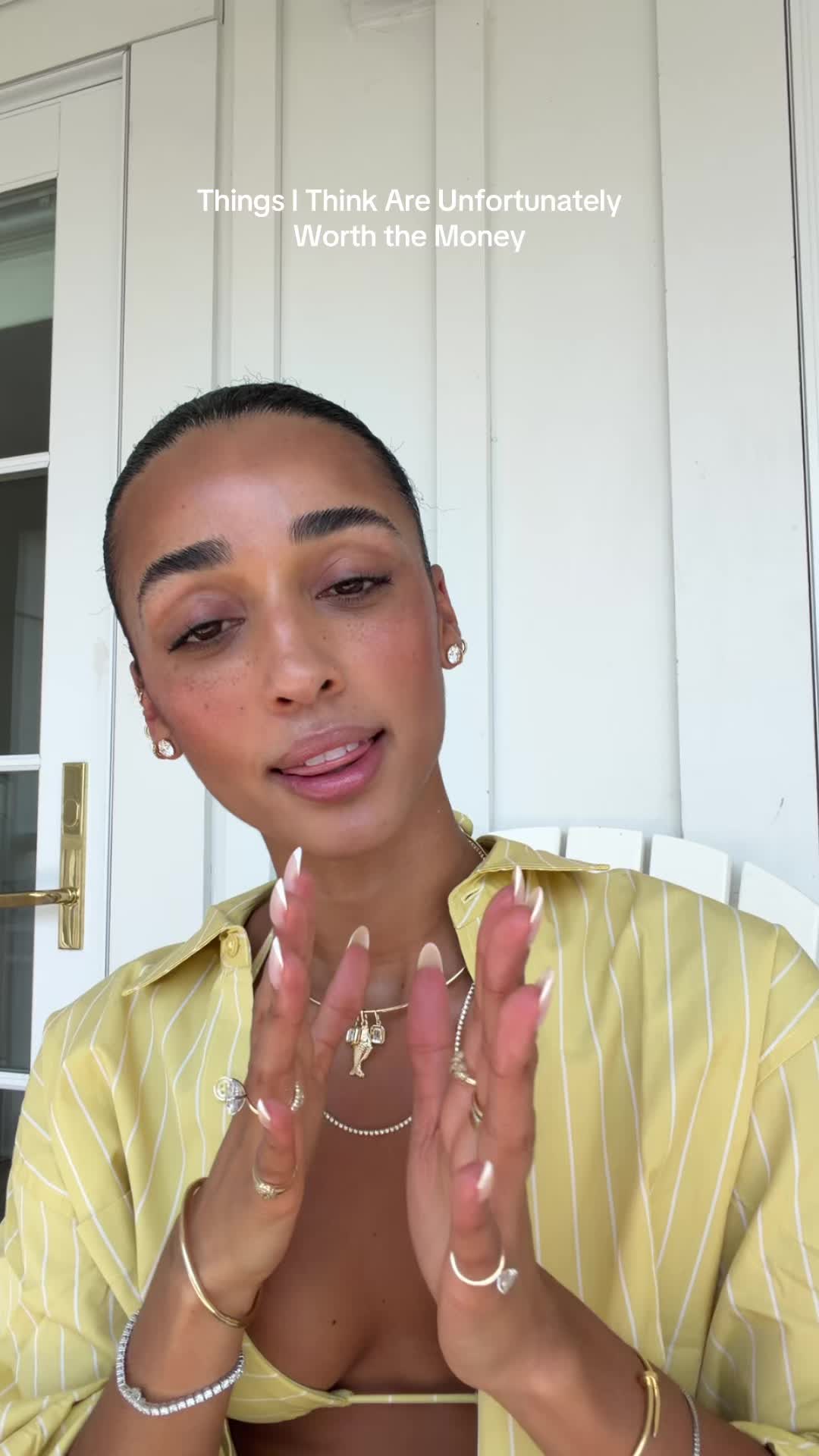
- Hook
- "This is a random list of expensive things that I absolutely think are worth it." A woman with dark hair pulled back, wearing a yellow and white striped shirt, is speaking directly to the camera. She has several rings on her fingers and earrings.
- Audience
- The mention of 'expensive things' and specific luxury items like 'Business class on flights over 8 hours,' 'Good quality jewelry,' 'AMEX Platinum,' and 'Gentle Monster & YSL sunglasses' targets an audience with disposable income and an interest in luxury or premium lifestyle choices.
Why it works. Frames the product as one entry in a personal worth-it list, borrowing credibility from the other premium items named alongside it.
Starts with a bold, relatable statement at 0:00: "This is a random list of expensive things that I absolutely think are worth it." Feature your product as one item in a short, opinionated 'worth it' list alongside other premium purchases your buyers already respect.
- Reach
- 30 upvotes · 8 comments · r/bigboobproblems
A community is already discussing this in r/bigboobproblems. Show up there authentically and answer the thread before a competitor does.
Who amplifies them
The single biggest amplification event in the evidence is a comment from celebrity Chrissy Teigen calling out "@mondayswimwear coming through with a comfortable and cute boulder holder" (slang for a supportive bra or bikini top) at 418,622 engagement, far above anything the brand's own account or paid ads generate. Fashion outlet fashiontv covered Monday's Miami Swim Week show, tagging co-founders Natasha Oakley (@tashoakley) and Devin Brugman (@devinbrugman) directly alongside the models. Beyond that, a roster of mid-size creators drives the everyday volume: Emma Donovan's postpartum-fit haul (26,294 engagement), Delaney Childs styling the Monday Body sub-line (21,816), and wizkidayo's Montenegro get-ready-with-me (27,953), plus a dozen smaller creator posts in the 300-4,000 range. Oakley shows up inside the brand's own paid creative, fronting a Meta ad doing a hat try-on haul, while Brugman appears on the organic side, credited as stylist on an Instagram print launch.
06 Organic & video
The organic content engine: the videos, creator posts, and community presence earning attention without paid spend.
The brand's own Instagram account posts print reveals and studio-life content in a low-key, non-produced style, its highest performer being an office-move announcement at 4,193 engagement, well below what its unpaid creators pull. TikTok is where the real volume sits: haul and get-ready-with-me clips from ordinary customers post five- and six-figure numbers, led by Carolyn Estephany's relatable "every single time" bikini-shopping bit at 227,841 engagement, Eloise Dufka's "IVE BEEN WAITING FOR A TREND LIKE THIS" swim-set video at 134,251, and 𝐴𝑛𝑑𝑟𝑒𝑎's "Summertime fine" post at 39,020, plus a long tail of smaller hauls in the 300-4,000 range. The format that wins is consistent: a talking-head or GRWM haul from a real customer, not a produced brand clip.
07 Affiliate & partners
How the brand turns creators and partners into a tracked, variable-cost acquisition channel, and how the program is structured.
A Reddit post links to a referral-code page hosted on rwrd.io (a referral-link platform used to distribute shareable discount codes), offering new customers 20% off their first order through an existing customer's link. That is a live, if lightly documented, referral program rather than a formal affiliate network. Wholesale distribution runs through UK department store Selfridges and a dedicated capsule collaboration with fashion retailer Revolve, both confirmed via each partner's own site, giving the brand two off-platform storefronts beyond mondayswimwear.com.
08 The playbook
The channels are not separate. They are one system where each stage feeds the next. Here is the read, then the plays to run tomorrow.
The inferred playbook
Monday Swimwear turns two channels most DTC brands treat as disposable, an unrefreshed Google text-ad budget and unpaid creator hauls, into a permanent floor of demand that new paid creative and retail openings build on top of.
The 846-day-old Google text ad and 27 of 46 Google ads still active as of 2026-07-29 point to a "set it and let it run" search-ads floor rather than constant creative testing, which frees Meta spend for campaigns like the Signature Collection Sardinia shoot.
Reddit reviews, TikTok hauls, and the Chrissy Teigen mention supply the fit-and-quality proof that the brand's own polished ad creative never has to argue for directly.
Dig deeper+3▾
The Beverly Hills flagship (opened September 2025) and the SoHo flagship (opened April 2026), backed by an active LinkedIn hiring ad for SoHo staff, add a physical-experience channel on top of the paid-plus-organic engine rather than replacing any piece of it.
Beyond the single rwrd.io referral code, there is no visible loyalty or subscription mechanic, so repeat-purchase economics appear to rest on email/SMS capture and organic word-of-mouth rather than a formal retention program.
Repeat-purchase rate, the wholesale-versus-DTC split behind the Particl revenue estimate, and blended customer acquisition cost across the concurrent Google and Meta spend.
Name the drop inside the ad itself
The proofMonday's "HUSK GEO" text-overlay video names the print directly on screen instead of just showing the product, turning a routine shot into a drop announcement.
The adaptationFilm a 10-second clip of your product on a phone, overlay the exact name of the new variant or SKU as on-screen text (not the brand name, the specific drop name), and post it as the launch creative instead of a plain product photo. The mechanism: naming the specific thing gives viewers a reason to search for it later, which a generic "new arrival" caption does not.
Cost: $0. Time to signal: days. Works pre-PMF: yes.
Build one signature shot and reshoot it per SKU
The proofThe "MONDAY" wordmark-over-water lifestyle shot has been reshot across multiple bikini colorways rather than reinvented each time.
The adaptationPick one composition (same pose, same overlay placement, same location type) that tested well once, and lock it as your template for every future product variant, changing only the product and model. Start by re-shooting your single best-performing organic post with your next new variant in the identical frame. This cuts creative production time while keeping every new ad recognizable as the same brand.
Cost: $0 to under $500 (a phone shoot). Time to signal: days to weeks. Works pre-PMF: yes.
Run a sitewide code and a separate first-order capture at the same time
The proofMonday's landing pages carry a public "20% OFF SITEWIDE" banner alongside a distinct "10% off your first order" email/SMS pop-up aimed only at new visitors.
The adaptationSet up two offers in parallel: a visible storewide promo code for urgency, and a smaller, separate discount gated behind an email or phone-number capture form for people who haven't bought yet. Use a percentage lower than your sitewide code (Monday's is half) so the pop-up doesn't just duplicate the bigger discount. This grows your list without cannibalizing the margin on the public promo.
Cost: $0 to under $500 (an email/SMS tool). Time to signal: weeks. Works pre-PMF: yes, provided there is already checkout traffic to capture.
Seed a customer referral link instead of building an affiliate network
The proofA Reddit post shows a Monday customer sharing a personal rwrd.io referral link offering 20% off, evidence of word-of-mouth sharing rather than a managed affiliate program.
The adaptationSet up a simple referral link (many low-cost tools generate one per customer automatically) that gives both the referrer and the new customer a discount, then hand the link to your first 10-20 repeat buyers directly rather than waiting for an affiliate signup page. The mechanism: a customer sharing their own discount code reads as a recommendation, not an ad, which is why it surfaces organically on forums the way a paid affiliate post never does.
Cost: $0 to under $500. Time to signal: weeks. Works pre-PMF: no, this needs a base of already-satisfied repeat customers to seed it.
Put the founder's face in the paid creative, not just the product
The proofCo-founder Natasha Oakley appears personally in a Meta ad doing a hat try-on haul, and co-founder Devin Brugman is credited as stylist on an organic print-launch post.
The adaptationIf you already have some personal following or credibility in your category, shoot one paid ad where you personally use or try on the product exactly as a customer would, using the same haul format (grab the item, react to it, show it in use) rather than a polished studio shot. First step: repurpose a phone video you'd normally post organically as a paid ad instead of commissioning new brand creative.
Cost: $0. Time to signal: days to weeks. Works pre-PMF: conditional, this only works if you already have an audience that recognizes you; without one, the personal-face format has nothing to trade on. Not transferable at an earlier stage: the physical retail expansion into Beverly Hills and SoHo, and the 846-day always-on Google budget, both assume years of accumulated cash flow and brand recognition that a reader starting has not yet built; adapt the creative and offer mechanics above, not the retail footprint or ad-spend duration.
You just read how Monday Swimwear does it. Tomorrow it is someone else.
Every morning we take one company that is actually growing and break down where its customers come from: the ads still running after a year, the channel doing the real work, and the play you can run this week.
Systemaic · directional intelligence. Traffic, spend, and reach figures are SimilarWeb-style estimates and qualitative reads of public data, not audited numbers. Built on real public receipts.
// teardowns with a similar GTM motion
sources & receipts (20)
Live ad libraries: meta ad library · linkedin ad library · google ad library
Researched facts: Monday Swimwear was founded by Natasha Oakley and Devin Brugman, who launched the brand in · Third-party e-commerce sales tracker Particl estimates Monday Swimwear's trailing 6-month · Forbes Australia reports Monday Swimwear turned over an estimated $40M in 2021-22, with sa · Monday Swimwear opened its first-ever brick-and-mortar flagship in Beverly Hills, CA in Se · Monday Swimwear opened its first New York flagship store in SoHo (464 Broome Street, ~2,00 · The SoHo flagship's interior was designed by Sugarhouse, a design studio whose other clien · Monday Swimwear partnered with Miranda Kerr's skincare brand KORA Organics, announced in M · Monday Swimwear runs an ongoing exclusive capsule collaboration line, 'Monday Swimwear x R · Monday Swimwear is also stocked internationally by UK/EU luxury retailer Selfridges: Stock · Monday Swimwear's direct-to-consumer pricing runs standard bikini tops/bottoms at $108 per · The brand fits a wide size range as part of its core positioning: sizes 00-16 (or XS-3X) a · As of May 2026, Monday Swimwear has approximately 46 employees spread across North America
Community threads: Trustpilot: Positive Trustpilot review praising fit-focused design and confidence-building · Review blog (Stella in Paradise): 36G-bust reviewer praises the Clovelly underwire top, ca · Marie Claire UK: Marie Claire UK fashion editor credits the brand's fit-first approach to · PissedConsumer: PissedConsumer aggregation shows customers mostly call in about returns, s · TikTok: TikTok creators tag founders directly while raving about fit, fabric quality and d
Traffic, spend, and revenue figures are estimates as noted in the report; the links above are the primary public artifacts.