- 01Claim the body-part content niche your category is too polite to touch
- 02Run an internal creator model before paying influencers
- 03Use ASMR and "pick your winner" challenge formats to resurface evergreen products
- 04Localize paid creatives into Spanish before competitors do
01 Snapshot
The one-glance read on who they are and how they grow. Each point is verifiable from the receipts above.
Vegan bath, body, and skincare products targeting women who want taboo body-care solutions (butt shaving, bikini-line care, body acne) at $30-$33 per item, sold DTC and across Ulta, Nordstrom, Amazon, CVS, Walmart, Walgreens, TikTok Shop (US), and Boots (UK).
Creator-led organic TikTok engine that bootstrapped retail placement, now layered with paid search and Meta at scale.
2.1M TikTok followers, 52.2M total TikTok likes, 819K Instagram followers, ~259,553 estimated monthly website visits (as of 2026-07-02), 62 active Meta ads, 25 active Google ads (as of 2026-07-02), and distribution in Ulta, Amazon, and TikTok Shop (US).
Truly built its entire retail and DTC business by making body-care content so specific and taboo that no mainstream brand would touch it, turning "How to shave your butt" tutorials into a retail distribution lever.
02 How it unfolded
The order the channels came online. Sequence is strategy: what they did first, and what they layered on once demand existed.
03 Traffic & channel mix
Estimated demand, the channel split behind it, and the keywords and referrers doing the work. Directional modeling, not audited analytics.
Traffic sources
Top search keywords
| Keyword | Volume | Weight | CPC |
|---|---|---|---|
| truly | 33k | $1.33 | |
| truly beauty | 3.3k | $0.68 | |
| treslaly | 23k | $0.61 | |
| how to debloat face | 25k | $0.35 | |
| truley | 1.4k | $1.93 |
Closest competitors by audience
Truly Beauty draws an estimated ~259,553 monthly visits (-15.7% trend). The channel mix is: Search Organic 43.8%, Direct 31.6%, Search Paid 8.3%, Display Ads 3.4%, Social Organic 3.3%, Social Paid 2.5%, Affiliate 2.5%, Referrals 2.4%, Email 1.6%, Gen AI 0.6%.
Organic search is the dominant acquisition channel at nearly 44% of visits, suggesting the brand benefits from strong branded search demand. The keywords they rank for confirm this: the brand name "truly" (33,210 total monthly searches) and "truly beauty" (3,270 searches) both rank at position one, meaning a large share of that organic channel is brand-driven, not conquest. The direct channel (31.6%) reinforces this: a substantial portion of their audience already knows the brand and returns without a search prompt, a signal of community habit built through TikTok.
Paid search is deliberately contained at 8.3%, suggesting the brand leans on organic TikTok and brand equity to carry the top of funnel, with paid search used to capture existing demand rather than create new demand. The affiliate channel (2.5%) is modest but real, likely reflecting TikTok Shop creator commissions. Email (1.6%) is a small share of site visits but is known from the research brief to drive disproportionate revenue relative to traffic share. Closest search competitors include biossance.com, drdennisgross.com, remedyskin.com, and sokoglam.com.
04 Organic content
The specific pages earning their organic search traffic, and the pattern behind why they rank. Adapt the format, not the topic.
Truly Beauty's top organic pages reveal a pattern built primarily around brand equity rather than topic-led content: the homepage alone accounts for roughly 55% of their estimated organic visits, which is a signal that most of their search traffic is branded. The blog enters the picture with a how-to / comparison format ("Eau de Toilette vs Parfum"), while product and collection pages for body serums and the Unicorn Fruit body butter pull long-tail product-intent traffic.
The strategic read: Truly's SEO is not a content moat, it is a brand moat surfacing through search. Their organic footprint is almost entirely brand-name keywords (they rank at position one for "truly," "truly beauty," "truly body butter," and "truly skin care") earned through TikTok virality, not a deliberate SEO content play. The one blog post earning meaningful organic visits targets a broader informational query adjacent to fragrance, suggesting the brand has not yet invested heavily in building a content-driven organic acquisition layer beyond what their brand recognition has naturally pulled in.
Top pages by organic traffic
05 Channel map
Not traffic share. How much weight the growth system actually puts on each channel, with a one-line read on the role it plays.
What drove growth
06 The creative doing the work
Each exhibit shows the actual asset, an X-ray of why it works, a status, and a play you can adapt. This is the heart of the teardown.
Truly runs 62 active Meta ads and 25 active Google ads as of 2026-07-02. Across both platforms, the proven winners are high-discount, gift-stacking offers and body-problem-led creatives.
- Running
- 13 days (new — still being tested)
- Hook
- "does your sunscreen give you a white cast like this" + a hand rubbing thick, unabsorbed white cream onto a leg.
- CTA / offer
- "check out Truly's Solar Baby"
- Audience
- Sunscreen users who dislike the 'white cast' or 'sticky' feel of traditional mineral sunscreens.
Why it works. Names the exact flaw of competing sunscreens the audience already resents, so the product's fix lands as a direct answer to a known complaint.
Visual Anchoring (0:00 vs 0:06) Open your video by naming the specific visible flaw of the category you're replacing, phrased as a direct question to the viewer.
- Running
- 13 days (new — still being tested)
- Hook
- "Wait, so nobody told me there was a diamond serum?" + Woman holding a bottle of Truly Diamond Baby serum to the camera.
- CTA / offer
- "Grab yours below."
- Audience
- Women concerned with body aging ('fix crepey skin') and those who already have a multi-step facial skincare routine.
Why it works. The creator reacts like she's catching up on gossip about the product, which reframes the ad as her sharing a find instead of the brand pitching it.
Ingredient Authority (0:03-0:11): 'That is actual diamond peptide.' Script your UGC opener as the creator reacting with surprise to discovering the product, not describing its features.
- Running
- 13 days (new — still being tested)
- Hook
- "the perfect summer glow doesn't exi...✨✨" text over a woman in a pink bikini and denim overalls sitting on grass.
- Audience
- Women interested in summer skincare and tanning aesthetics, evidenced by the bikini, outdoor setting, and 'summer glow' text.
Why it works. Plays on the it-doesn't-exist meme format to set up a payoff reveal, aimed at summer-aesthetic shoppers browsing TikTok-style content.
Visual contradiction hook at 0:00 ("the perfect summer glow doesn't exi...✨✨"). Open with a familiar meme phrase cut short on screen, then use the product as the twist that completes or contradicts it.
Show 7 more exhibits
- Running
- 13 days (new — still being tested)
- Hook
- "3 reasons you'll love..." + "solar baby ✨" over a shot of a woman's legs by a pool with the product.
- Audience
- Women interested in sun care and skincare-infused body products, signaled by the pool setting and mention of "bakuchiol" and "vitamin c".
Why it works. Frames a sunscreen oil's benefits as a countdown list next to poolside footage, aimed at shoppers buying for lifestyle appeal, not just SPF.
"1. completely invisible sunscreen oil - no white cast 🫶" (0:03) Preview a fixed number of benefits on screen at the very start, then deliver one per shot so viewers count down to the last one.
- Running
- 13 days (new — still being tested)
- Hook
- "solar baby smells like... 🥥🍦✨" shown over a close-up of a Truly bottle leaning against a fresh pineapple.
- Audience
- Consumers interested in 'clean girl' or 'summer glow' aesthetics, evidenced by the shimmering skin finish and tropical ingredient focus.
Why it works. Turns a sunscreen's scent, hard to convey on video, into a visual guessing game with fruit props, aimed at buyers who choose sunscreen partly by smell.
Visual Scent Mapping (0:00-0:10) For a scented product, show the ingredients behind the smell instead of describing the scent in words.
- Running
- 13 days (new — still being tested)
- Hook
- "it's finally here..." shown over a close-up of the Solar Baby product label.
- Audience
- Women interested in luxury body care and sun protection, indicated by the bikini, picnic setting, and focus on skincare ingredients like Bakuchiol.
Why it works. Treats a new sunscreen SKU like a product drop, using anticipation copy before showing the formula and SPF details on screen.
Ingredient-led benefit callouts at 0:04 ("made with vitamin c + bakuchiol") Open a launch video with a vague reveal tease before cutting to the product name and specs on screen.
- Hook
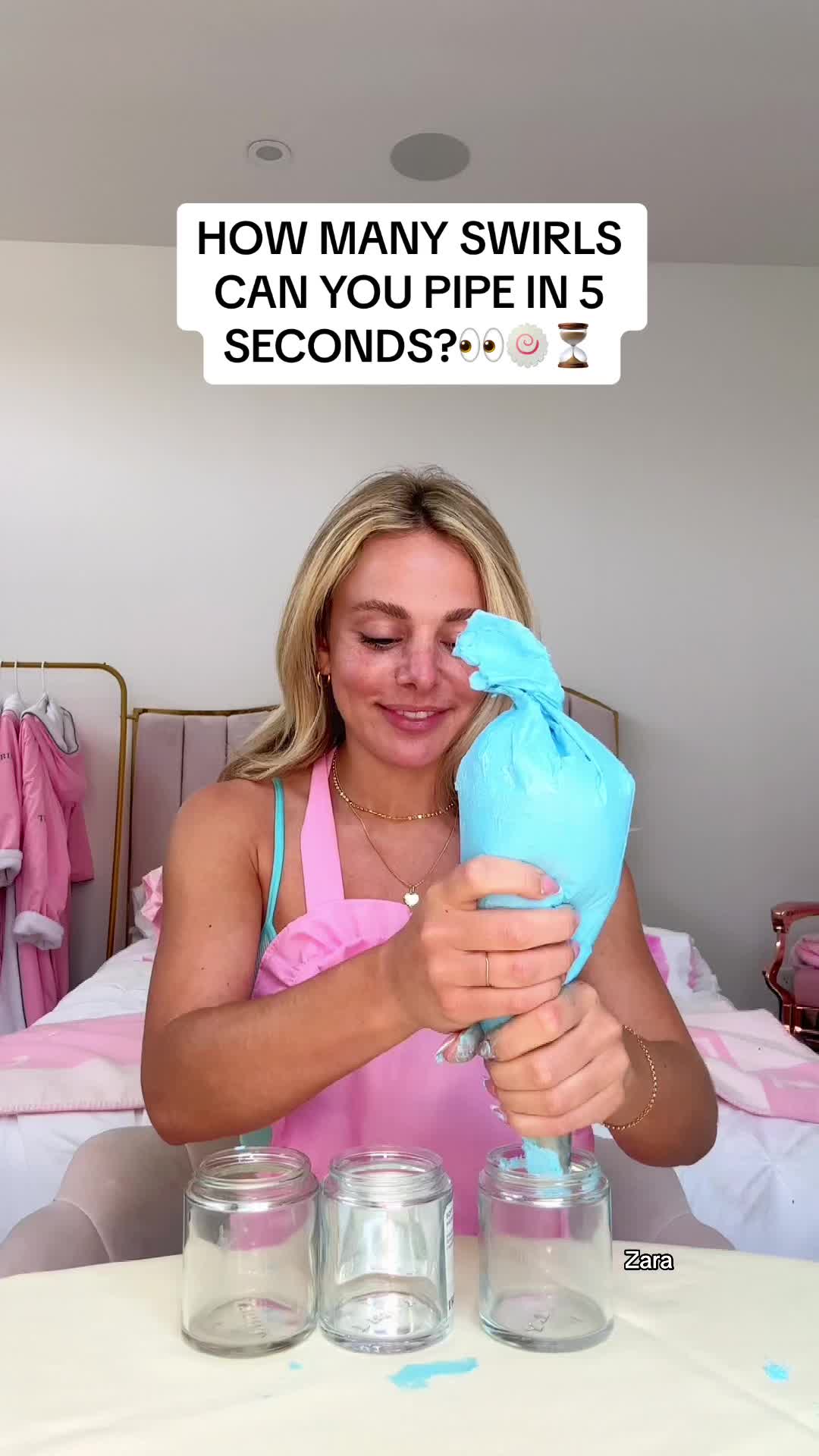
- "HOW MANY SWIRLS CAN YOU PIPE IN 5 SECONDS?" + A blonde woman in a pink apron and blue top holds a blue piping bag, smiling, with three empty glass jars in front of her.
- Audience
- The use of popular social media challenge format, emojis, and casual language suggests a target audience familiar with TikTok trends, likely younger women interested in DIY, beauty, or lifestyle content.
Why it works. Wraps a scrub demo in a piping speed challenge, aimed at TikTok viewers who engage more with games than straight product shots.
Challenge format with on-screen question at 0:00: "HOW MANY SWIRLS CAN YOU PIPE IN 5 SECONDS?🤯⏱️" Reframe your product's application step as a timed mini challenge with a specific number to beat.
- Hook
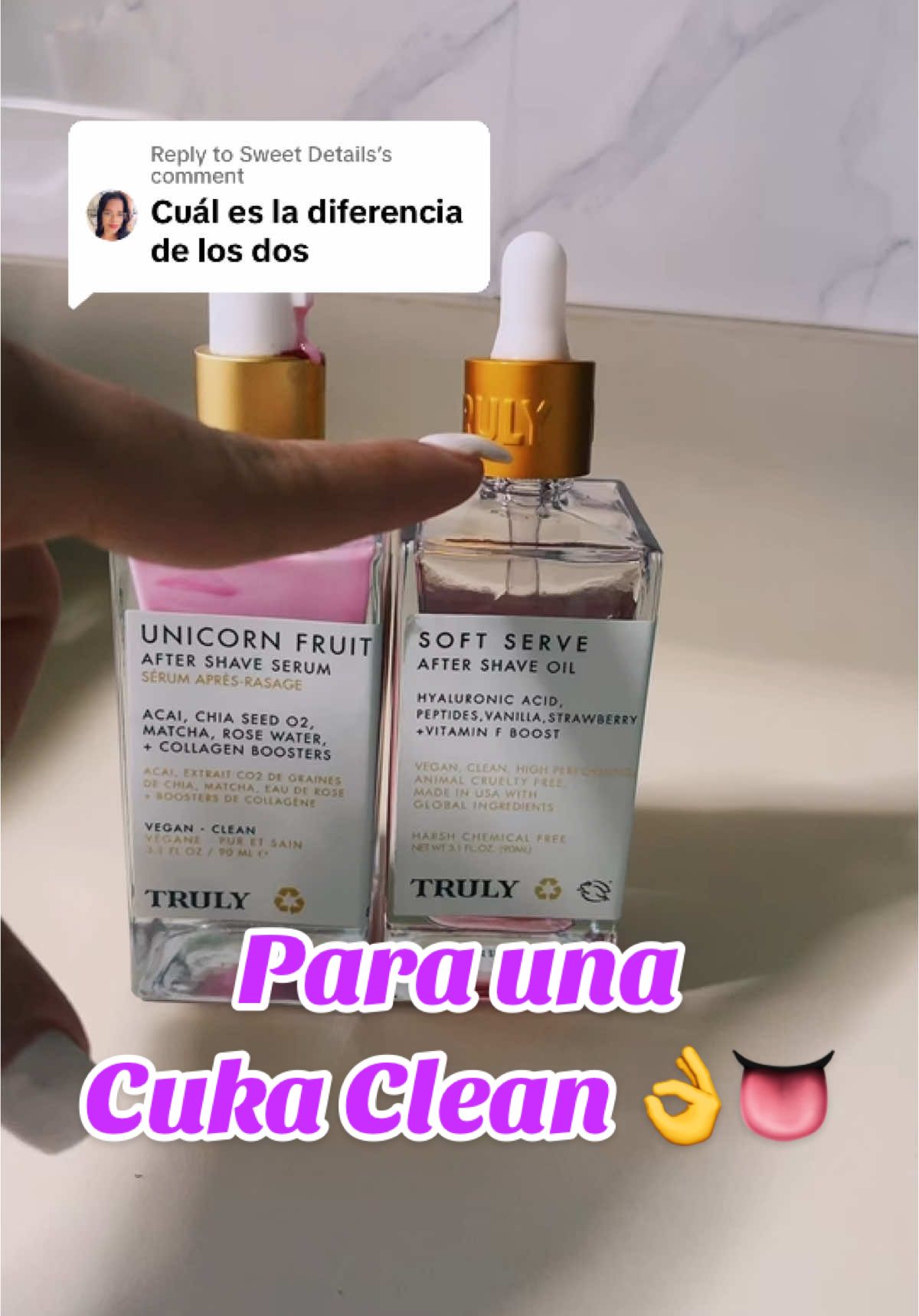
- 0:00-0:03, visual: A hand points to two square bottles with droppers, one pink and one clear, on a white surface. A speech bubble overlay says "Reply to Sweet Details's comment Cuál es la diferencia de los dos". audio: "El aceite y el serum que hará que tu cuca esté blanca, olorosa e hidratada."
- Audience
- Individuals seeking post-shave skincare solutions for intimate areas, indicated by the spoken phrase "tu cuca" and the product benefits like whitening, hydration, and preventing ingrown hairs.
Why it works. Answers a real follower's comment about the difference between two products on camera, aimed at shoppers already comparing the oil and the serum.
Directly answers a user comment and question at 0:00, "Reply to Sweet Details's comment Cuál es la diferencia de los dos". Screenshot an actual customer question from your comments and build a short video that answers it directly on screen.
- Hook
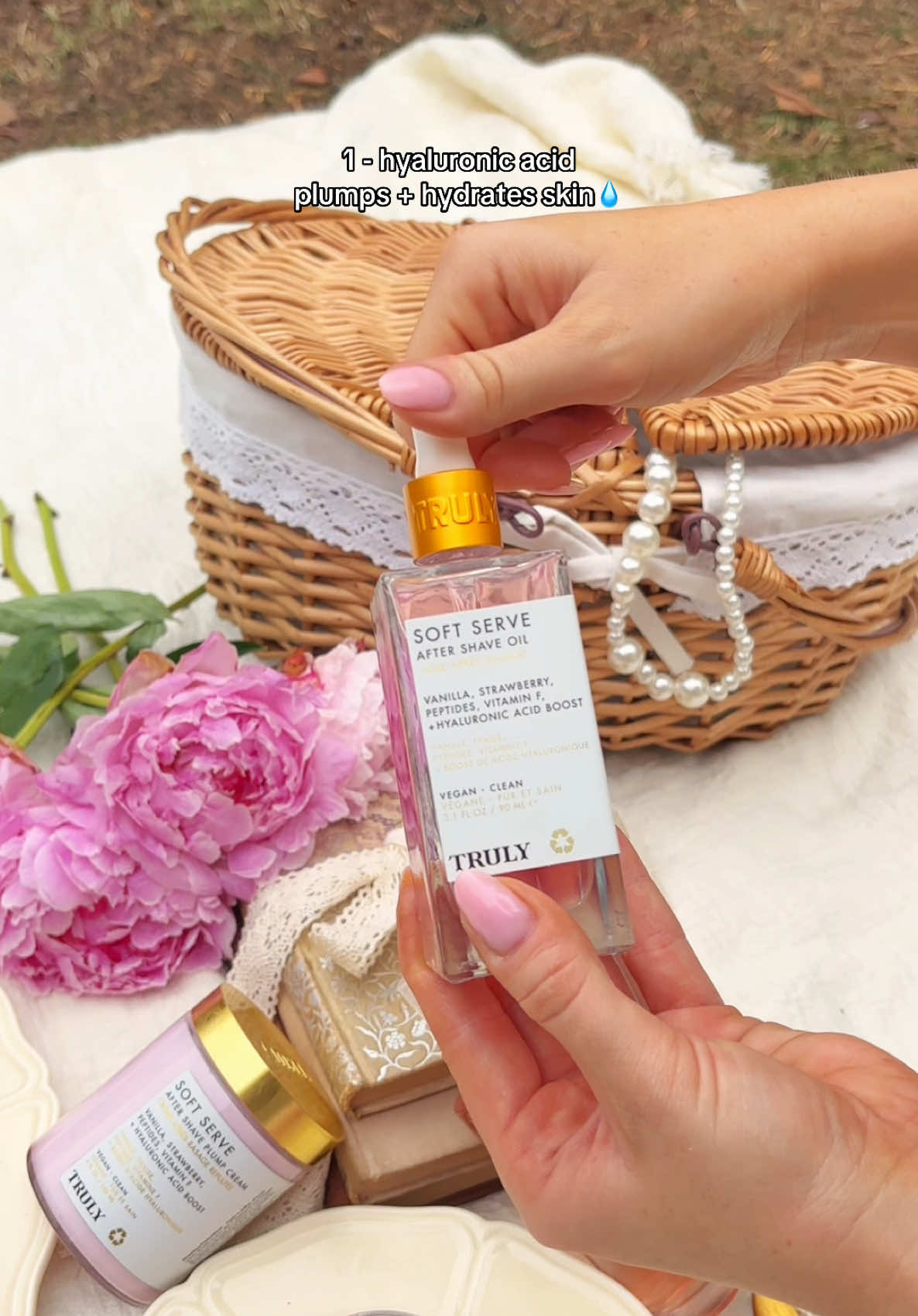
- "3 reasons our Soft Serve oil is viral" + a clear rectangular bottle being filled with a pink liquid containing small pink spheres from a machine.
- Audience
- Individuals interested in skincare, particularly post-shave care, who value natural ingredients and seek solutions for skin hydration, bumps, and exfoliation. The aesthetic of the picnic setting and pink products suggests a target audience that appreciates self-care and aesthetically pleasing products.
Why it works. Uses process footage of oil being piped into a bottle to back up a virality claim with a numbered reason list, aimed at viewers who like behind-the-scenes content.
Opening with a bold claim and a visual of product creation: "3 reasons our Soft Serve oil is viral" at 0:00-0:02, showing the bottle being filled. Pair a claim about your product's popularity with behind-the-scenes footage of how it's made or filled.
- Reach
- 216 upvotes · 140 comments · r/Ulta
A community is already discussing this in r/Ulta. Show up there authentically and answer the thread before a competitor does.
Who amplifies them
The creator amplification layer breaks into three distinct groups.
Third-party TikTok Shop affiliate sellers are the most commercially active. The account @ttshopofertasdeldia posted a Coco Cloud deodorant product with 59,696 engagements, operating as a direct TikTok Shop seller rather than an organic reviewer. @gigibella5 posted a Spanish-language after-shave oil review (21,015 engagements) tagged with TikTok Shop signals.
Gifted and organic creators include @Erika (127,135 engagements on an after-shave oil video), @sarah lynn (39,396 engagements unboxing a Truly Beauty advent calendar gifted ahead of the holiday season), and @Sabrina Mercado (40,720 engagements on a post tagging both Truly Beauty and Sprouts Farmers Market, suggesting retail visibility is also generating creator content).
The internal brand team functions as its own creator engine: Zara Brillo (Head of Social), Anna Callahan, and Tyler Moore appear as on-camera talent across YouTube tutorials, with Zara driving the highest-view content (butt shaving, body acne, bikini line routines). This internal creator model blurs the line between brand content and influencer content, which is structurally why Truly's TikTok looks organic rather than branded.
Reddit discussion is unsolicited and mixed: a July 2024 r/Ulta thread ("Genuinely who is buying Truly?") with 216 upvotes and 140 comments reflects skepticism about product efficacy and value at the current price points, and a May 2026 post on r/whatnotapp links the brand to clearance pricing at Marshalls, a signal worth noting as a perception risk.
07 Organic & video
The organic content engine: the videos, creator posts, and community presence earning attention without paid spend.
Truly's organic video machine runs on taboo specificity: every high-performing piece of content names a body-care problem most brands won't say out loud. The brand account @trulybeauty on TikTok posts demo and ASMR-format content around "piping" body butter (1.27M engagement on a May 2024 video), satisfying shave routines, and challenge-format posts where viewers pick a "winner" between two products. The YouTube channel mirrors this with long-form how-to videos from internal team members: Zara Brillo's "How to Shave Your Butt" tutorial (46K views), "The TRUTH About How I Cured My Body Acne in 4 Steps" (213K views), and the Coco Cloud shave routine (216K views) are the clearest evidence of what performs.
Read the full breakdown+3▾
Three standout posts from the evidence:
- A May 2024 TikTok "piping" body butter competition video: 1.27M engagements, categorized under ASMR, satisfying, and challenge formats. This is the highest single-post engagement figure in the evidence set.
- A YouTube compilation of their viral TikTok content: 182,511 views, which demonstrates that repurposing short-form hits as a YouTube long-form compilation is a real traffic-generating format for them.
- A January 2025 TikTok body oil "star" post: 96,235 engagements, linking the TikTok content directly to their ULTA listing ("ultafinds").
The dominant formats are: ASMR piping/swirl demos, challenge-and-pick-your-winner posts, and tutorial-format routine videos framing a specific body problem (strawberry legs, butt acne, bikini line irritation). The hook pattern across all high performers is naming the body part or problem explicitly, which earns attention from users searching for solutions to problems no mainstream brand will address.
08 Affiliate & partners
How the brand turns creators and partners into a tracked, variable-cost acquisition channel, and how the program is structured.
Truly runs an active TikTok Shop presence with a clear affiliate-seller ecosystem, evidenced by multiple TikTok Shop-tagged creator posts. The brand's website also links to its own affiliate/partner program (signaled by the owned site evidence), though the specific platform powering it is not visible in the evidence. The Reddit clearance-pricing signal (Marshalls appearances) suggests wholesale inventory overhang may be displacing some DTC and TikTok Shop demand at full price.
09 The playbook
The channels are not separate. They are one system where each stage feeds the next. Here is the read, then the plays to run tomorrow.
The inferred playbook
Truly built a retail beauty brand from zero by claiming a content niche so specific it had no competition, then used that organic TikTok authority as the proof point for retail buyers at ULTA and Target.
The brand chose body-care problems (butt shaving, body acne, bikini-line irritation) that no mainstream beauty brand would make content about, which meant zero content competition and high-intent search audiences. The virality was structural, not lucky.
Rather than outsourcing to influencers from the start, Truly built an in-house content team (Zara Brillo, Anna Callahan, Tyler Moore) that could post taboo content without the reputational risk a paid influencer might feel. This gave the brand creative control and a consistent face at a fraction of influencer cost.
Dig deeper+3▾
The brand's biggest organic moment (a body-butter video that crossed 1.27M engagements) was the proof of demand behind the pitch to ULTA, which now carries 57 SKUs. The organic audience was the proof of demand that earned shelf space, not the other way around.
With organic search at 43.8% of visits and direct at 31.6%, the brand's paid spend (Google at 8.3%, Meta at 2.5%) functions more as a retargeting and conversion layer than a cold-acquisition engine. The discount-plus-gift-stack Meta ads are structured to convert warm audiences who have already seen the brand organically.
A 216-comment Reddit thread questioning whether the products actually work and clearance appearances at Marshalls are public signals of a product-efficacy perception problem that the content engine alone cannot fix long-term. The traffic trend reinforces this: the TikTok engine that built the brand appears to be running at lower fuel than its peak.
Claim the body-part content niche your category is too polite to touch
The proofTruly's YouTube and TikTok library is almost entirely built around titles no mainstream brand would publish: "How to Shave Your Butt," "How I Fixed My Butt Acne," "The Truth About Shaving Down There." Their 213K-view body acne video and 46K-view butt-shaving tutorial attracted massive organic traffic specifically because competitors left those search queries empty.
The adaptationMap every body part, symptom, or embarrassing use-case in your category that established brands refuse to name in their content. For a supplement brand, that might be "why do I bloat after eating X?" For a fitness brand, it might be "how to stop chafing on your inner thighs." Create one tutorial video per un-addressed topic, titled in the exact words a customer types into search, not in branded or clinical language. Start by searching your category keyword + "reddit" to find what people are actually too embarrassed to Google publicly, then make content that answers it. Because the mechanism is content vacuum, not virality, early entrants in unaddressed niches earn compounding organic views at near-zero CAC.
Run an internal creator model before paying influencers
The proofTruly's highest-view YouTube content (216K, 213K, 182K views) was filmed by named internal team members: Zara Brillo as Head of Social, Anna Callahan, and Tyler Moore. This gave the brand editorial control over taboo content that an outside influencer might refuse or soften, and it cost the brand a salary rather than a per-post fee.
The adaptationBefore building an influencer budget, identify one person on your team (or hire specifically for this role) who can speak credibly and candidly about your product's most specific use-cases on camera. Give them a recurring content format: a weekly routine video, a tutorial series, a product teardown. The format consistency matters more than production quality at the start. This works because internal creators can say things external influencers won't risk their personal brand saying, and the accumulated content becomes a searchable asset the brand owns.
Use ASMR and "pick your winner" challenge formats to resurface evergreen products
The proofTruly's single highest-engagement TikTok post in the evidence (1.27M engagements, May 2024) was a piping body butter competition video with no explicit sales message: it was purely satisfying visuals of body butter being piped, with a "pick your winner" mechanic. A June 2026 version of the same format (swirls) shows they run this format repeatedly across product lines.
The adaptationTake a product with visual texture (a food product, a paint, a supplement powder, a lotion) and build a repeating content format around purely satisfying visual manipulation of that product paired with a binary choice ("which one wins?"). The format generates comment engagement through a low-friction question, which algorithmically recirculates the post. The first step is filming three variations of the same texture-led format, posting them one week apart, and measuring which hook drives the most "I'd buy this" comments versus pure entertainment comments. The mechanism is engagement arbitrage: comments from people picking a winner cost the algorithm nothing but extend reach significantly.
Localize paid creatives into Spanish before competitors do
The proofTruly is actively testing a Spanish-language Meta UGC talking-head ad ("Corran, porque Truly tiene una promoción increíble") and has organic TikTok creator content from Spanish-speaking creators (@gigibella5 with 21K engagements on a Spanish-language after-shave oil review, @Erika with 127K engagements on an after-shave oil video). The brand is already seeing organic Spanish-language creator performance before fully committing to paid localization.
The adaptationIf you have any organic signal from Spanish-language creators engaging with your product, that is your green light to test paid creative in Spanish before your English-language competitors do. The first step is taking your single best-performing English UGC talking-head ad, filming a Spanish-language version with a bilingual creator from the same demographic, and running it as a direct A/B against the English version at the same budget. The CPM on Spanish-language paid social is structurally lower in most beauty and wellness categories because fewer brands compete in that creative inventory, so the same budget produces more reach. The caveat: this only compounds if your site, checkout, and customer service can serve Spanish-speaking buyers; if not, fix conversion first or traffic is wasted.
Let retail distribution generate organic creator content without recruiting it
The proofA January 2025 TikTok post from creator @Sabrina Mercado (40,720 engagements) tagged both Truly Beauty and Sprouts Farmers Market in a haul video, and a November 2025 creator unboxed a Truly Beauty advent calendar tagged alongside @Ulta Beauty. Neither post appears to be a paid placement: the retail shelf presence triggered the content organically because consumers who discover a brand at ULTA or Target naturally create "found at the store" haul content.
The adaptationWhen you land any retail placement, even a test at a regional chain, brief your DTC email list and social following about where to find you in stores before the product hits shelves. A "find us at [retailer]" post from your owned channels prompts your existing community to create unprompted "I found it!" haul content when they discover you at retail. The mechanism is that retail discovery feels like a social status moment ("I found the brand I follow"), which generates UGC that retail brands with no pre-existing community cannot replicate. The first step is sending an email and social post 48 hours before any retail launch with the specific store name, so your community knows to look for it on their next visit.
You just read how Truly Beauty does it. Tomorrow it is someone else.
Every morning we take one company that is actually growing and break down where its customers come from: the ads still running after a year, the channel doing the real work, and the play you can run this week.
Systemaic · directional intelligence. Traffic, spend, and reach figures are SimilarWeb-style estimates and qualitative reads of public data, not audited numbers. Built on real public receipts.
// teardowns with a similar GTM motion
sources & receipts (2)
Live ad libraries: meta ad library · google ad library
Traffic, spend, and revenue figures are estimates as noted in the report; the links above are the primary public artifacts.