- 01Build an ambassador recruitment ad modeled on Comfrt's 244-day Meta creative.
- 02Launch a commission-only TikTok creator test before spending on paid ads.
- 03Write a Google text ad anchored to your product's emotional or wellness identity, not its features.
- 04Film a new-drop announcement in Comfrt's flat-lay montage format.
01 Snapshot
The one-glance read on who they are and how they grow. Each point is verifiable from the receipts above.
Comfrt sells slightly weighted hoodies, loungewear, and blankets (core hoodies retail $100-$170, sale $35-$75+, with the catalog spanning $19 tees to the $425 Dreamer Blanket, sale $99) built around an anxiety and mental health identity, launched in August 2022 by solo founder Hudson Leogrande with $50K and now claiming ~$700M in 2025 annual revenue (founder-reported, unaudited).
Creator-led at industrial volume: 350,000 commission-only affiliates flood TikTok Shop daily before any paid media runs.
~15.2M estimated monthly visits (+13.2% over the last 3 months), 4,087 active Meta ads and 3,000 active Google ads as of 2026-06-25, 1.29M Instagram followers, and the brand claims the #1 lifestyle/apparel ranking on TikTok Shop.
Hudson Leogrande on the sequencing: he ran zero paid advertising until the TikTok creator flywheel was producing revenue, then layered spark-ad spend only on top-performing affiliate clips (source).
Comfrt's most durable Meta ad is not a product ad but an ambassador recruitment ad promising "Make up to $30,000/Month," meaning paid budget actively grows the organic creator army while simultaneously functioning as lifestyle product placement.
02 How it unfolded
The order the channels came online. Sequence is strategy: what they did first, and what they layered on once demand existed.
03 Traffic & channel mix
Estimated demand, the channel split behind it, and the keywords and referrers doing the work. Directional modeling, not audited analytics.
Traffic sources
Top search keywords
| Keyword | Volume | Weight | CPC |
|---|---|---|---|
| comfrt | 120k | $4.82 | |
| comfrt hoodie | 61k | $1.97 | |
| cmfrt | 35k | $5.73 | |
| comfort | 80k | $4.58 | |
| comfort hoodie | 14k | $0.97 |
Top referring sites
Closest competitors by audience
~15.2M estimated monthly visits, up +13.2% over the last 3 months. The channel breakdown reveals a paid-dominated acquisition model despite the organic-UGC brand narrative: Search Paid (20.4%), Social Paid (15.3%), and Display Ads (15.2%) together account for just over half of all traffic, with Direct at 20.9% reflecting genuine brand recognition. Search Organic contributes only 11.1%, Email 9.7%, Social Organic 3.3%, Referrals 3.2%, Affiliate 0.7%, and Gen AI 0.2%. The 3.3% Social Organic share against a 350,000-affiliate army is the key tell: TikTok UGC drives purchase intent, but the actual site visits are routed through paid spark ads and retargeting, not organic link-clicks from creator posts.
Search terms they capture include "comfrt" (119,830 monthly searches across the web), "comfrt hoodie" (61,150/mo), "cmfrt" (34,760/mo), "comfort" (80,350/mo), and "comfort hoodie" (13,730/mo), all branded and near-branded demand they are monetizing with the 20.4% Search Paid allocation. Top referring domains include winninghunter.com and shophermedia.net, both deal-aggregator sites consistent with the brand's heavy flash-sale cadence. Closest competitors in the similarity set: Alo Yoga, Lululemon, Athleta, Aritzia, Vuori, and Quince.
04 Channel map
Not traffic share. How much weight the growth system actually puts on each channel, with a one-line read on the role it plays.
What drove growth
05 The creative doing the work
Each exhibit shows the actual asset, an X-ray of why it works, a status, and a play you can adapt. This is the heart of the teardown.
Comfrt runs 4,087 active Meta ads and 3,000 active Google ads as of 2026-06-25, a footprint sized for high-volume creative testing and broad retargeting of audiences generated by the TikTok creator army.
Meta proven winners (longest-running):
"BECOME AN AMBASSADOR, Make up to $30,000/Month" (running ~244 days as of 2026-06-25 across multiple image and dynamic ad variants)
- Hook: A person in matching Comfrt sweatsuits stares into camera; bold text overlay reads "BECOME AN AMBASSADOR / Make up to $30,000/Month."
- Why it works: This ad recruits affiliates rather than buyers. Each click that converts into a new creator generates commission-only UGC at zero additional ad cost: the ad pays for itself not in direct sales but in organic content production. The model wearing the product simultaneously functions as lifestyle placement, so every impression does double duty even for viewers who never apply to become ambassadors.
- Run this play: Build a Meta image ad recruiting affiliate sellers with a bold monthly income figure derived from your actual commission structure. Comfrt's single most durable Meta creative sells the business model, not the product.
"Are you seeing this?" (proven winner, b-roll voiceover video)
- Hook: A voiceover opens with "Are you seeing this?" over a top-down shot of four colorful hoodies folded on a fluffy white blanket.
- Why it works: The curiosity hook withholds context deliberately, forcing the viewer to keep watching before any brand name or price appears. Multiple colorways in a single frame address the "will this match my style?" objection passively. The product does the selling before a spokesperson says a word.
- Run this play: Film a flat-lay of your 4 best-performing SKUs on a textured surface and open with a spoken curiosity question that withholds the brand name. Test it as a 15-second Meta or TikTok video ad against your existing face-to-camera formats.
"the new dreamer blanket colors are so perfect" / "my dreamer blankets are all i need during that time of the month" (proven winner, product demo videos)
- Hook: First-person POV of someone falling onto or wrapped in a large textured blanket; lowercase on-screen text reads as a personal, unfiltered thought.
- Why it works: Lowercase casual text mimics an organic TikTok post rather than an ad, reducing ad aversion. "All I need" collapses the purchase decision into an emotional necessity claim rather than a feature list. The second variant targets a specific recurring pain point without being explicit, reaching a defined audience with minimal copy.
- Run this play: Write ad copy for a comfort or wellness product as if texting a friend, in lowercase, with a first-person "this is all I need" frame. Pair it with a first-person POV clip rather than a talking-head format.
What they are testing now: A wave of new colorway and print announcement videos ("COMFRT DROPPED COW PRINT," "NEW COMFRT DROP"), brand collabs (a second drop with We're Not Really Strangers, a card game and emotional connection brand, and a Brazil national team colorway), and a retention-proof angle ("Watch this. Still fits the exact same."). The shift from emotional-comfort hooks toward product novelty and durability signals they are testing purchase-intent frames beyond the mental health identity.
On Google, the longest-running proven winner (running ~687 days as of 2026-06-25) is an image ad showing a dog in a branded hoodie: pure lifestyle curiosity with no explicit product pitch. Text ads anchored to two semantic frames have held for 400-600 days: gift positioning ("Give the Perfect Gift - Gift Comfrt") and mental-health positioning ("Its Comfrt Season - Designed For Anxiety & Stress," "Designed For Anxiety & Stress - Calming Weighted Blanket"). Current Google tests are new image and text variants, indicating format iteration on top of a stable keyword-and-angle foundation.
- Running
- 45 days (longevity = it's converting)
- Hook
- "Are you seeing this right now?" + visual of four folded hoodies in pink, red, black, and blue with large white and pink text on the back.
- Audience
- Young women interested in mental health and loungewear, signaled by the creator's appearance and the affirmation-based text on the products.
Why it works. Opens like an urgent tip-off from a friend rather than a scheduled promotion, priming viewers for the scarcity message about a fast-selling collab.
Anchoring on past sell-out speed (0:12 - "sold out in two hours") Open your video with a direct, urgent question addressed to the viewer before revealing the product, especially for limited or restocked drops.
- Running
- 43 days (longevity = it's converting)
- Hook
- "the new dreamer blanket colors are so perfect 🌸🍓🍇🫐" + visual of a woman lying under a bright pink textured blanket.
- Audience
- Home decor enthusiasts or comfort-seekers looking for vibrant bedding ("dreamer blanket").
Why it works. The casual lowercase caption style reads as a genuine customer reaction to new colors rather than a brand announcement, fitting the UGC placement.
High-saturation color contrast (0:00) Write your on-screen caption in lowercase, casual phrasing rather than title case when the goal is to look like organic customer content.
- Running
- 43 days (longevity = it's converting)
- Hook
- "my dreamer blankets are all i need during that time of the month" + a woman jumping into a massive pile of pink, textured blankets.
- Audience
- women experiencing menstrual discomfort ("that time of the month")
Why it works. Attaches the product to a specific recurring discomfort, period cramps, instead of generic coziness, giving a concrete reason to buy beyond comfort.
Specific use-case text overlay at 0:00: "during that time of the month" Tie your comfort product to one specific, recurring discomfort your audience already names among themselves, not a generic comfort claim.
Show 7 more exhibits
- Running
- 17 days (longevity = it's converting)
- Hook
- "The number one most sold blanket in America" spoken over a visual of a person in a yellow hoodie unwrapping a yellow blanket on a bed.
- CTA / offer
- "up to 65% off"
- Audience
- People looking for cozy home goods, specifically those interested in 'mental health supporting' products and 'calming weight' blankets.
Why it works. Sequences a best-seller claim and a restock-scarcity warning ahead of the discount, so blanket shoppers see two reasons to trust the deal before they see the price cut.
Authority Claim + Badge (0:00) - 'Most Sold Blanket In America' Open with a specific best-seller ranking claim, follow with a restock-scarcity line like 'these sell out fast,' then reveal your discount last.
- Running
- 14 days (longevity = it's converting)
- Hook
- "If you haven't already heard Comfrt just did a second collab with We're Not Really Strangers" + woman holding a bright red hoodie with white text.
- CTA / offer
- "You can literally get the entire set from the collab for only the price of the hoodie alone."
- Audience
- Gen Z/Millennial women interested in mental health/affirmations and oversized streetwear (evidenced by the WNRS collab and fit guide).
Why it works. Framing it as a second collaboration signals proven demand from the first drop, borrowing credibility from a repeat partnership over an unproven one.
Hard Scarcity Claim (0:10) When announcing a repeat collaboration, explicitly say it's the second or third time, since repetition itself signals proven demand.
- Running
- 13 days (new — still being tested)
- Hook
- "If you're a Brazil fan you need to run and get your hands on Comfrt's brand new crew neck" + Woman tosses a soccer ball in the air and catches it while wearing a bright yellow tracksuit.
- CTA / offer
- Brand new collection launch with 5 other country colors available.
- Audience
- Brazil soccer fans ("If you're a Brazil fan") and women looking for oversized loungewear.
Why it works. Calls out a specific national fanbase by name before the product reveal, so the ad only holds attention from shoppers who already identify with that group.
Niche-specific hook at 0:00: "If you're a Brazil fan you need to run" Open by naming the specific identity group your limited edition targets, a team, a city, a fandom, before you show the product.
- Hook
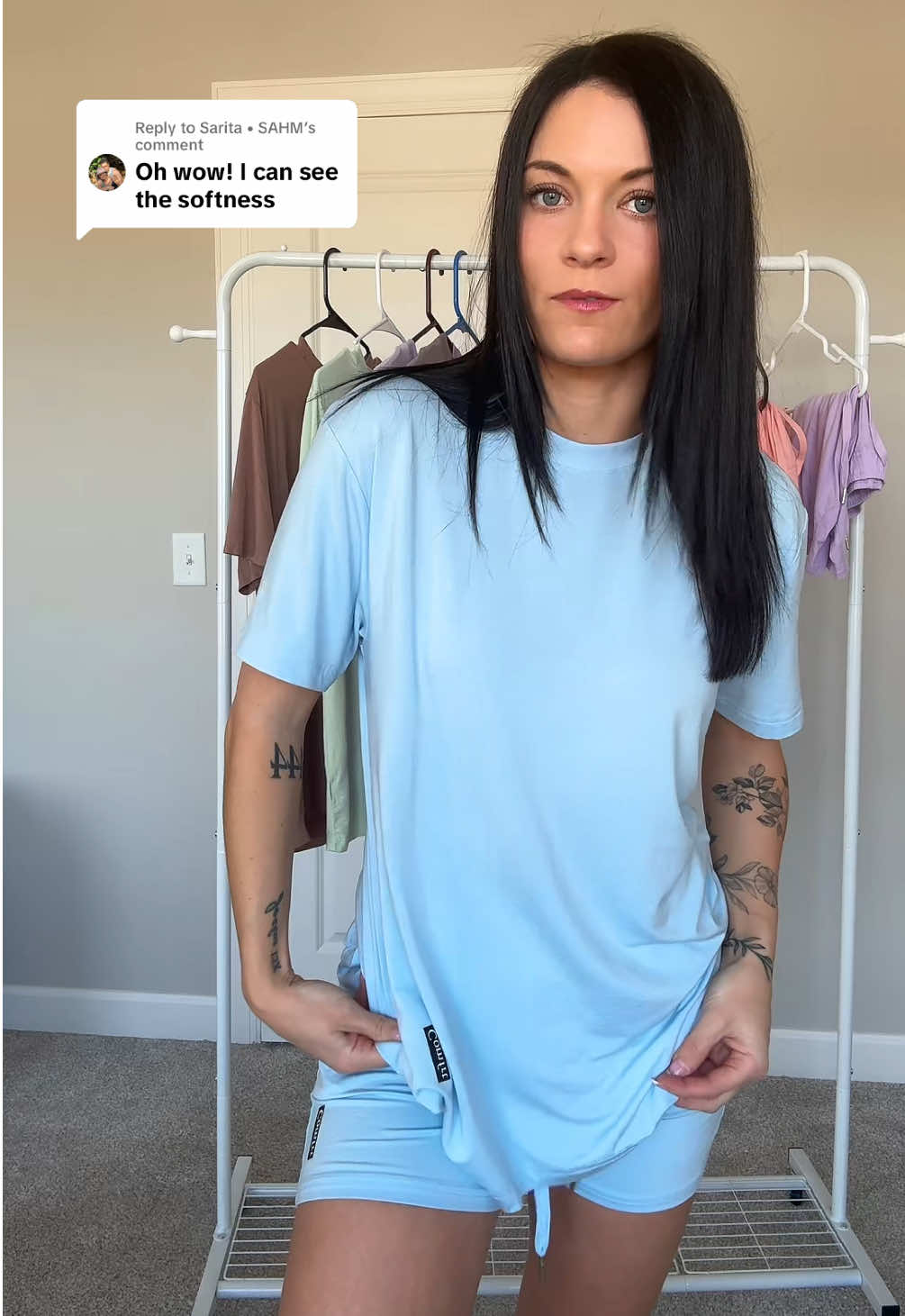
- 0:00-0:03: A woman in a light blue t-shirt and matching shorts pulls at the fabric of her shirt. On-screen text reads "FEELS LIKE BUTTER" with a butter stick emoji and a blue heart emoji. A comment bubble from "Sarita • SAHM's" reads "Oh wow! I can see the softness".
- CTA / offer
- Flash Sale: Comfrt Cloud Tee for $25.00 (originally $45.00) and Comfrt Cloud Shorts for $19.00 (originally $40.00).
- Audience
- Women who work from home or are stay-at-home moms, or anyone seeking comfortable loungewear. The mention of 'ripping off jeans' and 'throwing on something soft and cozy' directly targets those who prioritize comfort at home.
Why it works. A screen text claim paired with a comment reacting to the same softness turns one person's opinion into visible peer confirmation in real time.
0:00-0:03: The creator pulls at the fabric of her shirt while on-screen text reads "FEELS LIKE BUTTER" and a comment bubble says "Oh wow! I can see the softness". Overlay a food or object comparison for your product's texture, then let a genuine viewer comment agreeing sit on screen as proof.
- Hook
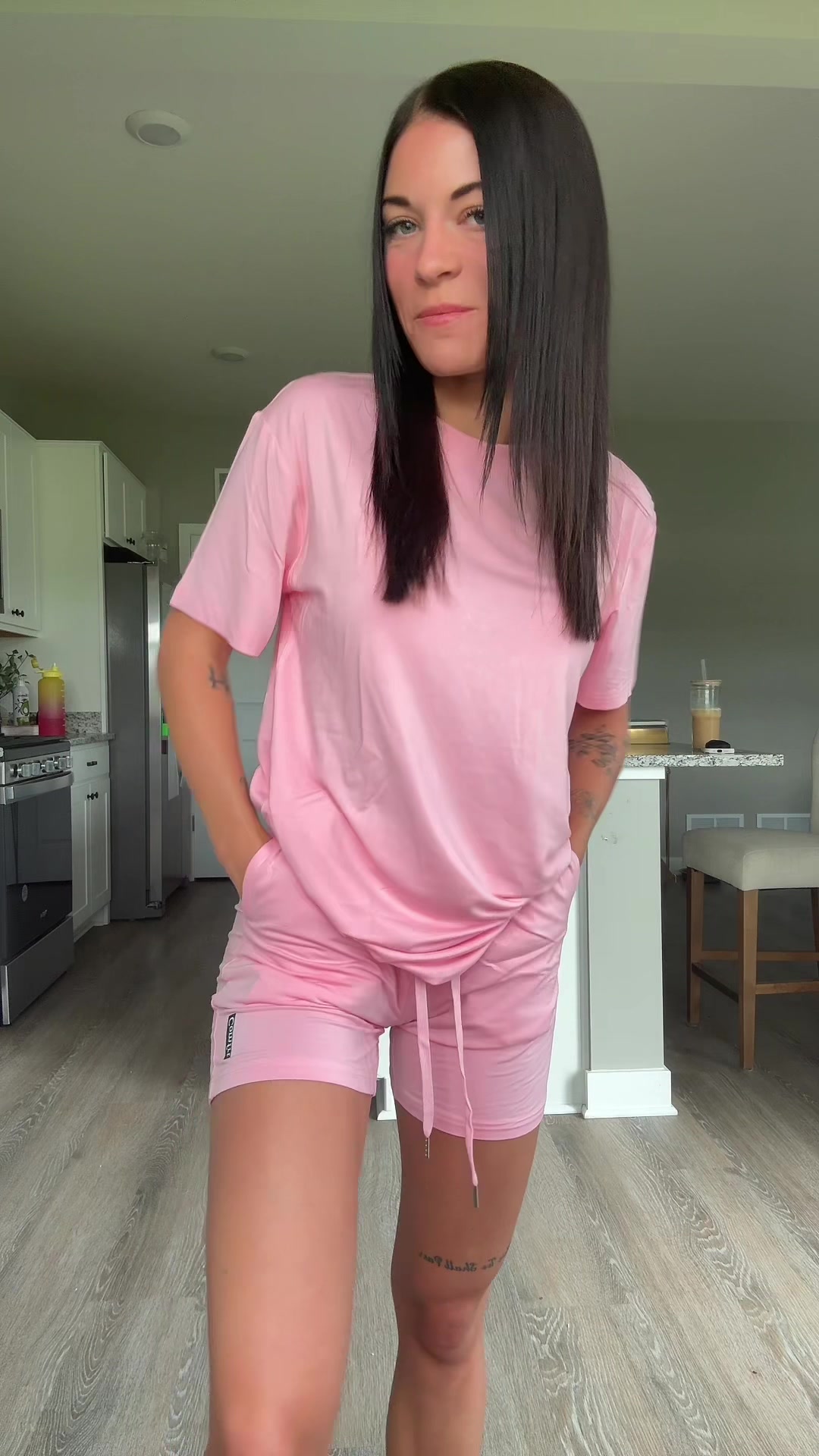
- 0:00-0:03: "I just bought this new Comfrt Cloud Tee Cloud Short set in so many of their pastels because they're limited edition." Visual: A woman in a pink t-shirt and shorts holds a stack of pastel-colored clothing.
- CTA / offer
- Flash Sale: $22.00 (originally $45.00) for Comfrt | Cloud Tee, with free shipping.
- Audience
- Targets individuals who work from home, dislike wearing jeans, or prioritize comfort, as indicated by the speaker's direct address: "If you work from home like me or you hate wearing jeans or the second you get home from anything you put on something comfy like you need one of these."
Why it works. A creator names the exact product line and shows she bought several pastel colorways herself, turning her own multi-buy into proof the limited run is worth grabbing.
Sensory description and on-screen text at 0:00-0:05: The speaker says, "I just bought this new Comfrt Cloud Tee Cloud Short set..." and on-screen text reads "Buttery soft sets >". Have your creator name your exact product or collection and show she bought multiple colorways, then tag the colors as limited edition to justify buying more than one.
- Hook
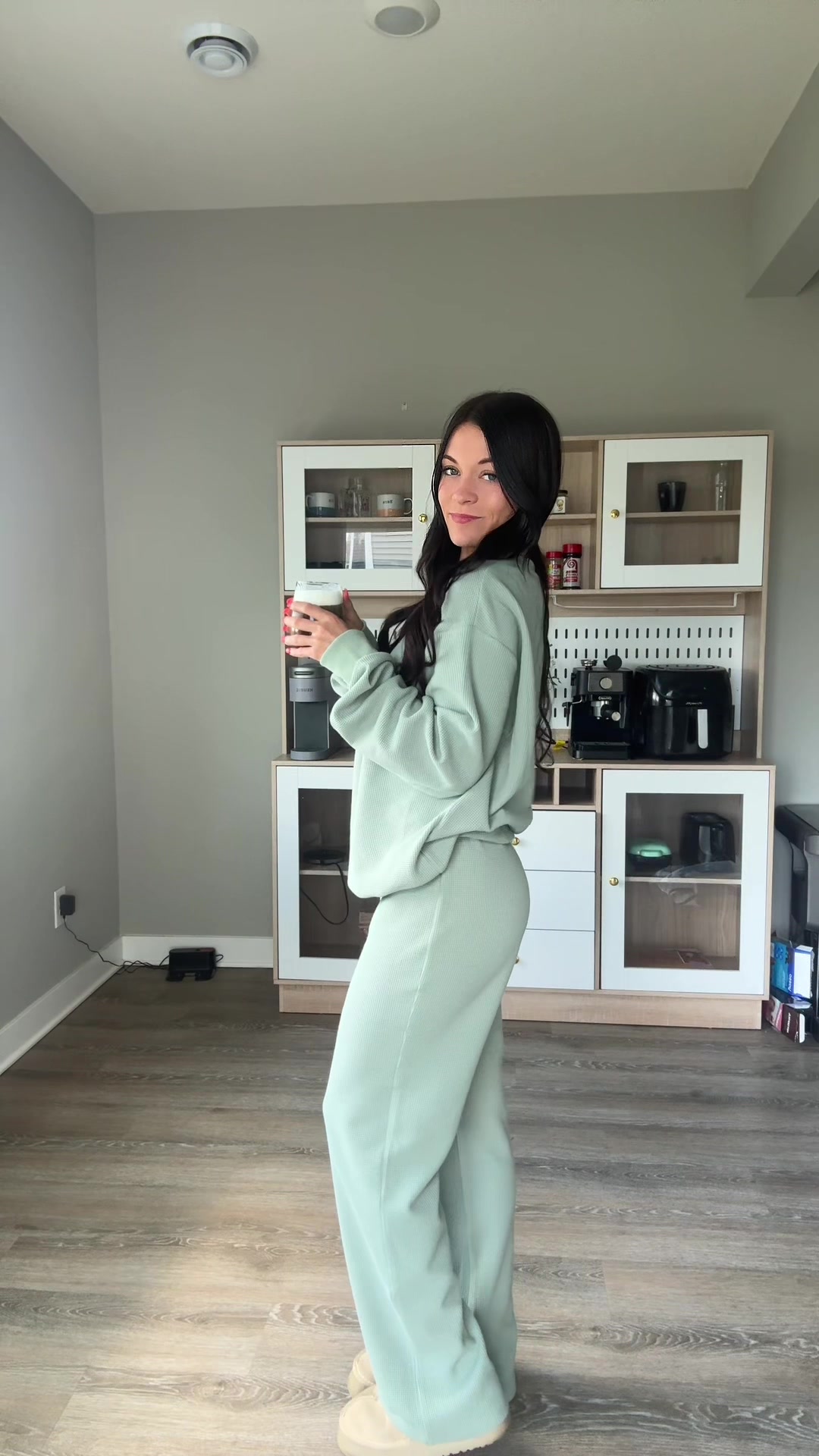
- "The coziest set" + A light green waffle-knit loungewear set is shown folded on a textured pink blanket.
- Audience
- Women who prioritize comfort and style in loungewear, likely interested in home activities like reading and working from home. The mention of 'matching sets' and 'comfy fit' appeals to those who value coordinated, relaxed attire.
Why it works. Showing the set folded on a contrasting textured blanket lets color and knit texture sell comfort before any spoken pitch starts.
Sensory appeal through visual and verbal description (0:00-0:03, "The coziest set"). Photograph your softest product folded against a textured surface and caption it with a one-line superlative claim.
- Reach
- 248 upvotes · 116 comments · r/Hoodies
A community is already discussing this in r/Hoodies. Show up there authentically and answer the thread before a competitor does.
Who amplifies them
The 350,000-affiliate TikTok Shop network is the core amplifier, with approximately 500 reported as "core" internal creators producing 10-20 pieces of UGC daily on commission-only terms (source).
Named top performers by engagement:
- Jordyn (TikTok Shop): 45M engagements on Cloud Shorts, 38M on Cloud Tee; the sensory demo format she uses is the most-replicated template in the affiliate base.
- Lainey// (TikTok): 1.7M engagements on Essential Oversized Tee using a flash-sale scarcity hook.
- Jordan Hilliard (TikTok Shop): 271K engagements on a ComfrtCore Double Layer Crop Tank demo.
- Adrienne (TikTok): 58K engagements on Cloud Pants with the hook "Unrestricted pants are my bestie."
- styledbylilea (TikTok): 53K engagements on a wide-leg sweatpants showcase.
- Elle Sneller (TikTok): 49K engagements with a colorway reveal ("THE BLUE. Are we kidding?!?").
- Anna Scott (TikTok): 35K engagements on a Cloud Pants sizing reference ("I'm 5'4 for reference, xs").
- Alexis Berentz (TikTok): 33K engagements on an "OBSESSED" hoodie and sweatpants reaction.
- Sarah Ramos (TikTok): recurring poster across new prints, drop announcements, and sizing, averaging 2K-11K per post.
On Instagram, ketomadesimple posted a "Comfrt vs. Amazon" dupe comparison reel (3,626 engagements), pitting the brand against cheap alternatives: a format that generates discovery from shoppers who would not already be searching for Comfrt.
Communities: r/Hoodies is the most active organic hub, with a standout 248-upvote, 116-comment thread in which a user researched post-wash durability over three months. Multiple threads cover quality concerns, shipping delays, and return policy complaints that the brand does not appear to engage with publicly. Affiliates extend the commission model into r/PromoCodeShare and r/referralcodes by posting referral links.
06 Organic & video
The organic content engine: the videos, creator posts, and community presence earning attention without paid spend.
Comfrt's organic content engine lives almost entirely in the TikTok affiliate network rather than in the brand's owned accounts. The top-performing creator clips share a consistent format: a relatable person in a natural setting demonstrating how the product feels, with short text overlays that describe sensation rather than product specifications.
Read the full breakdown+5▾
Jordyn is the highest-volume affiliate, with a Cloud Shorts clip at 45M engagements and a Cloud Tee clip at 38M (both via TikTok Shop). Her format is a touch-and-feel demonstration with a short sensory text overlay ("FEELS LIKE BUTTER") and a visible in-app comment from another user providing live social proof. This template is the most-replicated format across the affiliate base. Lainey// drives 1.7M engagements on the Essential Oversized Tee with a flash-sale scarcity hook ("I'd be doing you a huge disservice if I didn't tell you that Comfrt's oversized tees were on a massive sale"), and Elle Sneller generates 49K engagements on a new-colorway reveal with the hook "THE BLUE. Are we kidding?!?"
Three recurring formats account for the majority of affiliate engagement: (1) the sensory demo with a one-line feeling descriptor ("FEELS LIKE BUTTER," "the coziest set"), (2) the sizing reference video with exact body stats ("I'm 5'4, xs, for reference"), and (3) the flash-sale scarcity hook naming the product and discount in the first five words. A fourth format is appearing in the paid testing queue: the drop-announcement montage, a flat-lay of new product with "COMFRT DROPPED [X]" text overlay and no talking head, suggesting the brand is codifying product novelty drops as a repeatable paid-video format.
On YouTube, ComfrtClothing publishes many variants of the same lifestyle titles across colorways. The standout "2 Foot Height Difference" has 16.3M views using a relatable social concept over a product demo, while titles like "#1 Searched Hoodie On The Internet" and "The Most Googled Hoodie Of 2024" bake social proof directly into the video title, which functions as a hook in both search and suggested discovery before the video starts.
On Instagram, the brand's 1.29M-follower verified account posts product launches and seasonal content. The founder described reposting 300-500 customer tags per day on Instagram stories to manufacture the social signal that everyone is wearing the product (source); current story activity is not measurable from public data.
07 Affiliate & partners
How the brand turns creators and partners into a tracked, variable-cost acquisition channel, and how the program is structured.
TikTok Shop affiliate program is the primary distribution lever, with 350,000 enrolled creators per founder-reported figures. The model is fully commission-only: no upfront payments, weekly commissions on sales generated through TikTok Shop links (source). Creator outreach is reported to use AI-assisted automation to contact micro-creators at scale without a proportionally large internal team (source).
Read the full breakdown+4▾
Meta ambassador recruitment ads function as a dedicated paid channel for growing the affiliate program itself: multiple proven-winner ad variants (running up to 244 days as of 2026-06-25) lead with "Make up to $30,000/Month" and drive to an ambassador sign-up page. Paid media on Meta recruits the organic army on TikTok.
Direct referral tracking uses comfrt.com/[code] URL slugs visible in Reddit deal threads (e.g., comfrt.com/MESA2), enabling web-based referral attribution alongside TikTok Shop's native affiliate system.
No subscription model, tiered membership, B2B partnership, or retail wholesale presence is visible in public data.
08 In their own words
Pulled from interviews and community sessions. The quotes are the angle; the takeaway is what to do with it.
“Stop paying influencers. It doesn't work. It's irrelevant. It's outdated. Paying for content is done forever. Pay commission. Everybody on Tik Tok shops is commission. That's it.”
Expand
Hudson built Comfrt on a commission-only creator model, rejecting upfront influencer payments entirely: he recruited micro-creators at scale (500 internal, 350,000 affiliate) and put paid spark-ad spend behind their best content rather than buying placements. He pioneered the channel by first dominating Snapchat Stories with 1,000 creators posting daily before migrating the same playbook to TikTok Shop. Cash-flow was solved through a permanent pre-order system that let him collect revenue before buying inventory, funding hypergrowth from zero outside capital.
“we had a thousand creators doing two posts a day probably getting like 500 to 700 million views a month and it was all like cold traffic”
“we'll find them on Tik Tok. We'll go to their Instagram we'll DM them and then we have five other people DM them. So you'll get five messages from different people all maybe a mutual maybe not maybe verified maybe a little bit bigger but someone is going to get through to you.”
“My job as a founder, as an entrepreneur, is to mitigate risk at all cost. Pre-order mitigates risk. Dynamic price testing actually can mitigate risk. Having micro influencers that you pay commission to mitigates risk.”
“People don't buy a product, they buy a brand. If I have people that are like-minded, that talk about real life problems and relate to the consumer, I win. Why would I go have a celebrity face that is unrelatable to most people go promote my product?”
Run commission-only creator outreach from day one — no upfront spend. Pay creators only on sales, take all inventory and platform risk yourself, and pitch the annualized income ('75K over the year posting twice a week') rather than a one-off rate.
Break through to any creator with five simultaneous DMs from different accounts — find them on TikTok, pivot to their Instagram, send messages from multiple people (including current top earners who can share their own commission numbers as social proof).
Spark-ad every piece of creator content: put paid spend behind organic videos so creators still earn their commission while you scale what's already converting, rather than producing separate ad creatives.
Incubate a small internal creator squad (500 people, 3-5 posts/day each) and give them a live data feed — top hooks, best-performing colors, winning verbiage — via a shared Notion doc updated from data-scientist call reviews, so the whole group compounds off each other's learnings.
Use permanent pre-order to fund inventory without debt: list pre-order at a lower price even when stock is available, collect payment upfront, buy inventory with that capital, and ship 2 months out — disclosing the estimated ship date in at least five places to prevent chargebacks.
Making $1,000,000 Online Is EASY (If You Do This) | Hudson Leogrande ↗First Things THRST With Mike Thurston · 73k views · 61 min▶ View source“we were the first company ever to work with influencers and content creators on Snapchat. We would take a regular video that people would post and we would go and put a cold link like a traffic link to purelywhitedeluxe.com. No one knew who we were. We weren't running ads anywhere else.”
Expand
Hudson grew Purely White and Comfrt by identifying underutilized creator platforms early (Snapchat in 2020, then TikTok Shop), scaling to thousands of UGC creators with AI-automated outreach, and iterating content formats from data rather than instinct. He built on three pillars — marketing, product quality, and community (mental health charity tie-in) — while deploying attribution tools and a ChatGPT-based content-rating bot to optimize $500K/day in Meta spend.
“you'll put in the parameters of the person you want to reach out to... it will automatically outreach to their inbox on Tik Tok and then it goes right to your sample requests on the back end in Tik Tok drop. So you could just like message 5,000 people a day, get 3,000 people that want to get a product, you ship it to everybody, you flood the market and you win.”
“we'll actually take all of our creative content like all of our UGC videos and we'll upload them into uh like a like this bot where it's like a framework from chat GPT where we upload videos that have been winners that have made us a ton of money. And then we have the uh the bot actually rate the new videos coming in and it rates it 1 to 10 and tells us why it will blow up or why it won't.”
“three pillars is unbelievable marketing, incredible product quality, and then you have to have like a really great community of people.”
“we just flooded the market with content, made really relatable content with day-to-day people, no celebrities, and we just continued to pump out like really good products that people really loved.”
Find a creator platform before competitors do and scale aggressively: Hudson went all-in on Snapchat traffic links with 1,000+ creators before anyone else, hitting $10M/year on Purely White before the algorithm changed.
Automate TikTok creator outreach with a tool like Yuka AI: filter creators by GMV threshold and post frequency, then auto-DM 5,000/day and ship samples to everyone who responds to flood the market with authentic content.
Build a ChatGPT-powered content rating bot trained on your winning UGC videos: have creators self-submit new videos, score them 1-10 against your winners before posting, and only push high-scorers live.
Use a loose, data-driven UGC script structure — hook → personal try-on moment → FOMO call-to-action (sold out, limited sizes) — then test novel formats (street interviews, podcast clips) when existing formats plateau.
Pair brand growth with a cause tie-in (Comfrt donates to mental health charities) to build community loyalty and give creators a non-product narrative to authentically sell — it differentiates you from pure-product competitors who can copy your hoodie but not your culture.
Comfrt Will Hit $1B Bootstrapped: How Hudson Leogrande Did It ↗Operators Podcast · 63k views · 77 min▶ Listen“I have 500 1099s that make 10 to 20 pieces of content a day for me.”
Expand
Hudson built Comfort by deploying a 500-person 1099 creator network producing 10-20 pieces of UGC daily, then engineered virality by reposting 300-500 customer tags per day on Instagram stories to make wearing Comfort a social trend rather than an ad. He priced aggressively for accessibility, let customer feedback drive every product drop, and when a cash crunch hit in year two he invented a pre-order mechanism (50-55% of sales) that let him keep running ads and act as his own bank.
“We've made it a trend to post Comfort. And we repost about 3 to 500 people a day on our Instagram stories of people who just tag us wearing it day-to-day life.”
“We focused a lot of our energy and efforts on hook middle of content call to action.”
“Listen to the customer. Send the product to your creators. Have them sample it. Let them give you their feedback. And then you drop the product. And it's like people want to over complicate everything.”
“We were doing 50 to 55% pre-order on the website. We would continue to run ads at a very profitable rate, and people would be buying out of stock products on pre-order. That was what kept our business afloat.”
Build a paid 1099 creator network at scale: recruit hundreds of creators on flat daily rates to flood the zone with UGC, giving you content volume that no ad budget can buy cheaply.
Turn customers into a social proof engine: systematically repost every customer tag on stories daily so wearing your product becomes a visible social behavior, not just a purchase.
Engineer video structure (hook → mid → CTA) as a discipline across all creator content to retain viewers desensitized to standard ad formats.
Price for maximum accessibility, not margin maximization: make your hero product cheaper than every comparable competitor to drive volume, network effect, and word-of-mouth.
Use pre-orders as a cash-flow weapon when inventory runs out: take money upfront, defer shipment 60 days, and keep ads running to fund the next PO without outside capital.
$0 to $100M a Year Selling Products on TikTok & Snapchat | Hudson Leogrande ↗Foundr · 39k views · 50 min▶ View source“people do not need time to make a decision they need information”
Expand
Hudson grew Purely White Deluxe and Comfrt by recruiting massive networks of relatable micro-creators on untapped platforms (Snapchat, then TikTok) before paid ads or platform monetization existed there, paying them weekly commissions and running zero paid advertising until the creator flywheel was proven. He then ported the same creator network directly to Comfrt at launch, layered paid amplification on top of winning UGC, and scaled to #1 on TikTok Shop by combining paid budget with organic algorithmic lift. Every dollar of Comfrt revenue went back into inventory and ads, never salary.
“go get a ring light make the content that is authentic to you be as relatable as possible and you will get the best results for your videos”
“we had about at at our Peak 1,200 people a week posting for uh purely white deluxe on Snapchat about 5 to six times a week”
“when our creators start to do really well for us they actually become the Outreach so we'll pay them on the side a portion or a salary to go and do Outreach because they have had the results”
“go find 10 good creators that make great content for your brand and it will do everything and anything for growth find 10 and watch that happen”
Find platforms where creator rates are still cheap and no mid-roll ad programs exist yet — recruit hundreds of micro-creators there before the market prices in, pay weekly via PayPal or Social Snowball, and use cold traffic volume to compensate for low conversion rates.
Build a creator incubator: DM small creators with a blowup video, schedule a personal call with the founder, run a week-long onboarding in Notion covering content principles, then let them make content their own way — authenticity outperforms scripted ads.
Use your top-performing creators as paid recruiters — give them a side salary to do outreach to other creators because their personal income results close candidates faster than any pitch deck.
On TikTok Shop, put paid budget behind creator videos rather than only relying on organic — TikTok's algorithm sees engagement from paid traffic and pushes the video further organically, effectively doubling the return on ad spend.
Structure every ad in three layers: a strong hook, a middle section of personal experience and product differentiation, and a FOMO call to action (sold out, limited stock); UGC shot on an iPhone with a ring light consistently outperforms polished commercial creative.
09 The playbook
The channels are not separate. They are one system where each stage feeds the next. Here is the read, then the plays to run tomorrow.
The inferred playbook
Comfrt's acquisition loop starts on TikTok with commission-only creator content, recycles top clips as paid spark ads (TikTok's paid amplification format for existing organic creator clips), and saturates Meta and Google with retargeting while those same Meta ads simultaneously recruit the next wave of creators.
350,000 affiliates produce an estimated 10,000+ creatives per week (source), running a continuous content test at no upfront cost. Only the top performers generate commission payments and spark-ad amplification, meaning the brand's effective creative testing budget is funded by affiliate performance rather than internal production spend.
The brand reportedly ran zero paid ads until the TikTok creator flywheel was generating revenue (source), then layered spark-ad spend behind already-validated clips. The resulting paid traffic mix (Search Paid 20.4%, Social Paid 15.3%, Display 15.2%) retargets audiences who first encountered the brand organically, compressing the conversion funnel rather than building one from scratch.
Dig deeper+2▾
The longest-running Meta creatives recruit new creators rather than sell products, meaning paid Meta spend directly grows the organic UGC pool. More creators produce more content, which generates more warm audiences for retargeting, which is funded in part by the commissions the creators themselves generate: a compounding loop.
Despite 1.29M Instagram followers and a reported 300-500 daily story repost cadence, the brand's organic social share is only 3.3% of total traffic, and the ~0.05% average engagement rate per post confirms that owned social outside TikTok Shop is not compounding. A persistent thread of quality, shipping, and return-policy complaints in r/Hoodies that the brand does not appear to address publicly is a retention risk. Pricing visibility (70% off sitewide sale promotions visible in the X evidence) suggests a margin-compression risk if acquisition costs rise and the flash-sale cadence cannot slow. CAC by channel, LTV, and repeat-purchase rate are not visible in public data. ---
Build an ambassador recruitment ad modeled on Comfrt's 244-day Meta creative.
Take a lifestyle image of your product being worn, overlay bold text reading "Become a [Brand] Ambassador / Earn up to $[X]/Month," and run it as a Meta image ad pointing to a simple affiliate signup page. Comfrt has held this creative running for 244 consecutive days as of 2026-06-25, their single most durable Meta asset. Derive the income figure from your actual commission structure: if your product is $80 and you pay 20%, a creator selling 5 units per day earns ~$2,400/month, and that is your headline claim. The ad sells the business opportunity rather than the product, so it simultaneously recruits creators and generates lifestyle product exposure with every impression, even for viewers who never apply.
Launch a commission-only TikTok creator test before spending on paid ads.
DM 10-20 micro-creators in your product category (accounts with 5K-50K followers posting in adjacent niches), offer product and a 20% TikTok Shop commission, and ask for one clip in Jordyn's sensory-demo format: hold the product, describe how it feels in a short text overlay, no brand pitch. After two weeks, identify the 2-3 top clips by views and put TikTok spark-ad budget behind only those. The Comfrt model built the entire TikTok flywheel before running any paid spend; spark-ad amplification converts because the content already proved itself organically, removing the creative risk from the paid bet.
Write a Google text ad anchored to your product's emotional or wellness identity, not its features.
Comfrt's mental-health-positioned text ads ("Its Comfrt Season - Designed For Anxiety & Stress," "Designed For Anxiety & Stress - Calming Weighted Blanket") have run continuously for 400+ days on Google, indicating they outperform feature-led copy for comfort and wellness products on search. Create two variants targeting branded and category keywords: one with a feature headline ("Soft Heavyweight Loungewear") and one with an identity headline ("Made For Stress & Anxiety Relief"). Test them against each other; the emotional positioning is what has held on search for over a year in Comfrt's case, and the first step costs only the time to write two headlines.
Film a new-drop announcement in Comfrt's flat-lay montage format.
For any new colorway, print, or SKU: set the product on a dark or textured surface, film top-down, add bold text overlay "WE DROPPED [PRODUCT NAME]" with upbeat music and no voiceover or talking head. Post it simultaneously to TikTok, Instagram Reels, and as a Meta video ad. Comfrt is actively testing this format ("COMFRT DROPPED COW PRINT," "NEW COMFRT DROP") in their paid queue. The format treats every product drop as a discrete media event worth announcing, requires only a phone camera and a clean surface, and takes under 10 minutes to produce.
Seed a long-form durability or comparison post in r/Hoodies using the investigation format.
The highest-scoring organic Comfrt thread in the subreddit has 248 upvotes and 116 comments; its hook is that the author "spent three months tracking down Comfrt owners" to answer the post-wash durability question that no unboxing review addresses. That format, a genuine investigation into an unanswered community question rather than a first impression or a promotional post, is what earns trust in r/Hoodies and r/Anxietyhelp. To adapt it: identify the question your product category subreddit cannot answer (wash durability, true-to-size fit, head-to-head comparison against a well-known brand), gather real data, and post the honest result. Caveat: this only works if the posting account has a visible history predating the post and the answer is genuinely honest; moderators in r/Hoodies actively remove thinly veiled promotional posts, and a ban damages the brand in the community that is already actively researching it.
You just read how Comfrt does it. Tomorrow it is someone else.
Every morning we take one company that is actually growing and break down where its customers come from: the ads still running after a year, the channel doing the real work, and the play you can run this week.
Systemaic · directional intelligence. Traffic, spend, and reach figures are SimilarWeb-style estimates and qualitative reads of public data, not audited numbers. Built on real public receipts.
// teardowns with a similar GTM motion
sources & receipts (8)
Live ad libraries: meta ad library · google ad library
Founder interviews: Comfrt Will Hit $1B Bootstrapped: How Hudson Leogrande Did It · $0 to $100M a Year Selling Products on TikTok & Snapchat | Hudson Leog · How I Went From Depressed w/ $0 To $500 Million Per Year In My 20's (C · How Comfrt Made $500M in 3 Years (and Became #1 Clothing Brand on TikT · He quietly built the #1 company on tiktok (interview) · Making $1,000,000 Online Is EASY (If You Do This) | Hudson Leogrande
Traffic, spend, and revenue figures are estimates as noted in the report; the links above are the primary public artifacts.