- 01Recruit validators inside a skeptical niche before you advertise
- 02Narrate your own milestones on camera, not just your product
- 03Turn a shoppable platform into a multi-seller affiliate force
- 04Ship a standing referral page before you need one
01 Snapshot
The one-glance read on who they are and how they grow. Each point is verifiable from the receipts above.
Beam is a direct-to-consumer wellness brand selling sleep, gut, hormone, and recovery supplement powders, led by its Dream nighttime sleep powder.
Paid-led on Google and Meta search and social ads, layered with a TikTok Shop creator-affiliate army driving organic product UGC.
~178,757 estimated monthly visits (-32.1% over the last 3 months) as of 2026-07-15, alongside 500 active Google ads and roughly 77 active Meta ads as of 2026-07-15.
A fresh wave of Meta creative launched 2026-07-14, alongside unrelated advertisers bidding on Beam's own branded Google terms as of 2026-07-15.
Beam's real engine is a multi-year Google search program capturing its own branded demand, some ads active 483 days, while its Meta account looks freshly rebuilt within the last three weeks and TikTok Shop sellers do the organic legwork.
02 How it unfolded
The order the channels came online. Sequence is strategy: what they did first, and what they layered on once demand existed.
03 Traffic & channel mix
Estimated demand, the channel split behind it, and the keywords and referrers doing the work. Directional modeling, not audited analytics.
Traffic sources
Top search keywords
| Keyword | Volume | Weight | CPC |
|---|---|---|---|
| beam | 67k | $0.43 | |
| beam dream | 2.2k | $1.06 | |
| shopbeam | 1.5k | $0.61 | |
| beam organics | 1.1k | $1.14 | |
| beam glow | 1.3k | $1.15 |
Top referring sites
Closest competitors by audience
Beam pulls ~178,757 estimated monthly visits, down 32.1% over the last 3 months. The mix is led by three channels: search organic at 25.2% (branded-term capture, see Organic Content), direct at 19% (repeat and habitual buyers typing the URL or app-linking in), and paid social at 17% (the Meta creative wave documented in Paid Ads). Email retention flows add another 11.9%, notable for a subscription DTC brand, while paid search, display, affiliate, referrals, organic social, and AI-referred search combine for the remaining 26.9%, with none individually breaking double digits.
The keywords they own are almost entirely their own name: "beam" (67,350 searches/mo), "beam dream" (2,170 searches/mo), and "shopbeam" (1,480 searches/mo) are branded terms, not category demand like "sleep supplement," meaning the SEO program is capturing people who already know the brand rather than winning new category searchers. The top referrers, force.com, tryatria.com, and gethookd.ai, read as backend or marketing-tool integrations rather than press or affiliate publishers, a sign that little of Beam's traffic comes from earned media. Among the closest competitors, trybeam.com is a near-identical name that creates real brand-confusion risk in search, mtnops.com is a performance-supplement brand competing for the same athlete-credibility positioning Beam uses, and codeage.com is a broader DTC supplement peer competing on the same paid-search real estate.
04 Organic content
The specific pages earning their organic search traffic, and the pattern behind why they rank. Adapt the format, not the topic.
Beam's organic traffic is concentrated on the homepage (~28,198 visits/mo, 54.5% of organic) and the Dream Powder product page (~12,077 visits/mo, 23.3%), with the Glow, Kids Greens, and wellness collection pages splitting a much smaller remainder. This is a branded-search pattern, not a content-marketing engine: Beam ranks #1 for "beam," "beam dream," "beam dream powder," "beam glow," and "beam kids," meaning the pages earning traffic are product and brand pages capturing demand that other channels (ads, UGC, PR) already created, not blog or comparison content pulling in new top-of-funnel searchers. The strategic read: their SEO investment is in owning the brand's own name cleanly, not in building a discovery funnel from category keywords.
Top pages by organic traffic
05 Channel map
Not traffic share. How much weight the growth system actually puts on each channel, with a one-line read on the role it plays.
What drove growth
06 The creative doing the work
Each exhibit shows the actual asset, an X-ray of why it works, a status, and a play you can adapt. This is the heart of the teardown.
Beam runs 500 active Google ads and roughly 77 active Meta ads (73 sampled) as of 2026-07-15. The two platforms tell different stories: Google carries genuine proven winners, its oldest active ad has run 483 days, while every sampled Meta ad is 15 days old or newer, meaning Meta's longevity signal doesn't exist yet, this reads as a rebuilt or relaunched account rather than a tested, aging library. The Google active-ad list also includes several unrelated advertisers bidding on Beam's own branded terms and pointing to shopbeam.com (Xun Meng International Limited, WHATECH MOBILE CO., and an individual listed as 王晗), which looks like trademark-bidding arbitrage riding on Beam's own brand demand rather than Beam's own campaigns.
Hook: "Beam's Dream Sleep Powder - Wake Up Fresh, Not Groggy." Why it works: It leads with the single biggest objection to any sleep supplement, morning grogginess, and answers it in the headline before the reader has to click, competing on the objection itself rather than a generic benefit. Run this play: Put your category's most common purchase objection directly in the ad headline instead of a generic feature claim.
Hook: "Save Big on Beam Dream Powder - Get 20% Off Sleep Powder," landing on the dedicated try.shopbeam.com subdomain. Why it works: Routing discount-intent search traffic to a separate discount-only subdomain keeps the main site's price integrity intact while still capturing bargain-hunting searchers with a clean, single-purpose offer page. Run this play: Build a separate discount-coded landing subdomain for promotional search traffic so your main product pages never have to show a markdown.
Hook (current push, not yet a proven winner): "Worth the BEST SLEEP of your life?" over two men, one holding a Dream pouch, the other a mug, with a "$2" price overlay. Why it works: The bold claim and a tiny anchor number sitting in the same frame turn a big promise into what reads like a low-risk bet, and the two-person banter format borrows the credibility of an unscripted conversation rather than a scripted ad. Run this play: Pair your boldest claim with a small, concrete number in the same shot so the ask feels trivial next to the promise.
Also in their winning rotation (Google search, all part of the same 369-483-day proven-winner cohort as of 2026-07-15):
- [text-heavy search ad] · "Shop Beam Dream Today & Save! - Get 20% Off Sleep Powder" · discount, bold-claim
- [text-heavy search ad] · "Beam's Dream Sleep Powder - Get 20% Off Dream Powder" · discount, bold-claim
- [text-heavy search ad] · "Beam's Dream Sleep Capsules - Wake Up Refreshed Tomorrow" · objection-reversal, bold-claim
The contrast is stark: Google's proven winners are built entirely around the "wake up fresh, not groggy" objection-kill and the 20%-off try.shopbeam.com discount lander, while Meta's current push, including "Worth the BEST SLEEP of your life?" and a UGC-style "I don't know who needs to hear this but..." unboxing of Beam Glow, is a wave of DCO (Meta's dynamic creative optimization format, which auto-tests creative variants) and video tests launched as as 2026-07-14 with no track record yet.
The 20%-off Dream Powder search ads land on try.shopbeam.com, a dedicated discount subdomain separate from the main shopbeam.com storefront, keeping promotional pricing off the primary product pages. Meta's current push shows the same discount-subdomain pattern on at least two active creatives pointing to try.shopbeam.com. On the main site, Biotic creative shows explicit price-anchoring, $64.99 crossed out against $37.69 under a "SITEWIDE SUMMER SALE, UP TO 42% OFF" banner, and the sale mechanic recurs across seasons: a "Spring Refresh" at 40% off sitewide, a "Summer Sale" at up to 42% off, and a "July 4th Sale" on Dream. One Biotic ad also runs a direct competitor-value attack, "stop paying $80 for half the formula" (their own ad claim, not an independently verified comparison), positioning Beam's dosing against unnamed rivals rather than competing purely on ingredient story.
- Running
- 15 days (longevity = it's converting)
- Hook
- "WIND D" on-screen text, with a bag of "beam Dream" powder, a mug of hot chocolate, chocolate pieces, and cinnamon sticks floating on a purple background.
- CTA / offer
- UP TO 35% OFF FOR A LIMITED TIME
- Audience
- Individuals seeking improved sleep and relaxation, likely interested in wellness products and endorsed by reputable media. The visual of a woman in bed suggests a focus on evening routines.
Why it works. Times the reveal of Dream powder around cozy, wintery visuals, hot chocolate and cinnamon, so the product reads as a seasonal comfort ritual, not a supplement.
Problem-solution framing with sensory appeal at 0:02-0:05, showing "WIND DOWN FASTER" and then the product being prepared as a warm drink. Match your product's visual staging to a specific season or mood, a hot drink, a scent, a texture, so it reads as a ritual, not just a bottle.
- Running
- 15 days (longevity = it's converting)
- Hook
- "Worth the BEST SLEEP of your life?" overlay with a man in a black hoodie and jeans holding a brown pouch, facing another man in a black coat and fur-lined hat holding a blue mug. A text overlay shows "$2".
- CTA / offer
- Try it tonight and let us know how it made you feel tomorrow.
- Audience
- Individuals struggling with sleep quality, as evidenced by their direct statements about waking up at night or not getting good quality sleep.
Why it works. Uses an unscripted street-interview format so a stranger's reaction validates the sleep claim, which reads as more honest than a paid testimonial.
Problem-solution framing with direct questions at 0:09-0:12 and 0:18-0:21. The interviewer asks, “Have you tried anything to try to get it closer to a 10?” after the interviewee states they don't get good quality sleep. Film a street interview asking strangers your product's core benefit as a direct question, and let their real reaction do the selling.
- Running
- 14 days (longevity = it's converting)
- Hook
- On-screen text: "Sleeping soundly tonight 😴" and "July 4th Sale ❤️🇺🇸". A hand reaches into the frame and moves three flexible pouches with the brand name "beam DREAM" on them.
- CTA / offer
- $54.99 ➡️ $31.89 GET UP TO 42% OFF
- Audience
- Individuals seeking sleep support, likely interested in wellness products, and responsive to sales/discounts. The product's flavor options (Brownie Batter, Chocolate Chip Cookie, Sea Salt Caramel) suggest an audience that appreciates enjoyable, dessert-like consumption experiences.
Why it works. Ties the promotion to a specific US holiday and shows all three flavor pouches at once, widening the sale's appeal beyond one product.
Visual display of product variety and flavor options (0:00-0:02, 0:02-0:05) Anchor your next sale to a specific calendar date your audience already celebrates, and show your full product range in that single shot.
Show 6 more exhibits
- Running
- 14 days (longevity = it's converting)
- Hook
- "So my husband asked me" + A woman with red hair and a grey robe is speaking directly to the camera in a kitchen.
- CTA / offer
- 35% off with subscription + free frother
- Audience
- Individuals seeking a low-calorie, sleep-supporting beverage that satisfies sweet cravings, as indicated by the discussion of 'calorie deficit' and 'sweet tooth'.
Why it works. Uses a partner's real-life reaction as the entry point, which frames the result as visibly noticeable before she ever names the product.
Personal anecdote and problem/solution framing (0:00-0:05): "So my husband asked me if I changed my diet after I started drinking this hot cocoa every night." Open your testimonial with someone close to the customer noticing a change, before revealing what caused it.
- Running
- 3 days (new — still being tested)
- Hook
- "I don't know who needs to hear this but..." + A woman in glasses and a striped shirt holds a Beam Glow packet, cutting the top with scissors.
- CTA / offer
- Peach Mango, available for a limited time only on TikTok. Don't wait.
- Audience
- The product is explicitly called "women's glow up drink" and "Comprehensive blend for women's hormone health", targeting women interested in wellness and hormone balance.
Why it works. Uses a widely recognized viral opener, then resolves the setup with an on-camera product reveal, so the ad borrows credibility from format recognition.
Opening with a relatable, curiosity-inducing phrase (0:00-0:03: "I don't know who needs to hear this but...") while showing product preparation. Open with a phrase people already recognize from viral posts, then answer it in the next second with your product in hand.
- Running
- 14 days (longevity = it's converting)
- Hook
- "hack for the sweet treat girlies!!" overlay, a young woman with brown hair in a light grey sweatshirt looks directly at the camera with a surprised expression, hands clasped on a white counter.
- Audience
- Women who crave dessert nightly and are conscious of sugar/calorie intake and sleep quality, indicated by phrases like "sweet treat girlies" and discussing sleep disruption.
Why it works. Uses a niche, playful audience label and a surprised expression to make a nightly-craving fix feel like a shared inside tip.
Relatable problem statement and personal confession (0:00-0:06): "If you're a girl who has to eat dessert after dinner every single night, please listen up. I love sweet treat o'clock, like I won't lie..." Give your audience segment a specific, informal label they would use for themselves, and address that label directly in your opening line.

Who amplifies them
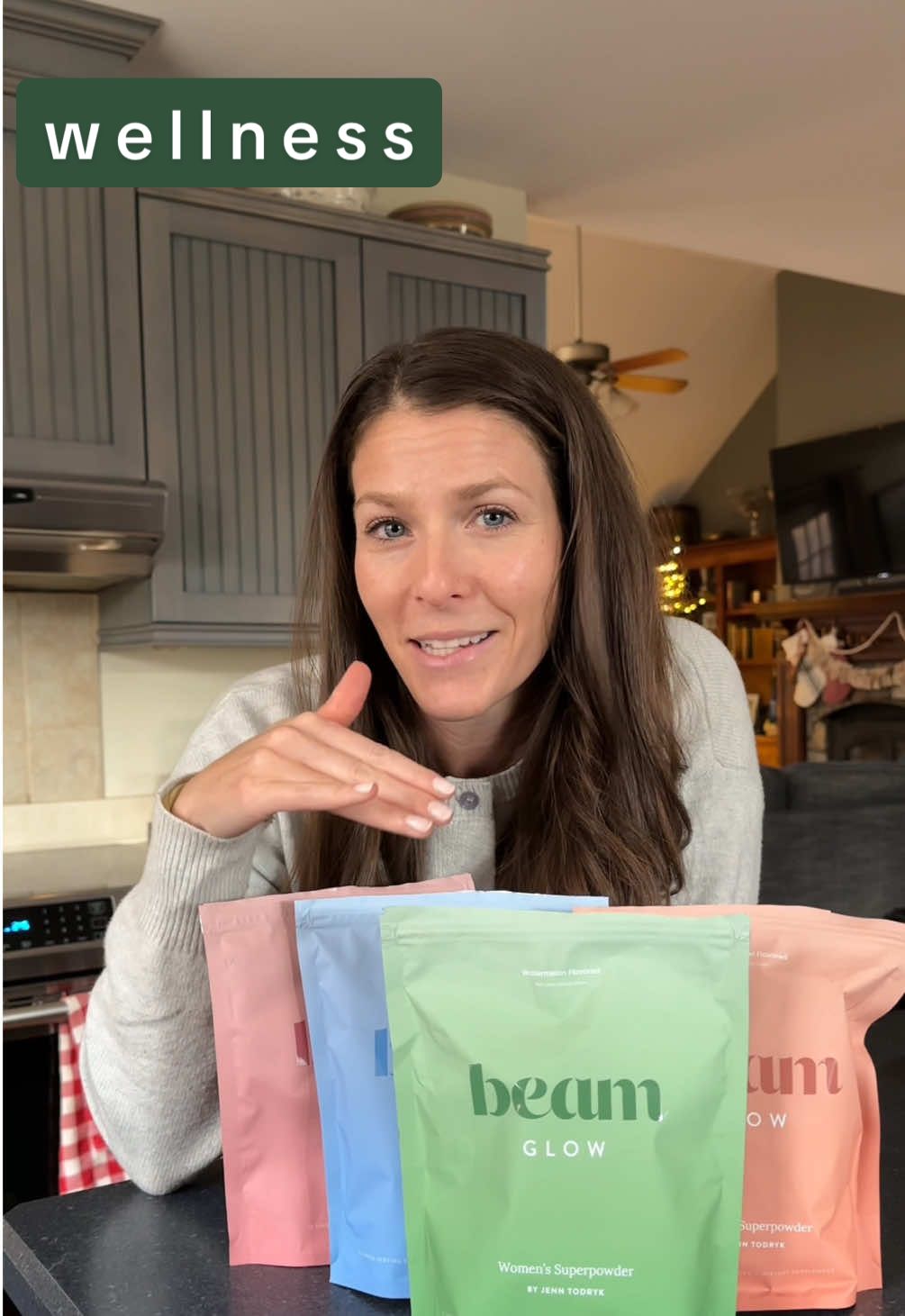
Beam's amplification runs almost entirely through third parties rather than its own brand account. The TikTok Shop layer is a multi-seller reseller network: separate accounts including Stevie, TIFFANY JANE, Mo, and BrightHairedMama each list different Beam SKUs (Collagen, Biotic Variety Pack, Preworkout, Creatine Gummies) under a shared "DealsForYouDays" storefront branding, functioning as an affiliate-seller army rather than a single influencer relationship. Alongside them, individual lifestyle creators including Reagan Spencer and Megan post product-specific testimonials, with the "#beampartner" tag on Reagan Spencer's post the only explicit evidence of a managed creator program. On the founder side, co-founder Matt Lombardi's personal X account is the only verified individual channel, distinct from both the brand handle and the third-party creators above. In interviews, the co-founders describe their earliest amplifiers as CrossFit athletes recruited directly, used as credibility validators whose endorsement opened conversations with bigger names over months of relationship-building (source), a community-seeding motion that predates the TikTok Shop layer now doing the amplifying.
07 Organic & video
The organic content engine: the videos, creator posts, and community presence earning attention without paid spend.
Beam's organic video output splits into two lanes: TikTok Shop product listings built for one-click purchase, and personal-style talking-head clips built for trust. The standout posts skew toward hormone and gut-health framing rather than sleep. Reagan Spencer's Glow post ("Inner wellness and outer glow yes pleaseee!!") pulled 19,693 engagement and carries a "#beampartner" tag, the clearest signal in the dataset of a formal creator-partnership arrangement rather than an organic mention. A second creator, ladym3131, posted a dessert-style Dream teaser that reached 15,972 engagement, and a TikTok Shop listing from Kath Rances (tagged "UGC") for the Glow-Biotic Duo added 3,811, plus roughly a dozen smaller creator and reseller posts in the 30-6,000 engagement range. Separately, one of the co-founders appears on camera himself: "Hey guys, I'm one of the founders of Beam, really exciting news, we just launched in Sprouts Farmers Market" is a founder-led retail-announcement format, distinct from the paid creator posts, using personal credibility to narrate distribution milestones instead of product features. Across both lanes, the format that performs is first-person, camera-facing talking-head content anchored to a specific claim (a hormone result, a retail launch) rather than produced brand video.
08 Affiliate & partners
How the brand turns creators and partners into a tracked, variable-cost acquisition channel, and how the program is structured.
Beam runs a detectable, if lightly documented, affiliate motion. The site links to a dedicated referral/partner page at shopbeam.com/pages/refer, a standing lever for recruiting affiliates or partners to drive referrals. In practice, TikTok Shop is doing most of the affiliate-style work: the multi-seller reseller network described above operates on commission through TikTok's built-in shopping and affiliate marketplace rather than a bespoke program, and the "#beampartner" hashtag on at least one creator post points to a managed partner tier layered on top of that. There is no visible Rewardful, PartnerStack, or similar third-party affiliate-platform footprint in the evidence, meaning the referral page and TikTok Shop are the extent of the detectable program rather than a formal, tracked affiliate operation.
09 In their own words
Pulled from interviews and community sessions. The quotes are the angle; the takeaway is what to do with it.
Matt Lombardi - Co-Founder of Beam | For the Love of Sports Podcast ↗For the Love of Sports with Michael Rasile · 266 views · 43 min▶ View source“we started CrossFit was the first sport that we really got involved in terms of working with athletes. And those first few athletes that we brought on as partners or athletes, um we really had to connect and build trust with them really just verbally and actually just having them use the products by getting them like that we were athletes and we understood the importance of what goes into your body.”
Expand
Beam grew by starting with CrossFit athletes as their first community, using drug-tested athletes as credibility validators who unlocked conversations with bigger names over 6-12 months of relationship-building. Their core positioning was reframing CBD as a mainstream daily supplement (like collagen or fish oil) rather than a medicinal or recreational product, then doubling down on functional, benefit-specific products based on what customers were already using the oil for.
“fast forward maybe 6 months, 12 months, we're working with the best athletes in CrossFit, um who are clearly getting drug tested, are clearly insanely intense in what they put in their bodies, what they don't put in their body. Uh that then led to being able to have conversations, you know, with Baker, with, you know, even just friends in the NHL or in the MLB.”
“people uh trust things that people that they admire use. And so, you know, in the context of CrossFit and running and some of these sports, um you know, we we let these athletes sort of be our north stars, like our um validation that this stuff is legit.”
“in the early days it was really just building relationships and having people take a little bit of a leap of faith uh a calculated leap of faith, but a leap of faith nonetheless.”
“if someone can come in as an investor and then as a brand partner...it's just such a great great way to build alignment with people. Um like they actually have their own skin in the game. They clearly want Beam to be successful.”
Start with one niche community (CrossFit) and dominate it before expanding — drug-tested athletes in that community became proof that unlocked conversations with bigger-name athletes in other sports.
Use credibility proxies your target customer already trusts: for Beam, drug-tested elite athletes served as third-party validators far more convincing than any brand claim.
Let early customer behavior dictate your product roadmap — Beam noticed customers using their single oil for specific outcomes (sleep, inflammation, stress), then built dedicated SKUs stacking CBD with purpose-built ingredient stacks for each use case.
Reposition the category, not just your brand: Beam's core move was reframing CBD from 'weird medicinal thing' to 'daily supplement like collagen or fish oil,' which expanded their addressable audience beyond early adopters.
Convert athlete ambassadors into investors to create alignment — athletes with equity actively want Beam to win, making the partnership more durable than a paid sponsorship.
#052 Matt Lombardi & Kevin Moran | Co-founders of Beam CBD ↗Sweat It Out · 103 views · 58 min▶ View source“we had this very core belief that if we built and designed both the brand and the products to meet the needs of the one percent and so you know these athletes the lead athletes these professional athletes and then we designed the brand the right way the masses would be interested in that because often people obviously look to their favorite athletes or people they look up to for guidance”
Expand
Beam grew by designing products specifically for elite athletes and the '1%' first, betting that mainstream consumers would follow credible athletic adoption. They went direct-to-consumer only (no retail), differentiated on a zero-THC guarantee to serve drug-tested athletes, and brought on athlete-investors like Billy Horschel as authentic proof points rather than paid endorsers.
“the business we're not in retail the business was optimized for direct to consumer”
“we saw early on that it was a really unique opportunity to uh bring something with profit and purpose both to the market”
“if you do anything with purpose and there's a reason behind it which a lot of our reason is to help people for the reason judah said um more often than not the you know things work out for you”
“a lot of our mission over the next few years is to humanize it and bring it to a mass market”
Target the credibility-granting 1% first (elite athletes, high-performance professionals) and let their adoption pull the mass market — design brand and product for them, not the average buyer
Optimize for DTC from day one and stay out of retail; owning the customer relationship lets you weather market disruptions (e.g. COVID) that crush wholesale-dependent brands
Anchor on a single non-negotiable differentiator that solves a real blocker for your core segment — Beam's zero-THC guarantee unlocked drug-tested athletes who couldn't touch any other CBD brand
Bring athlete-investors into funding rounds rather than signing paid endorsers — they become authentic proof points who talk about the product unprompted because they're financially and personally aligned
Build a 'profit and purpose' narrative early and let inbound customer success stories (DMs, support tickets) do the evangelism — Beam called this 'citizen science' and used it to counter skepticism without making unverifiable clinical claims
SimpliFinance with Shane White Ep. #170 - Matt Lombardi (beam) [Founders #70] ↗Shane White · 77 views · 47 min▶ View source“we don't really consider ourselves a cbd company we definitely have cbd roots and how we launch but for us we've always i think we've done a really good job focusing more on like the customer needs and the benefits that we want to provide and then using cbd as an ingredient”
Expand
Matt and Kevin grew Beam by going all-in on brand trust in a high-skepticism CBD market, positioning around functional benefits (sleep, focus, recovery) rather than CBD itself, and going deep into the CrossFit community via direct athlete outreach to build credibility before expanding to a broader wellness audience. They started with in-person grassroots sales and an MVP tincture, then systematically tracked 'traditional vs. innovative SKUs' quarterly and shifted investment toward whatever was winning.
“we launched we didn't have a website we went and set up a table at a core power yoga studio and we're selling it by hand”
“we always took the brand super super serious in the beginning and probably over invested in that...a lot of that really went towards building the brand and crafting the right brand”
“we went super deep into crossfit early on and you know when you see matt frazier and brooke wells and tia and catherine...that builds a ton of credit like okay matt's using this matt frazier like if he's using it like he's the fittest person really he's not messing around he wouldn't put [anything] in his body i trust that this is a good quality product”
“that was like dms and just messaging people...we were able to use that to then build more athletes in the community and then get [bigger names]...i'll always appreciate those three athletes in particular just like okay you replied like a random message from these two guys starting a new company you took a leap of faith with us”
Pick one tight community first and go extremely deep — Beam went all-in on CrossFit, landing mid-tier athletes first via cold DMs, then used that foothold to recruit top names like Matt Frazier
Start with in-person, zero-infrastructure sales (a table at a yoga studio) before building anything — it forces real feedback and avoids over-engineering before product-market fit
Launch the simplest possible product (one SKU, minimal packaging) to get to market fast, then layer on the full product vision once you have signal
Position around the customer outcome, not the ingredient — 'better sleep,' 'less inflammation,' 'sharper focus' were the hooks; CBD was just the mechanism behind them
Track 'traditional SKUs' vs. 'innovative SKUs' as separate buckets each quarter; when the mix shifts toward innovation, kill the laggards fast (the bar decision took 30 minutes) and concentrate resources on what's gaining
Introducing The Beam Podcast - Series Trailer ↗The Beam Podcast · 184 views · 3 min3rd-party breakdown▶ Listen
10 The playbook
The channels are not separate. They are one system where each stage feeds the next. Here is the read, then the plays to run tomorrow.
The inferred playbook
Beam's loop starts with credibility built through athlete communities, converts on branded search and a rebuilt paid-social push, and compounds through a TikTok Shop reseller layer, with retail expansion narrated organically rather than paid.
the co-founders built initial trust inside CrossFit gyms, using drug-tested athletes as validators who took 6-12 months of relationship-building to unlock conversations with bigger names, a slow-compounding trust asset that predates any paid channel (source).
going direct-to-consumer only and offering a zero-THC guarantee let Beam serve drug-tested athletes a category (CBD) most competitors couldn't sell into, with athlete-investors like Billy Horschel brought in as authentic proof points rather than paid endorsers (source).
Dig deeper+3▾
the 483-day Google program and #1 rankings on "beam," "beam dream," and "beam glow" exist to recapture demand the athlete-credibility and TikTok layers already created, not to win new category searchers.
with the brand's own X and Meta social presence thin, TikTok Shop sellers and tagged creator partners are functionally the organic growth engine, moving individual SKUs without the brand narrating its own story.
blended customer acquisition cost by channel, the Dream powder subscription renewal or attach rate, the revenue split between Sprouts retail and direct-to-consumer sales, and how much revenue the shopbeam.com/pages/refer program actually drives.
Recruit validators inside a skeptical niche before you advertise
The proofBeam's co-founders built early trust inside CrossFit gyms using drug-tested athletes as credibility validators, a relationship-building process that took 6-12 months to unlock bigger names.
The adaptationIdentify the one subgroup in your category whose approval carries outsized weight with skeptics, such as elite users, credentialed practitioners, or a tight professional community, and reach five to ten of them directly with free product and no strings attached, the same direct-outreach mechanic Beam used, instead of running ads at a cold audience first. Start by listing those names and sending the first message before building any paid campaign.
Cost: $0 · Time to signal: months · Works pre-PMF: yes, provided the category has an identifiable expert or elite subgroup whose word carries weight with the broader buyer.
Narrate your own milestones on camera, not just your product
The proofone of Beam's co-founders posted a first-person clip announcing the brand's Sprouts Farmers Market retail launch, using personal credibility rather than a scripted brand ad.
The adaptationThe next time you hit a real milestone, a new retail placement, a review, a funding close, film yourself explaining it in one unscripted take and post it from a personal account rather than the brand account, mirroring the founder-to-camera format instead of a polished announcement graphic. First step: pick your next verifiable milestone and record the explanation before you've had time to overproduce it.
Cost: $0 · Time to signal: days · Works pre-PMF: yes.
Turn a shoppable platform into a multi-seller affiliate force
The proofseparate TikTok Shop resellers (including sellers trading as Stevie, TIFFANY JANE, Mo, and BrightHairedMama) each list different Beam SKUs under commission, effectively running Beam's affiliate distribution for it.
The adaptationList your product on a shoppable marketplace with built-in creator commissions and actively recruit multiple small sellers to carry different SKUs or bundles, rather than relying on one big influencer deal, the same many-small-sellers structure Beam runs. First step: set a flat commission rate, list your best single SKU, and message ten small creators in your category asking them to add it to their shop.
Cost: $0 · Time to signal: weeks · Works pre-PMF: conditional, this only works for a physical, shippable product that fits a shoppable-marketplace catalog.
Ship a standing referral page before you need one
The proofBeam links a dedicated referral and partner page from its main site, a standing lever for turning existing customers into recruiters rather than a one-off promotion.
The adaptationBuild a single page with a clear referral incentive (a discount or credit for both sides) and link it from your main navigation and post-purchase email, so the mechanic exists before you have the volume to justify a full affiliate platform. First step: write the offer terms and publish the page, then add the link to your order-confirmation email.
Cost: under $500 · Time to signal: weeks · Works pre-PMF: conditional, needs an existing base of paying customers willing to vouch for the product.
Build the product around killing your category's #1 objection
The proofBeam's zero-THC guarantee was a formulation and positioning decision, not just ad copy, built specifically to neutralize the objection that stops drug-tested athletes from buying any CBD product.
The adaptationName the single biggest reason a skeptical buyer in your category says no (a side effect, a compliance risk, a trust gap), and make removing that objection a stated product or policy feature, not just a headline. First step: survey your last twenty lost leads for their stated objection, then pick the top one and turn its removal into a named guarantee on your product page.
Cost: $0 · Time to signal: weeks to months · Works pre-PMF: yes, provided the category has one dominant, nameable skepticism trigger rather than diffuse price sensitivity. Not transferable at an earlier stage: the 483-day Google search program and the athlete-investor network built around the co-founders' own professional sports backgrounds both depend on years of ad spend and a personal network most founders won't have on day one. Adapt the underlying mechanics, credibility-first seeding and objection-killing product design, not the specific assets.
You just read how Beam does it. Tomorrow it is someone else.
Every morning we take one company that is actually growing and break down where its customers come from: the ads still running after a year, the channel doing the real work, and the play you can run this week.
Systemaic · directional intelligence. Traffic, spend, and reach figures are SimilarWeb-style estimates and qualitative reads of public data, not audited numbers. Built on real public receipts.
// teardowns with a similar GTM motion
sources & receipts (14)
Live ad libraries: meta ad library · google ad library
Launch archives: Hacker News: Writing your own BEAM · Hacker News: Beam VM Wisdoms (2019) · Hacker News: Triforce – a beamformer for Apple Silicon laptops · Hacker News: Starlink's laser system is beaming 42 petabytes of data per · Hacker News: Artemis II will use laser beams to live-stream 4K moon foota · Hacker News: The BEAM Book – A Description of the Erlang RTS and the Virt
Founder interviews: Introducing The Beam Podcast - Series Trailer · Matt Lombardi - Grit. · Matt Lombardi Discusses Break-up with Olympian Nastia Liukin | #Adulti · Matt Lombardi and Kevin Moran - BEAM | Startup Advice | PRETTY INTENSE · Matt Lombardi - Co-Founder of Beam | For the Love of Sports Podcast · #052 Matt Lombardi & Kevin Moran | Co-founders of Beam CBD
Traffic, spend, and revenue figures are estimates as noted in the report; the links above are the primary public artifacts.