- 01Broadcast the Crisis Before You Resolve It
- 02Post Operational Metrics on LinkedIn to Pull Investors
- 03Lead With the Objection-Killing Customer Quote
- 04Seed Creators With Unique Tracking URLs
01 Snapshot
The one-glance read on who they are and how they grow. Each point is verifiable from the receipts above.
Functional chocolate bars with 6g plant-based protein and 4g fiber, positioned as a between-meal snack for health-conscious North American millennials, stocked in 10,000+ retail doors (Target, Walmart Canada, Whole Foods, Sprouts, Costco).
Founder-led reality show, the three co-founders broadcast the unfiltered behind-the-scenes of building a consumer packaged goods (CPG) company across Instagram, TikTok, and LinkedIn, converting followers into retail buyers before the product ever appears in their cart.
$32M in revenue in the most reported fiscal year, projecting ~$45M for FY ending May 2026 (Forbes, January 2026); 176,059 Instagram followers and 60M+ bars sold as of early 2026; 200+ ads in the Meta library as of July 6, 2026.
A 10+ creative Meta push around the PB&J flavor as of January 2026, running nostalgia reframes ("PB&J without the bread"), urgency-utility hooks ("PB&J, BUT YOU HAVE SHIT TO DO"), and social-proof volume angles simultaneously.
Their retail flywheel is emotionally powered: consumers who follow the founders' build-in-public story convert at shelf on narrative loyalty, which is why roughly 35,000 monthly website visitors can underpin $32M in annual revenue.
02 How it unfolded
The order the channels came online. Sequence is strategy: what they did first, and what they layered on once demand existed.
03 Traffic & channel mix
Estimated demand, the channel split behind it, and the keywords and referrers doing the work. Directional modeling, not audited analytics.
Traffic sources
Top search keywords
| Keyword | Volume | Weight | CPC |
|---|---|---|---|
| mid day squares | 3.5k | $0.42 | |
| midday squares | 2.8k | $0.50 | |
| mid-day squares | 2.2k | - | |
| mid day square | 550 | $0.51 | |
| midday square | 480 | $0.56 |
Closest competitors by audience
Estimated monthly visits sit at roughly 35,000, down 1.4% over the past 3 months, a deliberately small web footprint for a brand at that revenue scale, because retail is the dominant transaction channel and the site primarily serves brand-aware repeat DTC buyers.
Search organic drives 65.8% of site traffic, almost entirely on branded queries. The top-ranking keywords, mid day squares (~3,500 monthly searches across the web), midday squares (~2,800), and mid-day squares (~2,200), are all brand-name variants: the site captures demand already created through social and retail presence, converting aware shoppers who came looking for the product specifically. Direct (12.5%) and email (7.4%) together serve the returning DTC purchaser, confirming the site functions as a loyalty-and-reorder vehicle. Email at 7.4% is disproportionately strong for a CPG brand at this scale, signaling an active DTC list with real retention.
Social paid (4.5%), social organic (3.8%), referrals (3.3%), display (2.1%), and generative AI (0.7%) collectively account for under 15% of traffic.
The search competitor adjacency is worth noting: middaysquares.com sits near galaxychocolate.com, planters.com, and smartlabel.hersheys.com, meaning the brand competes for organic visibility against mainstream snack and chocolate incumbents where brand recognition is doing the ranking work, not content depth.
04 Organic content
The specific pages earning their organic search traffic, and the pattern behind why they rank. Adapt the format, not the topic.
The organic footprint is brand-demand architecture. The homepage captures the vast majority of keyword-tool-estimated organic visits on brand-name queries. The four supporting pages earning organic traffic serve the already-aware, functionally-minded buyer: a retailer-finder (where to buy in stores), an ingredients transparency page, a Cookie Dough product box page, and a general 12-pack purchase page. There is no editorial or long-form content layer reaching cold buyers who have never heard of the brand.
This structure is a deliberate fit with their GTM: awareness is built through social content and retail presence, and the site exists to convert that awareness into DTC orders and store-direction lookups. The ingredients and retailer-list pages performing organically suggest a buyer doing pre-purchase research after discovery elsewhere, exactly the pattern a build-in-public brand would expect.
Top pages by organic traffic
05 Channel map
Not traffic share. How much weight the growth system actually puts on each channel, with a one-line read on the role it plays.
What drove growth
06 The creative doing the work
Each exhibit shows the actual asset, an X-ray of why it works, a status, and a play you can adapt. This is the heart of the teardown.
The Meta library holds roughly 205 ads as of July 6, 2026 (an 80-ad sample analyzed for this report), with the oldest active creatives running ~212 days (first shown December 6, 2025). Google Ads shows only 2 total ads, 1 active at ~9 days as of July 6, 2026, not a meaningful paid search program.
- Running
- 199 days (longevity = it's converting)
- Hook
- "Want to get your boyfriend or your husband eating healthier?" spoken by a woman with dark hair in a car, with text overlay "POV: Clean eating shouldn't feel like a punishment".
- CTA / offer
- "Hope y'all give them a try"
- Audience
- Women looking for healthy snacks for themselves and their partners ("boyfriend or your husband").
Why it works. Turns the buy into a caregiving act for a boyfriend or husband, which sidesteps the guilt DTC candy shoppers feel buying junk food for themselves.
The 'Trojan Horse' Hook (0:00): "Want to get your boyfriend or your husband eating healthier?" Reframe your product as something the viewer buys for someone else's benefit, not their own indulgence, in your first line of copy.
- Running
- 212 days (longevity = it's converting)
- Hook
- "I've created you the perfect mid-day snack." Visual: A woman with short black hair in denim overalls sits on a couch behind two large display boxes of Mid-Day Squares.
- Audience
- Health-conscious snackers (mentions "destroying your diet", "cleanest ingredient list", and "4g fiber & 6g protein").
Why it works. A creator makes a personal promise then racks two full boxes on screen, using visible volume to signal this is a real staple, not a one-off treat.
Negative Framing / Problem Agitation (0:03 - "Forget about those sugar spiking chocolate bars") Open your UGC ad with a direct personal promise to camera, then show a stack of product to back the claim before you explain why it's different.
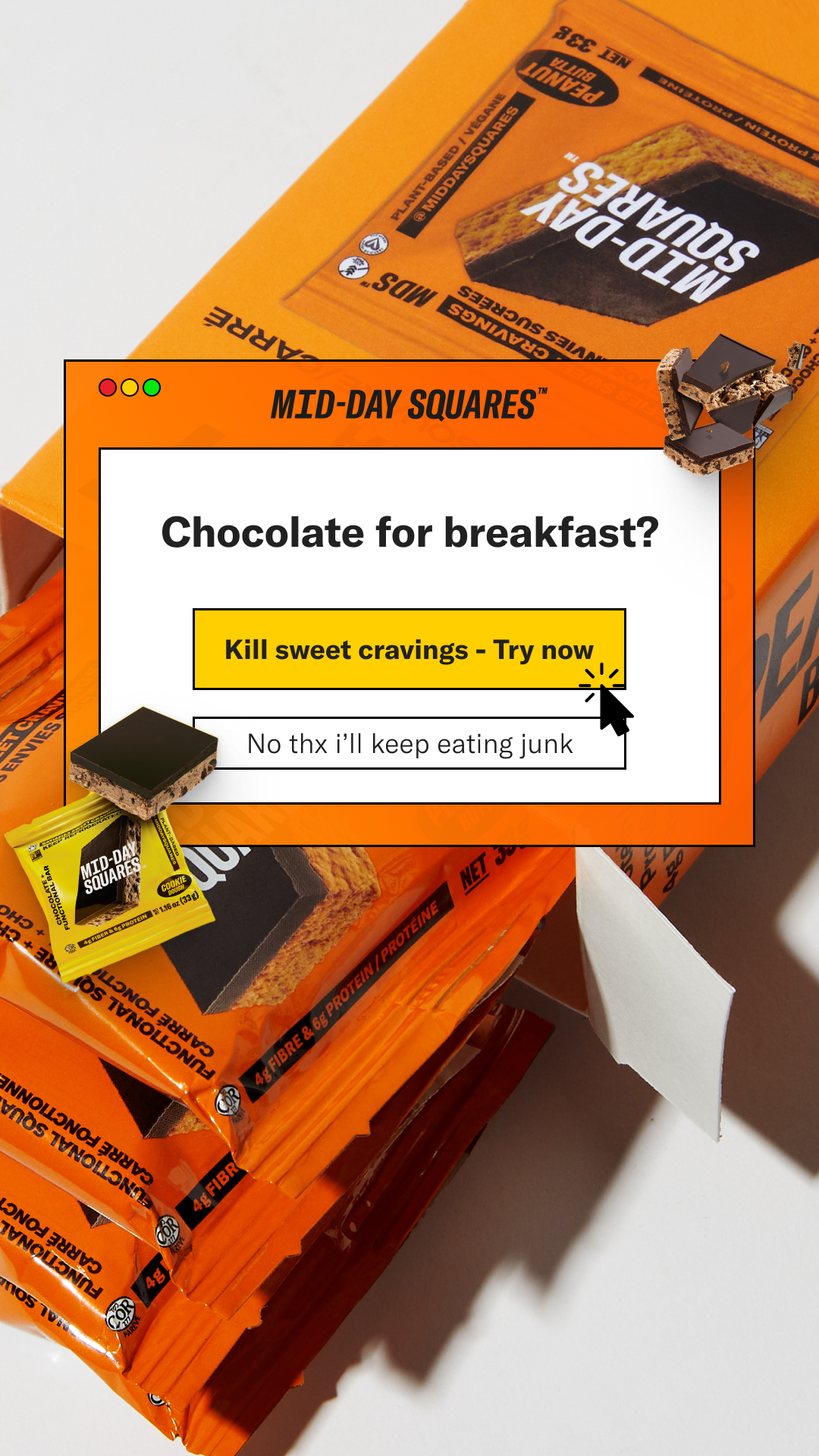
- Running
- 212 days (longevity = it's converting)
- Hook
- A digital pop-up window with the title "MID-DAY SQUARES™" and the question "Chocolate for breakfast?" is overlaid on an image of orange product packaging.
- CTA / offer
- Kill sweet cravings - Try now
- Audience
- Individuals interested in plant-based, high-protein, and high-fiber snacks, indicated by "PLANT-BASED / VÉGANE", "4g FIBRE & 6g PROTEIN", and the product name "MID-DAY SQUARES".
Why it works. Uses a pop-up style question to make an indulgent claim feel like an interactive reveal rather than a straight pitch.
Interactive pop-up with a provocative question: The ad features a digital pop-up window asking, "Chocolate for breakfast?". Ask a short question that breaks an everyday rule your product allows, styled as a pop-up or notification over the product shot.
Show 7 more exhibits
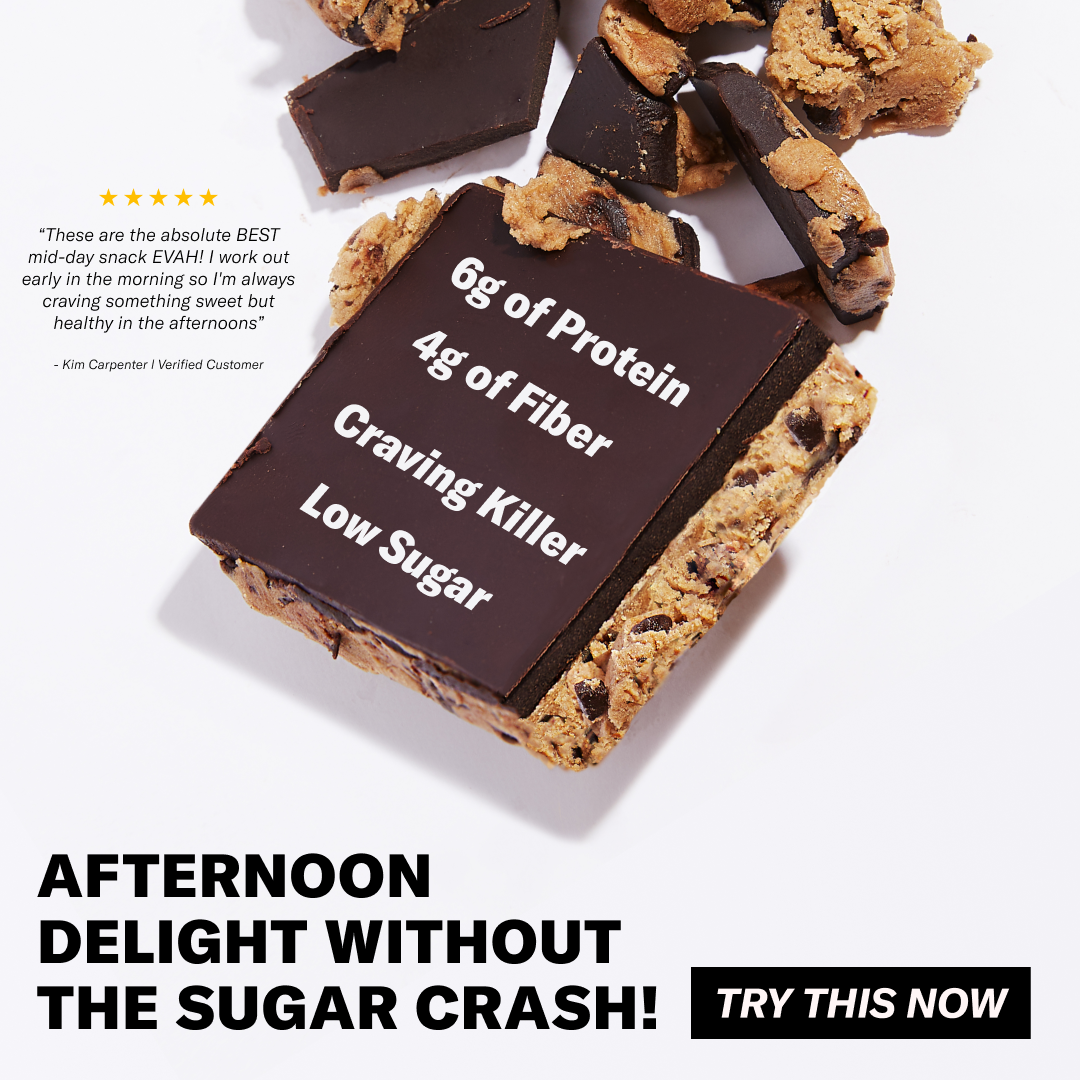
- Running
- 212 days (longevity = it's converting)
- Hook
- "These are the absolute BEST mid-day snack EVAH! I work out early in the morning so I I'm always craving something sweet but healthy in the afternoons" - Kim Carpenter | Verified Customer. Visual: A close-up of a chocolate-topped bar with cookie-like base, surrounded by broken pieces of similar bars, with a customer testimonial on the left.
- CTA / offer
- TRY THIS NOW
- Audience
- Individuals who work out, crave sweets but want healthy options, and experience afternoon energy crashes, as indicated by the testimonial and product claims.
Why it works. Borrows a real customer's voice and specific routine to make the sweet-but-healthy claim credible to skeptical scrollers.
Displaying a customer testimonial with star ratings and 'Verified Customer' badge: "These are the absolute BEST mid-day snack EVAH! I work out early in the morning so I'm always craving something sweet but healthy in the afternoons" - Kim Carpenter | Verified Customer. Pull a real review that names a specific daily routine your buyer has, and set it as a large pull-quote over a product close-up.
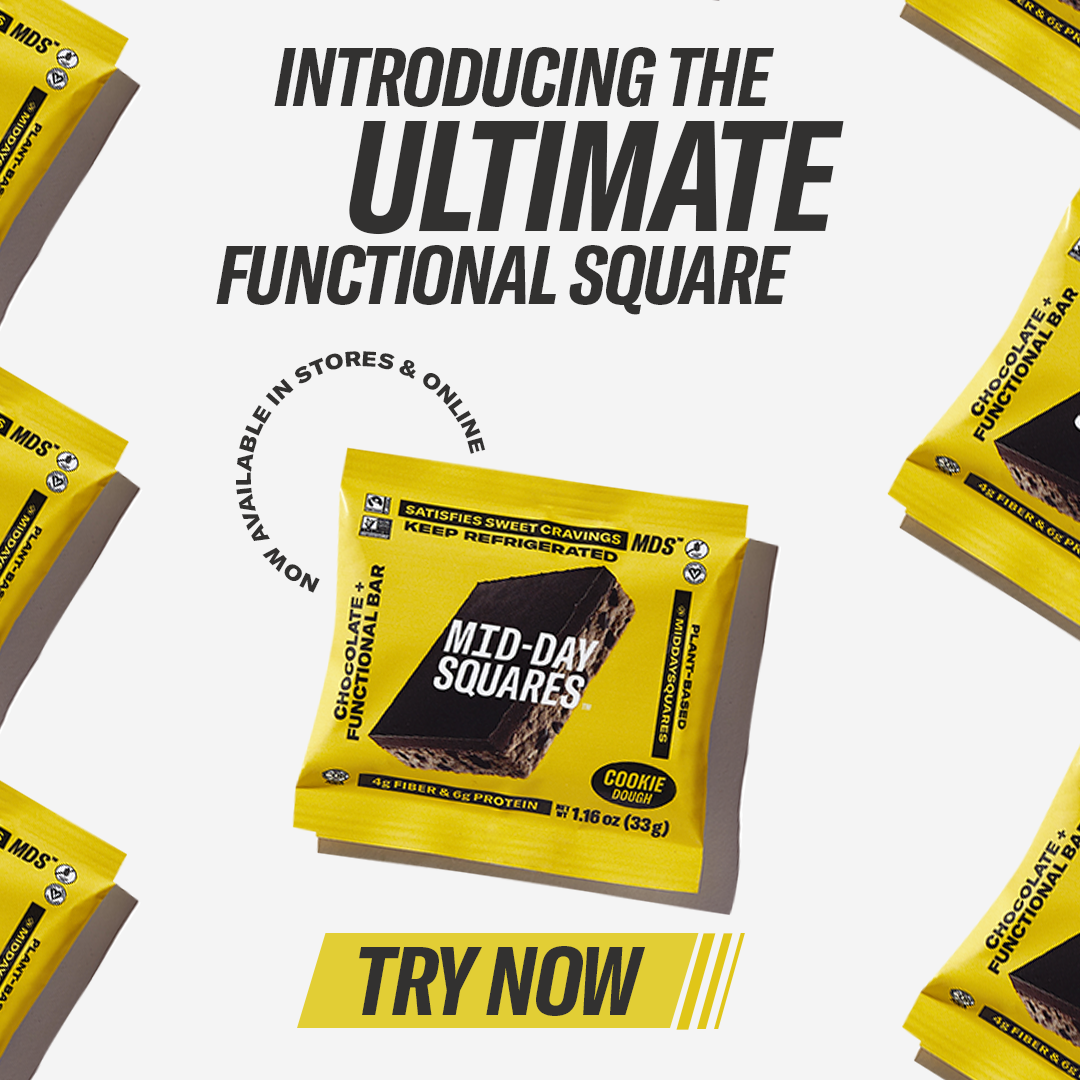
- Running
- 200 days (longevity = it's converting)
- Hook
- "INTRODUCING THE ULTIMATE FUNCTIONAL SQUARE" with a yellow packaged product, a chocolate bar labeled "MID-DAY SQUARES" and "COOKIE DOUGH" flavor, centered on a light background.
- CTA / offer
- "TRY NOW"
- Audience
- Individuals seeking convenient, plant-based, functional snacks that satisfy sweet cravings, indicated by "PLANT-BASED", "SATISFIES SWEET CRAVINGS", and "FUNCTIONAL BAR" text.
Why it works. Announces a new flavor with a category-topping claim to give existing fans a reason to try a new SKU.
Bold, aspirational headline: "INTRODUCING THE ULTIMATE FUNCTIONAL SQUARE" When launching a new flavor or variant, open with 'introducing' plus a superlative claim about its function, not just its taste.

- Running
- 200 days (longevity = it's converting)
- Hook
- A woman with dark hair and bangs, wearing a pink satin bomber jacket and black gloves, is reclining on a pink bed. She holds a white heart-shaped box filled with individually wrapped orange packages. A pink ribbon is tied in her hair.
- Audience
- Individuals interested in retro aesthetics and health-conscious snacks, indicated by the vintage styling and the 'MID-DAY SQUARES' product.
Why it works. A retro, styled visual builds a lifestyle association for the brand rather than making a functional claim, aimed at aesthetic-driven shoppers.
Stylized visual setting: The image features a woman in a pink satin bomber jacket and black gloves, reclining on a pink bed with a pink ribbon in her hair, holding a heart-shaped box. Build one strongly styled scene, with color, wardrobe, and props, around your product instead of a plain product shot, to build identity association.
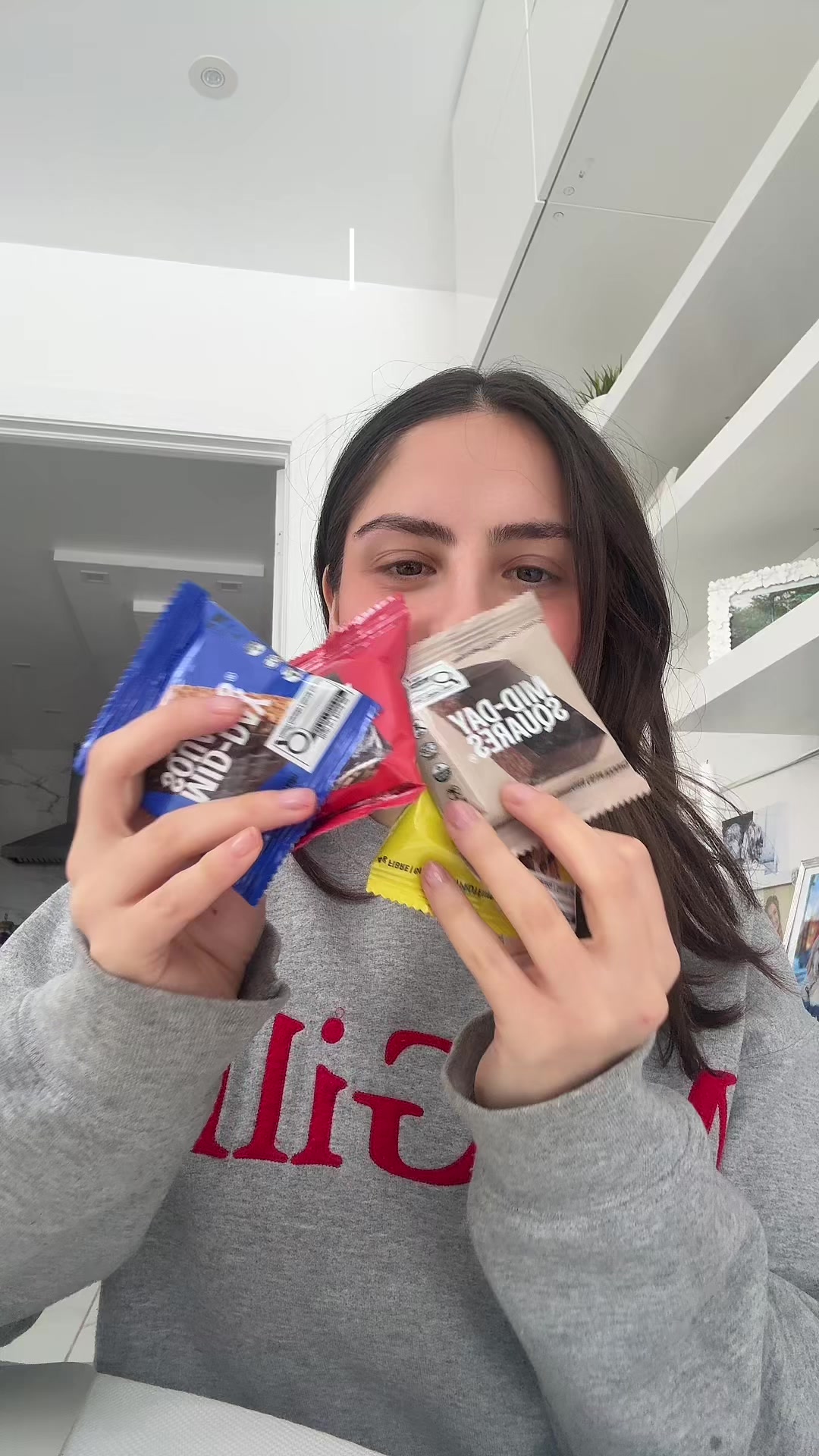
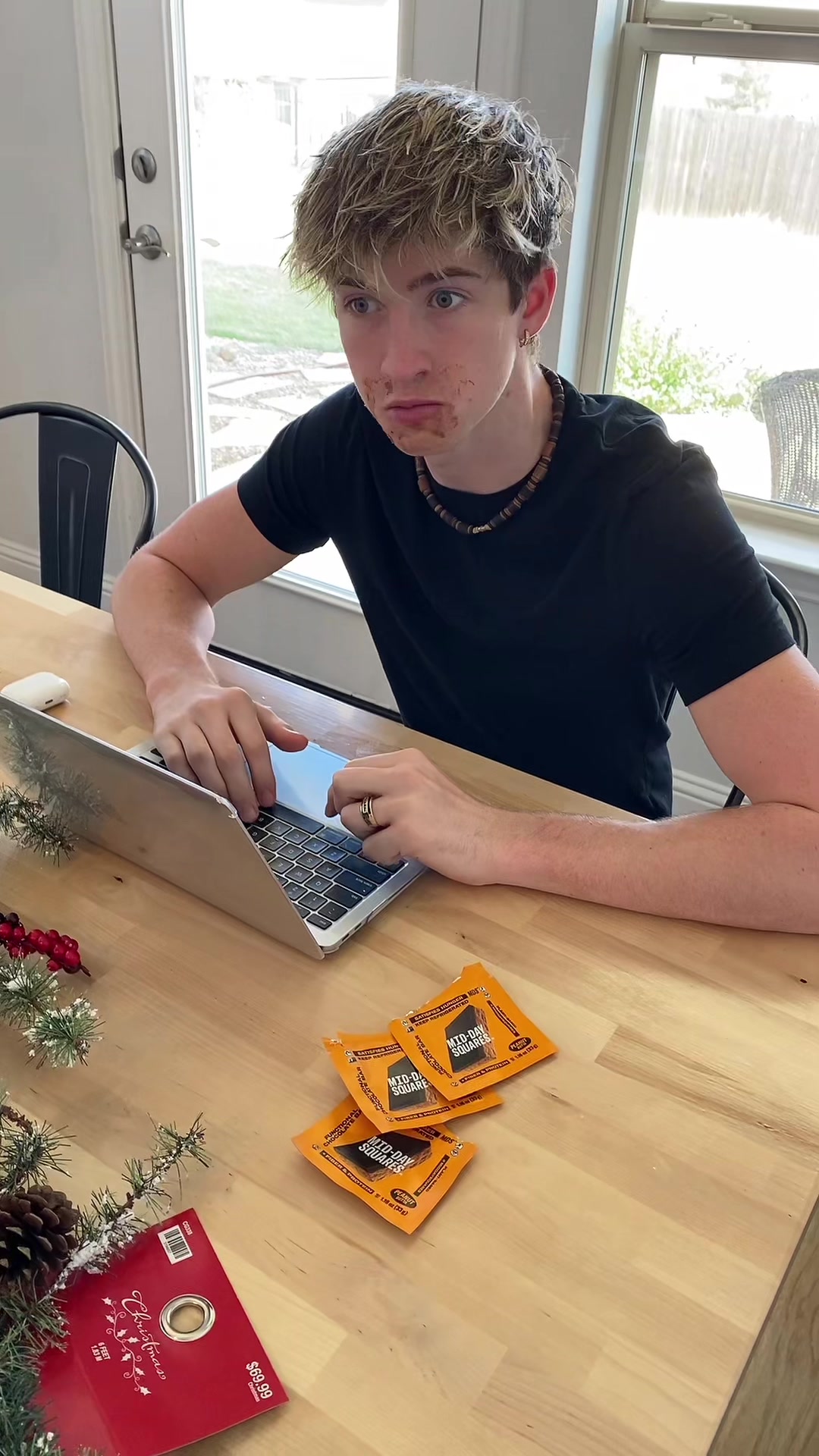
- Hook
- Visual: A hand opens a refrigerator door, revealing the interior. On-screen text: "Does your brother steal your favorite snacks!"
- Audience
- People who have siblings, people who enjoy snacks, people interested in plant-based options. Evidenced by the brother dynamic and the mention of 'plant-based stuff'.
Why it works. Opens with a relatable sibling rivalry moment to hook viewers before pivoting to where to buy the product.
Relatable problem hook (0:00-0:03): "Does your brother steal your favorite snacks!" overlay on a shot of an open fridge. Open your UGC skit with a specific, slightly funny household complaint your product happens to solve, as on-screen text over the action.
- Reach
- 30 upvotes · 18 comments · r/LovedItOrSnubbedIt2
A community is already discussing this in r/LovedItOrSnubbedIt2. Show up there authentically and answer the thread before a competitor does.
Who amplifies them
Top creator integrations on TikTok: Samuel Donner leads with 21,000+ engagements on a June 2026 branded integration; creator Bekka drew 11,000+ engagements tagging all three founders in February 2026; a third creator captured the Target-shelf discovery format at 10,000+ engagements. A broader tier of review, taste-test, and commentary clips (roughly 1,500 to 3,500 engagements each) rounds out the amplification layer, plus a consistent stream of health and snack creators in the 100-500 engagement range.
Reddit word-of-mouth: Discussion in r/yegvegan and r/diabetes skews positive (Costco price-per-bar find, blood-sugar-friendly snack report). A thread in r/LovedItOrSnubbedIt2 criticized product texture ("drier than the Sahara") and explicitly called out the affiliate discount-code model as commercial seeding, the predictable downside of a heavy creator-seeding program when the codes are visible to the audience.
LinkedIn: Jake Karls' personal profile is the brand's investor and operator amplification layer, drawing CPG founders and capital allocators who follow the build-in-public story directly into the fundraising pipeline.
07 Organic & video
The organic content engine: the videos, creator posts, and community presence earning attention without paid spend.
Instagram is the brand's strongest owned organic surface, with roughly 4,000 average engagements per post across 333 posts. The format mixes product visuals, milestone announcements, and founder-moment content (family dynamics, company crises, therapy, team resolutions), the same raw reality-show texture that defines their overall GTM posture.
Read the full breakdown+3▾
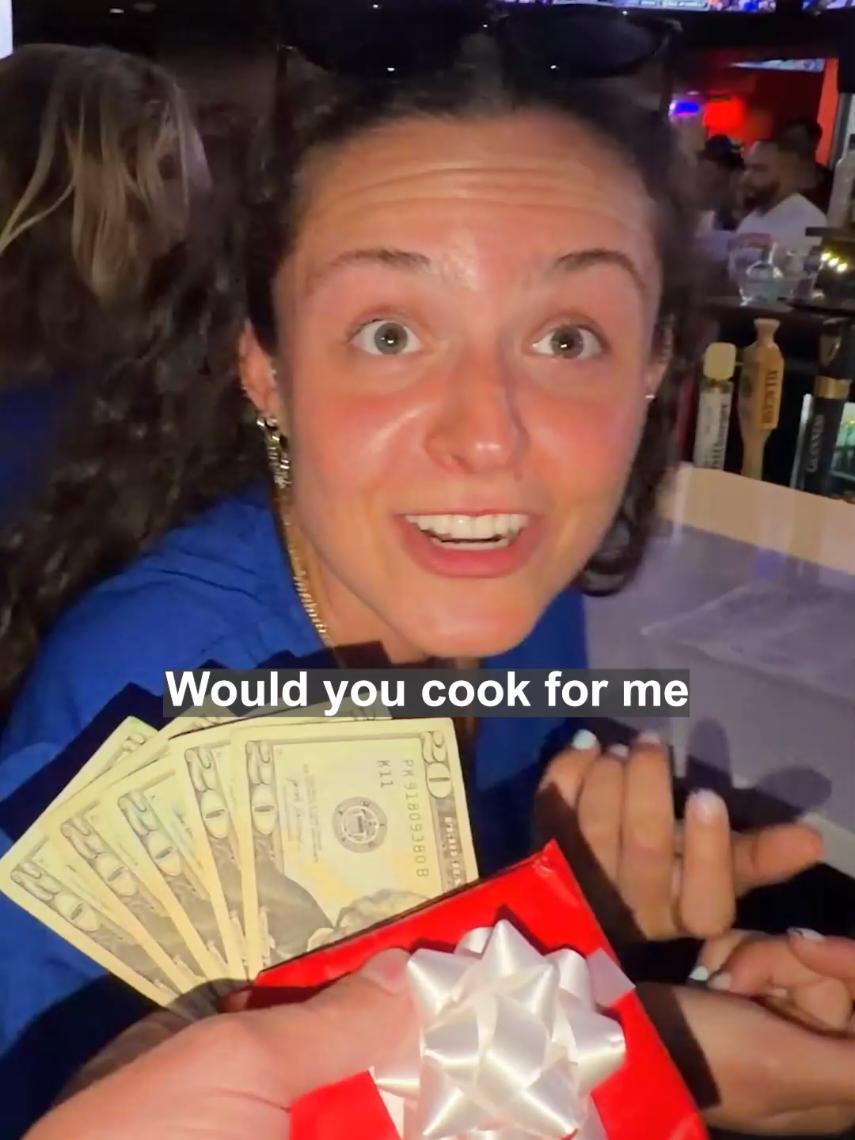
On TikTok, the top organic moment from mid-2026 is a Samuel Donner clip ("Paying strangers to cook for me in New York," June 2026) at 21,000+ engagements, where Mid-Day Squares appeared as a natural integration rather than the focal point. Creator Bekka's clip tagging all three founders in February 2026 drew 11,000+ engagements. The Target-shelf discovery format (creator finds the product in a Target fridge, reacts on camera) has recurred across multiple creators, including one creator clip at 10,000+ engagements, retail ubiquity generating its own organic content layer.
On YouTube, the brand's earned-media peak was the Hershey's packaging dispute: an October 2021 explanation video about a cease-and-desist over orange packaging resembling Reese's generated ~1.75M views across Instagram and TikTok. The follow-up, "Chocolate Gone Crazy" (a reportedly $70K music video diss track, February 2022), reached ~33,000 views on YouTube. Most "Mid-Day Squares Uncensored" podcast episodes draw under 2,000 views individually, making the "Busta Peanut" short (~111,000 views) the standalone YouTube outlier.
A structural note on the current state of their narrative engine: in 2025, co-founder Lezlie Karls Saltarelli posted a YouTube video announcing an indefinite sabbatical from Mid-Day Squares to recover and focus on her health after seven years of building. The reality-show engine has always run on all three founders showing up as real people, and one of the three stepping away is now part of the public story itself. Whether Jake Karls and Nick Saltarelli can sustain the content output and narrative intimacy that drove the flywheel is the most significant open question in their GTM as of this report's July 2026 observation date.
08 Affiliate & partners
How the brand turns creators and partners into a tracked, variable-cost acquisition channel, and how the program is structured.
An affiliate program is active and visible. Creator evidence includes named discount codes (MEGGAN15, HealthWithHunter) and unique per-creator referral URLs embedded in creator bio links (e.g., middaysquares.com/THE35271 in a TikTok creator's link tree). The unique-URL structure, one URL per creator rather than a shared generic code, indicates revenue attribution by creator, converting the program from a PR reach exercise into a measurable performance channel. No formal platform name appears in the public evidence; the program appears to operate through direct creator outreach and individual code assignment.
09 The playbook
The channels are not separate. They are one system where each stage feeds the next. Here is the read, then the plays to run tomorrow.
The inferred playbook
Mid-Day Squares runs a social-narrative flywheel where founder content builds emotional investment before any retail encounter, so shelf presence converts at a rate a brand with no prior story cannot match.
The build-in-public content across Instagram, TikTok, and Jake Karls' LinkedIn turns strangers into invested followers who complete a narrative arc when they find the product on a Target or Costco shelf, purchase becomes a vote for people they have been rooting for. Karls' LinkedIn reportedly generated approximately 17M organic profile views in a single year by posting operational milestones publicly, a distribution signal that pulled investor attention alongside consumer loyalty and funded the scaling of the retail network.
The Hershey's packaging dispute (October 2021) and the $70K diss track that followed (February 2022) demonstrated that adversarial moments broadcast publicly at speed can generate brand awareness at a scale no equivalent paid budget could purchase. The Cookie Dough stock keeping unit (SKU), launched in that momentum window, sold 1 million units in its first 5 months (per Jake Karls' June 2023 X post).
Dig deeper+3▾
Door-count milestones (8,000 doors by 2022, 10,000+ as of the latest public figures) function as recurring content beats, founders post shelf wins (2M+ bars sold at Target in under 2 years, Costco roadshow expansions) that attract more creators, more retail buyers, and more investor attention, which funds more shelf space and more content. Each expansion becomes the next chapter in the reality show.
The build-in-public engine depends on real people sharing real moments, and the human cost is now on the record: co-founder Lezlie Karls Saltarelli announced an indefinite health sabbatical in 2025. Whether the remaining two co-founders can carry the content output at scale has not yet been demonstrated in the public evidence.
DTC vs. retail revenue split, gross margin, CAC by channel, and whether the projected ~$45M FY2026 figure (Forbes, January 2026) was achieved.
Broadcast the Crisis Before You Resolve It
The proofMid-Day Squares' highest-reach organic moment was the Hershey's C&D video from October 2021 (the ~1.75M-view surge described in Organic & Video above), followed by a reportedly $70K music video diss track. The mechanism: conflict creates a villain and an underdog, and audiences root for the underdog in real time, building the emotional investment that later drives purchase.
The adaptationThe next time your business faces a credibility challenge, a threatening letter from a competitor, a scathing public review, a supplier crisis, a failed launch, document your real-time response as content before resolving it privately. Start by writing a thread or filming a one-take phone video explaining exactly what happened and how you are handling it. No production required. The raw transparency is the content, because a viewer's emotional investment forms in the moment of uncertainty, not after the clean resolution. A well-produced post-mortem generates a fraction of the engagement of a live dispatch on the same event.
Cost: $0 · Time to signal: days · Works pre-PMF: yes, provided you have an active audience, even a small one, already following your work. A brand with no prior social presence cannot manufacture this from scratch; build the audience before the crisis lands.
Post Operational Metrics on LinkedIn to Pull Investors
The proofJake Karls built a LinkedIn profile that became the brand's primary fundraising pipeline across multiple rounds, reaching the scale described in the Inferred Playbook above by posting CPG operational specifics, production counts, retail door milestones, SKU velocity numbers, as public updates.
The adaptationPost one operational metric per week on LinkedIn: a production milestone, a new distribution door, a customer retention number, or a manufacturing problem and how you solved it. The audience is capital allocators and operators who follow founders who demonstrate distribution in public rather than claiming it in a pitch deck. Start with the most concrete, specific number from your business and write three sentences about what it means and what you are doing next. Leave the outcome open-ended; a dispatch that ends with a decision still pending draws more engagement than a clean success story, because it gives the reader a reason to follow the next post.
Cost: $0 · Time to signal: weeks to months (the audience compounds over time; the signal is slow and persistent rather than fast and viral) · Works pre-PMF: yes, as long as you have something measurable to report.
Lead With the Objection-Killing Customer Quote
The proofThe longest-running creative in Mid-Day Squares' Meta library as of July 6, 2026 opens with "Stops me from over snacking. 1 square is enough.", a real customer quote that directly addresses the functional chocolate buyer's core hesitation (portion-control anxiety). Running across DCO, image, and video simultaneously for ~212 days signals that the copy thread, not the format, is driving conversion.
The adaptationBefore writing ad copy or product page headlines, list the three biggest reasons your buyer would hesitate to purchase, not reasons to buy, but reasons not to. Find a real customer quote that answers the most common hesitation in the customer's own words. Run that quote as the headline of a static image ad and a DCO test side by side. Compare it against your current best-performing hook after 30 days. Format variation matters far less than which objection you are neutralizing.
Cost: under $500 to test · Time to signal: weeks · Works pre-PMF: conditional, requires at least 10-20 real customers to source a genuine objection-killing quote. Fabricated testimonials violate platform policies and destroy conversion credibility if discovered.
Seed Creators With Unique Tracking URLs
The proofMid-Day Squares runs creator seeding with both named discount codes (HealthWithHunter, MEGGAN15) and per-creator referral URLs embedded in creator bio links (the middaysquares.com/THE35271 format visible in TikTok creator link trees). The per-creator URL structure enables revenue attribution per creator, turning a PR seeding program into a measurable performance channel.
The adaptationIdentify 20-30 TikTok or Instagram creators in your category who already review similar products without brand deals. Send them product plus a unique URL through a referral platform or a simple UTM parameter if you are pre-tool. Set a 10-20% flat commission on attributed purchases. Require no post commitment, the creators who genuinely like the product will post; those who do not will not, and you have spent only product cost. Start with creators who already feature your product category organically, because their audiences are already primed for the use case and the recommendation lands as native rather than commercial.
Cost: product cost only, under $500 for a seed batch of 20-30 units · Time to signal: weeks · Works pre-PMF: conditional, works best when the product has a clear functional benefit or sensory hook a creator can demonstrate on camera. A product that requires explanation over reaction is harder to seed effectively.
Use a New Flavor to Give Paid Media a News Hook
The proofThe PB&J flavor launch (January 2026) generated a coordinated wave of 10+ Meta ad creative variants all anchored on one repositioning angle, "no bread needed", turning a new SKU into a category reimagination. The push has run ~170 days as of July 6, 2026, well past the launch window, which means the nostalgia-reframe angle became a durable conversion theme rather than a one-week announcement.
The adaptationWhen you launch a new product variant, treat the launch as a media event rather than a product announcement. Choose one angle that frames the new thing as a category replacement ("PB&J without the bread" turns a chocolate bar into a nostalgic transformation), produce three or four creative variants around that single angle, and run a 30-day test before expanding to general brand copy. The news-hook structure gives paid media urgency and novelty that evergreen brand ads lack: a new SKU gives your audience a reason to pay attention to an ad they would otherwise scroll past. Start by writing the single sentence that explains what your new thing replaces or improves before you choose the product name or visual.
Cost: dedicated budget · Time to signal: weeks · Works pre-PMF: no, requires both a paid media testing budget and a proven DTC landing page before launch spend is justified. Not transferable at an earlier stage: the 10,000-door retail distribution network, Costco roadshow execution, and in-house chocolate manufacturing plant represent years of relationship-building and roughly $23.7M in publicly reported funding that a pre-revenue founder cannot replicate. The Meta ad program, 200+ creatives, multi-format DCO testing, coordinated flavor-launch waves, also requires a testing budget out of reach before product-market fit. The build-in-public motion, however, costs nothing to start and compounds from the first post.
You just read how Mid-Day Squares does it. Tomorrow it is someone else.
Every morning we take one company that is actually growing and break down where its customers come from: the ads still running after a year, the channel doing the real work, and the play you can run this week.
Systemaic · directional intelligence. Traffic, spend, and reach figures are SimilarWeb-style estimates and qualitative reads of public data, not audited numbers. Built on real public receipts.
// teardowns with a similar GTM motion
sources & receipts (2)
Live ad libraries: meta ad library · google ad library
Traffic, spend, and revenue figures are estimates as noted in the report; the links above are the primary public artifacts.