- 01Use live events as your primary sampling channel for social-occasion products
- 02THE PROOF:
- 03THE ADAPTATION:
- 04Caveat:
01 Snapshot
The one-glance read on who they are and how they grow. Each point is verifiable from the receipts above.
Hiyo makes canned non-alcoholic "social tonics" with adaptogens and nootropics (ashwagandha, lion's mane, L-theanine), priced at $44.99 per 12-pack DTC or $38.25 on subscription, targeting sober-curious millennials and Gen Z who want the social ritual of drinking without the alcohol.
Retail-distribution-led, with live-event sampling, organic creator UGC, and a paid social layer on top.
~58,407 estimated monthly visits, 90,152 Instagram followers, 3,000+ retail doors as of early 2025, 10,000+ five-star reviews claimed, 14 active Meta ads and 5 active Google ads as of June 29, 2026, and roughly $19M raised in disclosed funding, with Constellation Brands and Live Nation both later taking minority equity stakes at undisclosed terms.
Hiyo's actual growth engine runs through physical retail and live-event placement, not DTC, as the brand pushes toward 10,000 retail doors.
02 How it unfolded
The order the channels came online. Sequence is strategy: what they did first, and what they layered on once demand existed.
03 Traffic & channel mix
Estimated demand, the channel split behind it, and the keywords and referrers doing the work. Directional modeling, not audited analytics.
Traffic sources
Top search keywords
| Keyword | Volume | Weight | CPC |
|---|---|---|---|
| hiyo | 4.6k | $0.86 | |
| hiyo drink | 1.2k | $0.85 | |
| hiyo drinks | 400 | $0.85 | |
| hiyo social tonic | 430 | $0.84 | |
| hiyo flavors | 130 | - |
Closest competitors by audience
Hiyo draws an estimated 58,407 monthly visits, down 78.7% over the last 3 months. That drop is the loudest signal in this teardown: the DTC traffic engine is collapsing even as the brand secures a Live Nation deal and pushes deeper into retail.
Organic search leads at 34.7%, but every top keyword is branded: hiyo (4,590 total monthly searches across the web), hiyo drink (1,220), hiyo social tonic (430), hiyo near me. The brand ranks #1 for all of them, meaning organic search captures people who already know Hiyo, not buyers discovering the functional beverage category for the first time. Direct at 32.3% confirms the same picture: a loyal but shrinking returning base.
Display ads account for 13.4% of visits, higher than paid search (6.2%) or social paid (3.2%), which suggests retargeting and display are being used to recapture and retain existing-audience traffic rather than build top of funnel. Paid search at 6.2% and social paid at 3.2% are small fractions of the mix. Referral (4.2%), social organic (3.3%), and email (2.7%) round out a fragmented inbound picture that's clearly not firing at prior levels.
Closest competitors in the non-alc space: Kin Euphorics (kineuphorics.com), Ghia (drinkghia.com), Moth Drinks (mothdrinks.com), Three Spirit (us.threespiritdrinks.com), Wild Tonic (wildtonic.com), Curious Elixirs (curiouselixirs.com).
04 Organic content
The specific pages earning their organic search traffic, and the pattern behind why they rank. Adapt the format, not the topic.
Hiyo's organic traffic profile is almost entirely branded intent, not category discovery. The homepage captures 68.6% of all organic visits, the store-locator page takes 12.5%, and the variety pack product page takes 9.8%, together those three pages account for 91% of all organic traffic. The store-locator's outsized share is particularly telling: buyers who discover Hiyo through any other channel (TikTok, a live event, word of mouth) then search "hiyo near me" and land on the locator page, meaning the site functions as a map tool for already-aware buyers rather than a discovery funnel. There is no evidence of content marketing, comparison pages, or ingredient-education articles ranking for category terms like "adaptogen drink" or "non-alcoholic alternative", the brand has not built an SEO engine for new demand generation.
Top pages by organic traffic
05 Channel map
Not traffic share. How much weight the growth system actually puts on each channel, with a one-line read on the role it plays.
What drove growth
06 The creative doing the work
Each exhibit shows the actual asset, an X-ray of why it works, a status, and a play you can adapt. This is the heart of the teardown.
As of June 29, 2026, Hiyo is running 14 active Meta ads and 5 active Google ads. The entire Meta fleet launched in the five days prior (June 24-28), which looks like a new campaign push, not steady-state spending. Google shows a more sustained pattern: three text and video ads have been active for ~142 days (since early February 2026), with an image ad running ~61 days alongside.
- Running
- 5 days (new — still being tested)
- Hook
- "DOCTOR OF NUTRITION APPROVED BEV ✅" on-screen text while a woman in a green top cuts a red apple on a wooden board.
- CTA / offer
- "so give hiyo a try"
- Audience
- Sober-curious individuals or health-conscious drinkers, indicated by the explicit comparison to wine and the use of a nutrition expert.
Why it works. Puts a credentialed expert cutting real fruit on camera before any sales pitch, so health claims land as vetted instead of merely asserted.
Authority Credentialing (0:00 - "DOCTOR OF NUTRITION APPROVED BEV ✅") Open with a named credential relevant to your product's core claim, on screen, before any other copy.
- Running
- 5 days (new — still being tested)
- Hook
- "as a dietitian, here's one alcohol free drink" spoken over a woman in striped pajamas sitting on a bed with a laptop and a bowl of yogurt.
- Audience
- Health-conscious women looking for alcohol alternatives, signaled by the 'dietitian' hook and 'nightly routine' lifestyle footage.
Why it works. Sets the video inside a relatable wind-down-at-night routine, then uses a dietitian's title to reframe the drink as a vetted nightly ritual instead of a snack ad.
Professional Authority Hook (0:00 - "as a dietitian") If anyone on your team or in your UGC pool has a relevant credential, put that title on screen in the first line before the recommendation.
- Running
- 5 days (new — still being tested)
- Hook
- "if you ask 100 people hey? do you want to drink less?" George Youmans wearing a white "hiyo" hat speaks into a podcast microphone.
- Audience
- People who want to "drink less" and are dissatisfied with "soda water" or "sugary mocktails".
Why it works. A founder speaks from a podcast mic, using a relatable survey question to pre-qualify anyone who's thought about drinking less as the target audience.
Founder Authority Overlay (0:00): "GEORGE YOUMANS co-founder + chief revenue officer" Open founder-led clips with a yes or no question your buyer would answer yes to, asked before you name your product, to self-select the right viewer.
Show 7 more exhibits
- Running
- 5 days (new — still being tested)
- Hook
- "the future of socializing doesn't revolve around alcohol anymore" spoken by a woman sitting at a table with a microphone after a close-up of hands opening a silver and red can.
- Audience
- People who value wellness and intention in social settings but want an alternative to alcohol.
Why it works. Has the founder deliver a category-level claim on camera right after a can-opening sound, tying a bold worldview to a real person and a physical cue.
Founder Authority at 0:04 ("hi i'm cygne one of the co-founders") Have your founder state one sentence about how the whole category is changing, on camera, before pivoting to the product.
- Running
- 4 days (new — still being tested)
- Hook
- Sound of a can cracking open followed by "Was I supposed to crack this?" and the founder taking a sip.
- Audience
- Sober-curious individuals or those cutting back on alcohol due to health or family reasons ("we both cut back our drinking").
Why it works. The founder's off-script question right after opening the can makes the ad feel candid instead of scripted, building trust with the sober-curious niche.
ASMR + Fourth Wall Break (0:00-0:03) Keep one unscripted, slightly awkward moment in your founder video instead of cutting it, to signal the video isn't fully staged.
- Running
- 3 days (new — still being tested)
- Hook
- "wanna cut back on alcohol" + woman with long dark hair and gold hoop earrings talking directly to the camera.
- Audience
- People who "wanna cut back on alcohol" but still want to feel "uplifted" and "giggly" in social settings.
Why it works. Opens in the viewer's own words about cutting back, then walks through a dosage ladder to make an abstract effect concrete.
The Dosage Ladder (0:14-0:30) Open your UGC script with the exact sentence your customer would say to themselves about the problem, before naming your product.
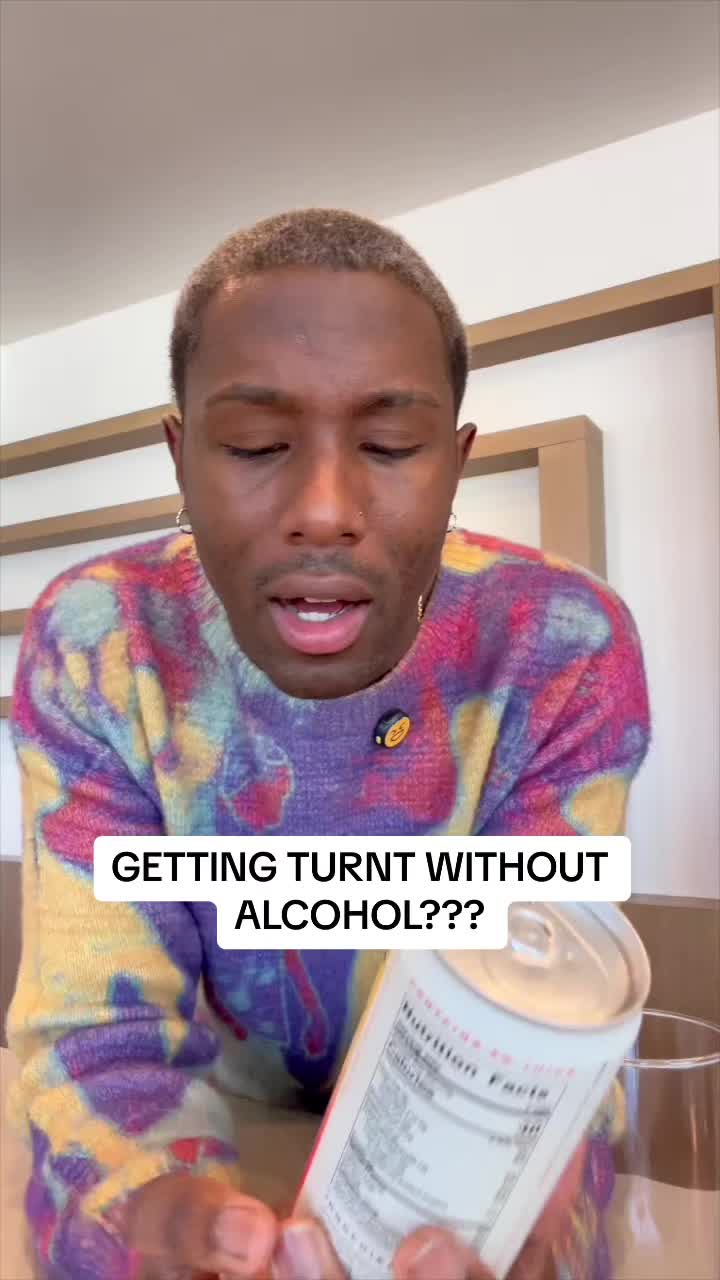
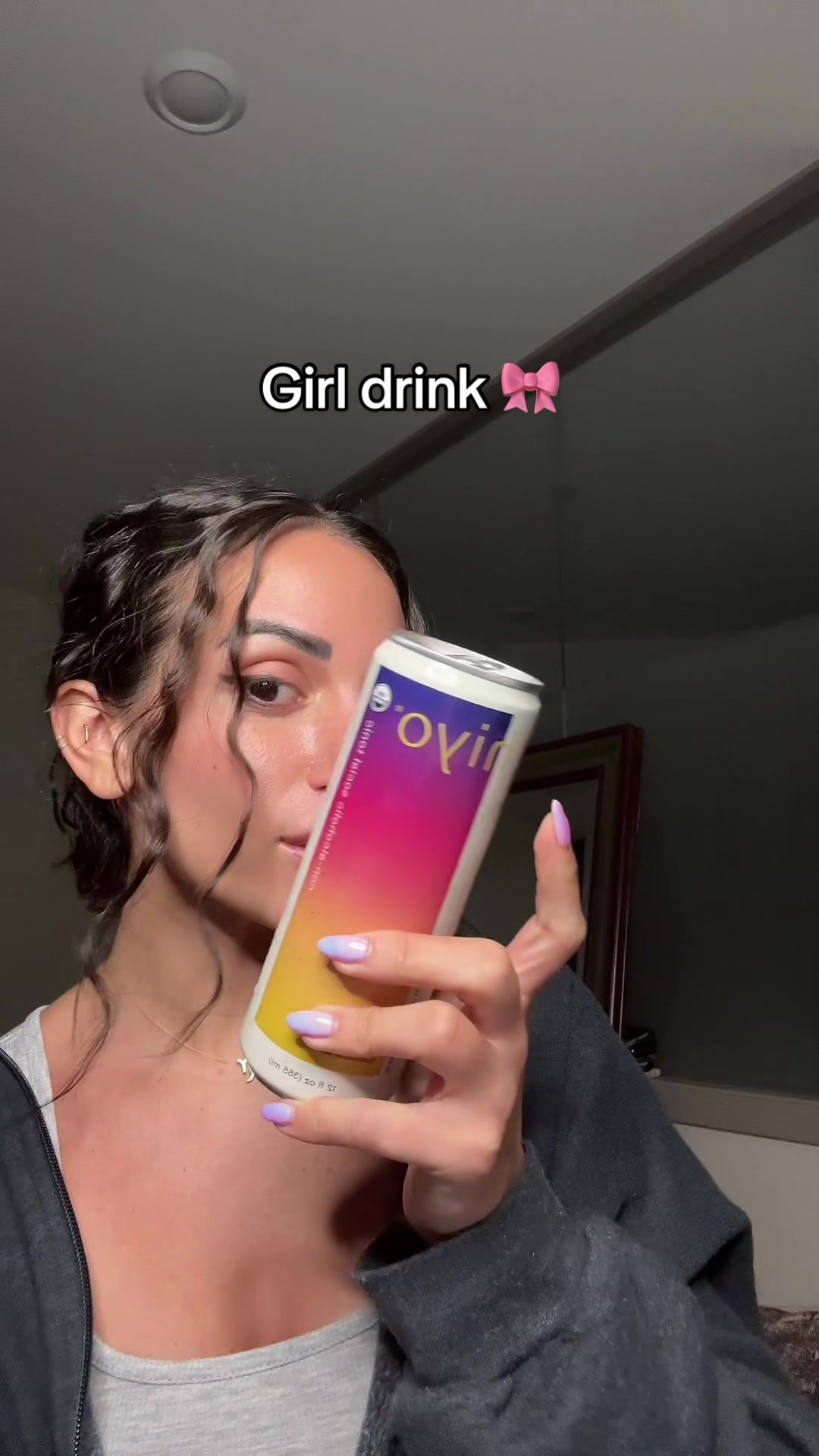
- Hook
- "I want to try this drink. It's supposed to be a non-alcoholic drink that makes you feel drunk." A woman with dark hair and makeup holds a white can with a pink and yellow gradient label. She is wearing a grey hooded top over a white top and a gold necklace with a Capricorn symbol.
- Audience
- People interested in non-alcoholic alternatives that provide a similar feeling to alcohol, as evidenced by the creator's explicit statement: "It's supposed to be a non-alcoholic drink that makes you feel drunk."
Why it works. A first-impression unboxing anchored to one contradictory claim (alcohol-free that feels like drunk) that makes sober-curious viewers want proof before they scroll on.
Directly addresses a bold product claim at the outset (0:00-0:03): "I want to try this drink. It's supposed to be a non-alcoholic drink that makes you feel drunk." Open your next UGC review with one sentence that states a claim about your product that sounds contradictory for its category, then let the video prove it.
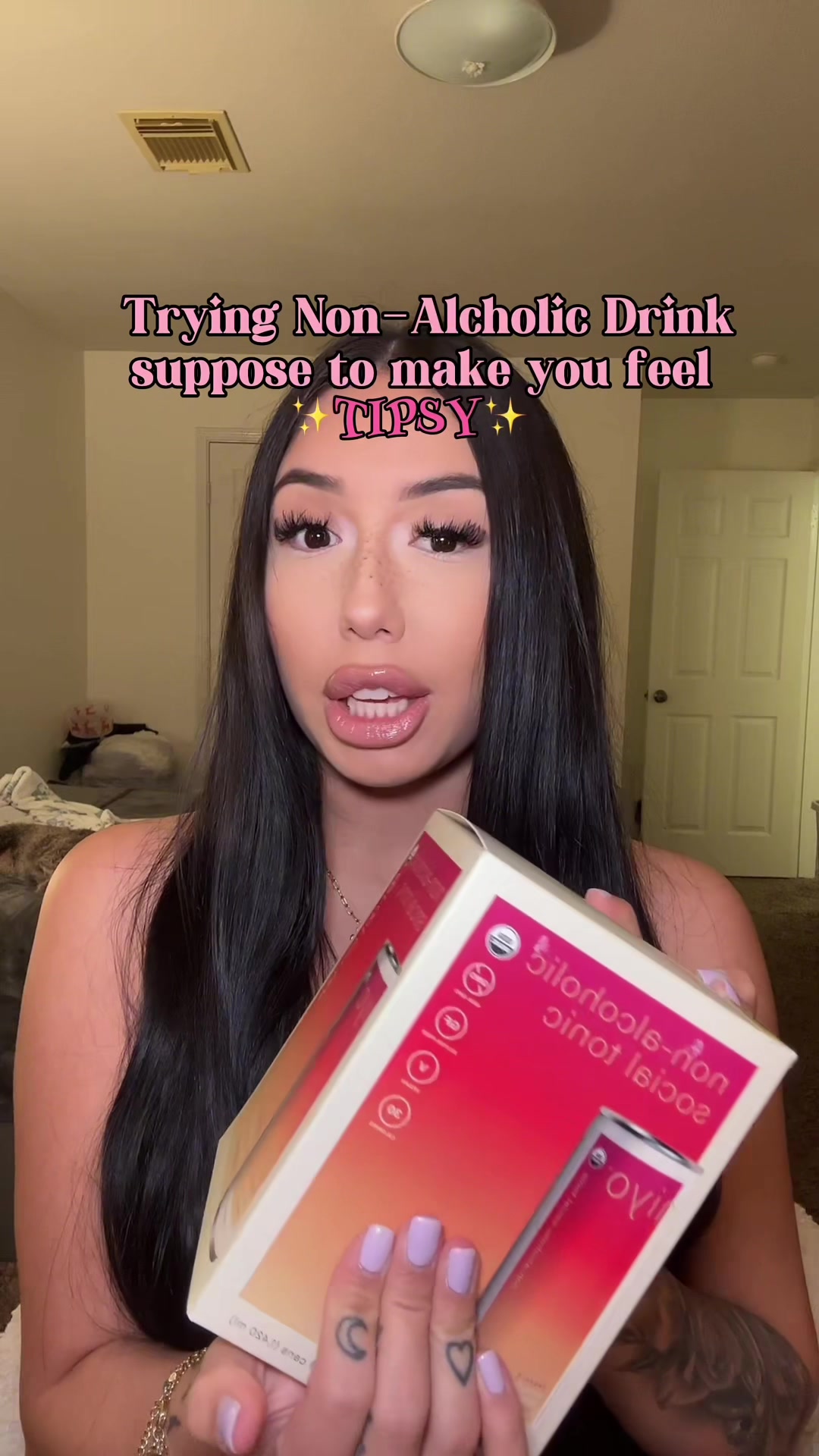
- Reach
- 167 upvotes · 61 comments · r/Mocktails
A community is already discussing this in r/Mocktails. Show up there authentically and answer the thread before a competitor does.
Who amplifies them
The most effective amplifiers are independent TikTok creators with no apparent affiliate structure: @DenzelCrisp (502K engagements on a single Hiyo review), @Lebaneseangel22 (99K), @shaypatino (53K), and @StormieGoldsmith (52K on a skeptical January 2026 review). None of these appear tagged with TikTok Shop affiliate links in the evidence, meaning the reach comes from genuine product discovery rather than a commissioned fleet.
TikTok Shop affiliate activity is visible but smaller-scale: @TiffaniLeah ("Feel chill without the booze #hiyo #tiktokshopcreatorpicks") and @BriInTheMoment (#TikTokShopStockUp) have both posted with Shop tags, confirming Hiyo has a TikTok Shop listing and some affiliate creator engagement, though it reads as early-stage.
On Instagram, @targetdoesitagain (a Target product-discovery creator account) posted a Hiyo reel, a signal that the Target shelf placement is generating organic creator coverage through the product-discovery-at-Target niche entirely on its own. Health professional @drbrookescheller posted a detailed ingredient breakdown reel naming Hiyo as her alcohol alternative of choice, which maps directly to Hiyo's expert-credentialing ad creative.
No named Reddit advocates or managed community presence in the evidence; community engagement in r/Mocktails and r/SoberCurious is organic and comparison-driven.
07 Organic & video
The organic content engine: the videos, creator posts, and community presence earning attention without paid spend.
Hiyo's most significant organic video asset is the brand-produced "happy in your own®" YouTube campaign: an 88-second video featuring real customers (not actors) framed around intentional living, which has reached 900,015 views. Two companion lifestyle-persona videos, "for the mindful movers" and "for the productive parents", reached 208K and 302K views respectively, while a third ("for the intentional achievers") has 12 views, suggesting the persona segmentation lands unevenly and the "productive parents" frame (302K views, the top performer) is the strongest resonating archetype.
Read the full breakdown+2▾
On TikTok, the format that generates the most organic reach is an honest, unsponsored review clip, low production, authentic skepticism followed by genuine surprise. Creator clips from @DenzelCrisp (502K engagements), @Lebaneseangel22 ("The end lol. I just got 3 more so part 2 coming", 99K engagements), and @shaypatino (53K engagements) are all unsponsored in the evidence, which is notable: the biggest reach drivers aren't affiliate posts, they're authentic reviews from people who discovered the product and filmed themselves trying it.
On Instagram, the brand's highest-performing posts are origin and community-platform content: the five-year anniversary reel ("from first test batches to shelves across the country") earned 813 engagements, the highest of any brand post in the evidence, confirming that founder/brand-story content resonates more with the existing follower base than product shots alone.
08 Affiliate & partners
How the brand turns creators and partners into a tracked, variable-cost acquisition channel, and how the program is structured.
TikTok Shop affiliate tags appear on creator posts, confirming Hiyo is listed on TikTok Shop with at least some structured affiliate engagement. The program is light, two tagged posts visible versus multiple unaffiliated organic reviews, suggesting TikTok Shop is a tested channel rather than a primary growth lever.
Read the full breakdown+1▾
No Rewardful, PartnerStack, or dedicated referral/ambassador program link was detected on the owned site. Given the scale of retail distribution and the Live Nation partnership, the brand appears to be prioritizing physical-channel partnerships over a formal digital affiliate program. At Hiyo's stage (3,000+ doors, $20M+ raised), the absence of a robust DTC referral program is a notable gap if they intend to rebuild DTC traffic.
09 The playbook
The channels are not separate. They are one system where each stage feeds the next. Here is the read, then the plays to run tomorrow.
The inferred playbook
Hiyo built its brand through physical presence and live-event sampling first, layered paid and organic digital on top, but the DTC traffic is contracting sharply as the retail footprint scales, and the two engines are not reinforcing each other.
The Insomniac Events exclusivity and the Live Nation equity deal treat live events as a large-scale sampling channel for a product designed to be consumed in social situations, a structurally sound fit that no search ad can replicate, because it catches the buyer in exactly the context the product is built for.
With 3,000+ doors across Whole Foods, Target, Costco, Kroger, and Albertsons, the majority of Hiyo's volume almost certainly moves through retail, not DTC; the store-locator page capturing 12.5% of all organic visits confirms buyers use the site to find the product, not to buy it online.
Dig deeper+2▾
The 10,000-12,000+ review count cited in ads, combined with heavy UGC creator coverage, gives an unfamiliar functional product the "lots of real people tried this" signal that reduces trial hesitation at both the DTC checkout and the retail shelf.
DTC site traffic shows every top organic keyword as branded (no category-term rankings in the evidence), and the Meta paid fleet appears to have just been relaunched entirely (all 14 active ads are under five days old as of the observation date). The brand has not built a discovery engine for people who don't already know the name "Hiyo", first-time awareness depends on retail shelf, creator happenstance, and event sampling; branded search then captures those buyers downstream.
Use live events as your primary sampling channel for social-occasion products
THE PROOF:
Hiyo secured exclusivity as the non-alcoholic RTD at Insomniac events including EDC Las Vegas, then leveraged that relationship into a multi-year national venue deal with Live Nation (which took an equity stake in the process). This turned concert and festival attendees, the exact social, celebration-context audience for a feel-good drink, into first-time triers at scale, in the precise moment the product is built to serve.
THE ADAPTATION:
If you sell a product designed for social occasions (food, drink, an experience-adjacent physical good), identify the recurring events your target buyer already attends, local music venues, fitness expos, industry conferences, cultural festivals, and get your product in as the exclusive or featured option in one category. Contact venue or event organizers directly, not via sponsor marketplaces, and offer an exclusivity arrangement (especially where your category has no incumbent) in exchange for access. Start by finding one mid-size recurring event (500-2,000 attendees) in your metro where your product fits naturally, and offer to be the exclusive in your niche for one season. The mechanism: in-context sampling converts at far higher rates than cold digital ads because the buyer is already in the mental and physical state the product is built for, the environment does the selling.
Caveat:
The Live Nation equity model required brand credibility and leverage Hiyo had after the Insomniac deal; smaller operators should start with single-venue or single-event exclusivity before offering equity.
Front-load review volume as your first paid creative before running product or lifestyle ads
THE PROOF:
Hiyo's most persistent Meta ad format, present in their current June 2026 campaign push and in prior cycles, is a gold-star count paired with a one-sentence testimonial ("HIYO DELIVERS!" / "12,000+ reviews" / "A COMPLETE LIFE HACK. THINKING OF GOING SOBER OR SOBER-ISH? GIVE IT A SHOT."), not a product demo or ingredient story. These review-wall creatives run across image, video, and dynamic formats on Meta and Google.
THE ADAPTATION:
For any functional, wellness, or unfamiliar category product, do not run a performance ad until you have at least 200 verified reviews, then build your first creative around the review count and a single punchy customer quote, with the product visual secondary. Start by emailing your existing customers with a direct "can you leave us 50 words?" review request (on your site or Amazon), then pull the most punchy, problem-solving quote and pair it with a star count as your headline. The mechanism: review volume is a proxy for risk reduction, a buyer who has never heard of your brand needs proof that others tried it and it worked before any ingredient claim lands.
Film health professionals in their routine as a credentialing ad format
THE PROOF:
Hiyo runs a repeating Meta ad format featuring a "DOCTOR OF NUTRITION APPROVED BEV" hook with a creator shown cooking in a kitchen, and a separate "as a dietitian, here's one alcohol free drink I use" reel filmed in a domestic setting. Both have run across multiple campaign waves, putting them in the proven-winner bucket by longevity.
THE ADAPTATION:
For any wellness, supplement, or functional product, identify 5-10 registered professionals (dietitians, physical therapists, sleep researchers, depending on your category) with active Instagram or TikTok accounts, send product with no posting obligation, and offer a modest affiliate commission (10-15%) to those who post organically. Film the resulting content for use as paid creative. Start by searching your category on TikTok or Instagram filtered to bios containing "RD," "PhD," "board-certified," or the relevant credential, then send 10 DMs offering free product. The mechanism: third-party professional framing sidesteps the skepticism that direct brand health claims trigger, while still anchoring the product in a credentialing context the target buyer trusts.
Build a store-locator page before your first retail announcement and optimize it for branded location searches
THE PROOF:
Hiyo's store-locator page (drinkhiyo.com/pages/store-locator) earns 2,967 organic visits per month, 12.5% of all organic traffic, ranking #1 for "hiyo near me" and related branded location queries. This means every piece of awareness Hiyo earns through events, creator UGC, or word of mouth eventually flows through a branded location search that the store-locator captures.
THE ADAPTATION:
As soon as your product enters any retail distribution, publish a store-locator page on your own domain optimized for "[brand name] near me" and "[brand name] + [city]" queries rather than directing buyers to the retailer's site finder. Tools like Stockist or a simple Google Maps embed handle the mechanics in a day. Publish the page before your retail announcement so every earned media mention drives to a page you control. The mechanism: "near me" queries signal high purchase intent from already-aware buyers, capturing that traffic on your own domain lets you remarket, collect email, and control the experience rather than handing the buyer to a retailer's generic page.
Enter a credible trade competition as a buyer-credentialing tool before pitching retail
THE PROOF:
Hiyo won BevNET's New Beverage Showdown 22, a trade-competition series in the beverage industry, and the research brief identifies this as an early signal that gave the brand on-shelf credibility with retail buyers. The award functions as third-party validation that a Whole Foods or Target buyer can reference when justifying a new SKU to their category manager.
THE ADAPTATION:
In any category where buyers (retail, wholesale, enterprise procurement, platform gatekeepers) are risk-averse about new brands, identify the single most recognized trade competition in your vertical and enter it specifically as a sales-tool investment, not a marketing vanity play. For CPG: BevNET, NOSH, Expo West New Product Showcases. For B2B SaaS: G2 category leader badges, Capterra Best Value awards, or the most-cited analyst ranking your prospects actually reference. Start by listing which competitions or award badges your top target retail or channel partners already recognize, ask one buyer directly if needed, then enter the one with the highest buyer-side recognition. The mechanism: a legitimate third-party win shifts a buyer's risk calculation from "I'm taking a bet on an unproven brand" to "this won [X], I have a documented reason to take the slot."
You just read how Hiyo does it. Tomorrow it is someone else.
Every morning we take one company that is actually growing and break down where its customers come from: the ads still running after a year, the channel doing the real work, and the play you can run this week.
Systemaic · directional intelligence. Traffic, spend, and reach figures are SimilarWeb-style estimates and qualitative reads of public data, not audited numbers. Built on real public receipts.
// teardowns with a similar GTM motion
sources & receipts (2)
Live ad libraries: meta ad library · google ad library
Traffic, spend, and revenue figures are estimates as noted in the report; the links above are the primary public artifacts.