- 01Turn a retail or marketplace velocity number into your paid-ad proof point THE PROOF
- 02Put the founder on camera as an unpolished testimonial, not a produced ad THE PROOF
- 03Publish comparison content that targets competitor product names, not
- 04Seed free product through a gifting network before paid ads are affordable THE PROOF
01 Snapshot
The one-glance read on who they are and how they grow. Each point is verifiable from the receipts above.
Inclusive-shade color cosmetics, skincare, and SPF for diverse skin tones, sold direct at livetinted.com alongside Ulta Beauty and Sephora Canada, backed by a $10M Series A closed in February 2023.
Paid-led and creator-amplified, with a heavy Meta ad rotation paired against organic TikTok and Instagram creator content driving most of the visible growth motion.
About 96,700 monthly visits (+67.6% over the last 3 months), 280,205 Instagram followers, and 18 active Meta ads plus 8 Google ads in the library as of July 13, 2026.
As of July 13, 2026, the newest wave tests the HUELIGHTER highlighter launch across Dynamic Creative Optimization and video variants running about 13 days.
As of a June 2026 report, founder Deepica Mutyala ceded the CEO seat to incoming chief executive Sherry Jhawar, a board member since the 2023 Series A, timing the shift alongside a paid-and-SEO machine that has effectively replaced founder-led virality as the growth engine.
02 How it unfolded
The order the channels came online. Sequence is strategy: what they did first, and what they layered on once demand existed.
03 Traffic & channel mix
Estimated demand, the channel split behind it, and the keywords and referrers doing the work. Directional modeling, not audited analytics.
Traffic sources
Top search keywords
| Keyword | Volume | Weight | CPC |
|---|---|---|---|
| live tinted | 6.4k | $0.65 | |
| tinted | 4.9k | $3.03 | |
| livetinted | 1.3k | $0.65 | |
| hueguard liv tinted sunscreen | 290 | - | |
| mineral sunscreen ingredients | 0 | $0.37 |
Closest competitors by audience
Live Tinted pulls roughly 96,700 estimated monthly visits, up 67.6% over the last 3 months. Search organic leads the mix at 48.9%, followed by direct traffic at 22.7% and paid search at 14.5%, a combination that points to a site earning category rankings while also protecting its own brand name in paid search. Affiliate traffic adds another 4.6%, a real secondary channel worth tracking; the rest, email, referrals, paid social, display, organic social, and AI-referred traffic, together total about 9%. The keywords they show up for are almost entirely branded: "live tinted" (~6,400 searches/month), "tinted" (~4,900 searches/month), and "livetinted" (~1,300 searches/month) dominate demand, meaning most of that organic share is people searching for the brand by name rather than the category. Two of the closest domains SimilarWeb surfaces, ulta.com and sephora.com, are Live Tinted's own retail distribution partners rather than true rivals, a sign shoppers are cross-shopping the brand across its own channels. The clearer competitive read comes from colleenrothschild.com, the fourth domain listed, an independent clean-beauty and skincare label competing for the same comparison-shopping searches.
04 Organic content
The specific pages earning their organic search traffic, and the pattern behind why they rank. Adapt the format, not the topic.
The homepage takes 39.7% of organic visits; the highest-earning pages after it are not product pages but comparison and roundup content: a review of a competitor's product ("Ilia Super Serum Skin Tint Review"), a "top clean beauty brands" listicle, and a "skin tint for oily skin, best picks tested" roundup. This is a classic content-marketing pattern, ranking for category and even competitor-brand search terms by publishing third-party comparison and "best of" content, then routing that traffic toward the owned suncare collection page (11.3% of organic visits on its own). It works because shoppers researching skin tints and SPF products search by use case and by competitor name before they search by this brand's name, and Live Tinted's blog is positioned to catch both.
Top pages by organic traffic
05 Channel map
Not traffic share. How much weight the growth system actually puts on each channel, with a one-line read on the role it plays.
What drove growth
06 The creative doing the work
Each exhibit shows the actual asset, an X-ray of why it works, a status, and a play you can adapt. This is the heart of the teardown.
Live Tinted runs 18 active Meta ads and 8 Google ads as of July 13, 2026, almost entirely through Dynamic Creative Optimization (DCO), a format that auto-generates and rotates multiple creative variants under a single ad flight rather than testing separate ad IDs. Three creatives have run long enough to count as proven winners:
- Hook: "Get lashes with legacy status with our clean mascara and lash serum hybrid designed to deliver instant lash volume and lasting lash benefits."
- Why it works: It stacks an aspirational status claim against a clinical substantiation line ("clinically proven to improve natural lash volume and length over time"), pairing emotion with proof to defuse the core skepticism around hybrid skincare-makeup claims.
- Run this play: Pair any aspirational hook with one concrete substantiation claim in the same line, so the ad answers "does it actually work" before the viewer has to ask.
This DCO ad has been live since February 3, 2026, roughly 160 days as of the observation date, among the longest-running creatives in the library.
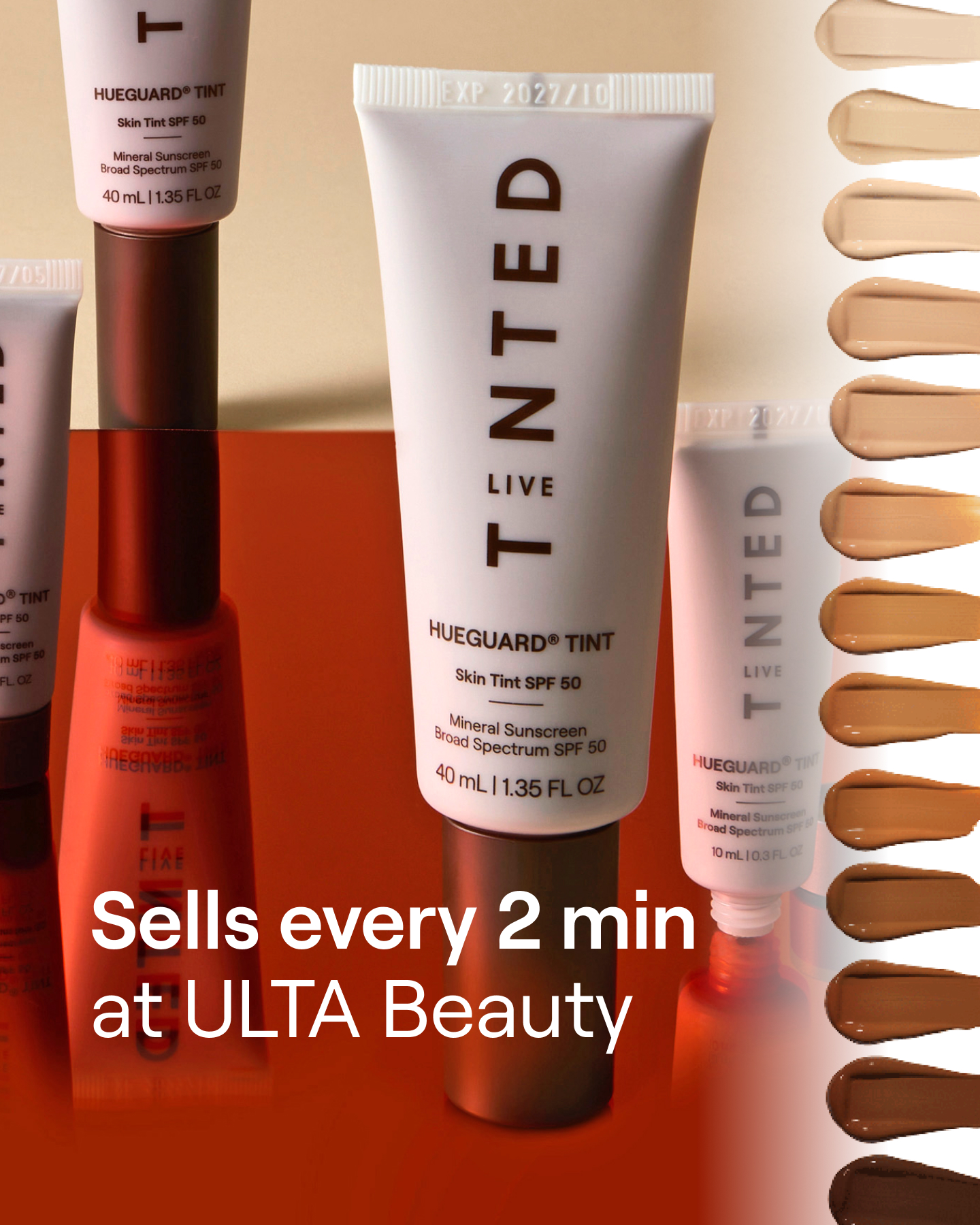
- Hook: "From fair to deep, HUEGUARD® Skin Tint comes in 13 shades," rotating against a companion product-shot variant claiming the tint "sells every 2 min at ULTA Beauty."
- Why it works: The shade-count leads before any texture or SPF benefit, targeting the exact inclusivity gap the brand is built on, while the sell-through claim borrows retail velocity as social proof. That sell-through figure is the brand's own advertised claim, not an independently verified number, so treat it as marketing copy rather than a confirmed result.
- Run this play: Lead with the specific number of shade or size options rather than a lifestyle shot, letting the specificity qualify underserved shoppers on its own.
First shown March 2, 2026, this DCO ad has run about 133 days as of the observation date, and the same "fair to deep, 13 shades" copy recurred in fresh flights through April, a theme the brand keeps relaunching rather than a one-off.
- Hook: "IT'S BACK. The blushing bronzer that sold out in 24 hours," later replaced with a direct customer quote: "This blush/bronzer is simply stunning! It's such a beautiful color on my skin... I can see my whole face in this mirror!" - Karen.
- Why it works: The scarcity claim (sold out in 24 hours) opens the flight, then the same product's ad creative shifts to an unpolished customer testimonial once the scarcity story has run its course, swapping urgency for trust as the primary lever.
- Run this play: Rotate a launch ad from a scarcity hook into a real customer quote once the initial urgency wave cools, instead of running the same creative until it fatigues.
The Huebeam Blushing Bronzer flight started March 3, 2026, running about 132 days as of the observation date.
Every winning ad lands on a dedicated single-product page rather than a bundle or generic collection lander, and pricing is tight across the catalog: HUEGUARD® Skin Tint SPF 50 and HUESTICK® Foundation Stick both list at $40 to $42, HUEBEAM® Blushing Bronzer adds a $36 variant, and HUESKIN Concealer shows a lower $29 option alongside its $40 price, hinting at a smaller or bundled size. The bronzer and highlighter pages both carry a "subscribe & save" option and a matching $1 line item, a shipping-protection add-on, while the concealer, skin tint, and foundation-stick pages run one-time purchase only, so subscription is a selective mechanic rather than a sitewide default. Every one of the five landers carries the same top-of-page banner promoting a new SPF body mist with free shipping, meaning a click from any of the ad hooks above lands the shopper in the same cross-sell funnel before they ever reach the product they clicked for.
- Running
- 31 days (longevity = it's converting)
- Hook
- "this going to have you glowing like nothing else" + Founder holding a rose-gold compact highlighter open to the camera.
- CTA / offer
- "shop now"
- Audience
- Women seeking a "sun kissed" or "bronzy glow" for "summer".
Why it works. The founder pairs a personal glow claim with an in-hand, natural-light reveal of the actual compact, turning the claim into something visibly checkable.
Founder Authority (0:02): "I'm Deepica I'm the founder of Live Tinted and I made this" Have your founder speak the core benefit claim casually while holding the exact product open in natural light on camera.
- Running
- 129 days (longevity = it's converting)
- Hook
- "Live Tinted" and "www.livetinted.com/" with an orange square logo containing white letters "LT" on the left.
- Audience
- Individuals interested in makeup, specifically foundation, lip gloss, and eyeliner, who value vegan and cruelty-free products, as indicated by the text "LIVE TINTED vegan cruelty free beauty for every hue."
Why it works. Leads with plain brand name and URL to win generic brand-name searches, keeping searchers on the official store over a reseller.
Prominent brand and website display: The ad starts with "Live Tinted" and "www.livetinted.com/" at the very top. For plain brand-name searches with no product qualifier, run a simple ad with just brand name, URL, and logo to own that space.
- Running
- 23 days (longevity = it's converting)
- Hook
- Live Tinted - Mineral Sunscreen That Works - Lightweight Daily Coverage
- CTA / offer
- 15% Off Your First Order. Free Shipping Over $40.
- Audience
- Individuals seeking effective, lightweight, and inclusive-shade mineral sunscreens with added skincare benefits, as indicated by 'Hueguard® Skin Tint SPF 50 evens skin tone with natural glow & SPF protection' and 'Inclusive Shades'.
Why it works. Targets high-intent sunscreen searchers by naming both objections, efficacy and heavy texture, upfront instead of generic branded copy.
Headline stating core product benefit: 'Live Tinted - Mineral Sunscreen That Works - Lightweight Daily Coverage' For category search ads, name the specific objection your product beats, like 'that works' or 'lightweight,' instead of brand-only copy.
Show 7 more exhibits
- Running
- 137 days (longevity = it's converting)
- Hook
- LIVE TINTED Official Site - LIVE TINTED Foundation
- Audience
- Individuals searching for 'Live Tinted' products, specifically foundation, indicated by the search result title and description.
Why it works. Branded search ad for foundation queries puts an Official Site trust signal directly against competitors bidding on the same term.
Headline stating 'LIVE TINTED Official Site - LIVE TINTED Foundation' On branded search terms tied to a specific product, run a dedicated ad group per product with Official Site in the headline.
- Running
- 134 days (longevity = it's converting)
- Hook
- LIVE TINTED Official Site - LIVE TINTED New Arrivals" with the Live Tinted logo (orange 'LT' in a white circle) and "www.livetinted.com/" visible above it.
- Audience
- Individuals interested in beauty products, specifically those seeking SPF skin tint, vegan, and cruelty-free options, indicated by the product description and category buttons.
Why it works. Combines Official Site trust with New Arrivals to pull existing customers who search the brand name back in for new launches.
Prominent brand name and official site link: "Live Tinted www.livetinted.com/" at the top. Run a branded search variant leading with New Arrivals whenever you launch products, targeted at people searching your brand name.
- Running
- 133 days (longevity = it's converting)
- Hook
- Visual: A close-up of three white tubes of 'HUEGUARD® TINT Skin Tint SPF 50' product, with one tube prominently centered and two others partially visible. To the right, a vertical column of swatches of the product in various skin tones is visible. The text 'Sells every 2 min at ULTA Beauty' is overlaid in white.
- Audience
- Individuals seeking tinted sunscreen or foundation, likely interested in beauty products sold at ULTA Beauty, indicated by the product type and the mention of 'ULTA Beauty'.
Why it works. Converts a Ulta sales stat into a real-time cadence claim, giving shoppers a live-feeling proof point beyond a bestseller badge.
On-screen text overlay: 'Sells every 2 min at ULTA Beauty' If you have retail sell-through data, convert it into a rate, like 'sells every X minutes,' instead of a static bestseller label.
- Hook
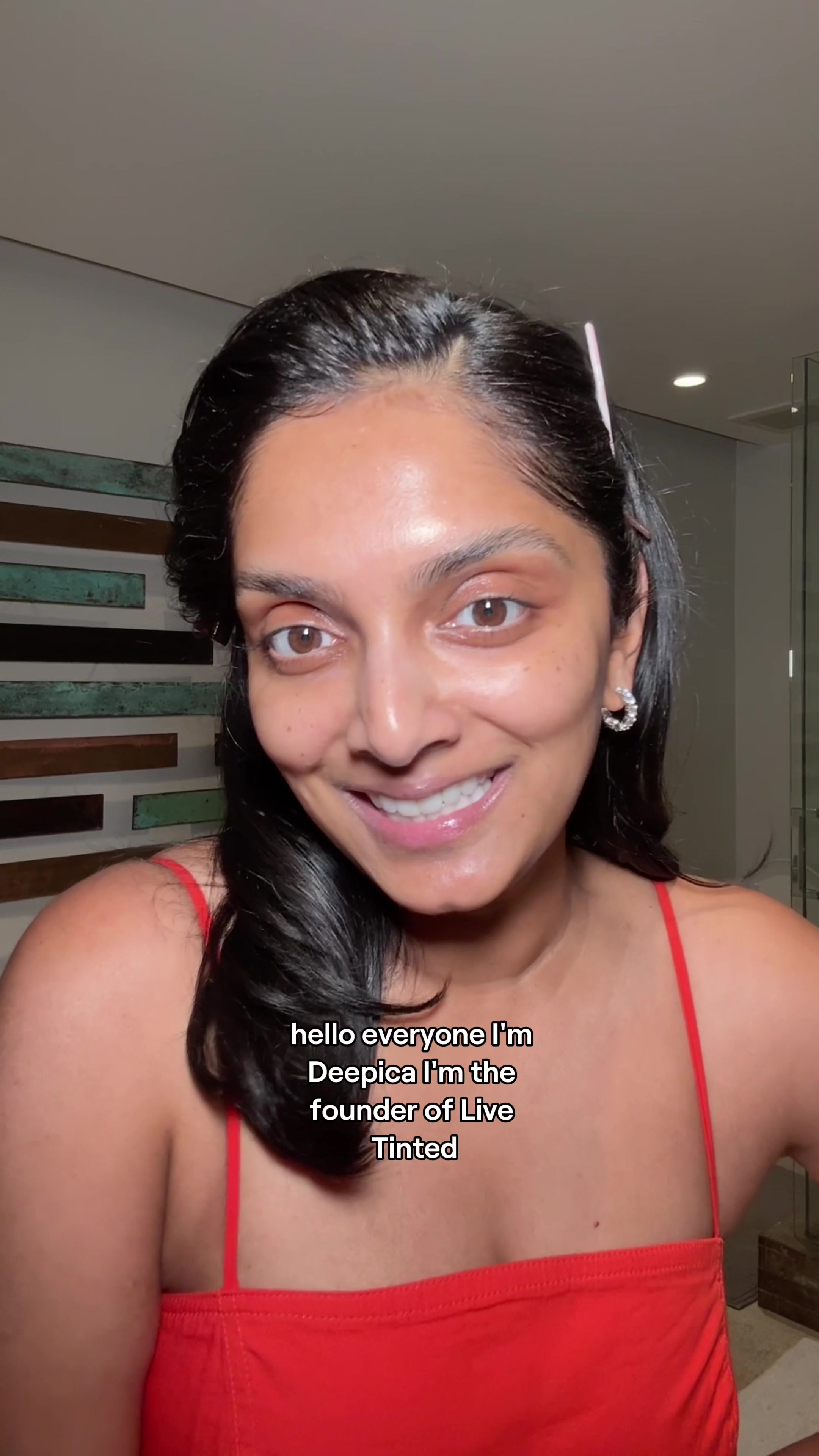
- "hello everyone" + A woman with dark hair and a red top smiles at the camera in a bathroom setting.
- CTA / offer
- Get the Kabuki brush for FREE with the HUEGUARD® Skin Tint duo.
- Audience
- Individuals seeking a tinted SPF that matches their undertone and provides skincare benefits, indicated by the founder's personal struggle and solution.
Why it works. Opens on the founder greeting viewers from an everyday bathroom setting, then attaches a limited-time free gift so the pitch feels personal rather than promotional.
Founder personal story and problem-solving at 0:09-0:14: "I made it because I couldn't find a single tinted SPF that matched my undertone." Film your founder's opening line in an unstaged, everyday setting (bathroom, kitchen) before introducing any offer, so the ask feels personal.
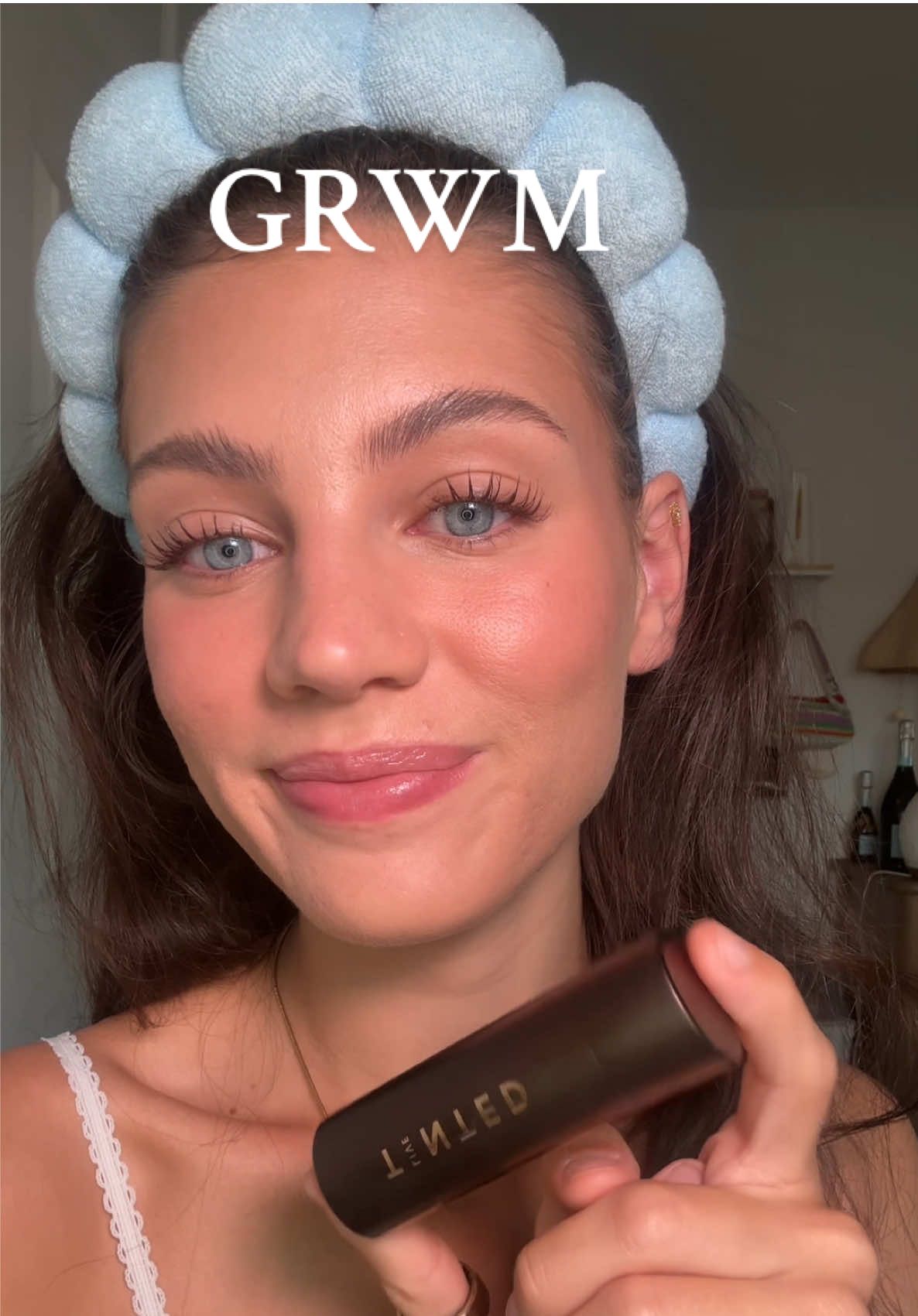
- Hook
- "Brands... LISTEN UP" with a woman applying a skin tint to her face, with three gold megaphone emojis above the text.
- Audience
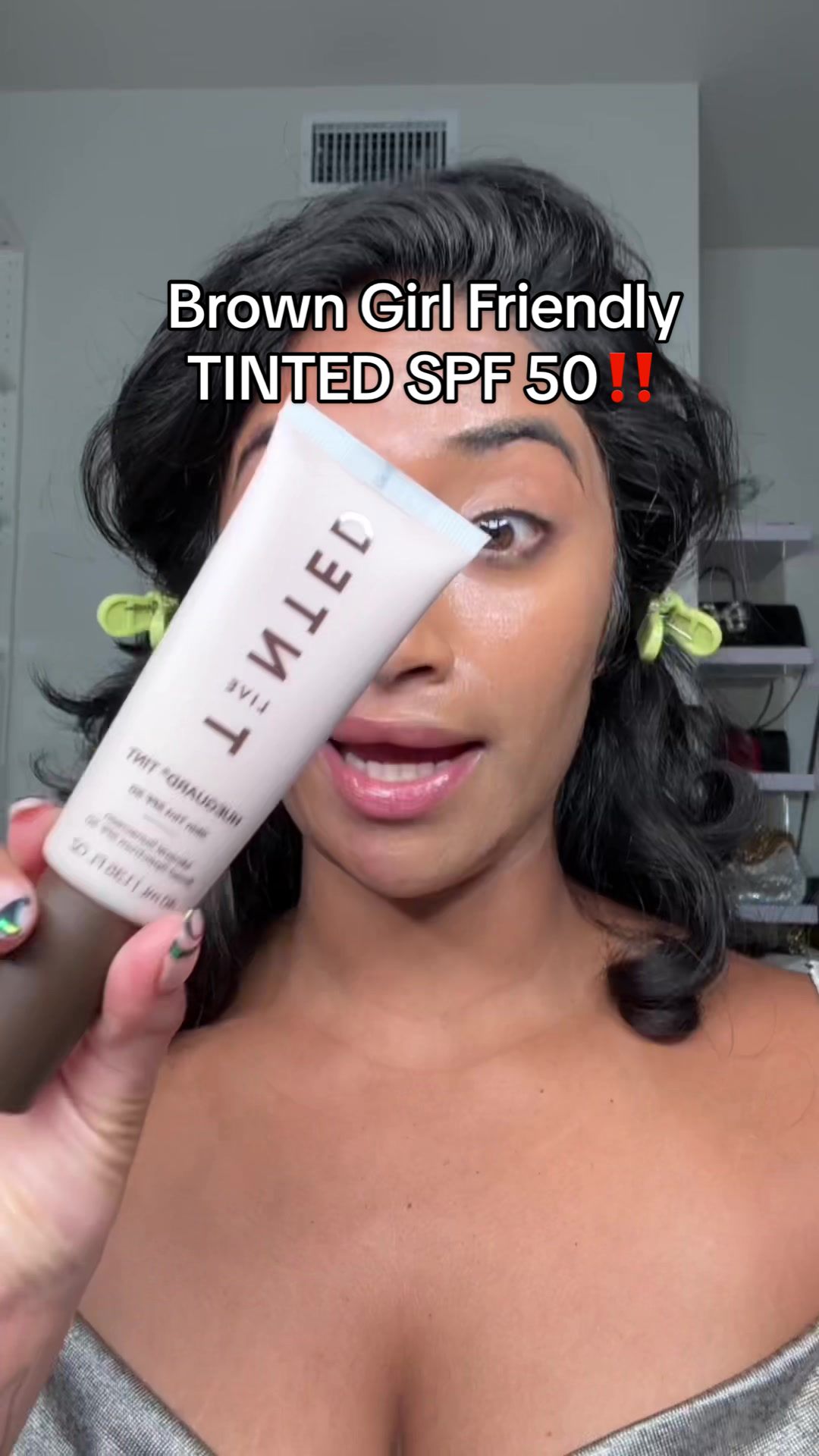
- Women with medium to dark skin tones who struggle to find inclusive shade ranges in beauty products, signaled by the phrase "Brown Girl Approved ✅" at 0:39 and the discussion of shade range inclusivity.
Why it works. Opens by calling out brands' shade-range failures directly, positioning Live Tinted as the fix for underserved skin tones.
Direct address and bold claim at the beginning: "Brands... LISTEN UP" (0:00-0:03). Open your UGC by addressing the industry directly before naming the specific gap your product fixes.
- Reach
- 2 upvotes · 3 comments · r/CPGIndustry
A community is already discussing this in r/CPGIndustry. Show up there authentically and answer the thread before a competitor does.
Who amplifies them
Amplification here is almost entirely third-party creators rather than the brand's own posting. Reviewer Abby Does Beauty 35+ posted a texture-focused clip ("Not because how. Why. How?!?") aimed at mature and textured skin that pulled about 1,300 engagement, Gloss Angeles ran a founder-interview-style clip about the "POC-owned brand" label with about 1,200 engagement, and creator abbey.kline posted twice, peaking at about 4,600 engagement on a "summer glam" look. Beyond that top tier, a long tail of smaller reviewers (JENNIE of greeneggsandglam, kenadee mcmullin, hillary hewitt, and others) each contribute in the 150 to 1,100 engagement range, while creator athostvz's tracked clip pulled about 7,470 engagement, plus the founder- and reviewer-led clips referenced above. This is a genuine creator-amplified footprint, not a thin one: the volume and repetition of independent reviewers picking up the same shade-range and SPF story is the clearest evidence that the brand's inclusivity positioning is landing with the audience it targets, distinct from anything the brand account itself posts.
07 Organic & video
The organic content engine: the videos, creator posts, and community presence earning attention without paid spend.
The format that actually performs across the tracked creator clips is the unscripted talking-head review: several of the organic clips in the creative sample show a person testing product on camera with lines like "the only skin tint I trust and here's why" or "Brands... LISTEN UP," which reads as outsider validation rather than brand messaging. The founder shows up directly in this feed rather than staying behind the brand handle. A clip posted under her own name captioned "Your skin. But better." pulled roughly 14,200 engagement, and a separate creator clip pairing her name with the line "SPF 50. Free brush. Your skin but better." added another ~7,500, on top of the top-performing reviewer clip (Erin Noelle, ~22,000 engagement). On the brand's own account, the highest-engagement single post is not a product shot but a piece of brand storytelling: a "first-ever brand commercial" captioned "This story began with our founder and has resonated deeply with so many of you over the past five years" pulled about 3,800 engagement, well above that account's per-post average of about 578. The pattern is a two-track content mix: high-volume independent creator testing for reach, and occasional founder-fronted or brand-narrative posts for depth.
08 Affiliate & partners
How the brand turns creators and partners into a tracked, variable-cost acquisition channel, and how the program is structured.
Live Tinted runs a live TikTok Shop listing for the HUELIGHTER highlighter, meaning the shoppable-video storefront is active and at least one outside seller is transacting through it, the clearest sign of a creator-affiliate motion already in motion rather than planned. One reviewer's post was also explicitly sourced through a gifting network ("I did recieve this from @influenster," a platform that seeds free product to reviewers in exchange for organic content), a second, lower-cost seeding channel that runs alongside the paid creator activity. The traffic mix shows affiliate referrals at 4.6% of total visits, referenced above, confirming a real if secondary revenue channel outside TikTok Shop itself. What is not visible is any dedicated referral or ambassador program link on the homepage itself, so the affiliate motion runs through third-party marketplaces (TikTok Shop, gifting networks) rather than a formal owned affiliate page.
09 The playbook
The channels are not separate. They are one system where each stage feeds the next. Here is the read, then the plays to run tomorrow.
The inferred playbook
The loop starts with a rotating Meta ad library and organic creator testing, converts through single-product landers and branded search, and compounds through retail sell-through proof and founder-fronted validation, with an open question over whether that founder layer survives its own leadership transition.
almost the entire Meta library runs through Dynamic Creative Optimization rather than discrete campaigns, meaning the format itself, not any single ad, is the top-of-funnel lever, letting the brand swap hooks and images under one flight without rebuilding campaigns from scratch.
the "sells every 2 min at ULTA Beauty" claim referenced above feeds retail velocity back into digital ad creative as trust signal, tying the DTC funnel to physical shelf presence at Ulta and Sephora Canada, a hybrid flywheel most pure-digital brands cannot borrow.
Dig deeper+3▾
with the top keywords almost entirely the brand's own name, the comparison and roundup content referenced in Organic Content exists to catch adjacent competitor and category searches rather than to generate net-new category demand, a defensive layer more than a growth one.
the CEO handoff referenced above creates a structural risk that the founder-fronted UGC driving some of the strongest organic engagement fades as she steps back from day-to-day operating, a transition risk specific to founder-led DTC brands.
repeat-purchase rate, customer acquisition cost, wholesale-versus-DTC revenue split.
Turn a retail or marketplace velocity number into your paid-ad proof point THE PROOF
The proofthe brand's Meta creative leans on "sells every 2 min at ULTA Beauty," an advertised sell-through claim rather than an independently verified figure, layered onto its shade-range messaging.
The adaptationif you sell through any third-party channel, a marketplace, a retailer, an app store, a wholesale account, pull the most concrete velocity or ranking number that channel will show you (units per day, category rank, reorder rate) and put that exact number in your own paid or organic creative instead of a generic lifestyle claim. Start by asking your retail or marketplace contact for one hard number this cycle, then write one ad or post that leads with it in the first line.
Cost: under $500 · Time to signal: weeks · Works pre-PMF: conditional, only once you have at least one real distribution channel generating a number worth citing.
Put the founder on camera as an unpolished testimonial, not a produced ad THE PROOF
The proofthe founder's own TikTok clips and the "Founder of Live Tinted on what makes this Skin Tint so good" organic UGC sit among the account's higher-engagement organic posts, alongside third-party reviewer content, referenced above.
The adaptationrecord the founder or lead operator talking directly to camera for 60 to 90 seconds about why they personally use or built the product, filmed handheld with no script, and post it from a personal account tagging the brand rather than through the branded account alone. The mechanism: an outsider or a visibly real person on camera reads as testimony rather than advertising, which lowers the viewer's skepticism before any product claim is made.
Cost: $0 · Time to signal: days · Works pre-PMF: yes.
Publish comparison content that targets competitor product names, not
The proofthe brand's highest-earning organic pages outside the homepage are competitor-product reviews and "best of" roundups, referenced in Organic Content above, not standard product pages.
The adaptationwrite a genuine comparison post naming a specific competitor's flagship product, structured as a real review with pros and cons, and place your own product as one of the options rather than the obvious winner. Start by picking the single competitor product your prospects search for most, and publish one honest comparison page targeting that exact search term. This works because buyers researching a category or a named competitor often convert at the comparison stage, before they know your brand name exists.
Cost: $0 · Time to signal: months · Works pre-PMF: yes, provided you have a real point of comparison to make honestly.
Seed free product through a gifting network before paid ads are affordable THE PROOF
The proofat least one tracked reviewer's post was explicitly sourced through a gifting platform rather than a paid ad partnership, referenced above, alongside the brand's broader organic creator volume.
The adaptationsign up for a product-seeding or review-gifting platform in your category, send a small batch of free units to matched reviewers, and require nothing but an honest post in return. First step: pick one such platform live in your vertical, list your product, and ship five to ten units this cycle. The mechanism is that a real stranger's unscripted reaction carries more trust than owned brand copy, at the cost of product and shipping instead of media spend.
Cost: under $500 · Time to signal: weeks · Works pre-PMF: yes, provided the product genuinely performs on first use, since a gifting network amplifies a weak product's flaws just as fast as its strengths. Not transferable at an earlier stage: the retail sell-through claims and the Ulta and Sephora Canada shelf presence assume physical retail distribution built up over years, so a founder without that distribution should treat Play 1 as a placeholder, swap in whatever concrete proof point you actually have (waitlist size, review count, repeat-purchase rate) rather than manufacture a retail claim you cannot back.
You just read how Live Tinted does it. Tomorrow it is someone else.
Every morning we take one company that is actually growing and break down where its customers come from: the ads still running after a year, the channel doing the real work, and the play you can run this week.
Systemaic · directional intelligence. Traffic, spend, and reach figures are SimilarWeb-style estimates and qualitative reads of public data, not audited numbers. Built on real public receipts.
// teardowns with a similar GTM motion
sources & receipts (2)
Live ad libraries: meta ad library · google ad library
Traffic, spend, and revenue figures are estimates as noted in the report; the links above are the primary public artifacts.