- 01Auto-post usage to an adjacent platform's feed
- 02Mine real user questions for your hook
- 03Recruit specialists through your own audience, not a job board
- 04Build one page per atomic unit in your product's data model
01 Snapshot
The one-glance read on who they are and how they grow. Each point is verifiable from the receipts above.
A freemium workout tracker with a social feed for strength trainers, letting users follow friends and share PRs, at an estimated ~400K downloads/mo as of June 2026 per Sensor Tower.
Organic-led, product-led growth: App Store algorithmic pickup, an in-app social feed, and long-tail SEO content carry acquisition, with founder build-in-public on X as a minor add-on.
An estimated ~$800K in monthly revenue and ~400K downloads/mo per Sensor Tower (cited in a June 2026 post), up from a founder-reported $160K MRR in April 2024, built on just $15,000 in lifetime ad spend across the 2 million downloads it had reached by 2024.
Co-founder Desmond McNamee on X in 2021: "@HevyApp just passed 100k users... we went from 10k to 100k with $0 ad spend, 0 press, 0 viral threads" during a pandemic that shut gyms worldwide.
Google's ad library shows a single text ad pointing to hevyapp.com that ran for about 4 days in late June 2026, a brief test against a multi-year Meta placement.
The product is the acquisition channel: the built-in social feed makes logged workouts shareable inside the app itself, so App Store category rank and organic search compound instead of paid spend.
02 How it unfolded
The order the channels came online. Sequence is strategy: what they did first, and what they layered on once demand existed.
03 Traffic & channel mix
Estimated demand, the channel split behind it, and the keywords and referrers doing the work. Directional modeling, not audited analytics.
Hevy pulls an estimated ~904,000 monthly visits, up +24.9% over the last 3 months, a strong curve for a company that has spent almost nothing on paid acquisition. A 2023 profile of the business put organic search at over 77% of total traffic, and the long-tail exercise-guide content still anchoring their top pages (detailed below) suggests that mix has held: search, not paid or social, remains the primary engine.
04 Organic content
The specific pages earning their organic search traffic, and the pattern behind why they rank. Adapt the format, not the topic.
Hevy's top organic pages split into two jobs: the homepage capturing brand-term search (~18,000 visits/mo, its single biggest organic landing page) and a run of long-tail exercise and split-guide pages, a 3-day split workout guide, a push/pull/legs split page, a cable crunch how-to, and a gluteus minimus exercises page, each pulling low thousands of monthly visits. This is a programmatic content pattern: exhaustive, specific answers to the exact phrases lifters type into Google, which is why they rank #1 for "best workout apps," "hevy app," and "gluteus minimus exercises," #3 for "heavy," and #4 for "cable crunches." The pattern draws on the same exercise database that powers the app, so every guide page doubles as a funnel back into the product.
Top pages by organic traffic
05 Channel map
Not traffic share. How much weight the growth system actually puts on each channel, with a one-line read on the role it plays.
What drove growth
06 Who they’re hiring
Open roles read like a roadmap: the functions they’re staffing show where the company is investing next and what stage it’s at.
1 open role
07 The creative doing the work
Each exhibit shows the actual asset, an X-ray of why it works, a status, and a play you can adapt. This is the heart of the teardown.
Hevy's own ad libraries confirm how little of its growth runs through paid media. Meta's library shows a small footprint: an active ad that has been running for ~1,371 days as of July 31, 2026, inside a roughly five-ad library (three sampled, all still active). Google's library shows exactly one ad, a text unit that ran for about 4 days in late June 2026, pointing straight to hevyapp.com, a brief test rather than an established placement. Neither library yielded creative detail reliable enough to deconstruct hook-by-hook here, which tracks with the minimal lifetime ad-spend story above: paid is a rounding error next to the organic and App Store engine driving the rest of this report.
- Running
- 1371 days (longevity = it's converting)
- Hook
- Visual: A woman in a brown sleeveless dress over a white long-sleeved shirt, standing next to a stool with a straw hat on it. She adjusts her dress. Audio: Music with a male vocalist singing in Vietnamese.
- Audience
- Women interested in modest, stylish, and versatile fashion, indicated by the dresses and styling.
Why it works. This creative uses a fashion lookbook style to showcase the versatility and aesthetic appeal of a dress, aiming to inspire purchase through visual desire.
Multiple styling options and colors shown (0:00-0:14, 0:14-0:16, 0:16-0:18, 0:18-0:20). The same dress style is shown in brown and black, worn by different models or in different settings. If your product comes in multiple variations (colors, sizes, styles), feature them prominently in your creative. Show how the same item can be styled differently to appeal to a broader audience.
- Running
- 1371 days (longevity = it's converting)
- Hook
- Visual: A woman wearing a white long-sleeved collared shirt under a brown sleeveless dress and white boots stands next to a stool with a straw hat on it. She reaches for the hat. Audio: A male voice sings in Vietnamese with background music.
- Audience
- Women interested in modest, stylish, and versatile fashion, indicated by the clothing styles and accessories shown.
Why it works. Fashion showcase with multiple styling options to inspire potential customers and demonstrate product versatility.
Product demonstration with varied poses and accessories (0:00-0:14) Film your product being worn or used in multiple common scenarios or poses, highlighting its versatility and aesthetic appeal with different styling options.
- Running
- 1371 days (longevity = it's converting)
- Hook
- 0:00-0:03: A young woman with long brown hair, wearing a black dress with a white-trimmed black jacket, walks towards the camera while holding a white cup. Audio: "Feeling so high, feeling so low."
- Audience
- The stylish, trendy outfit and accessories, combined with the casual outdoor setting, signal a target audience interested in fashion and lifestyle, likely young to middle-aged women.
Why it works. This creative showcases a fashionable outfit in various casual outdoor settings, aiming to inspire potential customers with a desirable lifestyle and product aesthetic, thereby driving interest in the clothing.
Multiple angles and poses of the product (outfit) are shown from 0:00-0:24, with the model walking, turning, and posing. Film your product being worn or used in a variety of natural, everyday scenarios, ensuring multiple angles and movements are captured to highlight its features and how it drapes or functions.
Show 4 more exhibits
We can now finally track every exercise, rep, set, and weight, share it with our friends, and get inspired by other people’s workouts @strava @hevyapp
UGC talking-head
- Hook
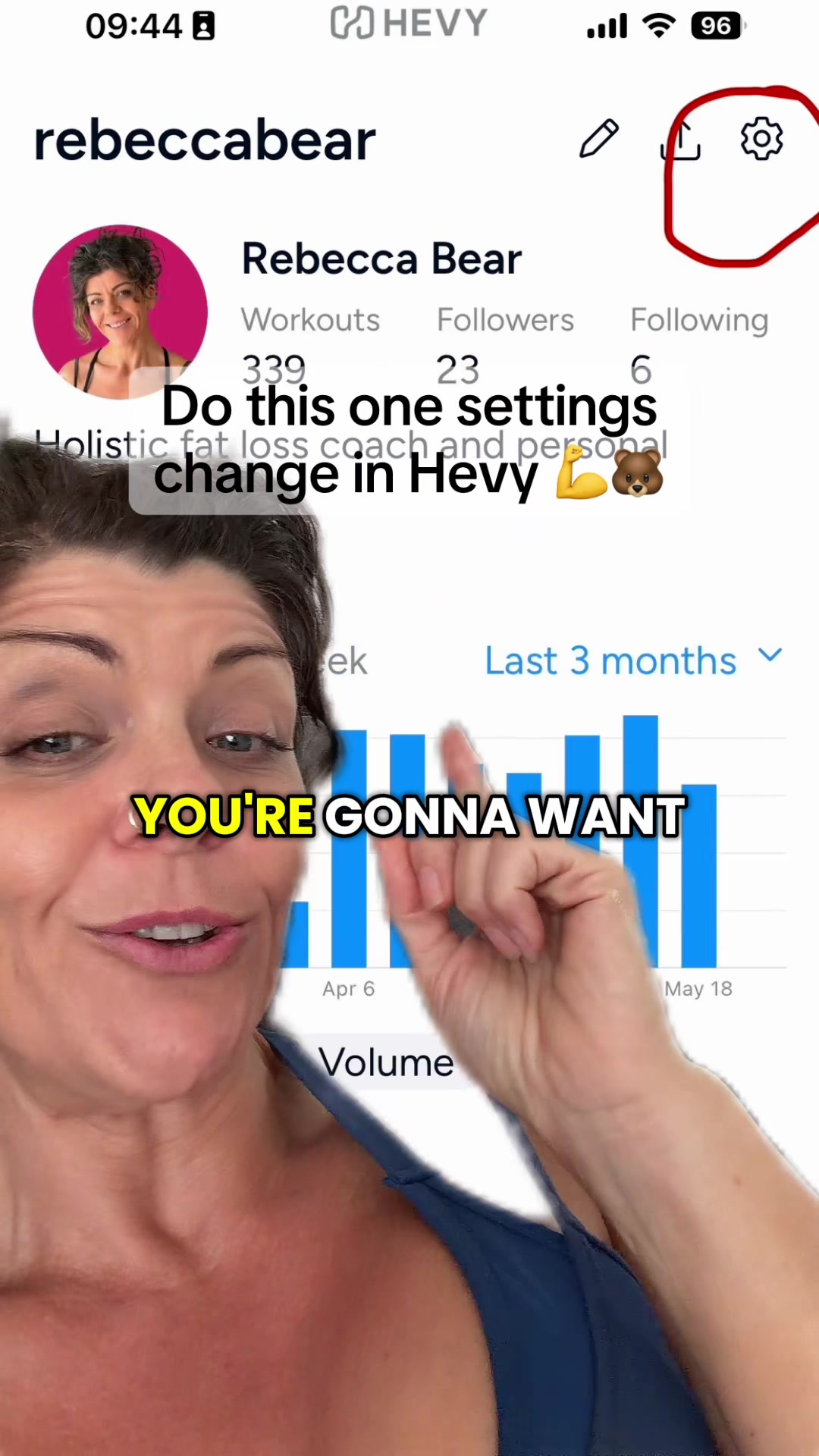
- Visual: A woman with long dark hair, wearing a pink and grey patterned top, looks directly at the camera and speaks. Text overlay: "SO YESTERDAY". Audio: "So yesterday I posted this story with a screenshot of my volume work at the gym."
- Audience
- Fitness enthusiasts, gym-goers, and individuals interested in detailed workout tracking and progress monitoring, indicated by the discussion of 'volume work at the gym' and the app's features for logging sets, reps, and RPE.
Why it works. UGC product demo with a relatable problem-solution narrative to educate potential users about the app's functionality and value.
Start with a relatable problem and social proof. The creator mentions, "So yesterday I posted this story with a screenshot of my volume work at the gym. And I don't think I've received these many DMs in a while now asking me what app that was..." (0:00-0:11). Begin your ad by referencing a common question or problem your product solves, and if possible, mention how many people have asked about it or shown interest, providing a specific number or a strong qualitative statement.
- Reach
- 3 upvotes · 10 comments · r/apps
A community is already discussing this in r/apps. Show up there authentically and answer the thread before a competitor does.
Who amplifies them
Beyond the routine-sharing and question-hook clips above, a broader roster of small creators keeps organic reach compounding. @athostvz's "Hevy does the heavy lifting for me" TikTok drew 608 engagements, Instagram poster @__diekex logs her training program through the app at 604 engagements, and @Amano Lamey's "I finally found the BEST fitness app" clip hit 367. A long tail of smaller posts from @gymotivation91, @nyasiafreestyle, @robbie_doherty, @zoo2uition, @sushi_musume_jk, @domilifts, and @marcwmorris each sit in the roughly 40-270 engagement range, none of them brand-sponsored as far as the evidence shows.
Reddit contributes light word-of-mouth rather than a managed community, the r/apps recap post above. Two distinct company voices run alongside this creator layer: the brand's own @hevyapp account posts feature announcements, while co-founders Guillem Ros and Desmond McNamee post build-in-public updates from their own, much smaller personal accounts. Neither the founders nor the brand account originates the bulk of the reach; the creator layer does.
08 Organic & video
The organic content engine: the videos, creator posts, and community presence earning attention without paid spend.
Hevy's own accounts post in bursts tied to feature releases rather than a steady daily rhythm: a 2025 TikTok clip captioned "Yeah… not quite" pulled 320 engagements with no real promotional hook, while the brand's bigger numbers coincide with launches like Hevy Trainer. The real volume comes from a long tail of independent creators posting across nearly four years, from a 2022 gym-recap clip to a 2026 "raging" post about the app, so fresh content keeps appearing on a rolling basis without a managed content calendar behind it.
Read the full breakdown+1▾
The format that consistently performs is problem-agitation text overlay: clips open with a lifter's literal question, "Matt how do I keep track of my lifts" and "I dont know what to do on the stairmaster..", before cutting to the app as the answer. A second recurring format is the curiosity-driven personal update, one Instagram clip opens with "So yesterday I posted this story with a screenshot of my volume work at the gym" before revealing the app behind it. Standout posts include @liki.lifts's Instagram breakdown of her own tracking setup at 2,805 engagements (she names Hevy alongside Jefit, Strong, and Flex as alternatives), @Mattliftshevy's "Hevy on the App Store" TikTok at 658 engagements, and @Nic's post sharing her public Hevy username so followers can copy her routines at 536 engagements, a peer-to-peer discovery mechanic distinct from anything the brand posts itself.
09 Affiliate & partners
How the brand turns creators and partners into a tracked, variable-cost acquisition channel, and how the program is structured.
Hevy runs an affiliate program, linked directly from its own homepage at hevyapp.com/affiliate/, recruiting outside partners to earn commission on referred signups rather than growing purely through organic reach. It also runs a direct distribution partnership: a 2023 tie-up with corporate wellness platform Gympass, a workplace fitness-perk aggregator, opened Hevy Pro to Gympass's own subscriber base, folding Hevy into a benefit employers already pay for instead of building that reach from a cold start. Between the affiliate program and the Gympass integration, Hevy has at least two structured referral channels layered on top of the creator and search motion covered above.
10 The playbook
The channels are not separate. They are one system where each stage feeds the next. Here is the read, then the plays to run tomorrow.
The inferred playbook
Hevy's acquisition loop starts inside a workout: logging a set surfaces in a friend's feed or a Strava timeline, turning ordinary product usage into the impression a paid ad would otherwise have to buy.
Free users log workouts with everything except four saved routines, seven custom exercises, and three months of history, and Hevy Pro unlocks the rest for $2.99 a month, $23.99 a year, or $74.99 as a one-time lifetime purchase, with a 50%-off first-year promo pushing monthly users toward the annual plan.
the in-app social feed and the direct Strava push-integration do double duty, keeping users checking friends' progress while automatically broadcasting every logged workout outward, a mechanic a standalone tracker without a feed would not get for free.
Dig deeper+3▾
the affiliate program and the Gympass integration above give Hevy inbound channels an App Store algorithm cannot, though B2B distribution still looks like a minor piece next to organic and creator reach.
public reporting shows a $160K MRR figure in 2024 and an estimated $800K monthly revenue figure by mid-2026, but no source explains which single lever, pricing changes, App Store rank, or partnerships, drove that jump, so the path between the two reads as directional rather than a mapped growth curve.
the revenue split between consumer Hevy Pro subscriptions and the separate Hevy Coach trainer product, how much of the roughly 400K monthly downloads traces to App Store category rank versus the search-content engine covered above, and what share of new signups the affiliate program or the Gympass partnership actually contributes.
Auto-post usage to an adjacent platform's feed
The proofHevy's direct Strava integration auto-pushes every logged workout into a user's Strava feed, turning ordinary product usage into a public share the user never had to think about.
The adaptationFind the one platform your users already treat as their public activity feed, whether that is Strava for fitness, GitHub for code, or Letterboxd for film, and build a minimal one-way integration that posts a user's completed action there automatically. Start by picking that platform's most basic write API, ship a single-object post (one workout, one commit, one entry) with no configuration required from the user, and measure how many of your existing users opt in within the first week.
Cost: $0. Time to signal: weeks. Works pre-PMF: yes, provided the adjacent platform's audience already overlaps with your target user.
Mine real user questions for your hook
The proofHevy's best-performing organic clips open with a literal, unedited user question, "Matt how do I keep track of my lifts" and "I dont know what to do on the stairmaster..", before cutting to the product as the answer.
The adaptationPull the five most common confused-customer messages from your own support inbox, reviews, or DMs, and film a 15-second clip that opens with the exact wording of the most common one as on-screen text before showing your product solving it. Do not paraphrase the question into marketing language; the verbatim phrasing is what makes it feel real rather than scripted.
Cost: $0. Time to signal: days. Works pre-PMF: conditional, it needs a handful of real user questions already in hand, so it works better once you have even a small existing user base to mine.
Recruit specialists through your own audience, not a job board
The proofCo-founder Guillem Ros posted directly to his own X following asking for a "TikTok growth hacker... obsessed with going viral" and inviting people to tag candidates or DM him, rather than posting to a job board first.
The adaptationWhen you need a specialist hire, write one post naming the exact skill and outcome you need in your own voice, post it to whatever following you already have, X, LinkedIn, a niche Slack or Discord, and explicitly ask people to tag someone or reply. Skip the job-board listing until this turns up nothing.
Cost: $0. Time to signal: days. Works pre-PMF: conditional, it depends on already having some audience to post to; a brand-new account with no following will not source strong applicants this way.
Build one page per atomic unit in your product's data model
The proofHevy's top organic pages are not blog posts but individual guides built off its own exercise database, a 3-day split guide, a push/pull/legs split page, a cable crunch how-to, each ranking for the literal phrase lifters search.
The adaptationList the atomic units your product already models internally, whether that's integrations, templates, or use-case configurations, and build one dedicated page per unit targeting the exact phrase a user would type to find it. Start with the 20 most common units, ship pages for the top 5, and link each one back into the product it describes.
Cost: under $500. Time to signal: months. Works pre-PMF: yes, conditional on your product having a natural taxonomy of units to turn into pages; a single-feature product has nothing to enumerate.
Pitch an existing benefit provider for embedded distribution
The proofHevy's Gympass integration, covered above, put Hevy Pro directly in front of Gympass's own subscriber base instead of building that reach from scratch.
The adaptationIdentify three platforms or benefit providers whose audience already needs what you sell as part of something else they buy (an employer perk, a bundled subscription, a marketplace add-on), and cold-email their partnerships team with one specific integration ask rather than a general partnership pitch. Lead with the exact mechanic you want, not a deck.
Cost: $0. Time to signal: months. Works pre-PMF: conditional, it works far better with a working product to demo than with an idea alone. Not transferable at an earlier stage: Hevy's 2022 App Store category-rank lift happened in a far less crowded fitness-app market, so ranking well alone will not reproduce that inflection point in isolation, and the Gympass-style enterprise benefit deal above generally requires a product mature enough for a corporate partner to vet before signing. Neither move is available to a founder still validating the core product.
You just read how Hevy does it. Tomorrow it is someone else.
Every morning we take one company that is actually growing and break down where its customers come from: the ads still running after a year, the channel doing the real work, and the play you can run this week.
Systemaic · directional intelligence. Traffic, spend, and reach figures are SimilarWeb-style estimates and qualitative reads of public data, not audited numbers. Built on real public receipts.
// teardowns with a similar GTM motion
sources & receipts (22)
Live ad libraries: meta ad library · google ad library
Launch archives: Hacker News: Show HN: I Created the Cursor for Workouts (Hevy App)
Researched facts: Hevy is bootstrapped with no venture funding: $0 raised; self-funded, no institutional inv · Hevy was co-founded by Guillem Ros (CEO) and Desmond McNamee (CTO): Guillem Ros - CEO/co-f · Hevy was founded in 2019 after Guillem Ros struggled to track his own gym progress: Founde · January 2022 was Hevy's key growth inflection point, cracking the top 5 apps on Google Pla · Earlier-reported (2023) revenue figure was materially lower than later milestones, indicat · Hevy Pro (premium subscription) is priced at $2.99/month: $2.99/month for Hevy Pro · Hevy Pro is offered in Monthly, Annual, and Lifetime subscription tiers, with periodic 50% · Hevy applied for Garmin API access to build a Garmin integration and was rejected, so no G · Hevy has a direct Strava integration that auto-shares logged workouts to a user's Strava f · Hevy launched a companion product, Hevy Coach, for personal trainers/coaches to manage cli · Co-founders Guillem Ros and Desmond McNamee met while working together at fitness app 8fit
Milestone sources: 2019-11-16: Hevy launches (Berlin) as a free weight-lifting workout tracker with social fe · 2022-12: Hevy passes 1 million downloads after roughly three years of organic growth since · 2024-01: Hevy wins Product Hunt's Golden Kitty Award for Best Mobile App of 2023. · 2026-06: Hevy ships full-detail Strava sync, one of the most detailed strength-training in
Community threads: AlternativeTo: AlternativeTo reviewer says Hevy's free tier is generous but community/soci · Hacker News: On a Hacker News Show HN for a DIY/open-source workout tracker, a commenter h · Hacker News: Another HN commenter on the same thread flags Hevy's one-time lifetime-member · G2: G2 reviewer of Hevy Coach (the trainer-facing product) praises the exercise library an
Traffic, spend, and revenue figures are estimates as noted in the report; the links above are the primary public artifacts.