- 01Stage your product against its worst stereotype
- 02Seed unscripted reactions before producing a single ad
- 03Build a demo-clip library as a testing ground for paid creative
- 04Bid on the problem, not your brand name
01 Snapshot
The one-glance read on who they are and how they grow. Each point is verifiable from the receipts above.
Additive-free cottage cheese, sour cream, and cream cheese sold through U.S. grocery retail (Whole Foods, Target, and others), riding a still-active TikTok cottage-cheese trend.
Creator-led and paid-led, with organic recipe UGC repurposed directly into paid ad creative.
181,576 Instagram followers and roughly 62,457 estimated monthly site visits (down 24% over the last 3 months) as of 2026-07-13, alongside 18 active Meta ads and a roughly 200-ad Google library (16 confirmed active in the analyzed sample), and reported 2025 revenue north of $200M with the company targeting around $250M.
Google's newest ad tests as of 2026-07-13 shift from years of static text search ads toward video creative, while Meta's newest test swaps single-recipe hooks for a multi-tip listicle format.
Good Culture doesn't sell anything on its own website; its entire content and ad engine exists to push search and social demand into third-party grocery shelves, and growth is now bottlenecked by production and logistics, not by demand generation.
02 Traffic & channel mix
Estimated demand, the channel split behind it, and the keywords and referrers doing the work. Directional modeling, not audited analytics.
Traffic sources
Top search keywords
| Keyword | Volume | Weight | CPC |
|---|---|---|---|
| good culture cottage cheese | 9.3k | $0.76 | |
| good culture | 3.4k | $0.79 | |
| cottage cheese good culture | 690 | $0.77 | |
| good culture low fat cottage cheese | 660 | $1.43 | |
| good culture cottage cheese costco | 870 | $1.06 |
Closest competitors by audience
Good Culture draws an estimated 62,457 monthly visits, down 24% over the last 3 months. Organic search dominates the mix at 64.5% of traffic, far ahead of paid search (10.4%), direct (7.6%), and referrals (7%); the rest, social organic, display, social paid, affiliate, and email, totals about 10% combined. That organic-search weight lines up with the brand's Google text-ad rotation and recipe-hub content strategy rather than a habitual direct-navigation audience. The site ranks and bids against high-intent recipe queries: "good culture cottage cheese" (9,310 monthly searches across the web), "good culture" (3,420), and, notably, "good culture cottage cheese costco" (870), a query pattern that reflects shoppers checking specific-retailer availability rather than buying on-site. Among the closest competitor domains, nancysyogurt.com and darigold.com are direct cultured-dairy rivals competing for the same clean-label shelf space, while prairiefarms.com represents the larger conventional dairy co-ops Good Culture is displacing share from in the category.
03 Channel map
Not traffic share. How much weight the growth system actually puts on each channel, with a one-line read on the role it plays.
What drove growth
04 Who they’re hiring
Open roles read like a roadmap: the functions they’re staffing show where the company is investing next and what stage it’s at.
2 open roles
05 The creative doing the work
Each exhibit shows the actual asset, an X-ray of why it works, a status, and a play you can adapt. This is the heart of the teardown.
As of 2026-07-13, Good Culture runs 18 active Meta ads out of a fully collected 18-ad library, and a roughly 200-ad Google library with 16 confirmed active in the 141-ad sample analyzed. The Meta library has genuine longevity proof: its oldest active ad has run about 61 days. On Google, the oldest active ad has run about 189 days, but that longevity sits entirely in the text-ad format; every newer Google test in the evidence is video, meaning the format itself is being replaced even as the old format keeps earning its spend.
None of the analyzed ads land on a checkout page. The recipe-content ad tested in the evidence (the long-running Google text search ad) lands on Good Culture's "Recipes" hub, which sits in the site nav alongside Our Products, Who We Are, Merch, and a "Where to Buy" retail locator. There is no visible discount code, subscription mechanic, or bundle offer in the landing evidence, consistent with a wholesale CPG business: the click doesn't need to convert to a sale on-site, it needs to convert to a retail purchase intent. "Merch" is the only nod to direct commerce, and it sends shoppers off to a third-party swag store (goodculture.giveswagger.com) rather than transacting on the domain itself, positioned as brand affinity rather than a revenue driver. Functionally, every paid and organic click is being routed toward "find this in a store," making the store locator the site's real conversion event.
- Running
- 61 days (longevity = it's converting)
- Hook
- "Let's talk about the perfect game day dip." + A hand dipping a tortilla chip into a bowl of orange buffalo chicken dip topped with shredded cheese.
- Audience
- Home cooks preparing for a social event ("game day").
Why it works. Ties a versatile product to a recurring calendar occasion instead of generic snacking, giving the brand a seasonal angle it can reuse every year.
Sensory 'Money Shot' Hook (0:00-0:03): "Let's talk about the perfect game day dip." Tie your versatile product to one specific recurring occasion your audience already plans for, like a game day or holiday.
- Running
- 61 days (longevity = it's converting)
- Hook
- Whipped cream is sprayed in a high, swirling pile onto a container of Good Culture cottage cheese, followed by crushed cookie bits. (0:00-0:03)
- Audience
- Health-conscious consumers looking for high-protein snacks (signaled by the '18G PROTEIN' label and the 'low-fat' product choice).
Why it works. Turns a plain cottage cheese cup into a dessert on camera with whipped cream and crushed cookies, letting the visual transformation do the persuading.
Reverse-order storytelling (0:00-0:03) Film a plain version of your product turning into an indulgent version in one continuous unbroken shot, no voiceover needed.
- Running
- 45 days (longevity = it's converting)
- Hook
- "I know that everybody thinks that I lost it" + a hand holds a Good Culture cottage cheese cup topped with a massive swirl of whipped cream, carrots, and walnuts as a gold spoon scoops into it.
- Audience
- Health-conscious individuals looking for high-protein snacks (visible '19G PROTEIN' label and fitness-style recipe).
Why it works. Shows a dessert-style topping, whipped cream, carrot and cinnamon, turning a plain cottage cheese cup into a carrot-cake-style treat through pure visual transformation.
Visual 'Food Porn' Hook (0:00-0:03) Pick one already-popular flavor combination, like carrot cake, and recreate it live using your base product.
Show 7 more exhibits
- Running
- 45 days (longevity = it's converting)
- Hook
- "dark chocolate raspberry cottage cheese parfait" spoken over a close-up of a hand with pink polka-dot nails holding a glass bowl filled with a layered chocolate and raspberry dessert topped with granola and a peanut butter drizzle.
- Audience
- Fitness-focused individuals or dieters looking for high-protein snacks (mentions "20 grams of protein" and "high protein base").
Why it works. Leads with a dessert name that sounds indulgent and lets the cottage cheese reveal double as the twist, which suits recipe-discovery audiences scrolling for food.
Sensory Texture Close-ups (0:01, 0:19) Name your recipe like a dessert menu item and let your product's presence be the reveal rather than the headline.
- Running
- 33 days (longevity = it's converting)
- Hook
- A thick, dark purple swirl is piped onto a light purple creamy base inside a "good CULTURE" cottage cheese container (0:00-0:03).
- Audience
- Health-conscious foodies looking for high-protein dessert alternatives (signaled by the '18G PROTEIN' label and the dessert-like transformation).
Why it works. Delays the pitch behind a casual voice greeting so the video plays like a personal video call before it reveals a dessert-style cottage cheese hack.
Visual Pattern Interrupt (0:00-0:03) Open with a casual, off-topic-sounding line before cutting to your product reveal, mimicking an unscripted personal video.
- Running
- 31 days (longevity = it's converting)
- Hook
- "I am a cottage cheese girl." + blonde woman in a striped shirt holding two stacked tubs of Good Culture cottage cheese.
- Audience
- Health-conscious individuals looking for high-protein snacks (mentions "extra protein" and "clean ingredients").
Why it works. Uses an identity claim tied to an existing trend format so the ad reads as personal lifestyle content, inviting viewers to self-identify with the label.
Rapid-fire UGC montage (0:00-0:30) Frame your product as an identity marker using the '[trend] girl/guy' format your audience already uses on social.
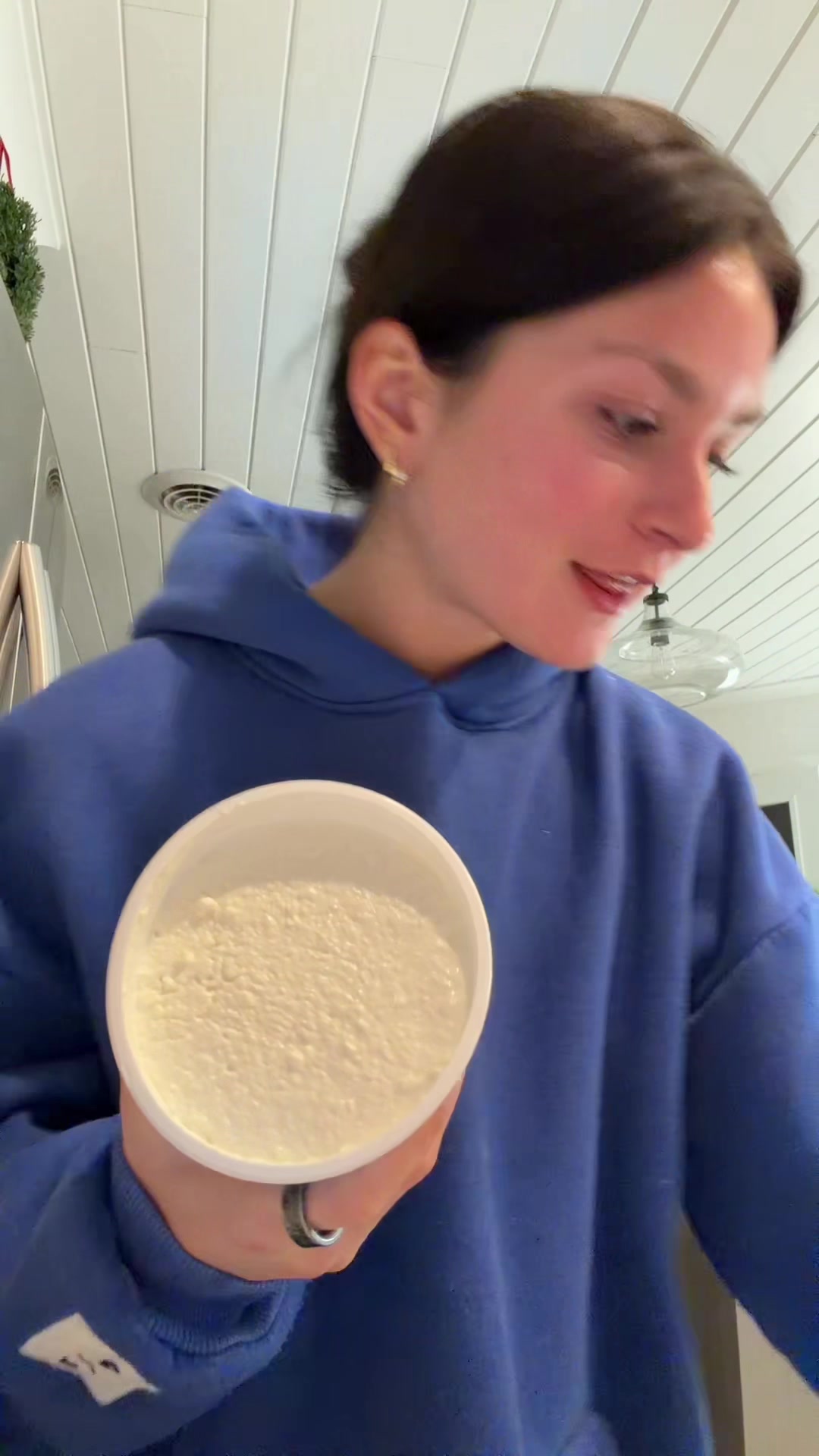
- Hook
- "There is nothing better than a good good cold fresh tub." A young woman in a blue hoodie holds a white tub of a white, thick, lumpy substance, smiling and looking at the camera.
- Audience
- The casual setting and direct address suggest a target audience interested in everyday food products, possibly health-conscious or looking for satisfying snacks, indicated by the emphasis on 'good' and 'fresh'.
Why it works. Sensory-first language sells the tub's texture and freshness to viewers scrolling for food content before the product is even shown.
Sensory demonstration of texture: At 0:05-0:15, the creator uses a spoon to scoop the product, stating, "Look how thick this is, guys. Watch this. Hold on. It's like ice cream. It's so thick." Describe your product's texture and temperature out loud before the camera reveals it, to build anticipation.
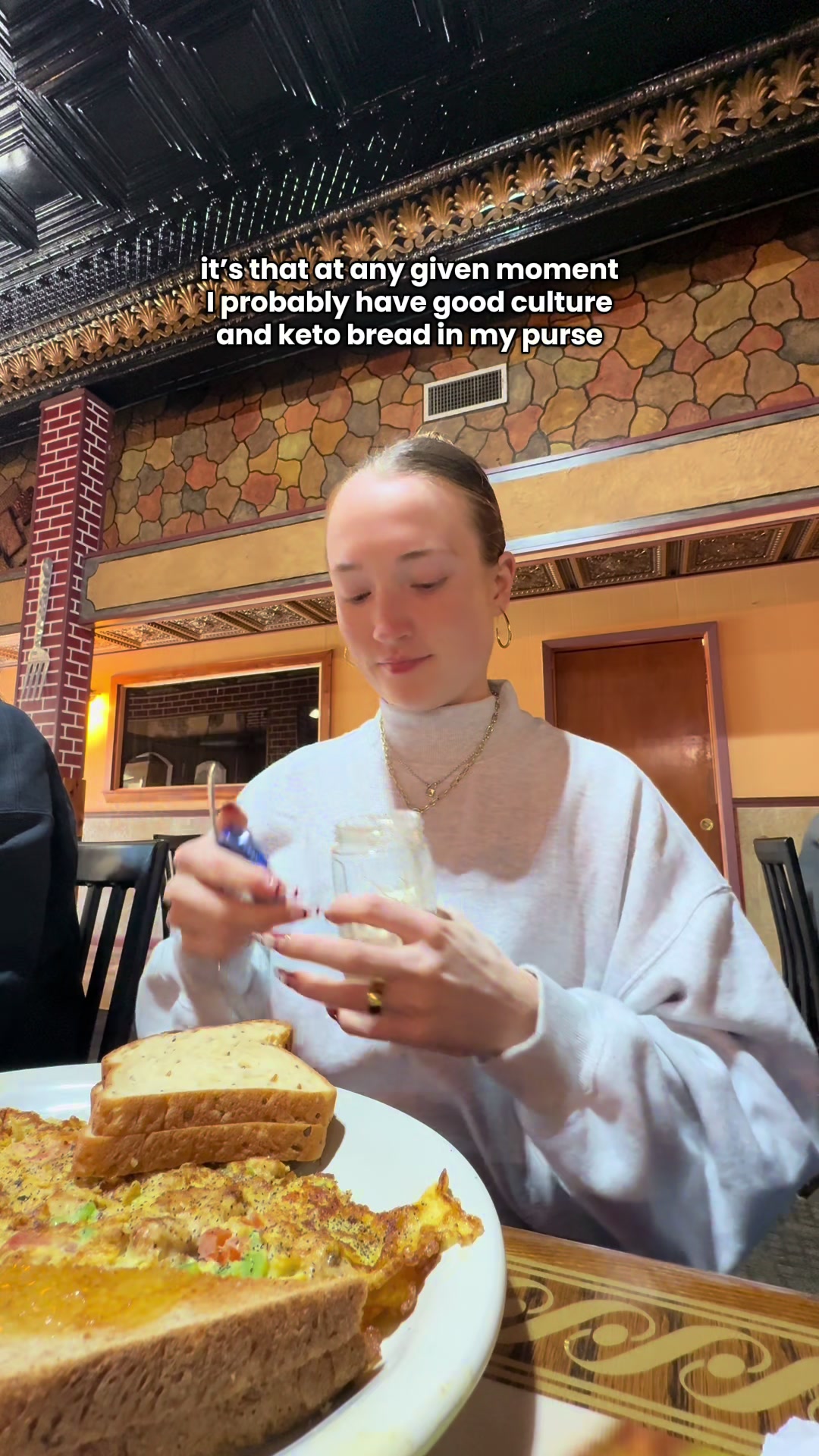
- Hook
- "if there's one thing about me..." A woman in a white turtleneck sweater is seated at a table, pulling a small white container out of a black purse. A plate with an omelet and toast is in the foreground.
- Audience
- The mention of "keto bread" and "good culture" signals an audience interested in specific dietary choices and health-conscious eating.
Why it works. Uses a recognizable TikTok meme opener to signal a personal habit reveal, pulling in viewers already primed by that format.
Relatable problem/solution setup (0:00-0:05, "if there's one thing about me... it's that at any given moment I probably have good culture and keto bread in my purse") Borrow a platform-native phrase format your audience already associates with a personal reveal, then pay it off with your product.
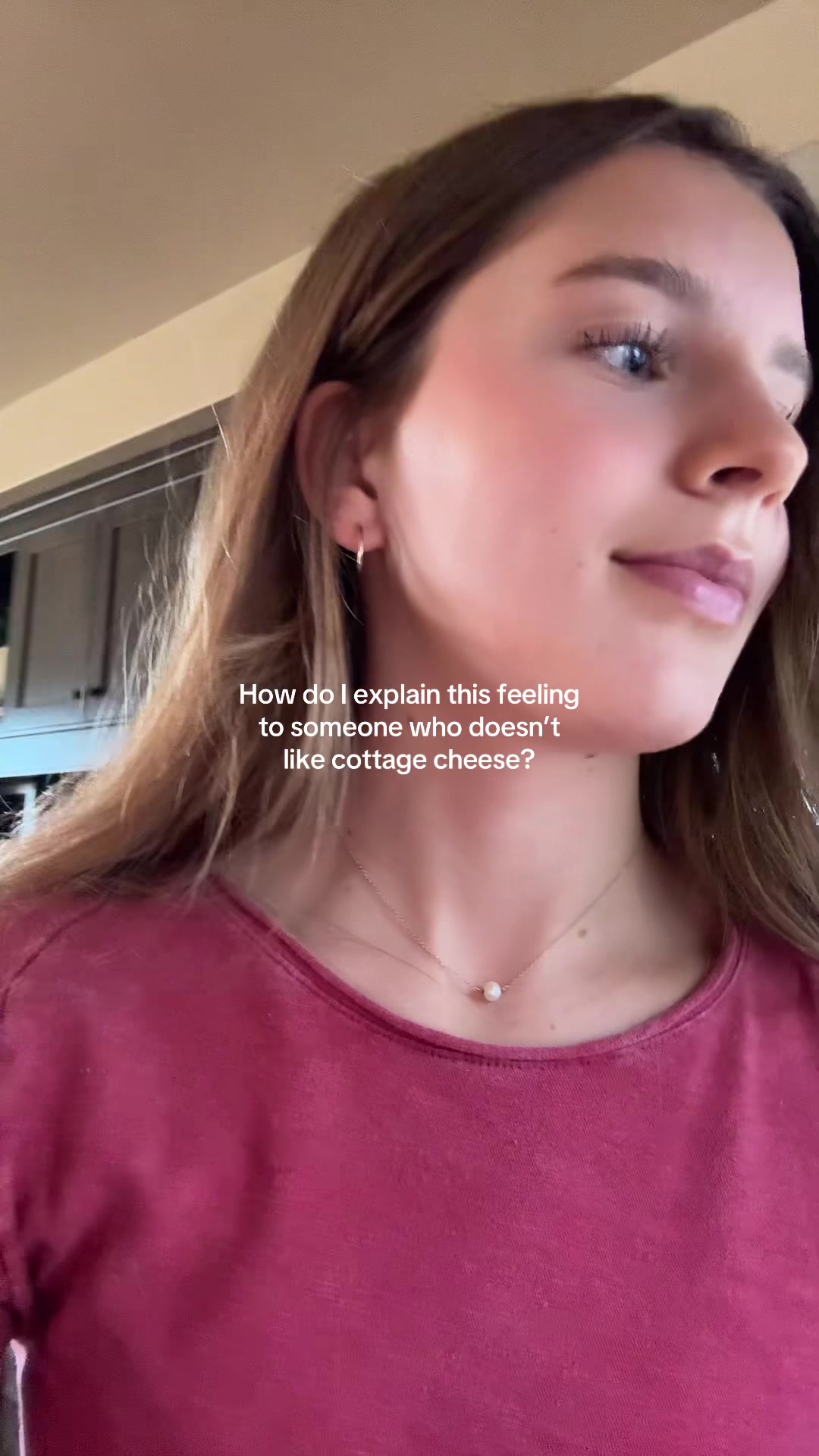
- Hook
- "How do I explain this feeling to someone who doesn't like cottage cheese?" A young woman with long brown hair, wearing a pink long-sleeved shirt, looks directly at the camera.
- Audience
- People who enjoy cottage cheese, or those who are skeptical but open to trying a new brand, indicated by the question posed on screen.
Why it works. Poses a question that splits viewers into fans and skeptics, pulling in loyal cottage cheese eaters and curious doubters alike.
Problem-agitation hook with on-screen text: "How do I explain this feeling to someone who doesn't like cottage cheese?" (0:00-0:03) Ask a question that splits your audience into believers and skeptics, then resolve it on camera.
- Reach
- 99 upvotes · 127 comments · r/keto
A community is already discussing this in r/keto. Show up there authentically and answer the thread before a competitor does.
Who amplifies them
The #GoodCulturePartner tag identifies a running roster of dietitian and fitness creators publishing recipe content: @brinya_thefitdietitian, @Healthienut, @conniemokwellness, @Kyrasgoodeats, @dietitiankyra, @the_plant_slant, @tasteslovely, and @soosfoods. These are third-party creators distinct from the brand's own account, @good_culture, and no founder-run personal account appears in the evidence. Beyond the managed creator roster, unaffiliated fans amplify the brand organically on TikTok and Instagram with no tag or compensation visible, and Reddit communities including r/Cheese, r/keto, r/EatCheapAndHealthy, r/AskRedditFood, and regional subreddits like r/HuntsvilleAlabama and r/ChicagoSuburbs discuss the brand unprompted, mostly around availability and, to a growing degree, product quality.
06 Organic & video
The organic content engine: the videos, creator posts, and community presence earning attention without paid spend.
The format that performs across both the brand's own Instagram and third-party creator content is the unscripted reaction or simple demo clip, not a produced brand video. Creator ayria's keyword-tagged clip ("good culture i'm ur biggest fan please") pulled 785,275 engagement in December 2025, fitness-coach creator Kelly Story's "I swear these are my food groups" post hit 195,879 in January 2026, and TikTok user liluzivert's "Not all good culture is built the same, but this was a perfect tub" reached 109,898 in February 2026, all with no brand production value beyond a phone camera. The brand's own Instagram account (181,576 followers, 2,343 posts) runs a steadier cadence of recipe demo clips using the same piping-bag whipped-topping visual gag that recurs across its paid ad creative, suggesting the organic feed doubles as a proving ground for what later gets promoted.
07 Affiliate & partners
How the brand turns creators and partners into a tracked, variable-cost acquisition channel, and how the program is structured.
No self-serve affiliate program, TikTok Shop, or referral-link system is detected on the owned site. Instead, the #GoodCulturePartner tag on dozens of dietitian and fitness creator posts points to a managed brand-partnership or seeding program rather than an open commission-based scheme. At this scale, that's a deliberate choice: a brand already stocked in 16,000+ stores gets more value from curated, credible creator voices than from an open affiliate funnel it would need to police.
08 The playbook
The channels are not separate. They are one system where each stage feeds the next. Here is the read, then the plays to run tomorrow.
The inferred playbook
Good Culture's growth engine turns unpaid recipe virality into paid-ad creative that pushes demand into grocery shelves it increasingly cannot keep stocked.
organic creator and in-house recipe clips, avocado toast, buffalo chicken dip, chicken parm bites, get repurposed directly into Meta's proven-winner rotation, collapsing the cost of producing paid creative to near zero.
the 64.5% organic-search share and the 189-day-old Google text ads both target generic recipe-intent queries rather than branded search, landing clicks on a content hub that funnels toward the "Where to Buy" locator instead of a cart.
Dig deeper+3▾
Reddit threads spanning April 2025 through June 2026 describe chronic stockouts, and the company's only two public open roles, a Director of Logistics and a Data and AI Analyst on the Quality team, point at fixing exactly that bottleneck rather than expanding demand generation further.
since co-founders Jesse Merrill (CEO) and Anders Eisner (Chairman) sold majority control to L Catterton in January 2026, several high-engagement Reddit threads (up to 99 score, 127 comments) allege a taste and quality decline, a brand-risk signal surfacing right as paid spend and creator partnerships keep scaling.
wholesale sell-in pricing, the conversion rate from ad clicks to actual retail purchase, and paid creator or partnership spend.
Stage your product against its worst stereotype
The proofGood Culture's "carrot cake-maxxing" ad (Paid Ads) takes cottage cheese, a category stereotyped as bland, and stages it as a dessert, the same reframe that shows up in its whipped-topping and piping-bag creative.
The adaptationname the single most common negative assumption about your product category (boring, cheap, clinical, hard to use), then produce one piece of content that stages your product doing the opposite job, using language your audience already uses to talk about that occasion online rather than inventing your own term. Post it natively before spending anything to promote it.
Cost: $0 · Time to signal: days · Works pre-PMF: yes, provided the product genuinely delivers on the reframed use case; a mediocre product staged as something it isn't gets called out fast.
Seed unscripted reactions before producing a single ad
The proofGood Culture's highest-engagement organic clips (up to 785,275 engagement, covered in Organic & Video) are unscripted fan reactions, not brand-produced videos.
The adaptationsend free product to 10-20 real customers or small creators with no script beyond "show us your honest reaction," see which clips get organic traction on their own, and only license the ones that already prove out as paid creative later. This skips the cost of a professional shoot until you know what actually resonates.
Cost: under $500 · Time to signal: weeks · Works pre-PMF: yes.
Build a demo-clip library as a testing ground for paid creative
The proofseveral of Good Culture's longest-running Meta winners, the avocado toast, buffalo chicken dip, and chicken parm bite clips (Paid Ads), started as recipe demo content before becoming paid ads.
The adaptationshoot 5-10 phone-quality "use it this way" clips for your own product, post them organically first, and only put ad budget behind the ones that earn above-baseline saves, shares, or comments. Your organic feed becomes the filter that de-risks what you eventually pay to promote.
Cost: under $500 · Time to signal: weeks · Works pre-PMF: yes.
Bid on the problem, not your brand name
The proofGood Culture's longest-running active ad, a Google text ad running about 189 days (Paid Ads), bids on generic recipe-intent queries and lands searchers on a content hub instead of a branded product page.
The adaptationfind the highest-volume generic "how to use" or "what to make with" search queries next to your category, write a small batch of low-cost search ads against them, and land the click on genuinely useful content rather than a hard sell. This reaches buyers already searching for the problem you solve before they know your brand exists.
Cost: under $500 · Time to signal: weeks · Works pre-PMF: conditional, needs enough measurable search volume in your category for even a small test to produce signal.
Treat public "can't find it" complaints as a fulfillment signal, not a marketing one
The proofrepeated Reddit threads about Good Culture selling out (Who Amplifies Them, The Inferred Playbook), paired with its Director of Logistics hire, show a company redirecting toward supply rather than more demand generation.
The adaptationif customers are publicly complaining they can't find or buy your product, that's validated demand you haven't earned the right to spend more marketing budget against. Put the next dollar and hire into fulfillment instead of ads, and only re-accelerate paid spend once you can reliably meet the demand you already have.
Cost: dedicated budget or hire · Time to signal: months · Works pre-PMF: conditional, only relevant once organic demand is genuinely outpacing supply; skip this one until you have that problem. Not transferable at an earlier stage: the 16,000-plus-store retail footprint and the post-investment logistics build-out are only available once a brand has Good Culture's shelf presence and capital; a pre-PMF founder can adapt the content and seeding mechanics above without any of that infrastructure.
You just read how Good Culture does it. Tomorrow it is someone else.
Every morning we take one company that is actually growing and break down where its customers come from: the ads still running after a year, the channel doing the real work, and the play you can run this week.
Systemaic · directional intelligence. Traffic, spend, and reach figures are SimilarWeb-style estimates and qualitative reads of public data, not audited numbers. Built on real public receipts.
// teardowns with a similar GTM motion
sources & receipts (2)
Live ad libraries: meta ad library · google ad library
Traffic, spend, and revenue figures are estimates as noted in the report; the links above are the primary public artifacts.