- 01One hook, many formats
- 02Turn payers into the acquisition budget
- 03Niche wedge inside a broad category
- 04A recurring ritual as a cross-channel content pillar
01 Snapshot
The one-glance read on who they are and how they grow. Each point is verifiable from the receipts above.
A gamified self-care app built around a virtual pet bird, growing to $1M/mo revenue and 300K iOS downloads/mo as of June 2026 (Sensor Tower).
Paid-led (Meta and Google performance ads) with a heavy creator-UGC layer on TikTok, now adding a brand-marketing push on top.
$1M/mo revenue as of June 2026, up from ~$380K/mo in June 2025 (Sensor Tower); $12M in cumulative lifetime revenue per the same June 2026 snapshot; ~500,669 monthly site visits, down 10.3% over the last 3 months; 11 active Google ads and dozens of live Meta variants as of 2026-07-29.
As of 2026-07-29, Finch is rotating in a new animated mascot-jingle ad format ("we take a three hour nap," "we breathe in our cats") alongside its usual UGC talking-head ads.
Bootstrapped since a 2021 friends-and-family round, Finch funds a 180-day evergreen Meta hook and an 11-ad Google library entirely from subscription revenue, so every active ad is a self-financed profit bet, not VC-subsidized spend.
02 How it unfolded
The order the channels came online. Sequence is strategy: what they did first, and what they layered on once demand existed.
03 Traffic & channel mix
Estimated demand, the channel split behind it, and the keywords and referrers doing the work. Directional modeling, not audited analytics.
SimilarWeb estimates ~500,669 monthly visits to finchcare.com, down 10.3% over the last 3 months. Referral, keyword, and channel-level breakdowns are not available in this pull, so the growth read below leans on the paid-ad and organic-social evidence rather than a SimilarWeb channel split.
04 Channel map
Not traffic share. How much weight the growth system actually puts on each channel, with a one-line read on the role it plays.
What drove growth
05 The creative doing the work
Each exhibit shows the actual asset, an X-ray of why it works, a status, and a play you can adapt. This is the heart of the teardown.
Google's own library summary confirms 11 of 11 tracked ads still active as of 2026-07-29, with the longest-running ad at 71 days. Meta shows a much larger rotating library dominated by one evergreen hook that has run unbroken since January 30, 2026, a genuine proven winner by any longevity standard.
-
Hook: "OF COURSE I needed to take care of a pet to take care of myself 😂 #finchapp"
-
Why it works: It reframes the product as an accountability trick rather than a wellness app, defusing the stigma of "needing help" with self-deprecating humor. Meta shows it running as static images, short video, and dynamic creative optimization variants simultaneously, letting the algorithm find the best-performing format without Finch having to write new copy.
-
Run this play: expanded as Play 1 below.
-
Hook: "If you're depressed and your house is always a mess, the support you need should be FREE."
-
Why it works: Straight problem-agitation aimed at a specific, shame-adjacent symptom (a messy home as a depression marker), paired with the word "FREE" to kill the objection that mental-health tools are usually paywalled. It's been reshot across a UGC talking-head video, plain-text static images, and even a photo of a Tamagotchi-style device displaying the same line, testing the message against multiple visual containers.
-
Run this play: expanded as Play 1 below.
-
Hook: "5 THINGS YOU SHOULD CLEAN ONCE A WEEK"
-
Why it works: It disguises the ad as a utility checklist rather than a sales pitch, so it earns saves and shares the way a cleaning-tips post would, with Finch's branding riding along on a bat-and-moon illustration rather than dominating the frame.
-
Run this play: Turn a mundane, universally-relatable task list into a five-step checklist graphic; the specificity of "five things" is what makes it read as free advice instead of an ad.
The ads split their landing destinations: some point straight to the App Store listing, others to a Google Play listing, and the Google search ads point to finchcare.com/get-the-app rather than an app-store link directly, a web2app pattern that routes search-intent traffic through Finch's own domain before handing off to install. The App Store listing itself (landed on by the "declutter challenge" variant of the evergreen hook) shows a free download with in-app purchases, a 733K-rating, 4.9-star listing carrying an Editors' Choice badge, and a spread of visible IAP price points from $5.99 to $69.99, consistent with the official Finch Plus pricing of $9.99/month or $69.99/year for cosmetic unlocks rather than gated core features. The "I will praise this app for the rest of time" ad lands on a bare marketing page with no offer detail visible in the static HTML, an honest gap in what could be verified from the outside.
- Running
- 153 days (longevity = it's converting)
- Hook
- 0:00-0:03: "Younger me, you look so put together now." A woman with dark hair and bangs is speaking directly to the camera in a messy room with clothes and items scattered around.
- CTA / offer
- A FREE self-care Tamagotchi app called Finch
- Audience
- Individuals struggling with executive dysfunction, bedrotting, and neglecting self-care, indicated by the messy room and specific problems mentioned ("dishes piled up," "ignoring like 27 text messages").
Why it works. Stages a before and after as a conversation with a past self, in a visibly messy room, so the payoff feels earned rather than stated.
Relatable 'before and after' visual contrast and dialogue at 0:00-0:05 and 0:18-0:23. Film your problem state as-is, then voice the pitch as a message from your past self reacting to how far you've come.
- Running
- 91 days (longevity = it's converting)
- Hook
- Visual: A young woman with light brown hair, wearing a light pink shirt and a silver heart-shaped pendant, looks directly at the camera with a slightly sad or concerned expression. On-screen text: "Gentle reminder that if you're rotting in bed each day, not texting people back, or leaving your house, we made this app to support you and made it FREE"
- CTA / offer
- FREE app to support you
- Audience
- Individuals experiencing symptoms of low mood, lack of motivation, or social withdrawal, indicated by phrases like "rotting in bed each day," "not texting people back," or "leaving your house."
Why it works. Names three specific withdrawal behaviors so isolated viewers self-identify before Finch is ever mentioned, lowering the wall of denial.
Directly address a common, negative emotional state with on-screen text at 0:00: "Gentle reminder that if you're rotting in bed each day, not texting people back, or leaving your house, we made this app to support you and made it FREE" List three concrete avoidance behaviors your buyer does when struggling, not a vague feeling, so they see themselves in the copy.
- Running
- 91 days (longevity = it's converting)
- Hook
- "Oh, you look so much happier now." A woman with curly brown hair and a pink headband is holding a clear glass bowl with yellow liquid in it. She is wearing a dark gray sweatshirt.
- CTA / offer
- Download now
- Audience
- The phrases "If you're depressed" and "your house is always a mess" directly address individuals struggling with mental health and the associated challenges, indicating the target audience.
Why it works. Opens mid conversation with a compliment about a visible change, so the viewer stays to find out what state improvement caused it.
Relatable problem statement with visual metaphor at 0:05-0:09: "If you're depressed and your house is always a mess" is shown with an animated bird character sitting in a desk overflowing with trash. Open your video on a line of dialogue that implies your buyer already improved, withholding the cause until after the hook.
Show 7 more exhibits
- Running
- 180 days (longevity = it's converting)
- Hook
- my married friend told me about this routine and I finally stopped bedrotting??
- Audience
- Individuals struggling with motivation for daily tasks and self-care, indicated by the term "bedrotting" and the focus on small, achievable goals within the app.
Why it works. Frames the app as a tip passed from a stable, credible friend rather than an ad, which lowers skepticism from viewers tired of ads.
The video opens with a relatable problem and a curious solution, stated in text overlay: "my married friend told me about this routine and I finally stopped bedrotting??" (0:00-0:02). Write your hook like a text message from a specific type of trusted friend recommending your product, lowercase and all.
- Running
- 91 days (longevity = it's converting)
- Hook
- A man is in a plank position, looking down, with the text overlay "Turns out I wasn't lazy".
- Audience
- Individuals who struggle with motivation for self-care and daily tasks, indicated by the opening text "Turns out I wasn't lazy" and the app's focus on gamified self-improvement.
Why it works. Reframes a common self-blame label, laziness, as undiagnosed executive dysfunction, giving strugglers a kinder story before the pitch.
Problem identification and relatability at the hook (0:00-0:02): "Turns out I wasn't lazy". Open on your buyer performing a task they think proves they're failing, then caption it with the reframe that removes the blame.
- Running
- 167 days (longevity = it's converting)
- Hook
- "hot take for all my bed rotting girlies" with a cartoon bat flying over a campfire at night under a full moon.
- CTA / offer
- an app to support you that you can use without paying anything
- Audience
- The phrase "bed rotting girlies" and descriptions like "depressed," "house is always a mess," "procrastinating," and "stuck in bed and not texting people back" clearly target young women experiencing mental health struggles and executive dysfunction.
Why it works. Speaks to a specific self-identified group in their own slang, so it reads as an insider addressing the group rather than a company targeting them.
Relatable problem identification and informal language at 0:00-0:03, "hot take for all my bed rotting girlies". Address your audience by the specific slang term they use for their own struggle, then promise an opinion rather than a solution.
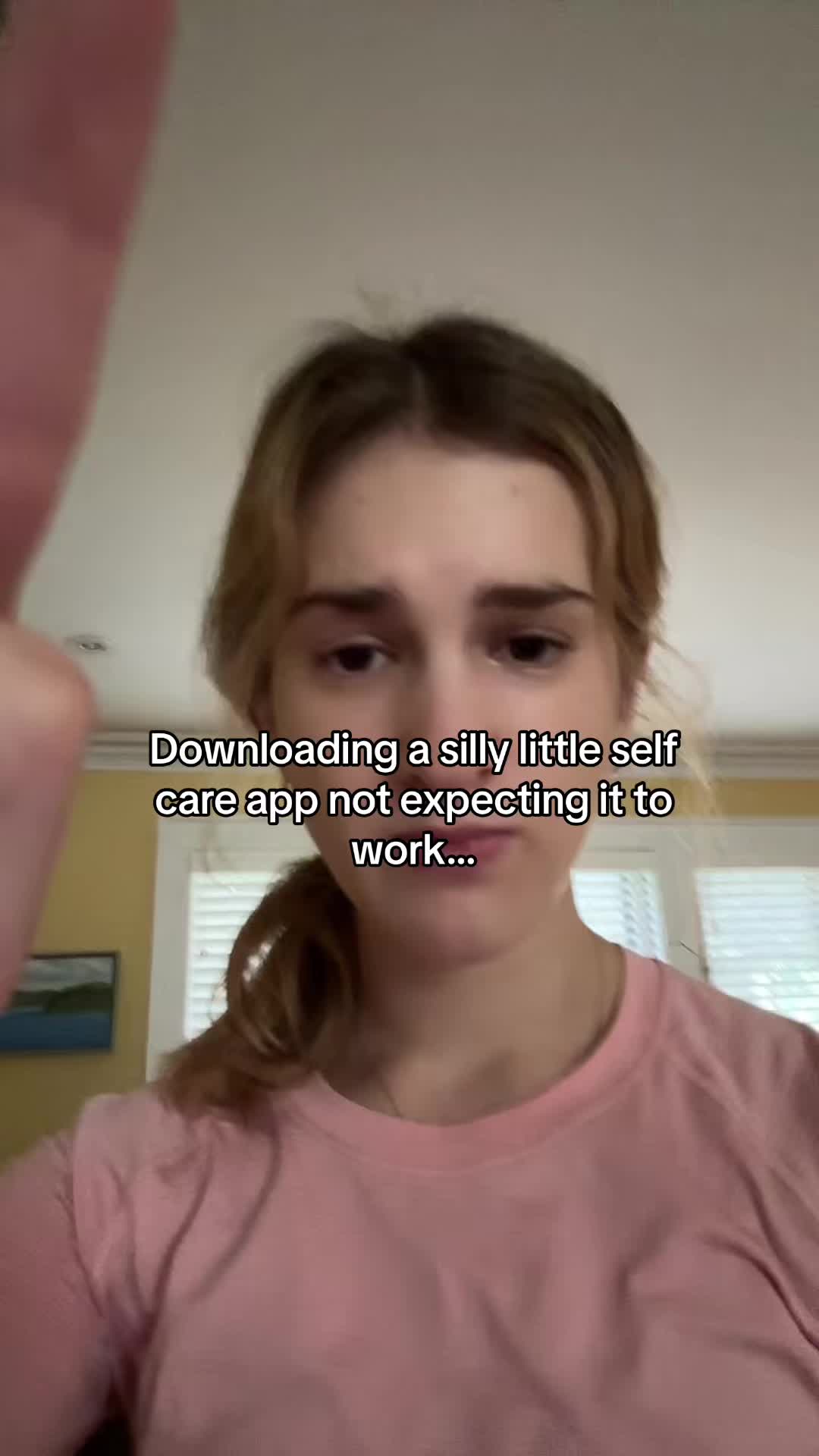
- Hook
- 0:00-0:03, a young woman with light brown hair wearing a pink long-sleeved shirt looks directly at the camera with a neutral expression. On-screen text reads: "Downloading a silly little self care app not expecting it to work..."
- CTA / offer
- Download
- Audience
- The on-screen text "Downloading a silly little self care app not expecting it to work..." and "During difficult times it may feel impossible to do the 'bare minimum'" targets individuals who are struggling with self-care, possibly experiencing mental health challenges, and are skeptical about self-help tools.
Why it works. Leads with the viewer's own skepticism toward self-care apps, so the reveal of it actually working lands as a genuine surprise, not a pitch.
Relatable problem statement at the beginning of the video (0:00-0:03): "Downloading a silly little self care app not expecting it to work..." Open your UGC video by stating your own low expectations of the product category before showing the result that changed your mind.
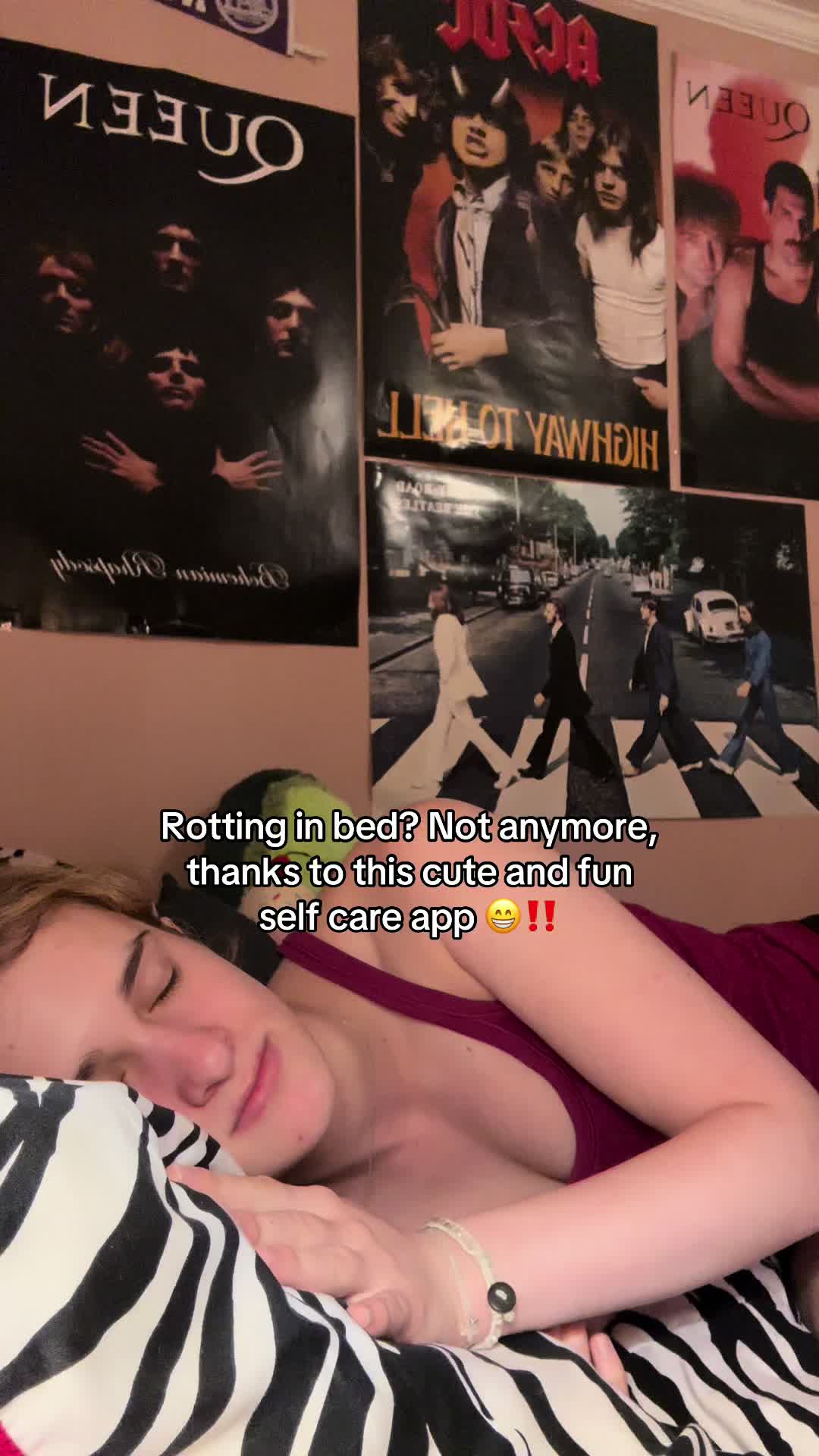
- Hook
- "Rotting in bed? Not anymore, thanks to this cute and fun self care app" + a young woman lying in bed, looking at the camera, with band posters on the wall behind her.
- CTA / offer
- Download
- Audience
- Young adults struggling with motivation or self-care, indicated by the 'Rotting in bed?' hook and the casual, relatable tone.
Why it works. Names a viewer's exact self-diagnosed slang state, 'bed rotting', then resolves it in the same breath with the app, for demotivated scrollers.
Problem-agitation hook at 0:00-0:02: "Rotting in bed? Not anymore, thanks to this cute and fun self care app". Open with the exact slang term your audience already uses to describe their problem before naming your product as the fix.
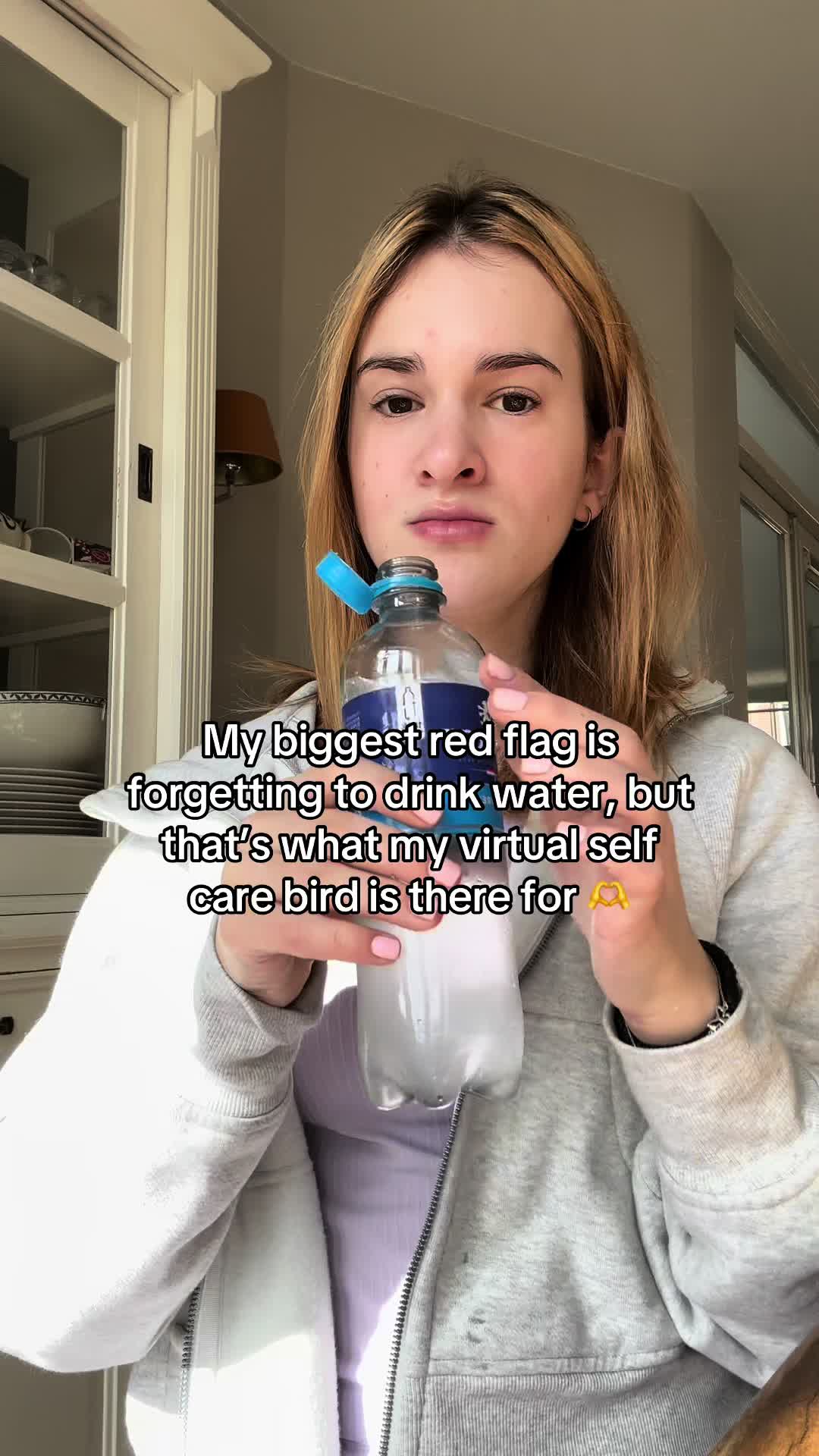
- Hook
- My biggest red flag is forgetting to drink water, but that's what my virtual self care bird is there for
- CTA / offer
- Download
- Audience
- Individuals who struggle with consistent self-care habits, indicated by the opening statement about 'forgetting to drink water' and the app's focus on daily self-care tasks.
Why it works. Borrows dating-app 'red flag' slang to confess a mundane habit lapse, then names the virtual bird mascot as the low-stakes fix.
Relatable problem statement and immediate solution hint (0:00-0:04): 'My biggest red flag is forgetting to drink water, but that's what my virtual self care bird is there for' Frame a small, relatable personal flaw using a current slang format from your platform, then resolve it with your product in the same line.
- Reach
- 677 upvotes · 157 comments · r/finch
A community is already discussing this in r/finch. Show up there authentically and answer the thread before a competitor does.
Who amplifies them
Beyond the brand's own @finchcare accounts, a steady stream of individual creators drive TikTok visibility: @keaneofficial (506,258-engagement reaction video), Becca, AuDHD Millennial (44,686-engagement ADHD tutorial), and Sarah ADHD Coach (a dedicated explainer on how Finch helps with executive dysfunction), plus a long tail including mitskileaks (a "does your birb die?" FAQ-style explainer), debra, Gardening.mama 2.0, fovosmusic, and becomingwithzee, who shared a personal in-app friend code in her post. On Reddit, r/finch and the fan-run r/FinchUnofficial function as self-sustaining support communities rather than brand-seeded ones. None of this is paid influencer activity in the evidence, it reads as organic fandom rather than a managed creator program.
06 Organic & video
The organic content engine: the videos, creator posts, and community presence earning attention without paid spend.
A recurring hydration ritual shows up as a deliberate content pillar across three separate surfaces at once: the brand's own TikTok post "Don't forget to hydrate" (63,349 engagement), an ad creative built around a woman drinking from a glass bowl of lemon water ("Oh, you look so much happier now"), and the Instagram-hosted VitaCoco giveaway tying hydration to a free-subscription raffle. Standout organic posts include the brand's "This app will legit change your life" TikTok (412,243 engagement), a creator reaction video by @keaneofficial that hit 506,258 engagement, and an ADHD-focused walkthrough from Becca (AuDHD Millennial) at 44,686 engagement. The dominant format that performs, both for the brand and for creators, is talking-head demo/testimonial: someone speaking directly to camera about whether the app "actually works," often inside a messy or unmade-bed setting that mirrors the paid ads' problem-agitation framing.
07 Affiliate & partners
How the brand turns creators and partners into a tracked, variable-cost acquisition channel, and how the program is structured.
No formal affiliate or referral-commission program (no Rewardful/PartnerStack-style link, no TikTok Shop) is detected. The closest analog is the in-app Guardians Program, where paying subscribers sponsor Finch Plus for other users through a monthly raffle, paired with an occasional branded co-giveaway (the VitaCoco hydration partnership funding 5,000 free subscriptions). At a bootstrapped, revenue-funded stage, this substitutes a peer-funded gifting loop for an outsourced affiliate network, keeping acquisition cost inside the product rather than paid out to third-party sellers.
08 The playbook
The channels are not separate. They are one system where each stage feeds the next. Here is the read, then the plays to run tomorrow.
The inferred playbook
Finch's loop starts with one evergreen problem-agitation hook run across dozens of ad formats, funnels into a free download with cosmetic in-app purchases, and now layers a big-budget animated campaign on top to reach past what direct-response ads alone could move.
The "OF COURSE I needed to take care of a pet" and "depressed house is a mess" hooks are each reshot as UGC video, static image, infographic, and DCO variants rather than replaced with new copy, letting Meta's delivery system find the winning container for a message that's already proven.
Google search ads route through finchcare.com/get-the-app rather than a direct app-store link, meaning a slice of subscription revenue likely closes on the web rather than through Apple or Google's payment rails, which Sensor Tower's app-store-only tracking would not fully capture.
Dig deeper+3▾
The Guardians Program turns existing paying subscribers into the acquisition budget for new free users via a sponsorship raffle, a structural substitute for a paid affiliate network.
A first large-scale animated brand campaign (an animated film with jingle) launched in May 2026 after the company's marketing leadership concluded performance ads alone had plateaued daily active use, and its mascot-jingle creative is now visibly entering the Meta test rotation alongside the older UGC library.
the free-to-Plus conversion rate behind the $9.99/$69.99 pricing, retention or churn on the paying base, and how the June 2026 Sensor Tower figure splits between the app-store and web2app revenue paths described above.
One hook, many formats
The proofFinch's longest-running Meta ad, active 180 days as of 2026-07-29, is a single insight ("you need a pet to take care of yourself") reshot as static image, short video, and dynamic creative variants, and its "depressed house is a mess" companion hook spans UGC video, plain-text images, and a photo of a Tamagotchi-style device delivering the same line.
The adaptationWrite down the one problem-agitation sentence that's truest of your customer, then produce it in four or five different containers, a talking-head video, a plain-text meme, a checklist graphic, a product-in-hand photo, and run them side by side instead of writing fresh ad copy every week. Let the format compete, not the message.
Cost: under $500 · Time to signal: weeks · Works pre-PMF: yes
Turn payers into the acquisition budget
The proofFinch's Guardians Program lets existing Finch Plus subscribers sponsor a free subscription for someone else through a monthly raffle, amplified by a co-branded VitaCoco giveaway of 5,000 free subscriptions.
The adaptationIf your product has any recurring-payment tier, build a simple "sponsor a month" mechanic where a fraction of revenue funds a recurring raffle for free access, and seed the first round yourself before recruiting a complementary brand to co-fund it. Announce winners publicly so the gifting itself becomes a piece of content.
Cost: under $500 · Time to signal: weeks · Works pre-PMF: conditional, it needs an existing paying base willing to sponsor others, so it's a retention-stage play, not a launch-day one.
Niche wedge inside a broad category
The proofAlongside its broad self-care ads, Finch runs a distinct 71-day proven-winner Google text ad naming a specific subgroup ("Made for Neurodivergent Minds"), matched by organic creator content from an ADHD coach explaining how the app addresses executive dysfunction.
The adaptationPick one underserved subsegment inside your broad target market, write a single ad or landing headline that names that subgroup explicitly, and message five creators who already make content for that specific audience to see what resonates before spending on broad targeting. Start with the outreach, not the ad spend.
Cost: $0 · Time to signal: days · Works pre-PMF: yes
A recurring ritual as a cross-channel content pillar
The proofA single self-care ritual, hydration, shows up simultaneously as a brand TikTok post, a paid-ad visual (a hydration-drink reveal), and a co-branded partner giveaway, rather than as one-off content.
The adaptationChoose one small, universally relatable ritual tied to your product's core use case and commit to producing it repeatedly across your organic posts, your ad creative, and eventually a partner tie-in, so the same idea compounds across surfaces instead of each post starting from zero.
Cost: $0 · Time to signal: weeks · Works pre-PMF: yes
Let a power user write your onboarding FAQ
The proofA 677-upvote Reddit post titled "Things You Should Know About Finch App," written unprompted by a regular user, functions as the de facto onboarding guide new users search for on r/finch.
The adaptationFind your one or two most active users in whatever community you already have (a Discord, a subreddit, a review thread) and directly ask them to write up "what I wish I knew when I started," or draft it yourself from a personal account seeded with real specifics. Post it in the platform's native community rather than as brand content, since the earned, unofficial framing is what makes it get cited later.
Cost: $0 · Time to signal: days · Works pre-PMF: yes, provided a handful of genuinely engaged early users already exist to draw from. Not transferable at an earlier stage: the animated brand-campaign layer (an original jingle and film from an outside creative team) assumes a paid-performance engine already at scale looking to break a growth ceiling, not a starting point, and the multi-format ad testing in Play 1 works best once you already have one proven hook to reshoot, not before you've found one.
You just read how Finch Self-Care does it. Tomorrow it is someone else.
Every morning we take one company that is actually growing and break down where its customers come from: the ads still running after a year, the channel doing the real work, and the play you can run this week.
Systemaic · directional intelligence. Traffic, spend, and reach figures are SimilarWeb-style estimates and qualitative reads of public data, not audited numbers. Built on real public receipts.
// teardowns with a similar GTM motion
sources & receipts (16)
Live ad libraries: meta ad library · google ad library
Researched facts: Founding motivation for Finch's self-care app: Co-founder Stephanie Yuan said she and her · Founders and founding year: Founded in 2021 by Stephanie Yuan and Nino Aquinas (legal name · Funding status / bootstrapped growth claim: Reported to have hit ~$30M ARR while bootstrap · Legal corporate structure: The app is published under the legal entity 'Finch Care Public · Sensor Tower revenue/download/active-user snapshot (Q2 2025): Revenue ~$380K/month by end · Sensor Tower 2026 download/revenue estimates (per-platform, dates vary): iOS US: ~400K dow · User base at time of Times Square OOH campaign: Finch described as having 1.8M users who n · Finch Plus subscription pricing: Monthly subscription $9.99 USD; yearly subscription $69.9 · First large-scale national brand campaign: In May 2026 Finch launched its first large-scal · Campaign reach and rationale for moving beyond performance marketing: Finch's VP of Market
Community threads: Trustpilot: A long-time Trustpilot reviewer (4 years, never missed a day) says the app has · Google Play: A 2.5-year Google Play user says they wouldn't trade the app for anything but · Sitejabber: A Sitejabber reviewer says Finch beats every other self-care app they've tried · Mozilla Foundation (*Privacy Not Included, citing r/FinchApp): Mozilla Foundation's *Priva
Traffic, spend, and revenue figures are estimates as noted in the report; the links above are the primary public artifacts.