- 01Recruit a category authority before you have an audience
- 02Win a real, juried award before you chase press
- 03Turn a competitor's misstep into a same-day stunt
- 04Co-market into a partner's existing customer base
01 Snapshot
The one-glance read on who they are and how they grow. Each point is verifiable from the receipts above.
Flash-frozen, no-machine specialty coffee capsules sold DTC by subscription at a premium $2-3/capsule price point.
Paid-led and creator-amplified, hundreds of always-on Meta ads stacked on a recruited TikTok and Instagram creator-affiliate roster rather than organic content.
~322,000 monthly visits (+22.7% over 3 months), a heavy, always-on Meta ad library (~240 ads, directional) as of 2026-07-30, and $100M raised through its October 2021 Series B.
As of 2026-07-30, live tests include a curiosity-hook "We're brewing up an apology..." creative and a "16 coffees, 16 countries" world-tour UGC angle.
Cometeer turns its $100M funding story and a celebrity-investor tie (Steven Bartlett) into landing pages that reframe a $2-3/capsule price as an investment thesis, not a coffee purchase.
02 How it unfolded
The order the channels came online. Sequence is strategy: what they did first, and what they layered on once demand existed.
03 Traffic & channel mix
Estimated demand, the channel split behind it, and the keywords and referrers doing the work. Directional modeling, not audited analytics.
Cometeer draws roughly 322,000 monthly visits, up 22.7% over the last 3 months. The keyword data leans overwhelmingly branded: it ranks #1 for "cometeer," "cometeer coffee," and the common misspelling "comeeter," but also holds the #1 spot for the category term "frozen coffee pods" and #5 for "coffee advent calendar," giving it a foothold in non-branded product-format search alongside its own name. No channel-mix breakdown (organic vs. paid vs. social share of that traffic) or referrer/competitor list was available in the pulled data, so the read here rests on the totals and rankings above.
04 Organic content
The specific pages earning their organic search traffic, and the pattern behind why they rank. Adapt the format, not the topic.
Cometeer's organic footprint is small and almost entirely brand-capture: the homepage alone pulls 83.9% of its ~19,000 monthly organic visits, with the /pages/how-it-works, /pages/shop-all-coffee, /pages/store-locator, and a "30% off new customer" promo page each contributing roughly 1.7-1.9%. None of the top five pages are editorial or blog content, they're functional commerce pages (product education, category browsing, retail-locator, a discount lander), which lines up with the keyword mix above: this is a site ranking on its own name and product category rather than running a top-of-funnel content engine. The store-locator page's presence in the top five also tracks with Cometeer's retail expansion into grocery.
Top pages by organic traffic
05 Channel map
Not traffic share. How much weight the growth system actually puts on each channel, with a one-line read on the role it plays.
What drove growth
06 Who they’re hiring
Open roles read like a roadmap: the functions they’re staffing show where the company is investing next and what stage it’s at.
1 open role
07 The creative doing the work
Each exhibit shows the actual asset, an X-ray of why it works, a status, and a play you can adapt. This is the heart of the teardown.
Cometeer runs a large, always-on Meta ad library (roughly 240 ads, directional; 80 sampled, all active), its dominant paid channel, against a much smaller Google footprint of 34 total ads with only 3 active (longest-running active Google ad ~89 days). Two Meta creatives clear the 60-day bar that marks a genuine proven winner:
-
Hook: "The World Mug Collection lets you taste 16 incredible coffees from around the globe in a head-to-head showdown."
-
Why it works: It reframes a subscription decision as a low-stakes game, a 16-country tasting bracket with a "chance to win a FREE year of Cometeer," and fronts the pitch with creators (Tanner Colson, Pull & Pour Coffee) instead of brand copy, borrowing their credibility. The paired video shows hands opening black tasting boxes to reveal the pods, a reveal-and-compare structure built for a scroll-stopping unboxing moment.
-
Run this play: Package a trial-size product as a head-to-head "tournament" with a prize hook, then hand the creative to a creator instead of running it brand-voiced.
-
Hook: "This MDW, enjoy up to 44% off on coffee that make summer mornings shine brighter."
-
Why it works: Classic urgency and a steep percentage-off number, but it stacks proof against objections inside the same frame ("No machine required," "Sourced from award-winning roasters," "100% recyclable aluminum capsules," "Time Magazine's Best Invention of the Year") and restricts the discount to first-time subscribers, funneling the sale straight into the subscription model. The red-white-and-blue star motif reads as a holiday sale at a glance even with the sound off.
-
Run this play: Attach a steep, holiday-timed discount to a first-subscription-only offer and use the same frame to pre-answer the two objections a new buyer will have (legitimacy, sustainability).
Cometeer's own Google search ads previously ran 230-294 days before going inactive between December 2025 and April 2026, its longest historical paid push, though none of those remain live. Against those two proven Meta winners, the current test slate is more exploratory: the "We're brewing up an apology..." curiosity creative, a Steven Bartlett investor-testimonial video pointed at a dedicated get.cometeer.com lander, and "16 coffees from 16 countries" UGC talking-heads, none with confirmed longevity yet.
The winning ads route to purpose-built landers rather than the generic homepage. The World Mug Collection dynamic-creative-optimization (DCO) ad lands on a "10 Reasons World Mug Collection" page pricing the bundle at $79-$99 (~$2.47-$3.09/cup) with 24% off through the Recharge subscription app and free shipping; the Memorial Day Flash Sale ad lands on a matching "10 reasons" page showing $28.88/$26.24 box prices (~$3.28-$3.61/cup) at 24-44% off, again first-subscription-only. Cometeer also runs comparison-branded landers tied to specific ad angles: the Steven Bartlett video points to a "Cometeer x Steven Bartlett" page that leads with "Cometeer created a before and after moment for me" and his investor status, while a Nespresso-conquesting ad lands on "Cometeer x Nespresso, World Mug," anchoring against a $130 price point to make the $79-$99 World Mug offer look like the discount. Across all four landers the mechanic repeats: subscription pricing in the $2.47-$3.61/cup range, a percentage-off hook reserved for first-time subscribers, and free shipping baked into the subscription tier rather than the one-time purchase.
- Running
- 66 days (longevity = it's converting)
- Hook
- On-screen text reads "Cometeer" at the top, and "MEMORIAL DAY" in large yellow letters. Two hands are shown holding clear glasses with iced beverages, one light brown and one dark brown, each with a star-shaped ice cube (one red, one blue).
- CTA / offer
- UP TO 44% OFF
- Audience
- People interested in iced coffee or cold beverages, likely looking for deals around holidays, indicated by the 'MEMORIAL DAY' text and the 'UP TO 44% OFF' offer.
Why it works. Uses star shaped ice cubes in iced coffee as a visual signature tying the holiday promotion to a memorable product detail rather than a plain banner.
Prominent holiday branding (0:00-0:01, "MEMORIAL DAY") combined with a clear discount (0:00-0:01, "UP TO 44% OFF"). Create one small, camera friendly visual signature, like a shaped ice cube, that ties a seasonal promotion to the product instead of a plain text banner.
- Running
- 73 days (longevity = it's converting)
- Hook
- "This is a coffee tasting bracket challenge that's going to help you find your new favorite cup of coffee." A person's hands open a black box to reveal multiple smaller black boxes with coffee-related graphics.
- Audience
- Coffee enthusiasts interested in exploring different origins and flavors, indicated by the detailed descriptions of coffee notes and the 'bracket challenge' format.
Why it works. Turns sampling eight coffee flavors into a tournament format, appealing to indecisive coffee drinkers who want a fun way to pick a favorite.
Visual demonstration of product setup and use (0:00-0:03, 0:19-0:26) Turn a multi option product into a bracket style challenge so trying it feels like a game instead of a decision.
- Running
- 12 days (new — still being tested)
- Hook
- Visual: Two black boxes with white graphics are held by two hands, opening up to reveal coffee pods. On-screen text: "A coffee world tour? Sign me up". Audio: "We've got 16 coffees from 16 countries and it's time for you to pick a winner."
- CTA / offer
- Snag the World Mug Collection before it's gone.
- Audience
- Coffee lovers who enjoy trying new flavors and engaging with a product in a fun, interactive way. Evidenced by phrases like "A coffee world tour? Sign me up" and "if you're a coffee lover like I am."
Why it works. Uses unboxing plus a country-picking game to make trying 16 origins feel like a competition, appealing to variety-seeking coffee drinkers.
Interactive product reveal and challenge framing at 0:00-0:03, with the on-screen text "A coffee world tour? Sign me up" and audio "We've got 16 coffees from 16 countries and it's time for you to pick a winner." Open with a first-person reaction line ('Sign me up') that mirrors what you want the viewer to think, not a brand statement.
Show 7 more exhibits
- Running
- 4 days (new — still being tested)
- Hook
- visual: A hand pours dark liquid from a small silver cup into a glass of white liquid and ice. On-screen text: "Try 16 specialty coffees from around the world". audio: "If you love tasting new coffees,"
- CTA / offer
- Shop now before it's gone.
- Audience
- Coffee enthusiasts, people who enjoy trying new flavors, those interested in global products, and individuals looking for convenient, high-quality coffee. This is signaled by phrases like "If you love tasting new coffees," "best specialty coffees from around the world," and the focus on unique flavor profiles and a "global coffee showdown."
Why it works. Turns Cometeer's premium price into a tasting-menu pitch for coffee enthusiasts who'd rather sample many origins than rebrew one bag.
Visual product demonstration and ease of use (0:16-0:23): "You just pop out the puck and pour hot water over it. Or melt it and pour it over water or milk. You can make it hot, iced, do a latte, or espresso style, all in seconds." Replace a vague variety claim with a specific number tied to a geographic or category spread, like '16 coffees from 16 countries.'
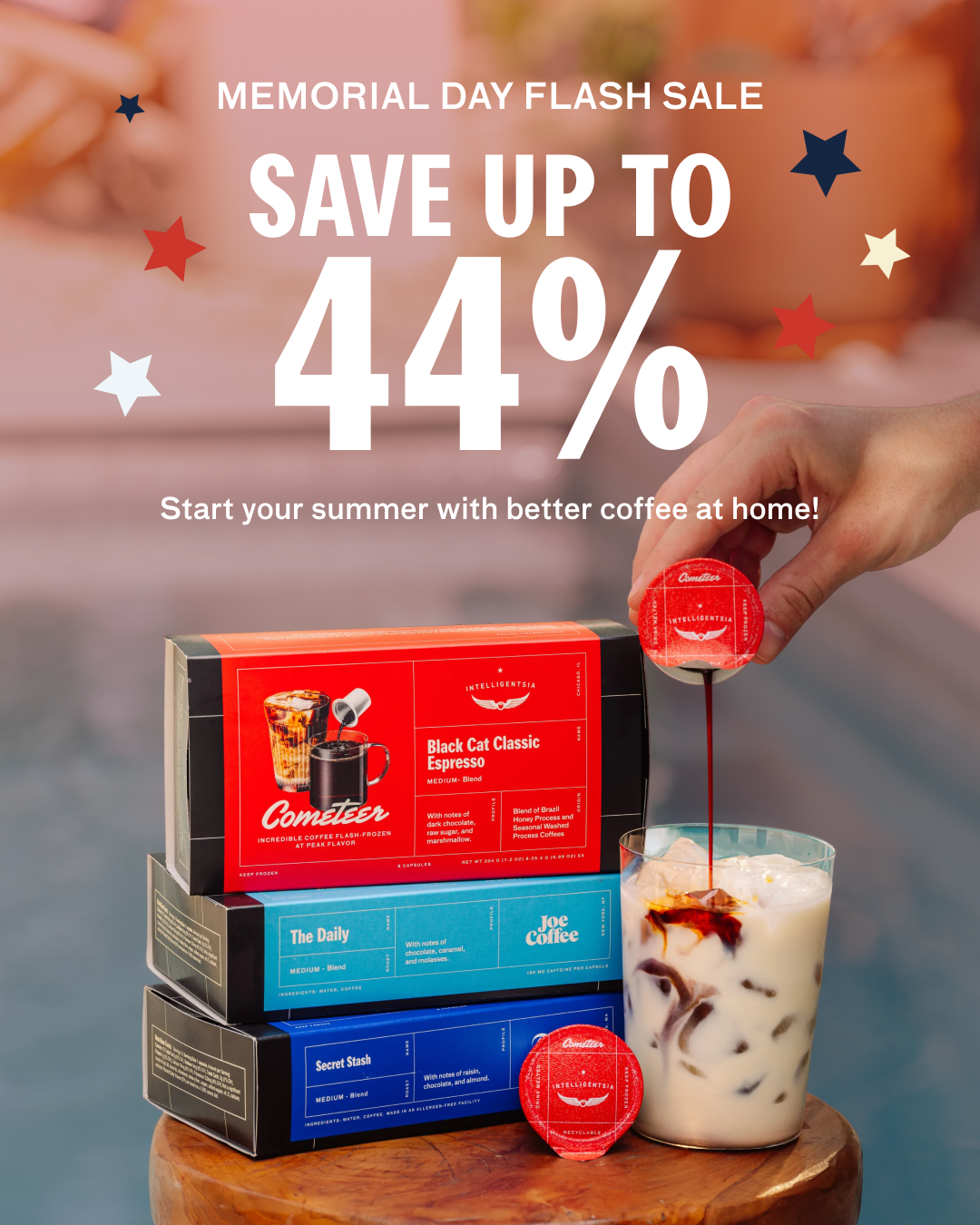
- Running
- 66 days (longevity = it's converting)
- Hook
- "MEMORIAL DAY FLASH SALE SAVE UP TO 44%" with a blurred background showing a hand pouring coffee into a glass with ice and milk, and product boxes stacked.
- CTA / offer
- SAVE UP TO 44%
- Audience
- Coffee drinkers looking for premium, convenient coffee options at a discounted price, indicated by the product type (espresso capsules) and the sale messaging.
Why it works. Anchors the discount at a specific 44 percent instead of a round number, giving deal seeking shoppers a precise figure to justify buying now.
Prominent discount display: "SAVE UP TO 44%" is displayed in large, white font, centrally on the image. Use your exact discount percentage, not a rounded figure, in your flash sale headline so the number feels calculated and real.
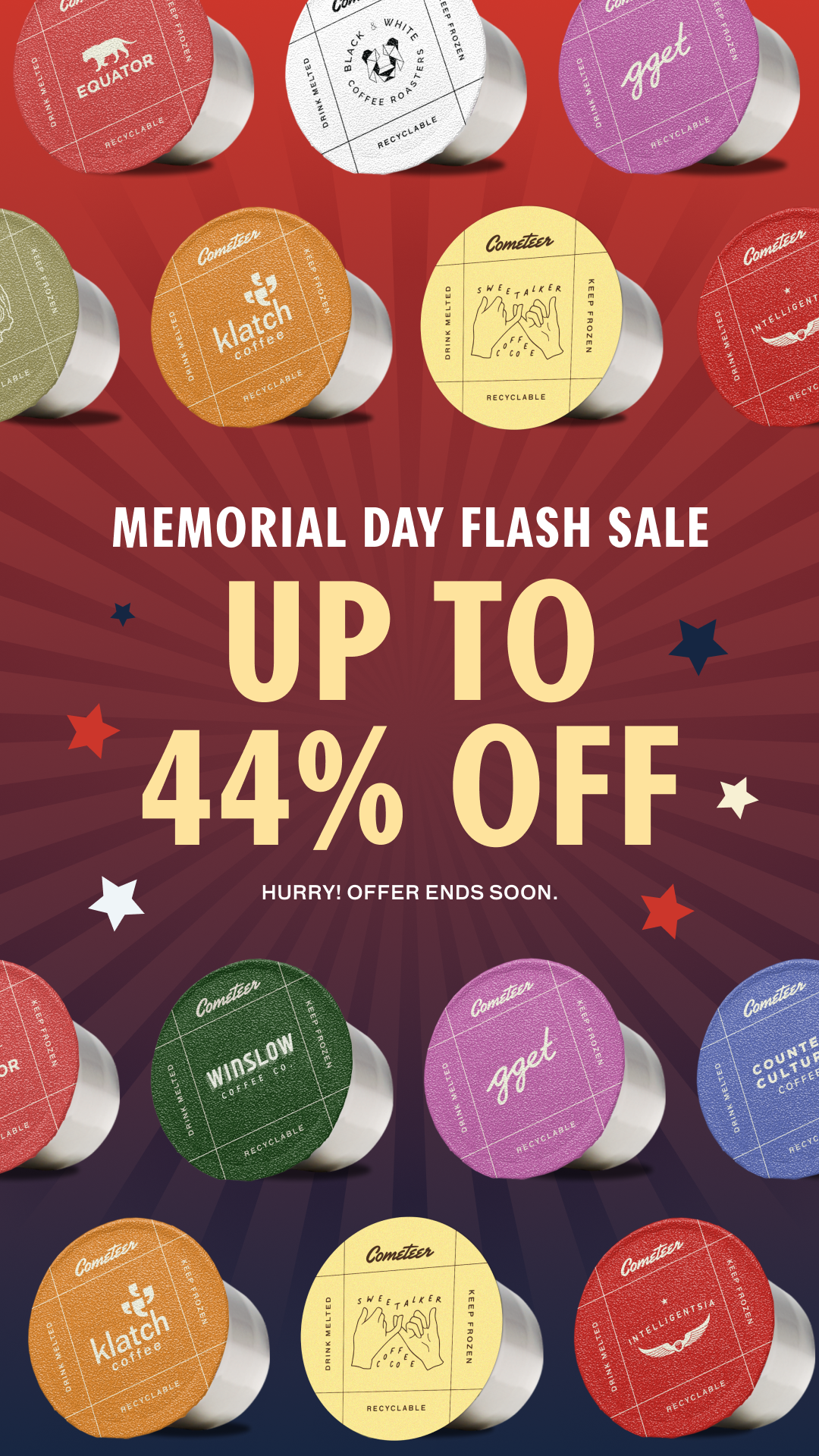
- Running
- 58 days (longevity = it's converting)
- Hook
- Multiple coffee pods with various brand logos are displayed against a red background with white and blue star accents. The text "MEMORIAL DAY FLASH SALE" is visible.
- CTA / offer
- UP TO 44% OFF
- Audience
- Coffee drinkers interested in premium or specialty coffee brands, indicated by the variety of known coffee roasters featured on the pods.
Why it works. Runs a hard-deadline discount play against price-sensitive shoppers who see Cometeer's $3-5 capsules as expensive next to $0.50 pods.
Prominent discount display: The text "UP TO 44% OFF" is centrally located and uses a large, bold font. Set a hard end date on your next discount and put it in bold text over a bright background so the deadline reads before the offer does.
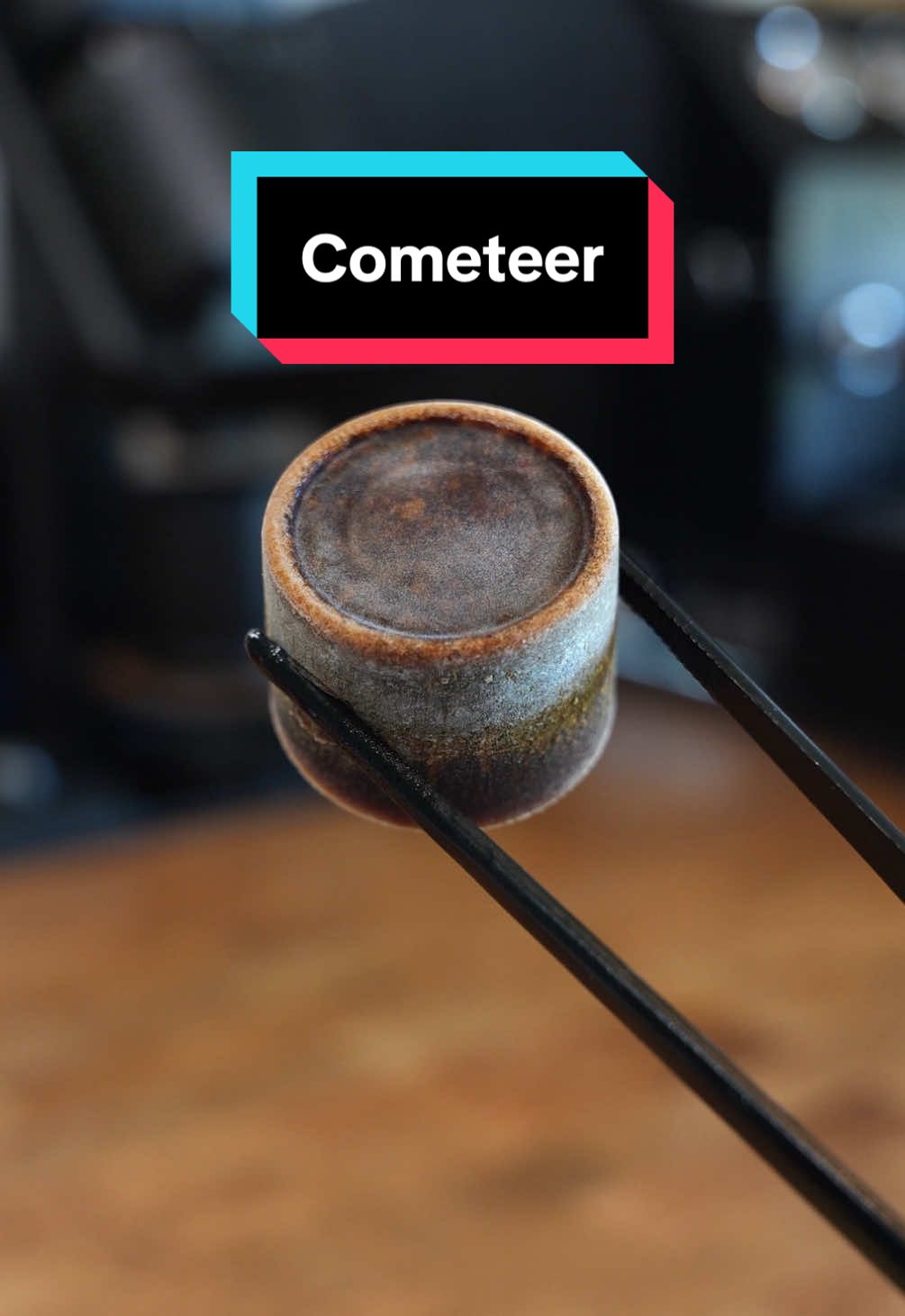
- Hook
- "This is flash frozen specialty coffee" - A small, dark, cylindrical coffee puck is held by black tongs, surrounded by white smoke, with a blurred background of coffee equipment.
- Audience
- The mention of 'specialty coffee' and comparison to 'pour overs' targets coffee enthusiasts who appreciate quality but also value convenience. The 'college dorm room' and 'hospital' anecdotes suggest busy individuals who need quick, high-quality coffee.
Why it works. Leads with an odd physical object, a frozen coffee puck, to make premium-price coffee feel like a novel technology, not just costly beans.
Demonstrates product uniqueness and ease of use at the start. (0:00-0:06) "This is flash frozen specialty coffee" followed by dropping the puck and adding hot water. Physically show the strangest, most unfamiliar part of your product first and name it in one flat sentence before explaining anything.
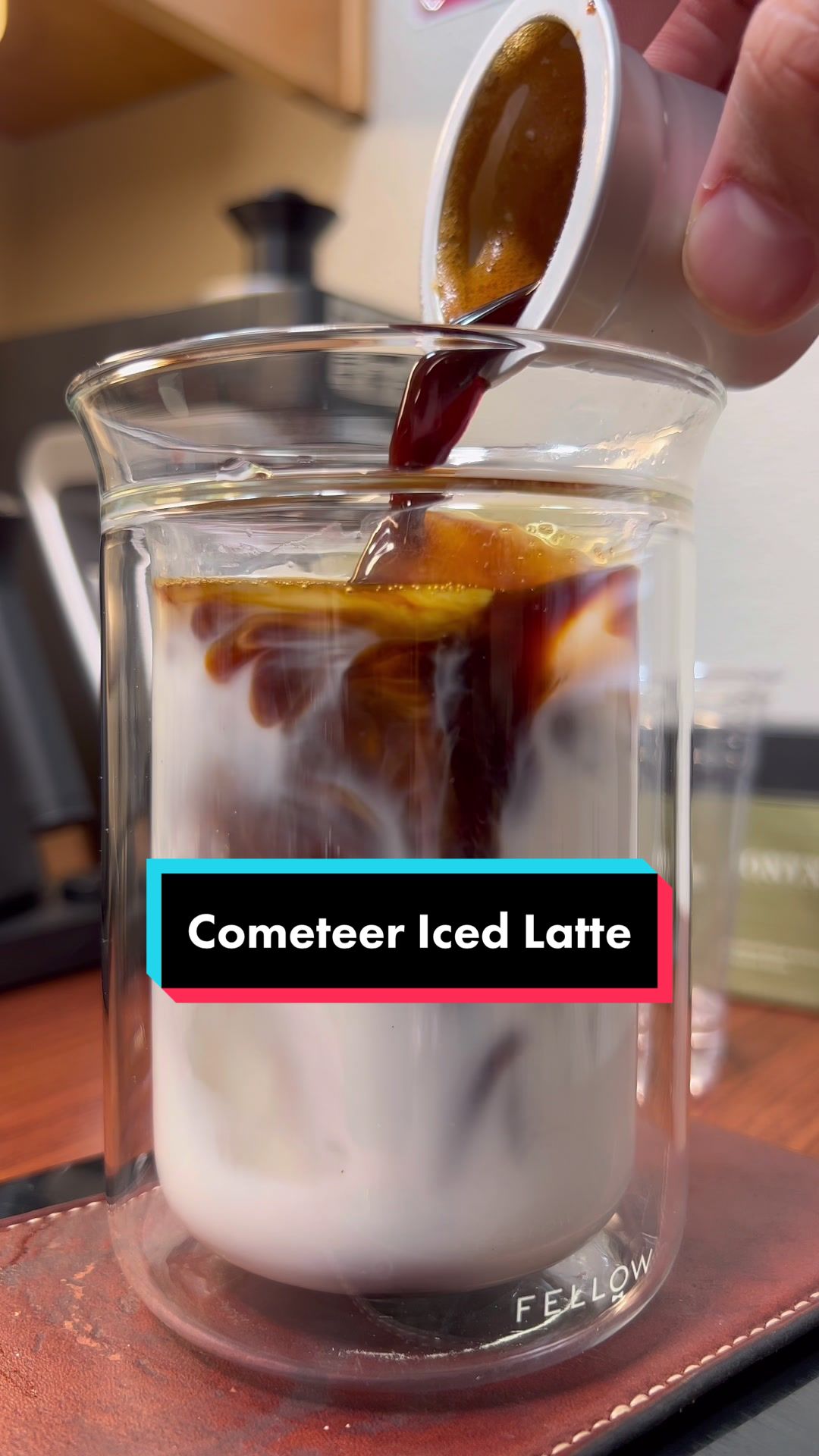
- Hook
- "What happens when you flash freeze coffee with liquid nitrogen?" A hand peels back the foil lid of a small, white coffee capsule, revealing dark, frozen coffee inside.
- Audience
- Coffee enthusiasts who appreciate specialty roasters and seek convenience without compromising quality, indicated by the mention of 'top specialty roasters' and the ease of making a high-quality drink.
Why it works. Turns Cometeer's manufacturing process into a mini-mystery for viewers curious about food science, not just coffee drinkers.
Demonstrate unique product feature at 0:00-0:06 with the visual of the frozen coffee puck and the audio "What happens when you flash freeze coffee with liquid nitrogen? This is what Cometeer does and the result is this frozen coffee puck." Ask a specific process question about how your product is made, then answer it visually within the same shot.
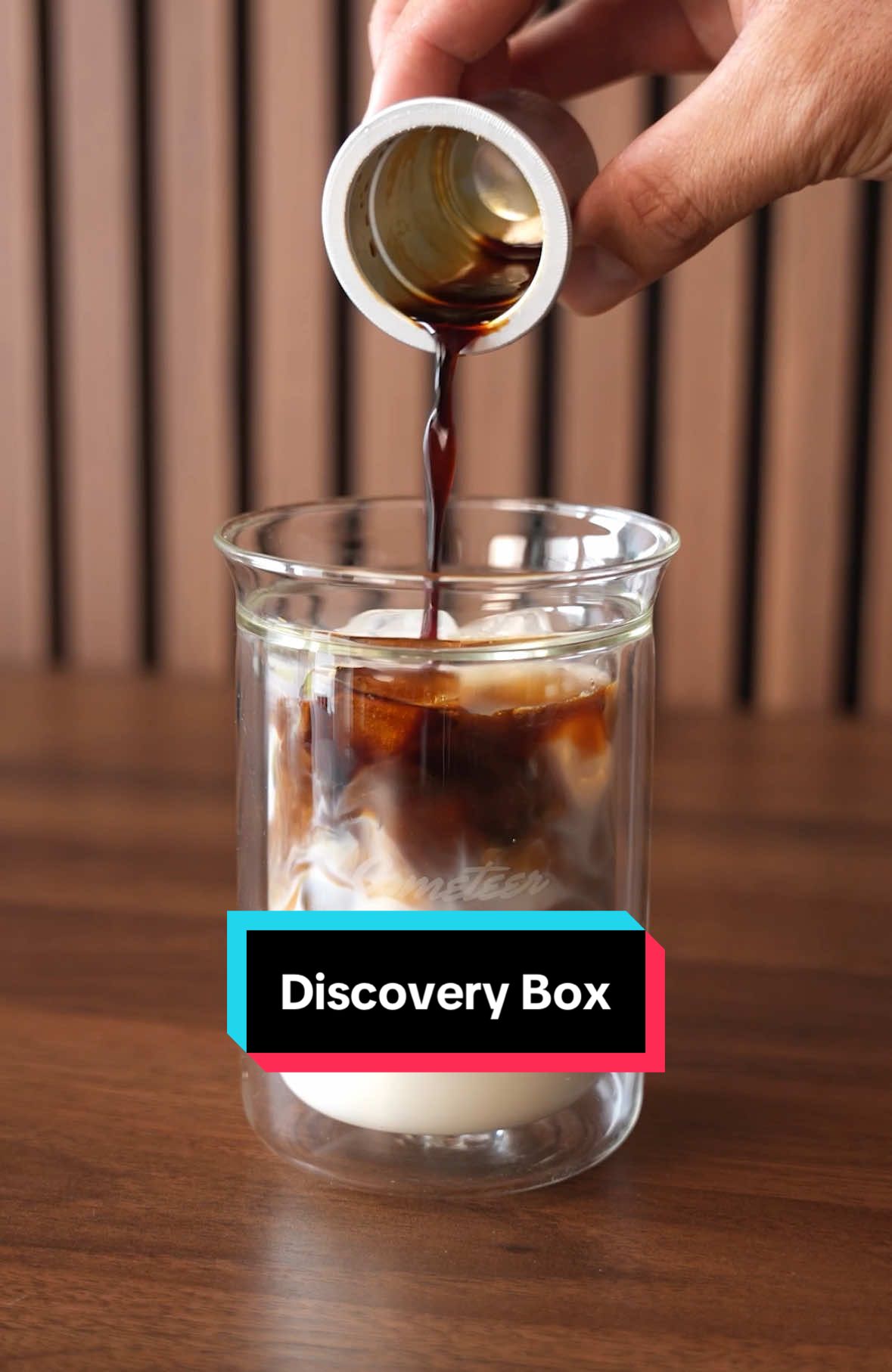
- Hook
- 0:00-0:03 visual: A clear glass with "Cometeer" written on it, containing a dark brown, square-shaped frozen coffee puck, with water being poured from above. audio: "This is a coffee personality test."
- Audience
- Coffee enthusiasts, people interested in exploring different coffee profiles, those who appreciate curated experiences, and potentially those who follow James Hoffmann. This is signaled by the detailed descriptions of coffee types, roast levels, origins, and tasting notes, as well as the mention of James Hoffmann.
Why it works. Positions choosing a coffee capsule as self-discovery to pull in viewers who enjoy quiz-style content, not just committed coffee buyers.
Introduces the product as a 'personality test' and 'Discovery Box' (0:00-0:06) and highlights the curator, James Hoffmann. Frame a simple product choice as a quiz or personality test format your audience already scrolls for.
- Reach
- 263 upvotes · 68 comments · r/JamesHoffmann
A community is already discussing this in r/JamesHoffmann. Show up there authentically and answer the thread before a competitor does.
Who amplifies them
Every piece of brand-voiced content in this evidence traces to the single company account, @cometeer; no verified personal founder account appears anywhere in the pulled data, which makes this a creator-and-affiliate amplification engine, not a founder-led one. The clearest example of that engine compounding is the relationship with specialty-coffee YouTuber James Hoffmann (@jimseven): Cometeer promoted specialty-coffee YouTuber James Hoffmann's own 2021 video comparing a $50, $500, and Cometeer's own $500,000 grinder (filmed at its HQ), then later co-developed a "Discovery Box" tasting kit with him, announced on his own Instagram to 10,099 engagements. That same fan base is also where the brand's biggest public complaint surfaced, the subscription auto-enrollment concern raised in r/JamesHoffmann, meaning Hoffmann's audience functions as both a reach multiplier and a brand-safety exposure point in one place. A similar organic-to-paid pipeline shows up with Pull & Pour Coffee: the same creator who posted an unpaid honey-oat-latte recipe to Instagram later appears as a whitelisted face in Cometeer's own Meta ad rotation, suggesting creators graduate from organic proof into paid placement rather than the two being separate tracks. Beyond those two, the roster is broad and code-driven: @d.95nb, @danilostankovicmusic, and other niche creators all post demo content carrying a personalized discount code, most landing in the low-hundreds to low-thousands of engagements with occasional spikes into six figures.
08 Organic & video
The organic content engine: the videos, creator posts, and community presence earning attention without paid spend.
The brand's own video output is thin next to what its creator roster produces: a behind-the-scenes Instagram reel showing the liquid-nitrogen freeze process ("How do we freeze Cometeer coffee?") pulled just 531 engagements, while third-party demo clips regularly clear five and six figures. The format that actually performs is the same one across nearly every high-engagement clip, whether brand-adjacent or fully independent: a no-machine-required demo, capsule peeled or melted on camera, poured over ice, done in under 15 seconds of footage. TikTok creator d.95nb's 2022 iced-latte demo ("This stuff is incredible") drew 76,704 engagements, Tanner Colson's Discovery Box unboxing drew 73,598. Below those three, dozens of smaller clips from creators like Meredith Little and Coffee With Carls sit in the 300-8,000 engagement range, running the same demo-and-recipe template with a personal discount code layered on top.
09 Affiliate & partners
How the brand turns creators and partners into a tracked, variable-cost acquisition channel, and how the program is structured.
Cometeer runs a self-serve referral and partner program at account.cometeer.com/account/pages/referrals, sitting alongside a much larger informal layer: nearly every creator clip in the evidence carries its own personalized code (ANDREA20, MERE20, COURTNEYC, cafe.dania) rather than one shared brand-wide discount, which lets the company attribute sales creator-by-creator without needing a named affiliate platform. It has also run at least one B2B co-marketing partnership: a 2022 offer giving Ramp corporate-card customers with 50+ employees a free in-person tasting, paired with a persistent "ramp" checkout code, turning another company's existing business customer base into a warm lead list instead of building one from scratch. Together these three layers (a formal referral link, per-creator tracking codes, and one platform co-marketing tie-in) point to a company treating partner-sourced distribution as a standing channel rather than a one-off tactic.
10 The playbook
The channels are not separate. They are one system where each stage feeds the next. Here is the read, then the plays to run tomorrow.
The inferred playbook
Cometeer's growth loop runs on constant paid media that borrows credibility it earned early (an industry advisor, a trade-show award, creator codes) to justify a premium subscription price, with retail and B2B tie-ins as secondary, lower-volume taps into audiences it didn't have to build itself.
Its founding-era moves, recruiting a category authority to validate the product and entering a juried industry competition before wide release, gave it a proof point to lean on years later, still visible in ad copy that leads with "sourced from award-winning roasters" rather than price.
The personalized discount-code system turns every UGC creator into a trackable mini-affiliate, and the strongest performers (the demo-format clips detailed above) get pulled into whitelisted paid placement, so organic testing quietly funds the paid media plan.
Dig deeper+3▾
Its single open role, a Marketing Performance Creative Video Editor for paid social at $85,000-$110,000, signals it is building in-house capacity to produce more of its own ad creative rather than relying solely on agency or creator-sourced footage.
No current MRR is publicly confirmed. Grounded in its $64-$99 subscription pricing, roughly 322,000 monthly visits, and a 51-200 employee headcount, annual revenue plausibly sits in the low-to-mid eight figures, broadly consistent with third-party estimates that range widely, roughly $30M-$70M (unconfirmed, not company-disclosed); the last company-adjacent subscriber count on record was roughly 28,000, reported in late 2022.
current subscriber count and blended CAC across its heavy concurrent Meta ad library, the free-to-paid conversion rate off the World Mug Collection's "win a free year" mechanic, and the DTC-versus-retail revenue split across its multi-hundred-store grocery footprint.
Recruit a category authority before you have an audience
The proofCometeer's 2014 prototype earned its flavor-preservation credibility when it was brought directly to a respected specialty-coffee authority, who became an early advisor, a relationship the brand still trades on in ad copy about its roasting partners.
The adaptationIdentify the single most credentialed, skeptical critic in your category (not an influencer, a practitioner-expert) and send them a working sample with no strings attached, asking only for an honest reaction. If the reaction is genuinely positive, ask to credit them by name or title on your product page and first ad set, the same way Cometeer's copy still cites its roasting network. The mechanism: one expert's real endorsement, used sparingly and specifically, out-converts a dozen generic five-star testimonials because it answers the "is this actually good" objection before a stranger asks it.
Cost: $0 · Time to signal: weeks · Works pre-PMF: yes, provided the product genuinely holds up under expert scrutiny; a lukewarm reaction should stop this play, not soften it.
Win a real, juried award before you chase press
The proofCometeer debuted at a specialty-coffee industry trade show and won a Best New Product award two years before its public launch, a credential it has since folded into recurring ad copy about being "award-winning."
The adaptationFind the smallest legitimate, juried competition in your category, a trade-show award, a regional maker's fair, an industry association prize, rather than a pay-to-play "best of" list, and enter before you have distribution. A juried win gives you a badge you can reuse in every landing page and ad headline indefinitely, unlike a one-time press hit that stops paying off after a week.
Cost: under $500 · Time to signal: months · Works pre-PMF: yes, and it's often easier pre-PMF since juried competitions frequently favor new entrants over incumbents.
Turn a competitor's misstep into a same-day stunt
The proofWhen Goldman Sachs ended free office cold brew, Cometeer staff set up a sampling table outside its New York headquarters within about 16 hours, later turning it into a recurring "Coffee Wars" bit on its brand account.
The adaptationWatch your own category for a competitor or incumbent's policy change, price hike, or public complaint that just broke, and stage a low-cost, on-brand response (a pop-up sample table, a side-by-side comparison post, a "we'll give you back what they took away" offer) while that news cycle is still live, typically its first 24-48 hours. Speed is the entire mechanism here: the audience is already searching and annoyed, so a fast, cheap response reaches people a scheduled campaign never would.
Cost: under $500 · Time to signal: days · Works pre-PMF: conditional, it needs a demoable product and someone able to execute in person fast; this is a reactive, moment-dependent move, not a repeatable weekly engine.
Co-market into a partner's existing customer base
The proofCometeer offered free tastings and a dedicated discount code to corporate-card customers of Ramp, tapping an audience that had already opted into a business relationship instead of cold outbound.
The adaptationPick one non-competing company that already serves your exact buyer (a tool, platform, or service your ICP pays for) and pitch a narrow, low-lift co-marketing offer: a dedicated discount code and a short intro email or in-app perk to their customer list, the same size-and-scope construct Cometeer used with Ramp's 50-plus-employee accounts. This works because the partner is vouching for you to an audience that already trusts them, which is a warmer path than any cold list you could buy.
Cost: $0-under $500 · Time to signal: weeks · Works pre-PMF: conditional, it depends on finding a partner willing to promote you, which usually takes real outbound effort to secure.
Give every creator their own trackable code
The proofCometeer's discount-code layer detailed above, ANDREA20, MERE20, COURTNEYC, ties each creator to a personal code rather than one shared brand-wide discount.
The adaptationWhen you recruit your first handful of creators or affiliates, generate a first-name-plus-number code for each one (a five-minute setup in most e-commerce platforms) instead of a single generic discount. This lets you see exactly which creator is driving sales without a paid attribution tool, and it gives each creator a personal stake in pushing "their" code, which is why Cometeer's roster keeps posting the same recipe-demo format on repeat.
Cost: $0 · Time to signal: days · Works pre-PMF: yes. Not transferable at an earlier stage: the heavy concurrent Meta ad budget, the celebrity-investor testimonial ads, and the multi-hundred-store retail footprint all assume the capital Cometeer raised after its Series B. The early credibility, stunt, and partner-code moves above do not require that capital and are where an earlier-stage founder should start.
You just read how Cometeer does it. Tomorrow it is someone else.
Every morning we take one company that is actually growing and break down where its customers come from: the ads still running after a year, the channel doing the real work, and the play you can run this week.
Systemaic · directional intelligence. Traffic, spend, and reach figures are SimilarWeb-style estimates and qualitative reads of public data, not audited numbers. Built on real public receipts.
// teardowns with a similar GTM motion
sources & receipts (16)
Live ad libraries: meta ad library · google ad library
Researched facts: Cometeer closed a $35M Series B, bringing total capital raised to $100M: $35M Series B, cl · Cometeer was founded by Matt Roberts starting from a DIY iced-coffee freezing hack: Founde · Cometeer's Gloucester, MA facility is a 70,000 sq ft former frozen-seafood plant with high · Cometeer scaled headcount rapidly from 2019 to 2021: Grew from 12 to 120 employees between · Cometeer's subscriber growth had slowed by end of 2022, at roughly 28,000 subscribers: ~28 · By recent third-party review, Cometeer's subscription price per capsule has risen to rough · Cometeer made its first brick-and-mortar retail debut at Erewhon in August 2022: Launched · Cometeer's retail footprint expanded to 450+ stores nationwide by April 2025: Available in
Milestone sources: 2019-04: Cometeer's flash-frozen coffee capsules made their public debut at the Specialty · 2021-10: Cometeer closed a $35M Series B (bringing total funding to ~$100M) and simultaneo · 2022-11: Cometeer's flash-frozen coffee capsule was named to TIME's list of the 200 Best I · 2024-02-20: Cometeer entered physical retail for the first time, launching in Whole Foods · 2024-10: Cometeer launched its 'Stellar Series' of rare, Cup of Excellence-ranked coffees, · 2024-10-22: Cometeer unveiled a limited-edition 2024 holiday Advent Calendar (5,000 units,
Traffic, spend, and revenue figures are estimates as noted in the report; the links above are the primary public artifacts.