- 01Per-creator attribution codes
- 02Turn buyers into a named creator tier
- 03Seed a credentialed expert, not just a lifestyle creator
- 04Anchor a recurring shared content moment
01 Snapshot
The one-glance read on who they are and how they grow. Each point is verifiable from the receipts above.
Under-$20 cleansers, moisturizers, and serums (e.g. the Cosmic Rain mist at $15) built for teen and Gen Z skin, sold direct at hellobubble.com and through Walmart, Target, Ulta, CVS, and Boots, with press reporting 17,000+ retail doors and 15M+ moisturizer units sold as of late 2025 coverage.
Creator-led, with paid social used mainly to recruit and amplify the creator layer rather than to drive direct checkout.
889,932 Instagram followers on the owned @bubble account, 20 active Meta ads as of 2026-07-17, and only ~8,953 estimated monthly visits to hellobubble.com, a gap that points to retail as the real transaction layer.
Meta's library shows 5 of 20 active ads in a testing bucket as of 2026-07-17, including two new video-format creatives and an Instagram carousel variant, all first shown between 2026-07-13 and 2026-07-15.
Bubble converts paid impressions into future free content by running ads that recruit viewers into its own ambassador program, then lets Walmart, Target, and Ulta shelf placement (not the.com checkout) do the actual selling.
02 How it unfolded
The order the channels came online. Sequence is strategy: what they did first, and what they layered on once demand existed.
03 Traffic & channel mix
Estimated demand, the channel split behind it, and the keywords and referrers doing the work. Directional modeling, not audited analytics.
Top search keywords
| Keyword | Volume | Weight | CPC |
|---|---|---|---|
| bubble skincare scholarship | 640 | - | |
| bubble sunscreen | 150 | $0.48 |
Hellobubble.com draws an estimated ~8,953 monthly visits, flat at +0% over the trailing period SimilarWeb tracks. That is a strikingly small number for a brand press pegged in the $100M-$150M net sales range in late 2025 (reported around the time Bubble engaged investment bank Centerview Partners to explore strategic options) and at an estimated ~$170M in sales in early 2025, which confirms the.com is not the sales engine: revenue is flowing overwhelmingly through wholesale and retail doors, not the owned site's checkout. The two keywords showing measurable demand are "bubble skincare scholarship" (640 searches/month) and "bubble sunscreen" (150 searches/month), both branded or product-specific searches rather than category-level demand capture. No meaningful referrer or competitor data is available at this traffic volume.
04 Organic content
The specific pages earning their organic search traffic, and the pattern behind why they rank. Adapt the format, not the topic.
The one page earning any organic-search traffic is the homepage itself, and it is earning almost none, ranking #8 for "bubble skincare store" and, oddly, #3 for "mady gosselin net worth," with the page pulling roughly zero organic visits per month. That is not a content strategy, it is incidental branded-search pickup: there is no blog, no "best skincare for X" hub, no comparison or glossary content doing the ranking work other DTC brands lean on. The strategic read is that Bubble has consciously skipped building an SEO content engine and is routing all of its discovery budget into creators and retail visibility instead.
Top pages by organic traffic
05 Channel map
Not traffic share. How much weight the growth system actually puts on each channel, with a one-line read on the role it plays.
What drove growth
06 Who they’re hiring
Open roles read like a roadmap: the functions they’re staffing show where the company is investing next and what stage it’s at.
6 open roles
07 The creative doing the work
Each exhibit shows the actual asset, an X-ray of why it works, a status, and a play you can adapt. This is the heart of the teardown.
Bubble runs 20 active Meta ads as of 2026-07-17, its full collected library. None of them has run the roughly 60 days needed to earn a "proven winner" label: the longest-running active creative is only about 30 days old, so the whole set reads as a current wave rather than a battle-tested library. Within that wave, three creatives stand out as the longest-running and most developed:
-
Hook: A split-face image labeled "BUBBLE Clinical Results You Can See," showing before, after, and after-with-makeup panels for the Cosmic Rain Hydrating Mist. Why it works: It answers the exact skepticism visible in their own audience (the r/SkincareAddiction thread asking whether reviews are seeded) with a literal visual proof point instead of a lifestyle claim. Run this play: Pair any measurable product change with a literal before/after split image rather than a mood shot whenever you have a visible result to show.
-
Hook: "FADE DARK SPOTS, DREAM FADE, 10% Azelaic Acid Discoloration Rescue Serum," with a woman holding the yellow bottle to her cheek, cream visible on skin. Why it works: It names the exact active ingredient and the exact concern, an ingredient-literacy angle that matches how their own derm and chemist creators already talk about the product rather than a generic "glow" claim. Run this play: Lead ad copy with the named active ingredient and the specific concern it treats, mirroring the vocabulary your expert creators already use.
-
Hook: "You could become a Bubble brand ambassador," a lifestyle image over a pink gradient. Why it works: It converts a paid impression directly into a recruitment funnel for free future content instead of only chasing a single sale. Run this play: Expanded as Play 2 below.
Also in their winning rotation: infographic · "The exact Azelaic acid routine that improved skin tone, redness + radiance in 2 weeks" · ingredient-routine claim · ~4-30 days running. Product shot · "The Cosmic Collection, Your Dewiest Skin Yet" · bundle promo · ~4-30 days running. Before-after · "FADE DARK SPOTS" bottle-drop visual · ingredient bold-claim · ~4-30 days running.
Against that current wave, the newest tests (first shown 2026-07-13 through 2026-07-15) swap in two video-format creatives and retest the "exact Azelaic acid routine" infographic alongside an Instagram-native carousel, suggesting Bubble is probing video and platform-native formats rather than new claims.
- Running
- 30 days (longevity = it's converting)
- Hook
- Visual: A light blue bottle with 'BUBBLE COSMIC RAIN Hydrating Mist' text is centered, partially submerged in a purple liquid. A clear, round object (possibly a glass or a bubble) is shown above the bottle, dripping liquid onto it. Text overlay: 'NEW!'. Audio: Sound of liquid dripping and sloshing.
- Audience
- Individuals interested in new skincare products, particularly hydrating mists, and those attracted to aesthetically pleasing, vibrant product presentations.
Why it works. Product launch announcement using sensory appeal and novelty to generate interest in a new hydrating mist.
Visual emphasis on 'NEW!' text at 0:00, prominently displayed in a starburst graphic. For any new product launch, use a clear, attention-grabbing 'NEW!' graphic or text overlay within the first 3 seconds of the creative.
- Running
- 22 days (longevity = it's converting)
- Hook
- COSMIC RAIN Hydrating Mist. A woman holds two rectangular boxes, one light grey and one light purple, both with "BUBBLE" branding.
- Audience
- Individuals seeking skincare products for hydration and glow, indicated by the product names 'Hydrating Mist' and 'Hydrating Milky Toner' and the on-screen text 'INSTANT HYDRATION, ALL-DAY GLOW.'
Why it works. Product demonstration of two hydrating skincare products to showcase their application and immediate benefits, aiming to drive interest and purchase.
Visual demonstration of product application at 0:04-0:08 for the toner and 0:14-0:17 for the mist. For skincare products, always include clear, well-lit footage of the product being applied to skin, showing the texture and ease of use.
- Running
- 22 days (longevity = it's converting)
- Hook
- On-screen text: "COSMIC RAIN Hydrating Mist". A hand holds a light purple box with "BUBBLE" in white letters on the side.
- Audience
- Individuals interested in skincare, particularly those seeking hydration and a glowing complexion, and who prefer dermatologist-developed, vegan, and cruelty-free products.
Why it works. This creative uses a product unboxing and demo to highlight the sensory experience and benefits of a hydrating mist, aiming to drive product interest and sales.
Product unboxing and reveal (0:00-0:05) For physical products, create a short video showing the unboxing experience, emphasizing packaging details and the product's initial appearance.
Show 7 more exhibits
- Running
- 4 days (new — still being tested)
- Hook
- “Honestly, this launch couldn't have come at a better time.” A woman with dark hair and a black headband, wearing a light brown robe, smiles at the camera while holding a yellow and light yellow cylindrical product bottle with "BUBBLE" written on it.
- Audience
- The mention of "post-acne red mark" and "stubborn dark spots" directly targets individuals experiencing these specific skin concerns.
Why it works. UGC product review and demonstration to build trust and highlight key benefits for a specific skin concern.
Problem-solution framing with personal experience (0:08-0:15): “I currently have a post-acne red mark that I've been working on fading. Ever since I started using Dream Fade, I noticed a difference in the time it took to lessen the discoloration.” Have a user clearly state a common problem your product solves, show them using the product, and then articulate the positive change they experienced, focusing on a specific, measurable outcome.
- Running
- 3 days (new — still being tested)
- Hook
- 0:00-0:03, visual: A woman with long, curly brown hair is shown from the chest up, with her hands on her head, eyes closed, and mouth open in a grimace. On-screen text reads: "The iconic duo of no-makeup". audio: "We all know a good no-makeup look starts with skincare."
- Audience
- The focus on 'no-makeup makeup looks' and 'glowing skin' targets individuals seeking natural-looking enhancements and effective skincare routines, likely younger demographics interested in trending beauty products.
Why it works. This creative uses a UGC-style product demonstration to showcase the effectiveness of two skincare products for achieving a 'no-makeup makeup look', aiming to drive product adoption through relatable results.
Relatable problem hook with on-screen text at 0:00-0:03: The video opens with a woman looking stressed, accompanied by the text "The iconic duo of no-makeup". Start your video with a visual representation of a common problem your target audience faces, paired with text that hints at a solution or introduces a key concept, to immediately grab attention and build anticipation.
- Running
- 22 days (longevity = it's converting)
- Hook
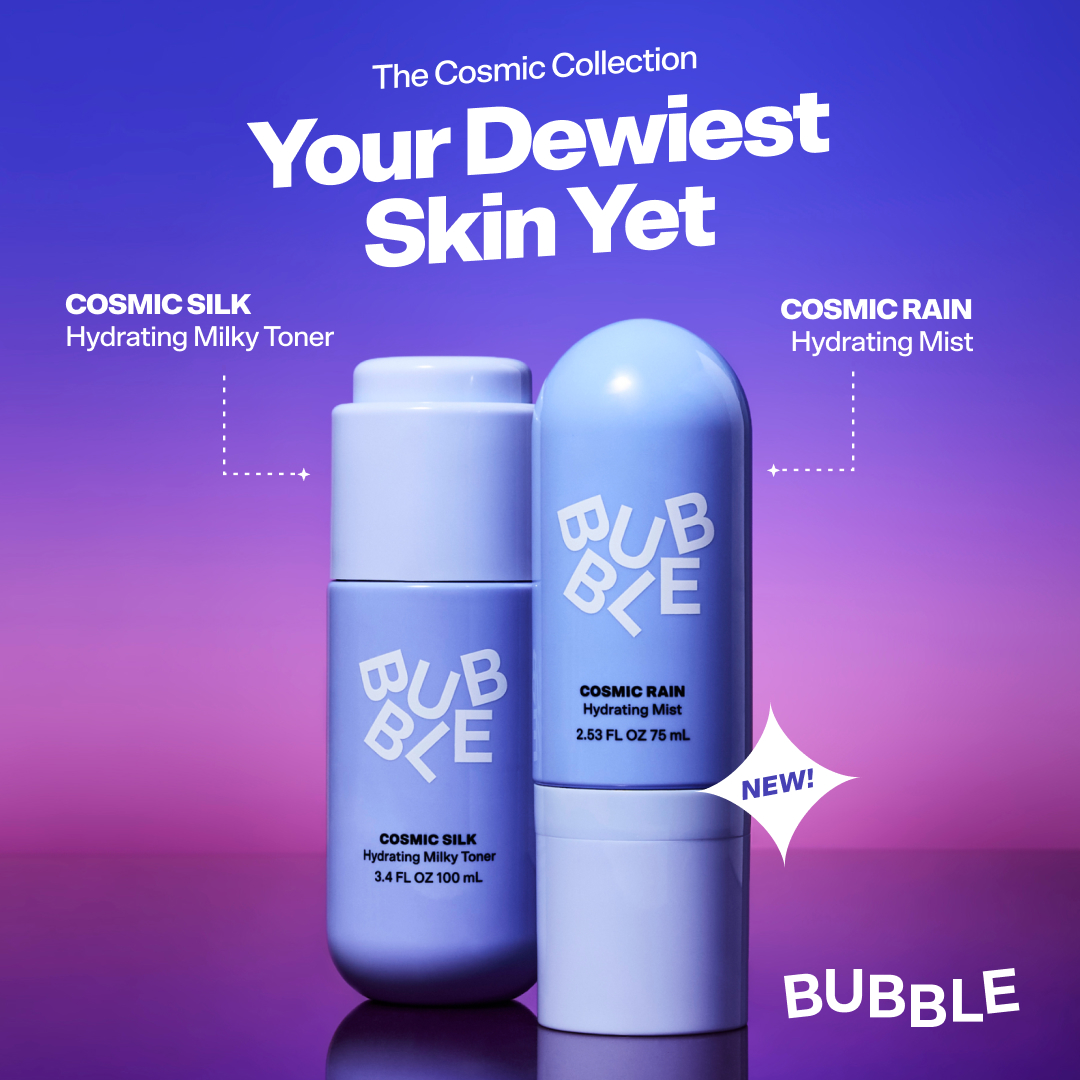
- "The Cosmic Collection Your Dewiest Skin Yet" on a purple background with two light purple product bottles.
- Audience
- Individuals interested in skincare, particularly those seeking hydration and new product launches, indicated by the product names ('Hydrating Milky Toner', 'Hydrating Mist') and the 'NEW!' tag.
Why it works. Product launch announcement showcasing two new hydrating skincare products to generate interest and drive initial sales.
Prominent product benefit headline (top of image): "Your Dewiest Skin Yet" Use a clear, benefit-driven headline at the top of your ad that promises a desirable outcome for your target audience.
- Hook
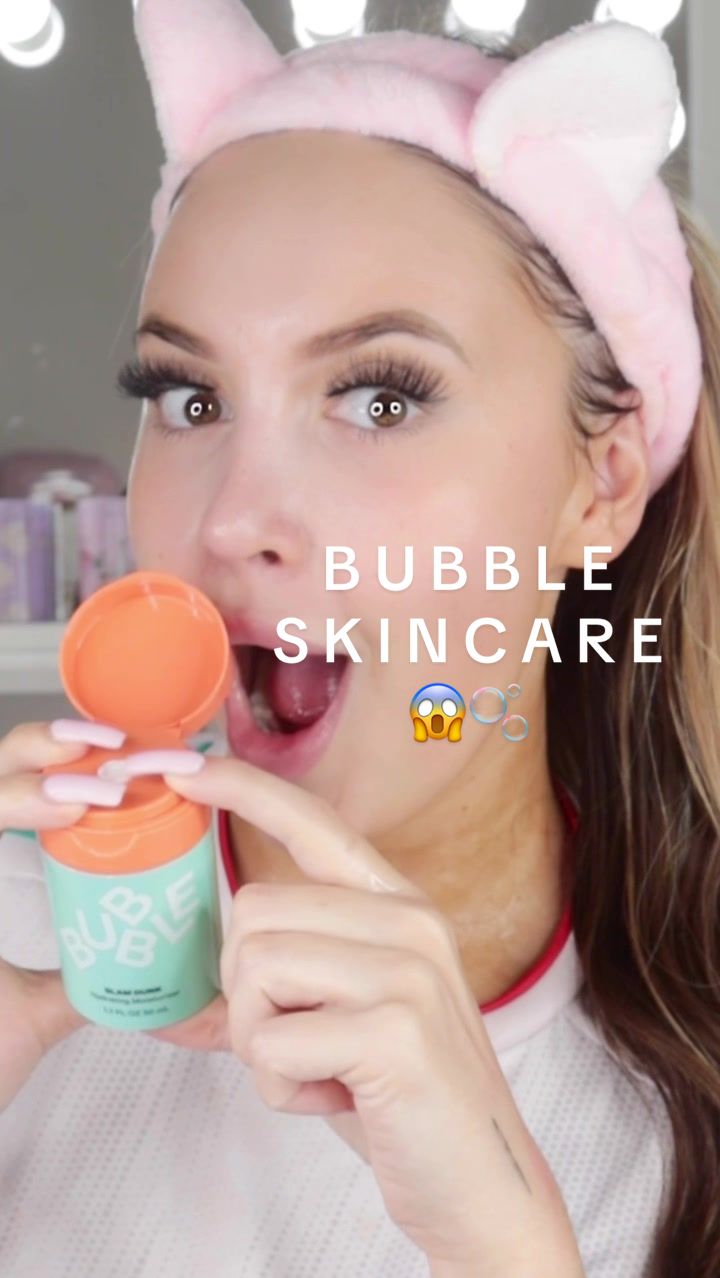
- 0:00-0:03, visual: A woman with long light brown hair wearing a pink cat-ear headband and a white and green shirt, with long light pink nails, smiles with her eyes closed and then opens them, pointing to her eyes. On-screen text: "POV: you are the biggest BUBBLE skincare fan". audio: "dreams, baby, get you a me. It's time to boss up."
- Audience
- Individuals interested in skincare routines, particularly those who are fans of the Bubble Skincare brand, as indicated by the opening 'POV' text and the consistent display of Bubble products.
Why it works. Showcase a comprehensive skincare routine using multiple Bubble Skincare products to appeal to existing fans and introduce new users to the brand's range.
Opening with a 'POV' statement and direct product display (0:00-0:03, "POV: you are the biggest BUBBLE skincare fan"). Start your creative with a 'POV' statement that directly addresses your target audience's identity or aspiration, immediately followed by a clear visual of your product.
- Hook
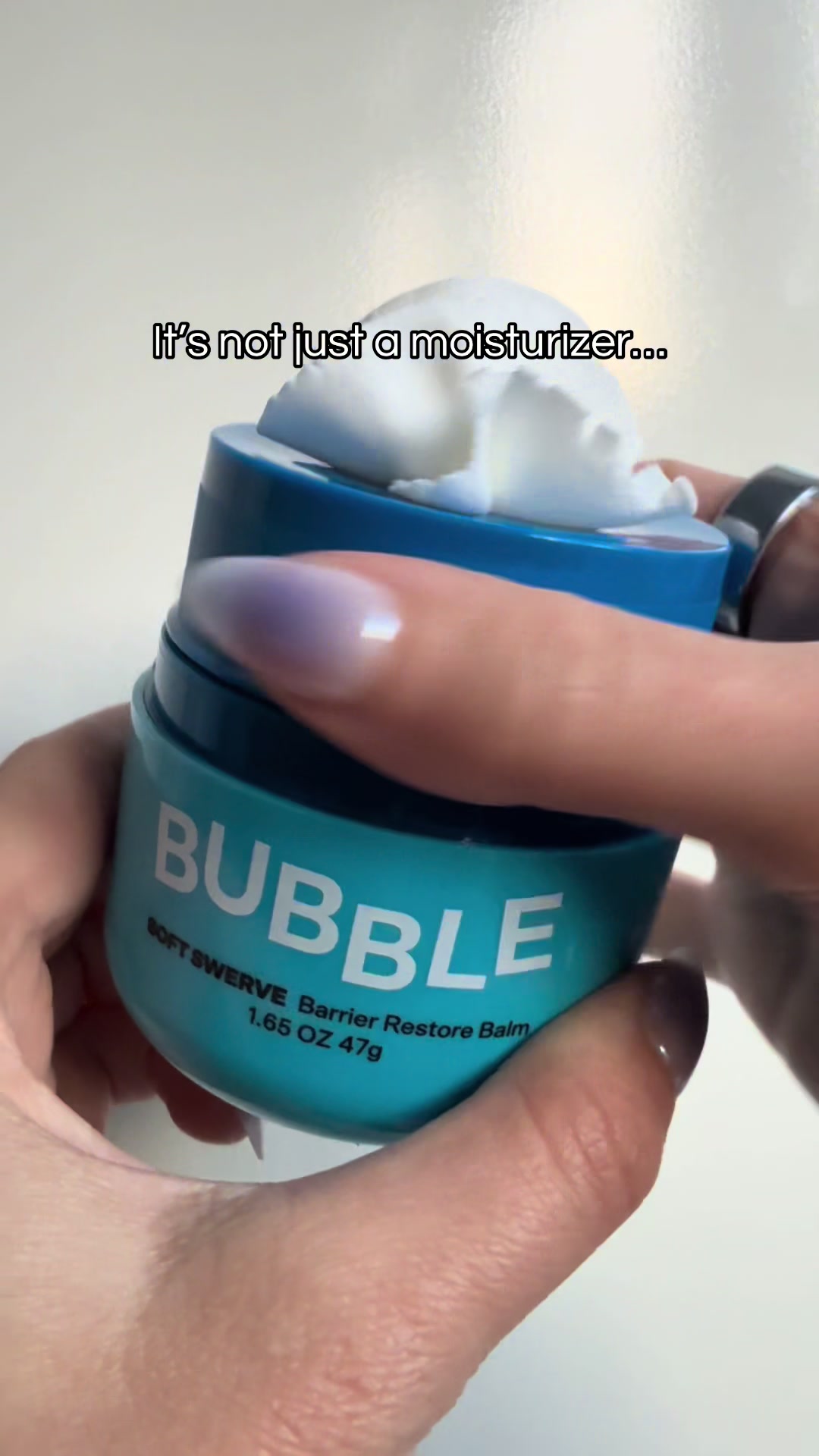
- "It's not just a moisturizer..." + A hand holding a light blue box with "BUBBLE" written on it in white letters.
- Audience
- Individuals with dry or 'pushed-too-far' skin, as indicated by the on-screen text 'Great for all-over body use for dry, pushed-too-far skin!'
Why it works. Product re-framing and benefit-led demonstration to educate and attract users seeking a specialized skin solution.
Opening with a curiosity-generating statement: "It's not just a moisturizer..." at 0:00. Start your ad with a statement that challenges a common perception about your product, creating an immediate question in the viewer's mind.
- Reach
- 151 upvotes · 38 comments · r/Ulta
A community is already discussing this in r/Ulta. Show up there authentically and answer the thread before a competitor does.
Who amplifies them
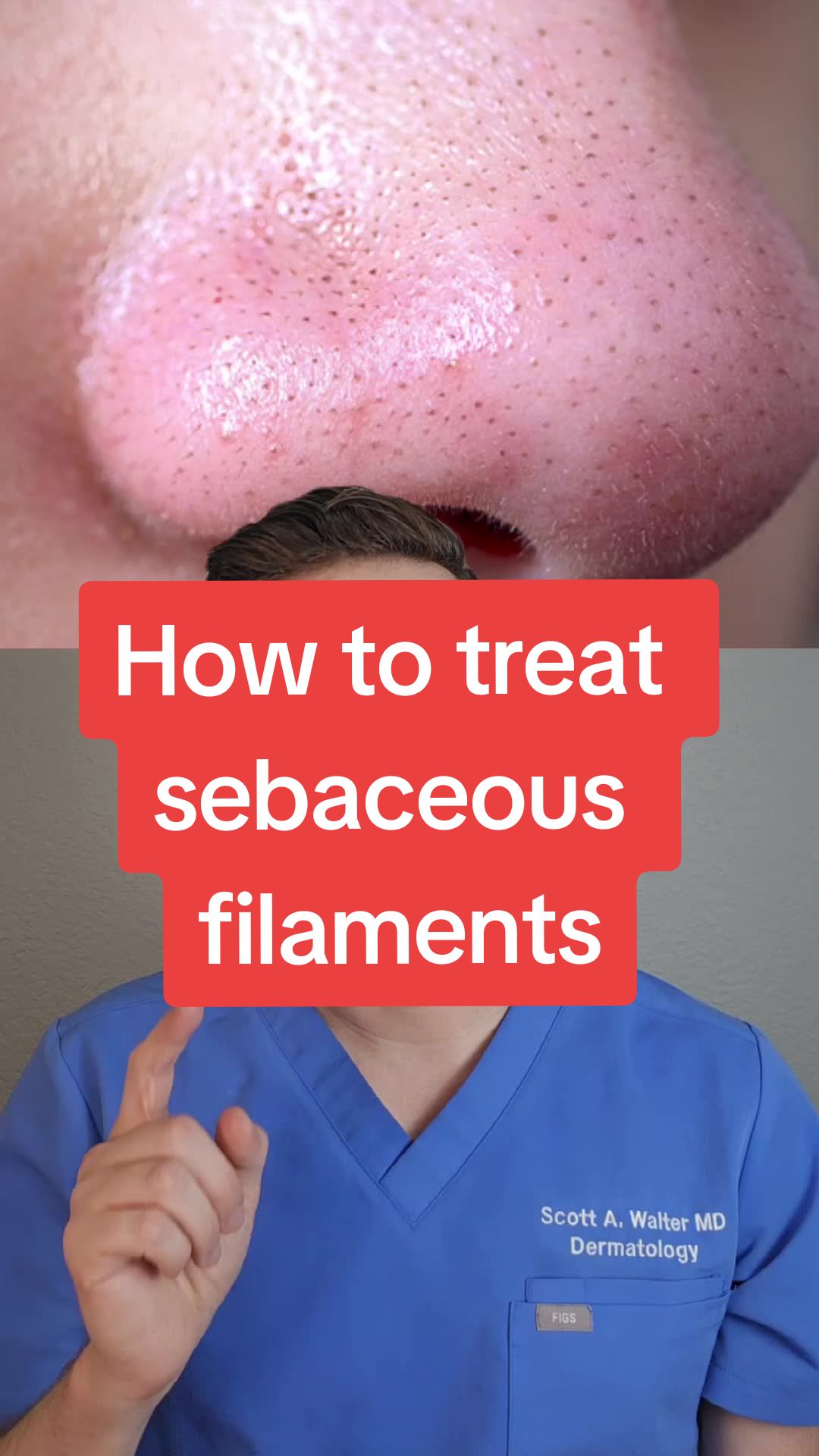
The heaviest lift comes from dermatologist creator Dr. Scott Walter | Derm, whose Come Clean mask demo through TikTok Shop drove 817,570 engagements, the largest single UGC number in the evidence. austincfarwell's glass-skin ASMR routine (25,277 engagements) explicitly names Shoppers Drug Mart and Superstore as where to buy, tying creator content directly to Canadian retail shelf. itsvedobaby's 2023 "biggest BUBBLE skincare fan" video pulled 95,417 engagements on hashtag reach alone. Beyond those three, a long tail of #BubblePartner-tagged creators (Angela Chalet, Ryane Roy, kristyn hoffman, Avery Katherine Wood, and others) post routinely in the 800-8,800 engagement range, and one creator, aimeetraveldiaries, credits both "Bubble Insiders" and "Bubble Skincare" for a PR unboxing, pointing to at least two named tiers inside the creator program. All of this activity is third-party and creator-labeled; the brand account itself shows only light direct posting by comparison.
08 Organic & video
The organic content engine: the videos, creator posts, and community presence earning attention without paid spend.
The clearest pattern across owned video is a shift from ensemble influencer events to individually coded creator content and back to marquee single-partner campaigns. The 2021 Field Day series clustered nine teen-facing creators around one shoot; the 2022 follow-up gave each creator their own "get ready with me" video carrying a personal discount code ("rudy15," "Madison15," "JD15"), and the 2025 Leighton Meester "Radical Joy" video returned to a single marquee partner. On TikTok, the format that performs is unscripted creator demo and ASMR-style routine content: austincfarwell's "asmr glass skin routine" pulled 25,277 engagements while tagging Canadian retailers Shoppers Drug Mart and Superstore directly in the caption, and Dr. Scott Walter's clay-mask demo pulled 817,570 engagements as the single biggest piece of UGC in the footprint. The rest of the tracked creator posts cluster in the 800-8,800 engagement range.
09 Affiliate & partners
How the brand turns creators and partners into a tracked, variable-cost acquisition channel, and how the program is structured.
Bubble runs a real creator-partner mechanic without a formally documented affiliate platform in the evidence: the recurring #BubblePartner hashtag across paid and organic creator posts, a distinct "Bubble Insiders" tier referenced in at least one creator caption, and a TikTok Shop listing (the Dr. Scott Walter clay-mask post is TikTok Shop sourced) together function as their affiliate-seller layer. There is no visible Rewardful/PartnerStack-style referral link or public application page in the collected evidence, which suggests recruitment happens through direct outreach or the paid ambassador-recruitment ad rather than a self-serve affiliate storefront.
10 The playbook
The channels are not separate. They are one system where each stage feeds the next. Here is the read, then the plays to run tomorrow.
The inferred playbook
Bubble's loop runs on creators first, retail second, and its own site barely at all.
Creator UGC routinely names the exact retailer in the caption itself (austincfarwell tags Shoppers Drug Mart and Superstore; the Ulta subreddit thread discusses in-store discovery), meaning the content's job is to send viewers to a retail shelf, not to hellobubble.com.
Their Meta ad set includes a dedicated "become a Bubble ambassador" recruitment creative running alongside product ads, so a portion of paid spend is functioning as top-of-funnel for the free-creator pipeline rather than direct response.
Dig deeper+3▾
Recurring single-partner moments, from the 2021 Outer Banks cast Field Day to the 2025 Leighton Meester "Radical Joy" campaign (873,154 views), punctuate the steady creator drumbeat and appear timed to keep the brand relevant as it broadens beyond its original teen cohort.
At ~8,953 monthly visits against reported nine-figure retail sales, hellobubble.com functions as an information and brand layer while the real transaction volume sits with Walmart, Target, Ulta, CVS, and Boots. The six open New York roles, split across paid media, social commerce, and three separate influencer and community leadership titles, show Bubble investing further into scaling its existing creator and ambassador motion rather than building out an enterprise sales layer.
the revenue split between retail and the DTC site, ambassador/creator commission or payout terms, and sell-through rates by individual retail door.
Per-creator attribution codes
The proofBubble's 2022 YouTube routine series gave each creator a personal discount code ("rudy15," "Madison15," "JD15") baked into the video description.
The adaptationGive every creator or affiliate you work with, even just two or three at a time, their own unique code or link before you send them product, so you can see which relationships actually convert instead of guessing from vanity view counts. Start with your next outreach message: offer the code as part of the pitch, not as an afterthought once they've already posted.
Cost: $0 · Time to signal: days · Works pre-PMF: yes
Turn buyers into a named creator tier
The proofBubble runs a paid Meta ad whose sole message is "you could become a Bubble brand ambassador," and organic creators reference both "Bubble Insiders" and the #BubblePartner tag as a distinct program.
The adaptationInstead of only running ads that sell product, run one ad or post whose entire message is an invitation to join a named creator or insider tier, and give that tier a specific tag so their content is trackable, the same way #BubblePartner functions. First step: DM the handful of customers who have already posted about you unprompted and invite them into a tier with a name and a hashtag, before you spend a cent on recruiting strangers.
Cost: $0 · Time to signal: weeks · Works pre-PMF: yes, provided you already have a few genuine unprompted mentions to recruit from
Seed a credentialed expert, not just a lifestyle creator
The proofDermatologist creator Dr. Scott Walter's TikTok Shop demo of the Come Clean mask outperformed every other piece of UGC in the footprint at 817,570 engagements.
The adaptationFind one credentialed expert in your category (a CPA for a fintech tool, a physical therapist for a fitness product) and offer them free product or a modest fee for one honest demo video, then list the product where they can tag it for direct purchase, mirroring how the derm's mask post ran through TikTok Shop. The mechanism: a credentialed voice converts skeptics that a lifestyle creator cannot reach.
Cost: under $500 · Time to signal: weeks · Works pre-PMF: conditional, only if the product genuinely performs under expert scrutiny
Anchor a recurring shared content moment
The proofBubble's 2021 "Field Day" event gathered nine creators around one shoot, and its 2025 Leighton Meester "Radical Joy" campaign served the same refresh function at larger scale.
The adaptationInstead of sending each creator off to post individually and hoping for a cluster effect, create one small recurring moment, a seasonal product drop, a local meetup, a themed content day, that gives several creators a shared reason to post around the same date, producing a wave instead of scattered one-offs. This scales down to a single afternoon with three or four local micro-creators and no celebrity budget required.
Cost: under $500 · Time to signal: weeks · Works pre-PMF: conditional, needs an existing small creator relationship pool to invite, and carries real risk if turnout is thin since a flat event reads worse than no event at all Not transferable at an earlier stage: celebrity-tier partnerships like the Leighton Meester campaign, wholesale distribution deals with Walmart, Target, and Ulta, and a 20-ad-strong Meta testing budget all depend on capital and retail relationships a pre-revenue founder will not have; adapt the seeding and attribution mechanics above, not the scale of the campaigns themselves.
You just read how Bubble Skincare does it. Tomorrow it is someone else.
Every morning we take one company that is actually growing and break down where its customers come from: the ads still running after a year, the channel doing the real work, and the play you can run this week.
Systemaic · directional intelligence. Traffic, spend, and reach figures are SimilarWeb-style estimates and qualitative reads of public data, not audited numbers. Built on real public receipts.
// teardowns with a similar GTM motion
sources & receipts (1)
Live ad libraries: meta ad library
Traffic, spend, and revenue figures are estimates as noted in the report; the links above are the primary public artifacts.