- 01Seed through an audience you already have
- 02Make your product page rank for the category term
- 03Crowd a marketplace category with your own variants
- 04Pilot a new line through one exclusive retail partner
01 Snapshot
The one-glance read on who they are and how they grow. Each point is verifiable from the receipts above.
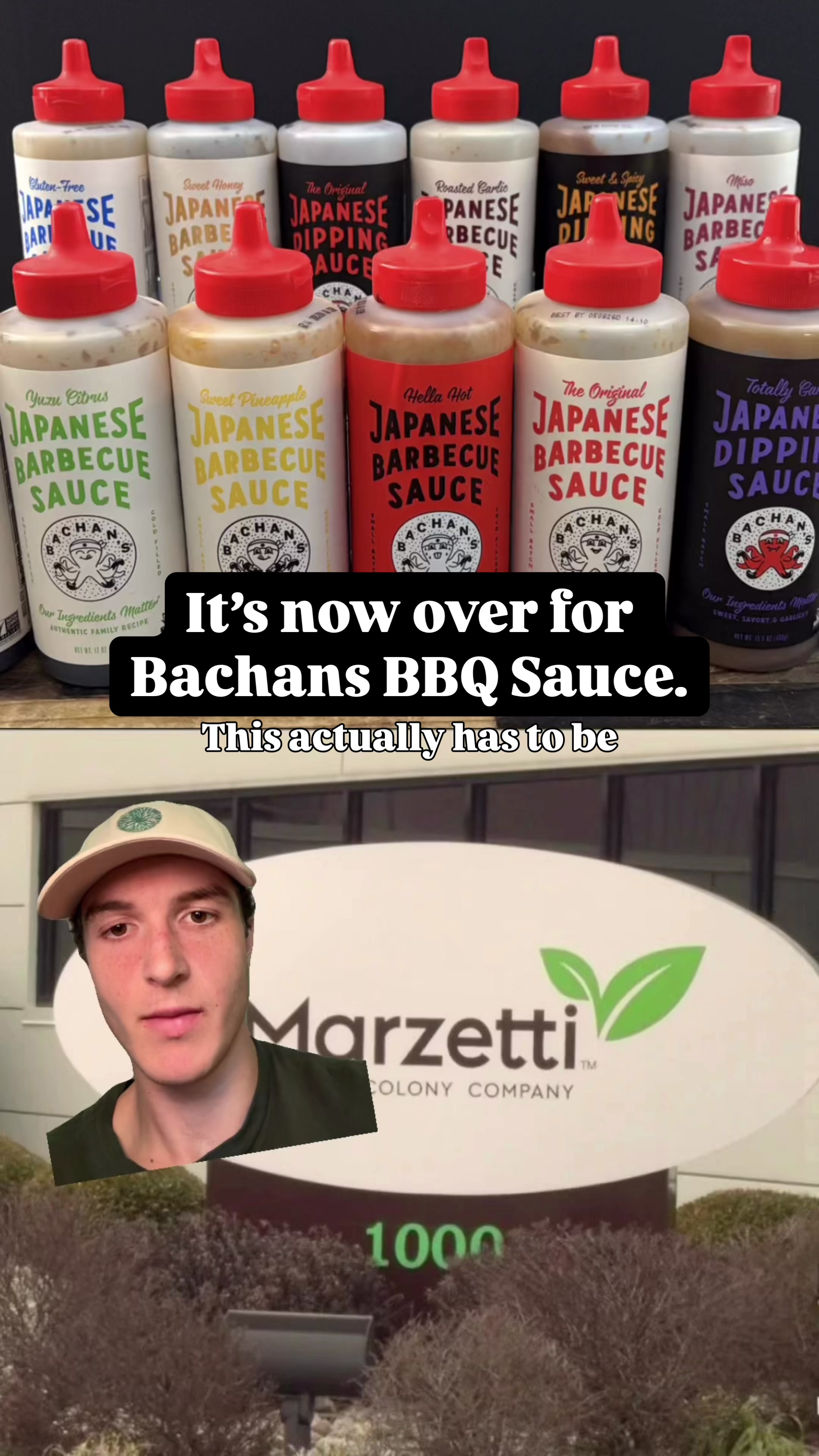
Japanese-style BBQ and dipping sauces sold via bachans.com and 25,000+ retail doors, now a Marzetti-owned brand after a $400M acquisition that closed 2026-05-01.
Organic-led, reinforced by heavy creator UGC and a steady paid-social program.
~124,388 monthly site visits as of the latest snapshot, 161,733 Instagram followers, 70 active Meta ads and 11 active Google ads as of 2026-07-31, and $87M in net sales for the fiscal year ended 2025-12-31.
As of 2026-07-31, an 11-ad Google Search push (oldest just 3 days active) sits alongside a Meta creative expansion built around their octopus mascot.
Bachan's let a single #1-ranking product page and unpaid recipe creators carry top-of-funnel discovery, then used retail ubiquity and paid social to reinforce (not create) demand that was already strong enough to draw a $400M strategic buyer.
02 How it unfolded
The order the channels came online. Sequence is strategy: what they did first, and what they layered on once demand existed.
03 Traffic & channel mix
Estimated demand, the channel split behind it, and the keywords and referrers doing the work. Directional modeling, not audited analytics.
Bachan's draws an estimated ~124,388 monthly visits, down 0.8% over the last 3 months, a mild dip consistent with post-launch normalization rather than any breakdown in the acquisition engine. The evidence doesn't include a channel-by-channel visit split, but the keyword data shows exactly where demand is concentrated: Bachan's ranks #1 for "japanese bbq sauce," "japanese barbecue sauce," and "bachans", and #2 for "bachan's japanese bbq sauce," meaning it owns both the branded term and the head category term for its entire product category.
04 Organic content
The specific pages earning their organic search traffic, and the pattern behind why they rank. Adapt the format, not the topic.
Their top organic pages are overwhelmingly transactional rather than editorial: the flagship Original Japanese Barbecue Sauce product page alone pulls an estimated 55.5% of organic traffic among their top five pages, followed by the sauce collection page (12%), the homepage (11.3%), a recipes blog (3.5%), and the Yuzu flavor product page (2.2%). The pattern is clear: instead of building a library of comparison or listicle content to capture search traffic, Bachan's makes the product listing itself the ranking asset for high-intent category terms, with a light recipes section as the only supporting content play. This likely works because the brand name and category term ("japanese bbq sauce") are close to synonymous in search, so the same page that converts is the page Google already wants to surface.
Top pages by organic traffic
05 Channel map
Not traffic share. How much weight the growth system actually puts on each channel, with a one-line read on the role it plays.
What drove growth
06 The creative doing the work
Each exhibit shows the actual asset, an X-ray of why it works, a status, and a play you can adapt. This is the heart of the teardown.
Bachan's runs 70 active Meta ads as of 2026-07-31, with their longest-running creative at 121 days active, a genuine proven-winner library rather than a fresh test batch. Their Google Ads presence is the opposite: all 11 active ads launched within the last 3 days as of the observation date, so that channel has no longevity signal yet and should be read as a brand-new push, not a validated one.
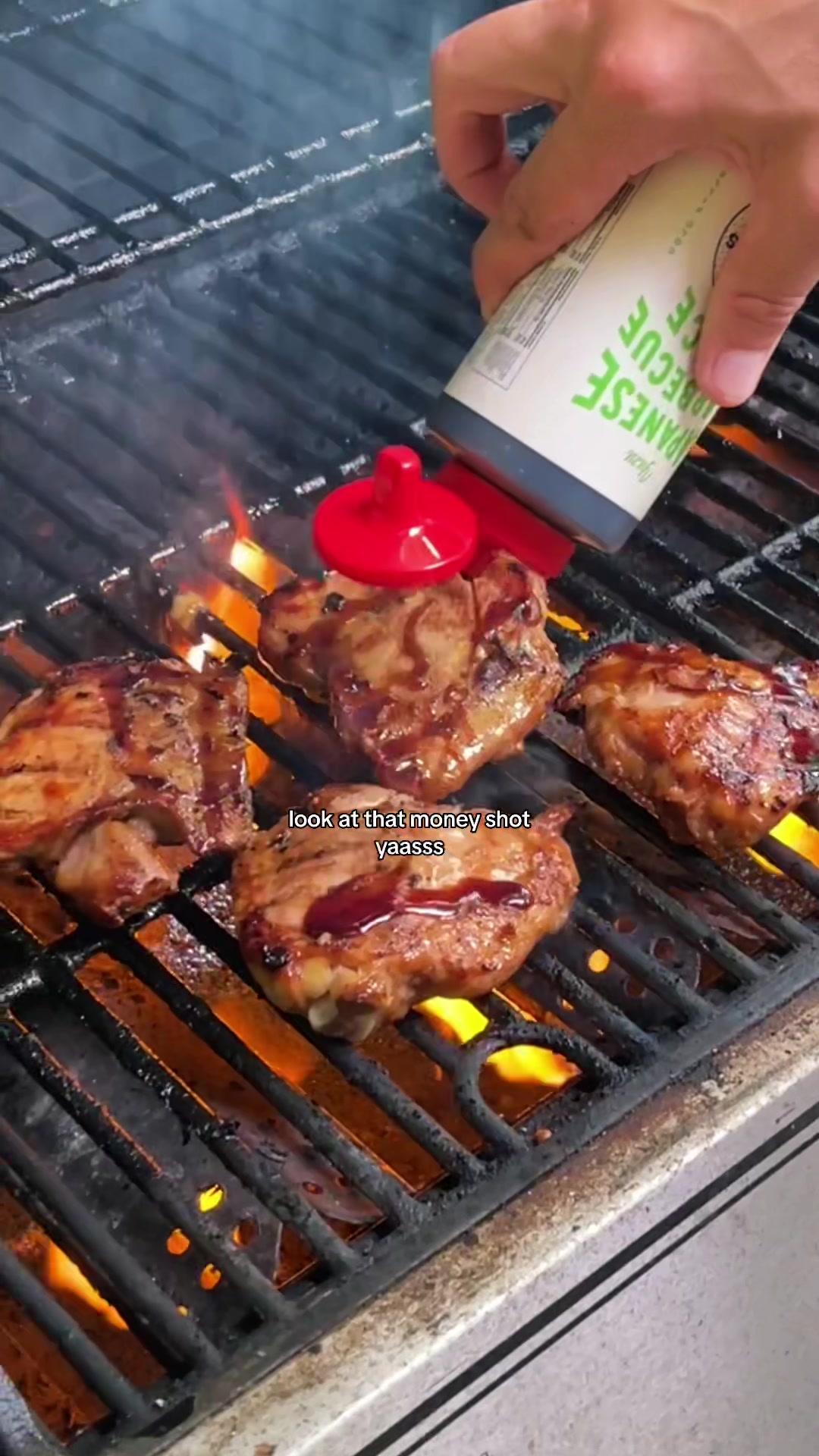
Hook: "Looking for bold, fresh umami flavor? Make it Bachan's Japanese BBQ Sauce." Why it works: A curiosity-framed voiceover plays over a hand pouring dark sauce onto grilled chicken and vegetable skewers, a simple demo that answers its own question visually before the line finishes; the same script recurs as video, DCO, image, and carousel from 2026-05-18 through 2026-07-01, making it the single most repeated line in the entire library. Run this play: Expanded as Play 5 below.
Hook: "GO FROM DISASTER TO GRILL MASTER." Why it works: A problem-agitation hook paired with a close-up of perfectly sliced grilled meat targets the fear of a ruined BBQ, positioning the sauce as insurance against the home cook's most common failure rather than just a flavor add-on. Run this play: Adapt a fear-of-failure hook for any product that removes a specific, nameable mistake your customer makes without it; name that mistake explicitly in the headline instead of describing the product's features.
Hook: "OCTO KNOWS WHEN YOU" / "Look for the Octopus." Why it works: A red octopus mascot in a headband anchors both a proven-winner b-roll voiceover ad and a newer wave of testing creative (a mascot-costume close-up, a plush-toy product shot), giving the brand a recurring visual character that reads consistently whether it's grilling on camera or sitting next to the bottle on a shelf. Run this play: Build one recurring visual character or prop that can headline both paid creative and organic UGC prompts, so audiences recognize the brand across formats without relying on the product shot alone.
Also in their winning rotation (each part of the proven-winner set, up to 121 days active as of 2026-07-31):
- [product shot] "SWEET, SAVORY & BOLD" · chili-pepper visual · bold-claim
- [product shot] "RAISE THE BAR AT YOUR NEXT BARBECUE" · problem-agitation
- [product shot] "SWEET SAVORY & ROASTY" · meatball dish · sensory appeal
- [b-roll voiceover] "These viral beef tortilla kebabs are super delicious..." · bold-claim
- [image, Google] "BACHAN'S Everyday made EFFORTLESS" · product grid shot · bold-claim
Against that established rotation, the newest test wave is the Google Search launch (11 ads, oldest 3 days) plus the octopus-mascot creative extensions, both unproven relative to the "bold, fresh umami flavor" and octopus b-roll winners above.
Ads split their landing destinations between straightforward product pages and recipe content: the "Roasted Garlic Japanese Barbecue Sauce" and "The Original Japanese Barbecue Sauce" ads land directly on their respective product pages, while other creative routes to recipe-style pages like "Classic Grilled Chicken" and "Sweet Honey Party Ribs" that feature the sauce inside a cooking context rather than a bare add-to-cart page. Every landing page shows the same price architecture: $9.49 standard 17oz bottles, free shipping over $35, and a Skio-powered subscription option for recurring orders, with no discount codes or promotional pricing visible in the captured pages. The consistency suggests a simple, low-friction funnel: the ad picks the entry point (product or recipe), but the commerce layer, price, shipping threshold, and subscribe option, stays identical everywhere.
- Running
- 63 days (longevity = it's converting)
- Hook
- Visual: A red octopus mascot wearing a white headband with a red circle on it, standing in front of a wooden fence. It is holding tongs and grilling food on a black charcoal grill. There is a bottle of 'JAPANESE SAUCE' on a small wooden table next to the grill. On-screen text: 'BACHANS' logo, 'SAUCY Scroll break WITH OCTO'. Audio: Sizzling sound of food on a grill.
- Audience
- People who enjoy grilling, Japanese cuisine, or are looking for a fun, family-friendly brand. The mascot suggests a broad appeal.
Why it works. Uses a costumed octopus mascot grilling in a backyard to make brand recall visual and memorable rather than copy-driven.
Use of a whimsical, anthropomorphic mascot in a relatable setting (0:00-0:13, 'A red octopus mascot...grilling food on a black charcoal grill'). Give your mascot or brand character a mundane, relatable task (grilling, cooking) so recall stays visual, not just text-based.
- Running
- 63 days (longevity = it's converting)
- Hook
- "Looking for bold, fresh umami flavor?" A hand pours dark sauce from a red-capped bottle onto grilled chicken and vegetable skewers in a black pan.
- Audience
- People who enjoy grilling and are looking for new, flavorful sauces, indicated by the grilling scene and the focus on 'umami flavor'.
Why it works. Opens on a specific flavor-seeking question and answers it immediately with the product in use, aimed at flavor-driven cooks.
Direct question and visual solution at 0:00-0:03: "Looking for bold, fresh umami flavor?" followed by pouring the sauce on grilled food. Open with a question naming the exact flavor or benefit your buyer searches for, then cut straight to your product delivering it.
- Running
- 63 days (longevity = it's converting)
- Hook
- “OCTO KNOWS WHEN YOU” is displayed on screen, with a red octopus mascot wearing a white headband with a red circle on it, standing against a light background.
- Audience
- People who appreciate humorous, slightly absurd marketing and are open to trying premium BBQ sauces.
Why it works. Uses an intentionally unfinished sentence from the brand mascot to force a payoff moment later in the video.
Mascot-driven narrative with a twist (0:00-0:11, “Octo knows when you use generic BBQ sauce. It upsets Octo. Look at that face. You tell me that isn’t the face of despair.”) Open with a deliberately unfinished sentence from your mascot or spokesperson, and resolve it later in the video.
Show 7 more exhibits
- Running
- 63 days (longevity = it's converting)
- Hook
- "These viral beef tortilla kebabs are super delicious and they need to be on your menu this grilling season." A person's hands are shown placing two large, cooked, spiral-cut meat and tortilla kebabs onto a metal tray.
- Audience
- Individuals who enjoy grilling, trying new recipes, and appreciate flavorful, visually appealing food, particularly those interested in Asian-inspired cuisine.
Why it works. Uses trending-recipe framing around an unusual dish format to make a familiar sauce feel new, aimed at scroll-happy recipe seekers.
Visual demonstration of product integration and taste appeal (0:03-0:05, 0:29-0:31). The sauce is shown being applied to the finished dish and then brushed on, followed by a shot of someone eating it. Feature an unusual, camera-friendly recipe using your product and open the copy by calling it 'viral' or trending.
- Running
- 23 days (longevity = it's converting)
- Hook
- A hand brushes a dark, glossy sauce onto a large piece of dark, cooked meat resting on a bed of noodles. On-screen text: "MINUTE".
- Audience
- Food enthusiasts and home cooks looking for elevated meal ideas, indicated by the focus on gourmet ingredients (10-hour beef rib) and detailed cooking process.
Why it works. Shows the sauce brushed onto a glossy, restaurant-style dish over noodles, positioning it as an elevated ingredient rather than a condiment.
Sensory-rich visual and audio description of the food preparation and final product at 0:00-0:03 ("A hand brushes a dark, glossy sauce onto a large piece of dark, cooked meat resting on a bed of noodles.") and 0:20-0:26 ("A close-up shows chopsticks holding noodles with a piece of glazed meat."). Film your product being applied to a restaurant-quality dish in close-up, focusing on texture and shine to signal elevated quality.
- Running
- 12 days (new — still being tested)
- Hook
- On-screen text: "SAUCY Scroll break WITH OCTO". Visual: A red octopus mascot wearing a white headband with a red circle on it stands in front of a grill in a backyard setting. It holds tongs and moves them over the grill.
- Audience
- People who enjoy grilling and are looking for new sauces, indicated by the backyard BBQ setting and the product placement.
Why it works. Labels itself a deliberate scroll break featuring the mascot, using self-aware framing to justify the interruption as entertainment.
Use of a unique and friendly mascot at 0:00-0:03, "SAUCY Scroll break WITH OCTO". Try labeling your video as an intentional 'break' from scrolling and pair it with your most recognizable brand character.
- Reach
- 227 upvotes · 31 comments · r/shrinkflation
A community is already discussing this in r/shrinkflation. Show up there authentically and answer the thread before a competitor does.
Who amplifies them
The clearest amplification comes from food creators posting recipes and reviews: @hey ash (29,895 engagement, sponsored), @ldrethegiant (10,550 engagement, covering a miso flavor launch), and @Jose el Cook (7,002 engagement, tagged "bachanspartner" around a Walmart/Sam's Club launch) all post under the #ad or partner framing that distinguishes them from unpaid fans. SPAM Brand (@SPAM, 9,797 engagement) represents a distinct mechanic beyond content, a co-branded retail SKU (a SPAM x Bachan's flavored can sold at Walmart) rather than a simple mention. On the critical side, creators Zephyr Zoidis and Grant Stoll posted acquisition-backlash videos (133,665 and 2,042 engagement respectively) arguing the Marzetti deal undercuts the brand's positioning, a real amplification channel even though the sentiment is negative. Community-wise, r/Costco carries genuine organic devotion (multiple threads with 90+ score describing repeat bulk purchases), while r/shrinkflation hosts a specific complaint thread about a package-size reduction.
07 Organic & video
The organic content engine: the videos, creator posts, and community presence earning attention without paid spend.
The best-performing organic post in the dataset is a creator collab from @AnnMartinez tagging Coca-Cola with a 255,403-engagement video built around a 5-minute marinade hook ("The marinade takes 5 minutes!"), suggesting quick-prep framing and brand-to-brand tags both help clips travel. A close second is a 133,665-engagement talking-head video from creator Zephyr Zoidis criticizing the Marzetti acquisition as a betrayal of the brand's small-batch, family-recipe positioning, an unusually high number for critical content and a sign of how emotionally invested the audience is in Bachan's "authentic" story. A sponsored post from creator hey ash (29,895 engagement, tagged #ad) rounds out the top tier, plus a run of smaller creator posts in the 100-10,000 engagement range covering recipes, flavor launches, and retail sightings. The format that performs consistently is quick recipe demos and reaction/talking-head clips, not polished brand video.
08 Affiliate & partners
How the brand turns creators and partners into a tracked, variable-cost acquisition channel, and how the program is structured.
No affiliate or referral program was detected on the owned site; the homepage's only outbound links are to their X, Instagram, TikTok, and Facebook profiles, not a partner or ambassador signup. Combined with the sponsored-only creator tags (#ad, "bachanspartner") seen in the UGC evidence, this suggests Bachan's runs one-off paid creator partnerships rather than a structured, self-serve affiliate program, leaving a scalable word-of-mouth lever largely unbuilt even after a $400M sale.
09 The playbook
The channels are not separate. They are one system where each stage feeds the next. Here is the read, then the plays to run tomorrow.
The inferred playbook
Bachan's turned a single #1-ranking product page and an unpaid creator base into national retail ubiquity, then used paid social to reinforce awareness that already existed rather than to generate it from scratch.
The flagship product page alone pulls an estimated 55.5% of their measured organic traffic and ranks #1 for "japanese bbq sauce" and "japanese barbecue sauce," meaning category search demand lands directly on a sales page with no content detour required.
Community threads in r/Costco show shoppers discovering the brand in-club and buying multiple boxes on the spot, converting physical retail placement into organic Reddit and TikTok content rather than the reverse.
Dig deeper+3▾
70 active Meta ads recycle a small set of validated hooks (the umami pour-shot, the octopus mascot) instead of testing new positioning, while the newly launched 11-ad Google Search program suggests they are only now starting to defend branded search terms with paid spend.
The Marzetti sale triggered creator videos with well over 100,000 engagements arguing the brand's small-batch, family-recipe story sits uneasily with its new owner, a real signal of how much of Bachan's equity was built on that narrative.
the DTC-versus-retail split behind the $87 million net sales figure, subscription attach rate on the Skio program, and paid-to-organic attribution behind the new Google Ads push.
Seed through an audience you already have
The proofJustin Gill sold the sauce through local drop-off deliveries starting in 2013 to his family's landscaping clients, years before launching Bachan's as a packaged retail brand in 2019.
The adaptationIf you run any unrelated service business or hold any existing client list, commit to handing 20-30 free samples of your new product to those existing contacts over one visit cycle and personally ask each one for a text-back reaction, using a captive relationship you already have instead of opening paid ads on day one. Carry forward the specific mechanic: deliver in person, ask for a direct reply, not a review-site link.
Cost: $0 · Time to signal: weeks · Works pre-PMF: yes
Make your product page rank for the category term
The proofBachan's flagship product page itself, not a separate blog post, ranks #1 for "japanese bbq sauce" and "japanese barbecue sauce" and carries the majority of their measured organic traffic.
The adaptationRewrite your top product or service page's H1 and title tag to include the exact 2-3 word category term buyers actually search, the same term customers would type instead of your brand name, and build 3-5 internal links from other site pages pointing to it. Skip the separate content-marketing asset; put the ranking effort directly on the page that converts.
Cost: $0 · Time to signal: weeks to months · Works pre-PMF: yes
Crowd a marketplace category with your own variants
The proofBachan's built out enough flavor SKUs to hold 5 of the top 10 spots in Amazon's BBQ sauce category by 2022, before later becoming the top-selling sauce there and at Whole Foods.
The adaptationOnce you have one validated product, launch 2-3 clearly differentiated variants targeting the same top keyword within a single listing cycle on whatever marketplace you sell through, so the category search results show multiple listings you own instead of one, crowding out a competitor's shelf space in the results themselves.
Cost: under $500 · Time to signal: months · Works pre-PMF: conditional, only once you already have one variant with real sales to branch from
Pilot a new line through one exclusive retail partner
The proofBachan's launched its Japanese Dipping Sauces line exclusively at Whole Foods in August 2024, its first category expansion beyond BBQ sauce, testing the new format with a single retail partner before wider distribution.
The adaptationWhen expanding into a new product line, pitch a single well-matched retail, wholesale, or marketplace curator for a time-limited exclusive placement instead of listing everywhere at once, then use that one partner's sell-through data as the proof point for a broader rollout pitch. Concretely: approach one retailer or curator you already have a relationship with (or a warm introduction to) for a 60-90 day exclusive window.
Cost: under $5k for a pilot production run (or $0 on consignment) · Time to signal: months · Works pre-PMF: conditional, needs an existing or introducible retail relationship
Reuse one validated hook across every ad format
The proofThe line "Looking for bold, fresh umami flavor? Make it Bachan's Japanese BBQ Sauce" recurs as video, DCO, image, and carousel executions from 2026-05-18 through 2026-07-01, rather than being replaced by new copy each cycle.
The adaptationOnce you find a single hook or headline that shows early signal in small-budget testing, rebuild that exact same line across every ad format your platform offers, a static image, a short voiceover video, and a carousel, within the same week, instead of writing three different messages. Carry the identical wording across formats rather than varying it.
Cost: under $500, or $0 with in-house phone-shot creative · Time to signal: days to weeks · Works pre-PMF: conditional, only once one hook has already shown early signal; don't invent new copy from scratch before that Not transferable at an earlier stage: the $400M acquisition outcome, the 25,000-plus retail door footprint, and the 70-ad always-on Meta program all assume years of prior distribution and capital the reader won't have yet; adapt the seeding, SEO, and single-hook mechanics behind them, not the current scale of spend or shelf space itself.
You just read how Bachan's does it. Tomorrow it is someone else.
Every morning we take one company that is actually growing and break down where its customers come from: the ads still running after a year, the channel doing the real work, and the play you can run this week.
Systemaic · directional intelligence. Traffic, spend, and reach figures are SimilarWeb-style estimates and qualitative reads of public data, not audited numbers. Built on real public receipts.
// teardowns with a similar GTM motion
sources & receipts (20)
Live ad libraries: meta ad library · google ad library
Researched facts: Bachan's raised a $13M Series A funding round: $13 million, led by Sonoma Brands Capital, · Bachan's closed an earlier growth investment round with celebrity backers: Round led by pr · Bachan's was founded by Justin Gill, named after his grandmother: Founder/CEO Justin Gill · Bachan's began as farmers-market/local sales before becoming a formal brand: Justin Gill s · Bachan's launched a new product category exclusively at Whole Foods: Debuted 'Japanese Dip · The Marzetti Company agreed to acquire Bachan's for $400 million: Definitive agreement ann · Bachan's grew at a 48% CAGR from 2022 to 2025: Compound annual growth rate of 48% between · Founder Justin Gill's statement on the Marzetti acquisition: Gill described the sale as 'a · Bachan's core sauce pricing on its own DTC site: Standard 17oz Japanese Barbecue Sauce bot · Bachan's is the top-selling barbecue sauce on Amazon and at Whole Foods: Company holds the
Community threads: Pitmaster Club forum (AmazingRibs.com): BBQ hobbyist forum thread declares Bachan's 'legit · BBQ Brethren Forums: BBQ Brethren forum member pushes back on the brand's popularity, call · The Virtual Weber Bulletin Board (TVWBB): Virtual Weber Bulletin Board grillers are split · Trustpilot (www.bachans.com reviews): A Trustpilot reviewer with 23 years living in Japan · Thingtesting (brand review aggregator with verified user reviews): Thingtesting reviewers · Meatwave (BBQ product review site): A dedicated sauce-review site (Meatwave) found the Hot · Smoking Meat Forums: Smoking Meat Forums members flag a third-party Walmart listing price- · Pitmaster Club forum (AmazingRibs.com): Pitmaster Club forum thread debates whether the sa
Traffic, spend, and revenue figures are estimates as noted in the report; the links above are the primary public artifacts.