- 01Bid the Benefit Word, Not Just the Brand
- 02Name a Limited Product After a Creator
- 03Countdown Teaser Before You Reveal Anything
- 04Turn Your Before/After Claim Into a Physical Bit
01 Snapshot
The one-glance read on who they are and how they grow. Each point is verifiable from the receipts above.
A sugar-free electrolyte stick-pack brand split into three occasion-based lines, Daily Hydration, Workout Hydration, and Weekend Recovery, drawing an estimated 65,300 monthly visits as of 2026-07-14.
Creator-led, scaled by an always-on paid social and search program.
142,870 followers on its verified Instagram account (196 posts, ~5,900 average engagement per post) and 9 active Google search ads running as long as 444 days, both as of 2026-07-14.
As of 2026-07-14, its newest Meta ad wave runs a multi-day teaser countdown ("NEW FLAVOR COMING IN: 3") toward an unrevealed cherry-themed flavor, using mystery close-ups instead of the product itself.
Waterboy pairs an occasion-segmented product line with a creator network inherited from Bachelor Nation (co-founder Connor Saeli appeared on The Bachelorette and Bachelor in Paradise, and met co-founder Mike Xhaxho through that world), tagged founders, named-flavor collabs, and a founder's own viral engagement story, to manufacture organic reach that a straight hydration-powder brand can't buy.
02 How it unfolded
The order the channels came online. Sequence is strategy: what they did first, and what they layered on once demand existed.
03 Traffic & channel mix
Estimated demand, the channel split behind it, and the keywords and referrers doing the work. Directional modeling, not audited analytics.
Traffic sources
Top search keywords
| Keyword | Volume | Weight | CPC |
|---|---|---|---|
| waterboy | 26k | $0.86 | |
| water boy | 5.8k | - | |
| waterboy electrolytes | 1.8k | $0.84 | |
| beam | 69k | $0.51 | |
| waterboy hydration | 420 | $0.84 |
Closest competitors by audience
Waterboy pulls an estimated 65,300 monthly visits, up 33.7% over the last 3 months. The mix is a near-even three-way split at the top: search organic (23%), direct (22.7%), and social organic (22%) each carry roughly a fifth of traffic, meaning brand awareness converts through as many un-paid doors as paid ones. Email adds another 14.8%, a large share for a DTC brand and a signal that its subscription and post-purchase flow is doing real retention work. The rest, display ads, paid search, referrals, paid social, and emerging AI-assistant traffic, together total under 18%. Its own brand name carries the bulk of measurable search demand: "waterboy" (≈25,800 searches/month) and "water boy" (≈5,800/month) dwarf the product-specific "waterboy electrolytes" (1,830/month). Notably, "beam" (≈68,900 searches/month) also shows up in its keyword set, a term well outside its own brand, which suggests it is bidding into an adjacent wellness-brand term for conquest traffic rather than ranking there organically. Among its named competitors, LMNT (drinklmnt.com) and Liquid IV (liquid-iv.com) are the two category leaders searchers most directly compare it against, while Nuun (nuunlife.com) rounds out the set as an established tablet-based hydration alternative.
04 Organic content
The specific pages earning their organic search traffic, and the pattern behind why they rank. Adapt the format, not the topic.
Waterboy's organic footprint is almost entirely brand-search equity rather than a content-discovery engine: its homepage alone accounts for 92.2% of its organic traffic, with the Daily Hydration, Weekend Recovery, and Workout Hydration product pages each pulling low single-digit shares. Its top-ranking keywords are all variations of its own name (waterboy, waterboy hydration, waterboy electrolytes, waterboy drink, water boy), all at position #1. That pattern reads as a brand that wins the searches people already do for it by name, but has not built out comparison guides, "best electrolyte for X" roundups, or other discovery-stage content that would pull in searchers who don't already know the brand.
Top pages by organic traffic
05 Channel map
Not traffic share. How much weight the growth system actually puts on each channel, with a one-line read on the role it plays.
What drove growth
06 The creative doing the work
Each exhibit shows the actual asset, an X-ray of why it works, a status, and a play you can adapt. This is the heart of the teardown.
Waterboy runs 9 active Google search ads as of 2026-07-14, its full library, with the longest continuously live for 444 days, making all 9 genuine proven winners rather than tests. Its Meta library (80 sampled creatives) is dominated by a wave first shown 2026-06-25, about 19 days old as of the observation date, so that wave is better read as its current push than as proven winners; a separate, visibly newer set of teaser creatives builds toward an unannounced flavor drop.
Hook: "Number 1 Electrolyte Drink, World's Best Electrolyte Drink" (Google search ad copy). Why it works: the ad leads with a superlative claim from its own copy, unverified but positioned against broad, non-branded searches like "electrolyte drink" rather than just its brand name, and has held that spot for 443+ days. Run this play: expanded as Play 1 below.
Hook: "Waterboy Hydration, Hydration Multiplier" (Google search ad copy). Why it works: it swaps the generic superlative for a specific benefit term ("multiplier"), letting one ad group catch both category-benefit searches and brand-name searches at once, a structure it has kept live for over a year. Run this play: expanded as Play 1 below.
Hook: "Waterboy Hydration, Hydration Packets," paired with a lifestyle photo of two women, one holding grapes (Google search ad). Why it works: it pairs a plain, high-volume product term with a relatable lifestyle image instead of a product shot, likely lifting click-through on a search ad format where most competitors run text-only. Run this play: brief the next static ad you write with a lifestyle photo instead of a product shot when the headline is already doing the product-description work.
Beyond the dated Meta wave, a few other flagged creatives, a hangover-themed rock-paper-scissors comparison bit and a "PMS relief cheat code" testimonial, look like established performers by the account's own classification, though their exact run length isn't shown. Contrasted with those, the current test is a multi-day teaser countdown, close-ups of a frosted berry and a lit cherry with copy like "A CHILLING DISCOVERY" and "GUESS OUR NEW FLAVOR," building curiosity ahead of what looks like a cherry-flavored reveal, a clear departure from the direct-benefit hooks its Google winners rely on.
Waterboy's ad-driven landing pages all route to product-specific pages rather than a single generic store front. The sauna/detox ad ("You hit the sauna to detox... re-tox with hydration") lands on both the Weekend Recovery and Workout Hydration pages, each offering the same $19.99-$24.99 one-time price band with a subscribe-and-save option through Skio, a Shopify subscription-management app. The Weekend Recovery page adds free shipping over $35, while the Workout Hydration and Sample Pack pages set that threshold at $40, both nudging single-box buyers toward a second item or the subscription discount to clear the line. The Sample Pack, priced from roughly $24.99 up to a $40 bundle, functions as the brand's low-commitment trial offer, letting a new customer try multiple flavors across its three formulas before committing to a recurring subscription. No public MRR or revenue figure exists for Waterboy; given its 10,000+ reported retail doors alongside its ~65,300 monthly DTC visits and $20-40 price points, a reasonable order-of-magnitude estimate is high seven to low eight figures in current annualized revenue, though this is an estimate, not a verified number.
- Running
- 19 days (longevity = it's converting)
- Hook
- "Stop training dehydrated and wondering why you're not seeing results." + Man leaning on a dumbbell looking exhausted.
- CTA / offer
- "Hydrate like an athlete with Waterboy."
- Audience
- Active individuals who "lift heavy" and "run miles" (gym-goers and endurance athletes).
Why it works. Targets active gym audiences by naming their specific mistake, training dehydrated, tying urgency directly to performance loss.
Negative Command Hook (0:00 - 'Stop training dehydrated') Reframe your product's benefit as a mistake your audience is currently making ('Stop doing X') instead of a feature claim.
- Running
- 19 days (longevity = it's converting)
- Hook
- "You can't trust her memory" + man in blue scrubs gesturing toward an elderly woman in a hospital gown.
- Audience
- People looking for hydration solutions for "weekends" and "workouts" who respond to irreverent, non-traditional health marketing.
Why it works. Uses a medical-staff visual and a trust-contrast line to borrow authority signals in a supplement category where safety skepticism is common.
Medical Authority Trope (0:00-0:11) Use visuals and attire that evoke authority relevant to your product's claims within the first seconds of your ad.
- Running
- 19 days (longevity = it's converting)
- Hook
- "Garbage. Ya'll taste like SALT." shown as a comment overlay while a man in a blue t-shirt and glasses dances against a blue water background.
- Audience
- People who use electrolyte supplements (Liquid I.V. or LMNT users) and value high electrolyte counts over flavor.
Why it works. Turns a public negative comment about salty taste into on-camera ammunition, letting the brand rebut the category's biggest objection.
Objection-Handling Hook (0:00 - "Garbage. Ya'll taste like SALT.") Screenshot a real negative comment about your product's known weak point and open your video by responding to it on camera.
Show 7 more exhibits
- Running
- 19 days (longevity = it's converting)
- Hook
- "Rock paper scissors shoot" + a man and woman playing rock-paper-scissors with text overlay "HANGOVERS BEFORE WATERBOY: -GROGGY -NAUSEOUS -HEADACHES".
- Audience
- Young adults who consume alcohol and participate in 'brunch' culture.
Why it works. Uses a before-and-after symptom list paired with a playful game visual to make the hangover pain point tangible for social audiences.
Bullet-pointed symptom contrast (0:00-0:06) List two or three specific symptoms of the problem you solve as on-screen bullets under a 'before' label in the opening seconds.
- Running
- 19 days (longevity = it's converting)
- Hook
- "I almost crapped my pants when I realized I was having an extra 77 grams of sugar per week" + hand holding a pink Waterboy bag.
- Audience
- Health-conscious individuals who use electrolyte powders but are wary of sugar intake.
Why it works. Turns a specific, calculable sugar-math comparison into a shock-reveal opener aimed at buyers comparing competitor drink mixes on sugar.
Shock-value opening line at 0:00 ("I almost crapped my pants"). Replace a round health claim with a hyper-specific calculated number, like grams per week, to make your comparison feel researched.
- Running
- 19 days (longevity = it's converting)
- Hook
- A man in a black shirt and grey pants is hit by a large splash of water from the left side of the frame while holding two product bags.
- Audience
- Individuals seeking hydration solutions (implied by 'electrolytes' and 'zero sugar' text).
Why it works. A sudden splash of water hits the presenter as he holds up two pouches, turning a static product shot into a live physical demo tied to the brand's water theme.
Extreme physical pattern interrupt (0:00-0:02) Stage a physical stunt tied to your product's core benefit, like a splash for a hydration product, and keep the product visible in the same frame as the action.
UGC talking-head
- Hook
- "When I'm dehydrated, I just don't make the best decisions." A blonde woman in a grey top is sitting on a white couch, speaking to the camera.
- Audience
- Individuals who experience dehydration and its effects on decision-making, likely young adults or those with active lifestyles, indicated by the casual tone, modern setting, and humorous scenarios.
Why it works. Uses a UGC-style couch confessional to normalize dehydration's 'brain fog' symptom and hand off to the product as an easy fix.
Problem-agitation hook with relatable, exaggerated scenarios (0:00-0:09): "When I'm dehydrated, I just don't make the best decisions." followed by visual examples like wearing fish slippers and eating jewelry. Open your UGC ad with a first-person confession about a relatable flaw tied to the problem your product solves, before naming it.
- Reach
- 4 upvotes · 7 comments · r/POTS
A community is already discussing this in r/POTS. Show up there authentically and answer the thread before a competitor does.
Who amplifies them
The brand account (@waterboycan on TikTok and Instagram) is distinct from its founders posting personally, Mike Xhaxho and Connor Saeli are both tagged directly in creator content (a Cabo trip video by @jaymebyrd pulling 1,948 engagements tags both founders plus Jenna Palek), and from third-party creators amplifying it unprompted. @Keneurich promotes a flavor named after them, "Ken's Juicy Peach," a named-creator product tie-in rather than a generic sponsorship. On Reddit, a member of r/POTS, a community for a chronic condition often managed with electrolytes, said Waterboy "changed the game for me" after comparing it against LMNT, Liquid IV, Pedialyte, Gatorlyte, and SALT, though a follow-up in the same thread pulled back after seeing a $50-for-24-sticks price on Amazon. A second thread in a Bachelor Nation gossip forum shows the flipside of the founder's personal-brand visibility: one commenter says outright they "can't stand Jenna" (Jenna Palek, tagged in the brand's Cabo content) but would still try the product, meaning the founders' personal-life visibility drives both attention and some reluctance among prospective buyers.
07 Organic & video
The organic content engine: the videos, creator posts, and community presence earning attention without paid spend.
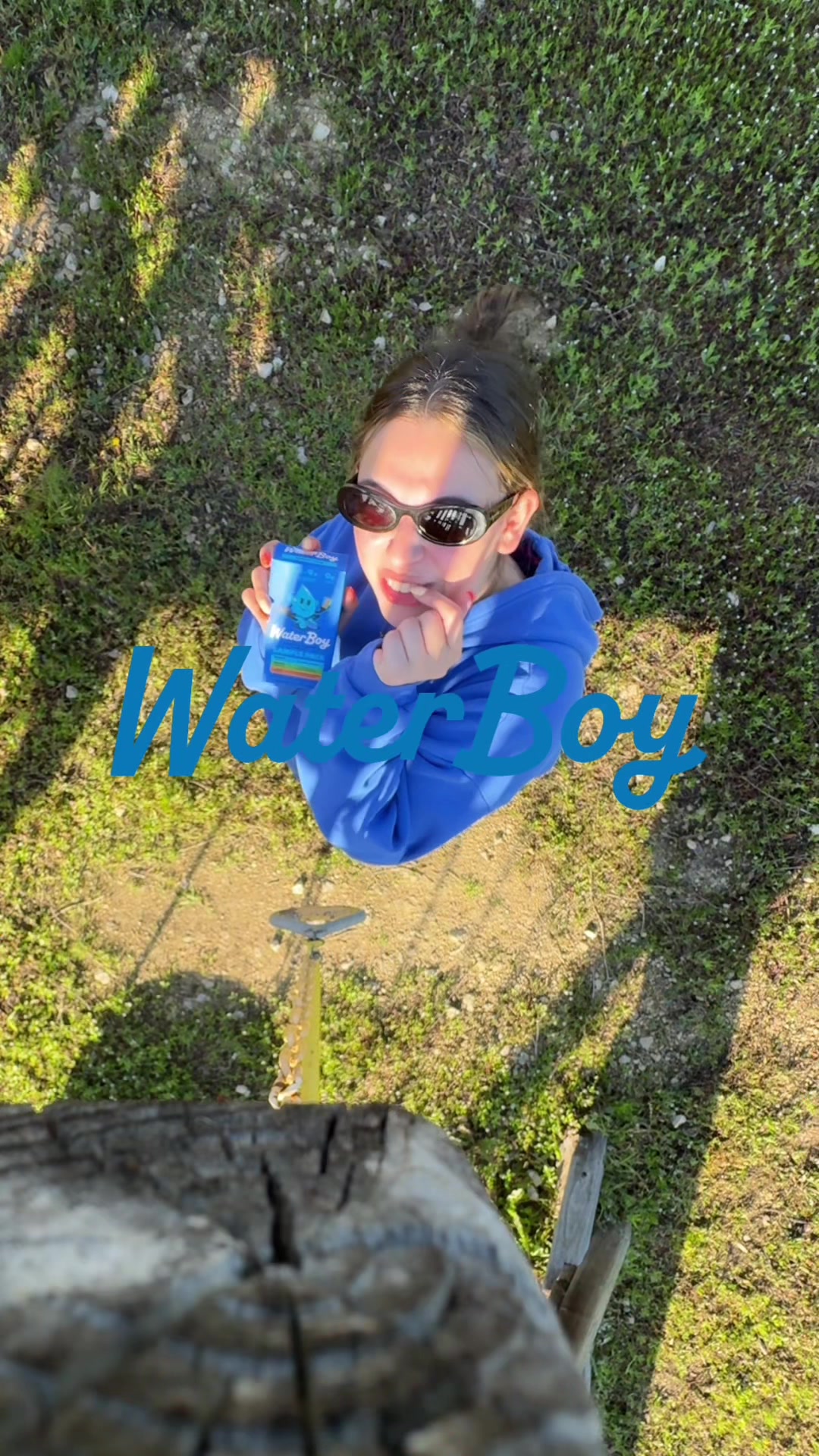
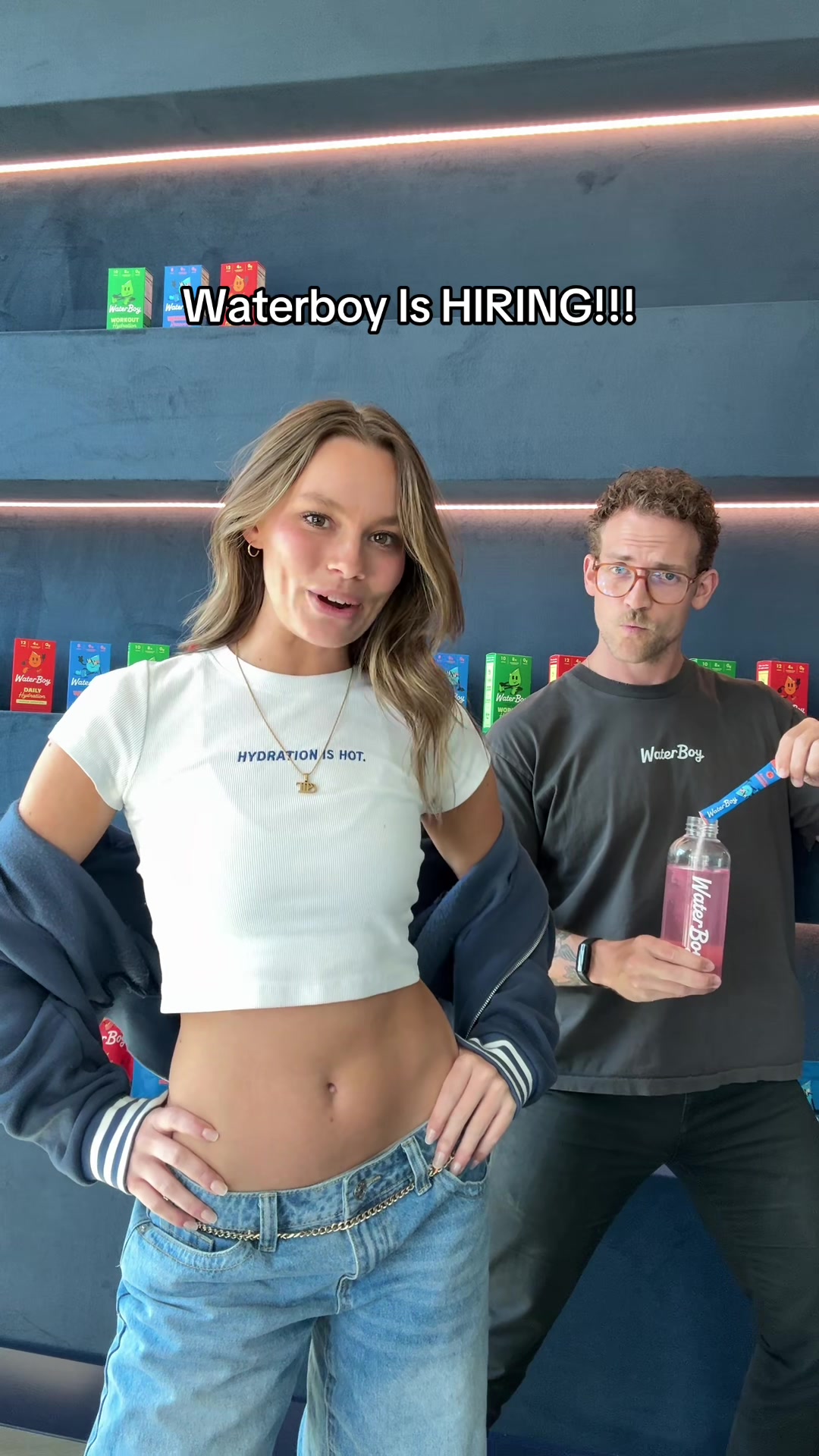
Waterboy's most-engaged organic content is not product demonstration but participation and personality. Its "WATERBOY IS HIRING!!!" internship call pulled 13,511 engagements, and a creator's contest entry tagging @waterboycan and Madi Marotta under #WaterboyIntern pulled 14,862, turning a hiring post into its best-performing organic format. Separately, a wedding-themed post from musician @andygrammer ("waterboy royal wedding... that's all") drew 6,178 engagements, tied to organic TikTok content that states plainly, "one of us is marrying the CEO of Waterboy," pulling outside Bachelor Nation-adjacent creators into brand-tagged content with no obvious paid relationship. Against that, straight product demos (a hand pouring powder into a glass, a stick pack held to camera) remain the workhorse of its paid creative but do not match that organic engagement ceiling.
08 Affiliate & partners
How the brand turns creators and partners into a tracked, variable-cost acquisition channel, and how the program is structured.
Its homepage links directly to a dedicated affiliate/partner program page (waterboy.com/pages/affiliate), a live, formal referral lever. Alongside that, its #WaterboyIntern recruitment content functions as an informal ambassador pipeline, turning applicants into brand-tagged creators before they're even hired, rather than a traditional creator-seeding program.
09 The playbook
The channels are not separate. They are one system where each stage feeds the next. Here is the read, then the plays to run tomorrow.
The inferred playbook
Waterboy's loop starts with founder-and-creator visibility, converts on occasion-specific product pages, and compounds through a Bachelor Nation-adjacent network the founders can tap without paying influencer fees.
splitting one hydration category into Daily Hydration, Workout Hydration, and Weekend Recovery formulas lets each product page speak to a distinct search intent and a distinct ad angle, rather than forcing one generic product to answer every use case.
organic content directly referencing a founder's engagement and wedding, plus tagged Cabo-trip content with named creators, generates creator-network reach that an unrelated hydration brand structurally cannot replicate.
Dig deeper+3▾
its 9 Google search ads have run untouched for over a year while its Meta library rotates in new creative waves roughly every few weeks, a split between a "set it and forget it" search layer and a constantly refreshed social layer.
with 92.2% of organic traffic landing on the homepage and its top keywords all variations of its own name, it has no comparison or "best electrolyte for X" content pulling in searchers who don't already know the brand, leaving that demand to LMNT, Liquid IV, and Nuun.
the split between DTC and retail revenue given its reported 10,000+ retail doors, the share of orders on its Skio subscription versus one-time purchase, and any current, verified revenue or order-volume figure beyond historical press estimates.
Bid the Benefit Word, Not Just the Brand
The proofWaterboy's Google search ad pairing "Hydration Multiplier" with its brand name has stayed live for over a year as one of its 9 always-active search ads.
The adaptationWrite one search ad headline that leads with your category's core benefit word (not your brand name) paired with your brand name in the same ad, so you catch both the "what solves this" search and the "who solves it" search in a single ad group. Start with the single benefit term your customers use most in reviews or support messages, not a term you invented internally, and leave it running as long as it holds a positive click-through rate rather than swapping it out on a schedule.
Cost: under $500 · Time to signal: weeks · Works pre-PMF: conditional, it needs some existing search volume for your category to bid into.
Name a Limited Product After a Creator
The proofWaterboy shipped a flavor called "Ken's Juicy Peach," promoted directly by the creator it's named after rather than through a standard sponsorship post.
The adaptationPick one creator or customer who already posts about your product unprompted, and co-name a limited variant, bundle, or flavor after them instead of paying for a one-off sponsored post. Start by messaging three to five people who've organically tagged your brand, and offer them a limited co-named drop in exchange for one launch video, giving them ownership incentive without setting up a full affiliate program first.
Cost: under $500 · Time to signal: days to weeks · Works pre-PMF: yes, provided you already have a few organic mentions to draw from.
Countdown Teaser Before You Reveal Anything
The proofWaterboy's newest Meta test wave runs a multi-day countdown, close-ups of a frosted berry and a lit cherry with copy like "A CHILLING DISCOVERY," ahead of revealing a new flavor, as of 2026-07-14.
The adaptationPost 3-4 short teaser clips counting down to any product or feature launch, showing a tight, unlabeled close-up of the new thing with vague on-screen text rather than any product claim. Post them for free on your own channels first, and only pay to promote the reveal clip itself once the countdown has built some curiosity.
Cost: under $500 (organic countdown, small paid push behind the reveal) · Time to signal: days · Works pre-PMF: yes.
Turn Your Before/After Claim Into a Physical Bit
The proofOne Waterboy ad stages a literal rock-paper-scissors match to visualize "hangovers before Waterboy" versus after, instead of listing symptoms as on-screen text over b-roll.
The adaptationTake your product's single biggest before/after claim and stage it as a small game, race, or duel between two people on a phone camera, instead of a bullet-point comparison graphic. Write the punchline (the "after" moment) first, then build the game backward from it, since the format only works if the payoff lands in the same clip.
Cost: $0 · Time to signal: days · Works pre-PMF: yes.
Split One Product Into Occasion-Based SKUs
The proofWaterboy turned what could be one hydration powder into three separate formulas by occasion, daily, workout, and weekend recovery, each with its own landing page and framing ("what you need after a night out is very different from a workout").
The adaptationIdentify 2-3 distinct occasions your existing customers already use your core product for, and repackage the same or lightly adjusted product into occasion-named SKUs with separate landing pages and copy for each. Start with whichever occasion shows up most often in customer messages or reviews, since occasion-specific pages can rank for and speak directly to intent-driven searches that one generic product page can't.
Cost: under $500 · Time to signal: weeks · Works pre-PMF: conditional, it needs an existing product with proven demand across those occasions first. Not transferable at an earlier stage: the founder's-personal-life amplification (Play 2's proof and the wedding-content engine) depends on a Bachelor Nation-scale personal network the founders already had before launch; a reader without that kind of existing audience should adapt the co-naming mechanic in Play 2 using whatever creator relationships they can build first, not expect the same organic reach.
You just read how Waterboy does it. Tomorrow it is someone else.
Every morning we take one company that is actually growing and break down where its customers come from: the ads still running after a year, the channel doing the real work, and the play you can run this week.
Systemaic · directional intelligence. Traffic, spend, and reach figures are SimilarWeb-style estimates and qualitative reads of public data, not audited numbers. Built on real public receipts.
// teardowns with a similar GTM motion
sources & receipts (2)
Live ad libraries: meta ad library · google ad library
Traffic, spend, and revenue figures are estimates as noted in the report; the links above are the primary public artifacts.