- 01Ship one meme, not one ad
- 02Preorder before you manufacture
- 03Seed a "spotted at" post for every new shelf
- 04Build a small recurring partner roster, not one-off gifting
01 Snapshot
The one-glance read on who they are and how they grow. Each point is verifiable from the receipts above.
Premium hand-sanitizer and fragrance-mist sprays ($10-26) that Church & Dwight acquired for up to $880M in a deal that closed July 2025.
Paid-led on Google and Meta, amplified by retail-tied creator UGC rather than founder-led or community-led motion.
~525K monthly visits (+43.9% over the last 3 months), a ~600-ad Google library with an active ad running up to 689 days, 78 active Meta ads (of a ~289-ad library), and TTM net sales ~$130M as of March 2025.
Peanuts® x Touchland summer collab creatives across image, video, and product-shot formats sit in Meta's active-testing bucket as of 2026-07-28, following the Hello Kitty and Crocs collab drops.
Each new retail placement or licensed collab gives unpaid creators a fresh "find" to film, while a 689-day-and-counting Google branded-search net closes the loop against the dupe-sellers surfacing in those same TikTok feeds.
02 How it unfolded
The order the channels came online. Sequence is strategy: what they did first, and what they layered on once demand existed.
03 Traffic & channel mix
Estimated demand, the channel split behind it, and the keywords and referrers doing the work. Directional modeling, not audited analytics.
Touchland pulls an estimated ~525,459 monthly visits, up 43.9% over the last 3 months. No channel-by-channel breakdown, keyword list, or referrer/competitor data was available for this domain beyond the total and trend, so the growth read here leans on the ad, social, and retail signals covered below rather than a traffic-mix cut.
04 Channel map
Not traffic share. How much weight the growth system actually puts on each channel, with a one-line read on the role it plays.
What drove growth
05 The creative doing the work
Each exhibit shows the actual asset, an X-ray of why it works, a status, and a play you can adapt. This is the heart of the teardown.
The Google library runs roughly 600 ads (directional, capped sample), all 240 sampled ads still active as of 2026-07-28, with genuine longevity behind the "proven winner" label. The Meta library carries ~289 ads (78 sampled, all active), but every dated Meta ad in the sample first appeared June 16-17, 2026, only about 41-42 days before the observation date, so that whole visible set reads as the current push (the Peanuts x Touchland summer wave) rather than proven winners; the longevity signal on Meta isn't established in what's visible here.
Hook: "TOUCHLAND X HELLO KITTY" text overlay on a red-and-pink gradient with a Hello Kitty-branded bottle. Why it works: It reframes a hygiene commodity as a collectible fashion object, tapping the same dynamic Reddit and press coverage independently confirm: kids trading and stockpiling Touchland bottles at school. The IP does the premiumization work a plain product shot can't. Run this play: License or partner with a low-cost, nostalgic IP for a limited-run SKU variant instead of shipping a generic new colorway, the character carries the "worth collecting" story for you.
Hook: A bare "Sponsored / Touchland / www.touchland.com" branded search text ad, no imagery. Why it works: It's the cheapest possible way to hold the top slot on your own brand name, and it matters here because the same TikTok feed carries "the dupes would be better" and Walmart-dupe-hunt content, meaning competitors and resellers are actively contesting that search real estate. Run this play: expanded as Play 5 below.
Hook: A pastel Glow Mist bottle styled against rose petals, borrowing fragrance/skincare photography (a separate text ad carries the "Scented Hand Sanitizer - Touchland Hand Sanitizing Mist" headline). Why it works: The styling borrows straight from fragrance/skincare photography rather than functional product shots, which is the visual half of turning a $1 hygiene item into a $16-22 beauty purchase. Run this play: Shoot utilitarian products with fragrance-category styling (soft backdrop, ingredient props, no clinical framing) to justify a premium price in a commodity category.
The proven Google winners sell the brand name and Hello Kitty collectibility on a near-two-year runway; the current Meta/Peanuts wave ("PEANUTS | touchland summer collab" product shots, Snoopy-branded bottles in coconut halves) and the Attentive-routed teaser ads are testing whether a second character license repeats that same UGC bump.
The Peanuts collab teaser ads ("Peanuts® x Touchland arrives soon," first shown June 23 and 25, 2026) point to touchland.attn.tv, an Attentive SMS-capture page, rather than the storefront, building an opt-in waitlist ahead of the drop. Once the set went live on June 29, 2026, the same campaign's follow-up ads ("Just dropped: Peanuts® x Touchland") swap the destination to touchland.com product pages, so the funnel splits cleanly into a pre-launch capture stage and a post-launch conversion stage.
Landing pages carry consistent architecture: the hand-sanitizer page shows $10-20 price points with a bundle set offered near those same prices, the fragrance-mist page runs $20-26, and the Peanuts set page bundles the $10 sanitizer with $16-20 mist SKUs. Every page offers "subscribe & save" through Recharge, Touchland's subscription-commerce layer, positioning the higher-ticket fragrance mists as the upsell that pulls buyers from a $10-12 sanitizer trial into a recurring order.
- Running
- 41 days (longevity = it's converting)
- Hook
- On-screen text: "touchland" and "fresh and breezy". Visual: A hand holding a white and orange rectangular product against an orange mesh fabric, with a blue sky in the background.
- Audience
- The visual of a fit, shirtless man in an outdoor setting, combined with scent notes like "Crisp Green Grass" and "Tennis Ball Accord", targets active individuals who value freshness and a sporty aesthetic. The product is also labeled "hydrating body & hair fragrance mist", indicating a target audience interested in personal care beyond just scent.
Why it works. Matches sensory adjectives to matching visual textures, mesh fabric and open sky, so the scent claim feels shown, not stated.
Sensory-focused text overlays (0:01-0:07): The video explicitly lists "TOP NOTES", "HEART NOTES", and "BASE NOTES" with specific scent descriptions like "Crisp Green Grass", "Tennis Ball Accord", and "Breezy Musks". Match your product's sensory claim words to a physical texture or setting in the shot instead of relying on words alone.
- Running
- 41 days (longevity = it's converting)
- Hook
- "touchland charged and bold" on-screen text over a close-up shot of a green and white rectangular product bottle on a sandy surface.
- Audience
- The visual of a young, active person skateboarding and the product being a 'PERFORMANCE BODY SPRAY' suggests it targets individuals who are active, modern, and value personal care that aligns with a dynamic lifestyle.
Why it works. Uses a close sandy product shot with an energetic two-word tagline to position the spray as gear for an active, confident user.
Visual and textual emphasis on product attributes at 0:00-0:02 with "charged and bold" and the product name "POWER ESSENCE". Pair your brand name with two punchy adjectives describing the feeling you're selling, not the product's function.
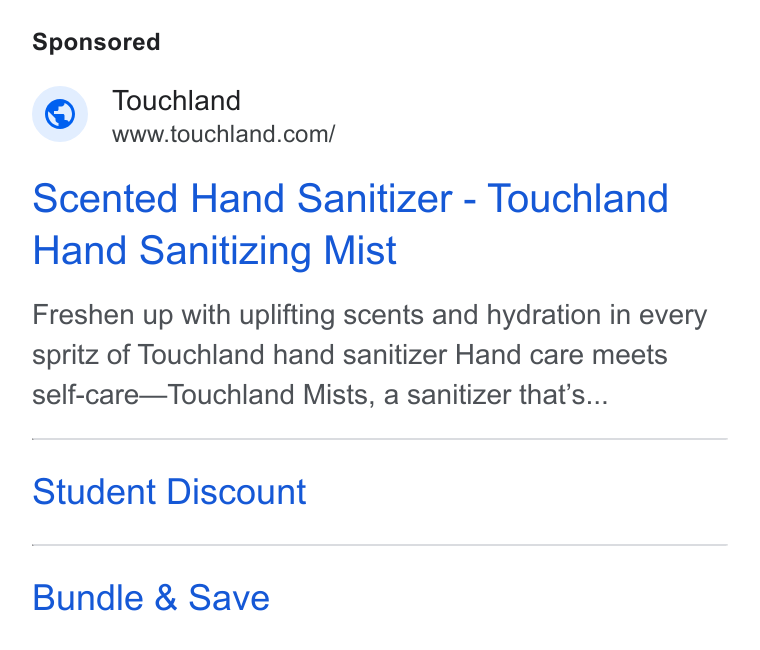
- Running
- 642 days (longevity = it's converting)
- Hook
- Sponsored" text at the top, followed by the Touchland logo and website, then the headline "Scented Hand Sanitizer - Touchland Hand Sanitizing Mist"
- CTA / offer
- Student Discount, Bundle & Save
- Audience
- Students (via 'Student Discount') and value-conscious buyers (via 'Bundle & Save'), as well as those interested in premium, scented personal care products.
Why it works. Leads the search headline with the product upgrade ahead of the brand name to capture generic-intent searchers.
Headline focuses on product differentiation: "Scented Hand Sanitizer - Touchland Hand Sanitizing Mist" Put your product's category upgrade before your brand name in search headlines targeting generic searches.
Show 7 more exhibits
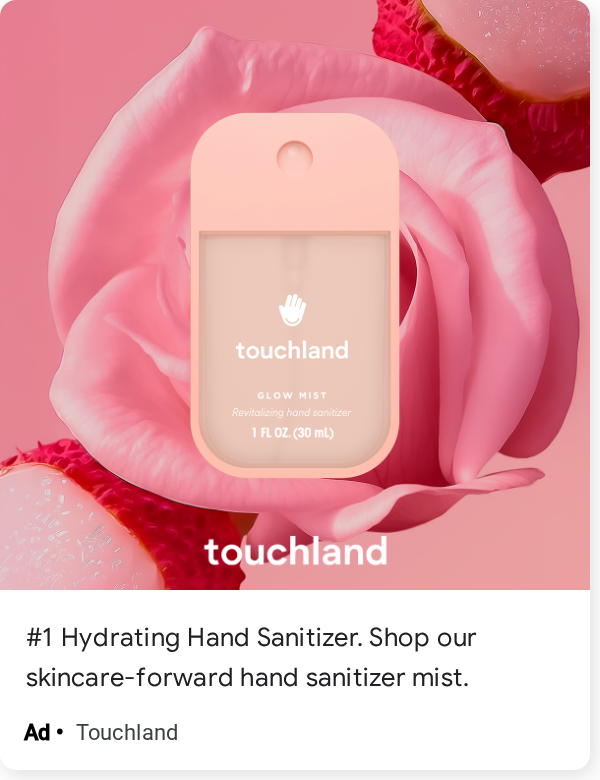
- Running
- 644 days (longevity = it's converting)
- Hook
- A light pink hand sanitizer bottle with 'touchland' and 'GLOW MIST Revitalizing hand sanitizer 1 FL OZ. (30 mL)' on it, centered against a background of pink rose petals and sliced red fruit.
- CTA / offer
- Shop our skincare-forward hand sanitizer mist.
- Audience
- Individuals interested in premium personal care products, indicated by the 'skincare-forward' language and the aesthetic presentation of a hand sanitizer.
Why it works. Shoots the Glow Mist bottle against rose petals and cut fruit so the revitalizing name on the label reads as literally true.
Prominent product display with brand name and key benefits on the product itself, as seen on the hand sanitizer bottle: 'touchland', 'GLOW MIST', 'Revitalizing hand sanitizer'. Name a product variant after its benefit and photograph it against the literal ingredients that back up that name.
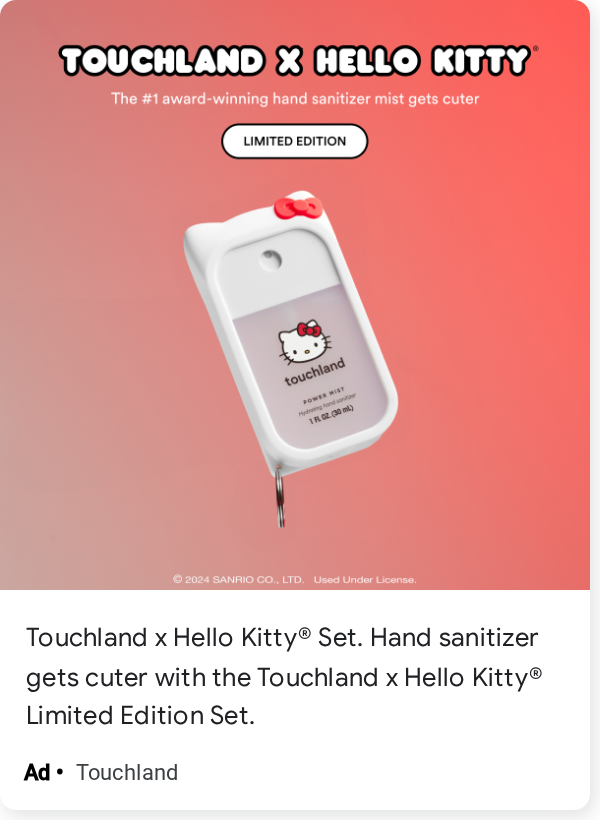
- Running
- 488 days (longevity = it's converting)
- Hook
- "TOUCHLAND X HELLO KITTY" text overlay on a red and pink gradient background with a white hand sanitizer bottle featuring Hello Kitty.
- Audience
- Individuals who appreciate popular culture collaborations, especially Hello Kitty fans, and those interested in premium or aesthetically pleasing personal care items.
Why it works. Turns a limited collab into the whole visual, borrowing Hello Kitty's fanbase to sell a low-interest category product.
Prominent brand collaboration display: "TOUCHLAND X HELLO KITTY" is displayed at the top of the image. Put your collab partner's name and logo directly on the product itself, not just in the caption, so it reads as a real collab.
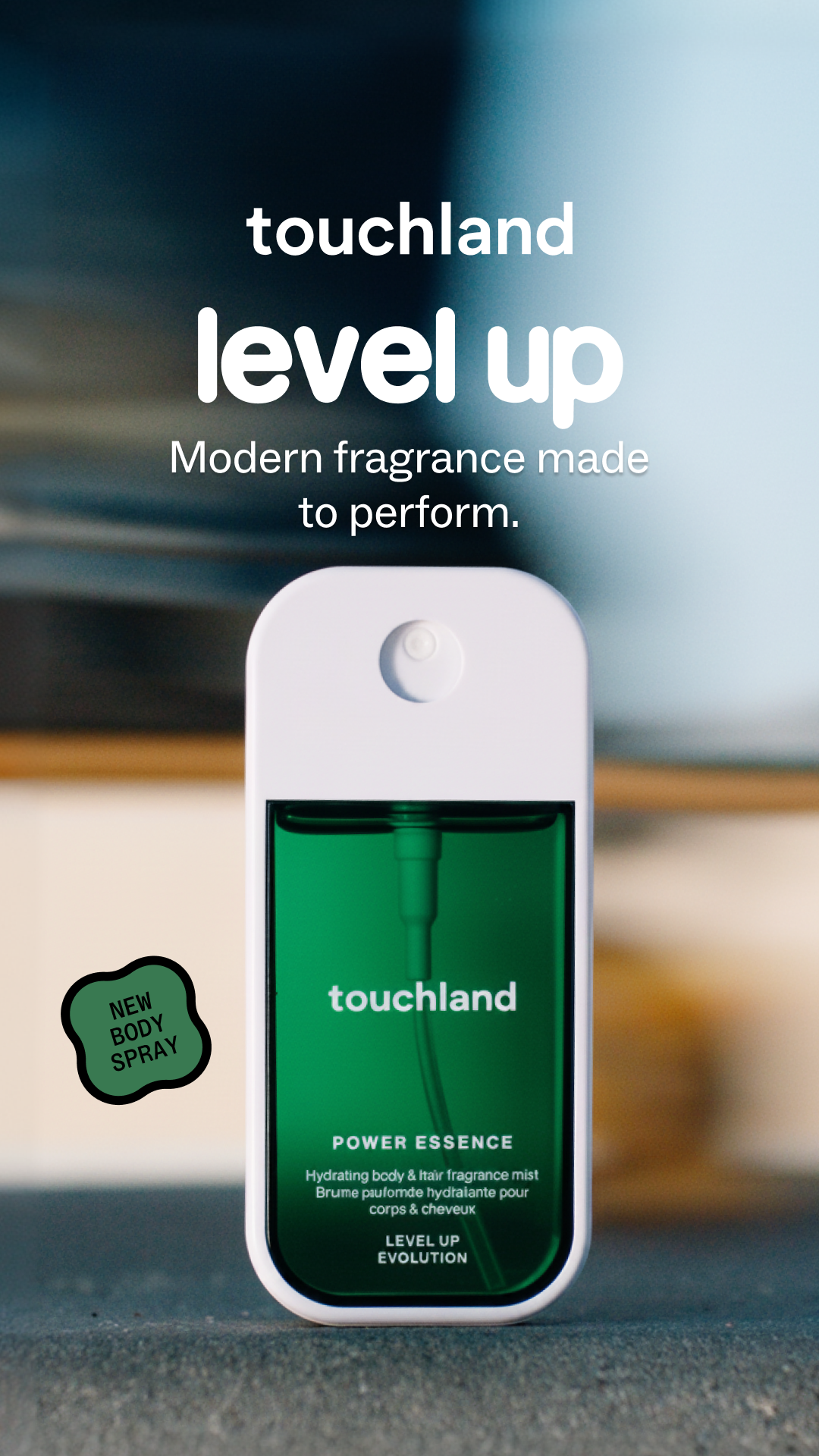
- Running
- 41 days (longevity = it's converting)
- Hook
- "touchland level up" in large white text, with a white and green product bottle in the lower half of the image.
- Audience
- Individuals interested in modern, high-performance personal care products, indicated by phrases like "Modern fragrance made to perform" and "LEVEL UP EVOLUTION."
Why it works. Frames a new product line as a status upgrade for existing customers rather than a separate purchase decision.
Prominent new product announcement with a visual badge: "NEW BODY SPRAY" in a green, blob-shaped badge on the left side of the image. Describe a new line extension as an upgrade to what customers already own, not as an unrelated new product.
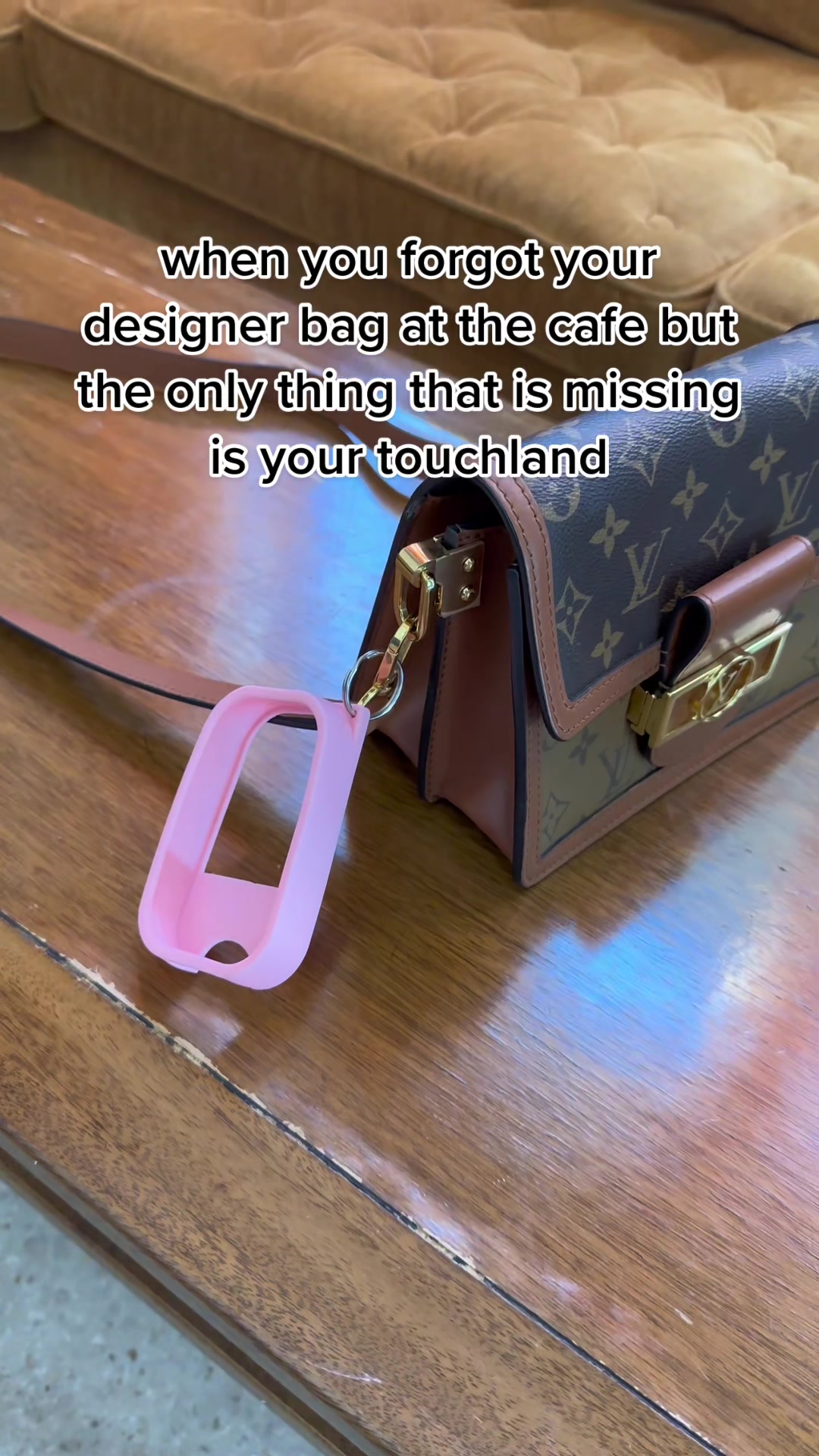
- Hook
- Visual: A cafe setting with a woman sitting at a table in the background. A brown wooden table is in the foreground with a designer bag on it. Text overlay: "when you forgot your designer bag at the cafe but the only thing that is missing is your touchland". Audio: Upbeat, electronic music.
- Audience
- The presence of a designer bag and the cafe setting suggests a target audience that values luxury items and a certain lifestyle.
Why it works. Positions the product as more essential than a designer bag for a luxury-minded audience, using a common cafe mishap as the setup.
Relatable scenario with a twist (0:00-0:03): "when you forgot your designer bag at the cafe but the only thing that is missing is your touchland" Write a one-line forgot-X-but-not-Y scenario where Y is your product, and post it as plain on-screen text over a lifestyle shot.
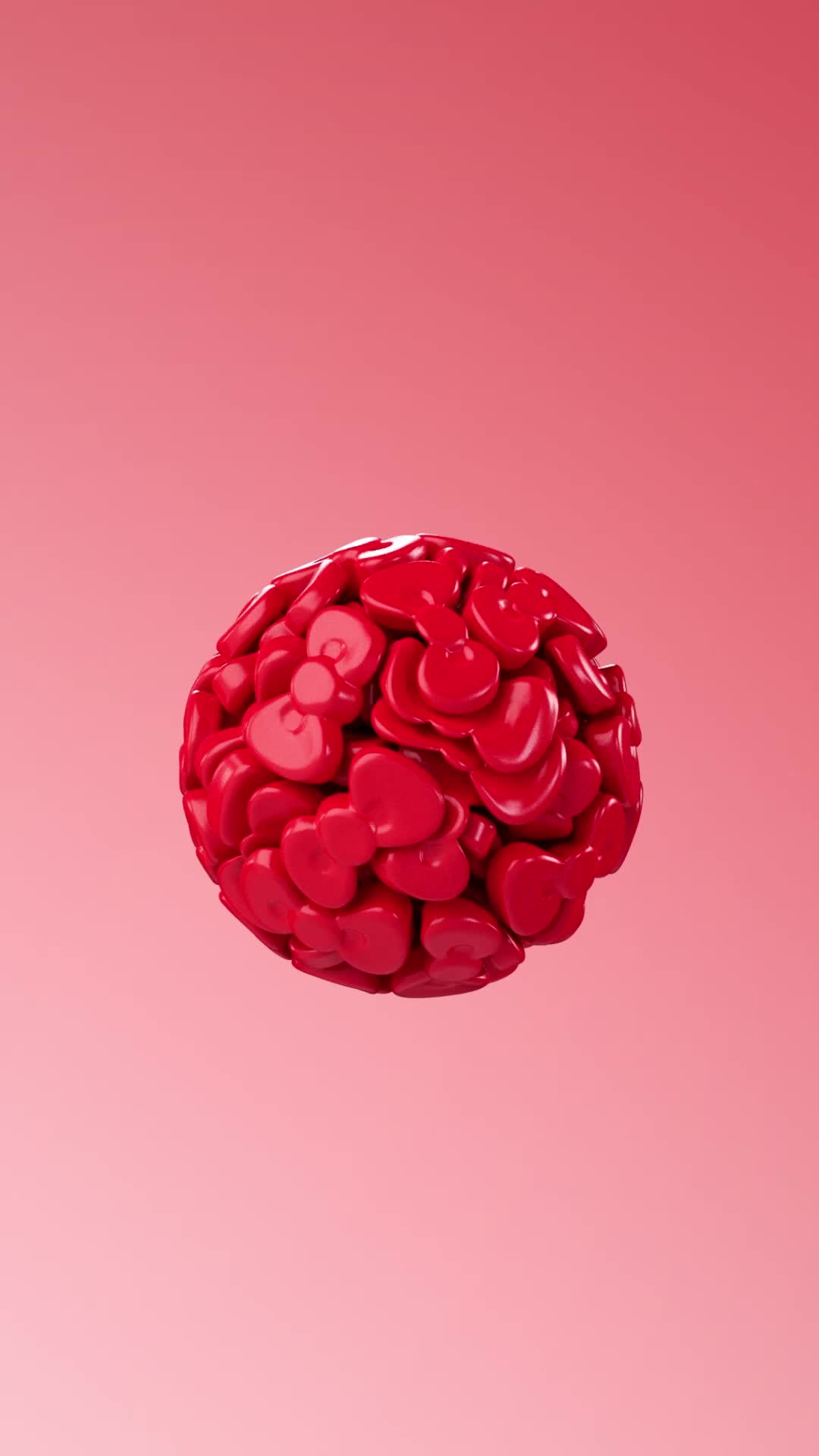
- Hook
- Visual: A sphere made of numerous small, shiny red bow shapes rotates slowly against a solid light pink background. Audio: Upbeat, electronic music begins.
- Audience
- Individuals who appreciate cute, branded, and aesthetically pleasing personal care items, particularly fans of Hello Kitty.
Why it works. Opens on an abstract rotating sphere of bow shapes before the cut to product, using pure visual novelty to carry a co-branded reveal.
Animated product reveal (0:03-0:05) Build a short abstract motion loop out of your product's core visual motif, then cut to the product itself as the reveal.

- Reach
- 143 upvotes · 80 comments · r/Costco
A community is already discussing this in r/Costco. Show up there authentically and answer the thread before a competitor does.
Who amplifies them
Beyond the brand's own account, a roster of tagged creator partners carries real reach: @jacknaunau posted "#TouchlandPartner #TouchlandPerformanceCollection" content at 202,887 engagements, @emily_outside1's untagged viral clip hit 158,527, and Alabama Barker posted a branded "Chief Misuse Office" bit at 87,963, plus smaller posts from @Morgan (B&M store finds) and several grocery "finds" creators (@costcoaisles, @vanessa) in the roughly 900-25,000 engagement range. Reddit adds unpaid community amplification: r/Costco threads discuss Touchland showing up on shelves and an r/Sephora thread debates whether it's worth the price, while r/Anticonsumption and a critical ingredient-review blog (Illuminate Labs) push back on price and formula, a genuine mixed-sentiment thread rather than one-sided hype.
06 Organic & video
The organic content engine: the videos, creator posts, and community presence earning attention without paid spend.
The brand's own TikTok account carries the biggest organic swings: a 2023 meme-style post captioned "the audacity 🫠 #touchland" pulled 1.86M engagements on pure relatability with no product pitch, while the October 2024 "Meet the limited edition Touchland x @hellokitty set" launch post drew 339,852. That comedic, low-production format sits alongside straight collab-announcement posts as the two formats that reliably outperform standard product demos. Instagram runs the same content types at a fraction of the scale (hundreds to low thousands of engagements), functioning as a secondary feed rather than a growth driver.
07 Affiliate & partners
How the brand turns creators and partners into a tracked, variable-cost acquisition channel, and how the program is structured.
The specific creator posts sampled here didn't carry visible affiliate links or TikTok Shop tags, but Touchland does run an ambassador/affiliate program and a TikTok Shop, so treat the retail-and-gifting motion below as what's dominant in this sample rather than the whole partner picture. At this stage, with wholesale distribution through Sephora and Ulta already in place, Product gifting and retail-placement virality do a large share of the amplification work here, on top of the affiliate/ambassador layer.
08 The playbook
The channels are not separate. They are one system where each stage feeds the next. Here is the read, then the plays to run tomorrow.
The inferred playbook
Touchland's loop pairs a comedic, low-production TikTok organic layer that manufactures cultural moments with an always-on Google branded-search net and a rotating cadence of licensed collab drops that keep both the retail shelf and the creator feed stocked with new reasons to post.
Hello Kitty (2024), Crocs (the brand's first fashion licensing deal, July 2025, an 11,000+ shopper waitlist that sold out almost immediately), and Peanuts (the current 2026 test wave) each restart the creator cycle around a fresh, scarce SKU.
Sephora endcap growth, reported at 163 locations en route to roughly 1,000, feeds the unprompted "spotted at Costco/Walmart/B&M" creator content that rides each new shelf win at no acquisition cost.
Dig deeper+2▾
The ~600-ad, up-to-689-day Google library exists largely to hold branded and near-branded search against the dupe-sellers already visible in the same TikTok feed that carries Touchland's own UGC.
the DTC-versus-Sephora/Ulta wholesale split of the ~$130M net sales figure, blended paid-versus-organic customer acquisition cost, and the repeat-purchase or subscription attach rate on the Recharge subscribe-and-save program.
Ship one meme, not one ad
The proofTouchland's highest-engagement organic post ever (1.86M engagements) was a plain relatable joke with no product demo, next to which its polished collab-launch posts underperform by an order of magnitude.
The adaptationPost one low-production, funny or relatable clip about the everyday annoyance your product solves, filmed on a phone with on-screen text captions, no logo-forward branding, no script. Post it from your brand account the same way Touchland did, and judge it purely on shares and comments, not likes, since that format's payoff is reach, not polish.
Cost: $0 · Time to signal: days · Works pre-PMF: yes
Preorder before you manufacture
The proofTouchland's US brand launched via a 2018 Kickstarter that hit 450% of its ~$67K goal within 24 hours from 1,300 backers, before it ever reached Sephora or Ulta shelves.
The adaptationBefore committing to inventory on a new physical SKU, build a simple preorder page with a visible funding goal set low enough to clear fast, then use hitting that goal within the first day as the social-proof headline in your first wave of ads and posts.
Cost: under $500 · Time to signal: weeks · Works pre-PMF: yes
Seed a "spotted at" post for every new shelf
The proofUnprompted creator posts like a Costco 4-pack unboxing and a Walmart aisle find ride Touchland's retail expansion (163 Sephora endcaps growing toward roughly 1,000) at zero paid cost.
The adaptationThe day your product lands on a new shelf or marketplace listing, whether that's one boutique or a national chain, film or commission a plain "found this at [store]" post tagging the retailer by name. Send the same brief to two or three small finds-style creators in your category so the moment gets covered from more than one account.
Cost: $0 to under $500 · Time to signal: days to weeks · Works pre-PMF: yes, provided you already have at least one real retail or marketplace placement to point the camera at.
Build a small recurring partner roster, not one-off gifting
The proofCreator posts tagged "#TouchlandPartner" (202,887 engagements from one such post) show a repeat-appearance structure rather than a single unboxing, giving the partner a running bit ("Chief Misuse Office") instead of a one-time mention.
The adaptationPick three to five creators already talking about your category and offer them a recurring role, a consistent hashtag and a recurring gifted drop, so their audience starts to expect and follow the series instead of seeing one sponsored post and moving on.
Cost: $0 to under $500 (product gifting) · Time to signal: weeks · Works pre-PMF: yes
Run a permanent, low-bid branded search campaign
The proofTouchland's longest-running active Google ad has held for 689 days as of 2026-07-28, a bare "Sponsored / Touchland" text ad, sitting inside a roughly 600-ad library that exists in part to hold branded search against dupe-sellers surfacing in the same TikTok feeds as Touchland's own content.
The adaptationSet up a minimum-bid Google Search campaign on your own brand name and its close misspellings, and leave it running indefinitely rather than as a time-boxed test. It's typically the cheapest traffic you can buy, and it keeps resellers or copycats from buying the top slot on searches for your own name once you have any.
Cost: under $500 · Time to signal: days · Works pre-PMF: yes, though it only earns its keep once someone is actually searching your brand name, so it's most useful once you have any organic awareness at all. Not transferable at an earlier stage: the licensed-IP collab cadence (Hello Kitty, Crocs, Peanuts) requires real licensing budget and negotiating leverage a pre-PMF founder won't have, and the 600-ad, 150-plus-ad paid libraries assume a media budget that comes after product-market fit, not before it. Adapt the underlying mechanics in the plays above rather than the scale versions.
You just read how Touchland does it. Tomorrow it is someone else.
Every morning we take one company that is actually growing and break down where its customers come from: the ads still running after a year, the channel doing the real work, and the play you can run this week.
Systemaic · directional intelligence. Traffic, spend, and reach figures are SimilarWeb-style estimates and qualitative reads of public data, not audited numbers. Built on real public receipts.
// teardowns with a similar GTM motion
sources & receipts (19)
Live ad libraries: meta ad library · google ad library
Researched facts: Church & Dwight acquired the Touchland brand: $700M at closing (cash + restricted stock) p · Touchland's trailing-twelve-month net sales at time of acquisition: ~$130M net sales (TTM · Touchland is Church & Dwight's eighth power brand and is #2 in category: Positioned as C&D · Founders named in the acquisition announcement: Andrea Lisbona (Founder/CEO) and Ruggero G · Founding origin and timeline: Founded 2014 in Barcelona, Spain by Andrea Lisbona; US launc · Kickstarter campaign that launched the US brand: Raised ~$67K from 1,300 backers in 2018 ( · 2024 annual revenue: Over $100M in 2024, up more than sixfold from 2022 (roughly 2,200% gr · Target and Sephora expansion with anti-aging line: Touchland launched its Glow Mist anti-a · Pricing tiers at Ulta: Power Mist Hydrating Hand Sanitizer (13 scents): $10-$12; Glow Mist · Touchland x Crocs collaboration (first fashion licensing deal): Limited-edition CROCS x TO · Featured in DTC Newsletter's spotlight coverage: Touchland x Crocs collaboration was cover · Full-funnel Meta/paid social creative campaign for Body Mist launch: Agency WITHIN execute
Community threads: Sephora Beauty Insider Community: Sephora community reviewer gives a mixed 3-star verdict: · Sephora Beauty Insider Community: In a Sephora thread praising the brand, a reply pushes b · Illuminate Labs (ingredient-review blog): A health-focused review blog is harshly critical · New York Post (syndicated to AOL): Coverage of the teen/tween trading craze quotes a 10-ye · Lemon8: A Lemon8 reviewer likes the look but flags the entry price as the main barrier for
Traffic, spend, and revenue figures are estimates as noted in the report; the links above are the primary public artifacts.