- 01Re-share, don't relaunch
- 02Seed one job-persona, not "creators" broadly
- 03Turn a free micro-tool into an ad landing page
- 04Let affiliates run their own paid search
01 Snapshot
The one-glance read on who they are and how they grow. Each point is verifiable from the receipts above.
A freemium social media scheduling and automation platform (Buffer/Hootsuite-style) for solo operators and small agencies, pulling ~94,355 monthly visits as of 2026-07-28.
Creator-led, with a founder-run Reddit/build-in-public layer underneath.
~94,355 monthly visits (-2.4% over the last 3 months); 9 of 25 collected Google ads active as of 2026-07-28, longest-running 399 days; founder's LinkedIn at 4,063 followers; bootstrapped since 2018 with ~$300K cumulative revenue, which extrapolates to a rough estimate of low-to-mid four-figure to low five-figure monthly revenue, not a verified current figure.
As of 2026-07-28, two new Google search ads had been live for under two weeks (since 2026-07-19 and 2026-07-20), alongside an image-ad experiment running since 2026-04-27.
The company's real growth loop is a founder who keeps re-pitching the same product to builder communities every year or two rather than one big launch, paired with a decentralized wave of TikTok creators, concentrated in the virtual-assistant and scriptwriting niche, who adopted the tool for job-hunting content and kept posting about it, with no evidence found of paid seeding either way.
02 How it unfolded
The order the channels came online. Sequence is strategy: what they did first, and what they layered on once demand existed.
03 Traffic & channel mix
Estimated demand, the channel split behind it, and the keywords and referrers doing the work. Directional modeling, not audited analytics.
SocialBu draws an estimated ~94,355 monthly visits, down 2.4% over the trailing 3-month window captured here. No channel-level split, keyword list, referrer set, or competitor set was captured in this pull, so the mix read below leans on the owned, creator, and paid signals in the rest of this report rather than a SimilarWeb breakdown.
04 Channel map
Not traffic share. How much weight the growth system actually puts on each channel, with a one-line read on the role it plays.
What drove growth
05 The motions doing the work
For founder-led SaaS the breakdown shifts from ads to traction: where the first users came from, how the founder grows it in the open, and the compounding organic surface.
SocialBu's traction didn't come from one breakout debut, it came from the founder returning to the same builder communities, Reddit and IndieHackers, launch after launch, years apart.
Founder Usama Ejaz posted a launch note in r/advancedentrepreneur in January 2023 ahead of a planned ProductHunt launch the next day, but the thread pulled only 2 upvotes and 3 comments, a thin result with no independent ProductHunt traction data to confirm how that launch performed.
In June 2025, over two years later, Ejaz posted "SocialBu - The All-In-One Social Media Management Tool (and we're looking for feedback!)" to r/indiehackers, framed explicitly as "(re)share" after "quietly building and iterating for a while." That post pulled 43 upvotes and 16 comments, the single strongest distribution moment in the evidence.
Dig deeper+2▾
About seven weeks later, a SideProject post pitched the product's API specifically rather than repeating the general pitch, though it drew only 1 upvote and 1 comment.
A June 2026 Reddit thread in r/SocialMediaSchedulers asking "best SocialBu alternative?" shows the product still surfacing in comparison searches roughly a year after the IndieHackers push, evidence the re-share moment left a lasting footprint rather than a one-off spike.
The build-in-public work here is personal and low-reach rather than audience-first: Ejaz posts constantly, but almost nobody is watching yet.
Post here, in this order of payoff: r/indiehackers (43 upvotes, 16 comments on the feedback-framed re-share, by far the best result), r/advancedentrepreneur (2 upvotes on the original launch note), and r/SideProject (1 upvote on an API-specific pitch).
Ejaz's personal account sits at 399 followers against 10,898 posts, a bio reading "Building @socialbuapp," high cadence with almost no audience behind it yet.
Dig deeper+2▾
His LinkedIn profile has 4,063 followers and states his co-founder title directly, giving it more raw audience than X even without matching post-level detail in evidence.
Co-founder Ayesha Awan surfaces in a SocialBu-produced podcast episode discussing startup life and AI, an owned-content appearance rather than a personal build-in-public account.
The strategic layer here is pairing free utility pages with paid search, not a scaled organic program.
Several Google ads point directly at pages like a free emoji/symbol generator and a "What Does Vlog Under Vlogging Mean?" blog glossary entry rather than the homepage, using top-of-funnel utility content to catch cold search traffic before pitching the product.
A chunk of the 9 active ads (of 25 collected as of 2026-07-28) are plain "Sponsored SocialBu, www.socialbu.com" units with no creative beyond the logo, functioning as brand-term protection against alternative-seeking searchers like the one seen in the r/SocialMediaSchedulers thread above.
Dig deeper+2▾
Two of the collected Google ads for socialbu.com are attributed to advertiser names other than SocialBu LLP, IT Solutions FZCO and Brandon M Allen Funy LLC, suggesting partners recruited through the affiliates page are bidding on paid search themselves rather than just dropping referral links.
A two-episode "SocialBu Podcast" pulled 322 and 631 views, a real but small content investment compared to the ad and creator activity above.
06 Paid ads
This founder-led SaaS also runs paid acquisition. Here are the live ads doing the work, each with the X-ray and a play you can adapt.
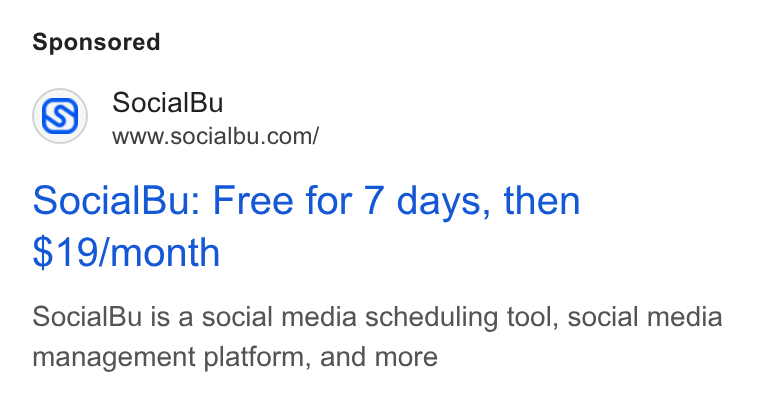
- Running
- 399 days (longevity = it's converting)
- Hook
- SocialBu: Free for 7 days, then $19/month
- CTA / offer
- Free for 7 days, then $19/month
- Audience
- Individuals or businesses looking for social media management solutions, indicated by the text "SocialBu is a social media scheduling tool, social media management platform, and more."
Why it works. Removes the biggest objection, hidden pricing, by stating trial length and monthly cost directly in the headline for price-sensitive buyers.
Clearly state the offer and pricing upfront: "SocialBu: Free for 7 days, then $19/month" Put your trial length and exact post-trial price directly in your ad headline instead of hiding it behind a click.
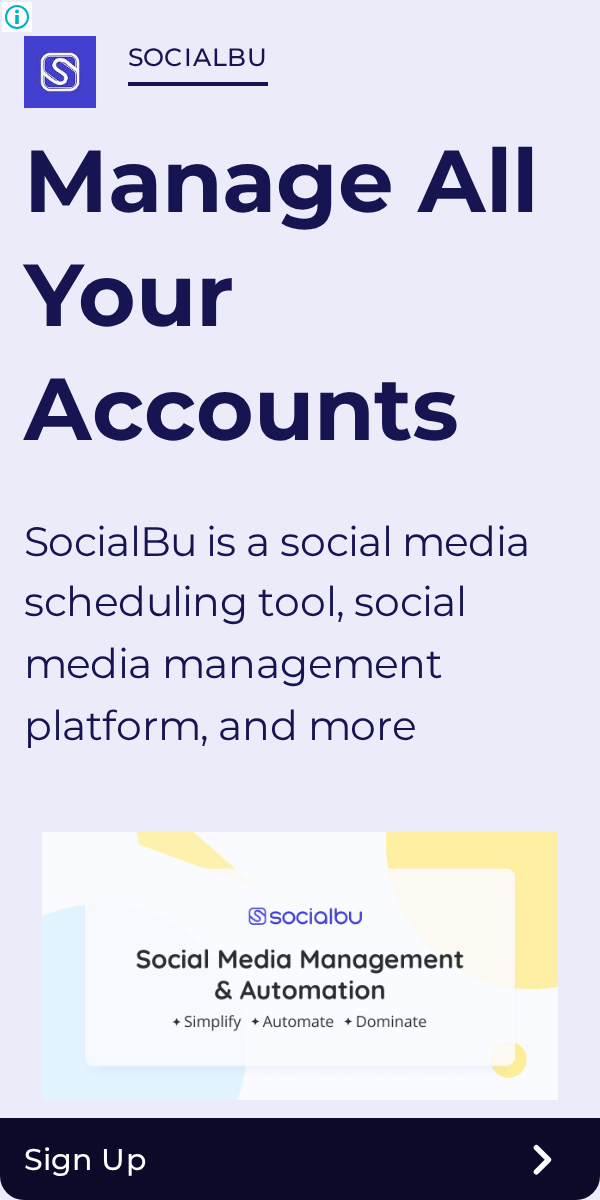
- Running
- 215 days (longevity = it's converting)
- Hook
- Visual: A blue square with a white stylized 'S' logo, next to the word "SOCIALBU" with an underline. Below this, large dark blue text reads "Manage All Your Accounts".
- CTA / offer
- Sign Up
- Audience
- Individuals or businesses managing multiple social media accounts, indicated by the headline "Manage All Your Accounts" and the description of the product as a "social media scheduling tool, social media management platform".
Why it works. Puts the broadest possible benefit, managing every account in one place, right in the headline for anyone juggling multiple platforms.
Prominent headline stating a key benefit: "Manage All Your Accounts". Put your product's single broadest benefit as the entire headline text, skip features and taglines.
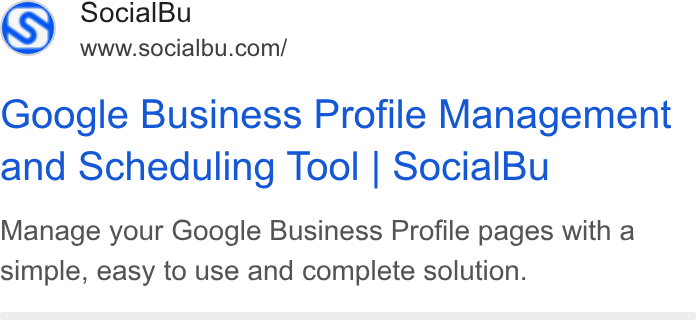
- Running
- 159 days (longevity = it's converting)
- Hook
- SocialBu www.socialbu.com/ Google Business Profile Management and Scheduling Tool | SocialBu
- Audience
- Small to medium business owners or marketing managers who manage Google Business Profiles, indicated by the direct mention of 'Google Business Profile Management' and the promise of a 'simple, easy to use and complete solution'.
Why it works. Matches the ad headline to the literal search query business owners type when hunting for a Business Profile tool, a high intent keyword play.
Clear problem/solution headline: "Google Business Profile Management and Scheduling Tool | SocialBu" Write your search ad headline as the literal phrase your buyer would type into Google, not a clever tagline.
Show 3 more ads
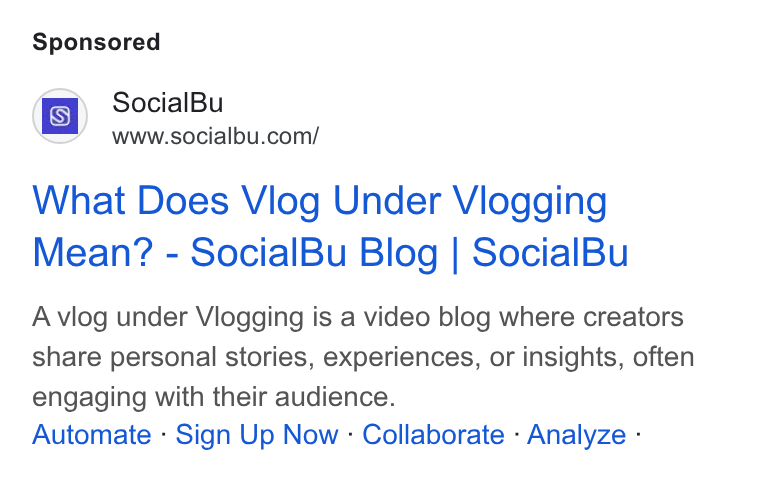
- Running
- 102 days (longevity = it's converting)
- Hook
- Visual: The word "Sponsored" at the top, followed by a small blue and white logo with an 'S' and the text "SocialBu" and "www.socialbu.com/". Below this is the blue headline "What Does Vlog Under Vlogging Mean? - SocialBu Blog | SocialBu".
- CTA / offer
- Sign Up Now
- Audience
- Individuals interested in vlogging and content creation, indicated by the headline "What Does Vlog Under Vlogging Mean?" and the description of vlogs.
Why it works. Uses long-tail content marketing to catch vloggers researching terminology, then introduces SocialBu as the tool behind the answer.
Posing a direct question in the headline: "What Does Vlog Under Vlogging Mean? - SocialBu Blog | SocialBu" Write a blog post answering a specific jargon question your niche audience searches, then run it as a search ad to capture that intent.
- Running
- 102 days (longevity = it's converting)
- Hook
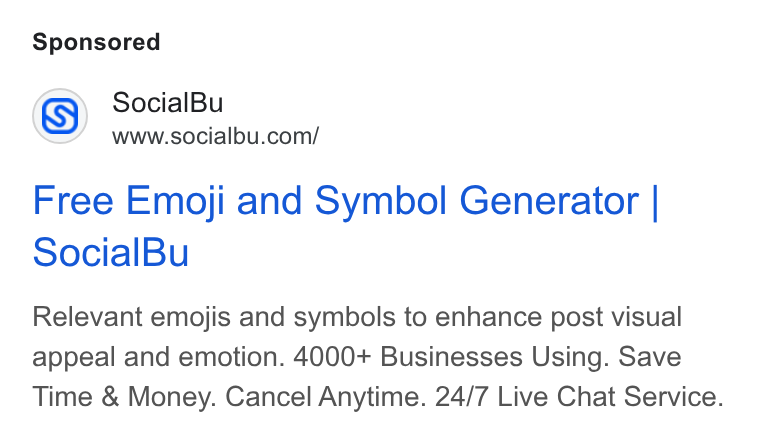
- Sponsored" with a small blue and white 'S' logo next to "SocialBu" and "www.socialbu.com/" below it. The main headline is "Free Emoji and Symbol Generator | SocialBu".
- CTA / offer
- Free Emoji and Symbol Generator
- Audience
- Businesses looking to enhance their social media presence and save time/money, indicated by "4000+ Businesses Using" and "Save Time & Money."
Why it works. A free micro-tool acts as a low-commitment entry point that captures searchers who weren't originally shopping for a full management suite.
Clear value proposition in the headline: "Free Emoji and Symbol Generator | SocialBu". Build one small free tool related to your niche and advertise it standalone as a top-of-funnel entry point.
- Running
- 37 days (longevity = it's converting)
- Hook
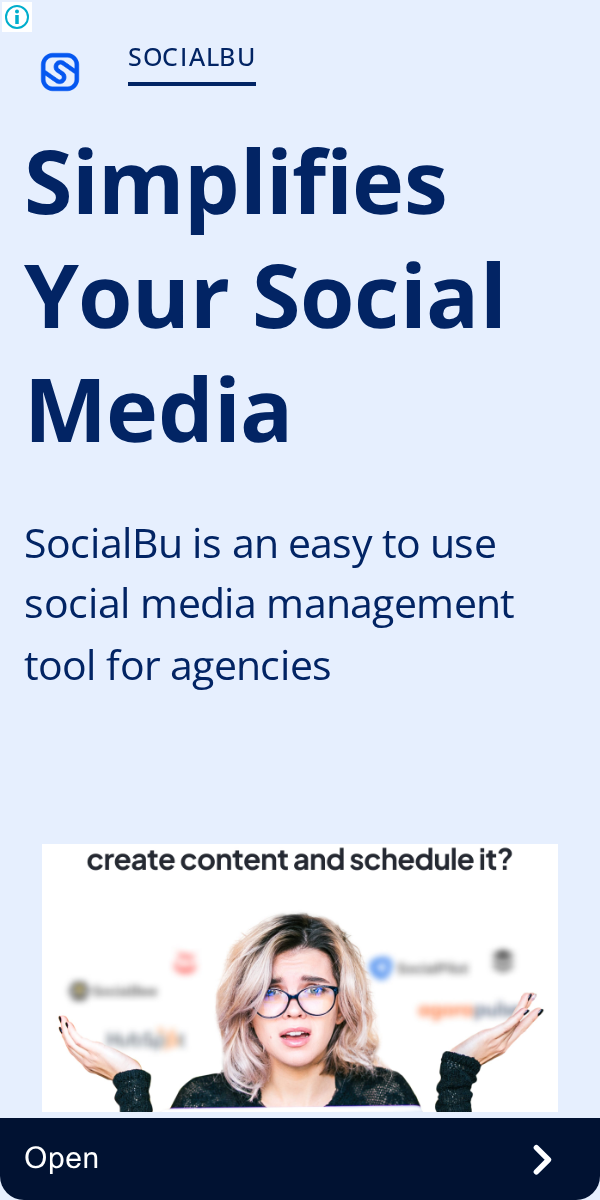
- Visual: A light blue background with a blue 'S' logo and the word 'SOCIALBU' underlined. Text: "Simplifies Your Social Media"
- CTA / offer
- Open
- Audience
- The text "tool for agencies" explicitly targets social media agencies or professionals managing multiple accounts.
Why it works. Speaks to agencies drowning in manual posting by promising simplicity as the sole benefit, paired with the brand mark for recall.
Headline as a direct benefit statement: The large, prominent text "Simplifies Your Social Media" is the first thing a viewer reads. Reduce your headline to one strong verb plus your category so the benefit reads in one glance.
07 The playbook
The channels are not separate. They are one system where each stage feeds the next. Here is the read, then the plays to run tomorrow.
The inferred playbook
Attention starts in two disconnected unpaid channels, converts through a generous free tier, and the affiliate-run paid ads are the one structural surprise tying partners into acquisition directly.
Founder Reddit re-shares and the TikTok virtual-assistant creator wave both bring in attention, but nothing in evidence connects the two, they read as separate, uncoordinated motions rather than one funnel.
The free plan's 10-post lifetime cap next to a $29 entry Starter tier keeps trial-to-paid friction low, though no conversion data confirms how well it actually converts.
Dig deeper+3▾
the ads run under outside advertiser names are consistent with partners bidding their own money on search terms pointing at socialbu.com, a possible unusual extension of a typical affiliate program (unconfirmed).
two podcast episodes and a handful of tool pages is a real but small bet relative to the paid and creator activity, so the compounding surface here is narrower than the creator and Reddit motions above.
free-to-paid conversion off the 10-post free cap, the size and payout terms of the affiliate program, and whether the TikTok creator wave was paid seeding or unprompted organic adoption.
Re-share, don't relaunch
The proofSocialBu's strongest distribution moment wasn't its original launch, it was a 2025 IndieHackers post framed as "quietly building... finally ready to (re)share," which outpulled the original announcement by more than 20x in upvotes.
The adaptationPost your own "still building this, want feedback" thread in the community closest to your product (IndieHackers if it's SaaS, a niche subreddit if it's not) using that same self-deprecating re-share framing instead of waiting for a polished one-shot launch. The framing matters more than the timing: ask for feedback, not upvotes, and expect the comment thread itself to be the win.
Cost: $0 · Time to signal: days · Works pre-PMF: yes
Seed one job-persona, not "creators" broadly
The proofSocialBu's TikTok presence is concentrated in one persona, virtual assistants and scriptwriters building portfolios to land gig work, with a wave of near-identical posts from small accounts landing in October 2025.
The adaptationIdentify the one job-seeker or side-hustle audience who would plausibly use your product to win work, then message 5-10 micro-creators in that exact niche with a script anchored to "use this to build your portfolio and land the job," mirroring that specific pitch rather than a generic product demo.
Cost: under $500 · Time to signal: weeks · Works pre-PMF: conditional, only if there's a genuine job-seeker use case for the product
Turn a free micro-tool into an ad landing page
The proofSocialBu runs Google ads pointing directly at its free emoji generator and a blog glossary page instead of its homepage.
The adaptationBuild one narrow free utility tied to your core value prop (a generator, checker, or calculator), publish it on its own page, and point a small starter search-ad budget at that page rather than a pitch page, since utility pages convert cold search traffic that a homepage pitch loses.
Cost: under $500 · Time to signal: weeks · Works pre-PMF: conditional, needs a genuine utility idea adjacent to the core product
Let affiliates run their own paid search
The proofTwo of SocialBu's Google ads are attributed to outside advertiser names, not the company itself, consistent with affiliates or resellers bidding their own money on search terms pointing at the site (the tie to its affiliate program is inferred, not confirmed).
The adaptationWhen recruiting referral partners, explicitly invite your top affiliates to run their own small search campaigns on relevant long-tail terms with their referral link, turning affiliate recruitment into an extra paid channel you don't have to fund or manage directly.
Cost: $0 to you, the affiliate spends their own budget · Time to signal: weeks · Works pre-PMF: conditional, needs an existing affiliate program with a few active partners, and brand-bidding guardrails so affiliates don't bid up your own exact-match term
Write a different pitch per community
The proofSocialBu used three distinct framings across three communities, a general launch note, a feedback-seeking re-share, and an API-specific pitch, and the feedback-framed version outperformed the generic one by more than 20x.
The adaptationWrite a one-paragraph pitch tailored to each community's actual interest (general audience, feedback-seekers, technical users) instead of copy-pasting one launch post everywhere, matching your ask (feedback, API access, general awareness) to what that specific audience already wants to give.
Cost: $0 · Time to signal: days · Works pre-PMF: yes Not transferable at an earlier stage: the TikTok creator wave and the affiliate-run paid search both assume an existing user base or partner network already using the product, so a pre-launch reader should start with the $0 Reddit re-share and community-segmentation plays first.
You just read how socialbu does it. Tomorrow it is someone else.
Every morning we take one company that is actually growing and break down where its customers come from: the ads still running after a year, the channel doing the real work, and the play you can run this week.
Systemaic · directional intelligence. Traffic, spend, and reach figures are SimilarWeb-style estimates and qualitative reads of public data, not audited numbers. Built on real public receipts.
// teardowns with a similar GTM motion
sources & receipts (16)
Live ad libraries: google ad library
Launch archives: Hacker News: SocialBubble – Unmasking the social media echo chamber · Hacker News: Show HN: SocialBusinessCard – Turn Your Social Profiles into · Hacker News: Show HN: An AI image generator for blog posts · Hacker News: Grappple - - #inspirational - #socialBUCKETLIST - #photo #fe · Hacker News: SocialBus a fault tolerant data collector for social network · Hacker News: Make sure you validate your idea – Interview with Usama Ejaz
Researched facts: SocialBu has no disclosed external funding and is bootstrapped: Ranks 149th of 175 active · SocialBu is self-reported as 100% bootstrapped with roughly $300K in revenue since launch: · SocialBu was founded by Usama Ejaz, an engineer/freelance developer: Usama Ejaz, CEO & Co- · SocialBu's origin was Usama Ejaz scratching his own itch while freelancing and managing cl · SocialBu was founded in 2018 and is described as headquartered in Lahore, Pakistan: Founde · SocialBu's free plan is capped at a lifetime post count, not monthly: 3 connected social a · SocialBu's current three-tier paid structure is Starter/Growth/Agency: Starter $29/mo, Gro · SocialBu holds roughly a 4.5/5 rating on Capterra: 4.5 (sometimes reported 4.6) out of 5 s · SocialBu's stated mission is enabling creators/businesses to manage and automate social me
Traffic, spend, and revenue figures are estimates as noted in the report; the links above are the primary public artifacts.