- 01Stack numeric specs against the category's biggest objection
- 02Seed a discount code per creator instead of one shared affiliate link
- 03Bid on your own brand name and the comparisons customers already make
- 04Document a real day-1-to-day-30 transformation instead of scripting one
01 Snapshot
The one-glance read on who they are and how they grow. Each point is verifiable from the receipts above.
Collagen-infused matcha and coffee (plus newer mocha, decaf, and vanilla coffee variants) for beauty-and-wellness-focused UK consumers, backed by a $70M ARR business as of the July 2026 Series A.
Paid-led, amplified by a decentralized swarm of TikTok creators each running a personal discount code.
$70M ARR as of the July 2026 Series A (reached in 20 months from an April 2024 launch), ~641K estimated monthly visits, and roughly 130 active ads across Google and Meta as of July 17, 2026.
Newest Meta creatives push a fitness/protein angle ("my number one protein hack," "15 grams of protein") over the beauty framing that dominates the proven winners, as of the July 17, 2026 ad pull.
Paid spend and the creator-code swarm are pointed at the same target, brand-name search, rather than run as separate acquisition motions: search ads, TikTok mentions, and organic pages all funnel back to "reformed" as a search term, then convert on two narrow single-SKU landers.
02 How it unfolded
The order the channels came online. Sequence is strategy: what they did first, and what they layered on once demand existed.
03 Traffic & channel mix
Estimated demand, the channel split behind it, and the keywords and referrers doing the work. Directional modeling, not audited analytics.
Traffic sources
Top search keywords
| Keyword | Volume | Weight | CPC |
|---|---|---|---|
| reformed | 13k | $0.39 | |
| reformed matcha | 1.2k | $0.82 | |
| feel reformed | 1.9k | $0.66 | |
| reformed coffee | 1.7k | $0.85 | |
| feelreformed | 1.0k | $1.05 |
Closest competitors by audience
Reformed draws an estimated ~641,023 monthly visits, up 13.7% over the last 3 months. Paid social leads the mix at 23%, paid search follows close behind at 20%, and direct traffic accounts for 18.5%, three channels that together explain nearly two-thirds of all visits. Organic search adds 13.2%, email 10.6%, display 8.8%, and referrals 4.6%; the rest, social organic and AI-chat referrals, totals under 1.5%. The unusually high direct share plausibly reflects the same branded pull visible in search demand: the term "reformed" alone pulls 13,450 monthly searches, dwarfing category terms like "reformed coffee" (1,690) and "reformed matcha" (1,220), which points to people typing the brand straight into a browser after seeing an ad or a TikTok clip rather than clicking through a link. Among referral domains, matchafuel.com stands out as a direct rival (also the exact comparison UK Reddit users raise unprompted), while spacegoods.com and foursigmatic.com sit in the adjacent functional-mushroom-beverage category, showing Reformed competes as much on "functional drink" positioning as on matcha specifically.
04 Organic content
The specific pages earning their organic search traffic, and the pattern behind why they rank. Adapt the format, not the topic.
The top organic pages are overwhelmingly product pages rather than blog content: the collagen-matcha product page alone earns 43.9% of organic visits, the homepage 19.1%, and a matcha-with-creatine variant page 13%, with a blog post on matcha taste (5.5%) and a bundle-builder page (4.1%) rounding out the top five. That taste-focused blog post likely exists to answer the exact skepticism showing up in the Reddit threads below, whether the functional additions ruin the flavor, while the bundle page supports cross-selling across the expanding SKU lineup. All five top-ranking keywords ("reformed matcha," "reformed coffee," "reform matcha," "feel reformed," "matcha collagen") sit at position one, meaning the organic engine here is defending brand-name search rather than capturing new-to-category demand.
Top pages by organic traffic
05 Channel map
Not traffic share. How much weight the growth system actually puts on each channel, with a one-line read on the role it plays.
What drove growth
06 The creative doing the work
Each exhibit shows the actual asset, an X-ray of why it works, a status, and a play you can adapt. This is the heart of the teardown.
The true footprint is roughly 200 Google ads (76 active) and at least 57 Meta ad variations, both as of July 17, 2026. On Meta the longest-running active creative has been live 462 days; on Google the longest-running active ad has run 461 days, both qualifying as genuine proven winners rather than a fresh test wave.
-
Hook: "What if your Matcha could nourish your beauty?" followed by a numeric benefit stack: 10g marine collagen, ceremonial-grade Japanese matcha, Lion's Mane adaptogens. Why it works: it stacks three specific, hard-to-fake numbers instead of vague wellness language, then kills the category's biggest objection directly ("no diluted flavour, no compromised quality"), the exact taste-versus-benefit tradeoff that shows up unprompted in the Reddit threads above. Run this play: expanded as Play 1 below.
-
Hook: "Do you want your skin to glow & look younger?" a UGC talking-head video of a woman spooning matcha powder over glasses of water. Why it works: the rhetorical question forces a yes/no answer that primes vanity-driven urgency, then cuts straight to a real product-in-use demo rather than narration, so the viewer sees exactly how the product is prepared before any sales pitch lands. Run this play: open a product ad with a direct yes/no question naming the single outcome the buyer wants most, then cut immediately to real product-in-use footage with no voiceover setup.
-
Hook: "UK's Favourite Collagen Drink - Glowing Skin & Strong Joints" (Google search ad text). Why it works: it intercepts people already typing category or brand terms into Google, converting existing search intent rather than creating demand from scratch, the reason it has stayed active for 461 days. Run this play: expanded as Play 3 below.
Also in their winning rotation (same 232 to 462-day proven-winner range as the deep-dives above):
- [b-roll voiceover] · "This is what you'd have to eat every single morning to have the same benefits as Reformed Collagen Coffee" · egg-comparison bold claim
- [before-after] · "DAY 1 OF Collagen Coffee" / "DAY 30 OF Collagen Coffee" · transformation angle
- [text-heavy] · "The Perfect Harmony Matcha + Collagen" alongside Vogue, GQ, Wired, and Guardian logos · press social-proof
- [product shot] · "The Biggest Deal of the Year" · urgency/promo
- [UGC talking-head] · "So I've been drinking this collagen matcha consistently for three months and just look at my stomach" · split-screen social proof
Against that proven base, the newest Meta tests trade the beauty framing above for fitness language, "my number one protein hack" and "if you want 15 grams of protein in the morning," suggesting Reformed is probing a male/fitness audience segment the winning rotation doesn't target.
Ads land on two dedicated single-product pages rather than a shared homepage: the matcha creative sends clicks to the "Matcha with Collagen" page, and the coffee creative sends clicks to "Black Coffee with Collagen." Both landers offer the same flat 10% off with code REFORMED10 at checkout, regardless of the ad's own promise, notably, the "Up to 40% OFF for our 1st Birthday!" ad copy lands on a page still showing only the 10% code, a mismatch between the ad's headline discount and what the funnel actually delivers. Site navigation on both landers exposes a growing SKU set (Black Coffee, Mocha, Matcha, plus Decaf and Vanilla coffee variants), indicating the same paid funnel and code now carries an expanding product line rather than a single hero SKU.
- Running
- 462 days (longevity = it's converting)
- Hook
- A hand pours white liquid into a glass with green liquid at the bottom. On-screen text: "BUT I CAN'T afford it!"
- CTA / offer
- A free starter kit worth 70 pounds with a discounted premium collagen matcha. Call to action: "Click the link before it's too late."
- Audience
- Individuals interested in health, beauty, and wellness, specifically those who consume matcha and are looking for added benefits like collagen and adaptogens. The visuals of glowing skin, hair, and active lifestyles (gym) indicate this. The initial comment also signals a target audience concerned about cost.
Why it works. Names the affordability objection directly and answers it with a starter kit offer, meeting a real purchase hesitation head on.
Directly addressing a user comment/objection at the start: "BUT I CAN'T afford it!" (0:00-0:03). Pull the most common objection from your comments or reviews, open your ad quoting it verbatim, then answer it with a specific offer.
- Running
- 310 days (longevity = it's converting)
- Hook
- "Do you want your skin to glow & look younger?" A woman with curly brown hair, wearing a beige top and dark skirt, stands in a kitchen holding a small silver spoon with green powder over a glass of water. Four glasses of water are on the wooden table in front of her.
- CTA / offer
- Reformed is currently offering a welcome kit with loads of gorgeous accessories worth £70 for completely free.
- Audience
- Individuals interested in health, wellness, beauty, and fitness, specifically those looking for multi-benefit supplements and convenience. The mention of 'skin to glow & look younger', 'healthy & sustained energy', 'better focus & reduce stress', and 'get in shape' directly targets these concerns.
Why it works. Shows the clutter of a multi-supplement routine before introducing one product as the consolidation, making the convenience argument visual.
Problem-agitation with a direct question and visual demonstration of multiple products (0:00-0:13): "Do you want your skin to glow & look younger?" followed by adding different powders to separate glasses. Before revealing your product, show the pile of separate items a customer currently juggles to solve the same problem.
- Running
- 276 days (longevity = it's converting)
- Hook
- A hand holding a silver metal cup with "Reformed" written on it, and a spoon with white powder above it. The on-screen text says "using".
- CTA / offer
- Click the link below and get all accessories worth £70 completely free on your first order.
- Audience
- Individuals using Mounjaro (0:00), those looking to increase protein intake (0:00), people seeking sustained energy and focus (0:11), individuals interested in lean muscle growth (0:14), and those wanting to regulate digestion and strengthen immunity (0:39).
Why it works. Shows the exact scoop to cup motion with the branded mug on screen, making the coffee routine feel simple while a free frother sweetens the first order.
Problem-solution framing with product integration (0:00-0:03): "If you're using Mounjaro and you want to increase your protein intake, drinking this collagen protein coffee from Reformed is the easiest way to do it." Show your product's actual use motion close up, from scoop to cup, so first time buyers see exactly how simple the routine is.
Show 7 more exhibits
- Running
- 245 days (longevity = it's converting)
- Hook
- "So I've been drinking this collagen matcha consistently for three months and just look at my stomach." A split screen shows four different people drinking a green beverage from clear glass bottles. The top left shows a woman in a white fluffy robe, the top right shows a man in a white t-shirt, the bottom left shows a woman in a white top, and the bottom right shows a woman in a white robe.
- CTA / offer
- They're currently giving all these gorgeous accessories worth seventy pounds on your first order.
- Audience
- Individuals experiencing bloating, low energy, or concerns about skin and hair health, particularly those looking for a coffee alternative or a wellness drink. The mention of 'feminine hormones' also targets women specifically.
Why it works. Splits the screen across four different people making the same claim, so one person's story becomes a pattern instead of an isolated result.
Problem-solution narrative with before-and-after visuals: "This is coming from someone who used to look like this for the longest time." (0:05-0:07) and "completely got rid of my bloating." (0:18-0:20) with visual comparisons of a bloated stomach versus a flat stomach, and tight jeans versus loose jeans. Recruit several customers to state the same timeframe plus result line on camera, then edit them into a split-screen grid.
- Running
- 220 days (longevity = it's converting)
- Hook
- “This is what you’d have to eat every single morning to have the same benefits as Reformed Collagen Coffee.” A hand drops a white egg into a white bowl, which already contains two raw egg yolks and whites.
- CTA / offer
- “click the link now and give Reformed Coffee a try.”
- Audience
- Individuals seeking health and beauty benefits (muscle toning, skin plumping, brain boosting, vitamins/minerals) but who are also busy and prefer a convenient solution, as evidenced by the comparison to a large, complex breakfast and the emphasis on coffee as an existing habit.
Why it works. Contrasts a messy multi-food morning routine against a single drink, making the convenience benefit concrete for time-constrained health conscious buyers.
Visual and verbal exaggeration of the problem: The video shows a large, complex meal being assembled with on-screen text like "This is what you’d have to eat every single morning" (0:00-0:03) and lists specific benefits tied to each food item. Visually build out everything a customer would need to do the hard way before cutting to your product as the one-step alternative.
- Running
- 79 days (longevity = it's converting)
- Hook
- “Okay, this is my number one protein hack for all the girls trying to get in shape this summer.” A woman in a light yellow top stirs a light brown drink in a clear glass with a straw.
- CTA / offer
- £70 of accessories literally free
- Audience
- “all the girls trying to get in shape this summer” (0:01), focus on 'skin, hair and joints' (0:16), and 'no jitters or bloating' (0:19) targets women concerned with fitness, beauty, and digestive comfort.
Why it works. Frames the product as a personal hack for a seasonal, audience-specific goal rather than a generic supplement pitch.
Directly addresses a target audience and their goal at the beginning of the video. “Okay, this is my number one protein hack for all the girls trying to get in shape this summer.” (0:00-0:03) State your ideal customer and their specific seasonal goal in the opening line, and call your product a hack rather than a solution.
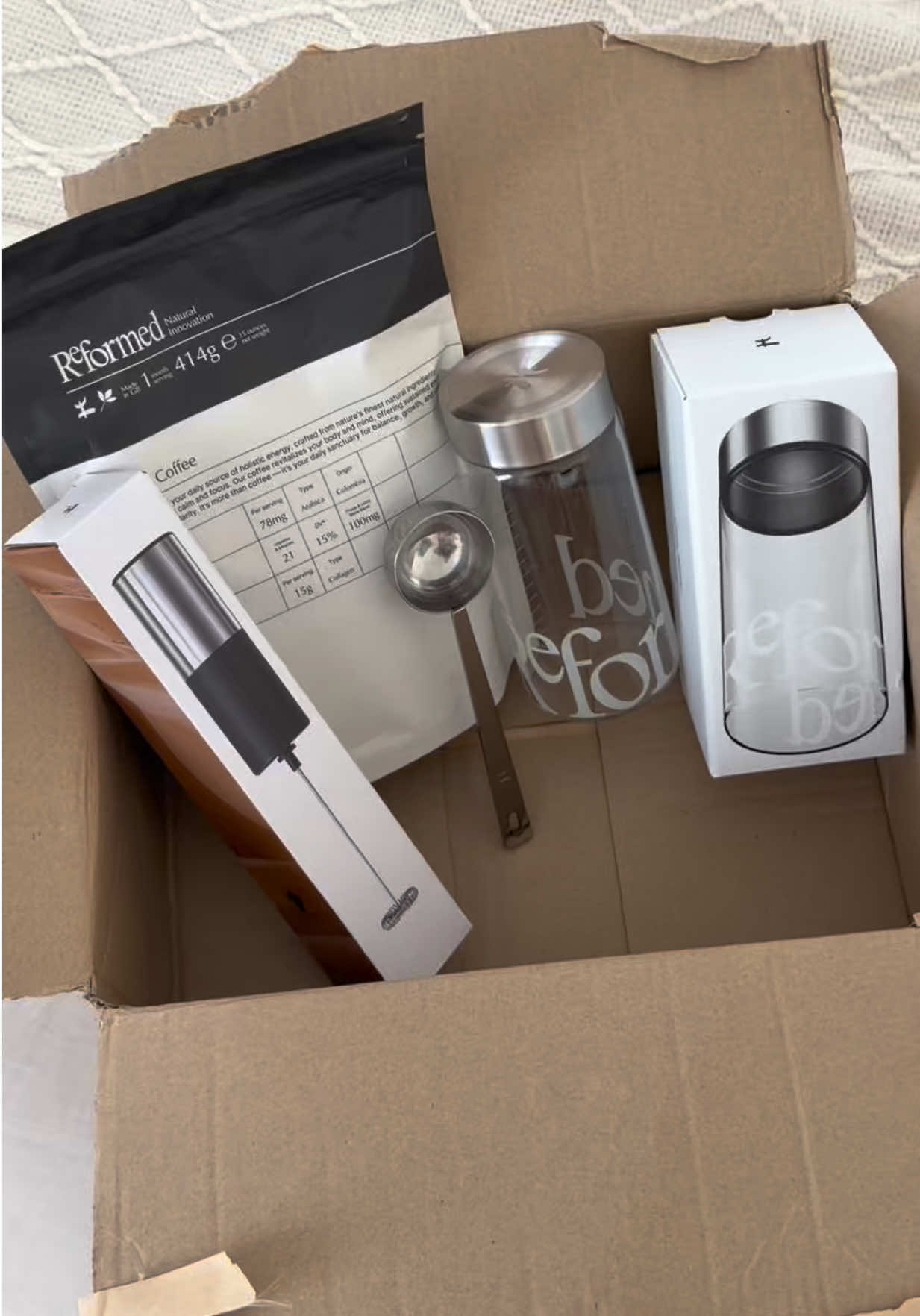
- Hook
- Visual: A hand holds a white and black pouch labeled "Reformed Black Coffee" inside a cardboard box. Audio: Upbeat, melodic music with a male vocalist singing.
- Audience
- Individuals interested in health-conscious coffee options, likely those who value natural ingredients and are looking for products that support energy, focus, and overall well-being. The inclusion of a milk frother and glass bottle suggests an interest in a complete coffee experience.
Why it works. Reveals the branded pouch inside its shipping box in the opening seconds, giving an unboxing feel before any spoken claim.
Initial product glimpse and text overlay (0:03-0:05): The video starts with a quick shot of the main product, then transitions to the shipping box with the text "Feel reformed coffe". In unboxing videos, show a quick glimpse of your product inside the box within the first few seconds before the full reveal.
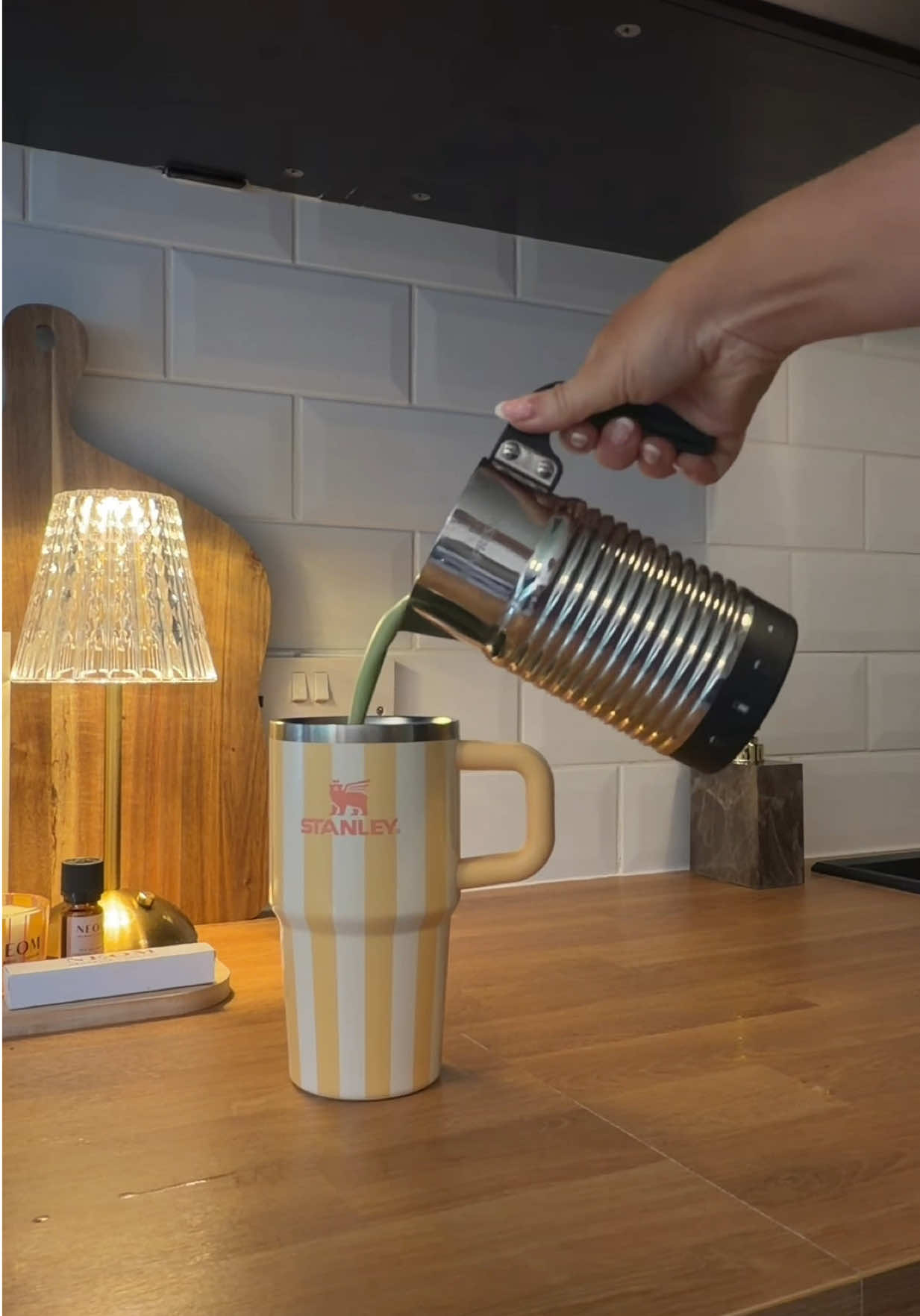
- Hook
- A woman with blonde hair in a ponytail, wearing white headphones and a black long-sleeved top, walks on a paved path in a park with green grass and trees in the background. The sun shines brightly from the upper left.
- Audience
- Individuals interested in healthy, quick, and aesthetically pleasing beverage preparation, likely those who are active and health-conscious, as indicated by the woman's active wear and the product choice.
Why it works. Shows a relatable everyday moment, a woman on a walk, before revealing the drink prep, framing the product as part of routine life.
Visual demonstration of product preparation from 0:02-0:15, showing the 'Reformed Vanilla Matcha' powder and 'alpro BARISTA' oat milk being combined in a frother. Open with a familiar daily moment your customer already recognizes before introducing the product prep, so the pitch feels like routine, not a sales pitch.
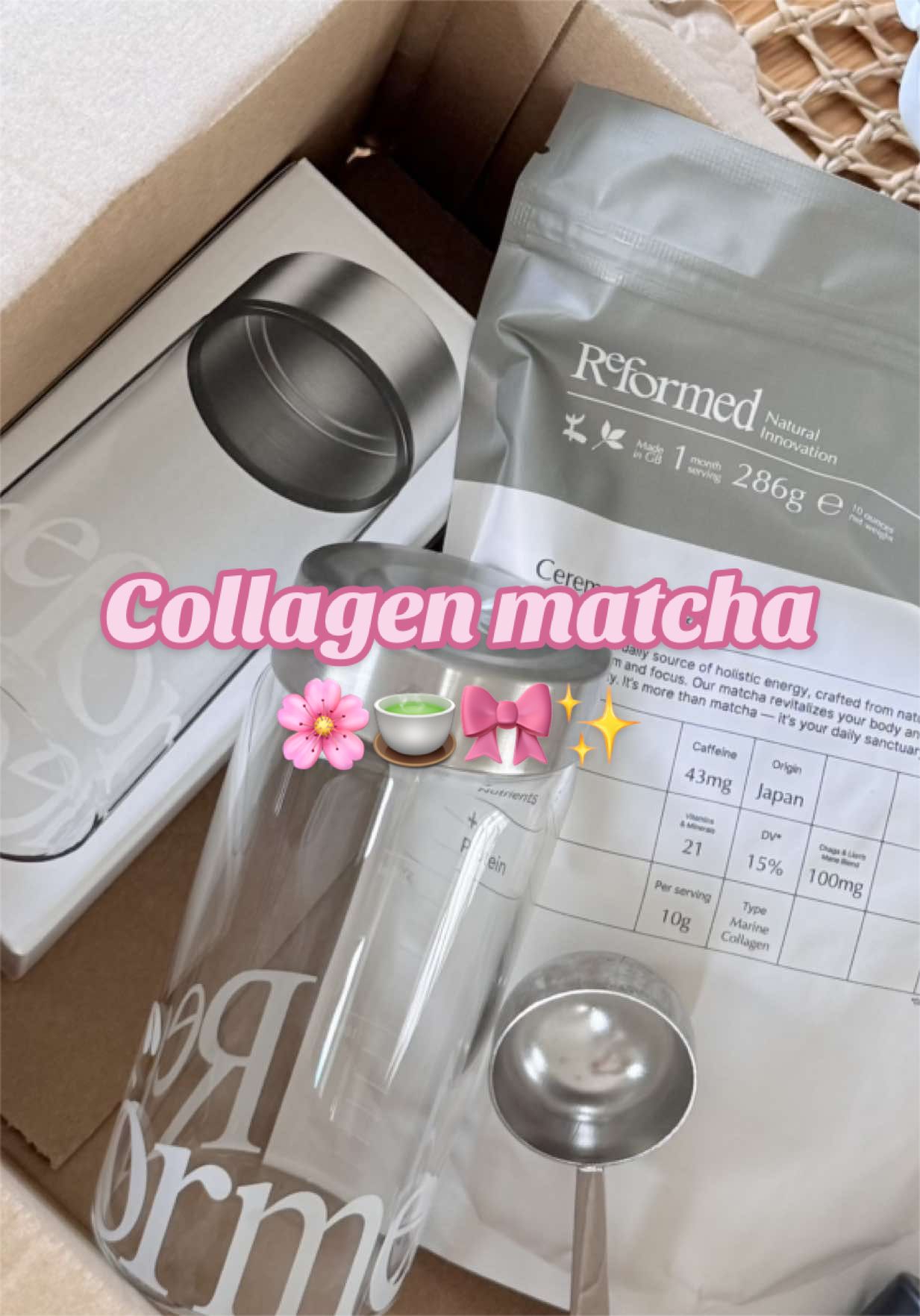
- Hook
- "Girls, I've just received the most exciting package from Reformed." A cardboard box with a gray pouch, a clear glass bottle, a metal scoop, and a black and silver frother inside.
- Audience
- Individuals interested in health and wellness, specifically those looking for matcha with added benefits like collagen and protein, and who appreciate aesthetic, high-quality accessories. The phrase "Girls" at the beginning suggests a female audience.
Why it works. Turns an unboxing into a direct address to a peer group, then shows the full kit of bottle, scoop and frother to justify the excitement.
Personalized unboxing experience at 0:00-0:03, with the creator saying, "Girls, I've just received the most exciting package from Reformed." Address your viewers like friends in your opening line and name your brand directly instead of hiding it until later.
- Reach
- 3 upvotes · 9 comments · r/MatchaEverything
A community is already discussing this in r/MatchaEverything. Show up there authentically and answer the thread before a competitor does.
Who amplifies them
The paid Meta rotation runs through named partner accounts (Jodie May, sophie__church, eveoliviaa, adamcollard, Molly Marsh, Courtney Black - The Pocket PT) and the agency Mundy Media, distinct from the brand's own Feel Reformed advertiser posts. On TikTok, organic-leaning creators post with individual discount codes rather than as paid Meta partners, including handles oldies.playing.di (code ALINASTEFANUCA20), yvngtrucky (code CHARLOTTEA), and the account posting under "adele" (code ADELE20). On Reddit, the amplification is unpaid and skeptical rather than promotional: users in r/MatchaEverything are actively weighing Reformed against Perfect Ted and Matcha Fuel rather than echoing brand messaging.
07 Organic & video
The organic content engine: the videos, creator posts, and community presence earning attention without paid spend.
TikTok creator posts run at roughly weekly cadence from April through July 2026, nearly all built around one of two formats: talking-head UGC ("Girls, I've just received the most exciting package from Reformed") or unboxing/demo clips of the pouch, bottle, and frother kit. The top posts by engagement are an ad-labeled partnership post ("AD| this collagen coffee is absolutely amazing... link is in bio," 306 engagements), a slow-morning lifestyle clip tagging both @Reformed and @Nespresso (138 engagements), and a simple reaction post ("Stop it now I can't take it anymore," 83 engagements), with the rest of the sampled posts clustering in the single- to double-digit range. Nearly every post carries the #reformed or #feelreformed hashtag, giving the brand a consistent, trackable tag across a fragmented creator base rather than one dominant format.
08 Affiliate & partners
How the brand turns creators and partners into a tracked, variable-cost acquisition channel, and how the program is structured.
The site links to a program at the /pages/affiliate-old URL, confirming a formal affiliate/partner recruitment page exists, though its "old" slug suggests it may not be the current front door for new sign-ups. Running alongside it is a looser, creator-by-creator code system (ALINASTEFANUCA20, CHARLOTTEA, ADELE20 among others) that functions as a de facto affiliate layer without a visible unified dashboard or marketplace listing in the evidence.
09 In their own words
Pulled from interviews and community sessions. The quotes are the angle; the takeaway is what to do with it.
Il Perd l'Argent de ses Parents puis fait 1'500'000€ - La Folle Ascension de Neil en E-Commerce ↗Yomi Denzel · 86k views · 31 min▶ View source“So there you have it, I'm launching my first store, my first ads and I was originally on Facebook”
Expand
Neil grew Reformed by starting with paid Facebook ads on a general dropshipping store, testing many products daily until one hit (hiking boots), then scaling with an agent-sourced supply chain instead of AliExpress. He later shifted toward organic/influencer marketing and UGC because it suited his personality better and was more consistent, while continuously reinvesting profits into new stores and brand-building with custom packaging and strong product imagery.
“So overall, it wasn't easy... I was testing anything and everything. I was doing product research every day and that's it.”
“I think the key is to persevere... nothing ventured, nothing gained.”
“I think what people are ultimately looking for is value. So you have to focus a lot on the perceived value of your product... what gives an image of significant perceived value? It's obviously all the imagery.”
“We shouldn't be afraid to diversify and outsource certain things we don't know how to do... I think it's a great investment today.”
“I wasn't really keen on the idea of constantly testing on Facebook anymore... I thought that organic marketing, in general, suited me better... I like human contact, and I prefer talking with agencies, with someone, with a negotiation behind it.”
Test products daily against fixed criteria (perceived value, strong imagery) rather than searching for a single winning formula.
Switch from AliExpress to a sourcing agent/freight forwarder early to protect margins and fulfillment reliability.
When one channel (Facebook ads) gets inconsistent, pivot to organic/influencer and UGC marketing that fits your personal strengths.
Invest in real product photography/videography (even before holding inventory) to make a generic sourced product look premium.
Reinvest profits into new stores/models (Amazon FBA, new brands) rather than pocketing revenue, treating each attempt as a learning cycle.
10 The playbook
The channels are not separate. They are one system where each stage feeds the next. Here is the read, then the plays to run tomorrow.
The inferred playbook
Reformed's loop pairs always-on paid acquisition on Google and Meta with a decentralized roster of TikTok creators running personal discount codes, both aimed at the same target, brand-name search demand, converting on two narrow single-SKU landing pages before an 80% repeat-order rate carries retention.
Paid exposure and creator UGC appear to be driving people to search the brand name directly rather than the category, evidenced by the outsized volume "reformed" pulls relative to category terms, while Search Paid still captures 20% of the channel mix, meaning even brand-curious visitors get served another paid click before converting.
Rather than a single showcased affiliate program, the real distribution runs through individually coded creators, a recruit-as-you-go model that is cheap to run but harder to manage or audit at scale than a formal marketplace.
Dig deeper+3▾
The same 10%-off code and matcha/coffee benefit-stack copy now cover mocha, decaf, and vanilla variants, suggesting new products are being pushed through the existing paid-plus-creator engine rather than earning dedicated funnels.
Selfridges placement and press-logo social-proof creative (Vogue, GQ, Wired, Guardian) support the beauty and wellness claims in the ads, which are otherwise difficult to substantiate through paid media alone.
the subscription-versus-one-time-purchase split behind the 80% repeat-order rate, channel-level paid ROAS (Meta versus Google), and the true size of the Meta ad library beyond the 57 variations sampled.
Stack numeric specs against the category's biggest objection
The proofReformed's longest-running Meta winner lists three exact numbers (10g collagen, ceremonial-grade matcha, Lion's Mane) then directly answers the category's core skepticism, that functional additions ruin taste, in the same breath.
The adaptationPull the three hardest-to-fake numeric specs of your own product, then search reviews or forum threads in your category for the single most common skeptical objection buyers raise before ever trying it. Write one ad line that states your three numbers and answers that exact objection in the same sentence, and test it first as a static image before investing in video.
Cost: $0 · Time to signal: weeks · Works pre-PMF: yes
Seed a discount code per creator instead of one shared affiliate link
The proofReformed's TikTok presence runs through individually coded creators (covered under Who Amplifies) rather than a single sitewide affiliate program.
The adaptationIdentify five to ten small creators already posting unprompted about your category (the way Reformed shows up organically in matcha-focused Reddit threads), message them directly, and give each a unique personal code rather than a generic affiliate link. The unique code lets you see exactly which creator drove which sale without building any affiliate infrastructure first.
Cost: under $500 · Time to signal: weeks · Works pre-PMF: yes
Bid on your own brand name and the comparisons customers already make
The proofReformed runs a search-ad library of roughly 200 ads with creative like "UK's Favourite Collagen Drink," intercepting people already typing the brand or category into Google, and its longest-running search ad has stayed active 461 days.
The adaptationMine reviews, Reddit, or customer support messages for the two or three comparison terms people already use when they mention your product alongside a competitor, then set up a small Google Search campaign bidding on your own brand name plus those exact comparison phrases, starting at a $5 to $10 daily cap.
Cost: under $500 · Time to signal: days to weeks · Works pre-PMF: conditional, it only pays off once your brand name already has some search volume worth bidding against.
Document a real day-1-to-day-30 transformation instead of scripting one
The proofOne of Reformed's proven Meta winners is a literal before-after split image labeled "DAY 1" and "DAY 30" of using the product.
The adaptationIf your product has any cumulative effect, a skincare routine, a fitness habit, even a software workflow, pick one real user (or yourself) and take a comparable photo or screenshot on day 1 and again on day 30 of genuine use, then run that unedited pairing as the ad or organic post itself. No script, voiceover, or production budget required, just the two real moments side by side.
Cost: $0 · Time to signal: about a month, since the 30-day window has to actually elapse before the creative exists · Works pre-PMF: yes
Let organic community skepticism do the comparison work for you
The proofUnpaid Reddit threads in r/MatchaEverything have users weighing Reformed against named competitors on price and quality without any brand prompting, a genuine trust signal money can't buy directly.
The adaptationRather than trying to seed or influence such threads, monitor the two or three forums or subreddits where your category gets discussed, and when a genuine comparison thread appears, make sure your product page and one clear piece of pricing information (a per-unit cost comparison, the way Reformed's £12-per-100g price point circulates in these threads) are easy for a searcher to find. Treat unprompted comparison threads as free market research on which objections to address next, not a channel to manufacture.
Cost: $0 · Time to signal: months, this depends on organic conversations happening on their own timeline · Works pre-PMF: conditional, only useful once a category community big enough to generate these threads already exists. Not transferable at an earlier stage: Reformed's retail placement at Selfridges and its press-logo social proof depend on brand credibility built over roughly two years and a $22M raise, a pre-PMF founder has no equivalent shortcut and should focus on the creator and search plays above until that kind of trust is earned the slow way.
You just read how Reformed does it. Tomorrow it is someone else.
Every morning we take one company that is actually growing and break down where its customers come from: the ads still running after a year, the channel doing the real work, and the play you can run this week.
Systemaic · directional intelligence. Traffic, spend, and reach figures are SimilarWeb-style estimates and qualitative reads of public data, not audited numbers. Built on real public receipts.
// teardowns with a similar GTM motion
sources & receipts (8)
Live ad libraries: meta ad library · google ad library
Founder interviews: Il Perd l'Argent de ses Parents puis fait 1'500'000€ - La Folle Ascens
Researched facts: Reformed raised a $22M Series A round: $22,000,000, oversubscribed Series A · Series A announcement date: July 14, 2026 · Series A lead investor: IRIS Ventures (led); participation from JamJar Investments, V3 Ven · Founding date: April 2024 · Retail presence: Sold via DTC subscription at feelreformed.com and in brick-and-mortar at
Traffic, spend, and revenue figures are estimates as noted in the report; the links above are the primary public artifacts.