- 01Match your landing page to the exact question, not just the product
- 02Seed creators with individually trackable codes, not blanket deals
- 03Let the founder post the unpolished stuff personally
- 04Bid on the question, not just the brand name
01 Snapshot
The one-glance read on who they are and how they grow. Each point is verifiable from the receipts above.
Stage-specific prenatal, fertility, postpartum, and perimenopause vitamin packs for women, sold DTC and through retail (Erewhon, Revolve, Amazon), backed by a $27M growth round in November 2025.
Paid-led (search and display ads) with a creator-UGC and affiliate layer stacked on top.
roughly 630,000 estimated monthly visits (+71.6% over the last 3 months) as of 2026-07-12; 156,289 Instagram followers; $37.7M total raised through the November 2025 round; Google's longest continuously active ad has run ~1,084 days.
Google is running fresh text-ad variants that were ~78-82 days active as of 2026-07-12, while Meta is layering urgency promos ("RUNNING LOW! Save $67 now, hurry!") onto its core credibility-led messaging.
Despite a highly visible TikTok and Instagram creator ecosystem, the traffic mix is majority paid (search, display, and paid social combine to roughly 46% of visits), meaning the creator content functions as trust-building and retargeting fuel rather than the primary acquisition engine itself.
02 How it unfolded
The order the channels came online. Sequence is strategy: what they did first, and what they layered on once demand existed.
03 Traffic & channel mix
Estimated demand, the channel split behind it, and the keywords and referrers doing the work. Directional modeling, not audited analytics.
Traffic sources
Top search keywords
| Keyword | Volume | Weight | CPC |
|---|---|---|---|
| perelel | 16k | $1.03 | |
| perelel prenatal | 1.8k | $1.38 | |
| prenatal vitamins | 14k | $2.74 | |
| perellel | 1.2k | $1.03 | |
| perelel health | 1.5k | $1.51 |
Top referring sites
Closest competitors by audience
Perelel draws an estimated ~630,000 monthly visits, up 71.6% over the last 3 months. Three channels dominate: paid search leads at 23.8%, confirming the core engine is bought intent rather than earned discovery; display ads follow at 18.9%, an unusually large share for a DTC supplement brand and a sign of heavy programmatic prospecting/retargeting; organic search takes 17.7%, which lines up with the branded-term dominance covered in Organic Content below. The remainder, direct at 16.7%, email at 8.3%, referrals at 5%, affiliate at 4.5%, and paid social at 3.6%, fills out the mix, while organic social and generative-AI referral each sit under 1%.
Their top-volume search terms are the brand name itself, "perelel" (15,590 monthly searches), and the category term "prenatal vitamins" (14,480 monthly searches), with "perelel prenatal" (1,790) close behind, showing they're capturing both their own name and a slice of generic category demand. The top listed referring domains, force.com and outreach.io, are enterprise sales/CRM tools rather than consumer sites; that pairing looks more like an artifact of tracking links or internal tooling than a real consumer channel. Among named competitors, ritual.com is the closest broad-category rival in branded DTC vitamins, thisisneeded.com (Needed) competes directly on life-stage-specific fertility and pregnancy nutrition, and fullwellfertility.com is a direct prenatal/fertility supplement competitor.
04 Organic content
The specific pages earning their organic search traffic, and the pattern behind why they rank. Adapt the format, not the topic.
Perelel's organic search traffic concentrates on transactional shop pages over content: the homepage and the "shop all" collection page alone account for roughly half of tracked organic visits, with a single product page (the mom multi support pack) and a general collection page rounding out most of the rest. The one content page in the top five, a blog post on cold symptoms in early pregnancy, pulls a modest but real ~2,513 visits/month. Their strongest keyword rankings are almost entirely branded ("perelel," "perelel prenatal," "perelel vitamins" all rank #1), with "postnatal vitamins" at #2 and the harder category term "prenatal vitamins" at #4. The pattern suggests SEO here is doing brand-capture and category-defense work, ranking their own name and near-variants so searchers land directly on shop pages, rather than a content-marketing engine built to win new, non-branded demand.
Top pages by organic traffic
05 Channel map
Not traffic share. How much weight the growth system actually puts on each channel, with a one-line read on the role it plays.
What drove growth
06 The creative doing the work
Each exhibit shows the actual asset, an X-ray of why it works, a status, and a play you can adapt. This is the heart of the teardown.
Google shows 17 of 30 collected ads still active as of 2026-07-12; LinkedIn shows 2 of 2 active; Meta's library runs far larger, roughly 297 ads, of which we sampled 80 and found every one still live. The longest-running proven winner is a Google text ad active for ~1,084 days (running continuously since mid-2023), a genuinely earned longevity signal rather than a fresh test.
Hook: Educational, curiosity-driven headlines in the Google proven-winner cohort, such as "Folic Acid vs Folate: Which Is Better in a Prenatal Vitamin?" Why it works: It targets a research-stage query instead of a brand-name search, catching women mid-decision before they've picked a prenatal brand, and answers it with implied doctor authority rather than a sales pitch. Run this play: Expanded as Play 4 below.
Hook: "Ease symptoms like hot flashes and irritability with the right support," on a Meta dynamic-creative (DCO) ad for the Peri Support Pack, active ~307 days. Why it works: It names the exact symptoms a perimenopausal buyer is Googling at 2am, then stacks four named sub-products (Peri Multivitamin, Metabolic Support, Perimenopause Complex, Omega DHA+EPA) to make the bundle feel clinically composed rather than a generic multivitamin, backed by an FDA disclaimer that reads as compliance rigor rather than a hedge. Run this play: Pair every specific-symptom claim with the regulatory disclaimer inline, letting the specificity carry the persuasion while the disclaimer carries the legal cover.
Hook: "Our ultra-convenient vitamin pack supports your body in the year leading up to pregnancy, so future you is already taken care of," a Meta DCO ad for the preconception pack, active ~155 days. Why it works: It reframes the purchase window from the moment of trying to a year ahead of it, turning a fertility supplement into a planning decision rather than an impulse buy, and taps identity-based motivation with the "future you" framing. Run this play: Reframe your product's buying moment to match your customer's actual planning horizon rather than the moment of checkout.
Ads route to purpose-built, SEO-titled landers matched to the exact life stage or symptom in the ad instead of one generic product page: the preconception ad lands on a "Fertility Vitamins - Conception Support Pack" page, the trimester ads land on stage-specific pages like "Best Prenatal Vitamins for Third Trimester," and the PCOS/hormone ad lands on a "Hormonal Balance Vitamins" page carrying a trio bundle near its individual price points. Prices across these landers run roughly $24.95 to $58.77 per pack, with a consistent 15% subscribe-and-save discount, free shipping over $39, and a first-purchase "WELCOME15" code offering 15% off the first month. Several landers also gate a further discount behind a product quiz ("Take our quiz and get 15% off"), turning the click into a lightweight personalization funnel that captures answers before revealing the offer.
- Running
- 168 days (longevity = it's converting)
- Hook
- "Hi! We're Alex + Tori" shown with two women in white jumpsuits and hats smiling at the camera, followed by them pregnant holding toddlers.
- CTA / offer
- 15% off your first order with code WELCOME15
- Audience
- Pregnant women and new mothers, evidenced by footage of ultrasounds, pregnancy bellies, breastfeeding, and newborns.
Why it works. Uses a visual before/after of the founders' own pregnancies to prove the origin story instead of just claiming it, pairing relatability with authority.
Problem-Solution Narrative (0:06-0:13) Open your founder story with first names only, then let a visual timeline of your own experience carry the proof.
- Running
- 307 days (longevity = it's converting)
- Hook
- "Hi, I'm Dr. Bayati," spoken by a woman in a white lab coat with a stethoscope around her neck, sitting in a medical office holding a pink box.
- Audience
- Women in perimenopause, signaled by the product name 'Peri Support Pack' and the mention of the 'perimenopause journey.'
Why it works. The founder's on-camera medical credentials and clinical setting validate a perimenopause supplement for women wary of unproven wellness products.
Credential-first introduction (0:00-0:05): "Hi, I'm Dr. Bayati, a practicing OB/GYN... and the medical co-founder." Open with your founder stating their name and title on camera in their actual clinical or professional setting.
- Running
- 307 days (longevity = it's converting)
- Hook
- "I created this product for women like me" spoken by Dr. Banafsheh Bayati wearing a white lab coat and holding a pink box.
- Audience
- Perimenopausal women, explicitly named at 0:09 and signaled by the doctor's age and professional focus.
Why it works. Pairs the founder's medical authority with a personal 'I built this for myself' claim, aimed at women at her same life stage.
Credentialed Authority Signaling (0:00 - 'MD, OB/GYN, FACOG') Have your founder state plainly who the product was built for, using their own life stage or need as the proof point.
Show 7 more exhibits
- Running
- 307 days (longevity = it's converting)
- Hook
- "Perimenopause is a big life transition" spoken by Jennifer Martin-Biggers in a green blazer sitting in a white chair with a black microphone.
- Audience
- Women experiencing perimenopause, indicated by the spoken line "Perimenopause is a big life transition" and the product name "Peri Support Pack".
Why it works. Opens on the life stage itself, not the product, so viewers self-identify before the expert pivots to the pitch.
Expert Credentialing (0:00-0:03) Let your expert open by naming the life stage or problem your buyer is in, saving the product pitch for after they've nodded along.
- Running
- 145 days (longevity = it's converting)
- Hook
- "I finally found a pack of vitamins I feel like it..." shown with a close-up of the white Perelel Sleep Support tub and pink Peri Support Pack sachet.
- Audience
- Women in perimenopause, explicitly mentioned in the audio ("during perimenopause") and captions.
Why it works. Leads with resolved search-and-struggle framing before naming the exact product, so the specific sleep and peri formulas land as the answer, not just another option.
Rapid-fire benefit listing (0:08-0:16): "My sleep has improved, my mood has improved... my periods are less heavy, and my hot flashes have decreased." Open your UGC line with 'I finally found the one that...' framing, then cut straight to naming the exact product that resolved it.
- Running
- 139 days (longevity = it's converting)
- Hook
- "So by now you guys know that I'm pregnant 🎉" Woman with long brown hair in a white ribbed long-sleeve shirt speaking directly to the camera.
- Audience
- Women trying to conceive or currently pregnant (explicitly stated "I'm pregnant" and holding a "Conception Support Pack").
Why it works. Opens as a personal life update to an assumed existing audience, which lowers guard before the product enters as advice from a peer, not an advertiser.
Authority signaling at 0:18: "Perelel is an OB/GYN founded company" If your creator has an existing following, open referencing that shared history before introducing the product as an update, not a pitch.
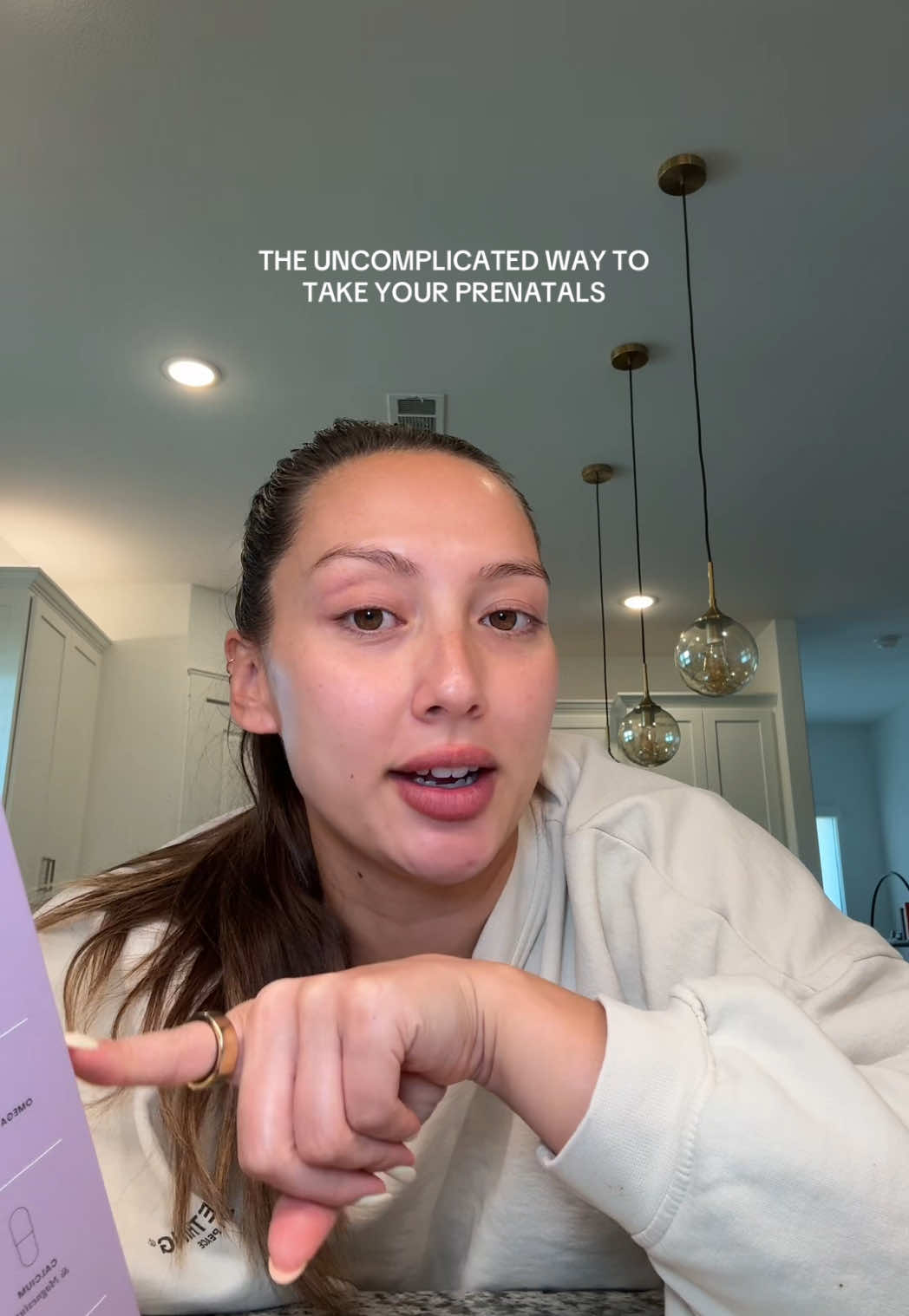
- Hook
- "So when I first found out I was pregnant, my husband did a ton of research on prenatals because we just wanted to make sure I was taking the best one on the market." A woman with brown hair in a ponytail, wearing a light-colored sweatshirt, is speaking directly to the camera, leaning on a counter.
- Audience
- Pregnant individuals or those planning pregnancy, indicated by the discussion of 'prenatals', 'baby's brain health', and 'third trimester'.
Why it works. Frames the product choice as the result of someone else's research effort, so it reads as a vetted decision rather than a self-serving plug.
Problem Agitation (0:09-0:18): The creator lists multiple separate supplements she previously had to take: "DHA... choline... probiotic... thyroid pills and it was just a lot." Frame your testimonial as a decision someone else researched on the customer's behalf, naming who did the digging and why.
- Reach
- 7 upvotes · 7 comments · r/BabyBumps
A community is already discussing this in r/BabyBumps. Show up there authentically and answer the thread before a competitor does.
Who amplifies them
Amplification runs through named creators posting with unique, trackable discount codes via ShopMy: each code such as ISKRA20, AMNA15, NABIL15, and HANNAHO maps to one individual creator posting gifted-product content that points back to their own code. TikTok Shop sellers list Perelel products directly as shoppable items, functioning as a distributed affiliate storefront. Co-founder Alex Taylor, one of three co-founders alongside Victoria Thain Gioia and Dr. Banafsheh Bayati, posts personally on TikTok in a casual register, pairing a joke about DNA results with a product collaboration announcement (a Bala partnership) that pulled 651 engagements, blending founder-led content with the creator layer rather than sitting apart from it. Not every voice is a booster: an OB/GYN posting as drjenniferlincoln has publicly disputed the brand's trimester-specific formula premise across two posts (249 and 520 engagements), stating she has been blocked by the brand, a real counter-narrative worth noting alongside the two Reddit threads flagging smell and GI-distress complaints.
07 Organic & video
The organic content engine: the videos, creator posts, and community presence earning attention without paid spend.
The creator format that performs is talking-head or testimonial UGC on TikTok, with product reveal or symptom-relatable framing rather than polished brand video. One post, from the creator @danielleajeto, pulled roughly 30,585 engagements with a simple caption about convenience, dwarfing the typical range of 18-300 engagements seen across the other TikTok posts scraped. A second standout, from KYLIE ALLISON, used blunt honesty ("greasy hair, fresh acne, this is life") to hit 2,824 engagements. On the brand's own Instagram, average engagement per post remains thin relative to that following, suggesting the follower count outpaces active engagement there. On YouTube, the brand's educational "Where You Are Now" series, hosted by a doula rather than the brand itself, is the format that earns real organic views, with the labor-interventions episode reaching 55,669 views against a channel where most branded clips sit in the low hundreds or thousands.
08 Affiliate & partners
How the brand turns creators and partners into a tracked, variable-cost acquisition channel, and how the program is structured.
Perelel runs a live affiliate and partner program, linked directly from the homepage at perelelhealth.com/pages/referrals. In practice, the mechanic shows up as individual ShopMy codes distributed to creators and a TikTok Shop listing for direct in-app purchase, effectively a gifting-plus-commission structure rather than a single blanket influencer deal.
09 The playbook
The channels are not separate. They are one system where each stage feeds the next. Here is the read, then the plays to run tomorrow.
The inferred playbook
Perelel's growth loop pairs a bought-attention front end with a doctor-authority conversion layer, compounded by a creator-and-affiliate trust network running mostly outside the brand's own feed.
Search Paid and Display together account for roughly 43% of visits (46% counting paid social), and the single longest-running Google ad has stayed active for nearly three years, meaning the core acquisition engine is a small number of long-lived, high-performing ad units rather than constant creative rotation.
Ad copy and landing pages lean on "formulated by OB/GYNs" and named-physician video ("Hi, I'm Dr. Bayati") to convert skeptical, research-stage buyers, the same authority positioning that also draws public pushback from at least one OB/GYN critic online.
Dig deeper+3▾
ShopMy-coded creators and TikTok Shop sellers extend reach without brand-side production cost, but the traffic-mix data shows this layer sits behind, not ahead of, the paid channels in actual visit share.
Non-branded organic search remains thin, ranking almost entirely on the company's own name rather than category terms, leaving paid channels to carry most net-new discovery.
free-to-paid or one-time-to-subscription conversion rate, churn, CAC, and current MRR (a rough order-of-magnitude estimate, given ~629K monthly visits, $25-58 price points, and $37.7M total raised alongside the company's publicly reported profitability (stated in its November 2025 funding announcement), would put monthly revenue in the high six to low seven figures, though this is an estimate, not a verified figure).
Match your landing page to the exact question, not just the product
The proofPerelel builds a separate, SEO-titled lander for each life stage and symptom (third-trimester prenatal, PCOS/hormonal balance, preconception), each priced and merchandised specifically to that search intent.
The adaptationList the 3-5 distinct situations your customers are actually in when they search for you, then build one lightweight page per situation with a headline that mirrors their exact phrase, not your product name. Start by rewriting one existing product page into two situation-specific versions and pointing your next ad or organic link at each separately.
Cost: $0 · Time to signal: days · Works pre-PMF: yes
Seed creators with individually trackable codes, not blanket deals
The proofPerelel's ShopMy creators each carry a unique personal discount code, letting the brand see which specific creator drove which purchase.
The adaptationIdentify 10-20 small creators, reviewers, or even satisfied customers in your niche and give each a unique code or referral link tied to their name, no contract needed. Reach out with a free unit or a modest comp, ask them to post honestly, and track which codes actually convert before spending on anyone bigger.
Cost: under $500 · Time to signal: weeks · Works pre-PMF: yes
Let the founder post the unpolished stuff personally
The proofCo-founder Alex Taylor's own TikTok mixes a personal joke with a product collaboration announcement, a founder voice distinct from the brand account's polished feed.
The adaptationPost from your own personal account in a genuinely casual register, tying your product in lightly rather than pitching it, before you have a big audience to leverage. Start by posting once this week about something true and small in your own voice, with the product mentioned only in passing.
Cost: $0 · Time to signal: weeks · Works pre-PMF: yes, this is often easier pre-PMF since a founder's raw voice reads as more credible with zero existing brand baggage.
Bid on the question, not just the brand name
The proofPerelel's single longest-running ad, active for nearly three years, targets an informational search ("Folic Acid vs Folate") rather than a branded term, catching buyers before they've chosen a brand.
The adaptationList the 3-5 questions your prospective customers Google before they know your product exists, and write one simple ad (or a page plus a small ad campaign) that answers each honestly, positioning your product as the natural next step rather than the headline. Start with a small daily budget on the single highest-volume question and let it run untouched for a month before judging it.
Cost: under $500 · Time to signal: weeks to months, since search ad performance and any organic lift both take time to season · Works pre-PMF: conditional, it works best once you have a real answer to the question, not just a product to sell.
Price the bundle just above the single item, not far above it
The proofPerelel's hormonal-balance lander offers a trio bundle priced near its individual item price points rather than at a steep multiple.
The adaptationTake your two or three most commonly co-purchased items or services and price the bundle only slightly above the cost of the single most expensive item in it, so the bundle reads as an obvious upgrade rather than a bigger ask. Start by testing this as a checkout-page option, no new inventory or build required.
Cost: $0 · Time to signal: days · Works pre-PMF: yes Not transferable at an earlier stage: the $27M growth round, the retail placements at Erewhon and Amazon, and the multi-year ad longevity all depend on capital and creative iteration a reader without funding or years of ad spend won't have yet; adapt the underlying mechanics above (lander matching, coded seeding, founder voice, informational-query bidding, bundle pricing), rather than the scale at which Perelel runs them.
You just read how Perelel does it. Tomorrow it is someone else.
Every morning we take one company that is actually growing and break down where its customers come from: the ads still running after a year, the channel doing the real work, and the play you can run this week.
Systemaic · directional intelligence. Traffic, spend, and reach figures are SimilarWeb-style estimates and qualitative reads of public data, not audited numbers. Built on real public receipts.
// teardowns with a similar GTM motion
sources & receipts (3)
Live ad libraries: meta ad library · linkedin ad library · google ad library
Traffic, spend, and revenue figures are estimates as noted in the report; the links above are the primary public artifacts.