- 01Pre-sell before you can ship
- 02Collapse a category into one object
- 03Trade product for disclosed commission, not flat fees
- 04Turn word-of-mouth into a tracked link
01 Snapshot
The one-glance read on who they are and how they grow. Each point is verifiable from the receipts above.
Multifunctional home cookware (the Always Pan) and small appliances (the Wonder Oven) sold direct-to-consumer with growing wholesale distribution.
Paid-led, amplified by a heavy creator-UGC layer on TikTok and Instagram.
~1.4 million monthly visits and a ~1,000-ad Google search library (directional, sample-capped) with active ads running as long as 1,319 days, both as of 2026-07-12.
As of 2026-07-12, fresh image-format Google ads (first shown July 2, active ~10 days) run alongside a French-market Meta push tied to a "SOLDES" sale window (June 24 to July 21, 2026), pointing to active international testing.
Multi-year evergreen "Made Without PFAS" (the "forever chemicals" found in some nonstick coatings) search ads keep converting steady branded intent even as total traffic falls by over a third in three months, suggesting paid now carries more weight than the brand's earlier viral, celebrity-driven spike.
02 How it unfolded
The order the channels came online. Sequence is strategy: what they did first, and what they layered on once demand existed.
03 Traffic & channel mix
Estimated demand, the channel split behind it, and the keywords and referrers doing the work. Directional modeling, not audited analytics.
Traffic sources
Top search keywords
| Keyword | Volume | Weight | CPC |
|---|---|---|---|
| our place | 30k | $1.20 | |
| ourplace | 17k | $1.27 | |
| our place air fryer | 2.6k | $1.43 | |
| air fryer | 302k | $0.36 | |
| our place wonder oven | 3.2k | $1.59 |
Top referring sites
Closest competitors by audience
Our Place draws an estimated ~1.4 million monthly visits across all channels, down 35.5% over the last 3 months as of 2026-07-12. Search Paid leads the mix at 23.5%, Search Organic follows at 17.8%, and Direct traffic sits at 16.2%, together confirming a brand with real search equity that still leans on paid to defend it. Social Paid (12.3%), Email (12.2%), Affiliate (6.9%), and Display Ads (5.9%) form a substantial mid-tier, while Referrals, Social Organic, and Gen AI referrals each contribute under 3% of visits. On keywords, they own their own name ("our place," 30,060 searches/mo) but also bid into the much larger generic "air fryer" demand pool (301,590 searches/mo) through the Wonder Oven line, plus the narrower "our place wonder oven" (3,160 searches/mo). Referral traffic includes theknot.com, a wedding-registry site pointing to bridal gift-list demand, and substack.com, likely newsletter mentions or affiliate roundups; force.com (a Salesforce-hosted domain) is harder to interpret without more context and may reflect a support or careers integration rather than editorial coverage. Their closest competitive set spans DTC upstarts (HexClad, Caraway, Made In) that share the multifunctional or non-toxic positioning, alongside legacy premium retail (Williams-Sonoma), which signals the brand now competes as much against established retailers as against other viral cookware startups.
04 Organic content
The specific pages earning their organic search traffic, and the pattern behind why they rank. Adapt the format, not the topic.
Our Place's top organic pages are dominated by hero product and category pages, not blog or comparison content: the homepage, the Always Pan product page, the cookware collection page, the Wonder Oven product page, and the ceramic cookware collection page. This is a branded-search capture pattern rather than a content-marketing funnel, they rank #1 for "our place cookware," "ourplace," "our place pan," "our place air fryer," and "always pan," meaning the organic engine is largely harvesting demand the brand already created through virality and advertising rather than manufacturing new discovery through articles or guides. The strategic read: with no visible glossary, comparison, or how-to layer in the top pages, their SEO investment is in owning product and category real estate for people already searching the brand by name.
Top pages by organic traffic
05 Channel map
Not traffic share. How much weight the growth system actually puts on each channel, with a one-line read on the role it plays.
What drove growth
06 The creative doing the work
Each exhibit shows the actual asset, an X-ray of why it works, a status, and a play you can adapt. This is the heart of the teardown.
On Google, Our Place runs a ~1,000-ad search library (directional, sample-capped) as of 2026-07-12, with proven-winner search ads still active after as long as 1,319 days, first shown back in December 2022, all booked under the advertiser name Lagom Kitchen Company, likely the brand's legal entity. The Meta library is large and continuously refreshed across Facebook, Instagram, Audience Network, Messenger, and Threads, though no independently verified total count was captured; several individual creatives have run 136 to 179 days as of 2026-07-12, comfortably past the proven-winner bar.
Hook: "Our Place® - The Always Pan - Made Without PFAS" / "Without PTFEs & Toxic Metals" (repeated across the longest-running Google search ads). Why it works: It answers the single biggest objection to nonstick cookware, is it toxic, at the exact moment of branded purchase-intent search, riding the ongoing PFAS health-anxiety conversation rather than needing to create it. Run this play: Pair your brand-name search bid with your category's top safety or trust objection resolved directly in the headline, not buried on the landing page.
Hook: "This is not your average air fryer." (Wonder Oven Pro, active since 2026-01-14, ~179 days as of 2026-07-12.) Why it works: It stacks a scarcity data point ("the original Wonder Oven sold out in 8 days," an advertised claim rather than a verified figure) with a risk-reversal guarantee (100-day trial, free shipping and returns) in one breath, neutralizing "will I actually use this" hesitation on a multifunction appliance. Run this play: Combine a specific scarcity signal with an explicit trial-length guarantee in the same line of copy so urgency and risk removal land together.
Hook: "Meet the NEW Essentials Cookware Sets from Our Place." (Active since 2026-02-26, ~136 days as of 2026-07-12.) Why it works: A brand-new SKU borrows legitimacy from an advertised scale claim, "the brand loved by 1M+ home cooks," letting a product with no organic track record launch on top of the brand's existing weight. Run this play: When launching a new SKU, lead the ad with your single biggest proof-of-scale number rather than the product's features alone.
Winning ads land on dedicated, product-specific pages rather than the homepage, the Wonder Oven Pro ad sends traffic to a "Wonder Oven Pro" landing page, the Essentials Cookware Sets ad to its own Essentials page, and so on, each carrying a consistent site-wide banner offering "$20 Rewards" for signing up plus a headline dollar-off bundle deal ("Save $247 on the Pro Cookware Set+" on cookware pages, "Save $345 on the Pro Cookware Set+" on the Wonder Oven Pro page). Price architecture varies by product line: cookware landing pages show a ladder from $20 to $247 across accessories, sets, and bundles, while the Wonder Oven Pro page runs a separate $20 to $345 ladder, with "set" and "bundle" pricing consistently positioned to lift average order value. Free shipping and a 100-day trial appear across every landing page tied to these ads, reinforcing the same risk-reversal message carried in the ad copy itself, and the $20 Rewards mechanic functions as the visible email or loyalty capture point at the top of the funnel.
- Running
- 142 days (longevity = it's converting)
- Hook
- "The Iconic Wonder Oven Has Gone Pro" shown as on-screen text over a close-up of a black toaster oven on a white countertop.
- CTA / offer
- "GET IT BEFORE IT SELLS OUT" with "Free Shipping", "1 Year Warranty", and "100 Day Trial".
- Audience
- Design-conscious home cooks, indicated by the sleek product aesthetics and the variety of gourmet-style meals shown (roasted chicken, artisan sandwiches, pizza).
Why it works. Frames the new Pro model as a status upgrade to an already-iconic product, targeting existing fans over new buyers.
Feature-anchoring with technical specs (0:03-0:07) When launching a premium tier, name-check your original product's reputation before naming the new upgrade.
- Running
- 136 days (longevity = it's converting)
- Hook
- "This is so much" spoken over a close-up of a whole chicken roasting inside a blue oven.
- CTA / offer
- "GET IT BEFORE IT SELLS OUT" with "Free Shipping", "Free Returns", and "100 Day Trial"
- Audience
- Health-conscious parents and home cooks, evidenced by the founder's pregnancy and the mention of "growing families like mine" and "non-toxic" materials.
Why it works. Opens on a sensory whole-chicken roast inside the appliance to visually prove a premium-upgrade claim before any spec is named.
Health-Scare Differentiation (0:03-0:13): "So many air fryers... are made with forever chemicals." Open on your product mid-use showing your single most impressive real result, before you state any claim about it.
- Running
- 136 days (longevity = it's converting)
- Hook
- "The easiest way to upgrade your kitchen" shown over a blue and a sage green countertop oven side-by-side.
- CTA / offer
- "GET IT BEFORE IT SELLS OUT" with "Free Shipping & Returns", "1 Year Warranty", and "100 Day Trial".
- Audience
- Design-conscious home cooks, signaled by the focus on matte colors and the endorsement from a "Culinary Scientist."
Why it works. An authority led demo pairs a celebrity chef with color matched ovens to position the product as professional grade and design forward.
Authority Endorsement (0:01 - "Kenji López-Alt") Bring in a recognizable expert in the first few seconds to vouch for quality, then pair it with a design or color choice.
Show 7 more exhibits
- Running
- 136 days (longevity = it's converting)
- Hook
- "The Wonder Oven is the multi-functional countertop appliance of my dreams." accompanied by a hand opening the oven door and removing the wire rack and crumb tray.
- Audience
- Home cooks with limited counter space or those frustrated by the 'soggy' results of microwave reheating.
Why it works. A fast feature demo positions the Wonder Oven as a single replacement for several countertop appliances, appealing to counter space conscious buyers.
Direct Replacement Claim (0:06 - "It replaces four appliances") Name the specific appliances your product replaces so shoppers can calculate the value for themselves.
- Running
- 136 days (longevity = it's converting)
- Hook
- "Complete Your Kitchen" text overlay with a hand placing a lid on a blue pan containing scrambled eggs.
- Audience
- Design-conscious home cooks who value both aesthetic appeal and functional organization (evidenced by the color-coordinated pans and storage rack).
Why it works. A benefit-driven montage recasts a single pan purchase as finishing an entire kitchen setup, appealing to buyers doing a full kitchen refresh.
Simplicity Framing (0:00-0:05): "Complete Your Kitchen with Just One Set" Frame your product as the final piece that completes a project your customer already started, not a standalone add on.
- Running
- 25 days (longevity = it's converting)
- Hook
- "This is the story of the award-winning..." + Shiza Shahid in an orange wrap top standing in a kitchen behind a blue pan.
- CTA / offer
- "GET YOURS AT FROMOURPLACE.COM"
- Audience
- Home cooks (demonstrated by the kitchen setting, focus on frying eggs, and steaming dumplings).
Why it works. Founder Shiza Shahid stacks award and credibility signals on camera before the pitch begins, borrowing her personal authority to vouch for the pan.
Social Proof Stacking (0:00-0:03) "award-winning, chef-approved, sold out 30 times" Have your founder open on camera with 'this is the story of the award-winning/best-selling [product]' before revealing what the product actually is.
- Hook
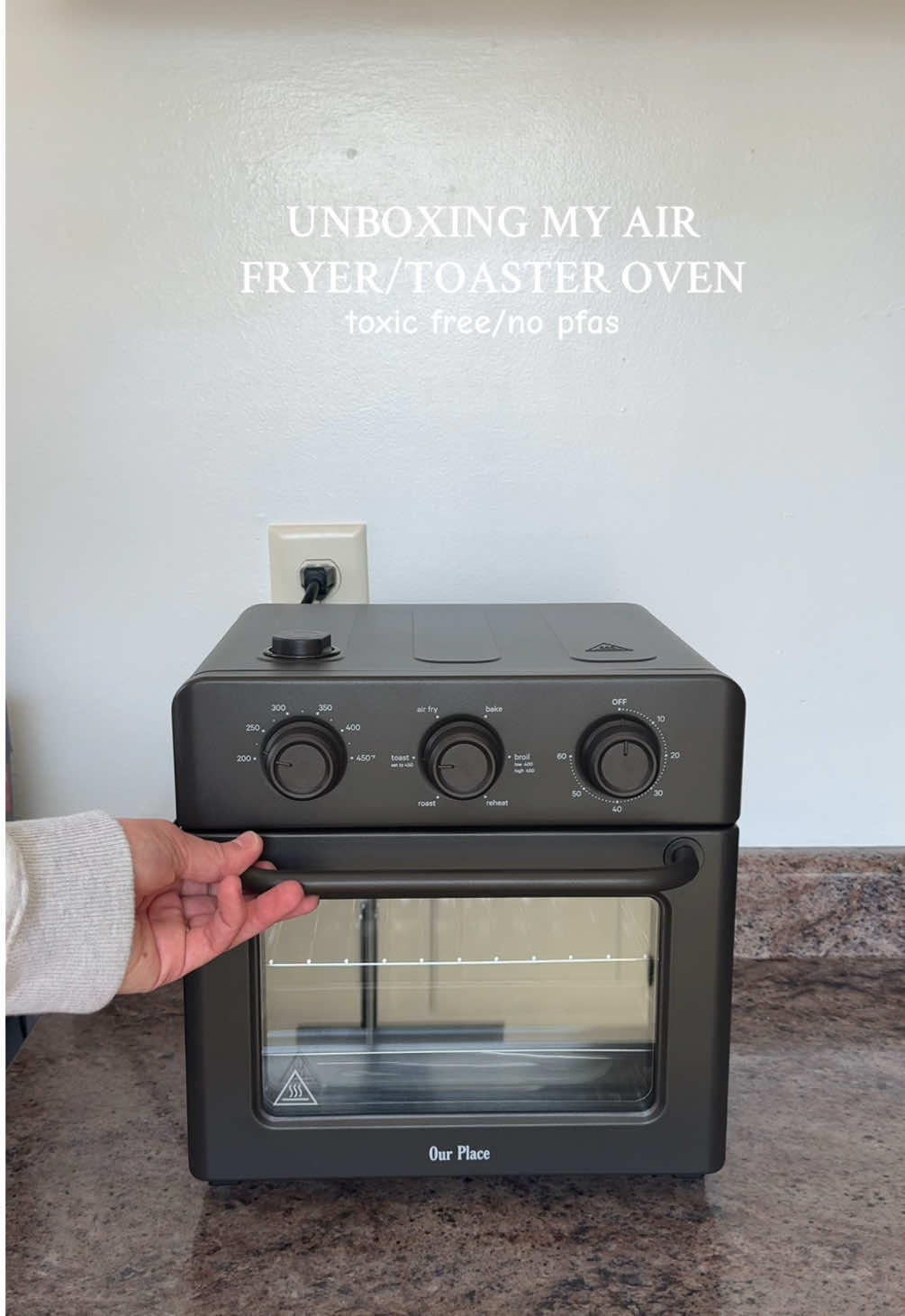
- A woman in a grey sweatshirt is seen removing a toaster from a kitchen counter. On-screen text reads: "UNBOXING MY AIR FRYER/TOASTER OVEN toxic free/no pfas". Audio: "I decided that 2025 was going to be the year of more healthy non-toxic swaps in our home."
- Audience
- Individuals concerned about household toxins, looking for healthier alternatives in kitchen appliances, and appreciate aesthetically pleasing home goods. Signaled by the explicit mention of 'toxic free/no pfas' and the visual appeal of the product.
Why it works. A relatable UGC creator frames a toxin swap as a personal resolution before the unboxing, building trust through her own stated motivation.
Problem-solution framing with personal anecdote (0:00-0:16): "I decided that 2025 was going to be the year of more healthy non-toxic swaps in our home... One thing I never knew until recently was that a lot of our kitchen appliances and cookware contain PFAS..." Open UGC content with a first-person resolution or decision that explains why you sought out a product like this, before you show it.
- Hook
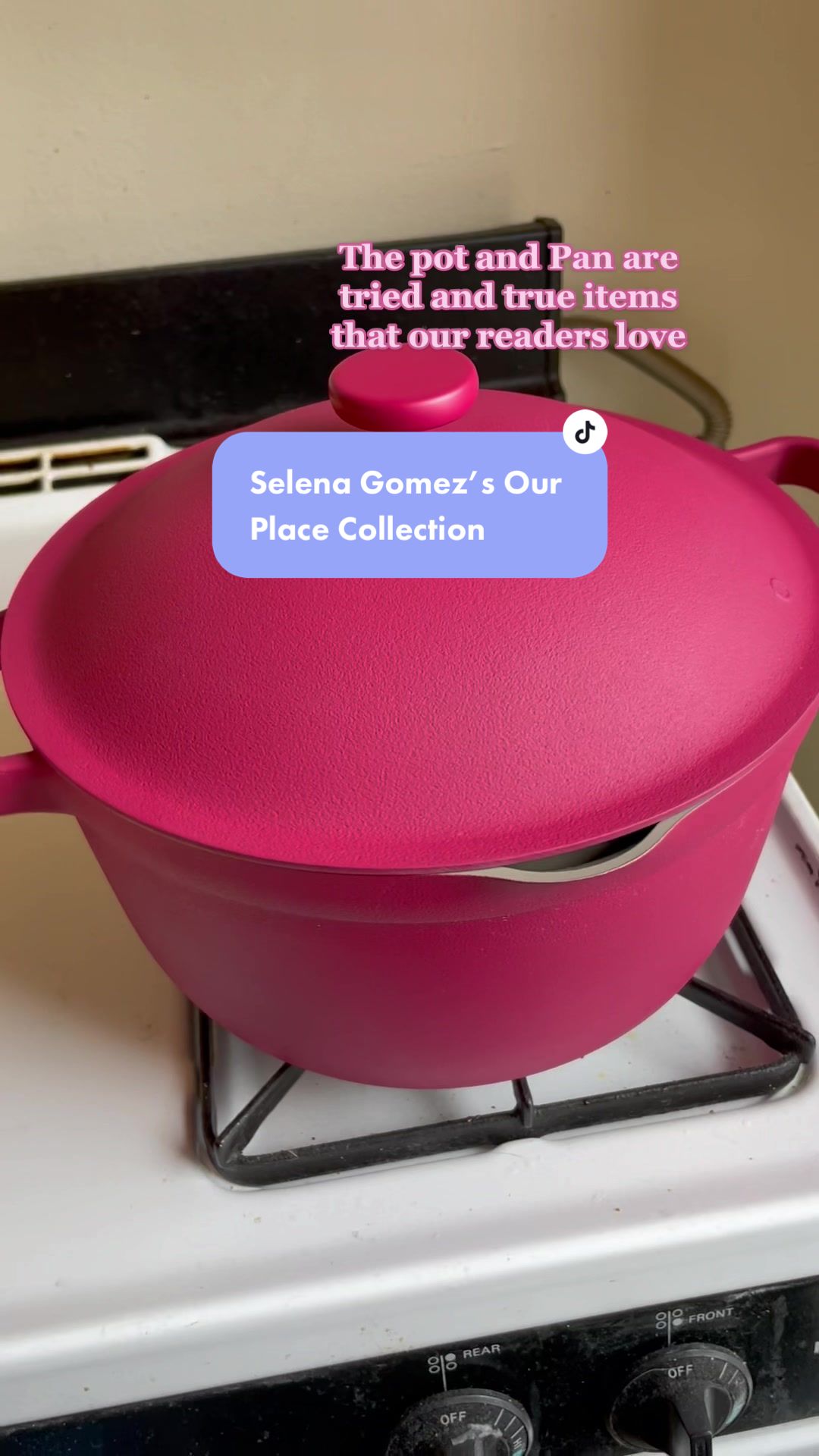
- "Selena Gomez teamed up with Our Place for their first ever celebrity collaboration" overlaying a fuchsia-colored pot with a lid on a light brown countertop.
- Audience
- Individuals interested in celebrity collaborations, home cooking, and aesthetically pleasing kitchenware, indicated by the mention of Selena Gomez and the visual presentation of the products.
Why it works. Leads with a specific celebrity name and a first-ever claim to pull in fans of the celebrity who may not already know the brand.
Leading with a celebrity collaboration announcement at 0:00-0:05 with the on-screen text "Selena Gomez teamed up with Our Place for their first ever celebrity collaboration". If you land a first celebrity or influencer partnership, say first ever explicitly in your opening line to make it read as news.
- Reach
- 47 upvotes · 7 comments · r/FabFitFun
A community is already discussing this in r/FabFitFun. Show up there authentically and answer the thread before a competitor does.
Who amplifies them
The amplification stack has three distinct layers. At the top, Selena Gomez's 2022 collaboration with Our Place, described in one fan's TikTok as the brand's "first ever celebrity collaboration," still gets referenced by creators years later, a halo effect current content hasn't replaced. Below that sits a visible gifted and paid creator layer: ugcwithells posts self-labeled agency-style unboxing content, luxuryyforless__ discloses "#sponsored" placement and a commission ("I may receive a small commission"), and jennalouise_jl tags her cookware-set post "#gifted", together showing a seeding program that trades free product and modest commissions for content rather than flat influencer fees. The broadest layer is unpaid, organic fans: creators like @estare, koichicnx, and Charlotte Jacklin (all covered above) post durability tests and long-term reviews unprompted, while @gsounds99 flagged finding Our Place ceramic pans at Costco, a retail-distribution data point the brand's own channels don't surface. Community conversation clusters in a few places: r/Cooking hosts genuine product debate (the Titanium complaint thread above), and a 2023 r/FabFitFun post walked members through stacking a 20%-off site sale with 15% Rakuten cashback instead of buying through the FabFitFun box itself, marking Our Place as a target for deal-stacking communities rather than a brand those members organically champion. The Kazakhstan and Russia resale creators noted earlier round out an amplification footprint that is real but geographically wider than the brand's authorized retail map.
07 Organic & video
The organic content engine: the videos, creator posts, and community presence earning attention without paid spend.
Their own channels move slowly next to the creator wave: the brand's Instagram account surfaces mainly as process storytelling, a behind-the-scenes reel with chef and food writer Kenji Lopez-Alt walking through product development pulled 718 engagements, a lower-key register than the paid creative it runs alongside. Founder Shiza Shahid's personal posts sit apart from the brand voice entirely, an Instagram reel marking the opening of Our Place's first retail store drew 1,171 engagements, and an older X post sharing a Chicken Karahi recipe cooked in the brand's own cookware tied the founder's Pakistani heritage directly to the product.
Read the full breakdown+1▾
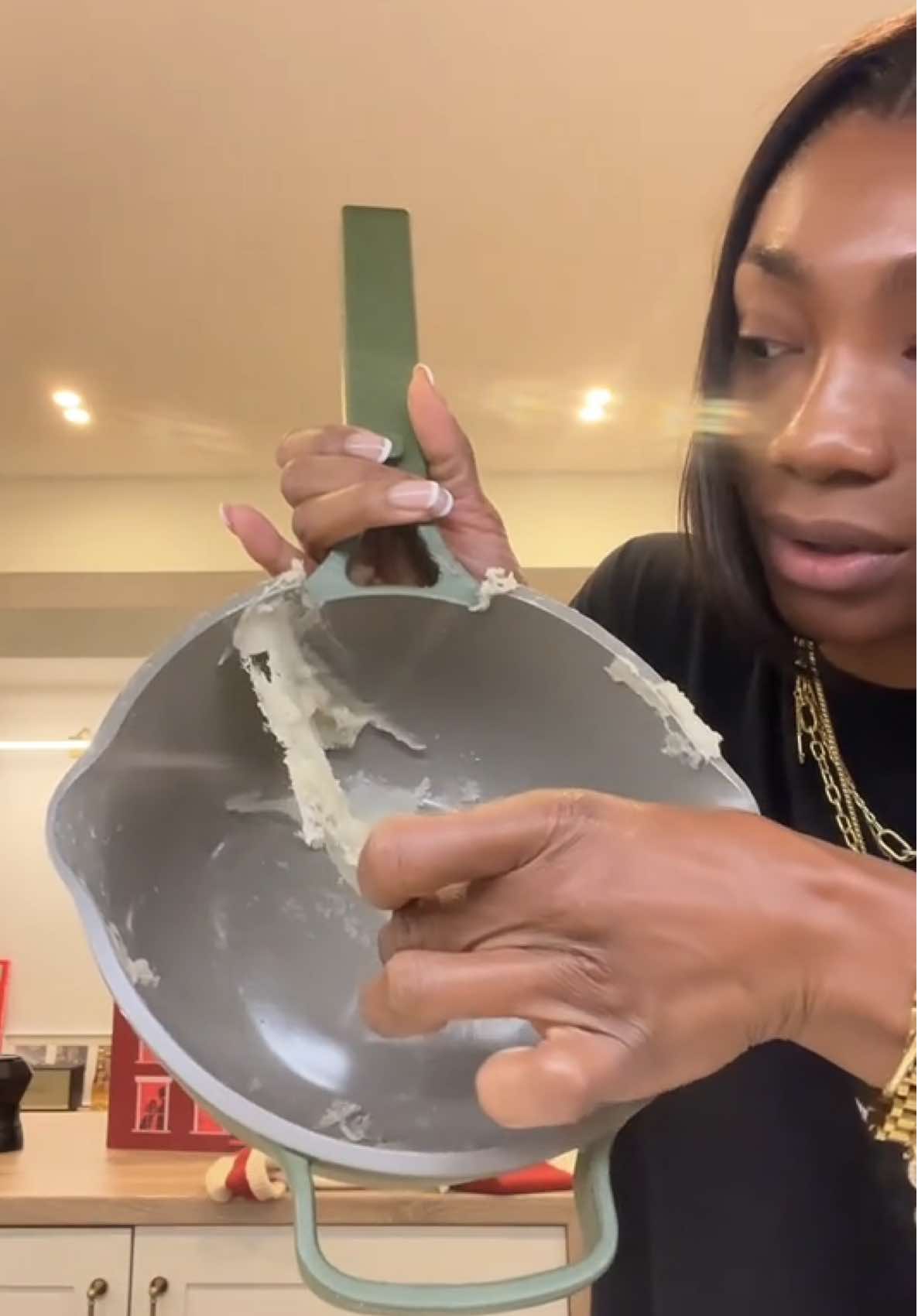
The format that actually performs comes from fans, not the brand: durability-proof clips beat simple unboxings. One TikTok showing a pot freed of hours of soaked-on grime ("Gone are the days of soaking that pot for hours!") pulled 3,079 engagements, and a follow-up reply testing dried, overnight-hardened rice ("I will stand by Our Place cookware from now, till thy kingdom come!") added 606 more, turning a skeptic's stress-test into social proof. Long-term ownership testimonials work the same way, a creator who'd used the Wonder Oven for two years called it her favorite kitchen appliance for 2,278 engagements, well past the credibility of a first-week unboxing. The brand's own ad library recycles this organic instinct directly into paid placement: one creative opens on a woman in a neck brace clanging two dirty pans together, "Can someone tell me what my husband has done to our Our Place pans?", turning a relatable complaint into a curiosity hook rather than a product pitch. Beyond these, a wide tail of TikTok clips in the roughly 50-800 engagement range covers unboxings, air-fryer swaps, and the occasional pan complaint.
08 Affiliate & partners
How the brand turns creators and partners into a tracked, variable-cost acquisition channel, and how the program is structured.
A Reddit r/promocodes post links to rwrd.io/32vhhw3, a tracked referral short link offering $20 off a first order, confirming Our Place runs a trackable referral or affiliate program even though no dedicated affiliate sign-up page surfaced in this pull. The creator side runs a lighter, informal version of the same motion: the "#sponsored" and "#gifted" disclosures noted above indicate individual commission or product-for-content deals rather than a self-serve storefront-style affiliate network (no TikTok Shop tagging appeared in the evidence). Traffic attributed to the affiliate channel sits at 6.9% of total visits, as covered in Traffic & Channel Mix, consistent with a program that is active but secondary to paid and organic search.
09 The playbook
The channels are not separate. They are one system where each stage feeds the next. Here is the read, then the plays to run tomorrow.
The inferred playbook
Our Place's loop starts with paid search and social buying back the branded demand its viral, celebrity-driven years created for free, converts on dedicated product landing pages backed by a trial guarantee, and compounds through a mix of gifted creators and unpaid fan proof-of-durability content, but the three-month traffic slide suggests that substitution is getting more expensive, not cheaper.
The multi-year Google search ads covered above exist to defend branded and category terms an organic, celebrity-driven spike once won for free, meaning paid spend is now doing retention work as much as acquisition work.
A small paid or gifted layer (the "#sponsored" and "#gifted" posts above) sits inside a much larger unpaid layer of fans testing durability and posting long-term reviews unprompted, so the brand gets proof content it did not have to fully fund.
Dig deeper+3▾
The Selena Gomez collaboration still gets referenced by creators years after the fact, but no comparably fresh celebrity moment shows up in the evidence, a plausible contributor to the traffic decline alongside rising paid-search costs.
Between the Costco sighting above and the grey-market resale interest in Kazakhstan and Russia, demand is surfacing in channels the brand has not formally entered, a signal worth chasing before a local competitor does.
customer acquisition cost, repeat-purchase rate, and the revenue split between direct-to-consumer and wholesale.
Pre-sell before you can ship
The proofOur Place built a roughly 30,000-person pre-launch waitlist for the Always Pan before the product was broadly available, converting pent-up demand into a launch-day sales spike rather than a cold start.
The adaptationBefore your next product or feature exists, put up a single landing page describing the exact problem it solves, collect emails with a "first batch reserved for waitlist" line, and push it only through your own network and any community you're already active in. The mechanism: a waitlist turns launch day into a scheduled event with built-in urgency instead of a cold-traffic gamble, and it tells you before you spend on inventory or ads whether the pitch actually lands.
Cost: $0 · Time to signal: weeks · Works pre-PMF: yes
Collapse a category into one object
The proofOur Place's own reply to a customer objection states the Always Pan "is designed to replace 8 pieces of cookware," reframing a $145 purchase as a consolidation, not an add-on.
The adaptationWrite down every separate tool, subscription, or step your product replaces, then rebuild your core pitch around the single biggest number in that list instead of your feature list. Post it as your bio line, your homepage headline, and your next piece of content, and watch whether it changes how people respond to the price. This works because a consolidation story reframes the price comparison from "why would I pay for this" to "what am I already paying for six of," which is a much easier objection to beat.
Cost: $0 · Time to signal: days · Works pre-PMF: yes
Trade product for disclosed commission, not flat fees
The proofInstagram creators tagged "#gifted" and "#sponsored" (with an explicit commission disclosure) post Our Place content without the brand appearing to run paid influencer contracts at scale, as covered above.
The adaptationIdentify 10 to 20 small creators already active in your category, send free product with no fee attached, and offer a simple tracked discount code that pays them a commission on anything it sells. Ask for nothing scripted, just their honest take. Cost stays low because you're paying in product and only paying real money for creators who actually convert, and the disclosure requirement keeps the content credible rather than reading as an ad.
Cost: under $500 · Time to signal: weeks · Works pre-PMF: conditional, provided you already have inventory to gift </br>
Turn word-of-mouth into a tracked link
The proofA $20-off referral link from a link-shortening tool surfaced organically in a Reddit coupon community, showing Our Place already has a live referral mechanic riding on top of unpaid recommendation.
The adaptationSet up a free-tier referral tool, generate a personal discount link, and hand it to your first 20 to 50 customers directly rather than waiting for a formal affiliate page. Drop it yourself in relevant deal-sharing or community forums where your buyers already hang out. This converts word-of-mouth you're already getting into something you can measure and reward, instead of leaving it invisible.
Cost: $0 · Time to signal: weeks · Works pre-PMF: yes
Read unauthorized resale chatter as free demand research
The proofInstagram creators in Kazakhstan and Russia post import-cost breakdowns for buying Our Place from its US site, and a French-language Meta ad testing wave appeared in the same window, both covered above.
The adaptationSearch your product name plus common non-English terms for it, or check where resellers and import communities discuss you without your involvement. A cluster of unprompted foreign-language interest is a demand signal you didn't pay to generate, and it's a cheaper way to prioritize your next localized market or ad test than guessing from ad platform demographics alone.
Cost: $0 · Time to signal: days · Works pre-PMF: yes Not transferable at an earlier stage: the sprawling Google search-ad library, continuously refreshed multi-platform Meta campaigns, and physical retail placement inside chains like Costco all assume funded ad budgets and wholesale negotiating leverage a pre-PMF founder will not have; adapt the underlying mechanics above, not the current scale of spend.
You just read how Our Place does it. Tomorrow it is someone else.
Every morning we take one company that is actually growing and break down where its customers come from: the ads still running after a year, the channel doing the real work, and the play you can run this week.
Systemaic · directional intelligence. Traffic, spend, and reach figures are SimilarWeb-style estimates and qualitative reads of public data, not audited numbers. Built on real public receipts.
// teardowns with a similar GTM motion
sources & receipts (2)
Live ad libraries: meta ad library · google ad library
Traffic, spend, and revenue figures are estimates as noted in the report; the links above are the primary public artifacts.