- 01Seed a shop-linked creator bench
- 02License a fan's video as your ad
- 03Write confession-style hooks, not benefit statements
- 04Sell a build-your-own bundle at a visible per-unit price
01 Snapshot
The one-glance read on who they are and how they grow. Each point is verifiable from the receipts above.
High-protein, low-sugar cereal that just expanded into a Protein Oatmeal line (launched June 2026) plus granola and treats, sold direct and through retail.
Paid-led, with a TikTok Shop creator-affiliate layer riding alongside it.
~203,600 monthly visits (-1.8% over the last 3 months), 421,703 Instagram followers, 99 total Google ads (36 active) and 115 Meta ads in the library as of 2026-07-13, on top of an $85M Series B closed in June 2022.
As of 2026-07-13, fresh Meta and Google creative pushes the new Protein Oatmeal line and a build-your-own bundle offer, both under two weeks old.
Magic Spoon runs two paid engines on different clocks: a 780+ day evergreen Google search layer mining niche high-intent terms like "diabetic-friendly granola," funded alongside a brand-new Meta and Google wave introducing Protein Oatmeal as a second product pillar beyond the original cereal SKU.
02 How it unfolded
The order the channels came online. Sequence is strategy: what they did first, and what they layered on once demand existed.
03 Traffic & channel mix
Estimated demand, the channel split behind it, and the keywords and referrers doing the work. Directional modeling, not audited analytics.
Traffic sources
Top search keywords
| Keyword | Volume | Weight | CPC |
|---|---|---|---|
| magic spoon | 27k | $0.54 | |
| magic spoon cereal | 5.7k | $0.59 | |
| magicspoon | 1.7k | $0.55 | |
| magic spoon granola | 450 | $0.60 | |
| majic spoon | 400 | $0.45 |
Top referring sites
Closest competitors by audience
Magic Spoon draws ~203,600 estimated monthly visits, down 1.8% over the last 3 months. Search Organic leads the mix at 37.3%, Direct follows close behind at 29.9%, a combination that points to a well-established brand people either search for by name or type straight into the address bar rather than discover through a channel. Social Organic adds 7.1%, the third real leg of the mix; Search Paid (6.9%), Display (4.7%), Email (4%) and Social Paid (3.8%) each register but stay secondary, and the rest, referrals, AI-assisted search, and affiliate, together total under 6%. The keywords they show up for are almost entirely branded: "magic spoon" pulls 26,820 searches/month and "magic spoon cereal" pulls 5,710/month, with "magicspoon" adding another 1,670/month, demand for the brand name itself rather than category terms like "keto cereal." Referring sites lean unusual for a DTC food brand: notion.site (likely a shared document or partner page rather than a marketing channel), and sponsorable.com and skailama.com, both consistent with creator-sponsorship or affiliate-matching platforms feeding into the TikTok Shop layer. The closest competitors by traffic overlap are Catalina Crunch, Truely, and Three Wishes, all direct low-sugar, high-protein cereal rivals fighting for the same search queries rather than retail or distribution partners.
04 Organic content
The specific pages earning their organic search traffic, and the pattern behind why they rank. Adapt the format, not the topic.
The organic engine is dominated by one page: the homepage alone pulls ~54,877 organic visits/month, 72% of all their organic traffic, with collection and product pages (Treats, the variety-pack case, the fruity keto case, Shop All) splitting a much smaller remainder in the low single-digit percentages each. There is no blog, guide, or comparison-page pattern in the top five; the ranking keywords are branded ("magic spoon," "magic spoon cereal," "magicspoon") plus one semi-informational query, "magic spoon cereal ingredients," which the brand also holds the #1 spot for. The read is that this is a brand-recognition funnel, not a content-marketing funnel: people search the name, land on the homepage or a shop page, and convert, with almost no top-of-funnel SEO content doing independent discovery work.
Top pages by organic traffic
05 Channel map
Not traffic share. How much weight the growth system actually puts on each channel, with a one-line read on the role it plays.
What drove growth
06 The creative doing the work
Each exhibit shows the actual asset, an X-ray of why it works, a status, and a play you can adapt. This is the heart of the teardown.
Magic Spoon runs 99 total Google ads (36 active) and 115 Meta ads in the library as of 2026-07-13. The two platforms tell different stories about age: Google's active library includes genuine proven winners running since May 2024, over 780 days, while every dated Meta ad in the visible library first appeared on or after 2026-06-30, under two weeks old at observation. That means the Meta creative is a current push tied to the Protein Oatmeal launch, not a proven-winner set yet; the longevity signal there simply doesn't exist.
Hook: "High Protein, Low Carb - Indulge Without Guilt" (Google search text ad, active since 2024-05-21, ~783 days). Why it works: It captures existing high-intent keto and low-carb search queries and directly kills the "diet food tastes bad" objection in five words, no creative production needed to win the click. Run this play: Write one Search ad per core objection your buyer has (taste, guilt, price) rather than one generic ad, and let the ones that keep converting run indefinitely instead of refreshing them on a schedule.
Hook: "Diabetic-Friendly Granola - Granola with only 2g of Sugar" (Google search text ad, active since 2025-01-13, ~546 days). Why it works: It targets a specific, underserved medical-need query with less competition than generic "healthy cereal" terms, paired with one concrete, verifiable number (2g of sugar) that reads as a promise rather than a slogan. Run this play: Pull one line item straight from your nutrition label or spec sheet and turn it into a standalone search ad aimed at the exact audience segment that cares most about that number.
Hook: "Shop Magic Spoon Cereal - Start Strong With..." (Google Shopping-style product ad, active since 2024-05-21, ~782 days, showing all four core flavor boxes). Why it works: It skips persuasion entirely and puts the full flavor range in front of someone already searching the brand name, reducing the click-to-cart path to a single decision (which flavor, not whether to buy). Run this play: For branded search terms, run a product-shot ad that shows your full SKU lineup rather than a single hero product, so browsers self-select their flavor or variant before they even land.
All four analyzed landing pages route through the same offer architecture: a "subscribe & save" mechanic built on Recharge and Stay.ai, paired with a "FREE Bowl Set for New Subscribers" incentive that appears verbatim across every page as the primary reason to pick subscription over one-time purchase. The Protein Oatmeal ads land on two dedicated case pages, "Oatmeal Variety 4" (1 case, 4 boxes) priced at $31.96 one-time or $25.57 on subscription, and "Oatmeal Variety 6" (6 boxes) at $44.94 one-time or $39.28 on subscription, each showing a per-serving price down to $1.27-$1.59 alongside the case price. The "Build Your Own Bundle" ad lands on two different mix-and-match pages, a "Custom Mixed Bundle" (6 boxes, $59 one-time or $54 subscription) and a "Magic Spoon Variety Pack" page carrying the same $59/$54 case pricing plus a spread of per-serving figures ($1.57 to $2.78) reflecting different product mixes. Every page also leads with an "80,000+ 5-Star Reviews" trust badge and flags limited-availability flavors (Apple Cinnamon, Blueberry Vanilla Almond Granola) to create urgency alongside the subscriber discount, which runs roughly 8-20% off the one-time price depending on the bundle.
- Running
- 14 days (longevity = it's converting)
- Hook
- "PROTEIN OATS Just Dropped" text overlay with three boxes of Magic Spoon Protein Oatmeal floating against a purple and blue gradient background.
- Audience
- Health-conscious consumers looking for high-protein, low-sugar breakfast options (indicated by '15g PROTEIN' and 'KETO FRIENDLY' labels).
Why it works. Borrows sneaker-drop language for a grocery SKU launch, making three new oatmeal flavors feel like a limited release worth acting on now.
Novelty Announcement (0:00 - 'Just Dropped') For a new SKU, use 'Just Dropped' style launch language instead of 'New' to borrow hype-release urgency from streetwear culture.
- Running
- 14 days (longevity = it's converting)
- Hook
- "We're launching oatmeal because we see the oatmeal aisle as somewhat similar to the cereal aisle five or six years ago." Gabi Lewis sits at a table with three boxes of Magic Spoon Protein Oatmeal.
- Audience
- Health-conscious consumers who currently eat traditional oatmeal but are dissatisfied with high sugar and carb content.
Why it works. Founder sits with the new oatmeal boxes visibly stacked behind him and demonstrates the product on camera, lending personal credibility to a launch.
Founder-to-camera authority at 0:04 'Gabi Lewis Co-Founder & CEO' Film your founder or a recognizable team member demonstrating the new product on camera with the packaging visible behind them.
- Running
- 4 days (new — still being tested)
- Hook
- "I found a snack" + visual of a Target storefront exterior with a blue sky.
- CTA / offer
- Not visible
- Audience
- Health-conscious shoppers who frequent Target and look for low-sugar, high-protein snacks.
Why it works. Opens with a discovery narrative set at a familiar big-box retailer, giving UGC authenticity to a first-time-buyer targeted spot.
Retail Grounding (0:00-0:03) Open your UGC ad on a location your customers actually shop, framed as a spontaneous find rather than a promotion.
Show 6 more exhibits
- Running
- 4 days (new — still being tested)
- Hook
- "Alright I'm about to blind rank these Magic Spoon protein treats" + Woman in a black t-shirt holding four colorful boxes of protein treats.
- CTA / offer
- "Make sure you pick these up next time you're at the grocery store."
- Audience
- Health-conscious snackers with a "late night sweet tooth" looking for high-protein (11g) and low-sugar (1g) options.
Why it works. Uses a blind-ranking video opener to hold attention through a flavor comparison, leaning on creator credibility over brand claims.
Blind Ranking Format (0:00-0:29) Open a comparison or ranking video mid-sentence, before revealing which options you're testing, to hold viewers through the reveal.
- Running
- 4 days (new — still being tested)
- Hook
- "Let’s make a snack jacket ✨" + woman in a clear plastic jacket made of Ziploc bags eating a protein bar.
- Audience
- health-conscious snackers looking for high-fiber protein treats
Why it works. Turns product packaging into a wearable DIY craft, using novelty to make the ad feel like an entertaining project video, not a pitch.
Absurdist DIY Visual (0:00 - "Let’s make a snack jacket ✨") Repurpose your product's packaging into an unexpected DIY object and film the build with a playful opening line.
- Running
- 4 days (new — still being tested)
- Hook
- A woman in red corduroy pants and a red-and-white striped shirt skateboards down a residential hill, smiling at the camera. (0:00-0:03)
- Audience
- Active, health-conscious adults (skateboarding lifestyle combined with grain-free/high-protein nutritional callouts).
Why it works. Opens on high-energy lifestyle motion before the product ever appears, matching the active-snacker audience's own visual world.
High-motion lifestyle hook (0:00-0:03) Cut your first three seconds to pure movement matching your buyer's lifestyle, holding the product reveal for after the hook.
Who amplifies them
The amplification layer is almost entirely third-party creators operating under the #magicspoonpartner tag, distinct from the brand's own accounts. Named creators posting under that tag include @finds.with.melissa, Parker Ewing, VIC, and SmallerSam_PCOS, each tagging retail partners (Target, Walmart, Kroger) directly in-post rather than driving to the D2C site. A separate group of creators, ice.karimcooks, Jon the Dad, and melanierazz_, have had their organic-style content pulled into the brand's own Meta ad account and run as paid creative under the "Magic Spoon Cereal" advertiser name, a whitelisting motion that blurs the line between organic UGC and paid media. No subreddit or forum community shows up in the evidence as a meaningful amplifier; the creator layer, not community discussion, is doing the amplification work here.
07 Organic & video
The organic content engine: the videos, creator posts, and community presence earning attention without paid spend.
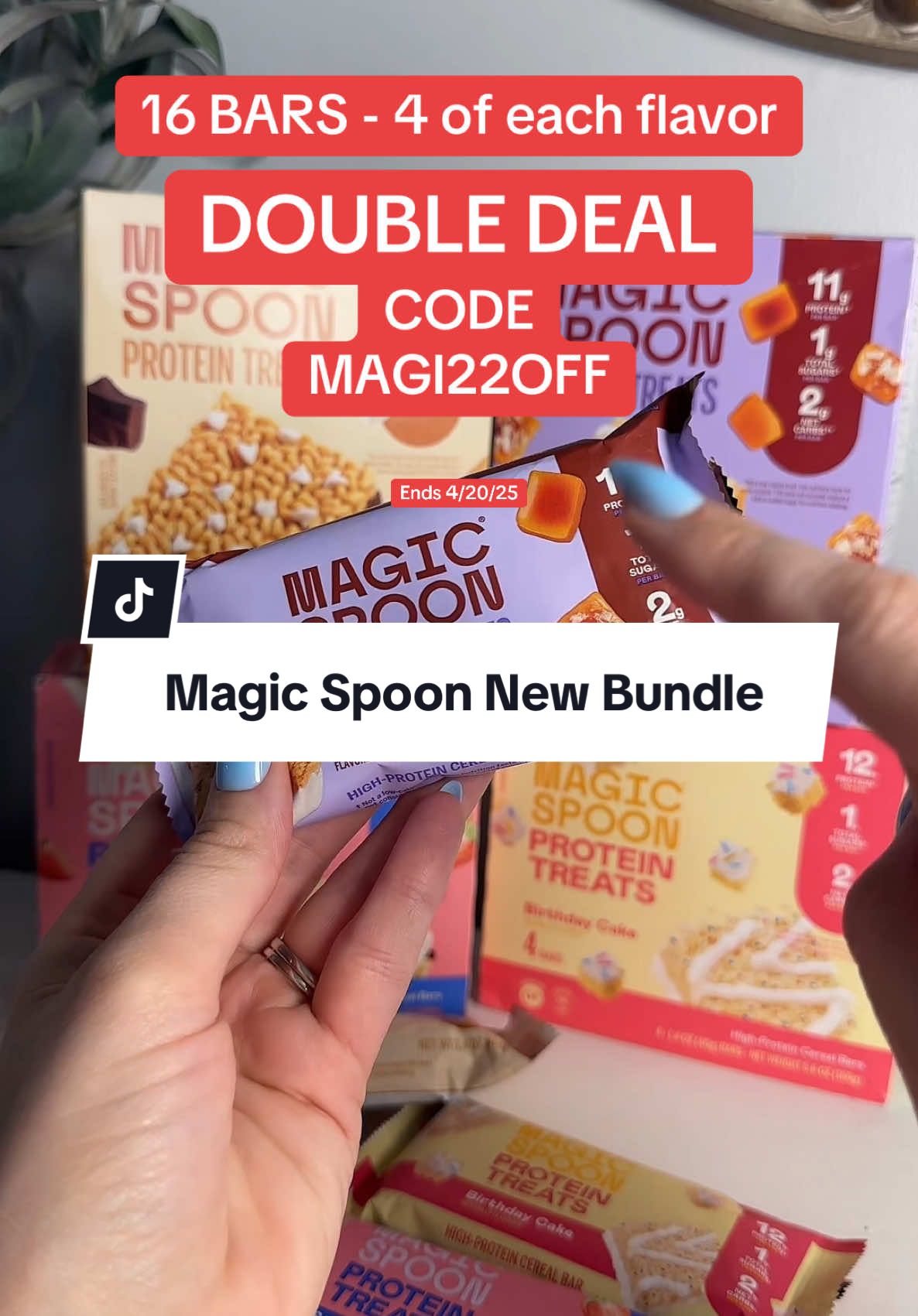
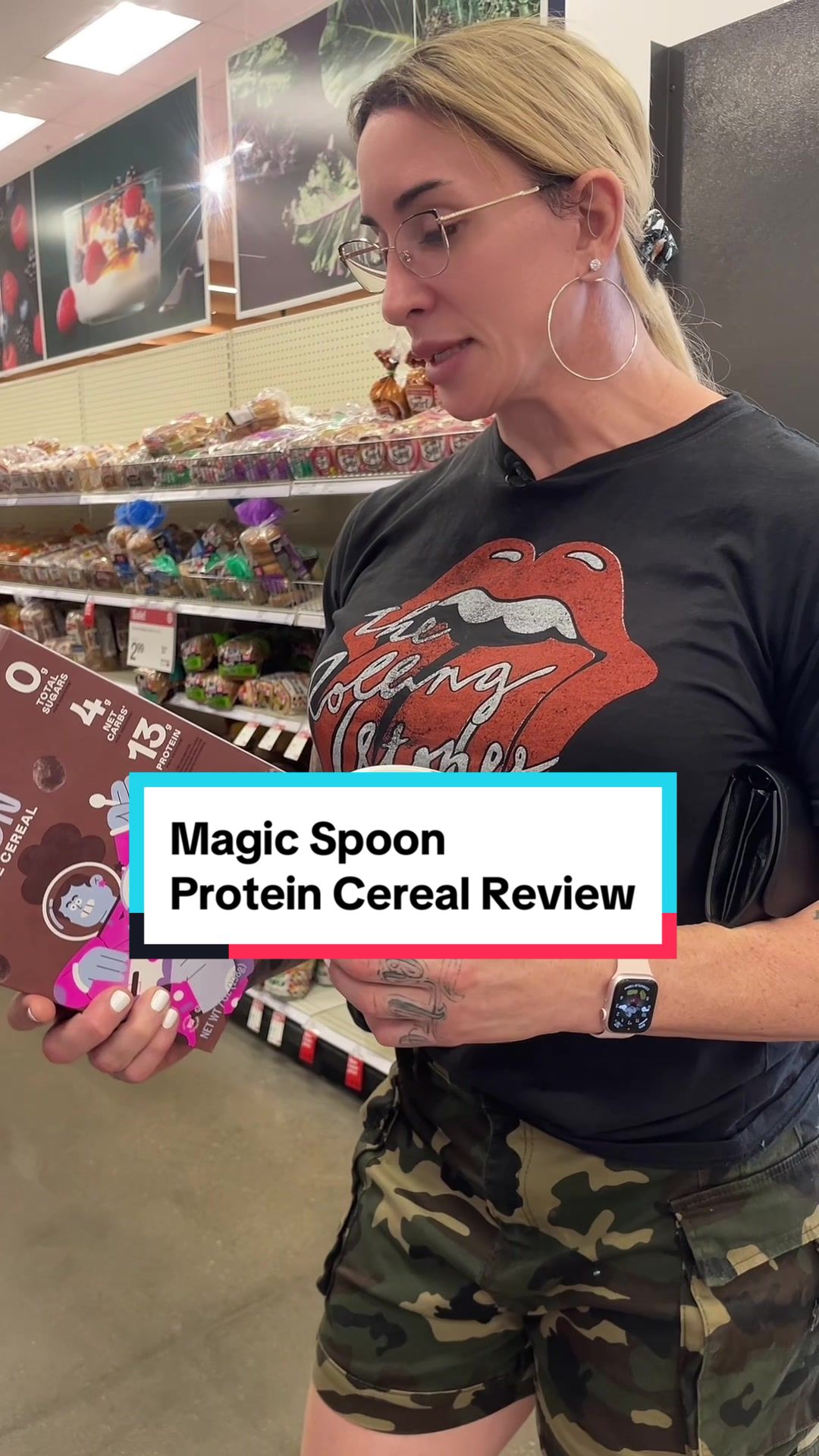
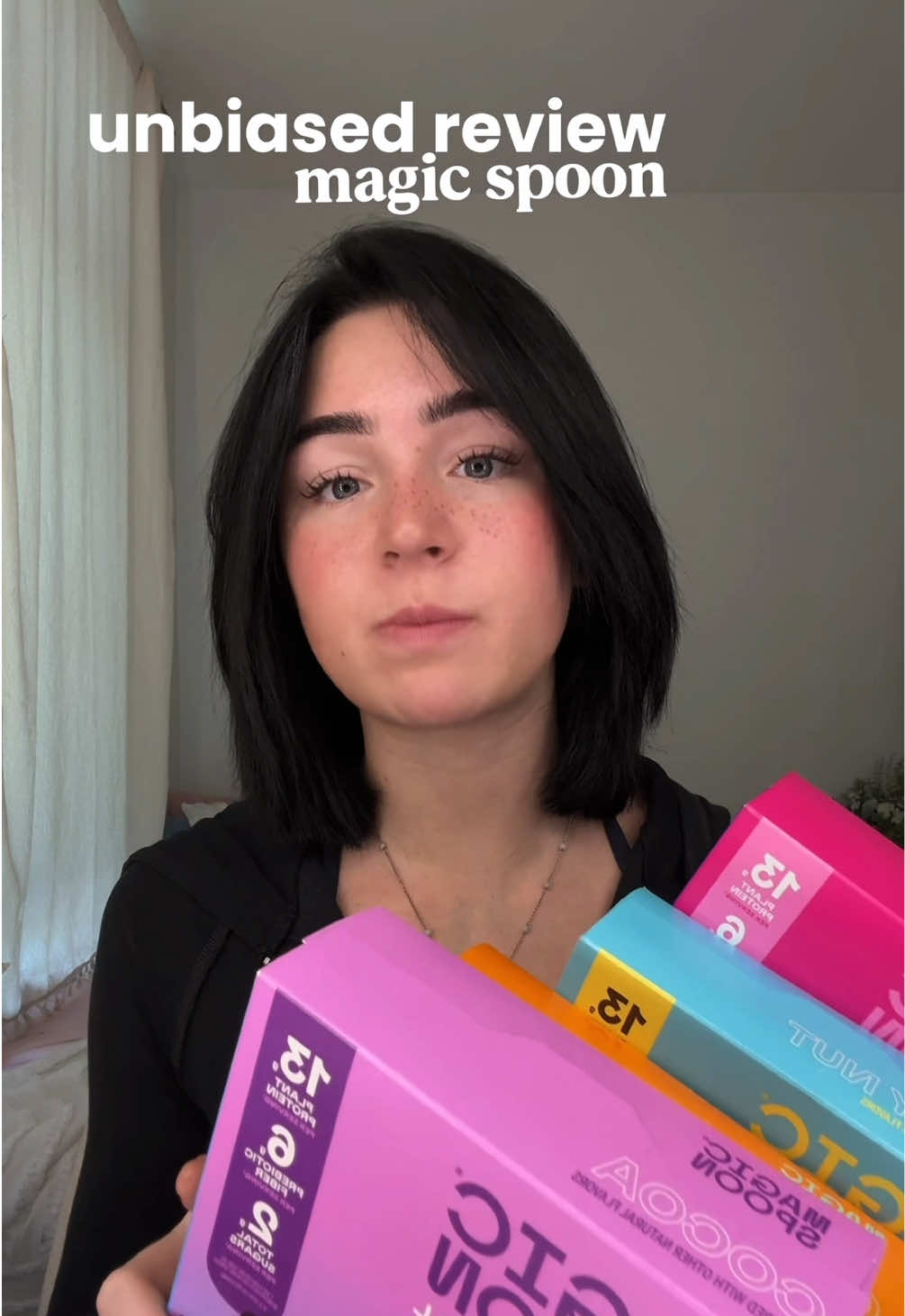
Magic Spoon's own Instagram output is high-volume but flat: 1,201 posts averaging roughly 140 engagements each, a brand feed posting steadily without breaking through. The real activity sits in creator hands. Posting formats split into three repeatable buckets: honest reviews that run positive-to-mixed (a mother's taste test with her kid closing "Magic Spoon passes the taste test," 1.27M engagement; a blunt takedown rating the cereal "6/10" against a bowl of Rice Krispies), recipe-remix content (fruity cereal turned into frozen yogurt clusters, a Peanut Butter Magic Spoon tres leches cake), and retail-haul clips tagging the exact store shelf ("did I just grab 4 boxes... they will be gone by end of this week," filmed at Target). A TikTok Shop-linked bundle post from a creator named Julie hit 1.7M engagement selling the Protein Treats Sampler directly through the platform's checkout, the single highest-performing piece of content in the dataset, order of magnitude ahead of anything the brand account posts itself. The format that performs is unscripted, camera-first reaction and haul video, not polished brand photography, and even a critical business-analysis clip titled "Why Magic Spoon died" pulled meaningful reach, evidence that commentary about the brand travels almost as well as content promoting it.
08 Affiliate & partners
How the brand turns creators and partners into a tracked, variable-cost acquisition channel, and how the program is structured.
The primary partner mechanic is TikTok Shop, not a standalone referral program: the evidence shows exclusive product bundles ("Exclusive" tag on the Protein Cereal with Marshmallows listing) sold through in-app shop links, with creators recruited under the #magicspoonpartner banner to sell directly inside their videos. There is no Rewardful, PartnerStack, or dedicated affiliate-program page visible on the owned site, which links out only to Instagram, TikTok, and X, no referral or ambassador program URL among them. That makes the affiliate motion platform-native rather than owned infrastructure: Magic Spoon is renting TikTok Shop's built-in creator marketplace instead of running its own tracked referral system, which caps how much affiliate-driven revenue the brand can attribute or optimize outside TikTok's own tools.
09 The playbook
The channels are not separate. They are one system where each stage feeds the next. Here is the read, then the plays to run tomorrow.
The inferred playbook
Magic Spoon's growth loop is a two-speed paid engine wrapped around a creator layer it doesn't fully own.
The Google side has run largely unchanged for two-plus years, with the oldest active ad at roughly 783 days, mining both broad branded terms and narrow, low-competition niches like diabetic-friendly and granola-specific queries that a bigger competitor would overlook.
TikTok Shop and #magicspoonpartner creators generate the platform's highest-engagement content (the 1.7M-engagement bundle post) and get selectively promoted into paid Meta creative, giving the brand a low-cost content pipeline it doesn't have to storyboard itself.
Dig deeper+3▾
The Protein Oatmeal introduction shows the brand can turn on a coordinated multi-format wave, image, video, and DCO bundle ads across Meta and Google within days of each other, when it has a genuine new SKU to sell, distinct from the slow-burn search layer.
No confirmed revenue figures exist in public data; given roughly 200K monthly visits and case pricing in the $30-60 range, direct online sales likely sit in the low-single-digit millions per month, with retail sales through Target, Walmart, Kroger, and Sprouts (all visible via creator tags) adding meaningfully on top.
the subscription-versus-one-time purchase split behind the case-page pricing, how much of TikTok Shop's creator activity converts into tracked affiliate revenue versus unattributed lift, and retail sell-through at Target, Walmart, and Kroger relative to direct D2C sales.
Seed a shop-linked creator bench
The proofMagic Spoon's highest-engagement single post, 1.7M engagement on a bundle sold through TikTok Shop, came from a tagged partner creator, not the brand account, alongside a wider bench of #magicspoonpartner creators posting hauls and reviews.
The adaptationSet up a shop-linked storefront on whichever platform your buyers already browse (TikTok Shop, Instagram Shopping, or an affiliate link tool), then send free product to 10-15 micro creators in your category with that link attached, no script required, and let them post their honest take, mixed reviews included, since even a critical review can carry real reach. The mechanism: a shop link embedded in the content removes the extra step between reaction and purchase, which is what let one creator's post outperform the brand's own feed.
Cost: under $500 · Time to signal: weeks · Works pre-PMF: conditional, provided you have physical inventory to ship to creators.
License a fan's video as your ad
The proofThree separate creators, ice.karimcooks, Jon the Dad, and melanierazz_, had their organic-style videos running as paid Meta ads directly from Magic Spoon's own advertiser account.
The adaptationFind one genuine, unsolicited post about your product (search your own tag or DM history for it), reach out to negotiate a simple usage-rights fee, and run that exact clip as a paid ad instead of commissioning new brand video. Keep the creator's original framing and captions intact rather than reshooting it as polished brand content, since the whole value is that it doesn't look like an ad.
Cost: under $500 · Time to signal: weeks · Works pre-PMF: yes, provided you already have at least one organic mention worth licensing.
Write confession-style hooks, not benefit statements
The proofMagic Spoon's current Meta library returns again and again to self-deprecating, curiosity-driven copy like "this breakfast hack feels illegal" and "this breakfast hack ruined my life," framed as a personal admission rather than a product claim.
The adaptationDraft three ad headlines that confess a slightly embarrassing habit tied to your product instead of stating its benefit (for a coffee brand: "I built my whole personality around a $6 latte" instead of "rich, bold flavor"), then run them as the cheapest possible format, a static text-on-gradient image, before spending on video production. The mechanism: a confession reads as a person talking, not a brand selling, which is why the hook stops the scroll before the offer does.
Cost: $0 · Time to signal: days · Works pre-PMF: yes.
Sell a build-your-own bundle at a visible per-unit price
The proofThe "Build Your Own Bundle" dynamic ad lets buyers mix cereal and treats into a $59 (or $54 subscription) case, with the landing page showing per-serving pricing down to the cent for every combination.
The adaptationIf you sell more than one SKU, build a single mix-and-match bundle page where customers pick their own combination, and print the per-unit price next to the bundle price so the value math is done for them, not left as a mental calculation. The mechanism: showing the per-serving number is what turns a $59 case into a legible "under $2 a serving" decision instead of an abstract bulk purchase.
Cost: under $500 · Time to signal: weeks · Works pre-PMF: conditional, only useful once you have at least two to three sellable SKUs to combine. Not transferable at an earlier stage: the evergreen search-ad library that has run for over two years and the whitelisted-creator paid pipeline both assume an existing budget and a backlog of organic mentions to license, neither of which a pre-launch founder has on day one. Start with the confession-style hook and the shop-linked creator seed, both buildable from zero, and let the paid-search and licensing plays follow once there's revenue to fund them.
You just read how Magic Spoon does it. Tomorrow it is someone else.
Every morning we take one company that is actually growing and break down where its customers come from: the ads still running after a year, the channel doing the real work, and the play you can run this week.
Systemaic · directional intelligence. Traffic, spend, and reach figures are SimilarWeb-style estimates and qualitative reads of public data, not audited numbers. Built on real public receipts.
// teardowns with a similar GTM motion
sources & receipts (2)
Live ad libraries: meta ad library · google ad library
Traffic, spend, and revenue figures are estimates as noted in the report; the links above are the primary public artifacts.