- 01Seed a per-creator affiliate army
- 02Run a small always-on branded-search campaign
- 03Bundle three SKUs instead of discounting one
- 04Launch small, sell out, then reopen on pre-order
01 Snapshot
The one-glance read on who they are and how they grow. Each point is verifiable from the receipts above.
Alcohol-free herbal tincture supplements (sleep, stress, metabolism, digestion) formulated by in-house clinical herbalists, now expanding from DTC into Whole Foods, Ulta, Sprouts, and The Vitamin Shoppe per company statements.
Creator-led (TikTok Shop) backed by an always-on paid-search layer.
~48,300 estimated monthly visits as of 2026-07-12, 46 total Google ads with 15 active (longest continuously active run ~643 days), and at least 56 Meta/Instagram ads in rotation.
As of 2026-07-12, live tests include image-format Google ads and a "Power Trip" pre-order/scarcity push alongside a fresh under-33-day wave of Meta creative.
Owned-site traffic is falling even as the company pushes hard into retail shelf space and TikTok Shop, meaning the growth story is likely migrating off apothekary.com and into channels SimilarWeb can't see.
02 How it unfolded
The order the channels came online. Sequence is strategy: what they did first, and what they layered on once demand existed.
03 Traffic & channel mix
Estimated demand, the channel split behind it, and the keywords and referrers doing the work. Directional modeling, not audited analytics.
Traffic sources
Top search keywords
| Keyword | Volume | Weight | CPC |
|---|---|---|---|
| apothekary | 4.3k | $1.64 | |
| apothékary | 1.8k | $2.18 | |
| metabolic duo: blue burn sugar kick | 150 | - | |
| rose colored glasses | 4.7k | $1.33 | |
| power trip apothekary | 460 | - |
Top referring sites
Closest competitors by audience
Apothekary.com pulls an estimated ~48,300 monthly visits, down 53.7% over the trailing three months tracked, a meaningful contraction for a brand simultaneously adding retail doors. The mix is led by three channels: Direct at 23.9%, Search Paid at 17.8%, and Search Organic at 12.5%, together over half of all traffic, a pattern that points to habitual/branded return visits and heavy reliance on capturing people already looking for the brand by name rather than winning new category searchers. The remainder splits across paid and organic social (11.5% and 10.7%), email (9.3%), display (6.5%), and referrals (4.8%), with affiliate and generative-AI search each under 3%.
Their top tracked keywords are almost entirely their own name: "apothekary" (4,270 searches/month) and "apothékary" (1,810/month). "Rose colored glasses" shows the highest single volume at 4,670/month, though that generic idiom phrase likely reflects broad idiomatic search demand rather than intent for their "Rosé-Tinted Glasses" product specifically. The top referrer, zhifeiji.vip, is an unfamiliar, low-signal domain rather than a recognizable partner, worth treating as noise. Among the competitor set, ritualzeroproof.com and soberish.com compete directly on the non-alcoholic/sober-curious positioning behind Wine Down and the Sober Curious Trio, while curiouselixirs.com competes on the tincture-format wellness category itself.
04 Organic content
The specific pages earning their organic search traffic, and the pattern behind why they rank. Adapt the format, not the topic.
Their organic footprint is dominated by one page: the homepage alone captures roughly two-thirds of their organic traffic (~3,600 of ~5,500 monthly organic visits), with everything else, a product page, a category collection, a how-to guide, and a beginner's tincture blog post, splitting single-digit shares. All five of their top-ranking keywords are branded (apothekary, apothekary reviews, apothékary, apothecary drops, apothokary), so this reads as branded-demand capture rather than a content-marketing engine: people already know the name (from retail shelves, press, or TikTok) and search for it directly, and the site's job is mainly to catch and convert that demand rather than manufacture new prospecting traffic through SEO content.
Top pages by organic traffic
05 Channel map
Not traffic share. How much weight the growth system actually puts on each channel, with a one-line read on the role it plays.
What drove growth
06 The creative doing the work
Each exhibit shows the actual asset, an X-ray of why it works, a status, and a play you can adapt. This is the heart of the teardown.
Google is where their real longevity lives: 46 total Google ads, 15 still active as of 2026-07-12, with the longest continuously active ad running 643 days since September 2024, part of a broader cluster of text ads active since June 2025 (400+ days each). Meta tells a different story: at least 56 ads observed in the current library, none of which has run past 33 days as of the observation date, so this is a current creative wave, not a proven-winner set. The longevity signal simply doesn't exist yet for the Meta side.
Hook: Branded, benefit-forward Google search headlines like "Blue Burn™ by Apothekary® - Metabolism Support Formula" and "Herbal Alcohol Alternative. Browse Our Collection of Natural Herbal Tinctures & Herbs." Why it works: These sit on top of the branded-search demand shown in the traffic mix above, catching people who already intend to buy and converting them straight into a Shopping-style listing rather than fighting for a cold click. Run this play: Expanded as Play 2 below.
Hook: "Bloating isn't Normal" / "Life's Too Short to Be Bloated," a stack of overflowing plates with three product bottles. Why it works: It reframes a common, dismissed symptom as unacceptable, killing the "this is just normal" objection before pitching Rescue Bloat as the fix. It's a static product-shot format, not video, so the whole argument has to land in the headline plus one image. Run this play: Expanded as Play 5 below.
Hook: "GLP-1s Aren't The Whole Story," a Blue Burn bottle tipped over a pile of sugary foods. Why it works: It inserts the brand into an active cultural conversation about GLP-1 weight-loss drugs (Ozempic and similar), positioning the tincture as a complement rather than a competitor, which borrows attention already flowing to that topic. Run this play: Expanded as Play 5 below.
Also in their winning rotation: [text, Google] · "Sober Curious?" · curiosity, positioned against a cocktail glass · part of the 400+ day active Google set · [text, Google] · "Cortisolved" · bold-claim, cortisol/metabolism angle · part of the 400+ day active Google set · [text, Google] · "Cravings Taking Over? 82%" · problem-agitation built on the company's own advertised statistic · part of the 400+ day active Google set · [image, Meta] · "97% of participants drank less after 2 weeks with Wine Down" · clinical-sounding claim · this is the company's own advertised figure, not an independently verified result.
Against those Google veterans and the newer problem-agitation Meta wave, the freshest tests skew scarcity-driven: a "Power Trip" pre-order banner and a "Sold out for a reason but we are bringing it back, pre-order yours now" creative, both signaling a launch or restock event rather than steady-state acquisition.
The Sober Curious Trio and Triple Digest Trio landing pages both show the same bundle architecture: $117 full price down to $94 for three tinctures (about 20% off buying separately), with free shipping and a "subscribe and save" option through a Recharge-powered subscription app. Single-product pages (Wine Down, All Day Stress Duo) carry strong 4.8-star ratings across 1,000 to 2,200+ reviews, social proof sitting right at the point of purchase. A sitewide banner cross-promotes "Power Trip™ is now available for pre-order, ships first week of August," and the Take the Edge Off product page uses a near-identical restock hook: "After months of being sold out... Get instant relief with just a few drops."
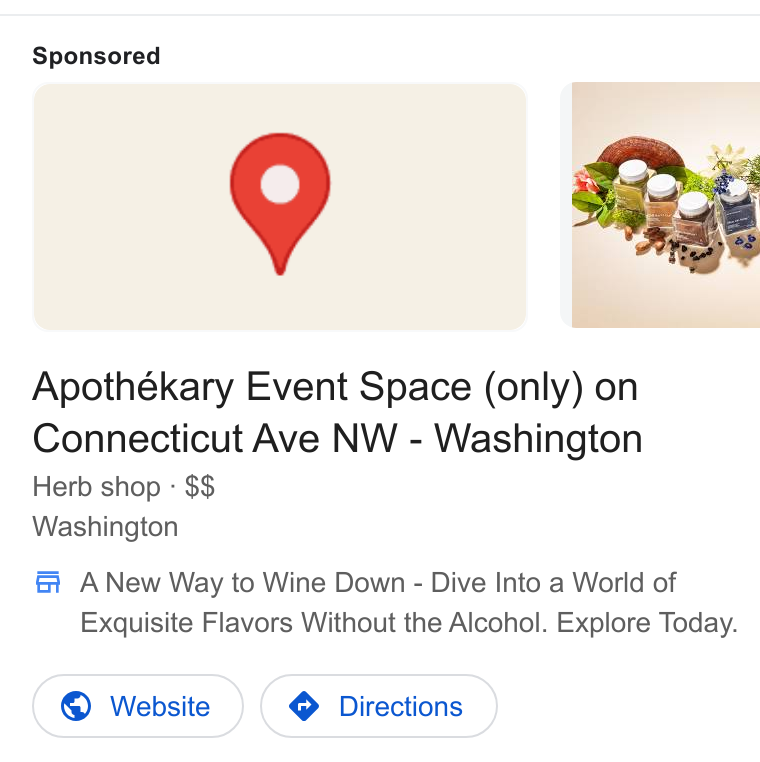
- Running
- 923 days (longevity = it's converting)
- Hook
- Sponsored Apothékary Event Space (only) on Connecticut Ave NW - Washington
- CTA / offer
- A New Way to Wine Down - Dive Into a World of Exquisite Flavors Without the Alcohol. Explore Today.
- Audience
- Individuals in or near Washington, D.C. interested in non-alcoholic alternatives and unique event spaces, as indicated by 'Washington' and 'Connecticut Ave NW'.
Why it works. Uses a local map ad to alert nearby shoppers that Apothekary's non-alcoholic bar has a physical DC event space, driving in person visits.
Visual representation of location and product category: The ad features a map pin icon for 'Apothékary Event Space' and a product image showing small bottles with botanicals. If you have a flagship physical location, run a local map ad naming the exact address so nearby customers know they can visit.
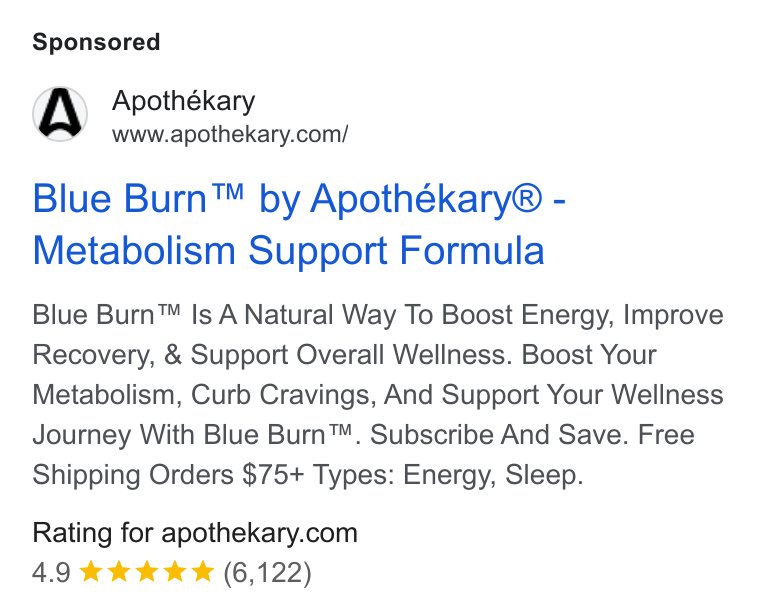
- Running
- 405 days (longevity = it's converting)
- Hook
- Sponsored text at the top, followed by the Apothekary logo and website, then the headline "Blue Burn™ by Apothekary® - Metabolism Support Formula".
- CTA / offer
- Subscribe And Save. Free Shipping Orders $75+
- Audience
- Individuals interested in natural health solutions, metabolism support, energy, recovery, and sleep, as indicated by the product description and 'Types: Energy, Sleep.'.
Why it works. Leads high intent search traffic straight to a named product and its one benefit claim, matching 'metabolism support' queries directly.
Headline stating product name and primary benefit: "Blue Burn™ by Apothekary® - Metabolism Support Formula" For search ads, put your product name and its single strongest benefit claim in the headline, skip lifestyle framing.
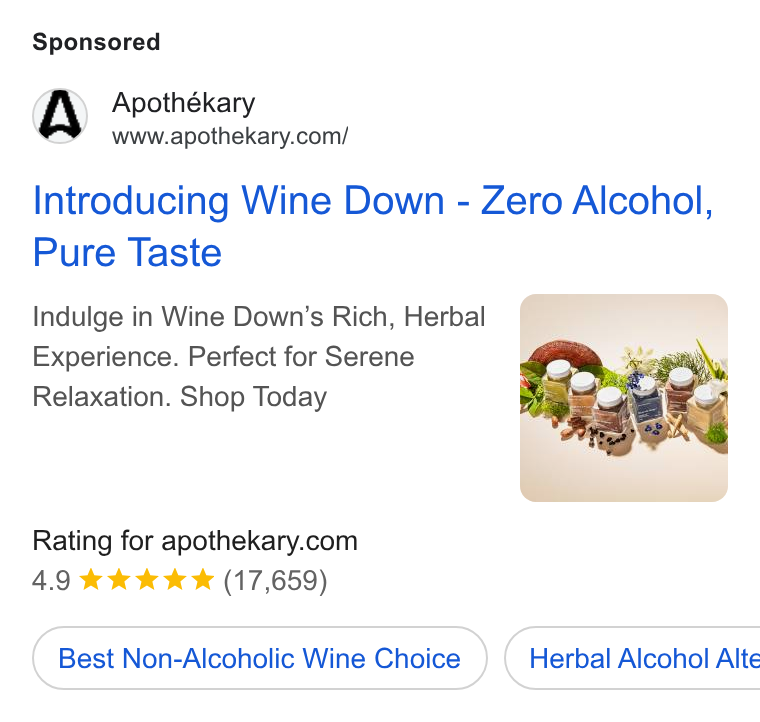
- Running
- 404 days (longevity = it's converting)
- Hook
- "Sponsored" text at the top, followed by the Apothékary logo (a stylized 'A' in a circle) and brand name, then the headline "Introducing Wine Down - Zero Alcohol, Pure Taste".
- CTA / offer
- Shop Today
- Audience
- Individuals seeking non-alcoholic beverage alternatives, specifically those interested in herbal products for relaxation, indicated by "Zero Alcohol, Pure Taste", "Herbal Experience", and "Serene Relaxation".
Why it works. Launches a new product by preempting the two objections wine alternative shoppers raise most, alcohol content and taste, in one headline.
Headline clearly states the core product benefit: "Introducing Wine Down - Zero Alcohol, Pure Taste". When launching a product, name it, then answer your category's two most common doubts in the same headline.
Show 7 more exhibits
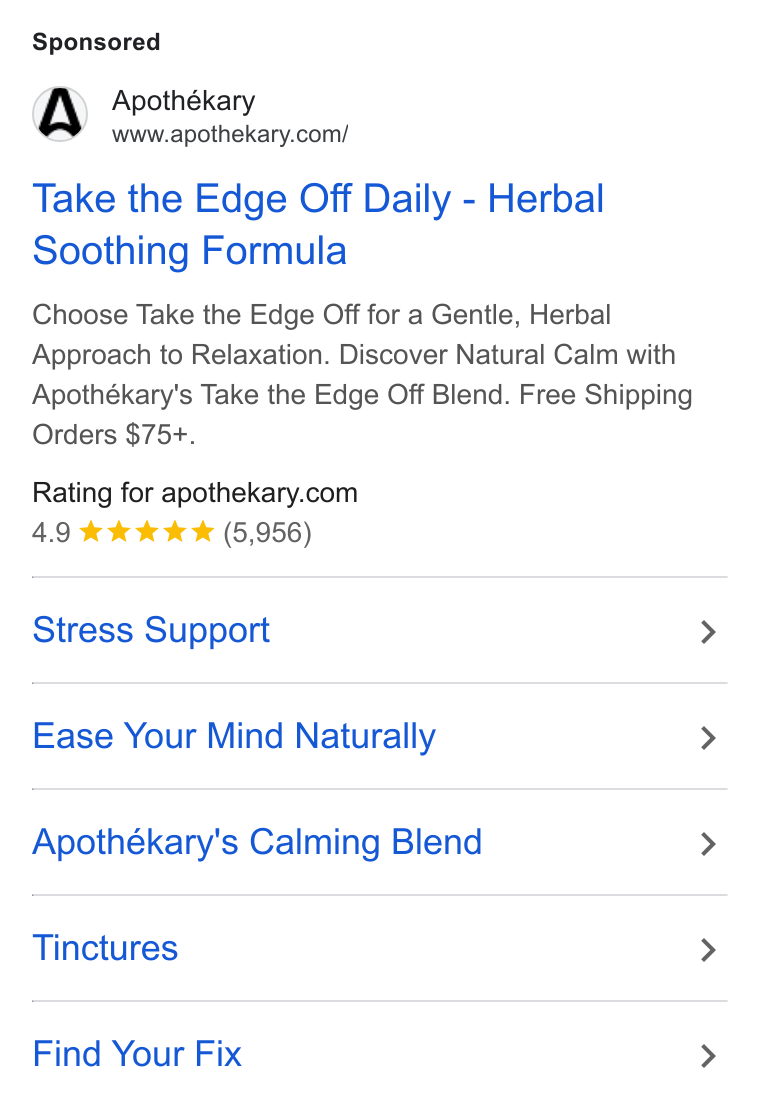
- Running
- 404 days (longevity = it's converting)
- Hook
- Sponsored ▲ Apothekary www.apothekary.com/ Take the Edge Off Daily - Herbal Soothing Formula
- CTA / offer
- Free Shipping Orders $75+.
- Audience
- Individuals seeking natural, herbal solutions for relaxation and stress management, indicated by phrases like 'Herbal Soothing Formula' and 'Natural Calm'.
Why it works. Anchors on a familiar stress relief idiom before naming the product category, meeting daily stress searchers with language they already use.
Headline directly addresses a common problem and offers a solution: "Take the Edge Off Daily - Herbal Soothing Formula". Open your headline with a common idiom your audience already uses for the problem, then name your product category right after.
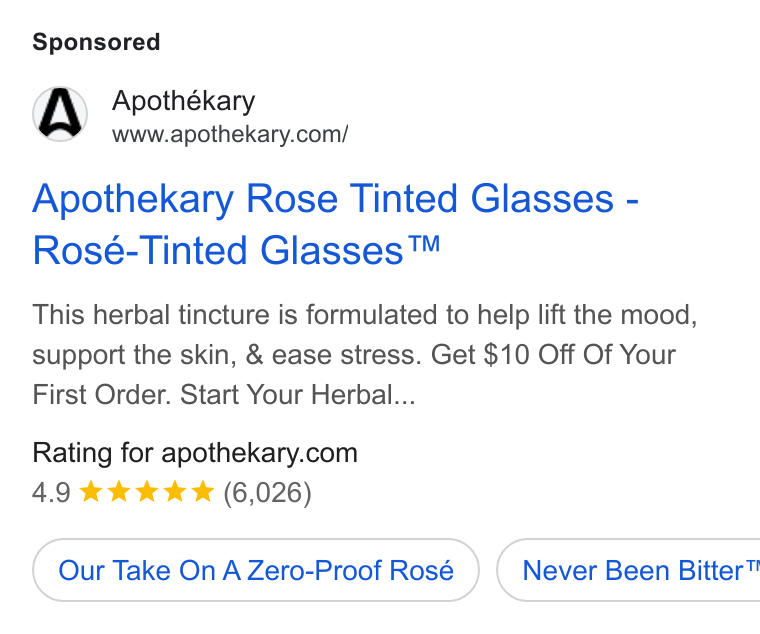
- Running
- 403 days (longevity = it's converting)
- Hook
- Sponsored Apothekary Rose Tinted Glasses - Rosé-Tinted Glasses™
- CTA / offer
- Get $10 Off Of Your First Order.
- Audience
- Individuals interested in herbal remedies for mood, skin, and stress relief, indicated by the product description and brand name 'Apothekary'.
Why it works. Turns a familiar idiom into a trademarked product pun, giving wine alternative shoppers a memorable name to search for and buy.
Headline uses a pun: "Apothekary Rose Tinted Glasses - Rosé-Tinted Glasses™" Find a common idiom that sounds like your product category and trademark a punny product name built on it.
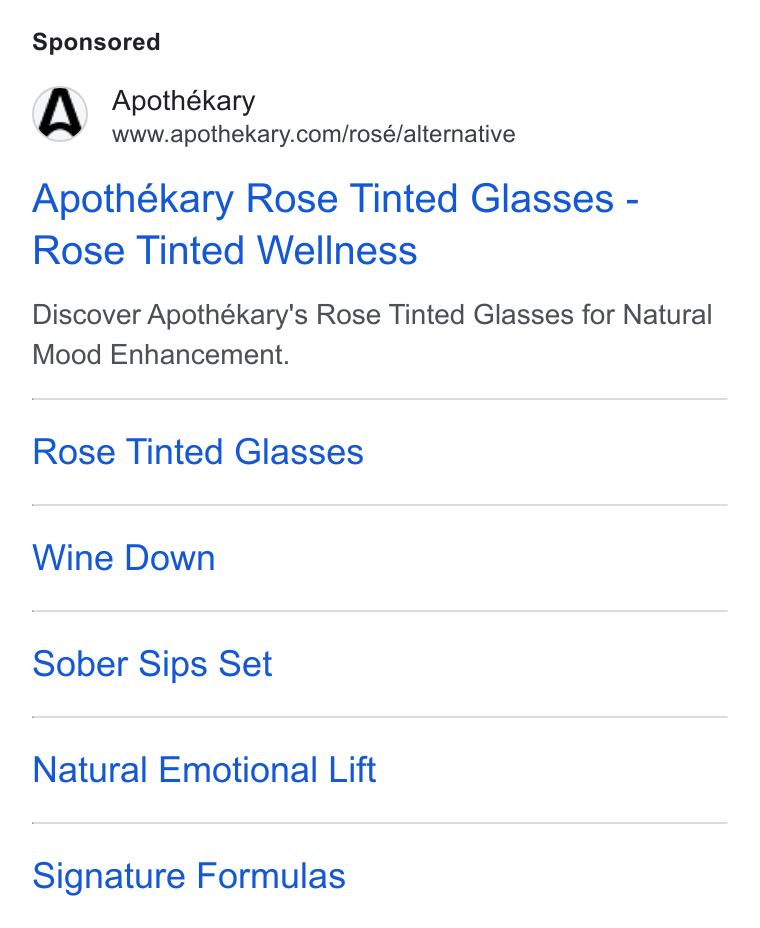
- Running
- 405 days (longevity = it's converting)
- Hook
- Sponsored A Apothekary www.apothekary.com/rosé/alternative Apothékary Rose Tinted Glasses - Rose Tinted Wellness
- Audience
- Individuals seeking natural mood enhancement and wellness solutions, indicated by phrases like 'Natural Mood Enhancement' and 'Natural Emotional Lift'.
Why it works. Borrows a widely understood idiom as the product's own name so the mood-support use case is clear straight from the search result.
Clear branding and URL at the top: 'Apothekary www.apothekary.com/rosé/alternative' Name a product after a common idiom that already implies its emotional benefit, so your search headline explains itself.
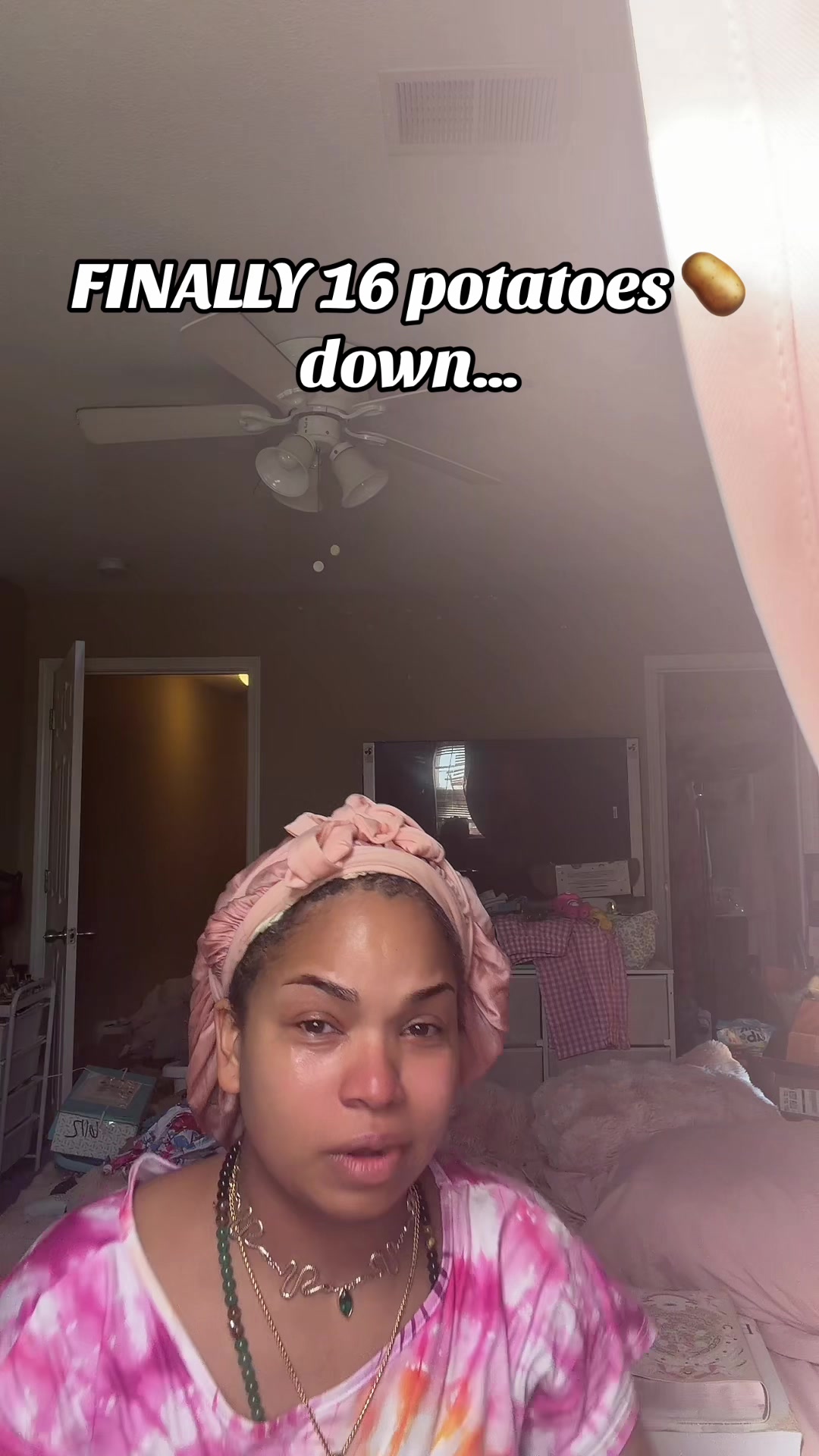
Our Founder & CEO answers all your burning questions about our bestselling Blue Burn® Have other questions for @Shizu Okusa ? Drop them below for her next Q&A 🌿✨ #blueburn #wellness #founder #apothekary
These are some herbs I love as alternatives to alcohol. #apothékarypartner 🌿 @apothekaryco’s new Sober Sips Set includes non-alcoholic wine alternatives with excellent health benefits. For example, you can get the same heart-healthy polyphenols and stress-soothing perks found in traditional red wine in this Stop Your Wine-ing herbal formula. If you’re looking for a daytime alcohol alternative to support mood and energy levels while nourishing the skin, their Rosé-Tinted Glasses is the one. I love these two tinctures in particular because they’re so easy to use, especially if you’re always on the go. I use Rosé-Tinted Glasses in the afternoon and to relax at night, it’s Take the Edge Off or Stop Your Wine-ing. And you can take them separately or together for added benefits. Find Apothékary’s new Sober Sips Starter Set at the link in my bio. Cheers! 📹 @fitztheworldcitizen • #rose #apothekary #collagen #wellness #health #adaptogens #herbs #holistichealth #adaptogenic #herbsforhealth #herbsforhealing #sobercurious #alcoholfree #skincare #naturalbeauty
- Reach
- 98 upvotes · 95 comments · r/gimmecare
A community is already discussing this in r/gimmecare. Show up there authentically and answer the thread before a competitor does.
Who amplifies them
Beyond the founder's own Q&A, amplification runs through named creators and TikTok Shop sellers: Setting the brand's own Q&A aside, the top organic voices are a true-crime-content creator (17,431 and 1,320 engagements across two posts), rachellerobinett on Instagram (6,599 engagements), and TikTok Shop seller SocalShopDeals (2,477 engagements). A dozen more posts from creators like TravelingAddy, oliviadeano_, KellsUnfiltered, The Beauty Doctrine, Shay Dolo, and Reinafragancia sit in the 30 to 400 engagement range, mostly TikTok Shop product listings or "trying this out" style clips. These are third-party creators and sellers, distinct from the brand's own light TikTok posting.
07 Organic & video
The organic content engine: the videos, creator posts, and community presence earning attention without paid spend.
The brand's own TikTok posting is thin but purposeful: a Vitamin Shoppe mood-and-sleep aisle clip pulled modest traction, while a founder Q&A, Shizu Okusa answering audience questions about Blue Burn, drew 10,994 engagements, the single best-performing brand-owned post in the evidence. Creator content follows a personal-testimony format rather than polished demos: a true-crime-content creator's first-person testimony post about her results with Blue Burn pulled 17,431 engagements, the largest single post in the dataset, while an Instagram educator's carousel-style post on herbal alternatives to alcohol drew 6,599 engagements. A TikTok Shop listing from a deals-focused seller added another 2,477. The pattern that performs is first-person "it worked for me" testimony and founder-led Q&A, not brand-polished demo content.
08 Affiliate & partners
How the brand turns creators and partners into a tracked, variable-cost acquisition channel, and how the program is structured.
The clearest lever is TikTok Shop: multiple sellers list Apothékary products as shoppable affiliate posts, and several creators carry personalized discount codes and links, including apothekary.com/ADDYMAC, a 20%-off code from sydneyhopeee, and a 15%-off code from an ad-running creator (Healthy Emmie). This is a trackable, per-creator affiliate structure rather than a single generic referral program, functioning as a self-serve creator-seller network layered on top of the paid ad account.
09 The playbook
The channels are not separate. They are one system where each stage feeds the next. Here is the read, then the plays to run tomorrow.
The inferred playbook
Attention starts upstream of the owned site, through retail shelf placement and TikTok Shop discovery, then gets closed by branded search, both organic and paid, landing on trio bundles and subscriptions.
Nearly all visible organic ranking and a meaningful share of the 15 active Google ads target the brand's own name and product names rather than category-prospecting terms, meaning the business generates awareness elsewhere (retail, TikTok Shop, press) and search mainly closes people who already intend to buy.
Named sellers and personalized creator codes function as a self-serve affiliate army distinct from the brand's own light TikTok posting, and it is the channel the evidence shows the most third-party creator volume flowing through.
Dig deeper+3▾
Once a shopper lands, the $117-to-$94 trio bundles and Recharge subscription option (covered above) are the primary levers for order value and repeat purchase, reinforced by restock and pre-order scarcity messaging for products like Power Trip and Take the Edge Off.
Estimated site visits fell roughly 54% over the period measured, a decline the public data doesn't explain on its own, worth treating as a genuine open question rather than assuming it's simply offset by retail growth.
free-to-paid or subscription conversion rate, churn, CAC, and blended ARPU.
Seed a per-creator affiliate army
The proofTikTok Shop sellers and personalized codes like apothekary.com/ADDYMAC function as a self-serve creator-seller layer, covered above.
The adaptationPick 5 to 10 micro-creators who already talk about your product category, send free product with a unique trackable code or link each, and let them post in their own voice rather than a brand-scripted format. Start by messaging creators directly on the platform where your category already gets organic UGC.
Cost: under $500 · Time to signal: weeks · Works pre-PMF: yes
Run a small always-on branded-search campaign
The proofTheir longest-running Google ad has been continuously active for well over a year, part of a 15-ad always-on branded layer.
The adaptationOnce any organic buzz or press exists, set a small always-on Google Search campaign against your exact brand name and top product names so competitors can't bid on your traffic and people already searching for you convert instead of bouncing. First step: check whether anyone is bidding on your brand name and claim it yourself.
Cost: under $500 · Time to signal: weeks · Works pre-PMF: conditional, only useful once your brand name is actually being searched
Bundle three SKUs instead of discounting one
The proofThe Sober Curious Trio and Triple Digest Trio land at $117 to $94, about 20% off buying separately, covered above.
The adaptationGroup three complementary products or service tiers into a single bundle priced under the sum of the parts, and give it its own landing page rather than burying it in a general discount. The mechanism: a bundle raises average order value without training customers to expect blanket sitewide discounts. First step: pick your three best-selling or best-paired items and build a single bundle page for them.
Cost: $0 · Time to signal: days · Works pre-PMF: yes
Launch small, sell out, then reopen on pre-order
The proofThe "Power Trip" pre-order banner and the "Sold out for a reason but we are bringing it back" ad creative, covered above.
The adaptationShip a deliberately small first batch, let it genuinely sell out, then reopen with a pre-order waitlist ad framed around the sellout. This only works if the scarcity is real: faking a sellout erodes trust fast when customers find out. First step: cap your next batch size on purpose and be public about the count.
Cost: $0 · Time to signal: days to weeks · Works pre-PMF: yes, provided the sellout is genuine, not staged
Position against an active cultural conversation
The proofThe "GLP-1s Aren't The Whole Story" and "Bloating isn't Normal" ad creatives, covered above.
The adaptationIdentify the trending conversation adjacent to your category, whether that's a drug, a diet trend, or a news story, and create one piece of content or ad copy that explicitly names it and positions your product as a complement or answer. This borrows attention already in motion instead of manufacturing net-new awareness. First step: write one headline that names the trend directly rather than talking around it, and post it organically before spending anything on distribution.
Cost: $0 · Time to signal: days · Works pre-PMF: yes Not transferable at an earlier stage: the retail-door expansion into Whole Foods, Ulta, Sprouts, and The Vitamin Shoppe, and the capital behind a $16M raise, both depend on brand credibility and cash a very early founder won't have yet.
You just read how Apothekary does it. Tomorrow it is someone else.
Every morning we take one company that is actually growing and break down where its customers come from: the ads still running after a year, the channel doing the real work, and the play you can run this week.
Systemaic · directional intelligence. Traffic, spend, and reach figures are SimilarWeb-style estimates and qualitative reads of public data, not audited numbers. Built on real public receipts.
// teardowns with a similar GTM motion
sources & receipts (2)
Live ad libraries: meta ad library · google ad library
Traffic, spend, and revenue figures are estimates as noted in the report; the links above are the primary public artifacts.