- 01Seed practitioners with free product instead of paid posts
- 02Turn a one-time goodwill gesture into a standing content format
- 03Recruit micro-creators with a personal code instead of a formal affiliate platform
- 04Judge ad creative by a fixed spend window, not by early fatigue
01 Snapshot
The one-glance read on who they are and how they grow. Each point is verifiable from the receipts above.
Made In sells premium stainless clad, carbon steel, non-stick, and cast iron cookware plus knives direct-to-consumer, drawing an estimated 1.5 million monthly visits as of 2026-07-12.
Paid-led, layered on a chef-testimonial organic base built through an in-house video operation rather than paid influencer buys.
~1.5 million monthly visits (essentially flat, -0.3% month over month) as of 2026-07-12, a roughly 800-ad Google library whose oldest active placement has run more than four years, and third-party estimates that put annual revenue in the $50M-$100M range (an estimate rather than a disclosed figure).
As of 2026-07-12, Made In is running a fresh 60-day-guarantee griddle video (8 days active) alongside a cluster of new image creative on Google, none more than a week old.
Their real advantage is ad durability, not ad novelty: the same handful of product hooks (the Saucier, the griddle) have stayed live for a year-plus rather than being refreshed on a content calendar, letting slow-burn conviction compound into cheap, repeated impressions instead of chasing new creative.
02 How it unfolded
The order the channels came online. Sequence is strategy: what they did first, and what they layered on once demand existed.
03 Traffic & channel mix
Estimated demand, the channel split behind it, and the keywords and referrers doing the work. Directional modeling, not audited analytics.
Traffic sources
Top search keywords
| Keyword | Volume | Weight | CPC |
|---|---|---|---|
| made in | 38k | $1.06 | |
| made in cookware | 13k | $1.09 | |
| madein | 17k | $1.13 | |
| made in pans | 5.0k | $1.13 | |
| madeincookware | 3.6k | $1.09 |
Top referring sites
Closest competitors by audience
Made In pulls an estimated 1.5 million monthly visits, essentially flat at -0.3% month over month as of 2026-07-12. Paid channels dominate the mix: Search Paid leads at 21.2%, and together with Display Ads (12.6%) and Social Paid (10.1%), paid discovery accounts for over 40% of all traffic, a direct-response operation sized more like a funded consumer brand than an organic DTC upstart. Search Organic (18.6%) and Direct (17.6%) trail close behind, pointing to a base of returning, brand-aware shoppers rather than fresh category discovery. The rest, email, referral, affiliate, organic social, and a sliver of AI-assistant referral traffic, totals just under 20%.
The keywords they rank and bid on are almost entirely their own name: "made in" pulls 38,280 monthly searches, "madein" 17,260, and "made in cookware" 13,170, demand for the brand itself rather than category terms like "best frying pan." That branded-search weight suggests organic and paid search are largely recapturing demand created elsewhere (ads, press, chef mentions) rather than winning new shoppers cold.
Foodandwine.com is their top named referrer, a sign that earned editorial placement (roundups, buying guides) still sends real traffic. Force.com, a Salesforce-hosted domain, is more likely a support or checkout integration surfacing in referral data than an actual marketing partner. Among competitors, HexClad is the closest DTC rival fighting for the same paid-social attention, All-Clad is the legacy incumbent Made In positions against on craft and price, and Williams-Sonoma shows up here as a competitor domain even though it is also one of Made In's own wholesale retail partners.
04 Organic content
The specific pages earning their organic search traffic, and the pattern behind why they rank. Adapt the format, not the topic.
Made In's organic search traffic is dominated by its own homepage and category collection pages rather than blog or how-to content: the homepage alone accounts for roughly 46% of the tracked organic-page total, with the Stainless Clad, Cookware, and Carbon Steel collection pages and a single griddle product page filling out the rest. Every one of their top ranking keywords, "made in cookware," "made in," "madein," "made in pans," is a branded, navigational term, meaning this organic engine mostly captures shoppers who already know the name and are searching their way back in rather than discovering Made In cold through generic cookware queries. That's a durable moat once brand awareness exists, but it means their large YouTube and TikTok libraries aren't showing up here as a top-of-funnel SEO asset.
Top pages by organic traffic
05 Channel map
Not traffic share. How much weight the growth system actually puts on each channel, with a one-line read on the role it plays.
What drove growth
06 The creative doing the work
Each exhibit shows the actual asset, an X-ray of why it works, a status, and a play you can adapt. This is the heart of the teardown.
Google's library runs roughly 800 ads (240 sampled, all still active as of 2026-07-12), with the oldest active placement running 1,548 days since 2022-04-14, real proof of a bet they keep paying for. Meta shows at least 40 concurrently live placements sampled across the US, UK, and Australian storefronts, with individual proven winners running from 88 days up to the year-plus mark below.
Hook: "If you love pasta and don't have this pot you're missing out." Why it works: Meta's longest-running placement, live since 2025-07-13 (364 days as of 2026-07-12), promotes the Stainless Clad Saucier with a blunt, slightly confrontational claim that reads as insider gatekeeping. A companion creative in the same rotation carries the mechanism ("curved walls... silkiest sauces and risottos"), pairing the provocation with an explicit payoff, though the library cannot confirm the order any single viewer sees them in. Run this play: Pair a hook that admits a small provocation with a follow-up creative that spells out the specific benefit, so the ad earns curiosity first and closes the loop second.
Hook: "I spent months eyeing Made In's viral carbon steel griddle." Why it works: Live in the UK since 2026-02-23 (139 days) and Australia since 2026-03-10 (124 days), this opens with the viewer's own hesitation rather than a brand claim, reading as an organic admission rather than an ad, before the voiceover pivots to a specific use-case tip: "This is my number one tip for turning any stove into a restaurant cooktop." Run this play: Open UGC-style video with a confession of desire or hesitation instead of a product claim, then pivot to one concrete tip, borrowing the credibility of a genuine review before the sell.
Hook: "Cookware Chefs Actually Use, Over 100k+ 5-Star Reviews" and "Voted Best Cookware. Cookware trusted by the world's best chefs." Why it works: These text-heavy Google search ads sit in the same evergreen rotation as the library's 1,548-day-old placement, leaning entirely on aggregate proof (review count, chef trust) rather than a feature pitch, appropriate for branded search where intent is already high and the job is reassurance, not persuasion. Run this play: On branded search ads, lead with an aggregate proof number instead of a feature, the searcher already wants you, so the copy's only job is confirming legitimacy.
The Giada-endorsement Stainless Clad ad lands on a dedicated UK collection page whose sets run from £309 (five-piece) to £979 (thirteen-piece), with each larger set priced just above the last to nudge basket size, and a free-shipping bar ("free shipping on orders over £99") surfaced in the basket drawer to lift average order value toward the threshold. The griddle ad lands on its own UK product page (£49-£159), and the Saucier ad lands on a matching UK Saucier page (£49-£129), both following the same pattern of a single-item price paired with a set upsell directly beside it.
On the US side, the cast iron launch ad lands on a dedicated Seasoned Cast Iron page priced $78 to $477 with a 16% site discount applied, while the "140,000+ 5-star reviews" authority ad lands on the full shop page spanning $59 to $1,024 with tiered discounts from 16% to 29% off depending on the set. Both funnels default to bundle logic rather than a single-SKU checkout: the landing page surfaces 3-piece and multi-piece sets beside the individual pan before the visitor has to look for them.
- Running
- 364 days (longevity = it's converting)
- Hook
- "PSA. If your pan looks like this..." with a visual of a burnt cast iron pan and a text overlay "PSA FOR HOME COOKS!! 🚨 SOS".
- CTA / offer
- Save over $155 on the 10-piece set.
- Audience
- Home cooks who currently use damaged non-stick or cast iron pans.
Why it works. Uses a visibly ruined pan to make viewers self-diagnose their own cookware as outdated before pitching the upgrade.
Visual Problem Agitation (0:00-0:08) Open with a close-up of the worn-out failure state of the product category you are replacing and ask viewers to compare their own.
- Running
- 364 days (longevity = it's converting)
- Hook
- "Hot take - you're making pasta in the wrong pot" shown as text overlay while a wooden spoon stirs pasta in a stainless steel pot.
- CTA / offer
- Order your saucier before it sells out at madeincookware.com
- Audience
- Home cooks frustrated by sauce sticking to pans or uneven cooking, looking for professional-grade tools.
Why it works. Tells home cooks their everyday method is wrong and frames it as a hot take, provoking a defensive reaction that carries them into the product justification.
Authority Anchoring (0:07 - 'is what Michelin star chefs use') Explicitly name the highest-tier professional user of your product (e.g., 'What pro athletes use') to establish quality by association.
- Running
- 282 days (longevity = it's converting)
- Hook
- "If you love pasta and don't have this pot you're missing out." + A man in a blue hat and glasses holds a large stainless steel saucier up to the camera, rotating it to show the bottom and interior.
- CTA / offer
- Order your saucier before it sells out at madeincookware.com
- Audience
- Home cooks who identify as "pasta lovers" and value professional kitchen tools ("Michelin star chefs").
Why it works. Narrows to pasta-obsessed home cooks specifically and frames the saucier as the one gap in an otherwise complete kitchen.
Authority Anchoring (0:05): "is what Michelin star chefs use" Call out a specific hobbyist identity your buyer holds and tell them directly what piece of their setup is still missing.
Show 7 more exhibits
- Running
- 139 days (longevity = it's converting)
- Hook
- "Turn your stove into a restaurant cooktop" + a person placing a large, dark rectangular griddle onto a gas stove.
- CTA / offer
- "Check out the Made In carbon steel griddle"
- Audience
- Home cooks with gas stoves who value professional-grade kitchen equipment.
Why it works. Reframes a griddle as a full appliance upgrade by promising restaurant results from equipment the viewer already owns.
Scarcity framing at 0:03: "I tried to get my hands on the viral... for months" Describe your accessory as transforming an appliance the customer already owns into a professional-grade version of itself.
- Running
- 115 days (longevity = it's converting)
- Hook
- "Serious home cooks know this rule." + Visual of a man in a black shirt holding and inspecting a large stainless steel pan.
- CTA / offer
- "The last pan you'll ever need. Made In® Stainless Clad"
- Audience
- Serious home cooks who cook every day and value professional-grade tools.
Why it works. Uses in-group identity framing to filter for high-intent home cooks who want to be seen as serious rather than casual.
Identity-based gatekeeping hook at 0:00: "Serious home cooks know this rule." Open with Serious [your niche] know this rule to filter for identity-driven buyers before revealing the actual tip.
- Running
- 364 days (longevity = it's converting)
- Hook
- "WHY MADE IN FRYING PANS WERE USED IN GIADA DE LAURENTIIS'S DREAM KITCHEN RENOVATION" shown over a close-up of stacked stainless steel pans.
- Audience
- Home cooks who value professional-grade equipment and follow celebrity culinary figures like Giada De Laurentiis.
Why it works. Attaches the product to a recognizable chef's actual home decision, letting her credibility carry the sell for premium cookware.
Celebrity Authority Hook (0:00 - 'GIADA DE LAURENTIIS') Find a real, checkable instance of a known expert choosing your product for their own project and lead with that specific story.
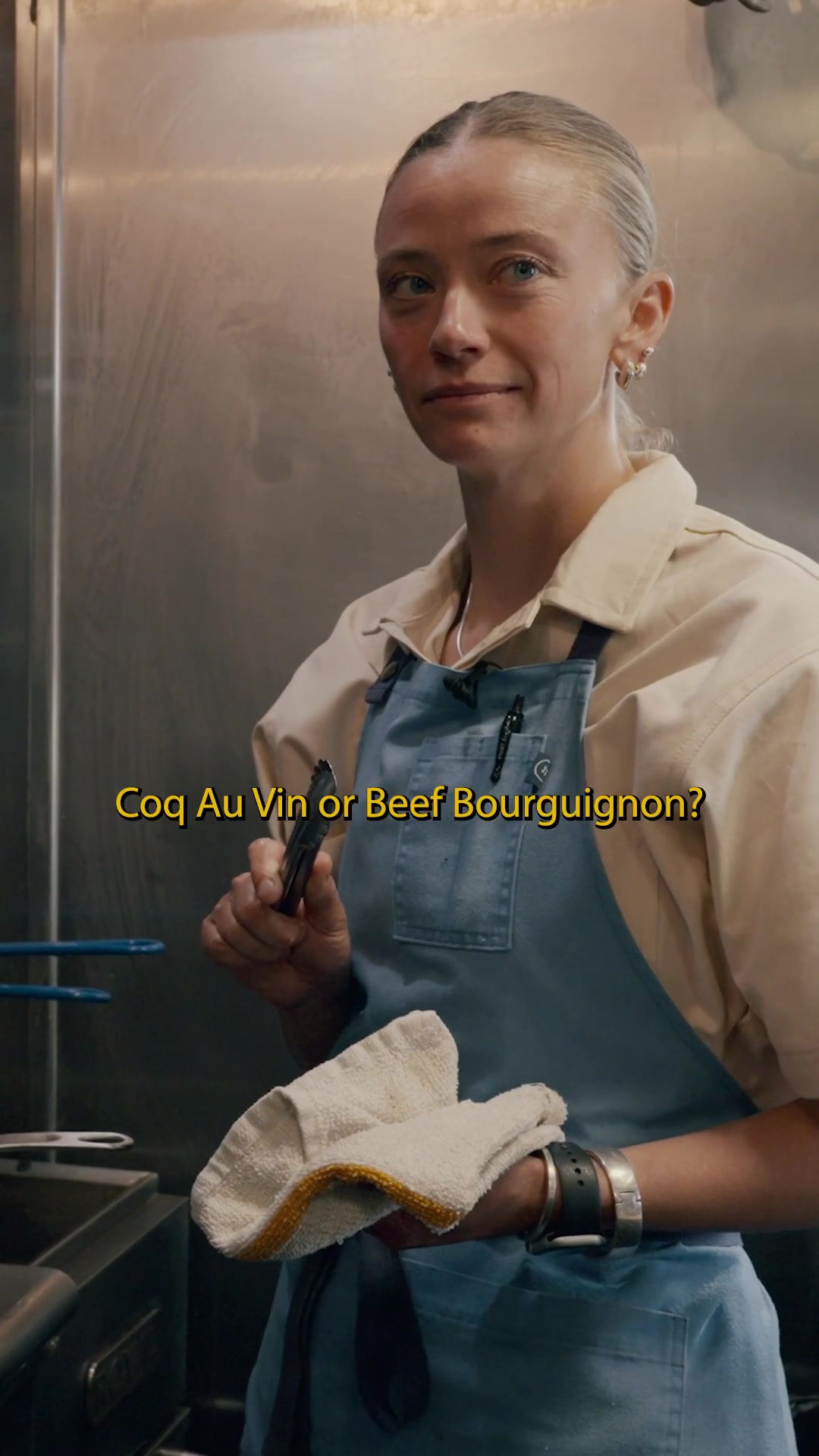
- Hook
- "What's one thing that immediately" - A woman with blonde hair in a bun, wearing a light-colored shirt and a blue apron, holding tongs and a white cloth, looks directly at the camera and smiles.
- Audience
- The questions and answers about cooking, restaurants, and food memories signal that this content is for people interested in culinary topics, possibly aspiring chefs, food enthusiasts, or those who enjoy cooking-related content.
Why it works. Uses an unscripted-feeling chef Q&A format with a warm, direct-to-camera host to build relatability for a foodie audience.
Direct questioning with on-screen text at 0:00, "What's one thing that immediately". Start your video with a direct, open-ended question as on-screen text that prompts self-reflection or curiosity in your target audience.
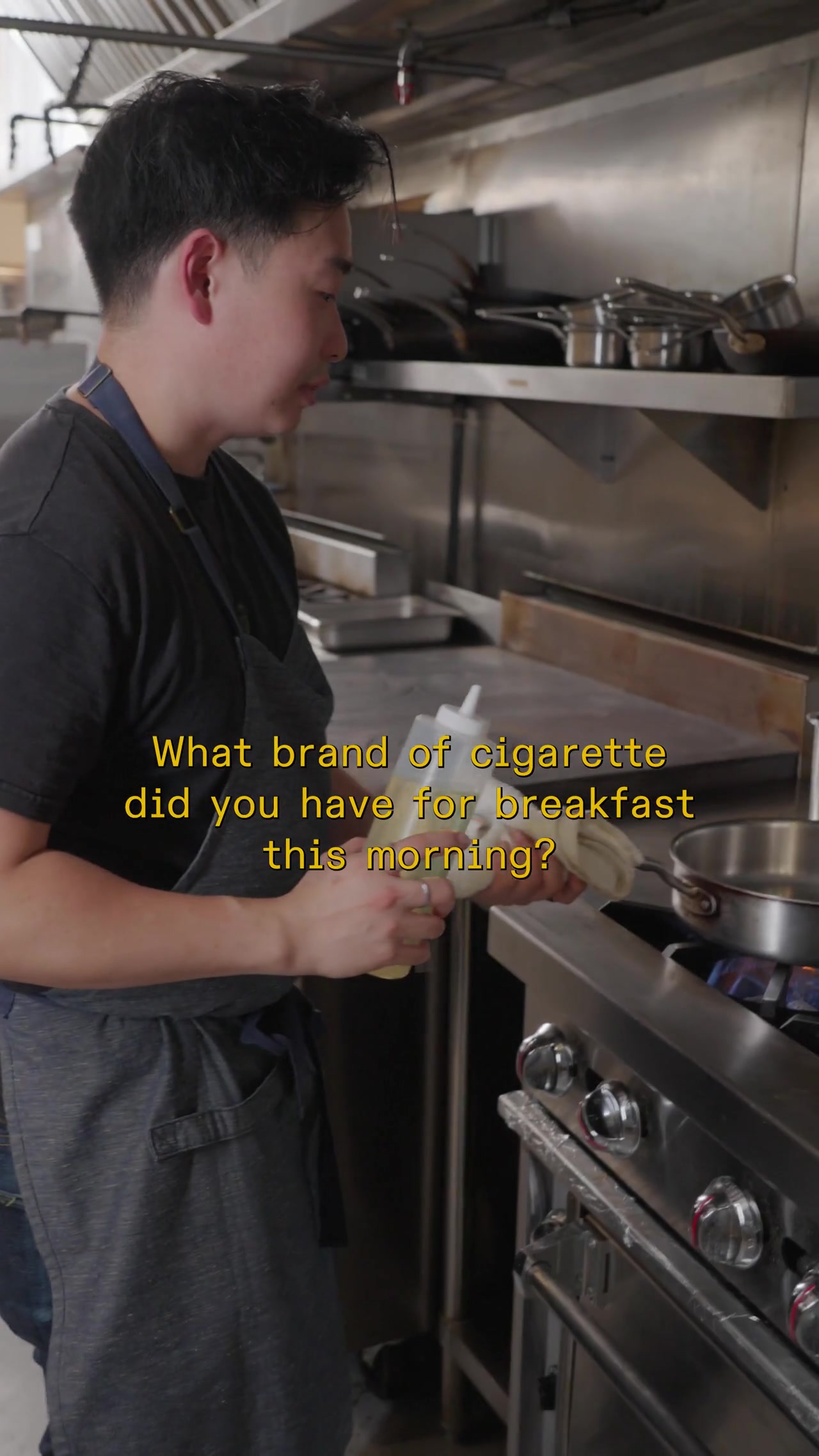
- Hook
- "What brand of cigarette did you have for breakfast this morning?" A man in a black t-shirt and grey apron is holding a clear plastic bottle with yellow liquid in a kitchen.
- Audience
- People interested in cooking, chefs, or restaurant culture, indicated by the questions about kitchen tasks, dishes, and restaurant aspirations.
Why it works. Uses a jarring, off-script question to make a chef interview feel unscripted, borrowing his credibility for the brand before any product is shown.
Rapid-fire Q&A format with on-screen text for each question (e.g., "0:00-0:03 What brand of cigarette did you have for breakfast this morning?"). Create a short video with 5-7 quick, personal questions (mix of funny, serious, and industry-specific) relevant to your niche, shown as on-screen text before the answer.
- Reach
- 34 upvotes · 59 comments · r/cookware
A community is already discussing this in r/cookware. Show up there authentically and answer the thread before a competitor does.
Who amplifies them
The creator layer runs wide rather than deep: TikTok posters tagged #madeinpartner include Olivia, Sad_papi, meganyagami, Sasser House, Halez Garcia, Tyler | Lifestyle Vlogs, JohnnyDrinks,.foodgotmewasted, and Hollywood Wonderland, each publishing personal-testimonial or demo content with a "link in bio" call to action rather than a single flagship partnership. On Instagram, creators annawpage and jims.table run the same testimonial pattern outside the tagged TikTok cohort. Two of the Meta ad library's video creatives are licensed directly from named creators, Primal Gourmet and Jonathan BBQ, whose griddle reviews were pulled into paid rotation, a sign Made In converts organic creator content straight into ad spend rather than treating the two as separate motions.
Co-founders Jake Kalick and Chip Malt show up as on-camera brand spokespeople in owned video (jointly in the carbon-steel design story, Kalick solo in the frying-pan design story) rather than posting from personal social accounts, so this is company-channel presence, not founder build-in-public. The chef roster, Grant Achatz and Nick Kokonas at Alinea, Michael Cimarusti, Daisy Ryan, Lucas Sin, Evan Funke, Tracy Malechek-Ezekiel, and others featured across the YouTube library, functions as the brand's amplifier network of working practitioners rather than paid talent. Tom Colicchio sits in a different bucket entirely: a 2018 tweet names him as an investor and advisor, not just a customer-chef, a dual role worth separating from the unpaid-endorsement framing applied to the rest of the chef roster. The r/cookware community covered above amplifies by scrutiny rather than promotion, functioning as an unpaid quality-control forum more than a growth channel.
07 Organic & video
The organic content engine: the videos, creator posts, and community presence earning attention without paid spend.
Made In's own video output has shifted format over time: early chef-technique clips carried a "Made In Presents" wrapper (Colicchio on sauteing mushrooms, Achatz on omelettes), a mid-run stretch settled into a serialized weekly maintenance series built around an in-house product expert narrating step-by-steps ("this week's episode" recurs across the carbon-steel-seasoning, stainless-cleaning, and knife-honing entries), and the current era has moved to documentary-style restaurant profiles under banners like "Most Popular Dish" and "Behind The Design," featuring the co-founders and named chefs on camera rather than a product demo alone. On TikTok, the brand's own chef-interview format outperforms its other posts, and the strongest showing among those in evidence is the Bell's (Los Alamos) chef Daisy Ryan interview at 375,308 engagement (2025-07-05), pulling ahead of narrower technique or product clips.
Read the full breakdown+1▾
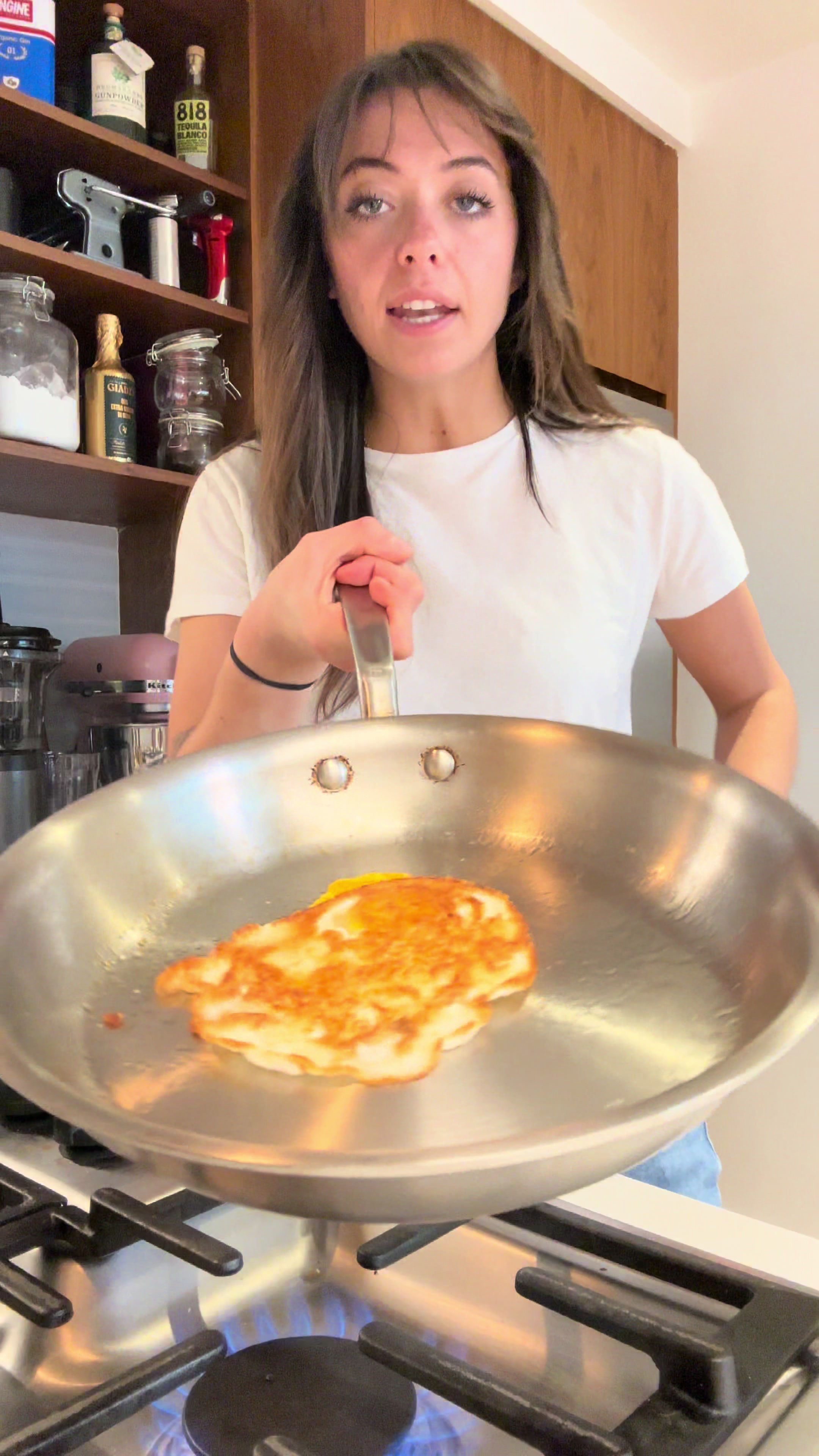
Among the creator layer, talking-head demo and personal-testimonial clips consistently outperform pure product shots: Olivia's "big stainless steel follow up" post hit 136,063 engagement (2024-05-08), her highest of several appearances, while Sasser House's pancake-on-the-griddle video reached 74,472 (2026-02-01) by pairing a specific dish with the product rather than a generic unboxing. The rest of the creator library clusters in the low thousands to tens of thousands, still consistent enough to read as a steady drumbeat rather than one-off spikes. The pattern across both owned and creator content is the same: a real person cooking a specific, named dish out-performs abstract product-quality claims.
08 Affiliate & partners
How the brand turns creators and partners into a tracked, variable-cost acquisition channel, and how the program is structured.
The #madeinpartner tag running across more than a dozen TikTok creators, each pointing to a personalized "link in bio" and, in Olivia's case, an explicit "10% off" code, is the clearest evidence of a live creator-affiliate program, even though no dedicated affiliate-program page surfaced in the owned-site link scrape (which only returned social profile links to X, YouTube, Instagram, and LinkedIn). That pattern reads as code-based, creator-managed tracking rather than a public self-serve affiliate portal, consistent with a brand that recruits and equips creators individually instead of running an open-signup program.
09 The playbook
The channels are not separate. They are one system where each stage feeds the next. Here is the read, then the plays to run tomorrow.
The inferred playbook
Made In's loop starts with unpaid trust from working chefs, gets harvested by paid search and social that mostly re-capture people who already know the name, and gets extended by a TikTok creator-affiliate layer, but the visible traffic trend shows that machine sustaining scale rather than growing it.
Chef-trust flywheel: the customer-spotlight and technique-series videos covered above convert real kitchen use into content the brand doesn't have to buy, seeding the credibility that the branded-search and paid-social layers later monetize. Paid recapture engine: with Search Paid, Display, and Social Paid together over 40% of traffic and the top bid terms all variations of the brand's own name, the ad spend detailed above is mostly closing demand the chef and content layers already created rather than discovering new shoppers cold. Creator-affiliate extension: the #madeinpartner cohort and the two creator ads pulled into the Meta library show the brand treating organic creator content as a farm system for paid creative, collapsing the line between earned and bought media. The flat-growth gap: despite the multi-year ad commitments and dense creator layer already covered, overall traffic sits essentially flat, suggesting the current loop is efficient at retention and recapture but is not the thing generating fresh top-of-funnel discovery.
Not visible in public data: CAC, repeat-purchase rate, and the wholesale-versus-DTC revenue split behind the third-party revenue estimate.
Seed practitioners with free product instead of paid posts
The proofThe customer-spotlight and Alinea kitchen-test videos covered above trace back to giving working chefs product to use on their own terms rather than a sponsorship brief.
The adaptationIn your own category, identify 5-10 credible practitioners, not necessarily famous ones, who would genuinely use your product, and send it free with no content requirement attached. The mechanism: a third party's unscripted reaction transfers trust that a paid caption cannot, because the audience can tell the difference between a review and an ad. Ask only that they film themselves using it if they like it, and let the honest ones opt out.
Cost: under $500 · Time to signal: weeks to months · Works pre-PMF: yes, provided you have finished units to give away rather than a prototype.
Turn a one-time goodwill gesture into a standing content format
The proofMade In's COVID-era Instagram Live cooking sessions, run as a fundraiser for furloughed restaurant staff, evolved into the in-house video operation behind its current chef-interview series.
The adaptationHost a free live session that solves a real problem for a community near your product rather than a sales pitch, record it, and keep running the format as a recurring series once the original cause has passed. The format itself, not the cause, is the asset worth keeping.
Cost: $0 · Time to signal: days to weeks · Works pre-PMF: yes.
Recruit micro-creators with a personal code instead of a formal affiliate platform
The proofThe #madeinpartner roster covered above runs on individual "link in bio" codes rather than a public affiliate signup page.
The adaptationDM 20-30 small creators in your niche, offer free product plus a unique discount code, and ask for one honest video in exchange. Track results by code redemptions rather than building affiliate infrastructure before you know which creators actually convert.
Cost: under $500 · Time to signal: weeks · Works pre-PMF: yes, conditional on having product ready to ship to creators.
Judge ad creative by a fixed spend window, not by early fatigue
The proofThe year-plus-running Saucier and griddle placements detailed above only became provable winners after months of continuous spend; nothing still active in that library was pulled after a normal few-week test.
The adaptationCommit each new paid-social creative to a fixed minimum window, for example 30 to 45 days at a small daily budget, before judging it dead, and reallocate only once that window closes rather than reacting to week-one click-through dips.
Cost: under $500 or dedicated budget · Time to signal: months · Works pre-PMF: conditional, only once there is enough revenue to fund a real test window.
Place the bundle price beside the single price, not behind a popup
The proofThe landing pages covered above surface a multi-piece set price directly next to the single-item price on both the UK and US storefronts.
The adaptationOn your own product or landing page, show a 2-3 item bundle price adjacent to the single-SKU price at the point of decision, instead of behind an upsell popup after add-to-cart, so buyers self-select into the larger basket before checkout.
Cost: $0 · Time to signal: days · Works pre-PMF: conditional, only if you already have at least two sellable tiers to bundle. Not transferable at an earlier stage: the wholesale placements inside Williams-Sonoma and Crate & Barrel, the concurrent US, UK, and Australian ad campaigns, and the staffed in-house video studio behind the chef-interview series all assume a team and retail relationships a pre-revenue founder will not have yet.
You just read how madeincookware does it. Tomorrow it is someone else.
Every morning we take one company that is actually growing and break down where its customers come from: the ads still running after a year, the channel doing the real work, and the play you can run this week.
Systemaic · directional intelligence. Traffic, spend, and reach figures are SimilarWeb-style estimates and qualitative reads of public data, not audited numbers. Built on real public receipts.
// teardowns with a similar GTM motion
sources & receipts (2)
Live ad libraries: meta ad library · google ad library
Traffic, spend, and revenue figures are estimates as noted in the report; the links above are the primary public artifacts.