- 01Test demand with a video before you build
- 02Turn your harshest critics into content
- 03Position the product as an identity signal, not an ingredient list
- 04Build collaborations around the partner's strangest quality
01 Snapshot
The one-glance read on who they are and how they grow. Each point is verifiable from the receipts above.
Canned mountain water, iced tea, and sparkling energy drinks in punk-metal aluminum tallboys targeting Gen Z and Millennials through mass retail and live events, with $333M in 2024 revenue and a $1.4B valuation confirmed in March 2024.
Entertainment-led, with retail distribution as the conversion layer.
$333M in 2024 revenue; 133,000+ retail doors across Walmart, Target, Kroger, and 7-Eleven; 7.6M Instagram followers at ~69,100 average engagement per post; ~733K monthly visits as of July 5, 2026 (+33.7% over the prior ~3-month window).
As of July 5, 2026, their Meta push is almost entirely behind a new Sparkling Energy line positioned as "the easy-drinking energy drink" (100mg caffeine, 0g sugar, 5 calories), running creatives across gym-goer, parent, and lifestyle flat-lay formats.
Liquid Death built a $333M beverage company by treating content production as the product and the aluminum can as the monetization vehicle, compounding earned media into retail shelf space a pure DTC play could never reach.
02 How it unfolded
The order the channels came online. Sequence is strategy: what they did first, and what they layered on once demand existed.
03 Traffic & channel mix
Estimated demand, the channel split behind it, and the keywords and referrers doing the work. Directional modeling, not audited analytics.
Traffic sources
Top search keywords
| Keyword | Volume | Weight | CPC |
|---|---|---|---|
| liquid death | 146k | $0.51 | |
| death liquid | 8.9k | $0.51 | |
| liquid death water | 4.2k | $0.54 | |
| liquid death energy drink | 3.2k | $0.93 | |
| liquiddeath | 2.4k | $0.45 |
Top referring sites
Closest competitors by audience
Liquid Death draws an estimated 733,214 monthly visits as of July 5, 2026, with a +33.7% trend over the prior ~3-month window. The traffic profile is that of a recognized brand, not a content farm: organic search leads at 46.2%, but the top-ranking terms are almost entirely branded. "Liquid death" commands 146,190 monthly searches across the web; "liquid death water" pulls 4,230 and "liquid death energy drink" pulls 3,220. They rank first for all of these. No editorial SEO content drives this volume, it reflects a brand people already know and seek out by name.
Direct at 20.3% is the second-largest channel. For a CPG brand sold primarily through retail and live venues, this tracks: shoppers who discover the product on a shelf or at a concert navigate home to the site. Display ads contribute an outsized 14.1% share, suggesting a programmatic retargeting layer running continuously alongside the organic flywheel. Paid social (5.9%) and paid search (4.9%) complete the paid picture; email (3%), referrals (2.5%), organic social (2.1%), and Gen AI (0.9%) account for the rest.
The top referring domain is amazon.com, consistent with a DTC-to-Amazon purchase path. Trendtrack.io (a trend intelligence platform) and force.com (Salesforce infrastructure) appear as referrers, pointing to some B2B or partner-data activity. Among the closest competitor domains, drinkopenwater.com, tonystapwater.com, and proudsourcewater.com sit in the premium-canned-water set; drinkcirkul.com and air-up.com suggest comparison searches around flavor-system hydration alternatives.
04 Organic content
The specific pages earning their organic search traffic, and the pattern behind why they rank. Adapt the format, not the topic.
Liquid Death's organic footprint is brand-driven rather than content-driven. The homepage alone captures roughly 70.7% of estimated organic visits, with searches for "liquid death," "liquid death water," and "liquid death flavors" landing on the homepage or core product pages. The remaining top organic pages are transactional: the beverages collection, the flavored sparkling variety pack, the still mountain water page, and the brand manifesto. There is no editorial content or SEO-targeted landing page in the top five. The pattern is a brand that earns organic search traffic by building awareness through other channels (content, earned media, retail) and capturing the resulting branded searches, not by producing keyword-optimized articles. One notable exception: the /manifesto page draws searches from people trying to understand what the brand stands for, not just to buy.
Top pages by organic traffic
05 Channel map
Not traffic share. How much weight the growth system actually puts on each channel, with a one-line read on the role it plays.
What drove growth
06 The creative doing the work
Each exhibit shows the actual asset, an X-ray of why it works, a status, and a play you can adapt. This is the heart of the teardown.
The Meta ad library holds roughly 275 ads (a directional estimate; our collection sampled 80, and every sampled ad was still active). As of July 5, 2026, the oldest active Meta ads are ~67 days old, making the current wave a recent launch push rather than a long-tenured rotation, the longevity signal for labeling these "proven winners" in the classic sense does not yet exist. Call this the current push.
The Google picture is unusual: 4 of 6 Google ads are active, with the longest-running at ~90 days as of July 5, 2026. But the advertisers are not Liquid Death, they are Taylor Morrison Home Corporation, TRUENEST LLC, BEXLEY LOWER LLC, and similar entities, all pointing to liquiddeath.com. These appear to be third-party resellers or affiliates bidding on Liquid Death's branded search terms. Liquid Death itself runs little or no proprietary paid search; the 4.9% paid search traffic share flows largely through these third-party bidders rather than a managed in-house campaign.
- Running
- 67 days (longevity = it's converting)
- Hook
- A woman in a black Nike sports bra looks in a mirror and adjusts her top to show her abs, followed by a hand holding a red Liquid Death can.
- CTA / offer
- "Try it out."
- Audience
- Fitness enthusiasts (shown through gym setting, Nike apparel, and high-intensity exercises like pull-ups).
Why it works. Opens with a body-check clip that looks like organic gym content, borrowing the trust fitness audiences already give that format before revealing the can as the payoff.
Functional Performance Montage (0:37-0:45) Shoot your product reveal to look identical to the unbranded content your audience already scrolls past approvingly, then cut to your product only at the end.
- Running
- 67 days (longevity = it's converting)
- Hook
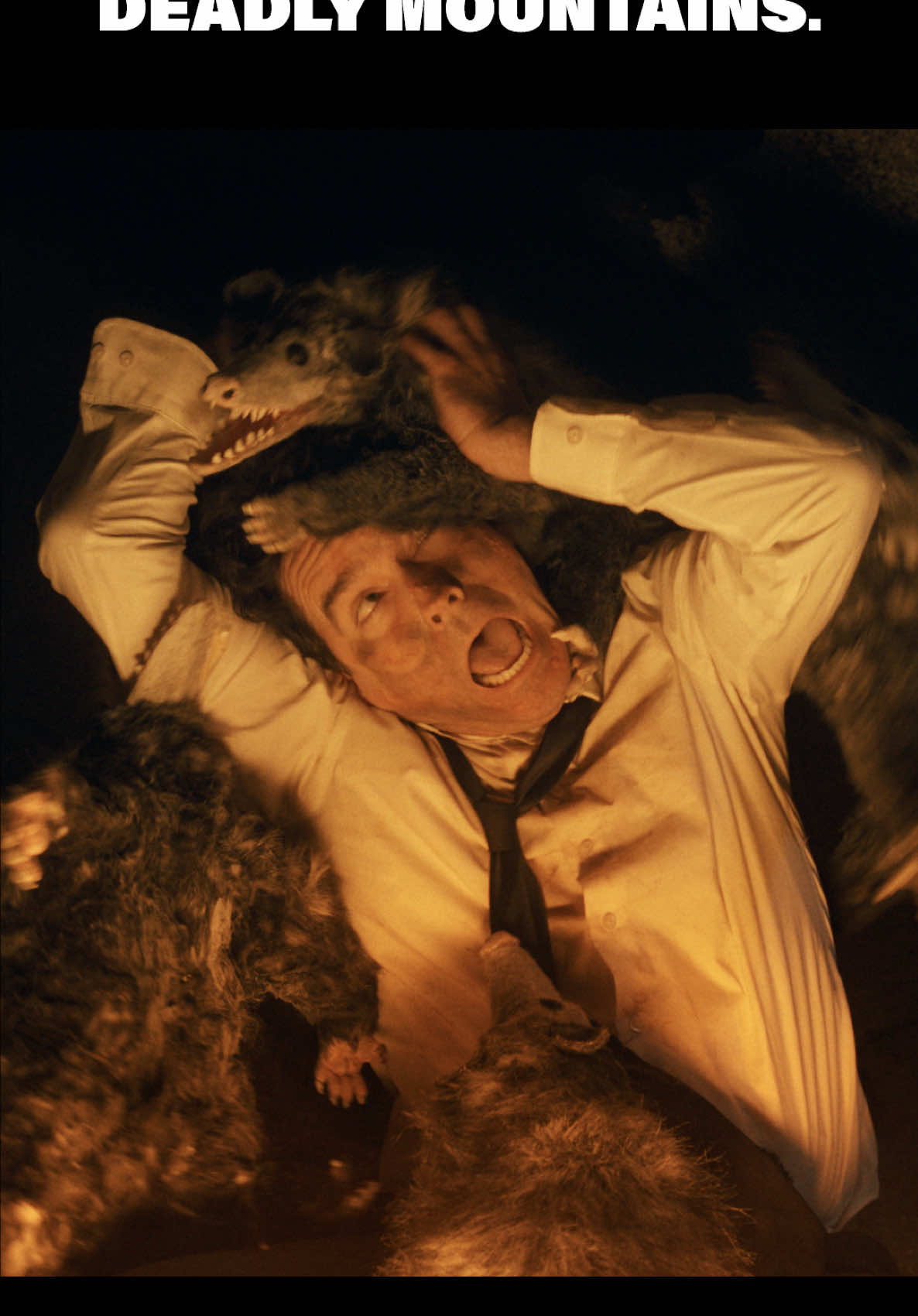
- "TODAY I'M TRYING OUT LIQUID DEATH ENERGY." A man in a dark suit and white shirt holds a black and gold can in front of a glass booth.
- Audience
- Young males who enjoy irreverent, low-budget 'stunt' content and frequent movie theaters (the visible setting).
Why it works. Sets up a big 'extreme experience' promise that visibly fails, then lets the can be the one thing in the video that actually delivers, which reads as more credible than a straight product pitch.
Binary rating contrast at 0:12 ("Tornado simulator, zero out of ten. Liquid Death energy, ten out of ten.") Film your product review inside a hyped-up 'experience' that underdelivers, then use the letdown as the setup for your product being the real payoff.
- Running
- 10 days (new — still being tested)
- Hook
- "So excited for this." + Close-up of a tattooed hand opening a red can labeled 'MURDER MYSTERY'.
- Audience
- Alternative/edgy consumers (tattoos, bold branding) who are health-conscious (looking for 'No Sucralose' and 'Natural Caffeine').
Why it works. An ASMR-quality can-opening sound paired with a genuinely unknown flavor name gives the video a sensory hook that works even muted, encouraging a replay for the reveal.
ASMR Sensory Hook (0:00) Record a crisp, isolated open or pour sound for your product and pair it with a mystery detail, flavor, batch, or color that only watching reveals.
Show 6 more exhibits
- Running
- 6 days (new — still being tested)
- Hook
- A blue 'TROPICAL TERROR' can is shown through a kaleidoscope mirror effect against a bright blue background with aggressive heavy metal screaming vocals.
- Audience
- Fans of alternative/heavy metal culture who want energy drinks without the 'wellness' or 'corporate' aesthetic.
Why it works. Heavy metal audio and kaleidoscope visuals swap the category's clean wellness look for a mosh-pit aesthetic, signaling this drink is made for metal and punk fans, not gym influencers.
Genre-Specific Audio Branding (0:00-0:14) Score your product visuals with music from your buyers' actual subculture instead of generic upbeat stock tracks, then let the genre do the targeting.
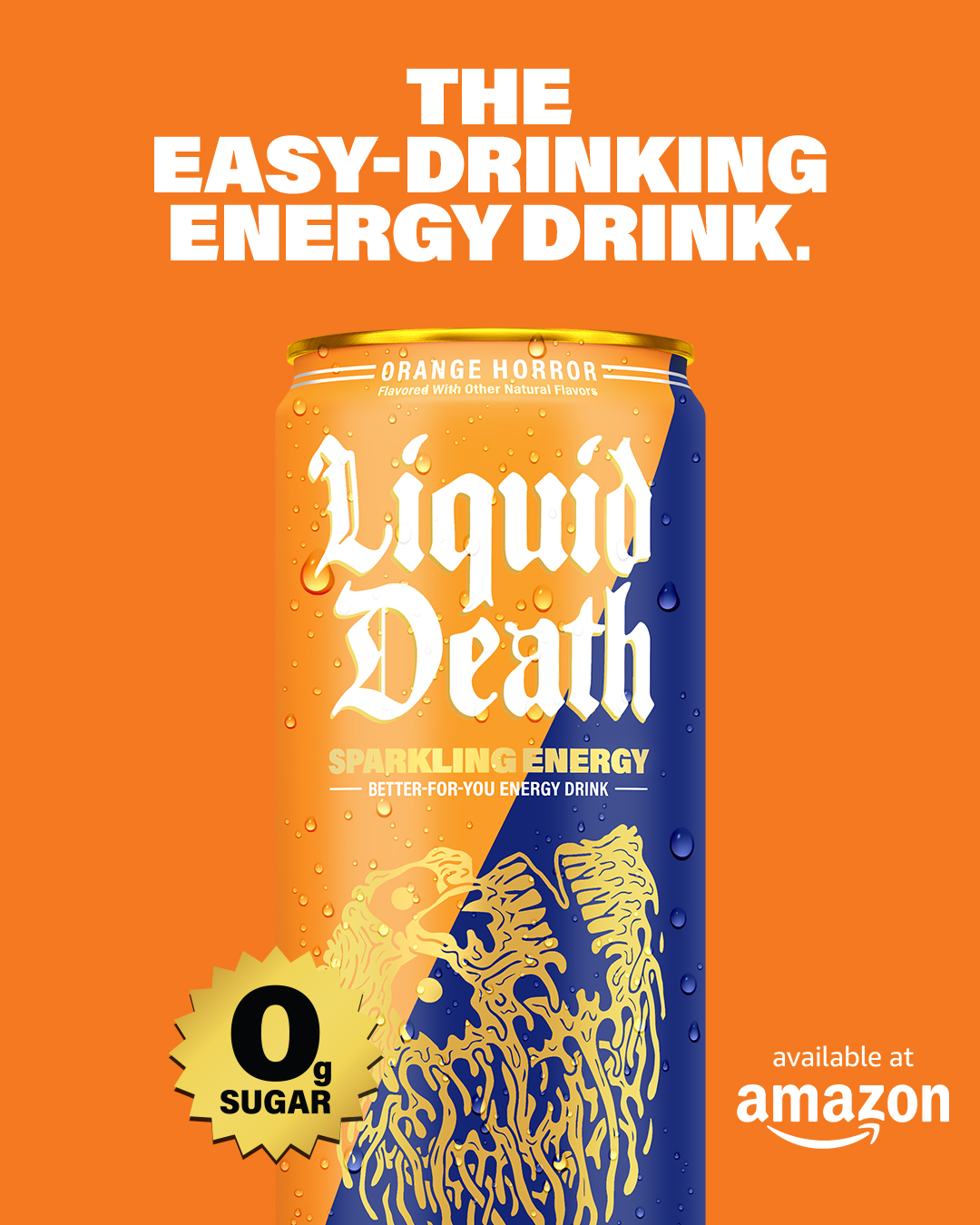
- Running
- 67 days (longevity = it's converting)
- Hook
- "THE EASY-DRINKING ENERGY DRINK." displayed as white text on an orange background, with the top portion of an orange and blue energy drink can visible.
- CTA / offer
- available at amazon
- Audience
- Individuals seeking an energy drink that is easy to consume and sugar-free, indicated by 'EASY-DRINKING' and '0 g SUGAR'.
Why it works. Leads with the one trait that differentiates it from Red Bull or Monster: it doesn't taste like a chemical energy drink, aimed at people who avoid the category on taste alone.
Prominent headline stating a key benefit: "THE EASY-DRINKING ENERGY DRINK." Write down the #1 reason people avoid your category, then turn it into a three-word headline that flatly contradicts it.
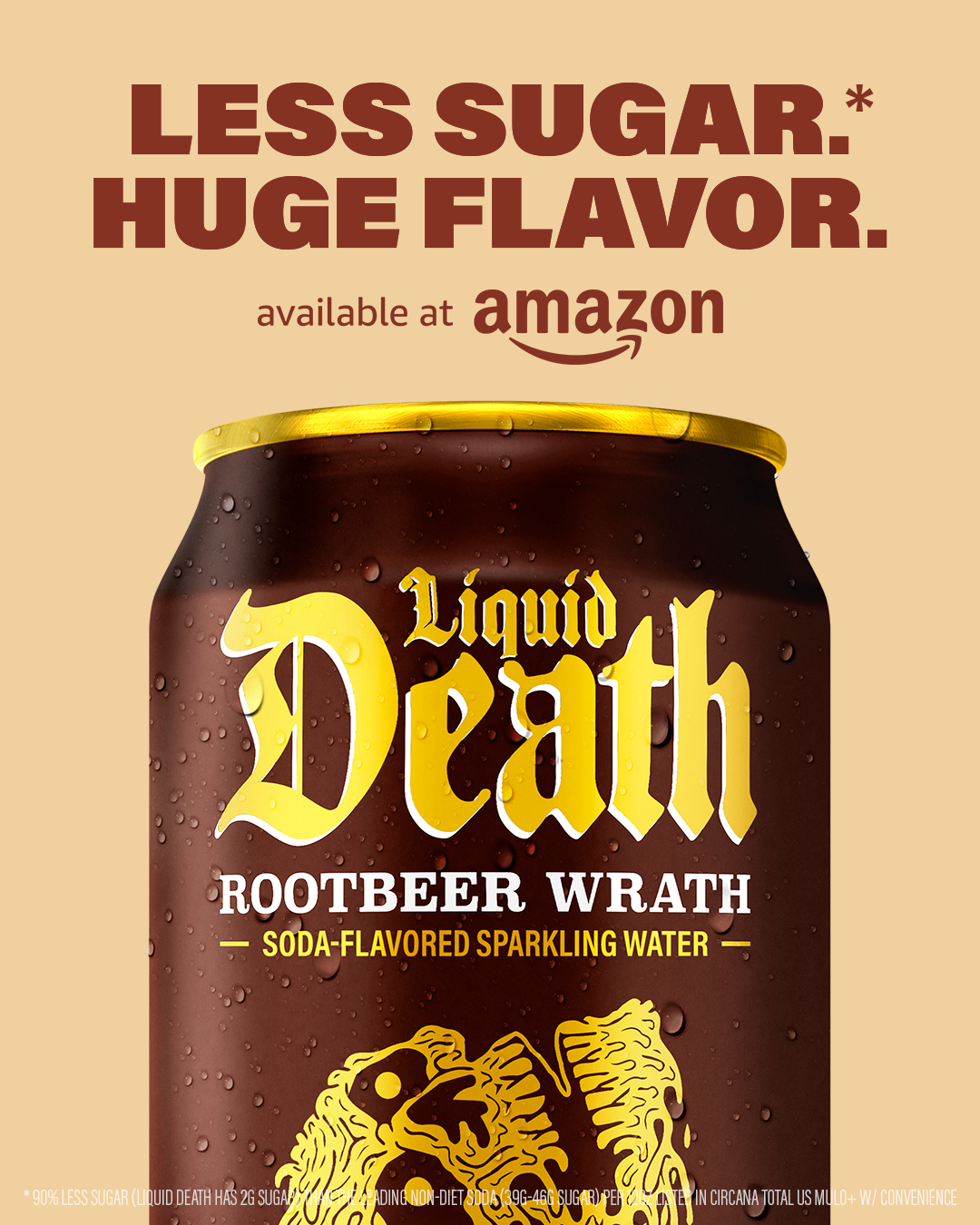
- Running
- 67 days (longevity = it's converting)
- Hook
- Visual: A brown background with the text "LESS SUGAR.* HUGE FLAVOR." in dark brown, and below it "available at amazon" with the Amazon logo. A brown Liquid Death can with gold lettering is visible from the top down to the middle of the can.
- CTA / offer
- available at amazon
- Audience
- Individuals seeking beverages with reduced sugar content but full flavor, specifically those interested in root beer or sparkling water, and who shop on Amazon. The brand name 'Liquid Death' also targets those who appreciate edgy or unconventional branding.
Why it works. Answers the low-sugar-means-bland assumption directly and routes buyers to Amazon in the same frame, shortening the path from claim to cart.
Headline benefit statement: "LESS SUGAR.* HUGE FLAVOR." is prominently displayed at the top of the image. State your product's health tradeoff and its taste payoff in the same short line, then link straight to where it's sold.
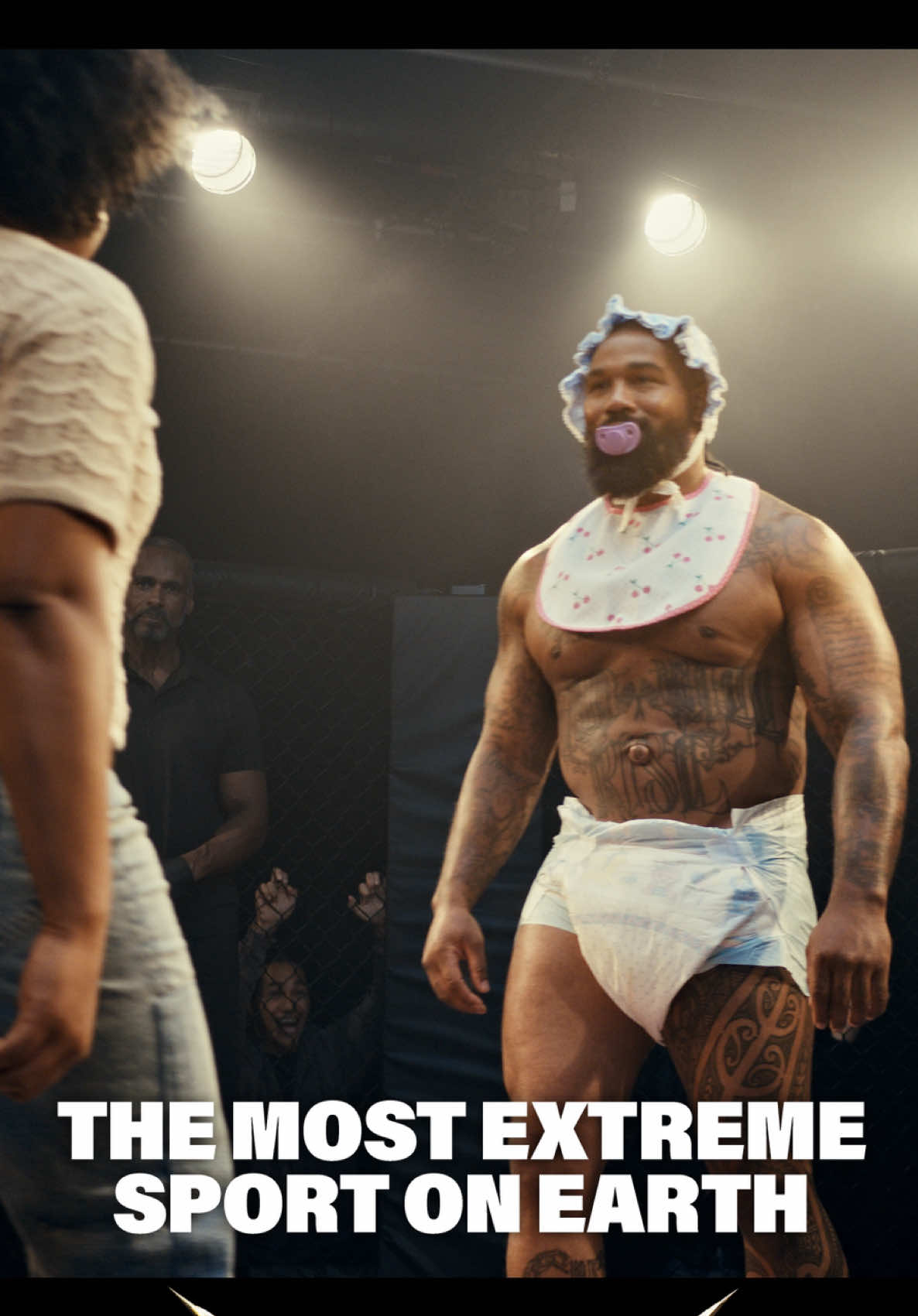
- Hook
- "Uh-oh. Poopies in my pants." A muscular man with a beard, wearing a baby bonnet, bib, and diaper, looks directly at the camera with a surprised expression.
- Audience
- Parents who feel overwhelmed and exhausted by the demands of raising children, indicated by the entire premise of 'Parenting is the most extreme sport on Earth' and the visuals of tired parents.
Why it works. Turns the parenting-is-an-extreme-sport claim into a sketch instead of a headline, giving exhausted parents something to send to each other.
Pattern Interrupt with Absurd Visuals and Audio (0:00-0:03): The video opens with a muscular man in full baby attire saying, "Uh-oh. Poopies in my pants." Take a headline claim you've already tested as static copy and act it out literally on camera as a short comedic skit.
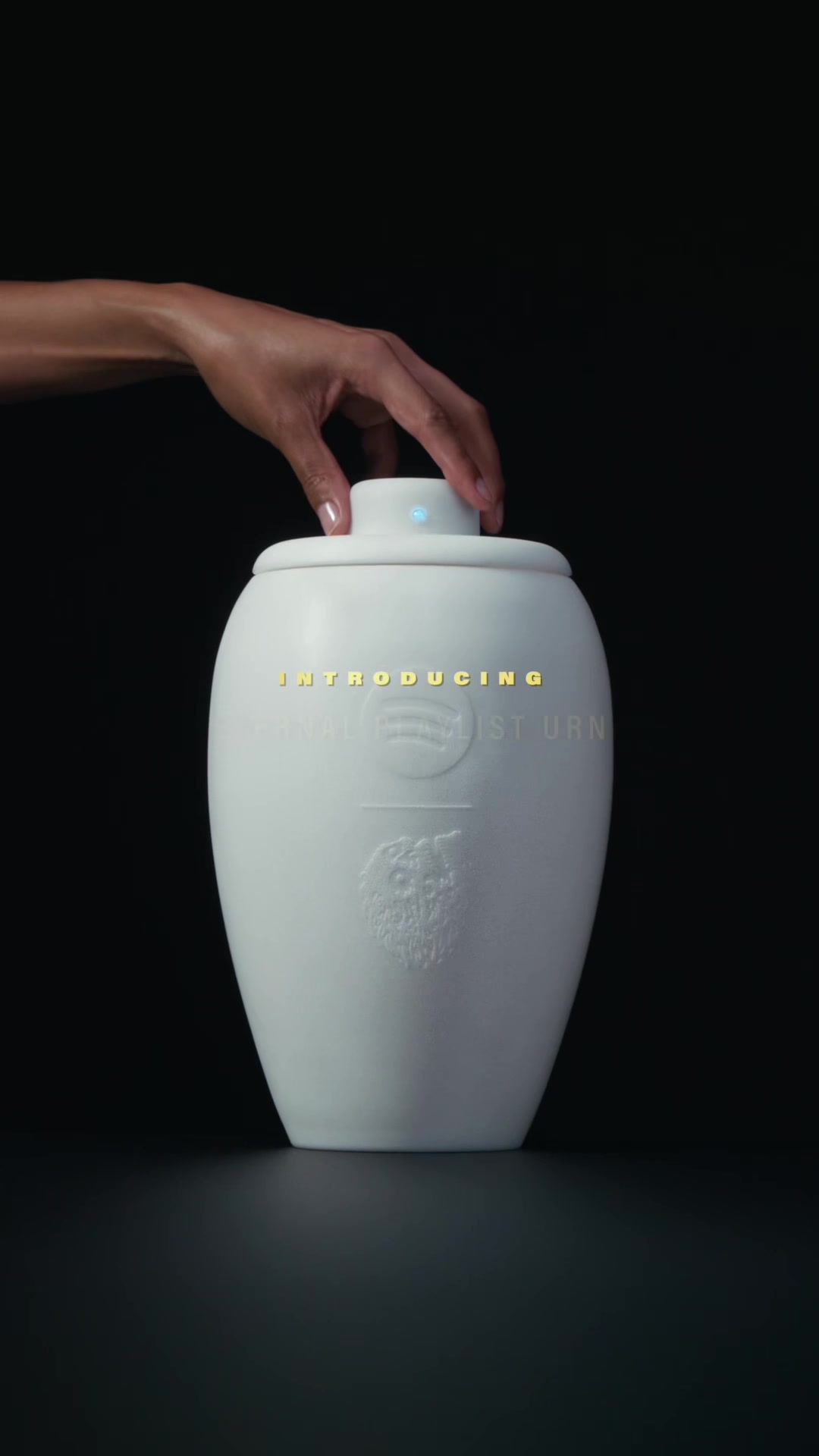
- Hook
- "Introducing" + a hand reaching to touch the lid of a white urn with a blue light on top.
- CTA / offer
- The Eternal Playlist Urn, available at liquiddeath.com/spotify
- Audience
- Individuals with a dark sense of humor, fans of Liquid Death and Spotify, and those open to unconventional products. The use of a ghost and the 'haunting' statistic signals a playful, irreverent tone.
Why it works. Uses straight-faced launch language on an absurd co-branded urn with Spotify so the mismatch itself carries the joke and the partnership.
Introduces a bizarre, co-branded product with a serious tone at 0:03, "Introducing the Eternal Playlist Urn, from Liquid Death and Spotify." Announce a genuinely odd or joke product with the same flat Introducing language you'd use for a real launch, letting the mismatch do the work.
Who amplifies them
Celebrities as creative raw material: Tony Hawk contributed blood for a pressed skateboard (100 units); Wiz Khalifa appeared as a water-brand heavyweight; Ozzy Osbourne warned kids not to snort Death Dust electrolyte powder; Bert Kreischer's Body By Bert VHS collab was built around his shirtless party-animal persona; Martha Stewart produced a dismembered-hand candle. These are not traditional endorsements, each celebrity's weirdest or most extreme quality becomes the plot of the content.
Brand crossovers with earned-media legs: The e.l.f. Cosmetics x Liquid Death Lip Embalm collab (a sequel to an earlier partnership) generated 9.6M YouTube views and 202,445 TikTok engagements for the teaser. Kylie Kelce's "Kegs For Pregs" 5-liter mini-keg ran as a post that drew 144,017 X views and 1,156 likes. The Spotify urn (a limited-edition speaker shaped like an urn) became a Hacker News item three separate times in early 2026.
Organic creator response: Multiple TikTok creators post without any visible affiliate arrangement, from genuine fans (@soph, Fruity Pebbles flavor at 18,448 engagements) to critics questioning water sourcing (@Cormac Hayden, 42,607) to religious framing posts (@Julian James, 165,797). The controversy content generates reach the brand does not have to produce, and the brand's aesthetic is designed to provoke exactly this response.
Distribution-level amplification: Live Nation made Liquid Death the exclusive water at hundreds of US venues, placing the product in front of the brand's core audience at concerts and festivals, the one physical context where the punk-metal can most directly makes sense.
07 Organic & video
The organic content engine: the videos, creator posts, and community presence earning attention without paid spend.
Liquid Death's YouTube library runs as an entertainment archive. The format pattern: a mock-genre concept executed with real production budget. The Big Game commercial (a parody of youth beer ads, kids pounding tallboys at a party to Judas Priest's "Breaking the Law") has 8.4M views; the e.l.f. Cosmetics Lip Embalm sequel hit 9.6M; the 2024 Iced Tea truck commercial drew 6M; the "Chest Blaster" workout device parody and the free-jet giveaway video each pulled over 5.9M. The brand produced a full 45-minute horror film, "Dead Till Death," that streamed on Amazon Prime, directed by the creators of the animated series Mr. Pickles. Every piece of content looks like something a person would choose to watch, not something they'd endure before the thing they actually wanted.
Read the full breakdown+1▾
On TikTok, the brand's own posts carry the heaviest engagement. The "extreme parenting" reel positioning Liquid Death Energy as the official sponsor of parenting drew 5.19M engagements. Creator coverage amplifies reach in both directions: the Spotify urn video from creator @wlanskeleton independently generated 3.66M engagements; a Christian-framing "demonic brands" video from @Julian James pulled 165,797, treating the brand name and aesthetic as a provocation worth responding to on camera. Three of the top creator posts (the urn, the e.l.f. Lip Embalm teaser, and the Kylie Kelce keg video) account for the bulk of creator-UGC engagement, with a handful of mid-range posts (7,000-42,000 range) and organic fan content filling in below.
08 Affiliate & partners
How the brand turns creators and partners into a tracked, variable-cost acquisition channel, and how the program is structured.
No affiliate or referral program is visible in the scraped evidence. The brand's homepage links only to Instagram and TikTok, with no partner portal or referral parameters. At Liquid Death's current scale, retail-first with 133,000+ doors and a celebrity-collab content engine, the absence of a structured affiliate layer is consistent with a brand that acquires awareness through earned media and retail velocity rather than tracked DTC referrals.
09 The playbook
The channels are not separate. They are one system where each stage feeds the next. Here is the read, then the plays to run tomorrow.
The inferred playbook
Liquid Death built a $333M-a-year beverage company by treating every marketing dollar as a content production budget and using the aluminum can as proof that the brand's personality is real.
A $1,500 Facebook video for a product that did not yet exist pulled 3M views in four months and directly enabled the $1.6M seed round from Science Inc. The initial hypothesis was that if the brand's entertainment value was genuine, people would share it without being paid to. The Facebook test proved the hypothesis before manufacturing began.
Rather than buying placement in culture, Liquid Death built objects designed to be covered: the Tony Hawk blood skateboard (100 units, widely reported), the "Greatest Hates" Spotify album turning internet hate comments into music, the 45-minute horror film on Amazon Prime. Each artifact's intrinsic strangeness earns the press and creator coverage; the water in the can is irrelevant to the story.
Dig deeper+3▾
The cultural awareness built across YouTube, Instagram, and TikTok gave retailers the audience signal they need before committing shelf space. The Live Nation deal (exclusive water at hundreds of US venues) embedded the product in the exact context, a concert crowd, a Gen Z/Millennial audience, high-energy environment, where the brand identity is most legible. Retail doors grew from roughly 16,000 in 2021 to 133,000+ by 2024.
The Meta library as of July 5, 2026, is almost entirely behind the new Sparkling Energy line. Moving from water and iced tea into caffeinated beverages puts Liquid Death in direct competition with Red Bull and Monster. Whether the "easy-drinking" positioning differentiates cleanly from those incumbents is the unresolved signal in the current paid data.
DTC free-to-paid conversion, churn, CAC, and the margin split between DTC and retail channels.
Test demand with a video before you build
The proofFounder Mike Cessario ran a $1,500 Facebook video for Liquid Death before a single can existed, pulling 3M views in four months. That video served as the primary demand signal that justified the $1.6M seed round from Science Inc. The product did not ship until after the round closed.
The adaptationIf you have a physical product concept, a positioning thesis, or a category re-frame you believe in, produce a 30-60 second video that sells the vision and run $50-500 of paid spend against a cold audience before committing to manufacturing, inventory, or a fundraise. The metric that matters is share rate and comment sentiment, not click-through rate, you are testing whether the concept triggers "wait, what IS this?" organic spread. Start by writing the concept brief as if you were pitching a 60-second brand film to a director, then produce it with whatever you have access to (phone, one rented location, one prop) and run a dark Instagram or Facebook ad to a cold lookalike audience.
Cost: under $500 · Time to signal: days · Works pre-PMF: yes
Turn your harshest critics into content
The proofLiquid Death collected their most hostile internet comments and released "Greatest Hates" as a real album on Spotify, with limited-edition 12-inch vinyl sold on their website. The project inverted the polarity of negative attention: instead of suppressing criticism, they amplified it and earned credit for the self-awareness.
The adaptationIn any category where the product or positioning is deliberately polarizing, the hater response is a content asset you do not have to generate. Search for the most common hostile framings of your product across Reddit threads, App Store reviews, reply threads, or support emails, and produce a piece of content that takes those exact words seriously and makes them funny, musical, or visually striking. The mechanism that makes this work is a confidence signal: a brand secure enough to laugh at its critics reads as a brand that knows something the critics don't. Start by collecting 20-30 of your harshest public reviews, identifying the funniest or most extreme three, and prototyping a single-page "Wall of Shame" or a short dramatic reading video.
Cost: $0 · Time to signal: weeks · Works pre-PMF: yes, provided you have enough public feedback to draw from
Position the product as an identity signal, not an ingredient list
The proofLiquid Death is canned water priced at $1.89-$2.29 per can. The entire premium over a $0.30 plastic bottle is aesthetic: the tallboy aluminum can, the metal-brand codes, and the implied statement that the person holding it made a deliberate cultural choice. The current Meta push leads with "THE EASY-DRINKING ENERGY DRINK" rather than "100mg caffeine, 0g sugar", the identity claim ("easy-drinking" implies a kind of person) is the headline, and the ingredient proof is the support.
The adaptationFor any product people carry, wear, or consume in public, ask one question: what statement does someone make by being visibly seen with your product? Design the packaging, the lead copy, and the first three seconds of any video around the identity claim, not the feature list. The functional differentiators (less sugar, recyclable can, clean caffeine) are the backup argument once someone is already interested. Start by writing one sentence that describes who your product says the buyer IS, not what it does, and test that sentence as the headline across three product images.
Cost: $0 · Time to signal: weeks · Works pre-PMF: yes
Build collaborations around the partner's strangest quality
The proofThe Tony Hawk collaboration was a skateboard pressed with Hawk's actual blood, 100 units sold. The Ozzy Osbourne campaign leads with Ozzy warning kids not to snort a hydration powder. The Bert Kreischer VHS used Bert's shirtless party-animal persona as the plot. Martha Stewart's collab used her incongruousness with death metal as the joke. None of these are flattering portrayals; all of them generated earned media and creator responses that a polished brand endorsement post never would.
The adaptationWhen approaching a creator, micro-influencer, or niche-adjacent figure for a partnership, lead with a concept built around one extreme or unusual quality of their persona, not the generic angle of "they love your product." A collaboration concept that makes the creator a little uncomfortable (in a productive, creative way) generates more genuine coverage and creator buy-in than a branded post that could belong to anyone. Start by identifying three creators in your category whose public persona contains one distinctive extreme quality, then write a one-paragraph collaboration brief that uses that specific quality as the premise of the content, not as context.
Cost: $0 to under $5K at the micro-creator level · Time to signal: weeks · Works pre-PMF: yes, provided you can write the concept
Sell your packaging or distribution surface as media inventory
The proofLiquid Death auctioned ad space on a national run of 500,000+ product cases on eBay. Coinbase won at $500,114, buying a 7.5 x 10.6 inch placement on cases reaching retailers where 200M+ shoppers walk through each week. The auction itself became the story before a single case shipped, generating press coverage that amplified the reach of the placement beyond the cases themselves.
The adaptationAny business with a physical surface that circulates at scale, packaging, a shipping box, a delivery sleeve, a receipt, can treat that surface as media inventory. The mechanism that elevates this beyond a simple sponsorship: making the sale a public event (an eBay auction, a limited application, a single-buyer announcement) creates earned media before the placement runs. This scales down considerably: a food brand with modest distribution, a direct-mail operator, or any physical product with meaningful monthly units can calculate their circulation, identify one non-competing brand that serves the same audience, and pitch a single placement as a story. Start by running the math on how many people physically encounter your packaging or surface per month and writing a one-paragraph pitch to one candidate brand.
Cost: $0 (the auction event is the content) · Time to signal: weeks to months · Works pre-PMF: conditional, requires an existing physical distribution surface with real reach; this play is premature until product is in customers' hands at scale Not transferable at an earlier stage: the Live Nation exclusive-venue deal required years of brand credibility and a direct investor relationship; the national TV production budgets (the Super Bowl spot, the Amazon Prime film) require funding at a level most founders won't have for years; and the celebrity collaboration model gets significantly more expensive once you're approaching figures like Tony Hawk or Martha Stewart rather than micro-creators. The early plays above, video test, critic content, identity positioning, concept-first partnership approach, are what Liquid Death ran when the brand was unproven; the scale plays are what the brand built after the cultural credibility compounded.
You just read how Liquid Death does it. Tomorrow it is someone else.
Every morning we take one company that is actually growing and break down where its customers come from: the ads still running after a year, the channel doing the real work, and the play you can run this week.
Systemaic · directional intelligence. Traffic, spend, and reach figures are SimilarWeb-style estimates and qualitative reads of public data, not audited numbers. Built on real public receipts.
// teardowns with a similar GTM motion
sources & receipts (8)
Live ad libraries: meta ad library · google ad library
Launch archives: Hacker News: Liquid Death sells water · Hacker News: Liquid Death Water Startup Valued at $700M After Funding Rou · Hacker News: Your Ad on a National Run of Liquid Death Cases · Hacker News: Liquid Death: the viral canned water brand killing it with G · Hacker News: Liquid Death became a billion-dollar beverage brand · Hacker News: Liquid Death Rejected Traditional Marketing and Built a Cult
Traffic, spend, and revenue figures are estimates as noted in the report; the links above are the primary public artifacts.