- 01Anchor your brand in a professional layer before scaling consumer acquisition
- 02Map a new product to the documented side effect of a mass behavioral trend
- 03Lead Google campaigns with educational content hooks, not product pages
- 04Turn your hero product into a named seasonal campaign
01 Snapshot
The one-glance read on who they are and how they grow. Each point is verifiable from the receipts above.
Clinical-grade skincare (flagships: VITAL C vitamin C line, PREVENTION+ SPF, and VOL.U.LIFT, a new treatment developed for GLP-1 drug users experiencing facial volume loss) targeting consumers who want professional-grade results, with estimated revenue at approximately $724,132/mo and traffic up +78.9% over approximately the past three months.
Affiliate-led, built on a professional-channel foundation that converts estheticians and spa operators into a de facto referral army.
382,380 estimated monthly visits; 300,922 Instagram followers; 300 active Google ads and 56 active Meta ads as of 2026-06-29; ad copy claims endorsement by 50,000+ skincare professionals.
The founder, Janna Ronert, describes building IMAGE as solving her own problem: "I created Vital C to treat my own rosacea" (source), a personal-problem origin that gives every product line an authentic clinical rationale.
Affiliate traffic at 30% of all visits is the single largest acquisition channel, fed by a professional distribution network of estheticians who sell product to their clients, a structural moat disguised as a referral program.
02 Traffic & channel mix
Estimated demand, the channel split behind it, and the keywords and referrers doing the work. Directional modeling, not audited analytics.
Traffic sources
Top search keywords
| Keyword | Volume | Weight | CPC |
|---|---|---|---|
| image skincare | 6.5k | $1.45 | |
| image | 515k | $1.39 | |
| imageskincare | 710 | $3.18 | |
| volulift | 840 | $7.80 | |
| image products | 0 | $1.87 |
Top referring sites
Closest competitors by audience
Approximately 382,380 estimated monthly visits, with traffic up +78.9% over approximately the past three months. The affiliate channel at 30% of visits is the dominant acquisition engine, a share unusually large for a beauty brand, explained by IMAGE's core model: a distributed network of professional estheticians and spa operators who carry the line and refer consumers to buy direct. Direct traffic (24.9%) likely reflects strong brand recall from those same professional recommendations. Search organic (16.4%) and paid search (13.2%) together account for a further 29.6%, meaning IMAGE holds strong branded and some category keyword positions while spending meaningfully to defend them. Display ads (6.6%) and email (4.3%) are supporting channels. Social organic (0.1%) is effectively negligible, confirming the brand does not depend on social virality.
Top keywords they rank or bid against by total web search volume across the web (not visits to IMAGE): "image skincare" (6,490 searches/mo), "image" (515,210 searches/mo), "volulift" (840 searches/mo). Their organic rankings include #1 for "image skincare" and "image skin care," #3 for "moisturizer with spf," #4 for "skincare," and #6 for "skin care products", a mix of branded dominance and genuine category positioning.
Top referral sources are force.com (Salesforce, consistent with a professionally managed spa/salon distribution layer) and midoceanpartners.com (Mid Ocean Partners, a private equity firm, specific investment details are not public but its presence in referral data suggests an institutional relationship). Closest competitors by traffic overlap: dermalogica.com, paulaschoice.com, drjart.co.uk, zoskinhealth.com, and kiehls.ie, clinical and professional-grade peers.
03 Organic content
The specific pages earning their organic search traffic, and the pattern behind why they rank. Adapt the format, not the topic.
The organic footprint is led by high-authority collection pages rather than content volume. The VITAL C collection and the peptides collection both pull meaningful organic traffic, suggesting Google rewards the depth of IMAGE's product catalogue and the clinical ingredient authority behind it. Their single standout content piece is a blog post on the acne face map, a symptom-based educational format that earns traffic by matching the exact language anxious, skin-concerned consumers type into search. The underlying pattern: lead with ingredient authority (Vitamin C, peptides, retinol) mapped to specific skin concerns rather than generic listicles, a strategy a clinical brand with genuine formulation credibility can sustain where commodity beauty brands cannot.
Top pages by organic traffic
04 Channel map
Not traffic share. How much weight the growth system actually puts on each channel, with a one-line read on the role it plays.
What drove growth
05 The creative doing the work
Each exhibit shows the actual asset, an X-ray of why it works, a status, and a play you can adapt. This is the heart of the teardown.
Google is running 300 active ads as of 2026-06-29, with the longest-running at approximately 905 days; Meta is running 56 active ads as of 2026-06-29, anchored by a VOL.U.LIFT cluster that has been live since October 2025.
Google proven winners:
- Running
- 252 days (longevity = it's converting)
- Hook
- "THE FIRST EVER" text over a blue tube of VOL.U.LIFT with a dollop of white cream on top.
- CTA / offer
- "DISCOVER NOW"
- Audience
- Individuals experiencing "LOOSE & SAGGING SKIN" or "DEFLATION", likely those following the GLP-1 weight loss trend.
Why it works. Opens on a bare superlative claim before showing the product, using the reveal itself as the reason to keep watching.
Keyword association with "GLP-1 FACIAL TREATMENT" at 0:01. If you can legitimately claim a category first, open your video on that claim alone before you show or name the product.
- Running
- 252 days (longevity = it's converting)
- Hook
- "worried about sagging and dull facial skin while being on a GLP-1" spoken by a woman in a brown tank top and black headband touching her face.
- CTA / offer
- "grab yours today"
- Audience
- Users of GLP-1 medications (like Ozempic or Wegovy) who have experienced significant weight loss and subsequent facial skin sagging.
Why it works. Uses a personal testimonial to speak directly to GLP-1 users noticing facial skin sagging, framing the product as built for their specific situation.
Niche-specific hook at 0:00 ("while being on a GLP-1") Open with the exact symptom words your customers use to describe their problem before naming your product.
- Running
- 239 days (longevity = it's converting)
- Hook
- "Meet VOL.U.LIFT" spoken while a hand holds a blue tube of VOLULIFT next to text stating "20% increase in facial volume."
- CTA / offer
- "Discover VOL.U.LIFT™"
- Audience
- Users of GLP-1 agonists (e.g., Ozempic/Wegovy) or those who have had gastric bypass surgery, as explicitly stated in the fine print and the "rapid weight loss" headline.
Why it works. Introduces a newly branded, clinically framed complex for weight-loss-related facial changes, building initial trust through naming and a box reveal.
Quantified Clinical Anchoring (0:00 - "20% increase in facial volume") Introduce a proprietary-sounding product name with a simple "Meet [Name]" line before explaining what it does.
Show 7 more exhibits
- Running
- 252 days (longevity = it's converting)
- Hook
- "RAPID WEIGHT LOSS IMPACTS SKIN AGING" shown over a woman touching her cheek in a bathroom setting.
- Audience
- Women (shown on screen) who are actively exercising (shown with dumbbells/yoga mat) and losing weight.
Why it works. Surfaces a side effect of a popular trend, rapid weight loss, the audience likely has not considered, then sells the fix for it.
Niche Problem Identification (0:00 - 'RAPID WEIGHT LOSS IMPACTS SKIN AGING') Name a hidden downside of a trend your audience is currently chasing, then position your product as the specific fix.
- Running
- 240 days (longevity = it's converting)
- Hook
- "After my rapid weight loss I was feeling great," spoken over a split-screen showing a blue product tube with "20% increase in facial volume" and a woman's face in profile.
- Audience
- Individuals who have experienced rapid weight loss (specifically mentioning GLP-1 agonists and gastric bypass in the fine print) and are concerned with facial volume loss.
Why it works. Split-screen testimonial format targets people whose faces changed after rapid weight loss, using lived experience to build trust before the product reveal.
Hyper-specific problem targeting (0:00 - "After my rapid weight loss") Open with a first-person account of the exact life event that caused your customer's problem before naming your product.
- Running
- 196 days (longevity = it's converting)
- Hook
- "What powers VOL.U.LIFT?" shown over a close-up of a blue product box featuring the text "GLP-1 4D SKIN REBOUND COMPLEX."
- Audience
- Individuals experiencing "rapid weight loss facial concerns" (e.g., "Ozempic face") looking for medical-grade solutions.
Why it works. Uses an ingredient-breakdown format anchored to a plastic-surgeon-developed claim to build clinical credibility for a niche GLP-1 skin complex.
Trend-Jacking Hook (0:00 - "GLP-1 4D SKIN REBOUND COMPLEX") Ask "What powers [product]?" on screen, then cut straight to an ingredient or mechanism explainer.
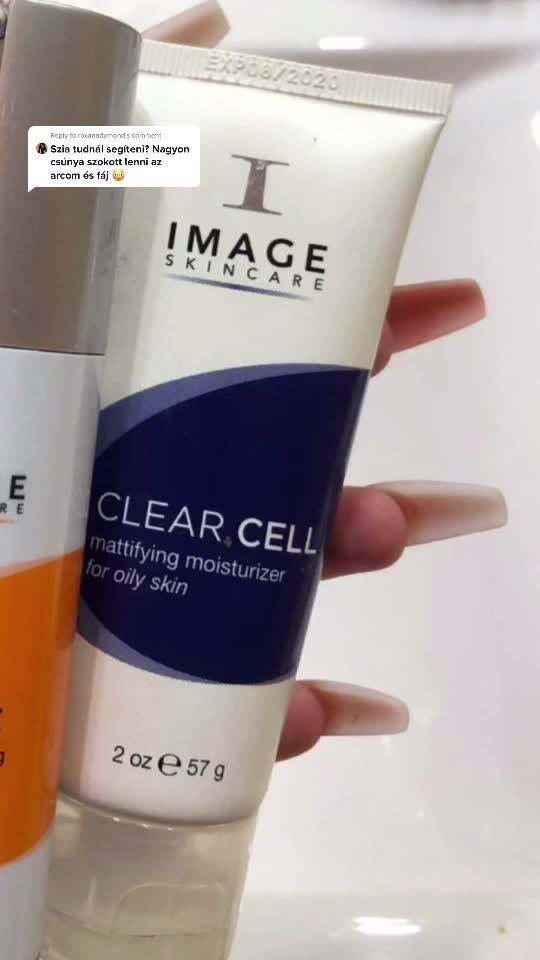
- Hook
- 0:00-0:03: A woman with long pink and white nails, wearing a white fuzzy sweater and pink pants, stands in a bathroom holding a silver and orange bottle. She says: "Szia, bocsi a hangom egy kicsit beteg vagyok, de gyorsan ezt most elmondom."
- Audience
- Individuals with oily skin and acne concerns, as indicated by the on-screen comment "Nagyon csúnya szekkot lenni az arcom és fáj 🥺" (My face is very ugly and it hurts 🥺) and the product shown, "CLEAR CELL mattifying moisturizer for oily skin."
Why it works. Uses a casual, voice-apologetic UGC opener to lower guard before a product demo, aiming for authenticity with a Hungarian-speaking audience.
Addresses a specific user comment directly at 0:00, displayed as on-screen text: "Szia tudnál segíteni!? Nagyon csúnya szekkot lenni az arcom és fáj 🥺". Open UGC content with a small, relatable personal aside, like being sick, before pitching the product, so it reads as unscripted.
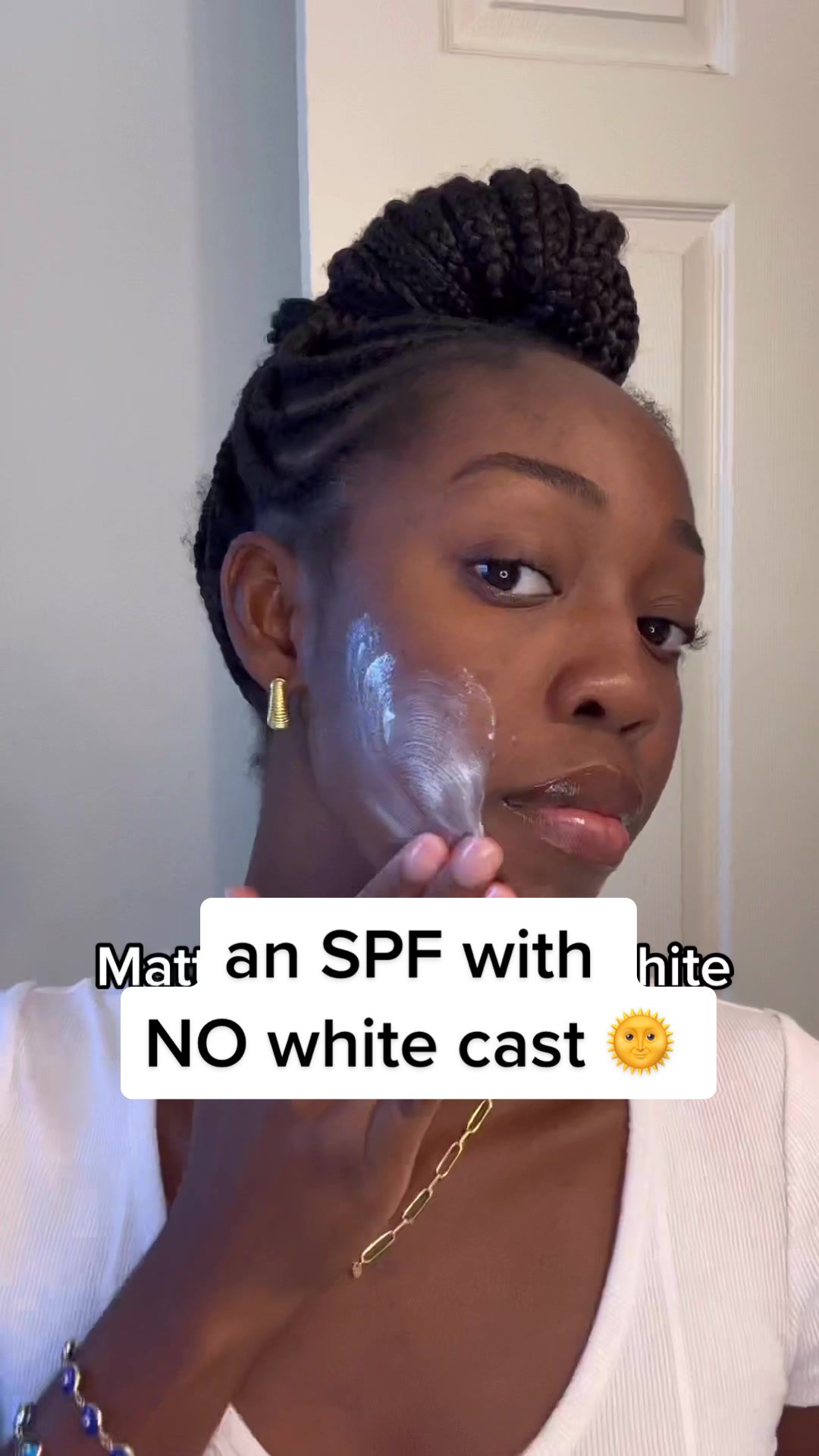
- Hook
- 0:00-0:03, a woman with braided hair in a bun holds a white and yellow tube of 'IMAGE PREVENTION+ daily matte moisturizer' and says, "If you're looking for an SPF that does not leave a white cast, I have the perfect one for you."
- CTA / offer
- shop below!! 🛍️
- Audience
- Individuals with darker skin tones who struggle with white cast from SPF, and those seeking a matte finish from their skincare. The creator's skin tone and the explicit mention of 'NO white cast' directly signals this target audience.
Why it works. Opens on the exact frustration SPF users have, white cast, and positions the product as the direct fix, aimed at buyers already burned by other sunscreens.
Directly addresses a common pain point in the hook: "If you're looking for an SPF that does not leave a white cast, I have the perfect one for you." (0:00-0:03) and on-screen text "Matte SPF with NO white cast 😭". Write down the top complaint customers have about products like yours, then say it out loud in your first line before you ever name the product.
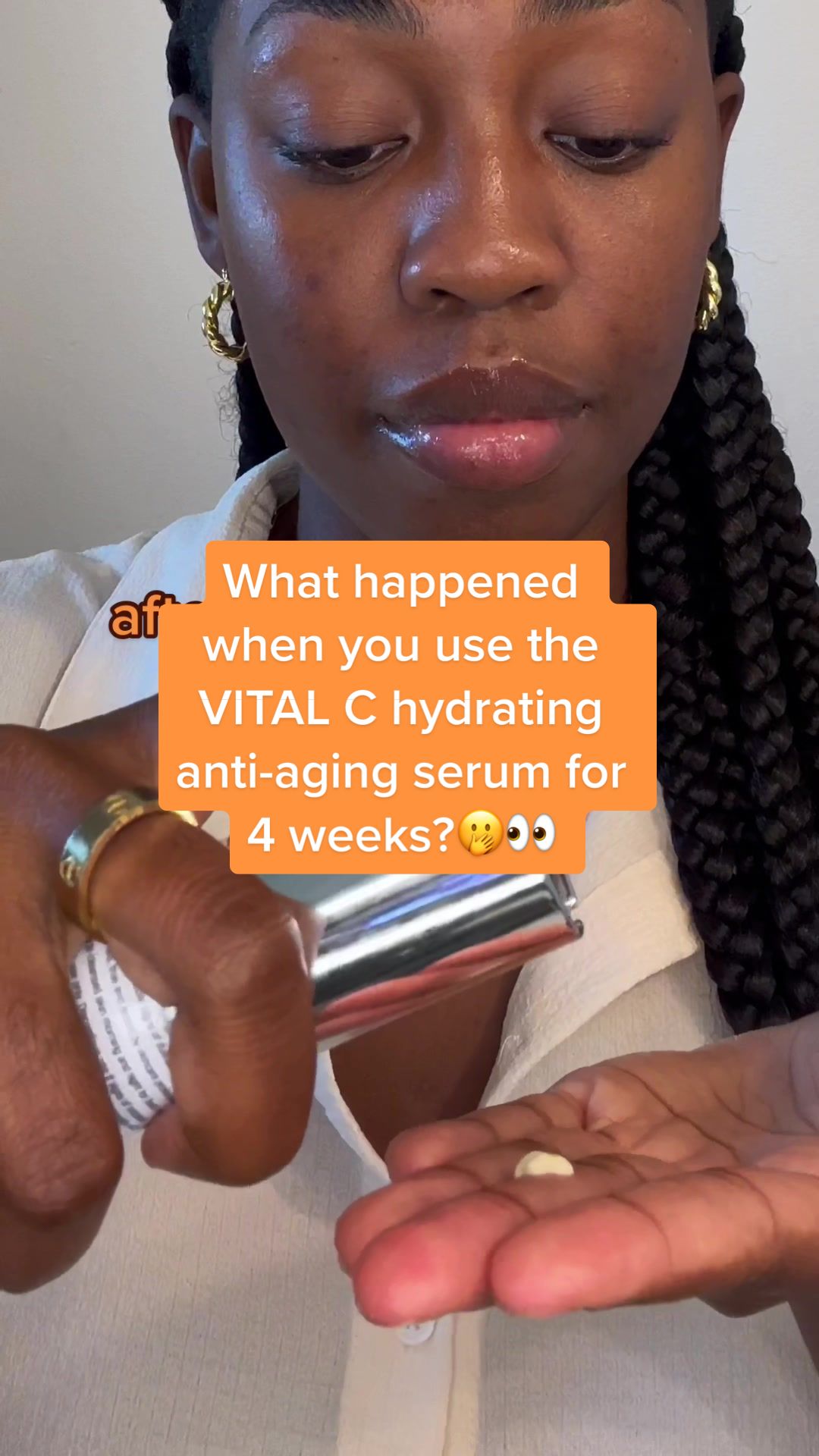
- Hook
- "VITAL C hydrating anti-aging serum 🍊" overlaying a close-up shot of a white and orange bottle of "IMAGE SKINCARE VITAL C hydrating anti-aging serum" held by a hand.
- CTA / offer
- shop below!🛍️
- Audience
- Individuals interested in anti-aging and hydrating skincare, as indicated by the product name "VITAL C hydrating anti-aging serum" and the on-screen text highlighting benefits like "hydrates and softens the skin," "skin looks better," and "brightens the skin."
Why it works. A close, well-lit shot of the serum bottle paired with an on-screen product name lets the citrus branding and category register in one glance.
Showcasing product application with on-screen text for benefits at 0:04-0:11, with text "100% agreed the product hydrates and softens the skin" and "91% agreed that skin looks better after using this product." Film a clean, well-lit close-up of your product and overlay the product name plus one specific claim or stat directly on the shot.
- Reach
- 2 upvotes · 2 comments · r/Esthetics
A community is already discussing this in r/Esthetics. Show up there authentically and answer the thread before a competitor does.
Who amplifies them
The amplification network is predominantly professional rather than celebrity-influencer. Esthetician creators are the core amplifiers on TikTok: @beatsbydriel_ (Jacksonville esthetician, Ormedic Lift facial demos), Maci at Michigan Esti (Detroit esthetician, Vital C facial walkthrough), @tollankim (esthetician, sale promotion), @cyaneighmy (esthetician, Vital C line advocacy). Consumer-side creators include @kristyn hoffman (Vital C serum personal testimony) and @Sarah Maxwell (brand gifting unboxing reaction). @A N I generated 11,993 engagements on an IMAGE Skincare Hungary post, pointing to an active international esthetician audience.
Founder Janna Ronert posts from her personal @jannaronert Instagram and @JannaRonert X account, the brand's 23rd anniversary origin story reel on her personal account earned 207 engagements, and the "Vital C Month" seasonal promotion is run from her personal handle. Co-founder Dr. Marc Ronert covers the clinical science angle separately (source). The brand does not appear to rely on high-reach celebrity or mega-influencer partnerships based on available evidence.
Hand and Stone Massage and Facial Spa appears as a named professional partner in an Instagram reel promoting the IMAGE Skincare VITAL C Brightening Facial, indicating at least one formal spa-chain co-marketing relationship.
06 Organic & video
The organic content engine: the videos, creator posts, and community presence earning attention without paid spend.
The YouTube library functions as a durable how-to asset rather than a social content engine. Short 15-30 second product application demos dominate view counts: the VITAL C Hydrating Water Burst demo has 653,000 views, the VITAL C Intense Moisturizer demo 747,000 views, and the IMAGE MD Power C Serum 628,000 views, all accumulated through clean product-application demonstration without influencer dependency. The 2023 brand positioning video ("IMAGE Skincare, #1 Spa and Salon Professional Skincare Brand in the US") has pulled 93,000+ views, confirming that professional authority framing resonates even in a consumer-facing channel.
Read the full breakdown+3▾
On TikTok, esthetician creators dominate the organic signal. Creators like @beatsbydriel_ (386 engagements for an Ormedic Lift facial walkthrough) and Maci at @MI Esti (320 engagements for a Vital C facial tutorial) embed IMAGE products into their professional service demonstrations, which functions as product discovery for their client audiences simultaneously. Consumer-side UGC includes @kristyn hoffman (1,423 engagements on a Vital C serum personal testimony) and @Sarah Maxwell (1,664 engagements on a brand gifting unboxing).
The format that performs: professional-use demonstration (an esthetician walking through a facial step-by-step) outperforms generic lifestyle content because it layers the product into a credibility context the viewer already trusts. On Instagram, the brand account @imageskincare reposts creator content and tags collaborators like @thenamesjulie for the DAILY PREVENTION SPF reel.
07 Affiliate & partners
How the brand turns creators and partners into a tracked, variable-cost acquisition channel, and how the program is structured.
IMAGE runs a formal affiliate program at imageskincare.com/pages/image-affiliate-program. Affiliate traffic accounts for 30% of all site visits as of 2026-06-29, the single largest acquisition channel in the mix, ahead of direct, organic search, and paid search combined. The top referral source (force.com, Salesforce) is consistent with a professionally managed partner and distributor relationship layer rather than a simple influencer affiliate stack.
Read the full breakdown+3▾
The 50,000+ professional estheticians who carry and recommend IMAGE products function as a structural referral channel even beyond any formal program: their client recommendations drive direct traffic and repeat purchases that reinforce both the affiliate and direct channel simultaneously. The affiliate program formalizes what was already happening organically through the professional network.
No TikTok Shop affiliate-seller program is detectable in the evidence; the TikTok creator activity is organic UGC and gifted content, not a scaled TikTok Shop commission structure.
08 In their own words
Pulled from interviews and community sessions. The quotes are the angle; the takeaway is what to do with it.
“I didn't really grow up in the beauty business... but I think what I did grow up learning is a lot about being an entrepreneur about dreaming big and that when you put your mind to something it can be achieved.”
Expand
Janna Ronert built Image Skincare by solving her own rosacea problem as an esthetician, using product integrity (the 'Jana test' with thousands of rejections) as the core differentiator. She grew the business through relentless professional education, staying connected to the esthetician community, and — in later years — social media to let passion shine through digitally. Distribution was anchored in the professional skincare channel, with innovation events like the launch party creating community loyalty.
“I think them saying I couldn't probably gave me a lot of fuel and energy to say I can do this I have a passion for this I love this business I love skincare and we're going to build something really special just watch.”
“Social media is the ability to promote yourself... it's kind of easy for your passion to shine through when you're in person to somebody but in this virtual world of what we live in you've got to let your clients or perspective clients know what you're really passionate about what you're really really good at.”
“The true test is the customers how they feel do they like it do they believe in it do they want to buy it again or they say take it all back and we have very very few returns in our company.”
“One of the pillars of starting this company was for me to allow and be a vehicle for free education... to really become the skilled esthetician and knowing the skin and knowing how to treat the skin you gotta get education.”
Solve your own problem first: Ronert built the product line to fix her own rosacea, which gave her authentic conviction and a built-in ICP she understood deeply.
Make product quality the moat: every formula passes a founder stress-test with thousands of rejections before launch; low return rates become a credibility signal you can cite to prospects and partners.
Own the professional channel through free education: training estheticians (webinars, events, in-company product knowledge) turns distributors into evangelists and creates a switching cost competitors can't easily replicate.
Use social media to make intangible passion tangible: advises new estheticians to show expertise and enthusiasm online so potential clients can feel the same trust they would in person.
Create community rituals around launches: the virtual 'launch party' (product reveal box + synchronized live event across all territories) builds anticipation, drives pre-launch sales, and turns customers into participants rather than recipients.
IMAGE Skincare Worldwide Launch Party 2022 ↗IMAGE Skincare · 1.8k views · 27 min3rd-party breakdown▶ View source“Image skin care has been named the number one spa and salon professional skin care brand in the United States.”
Expand
Image Skincare reached #1 in the U.S. spa and salon professional skincare category by building an exclusively professional distribution channel — estheticians are the core customer, not end consumers — and pairing that with clinical credibility (founder is an esthetician, medical director is a board-certified plastic surgeon) and a clean clinical formulation standard. Growth compounds through a pro-to-client retail flywheel: professionals use products in treatment, then sell retail take-home versions to clients, turning every treatment room into a sales channel.
“Two vital seed products being sold every minute — since day one image has always been at the forefront of clinical innovation.”
“Estheticians are truly the heart of our brand. You have guided us since day one and we base every decision on what is best for our professionals.”
“Use the pro version in your treatment room and then send your clients home with this amazing retail version — it's really a must-have for every client to keep their skin in shape between visits.”
“The pandemic and lockdowns have propelled us five to ten years into the future — consumers have completely shifted the way that they interact with brands.”
Build a professional-only distribution moat: restrict retail access to licensed pros, so the channel itself becomes a competitive barrier and aligns incentives (pros recommend what they sell).
Mirror product lines between treatment room and retail — a pro SKU for in-clinic use paired with a matching retail SKU turns every appointment into a natural upsell with zero extra pitch.
Anchor brand credibility in clinical proof: lead every product reveal with specific clinical numbers (e.g., '39% firmness improvement in 12 weeks') and consumer-perception data to justify premium positioning to a skeptical professional buyer.
Use founder origin story as product DNA — Janna's rosacea struggle birthed Vital C, creating a founding narrative that makes the entire catalog feel personally tested rather than manufactured.
Activate your pro community as a distribution and marketing layer: a members-only Facebook group (ImageVIP), social hashtags, product reveal boxes, and time-limited exclusive discount codes (48-hr 25% off) turn pros into launch amplifiers.
Janna Ronert — основатель компании IMAGE Skincare ↗megasparu · 427 views · 3 min3rd-party breakdown▶ View source“The way our company promotes our products to the world is via the Image Aesthetic Institute — we have licensed estheticians in every major city that educate, that promote the product, that know skin, that can really deliver information properly to get the message out.”
Expand
Image Skincare grew by routing distribution entirely through licensed estheticians — a professional education layer that created both credibility and a captive sales channel — rather than retail or DTC. The founder's personal rosacea struggle gave the brand an authentic clinical origin story, and marrying that with a plastic-surgeon co-founder signaled professional-grade efficacy at an accessible price point.
“My husband is a board-certified plastic surgeon, which is also a very unique part of a team — from chemists to dermatologists to estheticians, we collectively create these fantastic products that are extremely effective and very affordable.”
“I suffered from a condition called rosacea... I looked high and low for over-the-counter products, products from plastic surgeons, and prescriptions, and they just didn't seem to work — so the first line I developed was called Vital C to treat rosacea.”
“We offer products from organic all the way up to very high-level ingredients to treat aging skin — in good skincare there's just not one panacea product that can transform your skin.”
“It's a brand that believes in aging later, it believes in the philosophy of simplicity, and it's a brand that really is for everyone — and it works.”
Build distribution through credentialed intermediaries, not mass retail — licensed estheticians became both the sales force and the education layer, turning every client appointment into a brand touchpoint.
Solve your own clinical problem first: Ronert's rosacea was the brief for the debut product, which gave the brand an authentic, specific origin story that resonated with people who had tried everything else.
Pair a founder with a credentialed co-founder whose title does the heavy lifting on trust — a board-certified plastic surgeon co-owner signals clinical seriousness without expensive advertising.
Anchor the brand to a single, repeatable philosophy ('aging later') so the full product range — organic to advanced actives — reads as one coherent system rather than a scattered catalog.
Price professional-grade formulations accessibly to own the gap between drugstore and medical-office; 'extremely effective and very affordable' is the positioning, not premium exclusivity.
09 The playbook
The channels are not separate. They are one system where each stage feeds the next. Here is the read, then the plays to run tomorrow.
The inferred playbook
IMAGE built professional-authority credibility first, then layered paid and affiliate acquisition on top of that foundation, and the 30% affiliate share is the compounding payoff of over two decades of professional trust-building.
IMAGE earned distribution through 30,000-50,000+ licensed estheticians before needing to run a scaled consumer ad budget (source); those professionals sell product to clients in-chair, creating a referral channel that is structurally hard for competitors to replicate without equivalent professional credibility earned over the same time horizon.
The VOL.U.LIFT GLP-1 Skin Rebound Complex is a deliberate first-mover bet on the Ozempic/GLP-1 mass adoption curve; a plastic-surgeon-developed product that converts a documented medical side effect (facial volume loss) into a new skincare sub-category, with multiple ad formats running since October 2025 confirming this is a primary growth vector, not an exploratory test.
Dig deeper+2▾
Google campaigns running at approximately 905 days indicate IMAGE bids on branded and category terms to protect organic rankings from competitor conquesting, the paid and organic channels work in tandem rather than substituting for each other, which explains why both have healthy share simultaneously.
Social organic at 0.1% of traffic and relatively thin TikTok creator volume both sit well below what the affiliate engine produces; IMAGE has not yet converted its professional network into a scaled video-creator program (estheticians as affiliate content creators) that would compound paid acquisition and organic discovery simultaneously. ---
Anchor your brand in a professional layer before scaling consumer acquisition
The proofIMAGE spent years earning placement with tens of thousands of licensed estheticians who recommend the product to clients in chair; that professional channel now drives 30% of all traffic through affiliate referrals and gives every consumer ad a credibility umbrella ("recommended by 50,000+ professionals") that cold-traffic competitors cannot match.
The adaptationIf your product touches any licensed or credentialed professional (nutritionist, physical therapist, financial advisor, contractor, hair stylist), build a formal professional program before or alongside your consumer marketing. Offer wholesale pricing, co-branded education materials, and a private community. Start by identifying 20-50 practitioners in your category, sending product with a simple structure: use it, refer clients to buy direct, earn a commission. The affiliate channel scales from that seed because the recommendation carries institutional trust, not just personal enthusiasm. Because professionals already have a trust relationship with clients, their referrals convert at a structurally higher rate than cold-traffic influencer posts, the cost of acquisition drops as the professional network grows.
Map a new product to the documented side effect of a mass behavioral trend
The proofVOL.U.LIFT is formulated specifically for GLP-1 drug users experiencing facial volume loss, a documented medical side effect of a medication now taken by tens of millions of people. Meta ads hook "RAPID WEIGHT LOSS IMPACTS SKIN AGING" defines the problem before showing the product, and IMAGE positions VOL.U.LIFT as the first-to-market solution in this category, with multiple ad formats running since October 2025.
The adaptationIdentify a mass behavioral or pharmaceutical trend in your product category that produces a named, documented downside (screen time fatigue for productivity tools, sedentary posture for ergonomics brands, blue-light exposure for sleep brands). Build a product or bundle specifically for that named side effect, then run the problem-definition as the ad hook before introducing the solution. First step: search PubMed abstracts and Reddit complaint threads for the exact language real users apply to the side effect, use their phrasing as the opening hook, not clinical language. The mechanism is category creation: a "first for X" claim with a named clinical credential (here, plastic surgeon-developed) resets the competitive frame entirely and eliminates comparison shopping.
Lead Google campaigns with educational content hooks, not product pages
The proofIMAGE's longest-running Google ads at approximately 905 days active include "Retinol For Beginners - The Ultimate Guide" and "How to Properly Layer Your Skincare Products", curiosity-gap educational hooks that capture consideration-stage traffic. Running these for approximately two and a half years at scale confirms the education-to-purchase conversion path is profitable over a very long window.
The adaptationFor any premium product with a learning curve or ingredient skepticism (supplements, skincare actives, financial tools, complex software), create a genuine educational resource (a beginner's guide, a layering guide, a comparison framework) and bid on it in paid search. Start by identifying the top three "how to" or "for beginners" queries in your category using Google Search Console or a free keyword tool, build a single authoritative resource targeting all three, and bid on those terms. The educational frame pre-qualifies buyers and reduces the "is this worth the price?" objection before they reach the checkout. Bidding on educational intent converts at higher rates for premium brands because the visitor arrives already educated and partially pre-sold rather than cold.
Turn your hero product into a named seasonal campaign
The proofIMAGE runs "Vital C Month" as a recurring campaign promoted by the founder, Janna Ronert, from her personal @jannaronert Instagram account (253 engagements on the campaign post) and reinforced across brand channels, turning a product line into an annual purchase occasion that existing customers anticipate and new customers discover through creator content.
The adaptationPick your single best-performing product or ingredient category and designate a named campaign period tied to a genuine seasonal or functional logic (a vitamin C serum in winter when skin is dull, an SPF in spring, a sleep supplement in January). Alert your email list and social following several weeks in advance, build a short content series around the ingredient science, and make the event feel internally consistent rather than promotional. Start by identifying the month where your repurchase data shows the highest rate of organic repeat orders, that reveals when customers already naturally think about re-ordering, which is the right moment to name and amplify. Named seasonal campaigns compound over years because customers begin to anticipate them, which reduces re-acquisition cost through paid channels.
Build a YouTube how-to backlog for evergreen ingredient search
The proofIMAGE's 15-30 second product application demos uploaded in 2018 and 2022 have accumulated 600,000-750,000 views organically without influencer involvement, years after the initial upload. The VITAL C Water Burst demo (653,000 views) and the VITAL C Intense Moisturizer demo (747,000 views) are both extremely short and purely product-focused, demonstrating that simple application clips outperform produced lifestyle content on a long time horizon.
The adaptationFor any product with a visible application method or ingredient story, record a series of 15-30 second application demonstrations, one per product, clean background, no voiceover required, and upload to YouTube with keyword-rich titles matching ingredient-level search terms (for example: "how to apply vitamin C serum," "how to use hyaluronic acid"). These accumulate views over years because ingredient-how-to searches are evergreen; each video becomes a discovery channel at zero ongoing cost after upload. Start by filming the three products in your line with the highest repeat-purchase rate, where customers are most likely to search for guidance after buying. YouTube functions as a search engine for how-to queries, and short ingredient demos rank against consumer intent that paid ads cannot reach cost-effectively at scale.
You just read how Image Skincare does it. Tomorrow it is someone else.
Every morning we take one company that is actually growing and break down where its customers come from: the ads still running after a year, the channel doing the real work, and the play you can run this week.
Systemaic · directional intelligence. Traffic, spend, and reach figures are SimilarWeb-style estimates and qualitative reads of public data, not audited numbers. Built on real public receipts.
// teardowns with a similar GTM motion
sources & receipts (8)
Live ad libraries: meta ad library · google ad library
Founder interviews: IMAGE Skincare Worldwide Launch Party 2022 · WWLP 2021 - JANNA'S INVITATION · In Conversation with the IMAGE skincare Founder · Janna Ronert — основатель компании IMAGE Skincare · IMAGE Skincare | At-Home Skincare Must-Haves with Janna Ronert and Amb · HOW TO AGE LATER with Dr. Marc Ronert, MD, PhD, European board-certifi
Traffic, spend, and revenue figures are estimates as noted in the report; the links above are the primary public artifacts.