- 01Turn a five-star review into the ad
- 02Advertise on the retailer's page, not just your own
- 03Pay creators to run ads from their own handle
- 04Make every distribution win its own launch
01 Snapshot
The one-glance read on who they are and how they grow. Each point is verifiable from the receipts above.
Michelin-star restaurant recipes bottled into cooking sauces and marinades for home cooks, now stocked nationally at US Whole Foods (April 2026) and 481 Sprouts stores (July 2026) after 1,000+ UK doors.
Creator-led, now layering an emerging retail-media paid ad motion on top.
~73,055 monthly site visits (+17.8% over the last 3 months), 55 active Meta ad variants as of July 18 2026, and $11.5M raised across a 2024 seed and a May 2026 Series A, both led by CAVU Consumer Partners.
Meta's newest creative wave tests founder-to-camera hooks like "Our table just got bigger" and an unverified "sold out four times" claim, as of July 18, 2026.
Paid social increasingly points at the retailer's own product page, not Gymkhana's site: the Tesco-linked ad wave sends clicks straight to tesco.com, turning grocery-aisle credibility into a paid channel most CPG upstarts skip.
02 How it unfolded
The order the channels came online. Sequence is strategy: what they did first, and what they layered on once demand existed.
03 Traffic & channel mix
Estimated demand, the channel split behind it, and the keywords and referrers doing the work. Directional modeling, not audited analytics.
Traffic sources
Top search keywords
| Keyword | Volume | Weight | CPC |
|---|---|---|---|
| gymkhana | 45k | $0.55 | |
| gymkhana sauces | 1.3k | $0.87 | |
| ghymkana sauces | 350 | - | |
| gymkhana fine foods | 400 | $0.77 | |
| tandoi bbq gymkhana | 210 | - |
Closest competitors by audience
The site draws an estimated ~73,055 monthly visits, up 17.8% over the last 3 months. Search Organic dominates at 54.2%, with Direct at 16.8% and Display Ads at 8.8% as the next two largest channels; the rest, referrals, paid and organic social, email, and paid search, totals about 20%. The keyword split shows the brand-versus-product gap plainly: "gymkhana" alone pulls 44,590 searches/month (mostly restaurant-brand demand), against 1,290/month for "gymkhana sauces" and 400/month for "gymkhana fine foods," the two terms closest to actual product intent. Among named competitors, mrsbalbirsingh.com is a direct DTC Indian-sauce rival, kikkoman.co.uk represents the mainstream incumbent Gymkhana is fighting for shelf space against, and biggreenegg.co.uk is not really a competitor at all, it's a co-marketing partner (the two ran a joint giveaway, detailed below).
04 Organic content
The specific pages earning their organic search traffic, and the pattern behind why they rank. Adapt the format, not the topic.
Per third-party keyword estimates, roughly five pages carry Gymkhana's organic-search footprint, totaling an estimated 5,643 organic visits/month, and the pattern is commerce-first: the shop and sauce collection pages, the homepage, and the US storefront account for most of the set, with just one blog recipe post (paneer tikka masala) representing content marketing. That mix suggests the site ranks primarily on branded and product-category intent rather than a built-out recipe hub, since a single how-to post sits alongside four transactional pages. The strategic read: recipe content is underused relative to the creator-driven recipe demand visible elsewhere in the data (goan curry, tikka masala, butter chicken all show up repeatedly in creator posts), so there's likely upside in publishing more owned recipe pages rather than leaving that content entirely to TikTok and Instagram creators.
Top pages by organic traffic
05 Channel map
Not traffic share. How much weight the growth system actually puts on each channel, with a one-line read on the role it plays.
What drove growth
06 The creative doing the work
Each exhibit shows the actual asset, an X-ray of why it works, a status, and a play you can adapt. This is the heart of the teardown.
The true active count sits at 55 Meta ad variants as of July 18, 2026, against just 1 active Google ad out of 3 ever tracked. None of the visible library has run 60+ days, the longest current run is about 25 days, so this reads as a current push, not a proven-winner library with real longevity signal yet.
Hook: "These little jars are worth their weight in gold. Made my first meal today. Absolutely restaurant quality." (Barbara, customer review). Why it works: it's a dynamic product ad, meaning the exact SKU the customer praises auto-populates for the viewer, and the hyperbolic value claim reframes an $8-10 jar as a premium find rather than a grocery staple, killing the "why pay more for sauce" objection before it forms. Run this play: expanded as Play 1 below.
Hook: "The best curry I've ever made, the taste was incredible, and the heat was on point.. I tip my cap.." (Neill, customer review), paired with "Sauces & marinades, perfect for Barbecues and dinners. Inspired by Gymkhana, our World-Famous restaurant." Why it works: this dynamic-creative wave sends clicks directly to tesco.com instead of Gymkhana's own site, meeting BBQ-season shoppers where they already have a cart and trust, rather than asking them to learn a new checkout. Run this play: expanded as Play 2 below.
Against those two, the newest tests skew toward founder-to-camera video: multiple file variants of the same "Our table just got bigger" script are running in parallel (apparent hook-testing), alongside an unverified restock claim, "this Butter Masala has sold out four times," that reads as marketing copy rather than a confirmed fact.
Ads land on a dedicated US Shopify storefront (product pages like the Roasted Garlic & Chilli Marinade and Butter Masala Simmer Sauce, plus a Smoke & Simmer Gift Box bundle page). Single jars sit around $8-$10, with quantity discounts stepping from 5% to 20% off as cart size grows, free shipping kicks in over $50, and gift boxes scale up to $100-$300 for multi-jar sets, suggesting a corporate-gifting tier alongside the everyday single-jar buyer. A Recharge subscription option is live on product pages, giving repeat cooks a subscribe-and-save path without a separate landing page.
Revenue is not publicly confirmed. Given that $8-$10 per-jar pricing, the free-shipping cart economics, and placement in 1,000+ UK doors plus national Whole Foods and 481 Sprouts stores in the US, a directional estimate lands in the low-to-mid seven-figure annualized range as of mid-2026, though this is an estimate, not a confirmed figure.
- Running
- 19 days (longevity = it's converting)
- Hook
- Visual: A hand in a black glove mixes a reddish-brown marinade with pieces of meat in a clear glass bowl. On-screen text: "New".
- Audience
- Individuals who enjoy Indian cuisine, value convenience in cooking, and are interested in high-quality or 'Michelin Star' associated food products. The 'Available at TESCO' suggests a UK audience.
Why it works. Uses close-up hands-on food prep footage to make the marinade feel tactile, rather than only shooting the packaging.
Visual product transformation (0:00-0:09): The video shows raw meat being marinated, grilled, and then plated as a finished dish. Show a hand actually touching and mixing your product with real ingredients rather than only shooting the package.
- Running
- 19 days (longevity = it's converting)
- Hook
- Visual: A hand is shown scooping a thick, orange-brown sauce from a glass jar with a spoon. On-screen text: "New".
- CTA / offer
- Available at TESCO
- Audience
- The mention of "Michelin Star RESTAURANT" and "World-Famous KITCHEN" targets individuals who appreciate high-quality, gourmet food and aspire to recreate restaurant-quality meals at home.
Why it works. A slow scoop of thick sauce from the jar sells texture and richness before any claim is made, letting the product carry the gourmet positioning.
Visual product demonstration from 0:03-0:09, showing the sauce being poured and chicken being cooked in it. Film a close, slow scoop of your product's texture as the opening shot before any text or voiceover.
- Running
- 19 days (longevity = it's converting)
- Hook
- Visual: A hand holding a glass jar of 'GYMKHANA BUTTER MASALA COOKING SAUCE' and dipping a spoon into it. Audio: Soft, acoustic guitar music begins.
- Audience
- Individuals who enjoy Indian cuisine and seek convenience in cooking, indicated by the 'World-Famous KITCHEN TO YOURS' and 'Michelin Star Restaurant' claims, suggesting a desire for high-quality, restaurant-level food at home.
Why it works. Pairs a simple spoon-dip action shot with soft acoustic music, keeping the tone calm and appetizing rather than hard-selling.
Visual product demonstration of ease of use and delicious outcome (0:03-0:12, pouring sauce, adding chicken, garnishing). Match slow, simple product-in-use footage with soft background music when the goal is to feel premium rather than urgent.
Show 6 more exhibits
- Running
- 2 days (new — still being tested)
- Hook
- Visual: A hand is shown scooping a thick, orange-brown sauce from a glass jar with a spoon. The jar is labeled "GYMKHANA BUTTER MASALA COOKING SAUCE". Audio: Gentle, acoustic guitar music begins.
- Audience
- Individuals interested in cooking Indian cuisine at home, particularly those who appreciate high-quality, restaurant-grade ingredients, indicated by "World-Famous KITCHEN" and "Michelin Star Restaurant" claims.
Why it works. A close-up of sauce being scooped from the jar with a 'New' badge and soft acoustic music sells the texture visually, aimed at Tesco shoppers spotting it on shelf.
Visual product demonstration from jar to finished dish (0:00-0:12). Film a slow close-up of your product's texture straight out of the jar with soft background music, and add a simple 'New' badge if it just hit a retailer's shelf.
- Running
- 2 days (new — still being tested)
- Hook
- "It's almost hard to believe that it came out of a jar" - A close-up shot of a dish with chicken in a rich, reddish-brown sauce, garnished with fresh green herbs.
- Audience
- Individuals who appreciate Michelin-star quality Indian cuisine but also value convenience and ease of preparation at home. The mention of 'new takeaway' suggests targeting those who frequently order takeout.
Why it works. Leads with the exact skepticism a shopper has about jarred sauce, then lets the dish shot resolve it, turning doubt into proof within seconds.
Lead with a bold claim and visual proof of product quality (0:00-0:03, "It's almost hard to believe that it came out of a jar" + close-up of finished dish). Open by naming the specific doubt a buyer has about your product category, then immediately show the visual that answers it.
- Running
- 1 day (new — still being tested)
- Hook
- "This Butter Masala has sold out four times" - A man in a light green turban and dark green shirt holds a jar of "GYMKHANA BUTTER MASALA COOKING SAUCE" and gestures with his other hand in a restaurant setting.
- Audience
- Individuals who appreciate fine dining and Michelin-star quality but seek convenience for home cooking, as indicated by "FROM OUR MICHELIN STAR RESTAURANT" and "INDIAN to IMPRESS".
Why it works. A founder opens with a specific sell-out count before explaining the Michelin-star prep behind the sauce, turning proof of demand into the reason to buy now.
Opening with a bold claim of scarcity and high demand: "This Butter Masala has sold out four times" (0:00-0:03). If your product has restocked or sold out, open with the exact number of times it sold out rather than saying it's 'popular' or 'in demand'.
- Hook
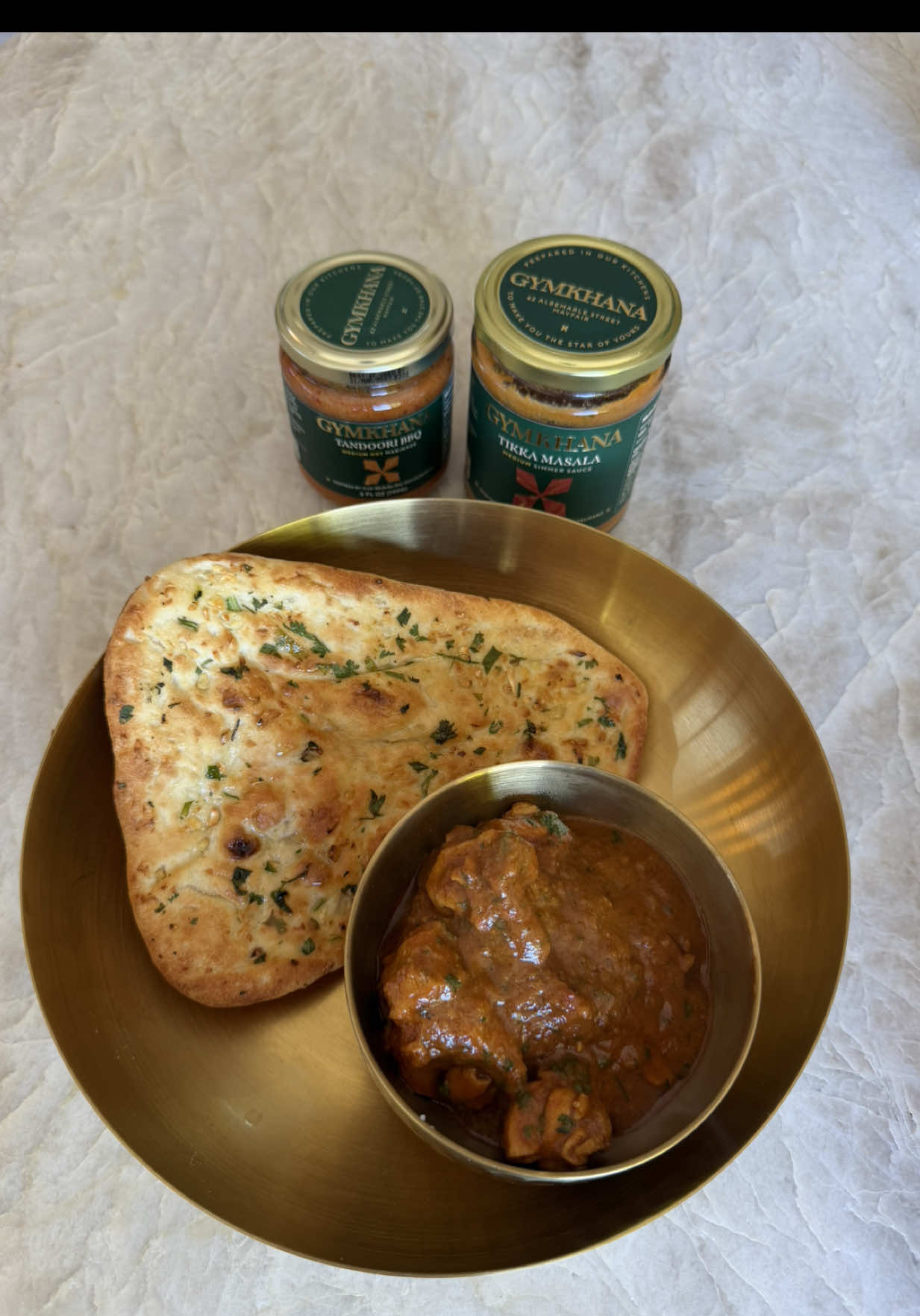
- "the easiest chicken tikka masala you'll ever make." A woman in a black t-shirt is holding a piece of naan with chicken tikka masala on it, smiling and looking at the camera.
- Audience
- People who enjoy Indian cuisine but want a quick, easy, and high-quality way to prepare it at home. The mention of 'Michelin star restaurant' and 'Whole Foods' suggests a target audience that values quality ingredients and gourmet experiences, even in a convenient format.
Why it works. A smiling home cook holds finished naan and tikka masala while claiming it's the easiest version ever, using the plated result as proof before the pitch.
Bold claim and immediate visual appeal at 0:00-0:03: "the easiest chicken tikka masala you'll ever make." The visual shows a delicious-looking dish being enjoyed. Lead your UGC video with a superlative ease claim for a dish people assume is hard, then cut straight to the finished plate as proof.
b-roll voiceover
- Hook
- Visual: A white bowl filled with a red-orange stew containing dumplings and ground meat, garnished with green herbs and red chili slices. On-screen text: "YOU KNOW I". Audio: "You know I love me a good fusion dish."
- Audience
- The mention of 'fusion dish' and using a pre-made sauce for a complex flavor profile targets busy individuals who enjoy cooking and experimenting with global cuisines but seek convenience. The use of 'soup dumplings' suggests an audience familiar with diverse food trends.
Why it works. A creator frames the sauce inside her own fusion recipe instead of a straight product demo, lending her own taste credibility to a versatility claim.
Product demonstration with a unique recipe at 0:00-0:05, showing the finished dish and stating, "So pairing up Gymkhana's home range sauces with soup dumplings was a no-brainer." Have a creator introduce your product mid-recipe with casual first-person phrasing like 'you know I love' instead of a formal product intro.
Who amplifies them
Organic creator UGC spans food-focused accounts like @ashnakapoorr, @bigdaddybsfoods, @Tiv, and @it's sim on TikTok, plus @noor.baqtiar and @thatfoodiejess on Instagram, most cooking a specific curry or masala on camera. Musician @tommyrichman posted a pakora hack featuring the marinades, though with modest engagement (152). Two names stand apart because they're run as paid, not organic: Meta's ad data flags Jack Munn and CJ Eats as "whitelisted," meaning Gymkhana pays to run targeted ads directly from those creators' own accounts rather than reposting through the brand page, blending organic-style credibility with paid reach. Co-branded collaborations round out the amplification: a Big Green Egg giveaway, a Burleigh Pottery serving-bowl and Signature Collection tie-in, and an HG Walter butcher recipe collaboration all cross-pollinate adjacent food and lifestyle audiences. No meaningful Reddit or X presence appears in the evidence.
07 Organic & video
The organic content engine: the videos, creator posts, and community presence earning attention without paid spend.
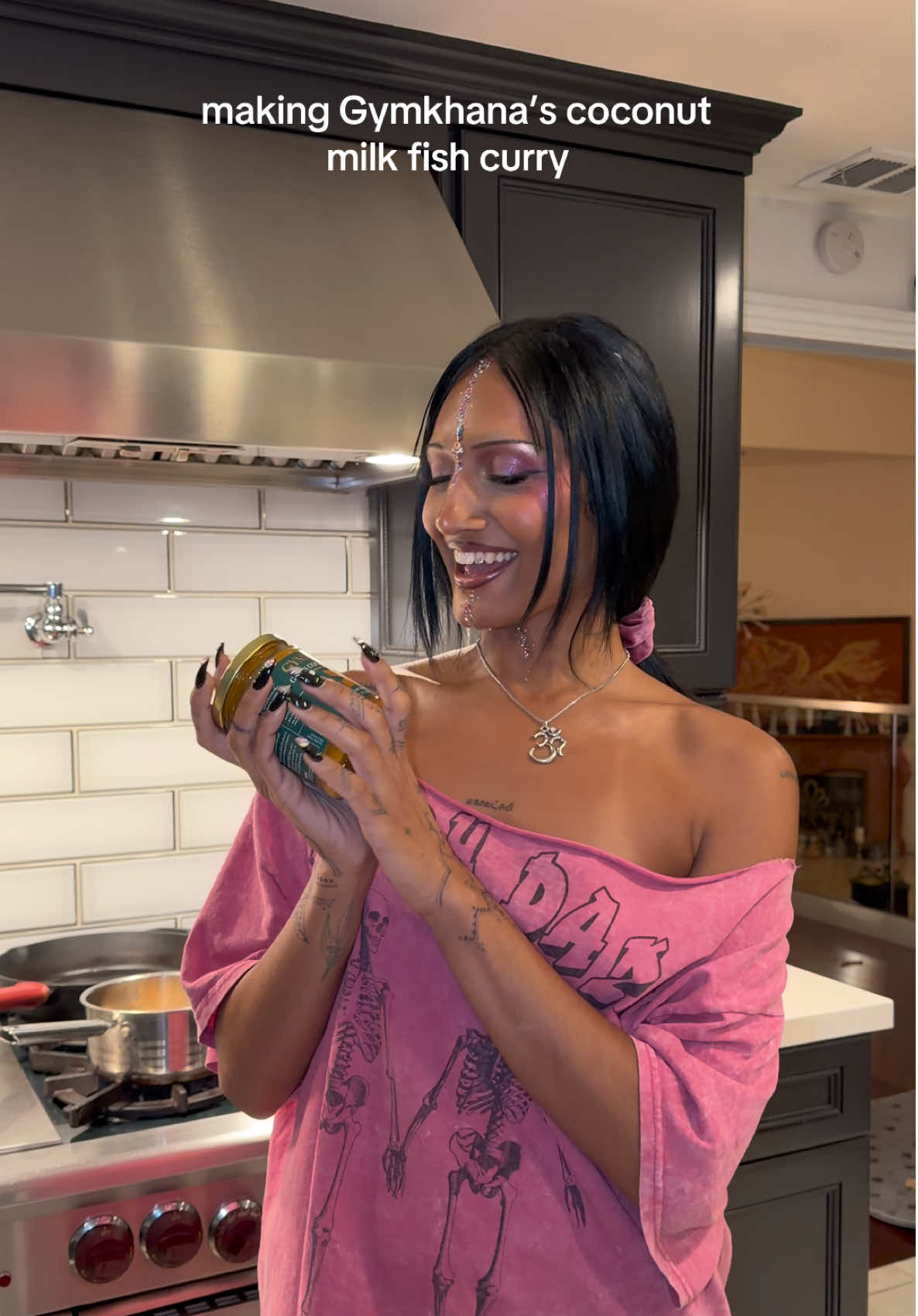
The format that performs is recipe-demo UGC: a creator cooks a dish on camera with the jar visible, then tags the brand. RHEA RAJ's Goan coconut fish curry post (243,669 engagements) is the clear outlier; Emily English's paid "Make a Michelin star meal at home" partnership, tied to a limited-edition Burleigh Signature Collection, pulled 3,429 engagements; and the brand's own "Now serving in the US" Instagram reel, announcing the Whole Foods debut with the line "this has been over 2+ years in the making," pulled 4,307 engagements. Beyond those three, a run of smaller creator posts cluster in the 700-6,600 engagement range. On the brand's own channels, product demos (a hand scooping sauce from the jar, acoustic guitar underneath) and founder-to-camera clips carry the paid side, while Instagram/TikTok organic leans on retail-launch news and creator reposts.
08 Affiliate & partners
How the brand turns creators and partners into a tracked, variable-cost acquisition channel, and how the program is structured.
An affiliate/referral program is live on-site through a Shopify referral-and-affiliates app, confirmed by the reward-claim popup embedded on the homepage, meaning Gymkhana already recruits partners to drive referral sales rather than relying solely on paid and organic reach.
09 The playbook
The channels are not separate. They are one system where each stage feeds the next. Here is the read, then the plays to run tomorrow.
The inferred playbook
Gymkhana turns a two-Michelin-star restaurant's kitchen credibility into grocery-aisle sales by pairing heavy creator seeding with paid ads that increasingly point at retailer product pages instead of its own checkout.
Every ad, UGC caption, and landing page leans on the two-Michelin-star Mayfair pedigree rather than generic CPG claims, and the brand's own July 2026 release reports about 70% incremental sales in UK accounts listed for a full year, the retail payoff of that positioning.
The newest and now-longest-running Meta ad wave sends clicks to tesco.com instead of the owned DTC site, pairing paid social spend with the retailer's own trust and reviews rather than funneling everyone to gymkhanafinefoods.com.
Dig deeper+3▾
Alongside organic creator posts, the brand runs paid ads directly through creator accounts like Jack Munn and CJ Eats, turning organic-style content into targeted paid reach without it reading as a traditional brand ad.
Each retail door win, Waitrose, Sainsbury's, Tesco, Whole Foods US, Sprouts, becomes its own announcement wave across Instagram, TikTok, and paid ads, keeping the content calendar full without needing new product SKUs.
per-SKU retail sell-through beyond the Nielsen-cited category figures, the DTC site's own conversion rate, Recharge subscription attach rate, and blended CAC across the retail-media-versus-owned-site paid split.
Turn a five-star review into the ad
The proofGymkhana's longest-running current Meta ad is a dynamic product ad built entirely around one customer line, "these little jars are worth their weight in gold," pointing straight at the product page it praises.
The adaptationPull the single strongest line from a real review or DM, not a paraphrase, and make it the headline image or caption of a boosted post or dynamic product ad aimed at the exact product it's about, rather than a generic lifestyle shot. Start with one product's best quote before testing it across a full catalog.
Cost: under $500 · Time to signal: days · Works pre-PMF: conditional, needs at least one genuinely glowing review already in hand.
Advertise on the retailer's page, not just your own
The proofGymkhana's current Meta wave sends clicks to tesco.com rather than its own site, using the retailer's listing, reviews, and one-click familiarity as the landing page.
The adaptationIf the product sells through any retailer or marketplace, Amazon, Target, a regional grocer, Etsy, build a version of the paid ad that links directly to that listing instead of the owned store, especially where the third-party page already carries reviews and trust the brand's own site lacks. Run it side by side against the owned-site version to see which converts colder traffic better.
Cost: under $500 · Time to signal: weeks · Works pre-PMF: no, it requires an existing retail or marketplace listing to point to.
Pay creators to run ads from their own handle
The proofBeyond organic posts, Gymkhana runs paid Meta ads through creator accounts like Jack Munn and CJ Eats, letting the brand target and spend behind content that still carries the creator's own voice and following.
The adaptationIdentify two or three creators already posting genuinely about the product category, pay a flat fee for a piece of content plus usage rights, and request Meta's partnership-ad permission so the ad can run from the creator's own handle instead of the brand account. Start with one creator and one ad set to see if it outperforms brand-account creative.
Cost: under $5k · Time to signal: weeks · Works pre-PMF: conditional, only once a handful of organic creator mentions already exist to identify who to pay.
Make every distribution win its own launch
The proofGymkhana treats each new retail door, the Whole Foods US debut, the 481-store Sprouts rollout, a Waitrose exclusive, as a standalone announcement across owned Instagram and TikTok rather than a quiet store-locator update.
The adaptationThe next time a new stockist, integration partner, or platform listing goes live, film or write a short "now live at X" post the same day, treat it as its own content asset, and boost or repost it rather than filing it away in a newsletter footnote. Start with the very next distribution win, however small.
Cost: $0 · Time to signal: days · Works pre-PMF: yes. Not transferable at an earlier stage: the retailer-listing play and the creator-whitelisting play both assume the reader already has a live retail or marketplace listing, and enough organic creator mentions to know who to pay, neither of which exists before some initial traction is already in hand.
You just read how Gymkhana Fine Foods does it. Tomorrow it is someone else.
Every morning we take one company that is actually growing and break down where its customers come from: the ads still running after a year, the channel doing the real work, and the play you can run this week.
Systemaic · directional intelligence. Traffic, spend, and reach figures are SimilarWeb-style estimates and qualitative reads of public data, not audited numbers. Built on real public receipts.
// teardowns with a similar GTM motion
sources & receipts (7)
Live ad libraries: meta ad library · google ad library
Researched facts: Gymkhana Fine Foods raised a $3 million seed round: $3M seed, led by CAVU Consumer Partner · Gymkhana Fine Foods raised an $8.5 million Series A round: $8.5M Series A, led by CAVU Con · US nationwide launch at Sprouts Farmers Market: Announced July 9, 2026; products in 481 Sp · UK category growth performance: Fastest-growing premium Indian brand in UK grocery, drivin · Founder/CEO background: Gulrez Singh Arora is CEO & Co-Founder; spent over a decade at Mar
Traffic, spend, and revenue figures are estimates as noted in the report; the links above are the primary public artifacts.