- 01Run the "taboo side effect" hook in your next Meta static.
- 02Gift 10-20 micro-influencers in your product's adjacent health community right away and brief only the format, not the hook.
- 03Build a comparison Google text ad against the category leader your buyer is already considering.
- 04Run a "We're So Sorry" pattern-interrupt static for your next offer.
01 Snapshot
The one-glance read on who they are and how they grow. Each point is verifiable from the receipts above.
Daily nutrition gummies packing 60 whole-food ingredients into a portable pouch for health-conscious consumers, capped by a $1.2B Unilever acquisition announced April 2026, described as the fastest $1B CPG exit on record.
Creator-led DTC, with a programmatic micro-influencer gifting engine feeding a massive paid Meta and Google machine.
~1.5M estimated monthly visits (+21.3% over the prior 3-month period), 1,138 active Meta ads and 800 active Google ads as of June 24, 2026; the founder mentioned $300M in revenue in an October 2025 tweet about international expansion, and 7,000+ retail doors at time of acquisition.
"We ran hundreds of ad angle tests per month, found the ones that stuck, and built fully personalized funnels - landing page, pop-up, email, SMS - tailored to each winning angle rather than running a generic funnel." (source)
The actual growth machine is a programmatic creator gifting loop: automated outreach to 500+ micro-influencers per week generates UGC that gets recycled directly into paid Meta ads, creating a self-reinforcing creative flywheel at industrial scale.
02 How it unfolded
The order the channels came online. Sequence is strategy: what they did first, and what they layered on once demand existed.
03 Traffic & channel mix
Estimated demand, the channel split behind it, and the keywords and referrers doing the work. Directional modeling, not audited analytics.
Traffic sources
Top search keywords
| Keyword | Volume | Weight | CPC |
|---|---|---|---|
| gruns | 255k | $1.17 | |
| grüns | 34k | $1.22 | |
| gruns gummies | 13k | $1.61 | |
| gruins | 3.4k | $0.74 | |
| grun | 6.1k | $1.21 |
Top referring sites
Closest competitors by audience
~1,499,851 estimated monthly visits, up +21.3% over the prior 3-month period. The channel mix tells the story of a DTC brand operating across every paid surface simultaneously: Direct (18.2%) and Social Paid (18.0%) are the two largest channels, followed tightly by Search Organic (17.1%), Search Paid (16.2%), and Display Ads (15.8%), with Referral (4.4%), Affiliate (4.1%), Social Organic (3.8%), Email (2.2%), and Gen AI (0.2%) rounding out the mix.
The near-equal split between paid and organic search confirms a brand investing to capture both brand-aware and category-aware demand simultaneously: they bid on comparison terms while earning organic traffic from branded volume. The branded term "gruns" draws 255,110 searches per month across the web, with "grüns" adding 34,320 and "gruns gummies" another 12,850 - reflecting the brand awareness built through creator content. Social Paid at 18% confirms Meta and TikTok as the primary acquisition surfaces, while Social Organic at only 3.8% reinforces that the creator engine is primarily a paid creative factory, not a free distribution play.
Top referring sites include shop.app, shopify.com, and immun.co. Closest tracked competitors include drinkag1.com, seed.com, maryruthorganics.com, hiyahealth.com, and renzosvitamins.com - the expected greens supplement and children's nutrition set, all replicable targets for comparison ad copy.
04 Channel map
Not traffic share. How much weight the growth system actually puts on each channel, with a one-line read on the role it plays.
What drove growth
05 The creative doing the work
Each exhibit shows the actual asset, an X-ray of why it works, a status, and a play you can adapt. This is the heart of the teardown.
Grüns runs 1,138 active Meta ads and 800 active Google ads as of June 24, 2026 - paid is the backbone of DTC acquisition. The longest-running Google text ads have been live approximately 733 days; the longest-running Meta creatives date approximately 24 days back, indicating a high-velocity creative rotation culture where proven angles are confirmed quickly and dead weight is cut.
- Running
- 24 days (longevity = it's converting)
- Hook
- "This is a huge bag of gummies. I'm actually in shock." - Woman holds a large green bag of "grüns" gummies to the camera.
- CTA / offer
- "Try them today! gruns.co"
- Audience
- Health-conscious individuals who dislike the taste of greens powders or pills, indicated by the focus on "sugar-free," "vegan," and "delicious" taste.
Why it works. A creator's surprised reaction to pack size resets the value comparison so the subscription price feels proportionate.
Visualizing bulk value (0:00 - "This is a huge bag of gummies") Have your creator react to the physical size or quantity customers actually receive before you mention price.
- Running
- 24 days (longevity = it's converting)
- Hook
- "POV: You're on a GLP-1 but you're not backed up for days because you cracked the code..." shown over a woman in a pink headband washing her face in a bathroom mirror.
- CTA / offer
- shop now and get up to 45% off!
- Audience
- People taking GLP-1 medications (like Ozempic or Wegovy) who struggle with constipation and low calorie intake.
Why it works. Speaks directly to GLP-1 users dealing with constipation using their own shorthand, reading like a tip from someone who's been there.
Niche-specific hook at 0:00 ("POV: You're on a GLP-1...") Write a POV headline naming your audience's specific medication or condition plus the exact symptom you solve.
- Running
- 24 days (longevity = it's converting)
- Hook
- "This is a huge bag of gummies." spoken by a young woman holding a large green bag of Grüns gummies to her chest.
- CTA / offer
- "Try them today! gruns.co"
- Audience
- Health-conscious individuals who struggle with the taste of traditional greens powders, signaled by the emphasis on '60 ingredients' and the relief that it 'satisfies gummy cravings'.
Why it works. Opens with a plain observation about physical size rather than a benefit claim, borrowing the credibility of unscripted UGC before pitching anything.
Oversized Product Hook (0:00): 'This is a huge bag of gummies.' Open your UGC ad with a plain, unscripted-sounding observation about your product's physical attributes before making any benefit claim.
Show 7 more exhibits
- Running
- 21 days (longevity = it's converting)
- Hook
- "For everybody who's been looking for a gut reset..." spoken by Chelsea Handler while she opens a green packet of Grüns.
- CTA / offer
- "try them today at gruns.co"
- Audience
- People seeking digestive health solutions ("Need gut support?") who value authenticity and celebrity-vetted routines.
Why it works. A public figure asks the exact question their gut-health-searching followers already have in mind, then hands them the product.
Celebrity Pattern Interrupt (0:00) Open with a short question that mirrors the exact phrase your customer would type into a search bar.
- Running
- 21 days (longevity = it's converting)
- Hook
- "I didn't even think twice ordering these." + Hands using red scissors to cut open a brown shipping box.
- CTA / offer
- limited edition!
- Audience
- Health-conscious adults who grew up eating Firecracker popsicles (referenced by the flavor profile and 'childhood treat' text).
Why it works. An unboxing framed as an impulse buy already vindicated by taste memory removes the hesitation step for the viewer.
Nostalgia Anchoring (0:02 - 'Same Popsicle® Firecracker flavor') Film an unboxing where the narrator explains why they didn't hesitate to buy, tying the decision to a specific flavor memory.
- Running
- 21 days (longevity = it's converting)
- Hook
- "2 cups of broccoli have 6 grams of fiber." + the creator pouring broccoli from a black measuring cup onto a white plate.
- CTA / offer
- gruns.co
- Audience
- Health-conscious women who struggle with digestion, signaled by the female creator, the "poop girl" address, and mentions of "beauty" and "immunity."
Why it works. Uses a concrete, verifiable fact about a common food as a baseline so the product's fiber comparison lands as credible, not promotional.
Visual volume anchoring (0:00-0:12) "Same as 9 cups of raw spinach." Open with one specific, verifiable number about a common alternative to your product before stating your own numbers.
UGC talking-head
- Hook
- "Drew, you dropped something." A hand holds a green packet with a yellow bear logo towards a woman in a tan suit and patterned tie, who is walking away from the camera in a hallway.
- Audience
- Individuals seeking an all-in-one nutritional supplement that is easy to consume and offers multiple benefits, as evidenced by the claim of being "a convenient, comprehensive formula" and "not just a multivitamin, or something green, or even a prebiotic. It's actually every single one of those things."
Why it works. Turns a hallway hand-off into a mini mystery, using the object reveal to introduce the product instead of announcing it outright.
Problem-solution framing with a direct question at 0:06, "It's only 7 AM and you're already eating a sweet treat?" Shoot a short workplace skit where a colleague hands back a dropped item that turns out to be your product, and let the reveal be the intro.
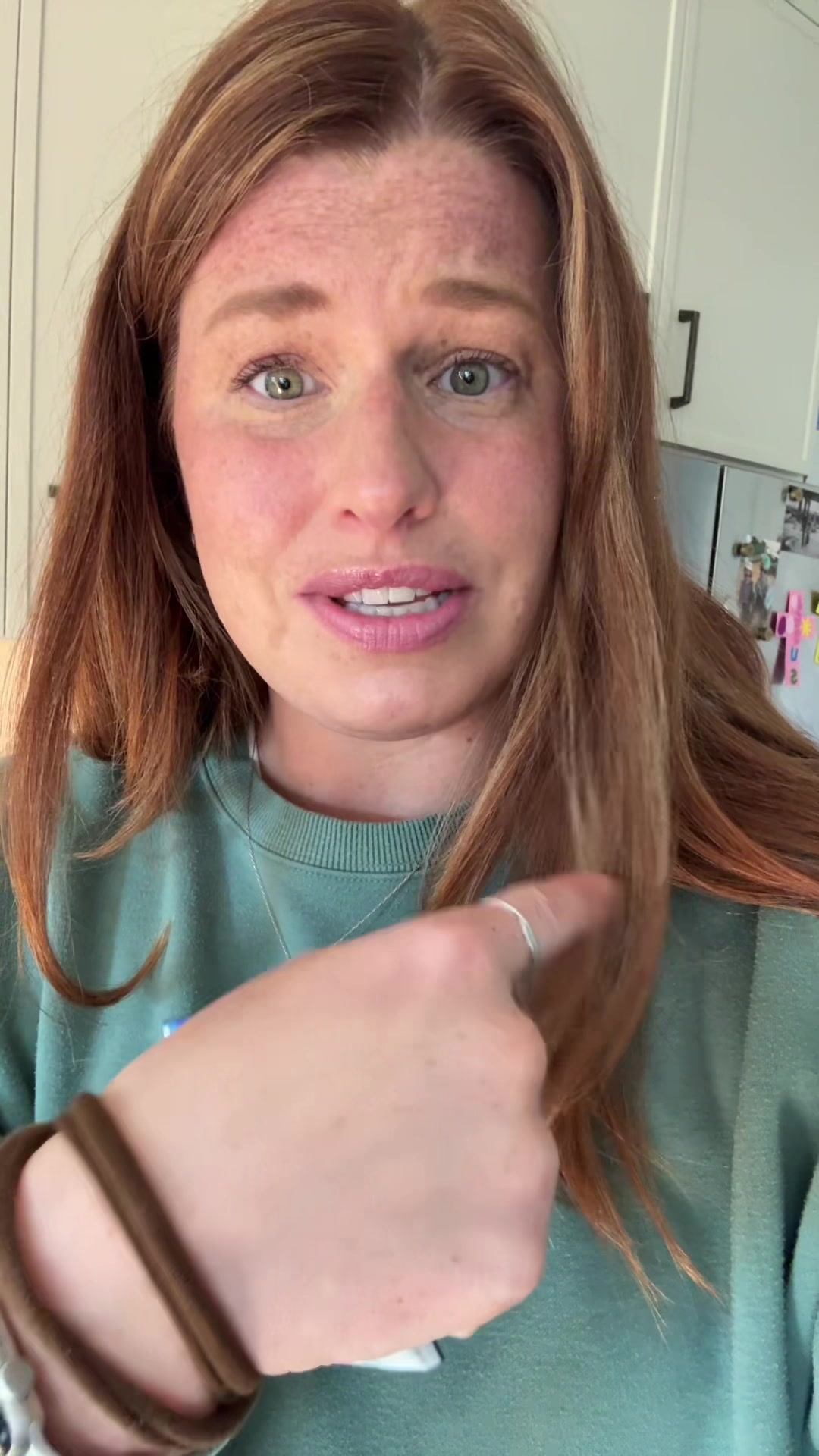
Gummies for digestion and overall health #gummies #vitamins #health #healthyhabits #digestion @grunsdaily
- Reach
- 50 upvotes · 224 comments · r/Supplements
A community is already discussing this in r/Supplements. Show up there authentically and answer the thread before a competitor does.
Who amplifies them
The creator layer is the growth engine. On Instagram, macro creators @drewbarrymore and @bethennyfrankel anchor the top of the amplification stack; @drewbarrymore's post carries FTC-disclosed #GrünsPartner #ad content with an affiliate link, while @bethennyfrankel's post has neither. @beautybybev101 drove 4,316 engagements on a holiday Grinch-themed limited edition. @joshdixon promoted the Sam's Club launch with a retail-availability post. @costco_empties (392 engagement) announced the Costco rollout. @gabs.gz runs an affiliate link via Linktree targeting the morning routine audience.
On TikTok Shop, the affiliate seller network includes @alex (6,327 engagement on the Popsicle Firecracker flavor launch), @Rekaa (2,538), @ctress_a (681), @gallbladdergal (661), @NEAVE (309), @Vanessa (168), and a stream of micro-sellers posting during promotional windows. These are affiliate sellers, not gifted creators - they earn commission per TikTok Shop transaction.
On Meta, paid dark posts run from the pages of Chelsea Handler, Olivia Reeves, Hayley Carling, and Cailin Burns, blurring the line between organic endorsement and paid influencer advertising. These creator-page ads are among the proven winners in the current Meta portfolio.
The brand account (@grunsdaily) and the founder's personal account (@chadjanis) are kept clearly separate: brand content is promotional and product-focused; Chad Janis posts about hiring, DTC unit economics, and scaling philosophy, rarely linking to Grüns directly.
06 Organic & video
The organic content engine: the videos, creator posts, and community presence earning attention without paid spend.
Creator content overwhelms the brand's own organic output across every surface. On TikTok, the dominant format is the talking-head review: a creator holds the green pouch on camera, describes a physical outcome, and links to TikTok Shop. @NEAVE's seven-day diary format (309 engagement) is a standout - daily updates on bowel movement regularity, more energy, fewer sweet cravings, ending with a repurchase statement. @gallbladdergal (661 engagement) and @Rekaa (2,538 engagement) follow a similar review-and-habit-stack structure. During TikTok's Deals for You Days promotional period, TikTok Shop creators @prodbyweed and @Jackie posted under the #dealsforyoudays and #gruns tags, while @koichicnx posted earlier without the promotional tag - evidence of a coordinated Shop creator activation, not organic spontaneous posting.
Read the full breakdown+2▾
On Instagram, @drewbarrymore's endorsement reel (13,740 engagement) and @bethennyfrankel's digestion post (4,363 engagement) are the highest single-post performers in the evidence. Both follow the celebrity lifestyle-lock-in pattern: personal, specific ("I don't go anywhere without a pack"), traveling-with-product framing. @beautybybev101 (4,316 engagement) tied a holiday limited edition to a seasonal content hook. The brand's own @grunsdaily account averages ~355 engagement at 148K followers - a respectable but unremarkable rate - confirming that organic brand content is not the engine; creator amplification is.
On X, Chad Janis's most-viewed posts (100K+ impressions) are hiring announcements and DTC philosophy commentary, not product content. The brand account's most notable recent post declared itself "a Bravo fan page first, daily nutrition gummy company second" - self-aware and low-volume, confirming X is a tertiary surface.
07 Affiliate & partners
How the brand turns creators and partners into a tracked, variable-cost acquisition channel, and how the program is structured.
A referral program exists at gruns.co/pages/referrals, indicating a structured affiliate or ambassador program built into the site. TikTok Shop functions as a second affiliate layer, with creators earning commission on Shop-tagged sales - confirmed by multiple creator posts with Shop links and #tiktokshop disclosures. The #GrünsPartner #ad disclosures on macro-creator posts indicate a formal paid ambassador program with FTC-compliant disclosure structures.
Read the full breakdown+1▾
Affiliate traffic represents 4.1% of total monthly visits, a real but not dominant referral channel at current scale. The affiliate layer appears to function primarily as a creator activation mechanism - gifted product plus a commission offer - rather than a pure affiliate arbitrage play. Free-to-paid conversion from affiliate traffic is not visible in public data.
08 In their own words
Pulled from interviews and community sessions. The quotes are the angle; the takeaway is what to do with it.
Grüns Founder & CEO Chad Janis: Winning Big in Consumer ↗Operators Podcast · 112k views · 93 min▶ Listen“We have a CAC ceiling. You can ask anybody at Grüns. They won't tell you cuz we had a very like closed off, internally transparent, externally opaque culture. You can ask anybody at Grüns what our CAC ceiling is and they would know. CEO, CSO, CMO, everyone knows exactly what that ceiling is for our CAC, the gospel around it.”
Expand
Chad built Grüns by spending a year doing blind product iteration (taste, format, count, color) before launch, then scaling with extreme LTV-to-CAC discipline: a company-wide CAC ceiling, set conservatively at launch and raised only as real cohort data came in, always targeting a minimum 3x fully-burdened LTV. He sequenced channels D2C first, then Amazon, then retail (Sprouts → Target → Walmart, now 4,000+ doors), adjusting the CAC ceiling modestly at each expansion and planning co-manufacturing capacity 6–9 months ahead to avoid ever having to kill the marketing engine.
“I run the business, have always run the business, and I would encourage everybody to run their business as a minimum three times LTV, fully burdened LTV, delivered to the door gross profit to CAC.”
“That ceiling was very different when I first launched. I picked something very low. And then as month two came in, I was seeing the retention said, hey, let's bump it a little bit. As we launched Amazon and I needed to factor in a little bit of a runoff into Amazon from the D2C spend, bumped it a little bit.”
“We got to get working on this new co-man right now. Otherwise, in, you know, 6 months, we're going to feel some massive pain and have to turn off the marketing engine.”
“I spent a year from like August of 2022 to August of 2023 when we launched going through dozens of iterations on this. And not just testing like formulation, the science of it, also testing like is should it be a gummy bear? Or should it be a gumdrop? How many gummies should be in a pack? What's the color? What's the smell? What's the taste? All of those things were tested, and they were blind sample surveys I was doing.”
Set a CAC ceiling on day one — conservative, based on early retention data — and encode it as company gospel so every hire knows the number. Raise it only when real cohort data justifies it, never on optimism.
Target 3x fully-burdened LTV-to-CAC: LTV is gross profit delivered to the door (post-refunds, post-COGS, post-shipping), not revenue, and the time horizon is three years — not the heat death of the universe.
When expanding to a new channel (Amazon, retail), adjust the CAC ceiling modestly upward to account for halo-effect runoff rather than trying to attribute every sale back to its origin channel; blend the LTV-to-CAC across the whole business.
Do blind, diverse-sample product testing before launch — different demographics, nationalities, not just your own community — to avoid echo-chamber validation.
Plan co-manufacturer onboarding 6–9 months before you need the capacity; by the time you feel capacity pressure, it is already too late and you will have to kill your marketing spend to catch up.
This guy sold his company to Unilever for $1.2B after just 3 years ↗My First Million · 58k views · 63 min▶ View source“New formats win. If you want to have the greatest odds of success it's by creating a new format.”
Expand
Chad Janis built Grüns by betting on a new product format (greens in gummy pouch form) to eliminate category competition, then engineered the entire growth machine around a pre-set LTV:CAC ceiling. He ran hundreds of ad angle tests per month, found the ones that stuck, and built fully personalized funnels (landing page, pop-up, email, SMS) tailored to each winning angle rather than running a generic funnel.
“Good product doesn't mean like make a better version of Grüns. Like that's not going to work for people. What's going to work is finding that product category, that white space. Good product equals new white space.”
“Everybody in our company since day one knew what our CAC ceiling was that would result in a three times or greater LTV to CAC.”
“You should test ads in high volume. So find new angles, test all over the place, find what sticks... Once you've identified an angle that seems to be running, then you build the entire funnel around it.”
“If you came in on a gut health ad, we want everything tailored to — hey, Sam just expressed interest in the gut health ad. Great, then Sam's probably interested in gut health. Let's give a pop-up to help them understand what about gut health is he interested in. That pop-up informs what messages we send on email and SMS towards Sam's expressed concern.”
Win by creating a new format, not by iterating on an existing one — a new format has no direct competitors and gives you time to build category leadership before copycats arrive.
Set your CAC ceiling on day one based on the LTV:CAC ratio you need (target 3x fully-burdened gross profit); every marketing decision should be measured against whether it keeps you under that ceiling.
Run hundreds of ad concepts per month across many angles (clinical, lifestyle, humor, companion-to-trend), then once an angle shows signal, pour all creative formats (static, UGC, cinematic) into that one angle rather than spreading budget thin.
Personalize the full post-click funnel by entry angle — the landing page, the pop-up quiz, and all email/SMS sequences should reflect why the customer clicked, not a generic brand message.
Make the product a joy, not a chore — model the Doctor Squatch playbook (lifestyle branding, limited-edition drops, fun partnerships) so customers look forward to using it daily rather than seeing it as a clinical obligation.
How a Student Built a $500M Gummy Vitamin Empire in 14 Months | Grüns Brand Breakdown ↗Zipchat AI | AI Agent for Ecommerce · 100k views · 11 min3rd-party breakdown▶ View source“They hit profitability in just 14 months. That is insane for a consumer brand.”
Expand
Grüns grew to $500M by repositioning the supplement category around enjoyment rather than efficacy — combining AG1's comprehensive nutrition with Goli's candy-like gummy format to create a daily habit people actually stick to. Their core engine was a subscription-first pricing model that maximized LTV, funded aggressive paid acquisition, and drove 14-month profitability, amplified by a programmatic micro-influencer flywheel that generated UGC at scale.
“100 to 500 Instagram and TikTok creators contacted weekly... more than 250,000 influencer community members in total.”
“Gifting plus affiliate hybrid model — send free products to influencers. If the influencer actually likes it, they post about it and get an affiliate commission. If not, no problem. Move to the next one.”
“Make one-time purchases expensive, like $80. Make subscription a no-brainer. $1.38 a day.”
“They proved DTC before scaling retail — velocities were so good that within just 2 months they expanded from just the adults line to adding Grüns Club for kids, then came Target, then Walmart, another 5,000 retail stores.”
Run a gifting-plus-affiliate flywheel: send product to 500 micro-influencers weekly, collect UGC from the 20–30% who post, repurpose that UGC as paid ad creative, reinvest revenue into the next batch — no upfront influencer fees required.
Price one-time purchases punitively high and subscriptions as a near-obvious deal (e.g., $80 one-time vs. $1.38/day) to funnel customers into recurring revenue from day one.
Prove velocity on DTC first, then use those sell-through numbers as the pitch to retail buyers — retail expansion becomes a pull, not a push.
Expand the product line along customer-segment lines (kids, low-sugar, nootropic) rather than feature lines — each SKU opens a new TAM and raises AOV for existing subscribers.
Find a 'mashup' positioning: identify two proven products with complementary strengths (one functional, one enjoyable) and combine them — the novelty is the marketing hook, not just the product.
With A $1.2 Billion Sale To Unilever, Grüns’ Founder Mints A Fortune ↗Forbes · 21k views · 6 min3rd-party breakdown▶ View source“His brand, Grüns, from the German word for greens, now ships around 10 million gummies every day”
Expand
Grüns grew from zero to $300M+ annualized revenue in under three years by solving a universal nutritional gap (90% of Americans are deficient in key vitamins/minerals) with a radically better delivery format (gummy bears instead of chalky powders), then dominating the Amazon green supplement category before expanding to retail. The founder's PE background gave him pattern recognition on what acquirers value, and he executed with capital efficiency — raising only ~$45M total while achieving a $1.2B exit at 4x trailing revenue.
“By the time he got his MBA in 2024, Grüns had $50 million in revenue”
“In October 2025, the company announced that it had hit an annualized run rate of over $300 million after raising a $35 million Series B in March 2025”
“Its superfood gummy bear is the top-selling green supplement on Amazon and across retailers nationwide”
“If you're Unilever and you're going to spend a billion dollars, you want to be very confident it's not a fad. Most exits are after 11 years. You get higher multiples when you're around longer, so this is very much bucking the trend”
Lead with a massive, validated problem before building the product: Janis confirmed 90% of Americans have vitamin/mineral gaps before finalizing his formula, giving him a built-in TAM argument for retailers and investors
Compete on format, not formulation: the gummy delivery format was the wedge into a crowded supplement market, not a novel ingredient stack — incumbents ignored the format while Grüns owned it
Use your network for pre-seed before touching institutional money: $400K raised from Stanford classmates funded the launch through $50M in revenue, preserving founder equity
Win Amazon first, then retail: becoming the top-selling green supplement on Amazon created proof of demand that made nationwide retail placement a pull, not a push
Spend years in adjacent industries before founding: Janis's 3 years leading $1.4B in PE deals gave him board-level visibility into what makes CPG brands acquirable, which shaped every build decision at Grüns
09 The playbook
The channels are not separate. They are one system where each stage feeds the next. Here is the read, then the plays to run tomorrow.
The inferred playbook
The entire growth machine is a single compounding loop: micro-influencer UGC at scale feeds paid creative, which feeds subscription LTV, which funds more creator spend.
Automated outreach to 500+ micro-influencers per week for gifting generates a constant supply of UGC; the best-performing organic clips are recycled directly into paid Meta ads, collapsing creative production cost to near zero for proven material (source).
Chad Janis set a company-wide CAC ceiling at launch targeting a minimum 3x fully-burdened LTV, raised it only as cohort data confirmed retention, and sequenced paid spend against that ceiling - meaning subscription conversion and retention ratios directly controlled how aggressively they could buy traffic (source). Subscription pricing runs $59.99/month for individuals and $114/month for two-person households; one-time purchase is $80 for a 28-day supply. The gap between one-time and subscription price (~25-30%) is the incentive architecture driving subscription conversion.
Dig deeper+3▾
Rather than running a single funnel, they test hundreds of ad angles per month and build dedicated landing pages, pop-ups, email flows, and SMS sequences for each winner - six distinct customer avatars with separate full-funnel builds were reported at peak (source). The current ad mix simultaneously runs GLP-1 side effects, nostalgia flavor collabs, gut health, celebrity endorsement, and segment-specific angles (men, women, kids).
Sprouts → Target → Walmart → Sam's Club → Costco was sequenced after DTC scale, using retail doors to widen trust signals and capture ambient demand, not as the initial growth lever. The path from $300M ARR to the $1.2B Unilever acquisition multiple is not fully detailed in public sources.
Subscription churn, free-to-paid conversion from gifting programs, and blended ARPU are not visible in public data. Given the DTC subscription model, retention economics are the invisible variable the entire playbook depends on.
Run the "taboo side effect" hook in your next Meta static.
Grüns' proven hook "Poop More While On a GLP-1" works because it names the most unspeakable adjacent problem in the exact language your buyer uses privately. Identify the one thing your target customer is too embarrassed to say out loud that your product solves - constipation, bloating, bad skin, brain fog - write a single static image with that exact phrase in large text on a brand-color background, and run it as a dark post from a creator's page rather than the brand account. The taboo framing earns the scroll-stop that a benefit claim does not; Grüns has been running this creative cluster as a proven winner across multiple format variations.
Gift 10-20 micro-influencers in your product's adjacent health community right away and brief only the format, not the hook.
Grüns built its UGC supply by gifting before anyone was paid, and the best content came from creators who reported specific outcomes they actually noticed - @NEAVE's seven-day diary on bowel regularity is the template. Find 10-20 TikTok or Instagram creators in the relevant community who have posted about your category's core problem in the last 30 days, DM them a free supply, and ask for a one-week format (daily outcome update, no script). Do not brief the hook; brief only the cadence and outcome category. The creator's authentic language becomes your next round of ad copy.
Build a comparison Google text ad against the category leader your buyer is already considering.
Grüns has run "AG1 vs Grüns: Which Green Supplement Wins for Daily Nutrition?" as a proven Google text winner for approximately 733 days. Identify the one incumbent your buyer already knows and run a search ad that explicitly names the comparison and bids on "[competitor] alternative" and "[competitor] vs [your brand]" keywords. Write the headline as a question, not a claim - the question format implies your product wins without triggering the skepticism a claim does. This captures high-intent buyers already in purchase mode.
Run a "We're So Sorry" pattern-interrupt static for your next offer.
Write a brand-color background with "WE'RE SO SORRY" or "This is awkward" in large white text, no product image above the fold, then hard-pivot to the offer in body copy (new flavor, sale, launch, reformulation). Grüns uses this exact template for limited-edition flavor reveals and has it in the proven-winner portfolio. Test it against a direct-discount headline running the same offer; the faux-apology framing earns the click that a discount headline surrenders to banner blindness.
Find a nostalgia brand in your category adjacency and propose a limited-edition co-label SKU.
The Popsicle Firecracker x Grüns collab is generating multiple simultaneous proven Meta angles: the nostalgia hook ("Wait, you already know this flavor"), b-roll unboxing, and childhood memory framing, all with built-in scarcity ("limited edition, don't wait"). Reach out to one brand your audience already has affection for - a flavor, a snack, a childhood staple - for a co-pack or co-label on a limited run. The partner brand's audience is free distribution, the scarcity framing is structural, and the nostalgia angle opens creative territory unavailable to a standard product launch. This play requires a willing co-brand partner; it is not a solo tactic and cannot be run without that agreement in place first.
You just read how Gruns does it. Tomorrow it is someone else.
Every morning we take one company that is actually growing and break down where its customers come from: the ads still running after a year, the channel doing the real work, and the play you can run this week.
Systemaic · directional intelligence. Traffic, spend, and reach figures are SimilarWeb-style estimates and qualitative reads of public data, not audited numbers. Built on real public receipts.
// teardowns with a similar GTM motion
sources & receipts (9)
Live ad libraries: meta ad library · google ad library
Launch archives: Hacker News: John Grunsfeld will retire from NASA
Founder interviews: Grüns Founder & CEO Chad Janis: Winning Big in Consumer · How a Student Built a $500M Gummy Vitamin Empire in 14 Months | Grüns · Unlocking Growth Levers with Connor Dault, CMO of Fast-Growth DTC Supp · This guy sold his company to Unilever for $1.2B after just 3 years · With A $1.2 Billion Sale To Unilever, Grüns’ Founder Mints A Fortune · 1 Smart Business Story: This Joke Just Sold for $1.2 Billion | Inc.
Traffic, spend, and revenue figures are estimates as noted in the report; the links above are the primary public artifacts.