- 01Narrate your own product decisions
- 02Make your pricing math the marketing
- 03Run a two-track creator program
- 04Revive a fan-favorite for one day only
01 Snapshot
The one-glance read on who they are and how they grow. Each point is verifiable from the receipts above.
Clinically vetted indie skincare (serums, moisturizers, a reusable silicone Forever Eye Mask), priced $25-$62, sold direct and through Sephora wholesale.
Founder-led and creator-amplified, propped up by Google search ads that have run continuously since 2022.
~199,000 estimated monthly visits and 187,143 Instagram followers as of 2026-07-15, against $10M+ in reported 2023 sales (45% year-over-year, per a Feb 2024 report); no newer public revenue figure exists, so the current run rate is likely higher but unverified.
As of 2026-07-15, Meta's newest creative (1-2 days active) teases an unreleased "firming formula" launching 08.04, while Dieux's own Google account is trialing new image-format search ads.
Every size or price change (a jumbo Air Angel, a Deliverance price drop) gets recycled as fresh content for a tagged creator network and the founder's own TikTok, then caught downstream by search ads that have never needed a rewrite.
02 How it unfolded
The order the channels came online. Sequence is strategy: what they did first, and what they layered on once demand existed.
03 Traffic & channel mix
Estimated demand, the channel split behind it, and the keywords and referrers doing the work. Directional modeling, not audited analytics.
Traffic sources
Top search keywords
| Keyword | Volume | Weight | CPC |
|---|---|---|---|
| dieux | 13k | $0.57 | |
| dieux skin | 6.6k | $0.63 | |
| dieux instant angel | 3.3k | $0.66 | |
| dieux forever eye mask eye reviver mask 0.5 oz | 2.2k | $3.03 | |
| dieux eye mask | 790 | $0.65 |
Closest competitors by audience
Dieux draws roughly 199,000 estimated monthly visits, down 20% over the trailing three months. The mix is led by Search Organic at 31%, with Direct close behind at 25.1% and Search Paid at 21.5%, meaning almost a third of traffic arrives already knowing the brand name rather than discovering it fresh. Email holds a notable 12.2% share, a sizable slice for a DTC brand and a sign of an active owned list; the rest, affiliate, referrals, display, social organic, generative-AI referrals, and social paid, together total under 10%. The top ranking and bid terms are overwhelmingly branded: "dieux" (≈13,000 searches/mo), "dieux skin" (≈6,600 searches/mo), and "dieux instant angel" (≈3,300 searches/mo), meaning the demand they're capturing is people already searching the brand rather than generic skincare-category terms. Among the competitor domains SimilarWeb surfaces, sephora.com is actually Dieux's own wholesale retail partner rather than a rival, cocokind.com is a fellow indie clean-beauty DTC brand chasing the same price-conscious shopper, and ubeauty.com is another founder-fronted, ingredient-transparency-driven skincare line competing on similar positioning.
04 Organic content
The specific pages earning their organic search traffic, and the pattern behind why they rank. Adapt the format, not the topic.
All five of Dieux's top organic pages are product or collection pages, the Instant Angel product page, the homepage, the Forever Eye Mask product page, the Air Angel product page, and the eye-masks collection, with no blog, comparison, or how-to content in the mix. The pattern is pure branded-product-page SEO: the pages rank #1 for exact-match queries like "dieux instant angel," "dieux eye patches," and "dieux moisturizer" rather than competing on generic, high-competition skincare terms. That works because the founder-built audience already searches the product names directly, so the product pages themselves function as the landing point for demand that was created off-site, on TikTok and Instagram, before it ever hits Google.
Top pages by organic traffic
05 Channel map
Not traffic share. How much weight the growth system actually puts on each channel, with a one-line read on the role it plays.
What drove growth
06 The creative doing the work
Each exhibit shows the actual asset, an X-ray of why it works, a status, and a play you can adapt. This is the heart of the teardown.
As of 2026-07-15, Dieux runs roughly 200 total Google ads (38 of a 133-ad sample still active) and roughly 77 Meta ads (73 sampled, all active). Only the Google side has earned the "proven winner" label: its oldest active ad has run 1,404 days. Every visible Meta creative tops out at 29 days active, too young for longevity to be the proof, so that library reads as a current push, not a settled winner set.
- Running
- 29 days (longevity = it's converting)
- Hook
- On-screen text: "jess d Please make a larger size of air angel !!!!" and "youareaye I NEED THIS IN 100ml PLEASE!! I'M BEGGING YOU" with a light blue box with "AIR ANGEL" printed on it being held by two hands.
- CTA / offer
- $59 ($68 VALUE!)
- Audience
- Existing customers or potential customers who value larger product sizes and good value, indicated by the multiple user comments requesting a 'jumbo' size and the explicit 'VALUE!' callout.
Why it works. Turns real customer comments begging for a larger size into the opening proof of demand, before the brand even claims to have delivered it.
Displaying multiple user comments requesting a larger product size at 0:00-0:03, followed by the text "YOU ASKED, WE LISTENED" at 0:02-0:03. Screenshot real customer requests for a product change and use them, unedited, as your opening frames before announcing you built it.
- Running
- 29 days (longevity = it's converting)
- Hook
- On-screen text: "AIR ANGEL A moisturizer that gives you room to breathe". Visual: A light blue product box is opened to reveal the product tube inside.
- CTA / offer
- Shop at dieuxskin.com
- Audience
- People with oily and blemish-prone skin who are looking for a lightweight, hydrating, and non-comedogenic moisturizer, as indicated by the on-screen text "Made for oily & blemish-prone skin" and "Non-comedogenic" at 0:16-0:21.
Why it works. Pairs an unboxing reveal with a one-line benefit claim that gives literal meaning to an abstract product name for new customers.
Visual product reveal and texture demonstration at 0:00-0:04, showing the unboxing and then squeezing the product out of the tube. When naming a product something abstract, pair its first reveal with one plain-language sentence that translates the name into a felt benefit.
- Running
- 29 days (longevity = it's converting)
- Hook
- Visual: A woman holds a light blue tube of 'DIEUX Air Angel Peptide Plumping Gel Cream' directly in front of her face, obscuring most of it. Audio: Upbeat, instrumental music.
- Audience
- The focus on a natural, dewy finish and the visible skin texture (freckles, minor blemishes) suggests the product is for individuals seeking effective skincare that enhances natural beauty rather than covering it up. The 'Peptide Plumping' claim targets those interested in anti-aging or skin firming benefits.
Why it works. Has a real customer hold the tube directly over her own face on camera, modeling exactly how close and personal the product's use is.
Product-first visual introduction (0:00-0:01): The video opens with a close-up of the product, 'DIEUX Air Angel Peptide Plumping Gel Cream', held prominently. Have a real customer hold the product directly in front of their face on camera so the brand name and the human demo share one frame.
Show 7 more exhibits
- Running
- 29 days (longevity = it's converting)
- Hook
- 0:00-0:03, a woman holds a light blue tube of moisturizer with the brand name 'DIEUX' and the text 'Air Angel Peptide Plumping Gel Cream'. On-screen text reads: "Why is this moisturizer".
- Audience
- Individuals with oily and acne-prone skin looking for a plumping, hydrating moisturizer that won't clog pores. This is signaled by the explicit mention of "oily and acne-prone skin" at 0:09 and the testing for "acnegenic" and "comedogenicity" at 0:30.
Why it works. Uses an unfinished question as the opening frame so curiosity about a specific ingredient claim carries the viewer into the education segment.
Problem-solution framing with a curiosity hook: "Why is this moisturizer so plumping for your skin?" (0:00-0:03) Open with a deliberately incomplete on-screen question about your product's key differentiator, cutting off before the answer.
- Running
- 29 days (longevity = it's converting)
- Hook
- "which Dieux moisturizer is right for you?" - Three tubes of Dieux moisturizer (light blue, green, white) are laid out on a white textured surface.
- Audience
- Individuals seeking solutions for specific skin concerns like oiliness, fine lines, redness, dryness, or barrier support, indicated by the detailed descriptions of each product's benefits and target skin types.
Why it works. Removes multi-SKU decision paralysis by asking the exact question a shopper facing three similar tubes would have, then answering it product by product.
Direct question hook at 0:00: "which Dieux moisturizer is right for you?" If you sell more than one similar product, open with the exact 'which one is right for you' question shoppers are silently asking.
- Running
- 1 day (new — still being tested)
- Hook
- A close-up shot of a person's hand pressing a dark green pump bottle, dispensing a small dollop of yellow cream onto their index finger.
- CTA / offer
- Join the waitlist at dieuxskin.com
- Audience
- Individuals interested in skincare, specifically anti-aging or firming products, indicated by the product application and on-screen text about 'firming formula'.
Why it works. Uses an extreme macro shot of an unnamed cream being dispensed to build sensory curiosity ahead of a waitlist-driven product launch.
Sensory product demonstration (0:00-0:03): The video opens with a close-up of a yellow cream being dispensed and then applied to skin. Tease an unnamed new product with an extreme close-up of its texture or dispensing action before revealing what it is.
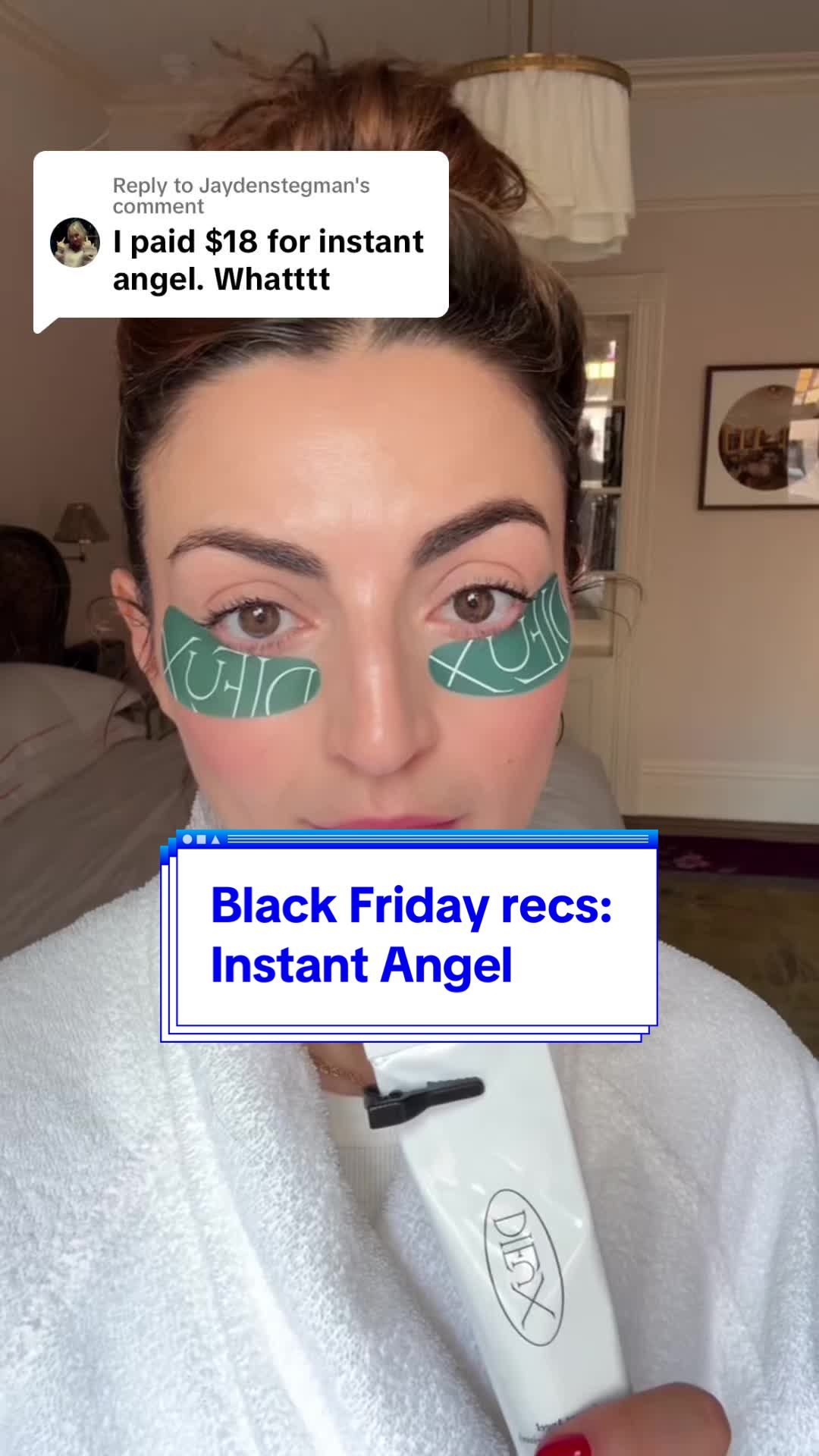
- Hook
- Visual: A woman with green eye patches under her eyes, wearing a white robe, holding a white tube of product. Text overlay: "This viral $45 moisturizer is on sale". Audio: "This viral $45 moisturizer is on sale".
- CTA / offer
- Up to an additional 50% off on TikTok Shop, on top of a 20% off Black Friday sale.
- Audience
- Individuals interested in skincare, particularly those with dry skin, who are looking for high-quality moisturizers and are responsive to sales and social proof. Evidenced by the discussion of 'dry skin' and the emphasis on 'viral' status and 'biggest sale of the year'.
Why it works. Combines social proof of virality with flash-sale urgency to convert TikTok Shop browsers into immediate buyers.
Leveraging a user comment and viral status (0:00-0:07): The video starts with a reply to a comment "I paid $18 for instant angel. Whatttt" and states "This viral $45 moisturizer is on sale" and "Instant Angel is viral because this woman knows how to make a moisturizer". Open with your product's exact price plus a viral or bestseller claim, then state the sale is live right now.
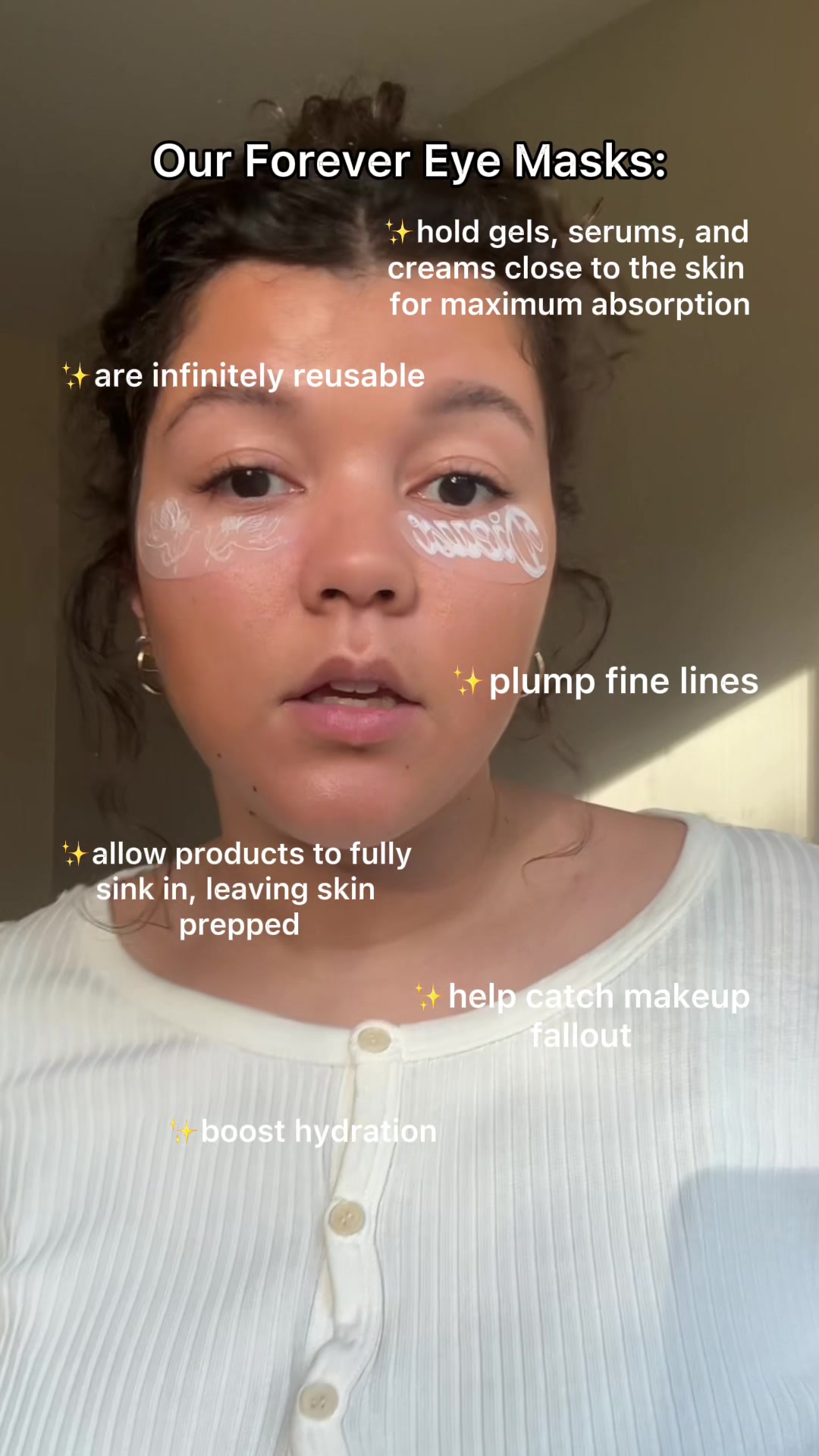
- Hook
- Visual: A woman with dark curly hair and a white ribbed shirt is looking directly at the camera, with text overlays on the screen. Audio: "For what it's worth, I am continuously impressed by you."
- Audience
- Individuals interested in skincare, particularly eye care, and those looking for reusable, effective beauty tools, indicated by the product being an 'eye mask' and the benefits listed.
Why it works. Uses a warm direct-address compliment to soften into an eye mask demo, keeping viewers watching past the first line before the pitch lands.
Visual product application and benefit stacking (0:03-0:10, "✨ hold gels, serums, and creams close to the skin for maximum absorption", "✨ are infinitely reusable", "✨ plump fine lines", "✨ allow products to fully sink in, leaving skin prepped", "✨ help catch makeup fallout", "✨ boost hydration") Start your video with a genuine compliment or observation aimed at the viewer before you introduce the product.
Skincare that is owned and operated by a chemist just hits different! Especially when that chemist is @joycedeezy 👩🏻🔬 Making our formulas in house allows us to have more creative control, be nimble and adaptive, and deliver the best possible products to you with extra levels of transparency as to what goes into everything we make 😇
- Reach
- 140 upvotes · 73 comments · r/Sephora
A community is already discussing this in r/Sephora. Show up there authentically and answer the thread before a competitor does.
Who amplifies them
Three distinct tiers of amplification show up in the evidence. The brand's own accounts, "dieux" on TikTok and the verified "dieuxskin" on Instagram, post the majority of explainer and formulation content, and co-founder Charlotte Palermino posts personally from her own TikTok account (distinct from the brand handle), alongside co-founder and cosmetic chemist Joyce de Lemos, who appears in owned content as @joycedeezy. A second tier is explicitly paid: creators like kristyn hoffman, who posted about Dieux at least twice including a JUMBO Air Angel launch clip, and sydney heinemann (1,278 engagements on an Instant Angel post) both mark their videos "Ad" per FTC disclosure rules. A third, larger tier posts under the #dieuxpartner tag without the same paid disclosure, including Sudeshna Haldar, gina, and Aysha Harun. Beyond the tagged program, unprompted organic mentions come from creators like tommyrichman (2,313 engagements crossing over eye masks into makeup use), liluzivert (3,159 engagements praising the reusable eye masks), and Karla Cruz (2,800 engagements requesting a restock). Sephora's own Instagram account also reposts Dieux launches to its SephoraSquad audience, the retail-partner amplification already noted above. The Reddit threads covered above round out the amplification as unpaid, unprompted community discussion rather than a brand-run channel.
07 Organic & video
The organic content engine: the videos, creator posts, and community presence earning attention without paid spend.
Dieux's video content splits into three lanes that all lean on the same "show the reaction" instinct: brand-account clips explaining product decisions, co-founder-fronted formulation content, and creator reaction/UGC reposted or tagged back to the brand. The owned account's top performer answers a question a skeptical shopper would ask out loud, "Why on earth would a brand launch THREE moisturizers?!" pulled 6,250 engagements, framing a SKU-expansion decision as a behind-the-scenes explainer rather than a product announcement. On Instagram, the brand's own reel introducing co-founder and cosmetic chemist Joyce de Lemos ("Skincare that is owned and operated by a chemist just hits different") drew 7,139 engagements, tying the clinical-vetting claim to a named, credentialed person rather than a generic lab-coat visual. Creator jillian.gottlieb's comedic "Jumbo @dieuxskin Deliverance! I did it!" reel added 5,254 engagements from outside the brand's own channels, showing the same size-variant-as-content mechanic working when a third party runs it unprompted. Posting cadence runs multiple times a month across TikTok and Instagram, and the format that consistently outperforms is the reaction or decision-explainer, someone holding the product and narrating a change (a new size, a price cut, a restock) rather than a static product shot.
08 Affiliate & partners
How the brand turns creators and partners into a tracked, variable-cost acquisition channel, and how the program is structured.
No public referral link or affiliate signup page turned up on Dieux's own site, only TikTok and Instagram profile links. The affiliate motion instead runs through TikTok Shop's creator-commission infrastructure: shoppable video tags, the "tiktokshop" hashtag on brand posts, and the #dieuxpartner tag used by unpaid or commission-based creators, sitting alongside a separate tier of FTC-labeled paid partnerships. That is a closed, platform-native creator-commission system rather than a self-serve affiliate program a reader could sign up for, which fits a brand at Dieux's stage: enough scale to run a managed creator roster, not yet (or not interested in) opening a public affiliate portal.
09 The playbook
The channels are not separate. They are one system where each stage feeds the next. Here is the read, then the plays to run tomorrow.
The inferred playbook
The loop starts with founder- and creator-generated video that turns product changes into content, which shows up downstream as branded search volume that a multi-year Google ad library then intercepts of purchase intent.
Posts explaining SKU or pricing decisions, the "three moisturizers" clip and the Deliverance price-cut post, consistently outperform static product content, turning ordinary merchandising choices into shareable moments instead of quiet backend changes.
Meta's library stays young (nothing older than 29 days) and themed around unreleased launches, functioning as the testing lane, while Google's library is anchored by branded-term ads that have run for years, functioning as the harvesting lane for demand the content side already created.
Dig deeper+2▾
Every organic page that earns traffic is a product or collection page; there is no comparison or how-to content capturing category-level searches like "eye mask for puffiness," ceding that non-branded demand to competitors positioned similarly, such as cocokind or ubeauty.
how revenue splits between direct sales and the Sephora wholesale channel, the repeat-purchase rate on the opt-in subscription option, and the commission structure behind the #dieuxpartner creator tier.
Narrate your own product decisions
The proofDieux's highest-performing brand clip answers a skeptical question head-on, "Why on earth would a brand launch THREE moisturizers?!", pulling 6,250 engagements, and a separate post did the same for a price cut.
The adaptationNext time you add a SKU, cut a price, or change a spec, film a short clip answering the obvious objection a customer would raise ("why would you do that") instead of just announcing the change, and post it as the launch content itself rather than a press release. The mechanism: framing the post as answering the audience's unspoken skepticism, not stating the news, is what makes it watchable.
Cost: $0 · Time to signal: days · Works pre-PMF: yes
Make your pricing math the marketing
The proofA tagged creator post amplified Dieux's line that it prices "based on what it should cost, not what we think we can get away with", the same cost-framing that shows up paired with clinical-claim copy in the brand's own search ads.
The adaptationPublish the actual cost logic behind one flagship product's price, ingredient cost, markup, and the reasoning, as a single post or page, using the same "here's the math" framing rather than a vague "transparent pricing" claim. This only works if the underlying numbers can survive being made public.
Cost: $0 · Time to signal: weeks · Works pre-PMF: conditional, only if the unit economics are defensible enough to publish without inviting price-shopping against you.
Run a two-track creator program
The proofDieux layers FTC-labeled paid creator posts (kristyn hoffman's "Ad"-tagged clips) on top of a separate unpaid #dieuxpartner tag used by creators like Sudeshna Haldar and gina, both running through TikTok Shop's shoppable-video tools.
The adaptationSet up the same two tiers, a small paid roster for disclosed launch pushes and a lightweight tagged or coded-link tier open to anyone in your category who already uses the product, seeded by messaging 10-20 creators who've posted about your category unprompted and offering a commission code. Carry over the paid-versus-unpaid split so disclosure stays clean as the roster grows.
Cost: under $500 · Time to signal: weeks · Works pre-PMF: conditional, requires an actual product to send and a platform with native shoppable tagging.
Revive a fan-favorite for one day only
The proofDieux brought back a discontinued product, Barrier Blanket, for a single announced day, bundled as a free sample with any moisturizer purchase and framed as "our most requested product ever."
The adaptationIf customers still ask about something you discontinued or limited, bring it back for one specific, announced day rather than an open-ended restock, and bundle it as a free add-on to an existing purchase. The scarcity of the single-day window is what generates the content and demand spike, not the product itself.
Cost: $0 · Time to signal: days · Works pre-PMF: no, this depends on an existing base of repeat customers already asking for the item back, which a pre-PMF brand has not yet built. Not transferable at an earlier stage: the 1,404-day Google ad's authority and Sephora's wholesale distribution both took years and outside retail approval to build, so a newer brand should adapt the content and pricing mechanics above without expecting the same search-ad longevity or retail reach from day one.
You just read how Dieux Skin does it. Tomorrow it is someone else.
Every morning we take one company that is actually growing and break down where its customers come from: the ads still running after a year, the channel doing the real work, and the play you can run this week.
Systemaic · directional intelligence. Traffic, spend, and reach figures are SimilarWeb-style estimates and qualitative reads of public data, not audited numbers. Built on real public receipts.
// teardowns with a similar GTM motion
sources & receipts (2)
Live ad libraries: meta ad library · google ad library
Traffic, spend, and revenue figures are estimates as noted in the report; the links above are the primary public artifacts.