- 01Turn a verbatim review into the entire ad
- 02Give creators a standing tag instead of one-off shoutouts
- 03Bid on the specific claim your buyer is already searching, and let the winner run indefinitely
- 04Turn a restock into its own marketing moment
01 Snapshot
The one-glance read on who they are and how they grow. Each point is verifiable from the receipts above.
Mass-market "clean" hair and body care ($8-$20 per item) sold DTC and through 15,000+ retail doors as of the Series B close (Jun 2026).
Paid-search-and-social-led, layered with a standing micro-creator partner army and a celebrity-fronted brand campaign.
~86,100 monthly visits (+94.3% over the trailing 3-month window); 63 total Google ads with 8 active and a 321-day-running search ad as of 2026-07-28; an 8-figure Series B led by Align Ventures (Jun 2026); 15,000+ retail doors including roughly 1,340 Walmart and 803 Target stores.
As of 2026-07-28, the live experiment set skews toward new SKUs (a body-wash-and-lotion duo, an anti-thinning scalp serum) and fresh video creative rather than new messaging.
The paid engine barely rotates, it lets one ingredient-claim ad run for months while a tag-disciplined creator layer supplies all the lifestyle emotion the ads skip.
02 How it unfolded
The order the channels came online. Sequence is strategy: what they did first, and what they layered on once demand existed.
03 Traffic & channel mix
Estimated demand, the channel split behind it, and the keywords and referrers doing the work. Directional modeling, not audited analytics.
California Naturals draws an estimated ~86,100 monthly visits, up 94.3% over the trailing 3-month window the traffic estimate covers. That lift lines up with the heavy paid presence documented below (63 Google ads and dozens of live Meta variations), which suggests a meaningful share of the growth is bought rather than purely organic recall. A channel-by-channel breakdown, ranked keywords, and named referrers were not available in this pull, so the rest of this teardown's channel read leans on the ad-library and creator-UGC evidence instead.
04 Channel map
Not traffic share. How much weight the growth system actually puts on each channel, with a one-line read on the role it plays.
What drove growth
05 The creative doing the work
Each exhibit shows the actual asset, an X-ray of why it works, a status, and a play you can adapt. This is the heart of the teardown.
The library totals 63 Google ads (8 active as of 2026-07-28) plus a large, continuously refreshed set of Meta/Instagram creatives. The longest-running Google ad has stayed active 321 days, a real proven winner rather than a fresh test; the Meta cohort's longest-running still-active creatives sit around 68 days, young enough to call a solid winner but not yet in the multi-hundred-day tier Google's search ads reach.
-
Hook: A Google search ad headlined "Sulfate-Free, Worry-Free Hair, Cruelty-Free Haircare Heroes," one of the ingredient-claim search creatives in the active set. Why it works: It bids directly on ingredient-avoidance intent, capturing shoppers who are already mid-search for a specific claim rather than trying to create demand cold; a search ad's longevity is itself the proof it keeps converting against that query. Run this play: Expanded as Play 3 below.
-
Hook: "All the good stuff, for your everyday. Naturally-derived, clean ingredients that actually work. Free from junk, and kind to your hair & body." (Meta, dynamic creative, 68 days active as of this pull.) Why it works: It leads with what's absent (junk, sulfates) before what's present, mirroring how the clean-beauty shopper already frames the decision in their own head, so the ad reads like confirmation rather than a pitch. Run this play: Lead your own ingredient-forward copy with the specific things you leave out before the benefit claim, specificity ("no junk") beats a vague "clean" adjective.
-
Hook: "It isn't harsh at all, and I love how shiny it makes my hair, bringing out the blonde but not stripping it." (Meta image ad, verbatim customer language, part of the same ~68-day proven-winner cohort.) Why it works: Using an actual customer's sentence as the entire ad, punctuation and all, borrows the credibility of an organic review inside a paid unit, which reads less like advertising than the brand's own scripted copy does. Run this play: Expanded as Play 1 below.
The winning ads split traffic across three distinct landing surfaces tied to where the shopper is expected to buy. The "No junk, just clean hair... Under $10 at Target" ad sends clicks to the brand's Target.com product page, a retailer product page rather than the brand's own site, putting the sub-$10 price front and center exactly as the ad promises. A UGC-style Meta ad built around "Scrolling the feed you can almost start to feel like clean, quality hair and body products mean spending a lot" lands on a 32-product Ulta storefront showing bundle pricing from $20 to $200 with 40-50% off signage, an assortment page rather than a single-SKU page. The brand's own dynamic creative ads (the "All the good stuff" and "Realness" set) land on thecalifornianaturals.com collection pages, where free shipping kicks in at $40+ and trio/kit/set bundles are priced from roughly $24 to $59, positioned just under or around that shipping threshold to nudge a bundle add. One Target-bound landing page fetch returned only the retailer's generic homepage shell with no visible offer, a gap in what's observable from outside rather than a finding about the funnel itself.
- Running
- 68 days (longevity = it's converting)
- Hook
- "You can't fake a sunrise" + A woman with curly hair, wearing a light green long-sleeved top, walks on a beach with the sun brightly behind her, creating a halo effect.
- Audience
- Individuals who value natural beauty, genuine experiences, and high-quality, effective personal care products, indicated by the focus on natural settings, diverse women, and the emphasis on 'good ingredients' and 'real results'.
Why it works. Sells authenticity through pure metaphor and cinematic beach imagery before showing product, building an emotional halo a features-first ad could not match.
Philosophical opening statement with natural imagery (0:00-0:03): "You can't fake a sunrise" overlaid on a bright beach scene. Open your video with a natural, unstageable moment like weather or light as a metaphor for your product's authenticity claim, and hold off on showing the product for a few seconds.
- Running
- 68 days (longevity = it's converting)
- Hook
- On-screen text: "REAL FEELS DIFFERENT". Visual: A woman with blonde hair, wearing a white crop top and light blue shorts, is skateboarding on a sidewalk next to a dark wall with white text. She is looking back and smiling.
- Audience
- Individuals who value natural products, an active lifestyle, and a sense of authenticity, likely young adults or those who resonate with a youthful, carefree image.
Why it works. Uses an active lifestyle scene instead of a product shot to extend the brand's tagline into personal identity, aimed at younger, active shoppers over ingredient-focused buyers.
Aspirational on-screen text as a hook: "REAL FEELS DIFFERENT" (0:00-0:03). Test your brand tagline against a lifestyle scene showing confident self-expression, not just the product, to reach a younger segment who buys identity as much as ingredients.
- Running
- 68 days (longevity = it's converting)
- Hook
- Visual: A woman with dark hair, wet, with her back to the camera, is seen from the chest up, with her hands near her head. On-screen text: "We all want the real stuff". Audio: "We all want the real stuff".
- Audience
- Individuals seeking natural and effective personal care products, evidenced by the focus on 'real stuff', 'simple ingredients', and 'real results' for hair and skin.
Why it works. Leads with a spoken and written claim about wanting authenticity, letting the viewer supply the implied contrast with synthetic competitors before the brand ever appears.
Opening with a universal desire statement and visual of a person in a natural state (0:00-0:03). On-screen text: "We all want the real stuff". Write a single relatable sentence about what your customer already wants, then say it out loud and show it as text at the same time before you name your product.
Show 7 more exhibits
- Running
- 68 days (longevity = it's converting)
- Hook
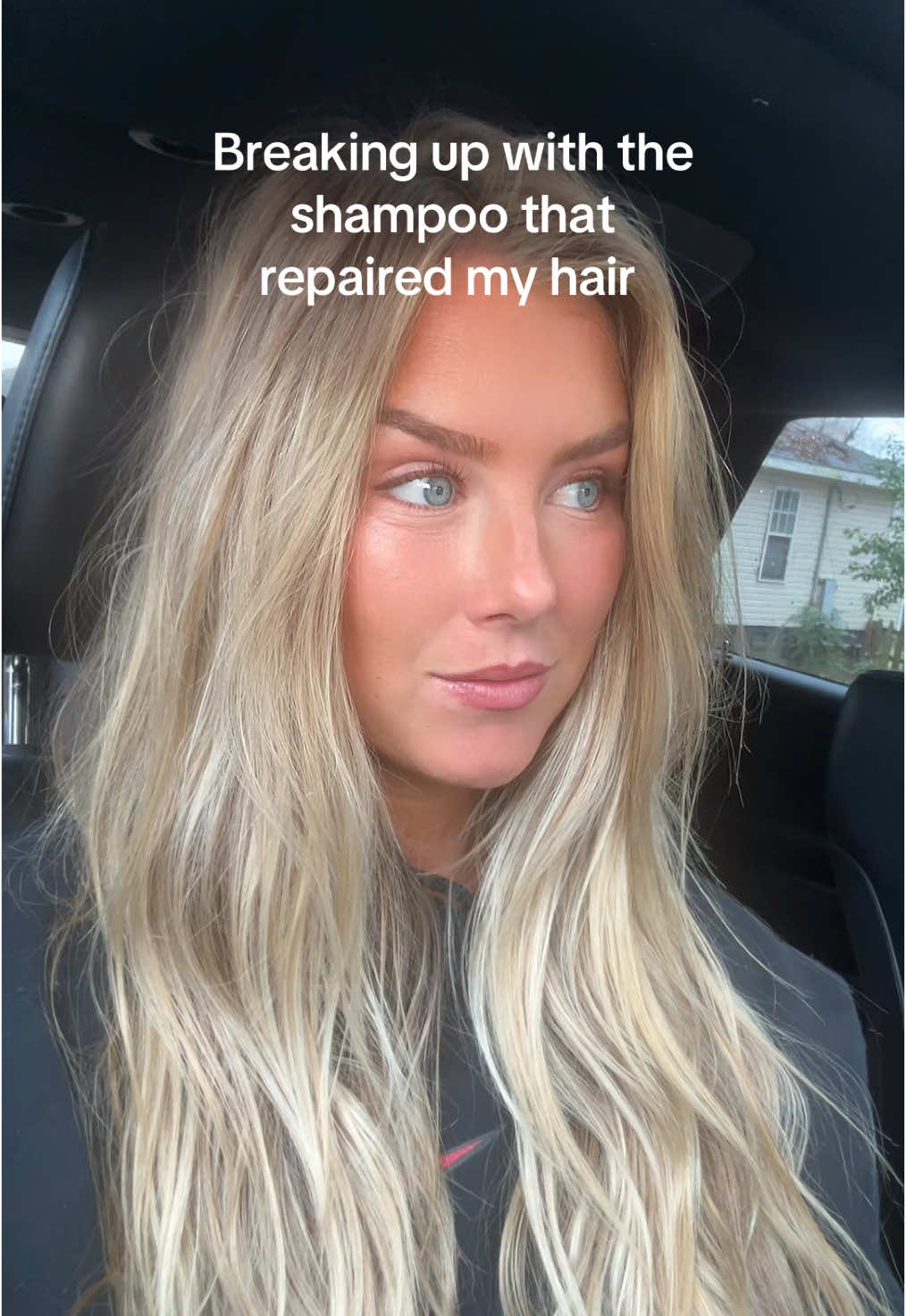
- Audio: "Come with me to Ulta to restock my favorite hair and body care line." Visual: A woman with blonde hair in a car, looking to her right, then to the camera, and adjusting her hair.
- Audience
- Individuals who shop at Ulta, are interested in hair and body care, value natural ingredients, and are budget-conscious but still desire a 'luxury' feel. This is signaled by the location (Ulta), the product category (hair and body), and the explicit mention of 'low-tox' and 'natural ingredients' and 'smell expensive without the luxury price tag'.
Why it works. Frames the ad as a real restock trip to a named retailer, giving the brand in-store credibility with shoppers who trust seeing it on shelves.
Relatable shopping experience and product discovery at 'ULTA' (0:00-0:06). The creator says, "Come with me to Ulta to restock my favorite hair and body care line." and shows herself entering the store. Film a restock-run video at the specific retailer that carries you, naming the store by name in your opening line.
- Running
- 7 days (new — still being tested)
- Hook
- "Nothing beats a post-beach everything shower." A woman with long blonde hair, wearing a striped strapless top, runs her hand through her hair and looks at the camera.
- Audience
- Individuals who prioritize clean ingredients and natural products, enjoy outdoor activities like going to the beach, and seek a luxurious yet affordable self-care experience. Evidenced by the outdoor shower setting, emphasis on 'clean ingredients' and 'naturally derived ingredients', and the 'post-beach' context.
Why it works. Names one specific, widely recognized moment, the post-beach rinse, so beach-going viewers see their own routine before the product appears.
Problem-solution narrative with relatable context (0:00-0:03, "Nothing beats a post-beach everything shower. My hair always needs a little extra love after the sun and salt...") Anchor your opening line to one specific, recognizable moment your product fits into, rather than a general use case.
- Running
- 3 days (new — still being tested)
- Hook
- On-screen text: "VACATION. BOTTLED." Two yellow bottles with black pumps, labeled "CALIFORNIA NATURALS" and "Glow Oil Body Wash" and "Glow Body Lotion" respectively, are centered on a background of sliced oranges.
- Audience
- Individuals seeking a luxurious or pampering experience from their body care products, indicated by the phrase "VACATION. BOTTLED." and the focus on "Glow Oil Body Wash" and "Glow Body Lotion."
Why it works. Turns a body wash into a mini vacation fantasy with a two-word tagline and bright citrus styling, aimed at shoppers buying self-care as an escape, not just hygiene.
Repeated on-screen text overlay at 0:00-0:07: "VACATION. BOTTLED." Name the emotional experience your product delivers in two words, such as 'ESCAPE. BOTTLED.', and style the shot's colors to visually match that feeling.
- Hook
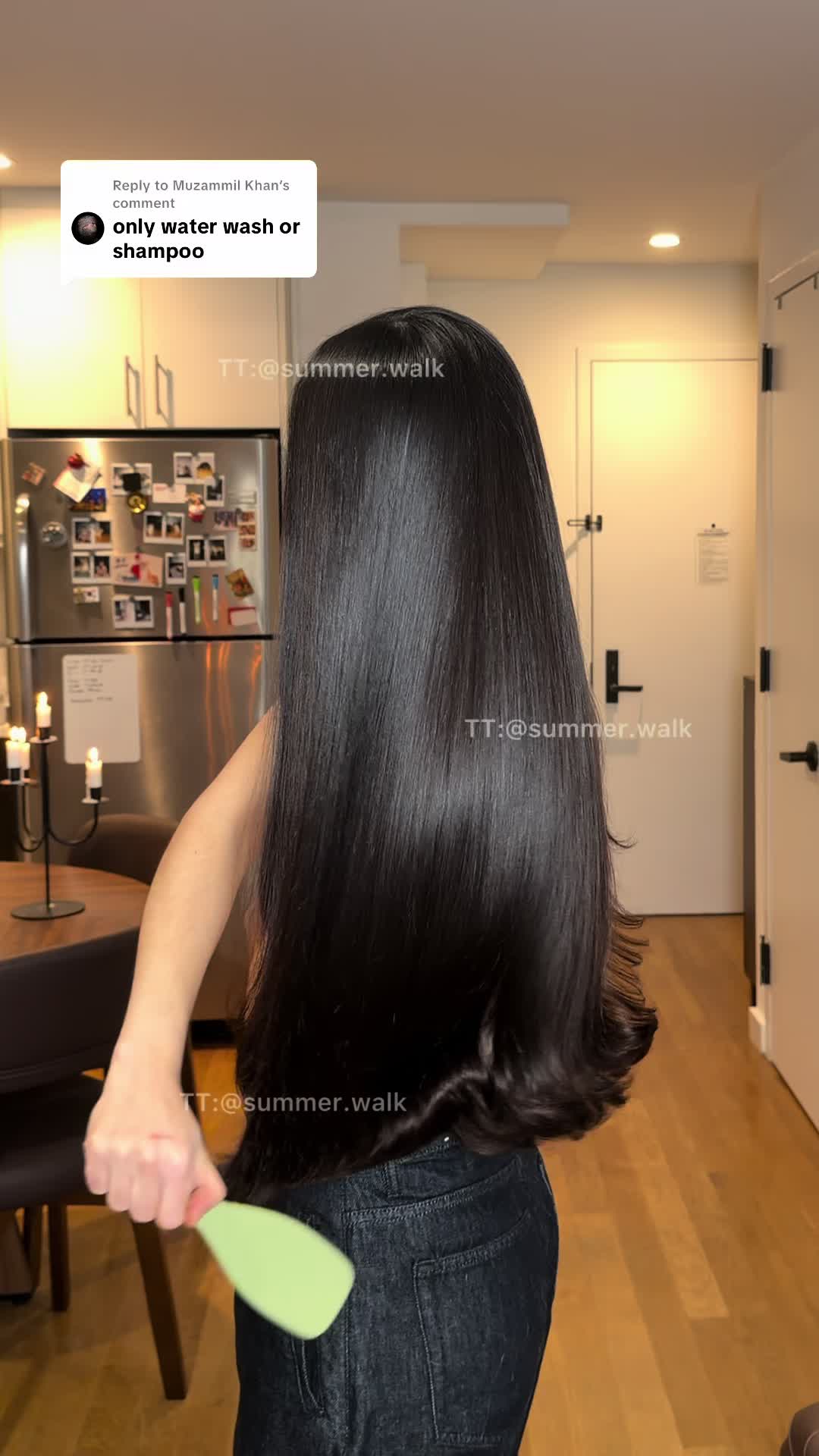
- A person brushes long, dark, straight hair with a light green brush. On-screen text reads: "Reply to Muzammil Khan's comment only water wash or shampoo".
- Audience
- Individuals interested in hair care, particularly those seeking products for long, healthy, and shiny hair. The question about 'water wash or shampoo' suggests an audience interested in specific hair care routines or product efficacy.
Why it works. Disguises the ad as a native TikTok comment-reply, so it plays like an answer to a real wash-routine question rather than a paid spot.
Visual demonstration of desired outcome at 0:00-0:04, showing long, shiny, healthy hair being brushed. Film your product answer as a reply to a real or seeded audience comment using the platform's native reply-video format.
- Hook
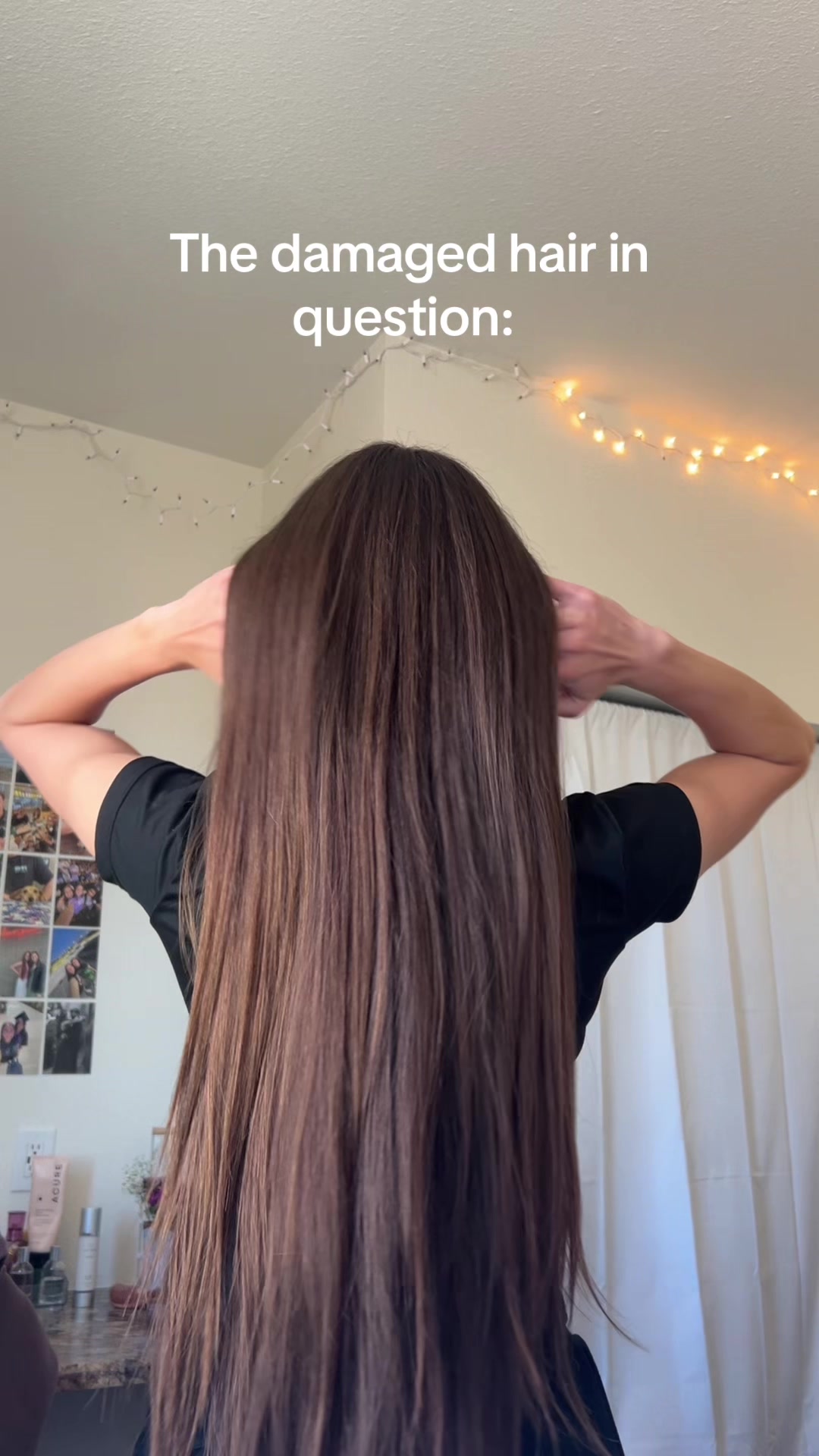
- "But I don't want nontoxic hair care to damage my hair" - A young woman with long brown hair, wearing a dark grey sweatshirt, speaks directly to the camera.
- Audience
- Individuals concerned about hair damage from nontoxic hair care products, indicated by the direct quote and visual demonstration of healthy hair.
Why it works. Voices the customer's own hesitation about nontoxic products in their words before answering it, so skeptical shoppers feel understood, not sold to.
Problem-agitation hook with direct quote (0:00-0:02): "But I don't want nontoxic hair care to damage my hair" Open your ad by stating your customer's specific objection to your product category in their own words, before you resolve it.
- Reach
- 11 upvotes · 13 comments · r/BzzAgent
A community is already discussing this in r/BzzAgent. Show up there authentically and answer the thread before a competitor does.
Who amplifies them
The brand account "California Naturals" runs the paid Meta creative and the DTC-facing messaging; the creator layer is entirely separate third parties, not founder or brand personal posting. Named creators recur across the partner tag, including @prod.smasher, @byhaileigh (whose Target haul ad runs as a whitelisted, brand-boosted post), @Amina Marie (also whitelisted), @relauren, @itsoizzieolivia, and @solarpowered_blonde, most posting from Target, Ulta, or Sprouts hauls. Reception outside the curated creator layer is more mixed: a Reddit r/Haircare user asked about "blistering rashes... and an itchy scalp," a Walmart reviewer of the Dream Curl Shampoo said it "didn't lather well" and "left my hair feeling stripped of moisture," and one direct-site customer described unfulfilled orders and unresponsive support. None of this appears to have broken through at scale, but it is a real counter-signal to the polished paid-and-creator narrative above.
06 Organic & video
The organic content engine: the videos, creator posts, and community presence earning attention without paid spend.
The YouTube channel's cadence is mostly single-product explainer videos (15-70 seconds, most under 1,000 views) punctuated by two outsized Owen Wilson pieces that behave like separate campaign moments rather than steady-state content. Creator UGC does the format lifting the brand's own channel doesn't: talking-head reviews, restock hauls, and curl-routine demos. @twice as good hair's "make sure you get the coconut one" post pulled 19,954 engagements, @SummerWalk's Ulta-restock brag ("People who restock California Naturals at Ulta hate to see me coming") pulled 19,570, and @chrisrainbowmusic's "nontoxic hair care" post pulled 4,846, with the rest of the collected posts clustering in the low hundreds to low thousands. A meaningful share of these carry #ad or #californianaturalspartner disclosures, but a few, like @marinadiamandis ("not even an ad I just love them") and @jamielynn.lee ("not sponsored btw, I spent my own money at Sprouts"), are genuinely unpaid, giving the brand a mix of paid-partner and organic-fan content rather than one or the other.
07 Affiliate & partners
How the brand turns creators and partners into a tracked, variable-cost acquisition channel, and how the program is structured.
No dedicated affiliate-program link (Rewardful, PartnerStack, TikTok Shop, or similar) surfaced on the owned site, only social profile links. What the evidence does show is a functioning creator-partner layer running on tag discipline instead of program infrastructure: the recurring #californianaturalspartner hashtag across the collected creator posts (10 of 25) from January 2024 through July 2026, with at least two of those creators' posts running as whitelisted paid Meta ads, meaning the brand pays to boost the creators' own posts through the creators' pages rather than the brand's. That is a real, ongoing distribution mechanic, just not a formal self-serve affiliate program a reader could sign up for.
08 The playbook
The channels are not separate. They are one system where each stage feeds the next. Here is the read, then the plays to run tomorrow.
The inferred playbook
The growth loop pairs an always-on, low-drama paid-search-and-social base with a tagged army of gifted and whitelisted micro-creators, while retail door count, not the DTC site, is very likely the real revenue engine underneath it.
The 321-day-running search ad and the 8-of-63 active-ad discipline show Google is being used to catch shoppers already searching a clean-ingredient term, not to manufacture demand cold.
The recurring #californianaturalspartner tag, running from gifted micro-creators through at least two brand-whitelisted paid posts, functions as a standing distribution layer rather than one-off influencer gifting.
Dig deeper+3▾
With 15,000+ doors and roughly 1,340 Walmart and 803 Target locations as of the Series B, in-store velocity is very likely the dominant revenue driver, with the visible ad and creator layer existing mainly to feed traffic and brand recognition into those shelves.
Nothing in the evidence shows a subscription option, loyalty program, or email/SMS capture on the DTC site; outside the $40 free-shipping bundle nudge, there's no visible structural pull turning a one-time buyer into a repeat direct customer.
per-door sell-through velocity at Target and Walmart, DTC repeat-purchase rate, and blended paid CAC across the Google and Meta mix are not disclosed anywhere in this evidence.
Turn a verbatim review into the entire ad
The proofOne of California Naturals' proven-winner Meta ads is nothing but a customer's own sentence, "It isn't harsh at all, and I love how shiny it makes my hair, bringing out the blonde but not stripping it," as the full headline.
The adaptationPull your best unedited review or DM, the one with a specific sensory detail (a texture, a smell, a before/after), and run it word-for-word as a static image ad with a plain product shot behind it, no rewriting into marketing language. The specificity in the customer's own phrasing (not a paraphrased benefit) is what makes it read as proof instead of copy.
Cost: $0 · Time to signal: days · Works pre-PMF: yes, provided you already have at least one genuinely enthusiastic review to draw from.
Give creators a standing tag instead of one-off shoutouts
The proofMultiple TikTok and Instagram creators have posted under #californianaturalspartner across January 2024 through July 2026, with the tag itself becoming a searchable proof trail independent of any single post.
The adaptationCreate one consistent partner hashtag for your product (not a different caption each time), require every gifted or paid creator to use it, and search that tag periodically to see the accumulated social proof as a single browsable feed. Start by gifting product to five to ten small creators in your category and asking for the tag on every post, not a review video specifically.
Cost: under $500 · Time to signal: weeks · Works pre-PMF: yes.
Bid on the specific claim your buyer is already searching, and let the winner run indefinitely
The proofCalifornia Naturals' longest-running Google ad has stayed active 321 days as of 2026-07-28, while the account as a whole tests and kills most of its 63 total ads quickly.
The adaptationWrite one plain text search ad against the exact attribute-claim query your buyer already types (not your brand name), let it run untouched, and check back at the 60-day mark: if it's still converting, leave it alone indefinitely instead of refreshing it for novelty's sake. The discipline is in what you don't touch, not what you write.
Cost: under $500 · Time to signal: weeks · Works pre-PMF: yes, provided there's real search volume for the specific attribute claim you're bidding on.
Turn a restock into its own marketing moment
The proofAmong California Naturals' newer Meta tests is a "THE BESTSELLER BACK IN STOCK" ad built entirely around a restocked product tub, using scarcity-then-return as the hook rather than a discount.
The adaptationThe next time you restock a sold-out item, post or run it as "back in stock" news on its own, separate from any general sale post, since having sold out at all is itself a piece of social proof a tiny operation rarely gets to use. Write the copy around the fact of the sellout, not a generic restock announcement.
Cost: $0 · Time to signal: days · Works pre-PMF: yes, provided you've genuinely sold out of something first, this doesn't work if nothing has actually run low.
Price your bundle just under the free-shipping line
The proofCalifornia Naturals sets free shipping at $40+ on its own site while selling trio and kit bundles priced from roughly $24 to $59, several landing right around that cutoff.
The adaptationSet your own free-shipping threshold slightly above your best 2-3-item bundle price, then feature that bundle first on your landing page so single-item shoppers see a small, easy top-up to hit free shipping instead of paying for delivery. Test the exact bundle price against your own shipping cutoff, not a round number.
Cost: $0 · Time to signal: days · Works pre-PMF: yes. Not transferable at an earlier stage: the celebrity-fronted campaign, the mass-retail door count across Target, Walmart, CVS, and Ulta, and the Series B-scale ad spend all depend on funding and retail relationships a pre-PMF founder won't have yet; the five plays above deliberately draw on the cheaper, repeatable mechanics underneath that scale instead.
You just read how California Naturals does it. Tomorrow it is someone else.
Every morning we take one company that is actually growing and break down where its customers come from: the ads still running after a year, the channel doing the real work, and the play you can run this week.
Systemaic · directional intelligence. Traffic, spend, and reach figures are SimilarWeb-style estimates and qualitative reads of public data, not audited numbers. Built on real public receipts.
// teardowns with a similar GTM motion
sources & receipts (14)
Live ad libraries: meta ad library · google ad library
Researched facts: California Naturals closed a Series B round led by Align Ventures: Series B led by Align V · Prior to the Series B, California Naturals raised a $4M round in 2024 to fund its launch: · Founder Shelby Wild launched California Naturals in July 2023, debuting direct-to-consumer · Since entering Ulta Beauty (1,400-store debut in early 2025), the brand has exceeded its i · California Naturals launched its first children's personal care line, California Naturals · Actor Owen Wilson joined California Naturals as "Chief Shampoo Officer," plus investor and
Milestone sources: 2023-07: California Naturals launches direct-to-consumer with exclusive retail distributio · 2024-10: California Naturals expands into CVS (2,000 of 9,100+ doors, with plans to reach · 2026-02: California Naturals debuts nationwide at Walmart across 1,340 stores and online
Community threads: Thingtesting (review site): A customer who ordered directly from the brand's own site repo · Walmart customer reviews: Walmart shopper reviewing the Dream Curl Shampoo found it didn't · Walmart customer reviews: Walmart shopper on the Toasted Coconut Classic Clean Shampoo sai
Traffic, spend, and revenue figures are estimates as noted in the report; the links above are the primary public artifacts.