- 01Recruit creators with a personal code, not a program
- 02Build one page per buying occasion, not per product
- 03Gate the referral credit behind a real basket size
- 04Run a weekly low-cost video series alongside your paid creative
01 Snapshot
The one-glance read on who they are and how they grow. Each point is verifiable from the receipts above.
Personalized baby, toddler, and family gifting apparel (bamboo pajamas, swaddles, crib sheets, matching family sets) at $10M+ annual revenue as of June 2026 press coverage, founder-led and bootstrapped.
Paid-led, backed by a ~700-ad Google search library and a 200+ active Meta ad fleet, with creator UGC and weekly YouTube content filling the funnel underneath.
~816,977 estimated monthly visits (+16.5% over the last 3 months), 854,159 verified Instagram followers, a Google ad library of roughly 700 ads (193 active) and 200+ active Meta ads, both as of 2026-07-31.
As of 2026-07-31, fresh Halloween "FREE with every purchase" plush-toy creatives and new Meta DCO variants (first shown July 22) are running alongside newly launched Google text, image, and video tests from the week of July 21.
Caden Lane pairs a scarcity-driven "it won't last long, up to 75% off" creative that recurs across at least six separate Meta ad units with name-on-product SKUs (crib sheets, blankets, pajamas), turning a single newborn gift purchase into a recurring family-occasion buy for Christmas, Easter, and back-to-school.
02 How it unfolded
The order the channels came online. Sequence is strategy: what they did first, and what they layered on once demand existed.
03 Traffic & channel mix
Estimated demand, the channel split behind it, and the keywords and referrers doing the work. Directional modeling, not audited analytics.
Caden Lane draws an estimated ~816,977 monthly visits, up 16.5% over the last 3 months. No channel-level breakdown (direct, paid, organic, social split) is available for this domain, so the mix itself can't be quantified here. The keyword data that is available shows the brand owns its own name and several product-category terms outright: "caden lane" ranks #1, "bamboo pajamas" ranks #1, "caden lane discount code" ranks #1, "christmas pjs family" ranks #1, and "matching family christmas pajamas" ranks #2. That combination, branded terms plus category terms it already leads, points to a demand pool that is largely captured rather than contested, which lines up with the size of the always-on Google search campaign covered in Paid Ads below.
04 Organic content
The specific pages earning their organic search traffic, and the pattern behind why they rank. Adapt the format, not the topic.
The organic top-content data shows Caden Lane's traffic concentrated on the homepage (34.3% of organic visits) and a handful of seasonal or product-format collection pages: Christmas family matching pajamas (12.7%), bamboo pajamas (10.3%), personalized kids blankets (3.7%), and mommy-and-me hospital outfits (3.6%). The pattern is category pages built around a specific occasion or fabric rather than blog content: a holiday-matching page, a material-specific page, a hospital-going-home page. These rank because they double as the exact query a parent types when shopping for a specific moment (a holiday, a hospital bag, a fabric preference), and the site's own top keywords, "bamboo pajamas" and "christmas pjs family" both at #1, confirm the collection pages are winning the searches they're built for rather than competing on generic "baby clothes" terms.
Top pages by organic traffic
05 Channel map
Not traffic share. How much weight the growth system actually puts on each channel, with a one-line read on the role it plays.
What drove growth
06 The creative doing the work
Each exhibit shows the actual asset, an X-ray of why it works, a status, and a play you can adapt. This is the heart of the teardown.
Caden Lane runs roughly 700 ads in its Google library (193 active as of 2026-07-31, longest-running placement live since October 2021) and 200+ active Meta ads as of the same date. The two channels split cleanly by longevity: Google carries the genuine proven winners, while the entire visible Meta fleet is a current push, its oldest active ad only 57 days old as of the observation date, so Meta's longevity signal hasn't been established yet, this is a seasonal creative wave, not a multi-year bet.
Hook: "Hospital Bag Checklist: What to Pack for Baby..." (Google search ad, paired with an image of a sleeping newborn). Why it works: It bids on a life-stage question expectant parents actively search before they're shopping for a brand, capturing intent earlier in the funnel than a branded or product-name query would, and the sleeping-baby image cues the emotional payoff before the click. Run this play: Build a search ad (and matching landing content) around the specific task-based question your buyer types before they know your product exists, not just around your product name.
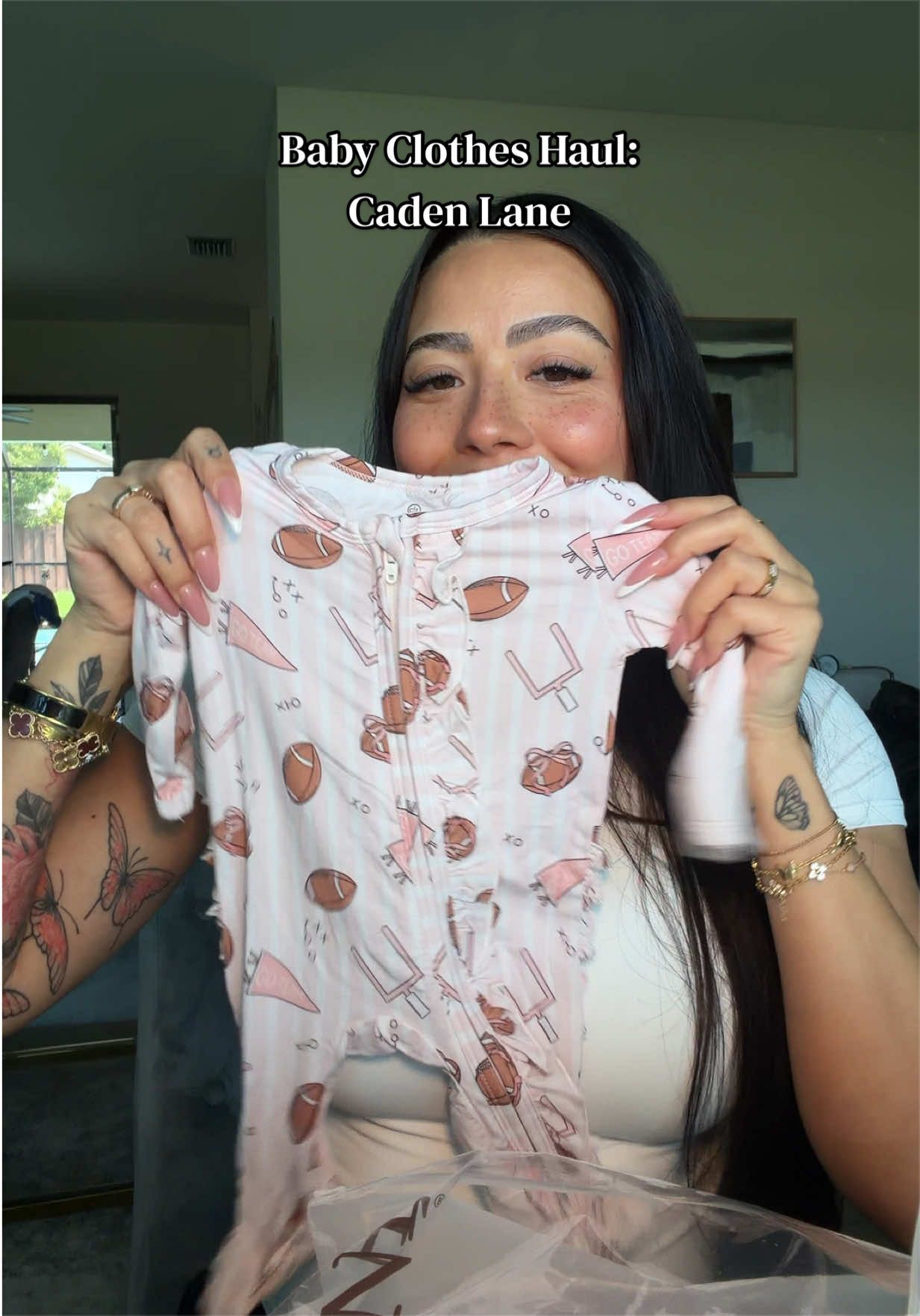
Hook: "It won't last long... up to 75% OFF" (Meta, recurring across video, product-demo, and text-overlay variants). Why it works: A hand reaching in and picking up a folded item creates a tangible, almost tactile reveal, and pairing it with a hard scarcity claim suits impulse gift-buying, the recurrence across at least six separate ad units suggests it's Caden Lane's most reliably redeployed sale mechanic rather than a one-off test. Run this play: Reuse one scarcity hook and reshoot it in 3-4 formats (a hand-reveal clip, a static product shot, a text-overlay montage) instead of producing net-new creative concepts for every sale.
Hook: "You ordered PJs. They got a whole new best friend." (Meta DCO, "FREE Mini Cuddle Plush with every purchase"). Why it works: It reframes a gift-with-purchase as an emotional bonus for the child rather than a discount, protecting the perceived price while still adding a tangible incentive, and the DCO (dynamic creative optimization) format lets Meta auto-test the copy and image pairing. Run this play: Attach a small, thematically-tied free gift to your core SKU and frame the ad copy around the recipient's reaction to it, not the discount math.
Testing now, the Halloween "FREE with every purchase" plush-toy creatives (pumpkin, mummy, ghost, bat) sit alongside fresh Meta DCO variants first shown July 22, piloting the same gift-with-purchase mechanic into a seasonal angle, while the "it won't last long" scarcity creative and the Google evergreen search ads keep running unchanged. Notably, some of the newest Google test ads pointing to cadenlane.com as of late July 2026 are attributed to advertiser accounts other than the company's own Katy Elaine Inc entity, suggesting third-party or arbitrage bidding on the brand's search terms.
The Google Shopping-style ad reading "Shop our HUGE selection of stylish swaddles, knot gowns, mommy robes, personalized gifts and toddler pajamas" lands directly on individual personalized product pages, a Blush Rose crib sheet, an Ella's Dusty Rose floral crib sheet, a Pink Personalized Name crib sheet, an Olive Leaf custom-name accent pillow, each carrying a "Subscribe & Save" option even though these are one-time personalized items, which points to a sitewide subscription app rather than a product-specific recurring program. Verified site pricing puts personalized swaddle blankets around $48 and personalized toddler blankets around $68, so the dynamic product ads are routing paid clicks into a mid-double-digit personalization price band rather than a low-cost entry SKU.
Every landing page carries the same seasonal merchandising banners regardless of which product the ad clicked through to: "SPOOKY VIBES, COZY NIGHTS, HALLOWEEN IS HERE" and "FIRST DAY, BEST DAY, SHOP BACK-TO-SCHOOL," plus a cross-sell banner into the sister brand Lane & Leash's personalized jewelry line. On the capture side, the site's newsletter signup offers 15% off the first order, giving the paid traffic a low-friction reason to hand over an email even when it lands on a specific personalized product rather than a generic homepage offer.
- Running
- 57 days (longevity = it's converting)
- Hook
- Visual: A hand reaches into the frame and picks up a folded baby romper with a deer pattern. On-screen text: "it won't last long" and "UP TO 75% OFF". Audio: Upbeat, instrumental music.
- CTA / offer
- UP TO 75% OFF
- Audience
- Parents or gift-givers for babies/toddlers, indicated by the baby rompers with various playful patterns (deer, teddy bear, fishing, floral, race cars, donkey).
Why it works. Combines scarcity language with a steep discount on a tactile product reveal, pushing impulse purchases during a flash sale on baby apparel.
Immediate display of a high discount and scarcity warning (0:00-0:03, "it won't last long", "UP TO 75% OFF"). Open your flash-sale video with a scarcity phrase plus the exact discount percentage as text, before showing the product.
- Running
- 57 days (longevity = it's converting)
- Hook
- Visual: Hands are sorting through various baby pajamas with different patterns (unicorns, deer, cars, flowers). On-screen text: "It won't last long... up to 75% OFF". Audio: Acoustic guitar music with male vocals.
- CTA / offer
- up to 75% OFF
- Audience
- Parents or gift-givers for babies/young children, indicated by the baby pajamas with various playful patterns (unicorns, deer, cars, flowers, teddy bears, fishing/camping).
Why it works. Uses the same urgency-plus-discount hook but with a sorting-through-a-pile visual to emphasize variety of in-stock patterns during the sale.
Prominent display of a high discount and scarcity message at 0:00-0:12 with the text "It won't last long... up to 75% OFF". If your flash sale spans many product variants, show a hand sorting through the pile so shoppers register both selection and savings at once.
- Running
- 37 days (longevity = it's converting)
- Hook
- Visual: A woman with long blonde hair and a small child with red curly hair, both wearing matching light pink pajamas with a white pattern, walk towards the camera. The child is slightly ahead of the woman. On-screen text: "girls just wanna have fun & girl mamas just wanna match their minis💕". Audio: Upbeat pop music begins.
- Audience
- Mothers of young girls, indicated by the presence of a mother and a young daughter, and the on-screen text explicitly mentioning "girl mamas" and "minis."
Why it works. Names a specific, already-desired parent behavior, matching with your kid, so the pajamas read as fulfilling an existing want rather than a new pitch.
Relatable on-screen text and visual pairing (0:00-0:03): "girls just wanna have fun & girl mamas just wanna match their minis💕" overlaid on a video of a mother and daughter in matching pajamas. Name the specific behavior your product enables (matching, coordinating) in your opening line instead of describing the product itself.
Show 7 more exhibits
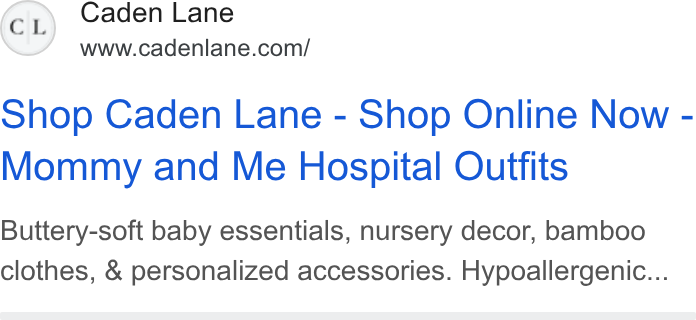
- Running
- 1387 days (longevity = it's converting)
- Hook
- A circular icon with 'CL' in the center, next to the text 'Caden Lane' and 'www.cadenlane.com/'. Below this, in large blue text: 'Shop Caden Lane - Shop Online Now - Mommy and Me Hospital Outfits'
- CTA / offer
- Shop Online Now
- Audience
- Parents or expecting parents, particularly mothers, interested in baby essentials, nursery decor, and matching outfits for themselves and their babies, as indicated by 'Mommy and Me Hospital Outfits' and 'baby essentials'.
Why it works. A branded search ad surfaces a specific, high-intent product line so new and expecting parents searching that term land on the exact match.
Prominent display of a specific product category in the headline: 'Shop Caden Lane - Shop Online Now - Mommy and Me Hospital Outfits' Pull your single most-searched niche product name into your search ad headline instead of a generic brand tagline.
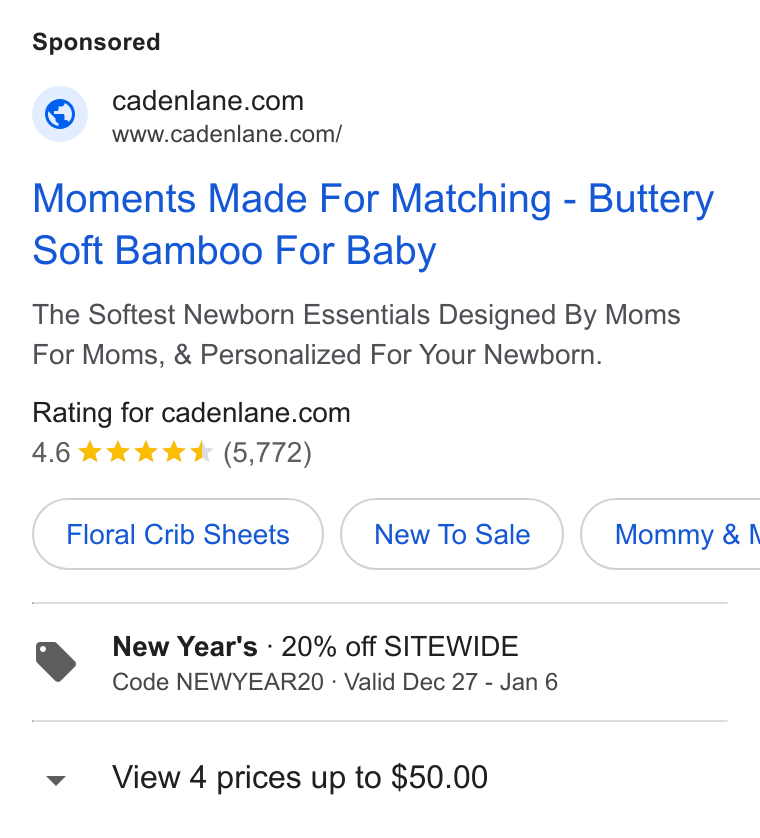
- Running
- 727 days (longevity = it's converting)
- Hook
- Sponsored ad for cadenlane.com with the headline "Moments Made For Matching - Buttery Soft Bamboo For Baby" and a description below.
- CTA / offer
- 20% off SITEWIDE with Code NEWYEAR20, valid Dec 27 - Jan 6
- Audience
- Parents of newborns, specifically mothers, looking for soft, personalized baby essentials, indicated by "Newborn Essentials Designed By Moms For Moms, & Personalized For Your Newborn."
Why it works. Combines a sensory fabric claim with a matching-family hook in the headline, targeting parents assembling coordinated family outfits for newborns.
Headline emphasizing sensory benefit: "Moments Made For Matching - Buttery Soft Bamboo For Baby" Lead your headline with your single strongest sensory material claim paired with a specific use case like family matching.
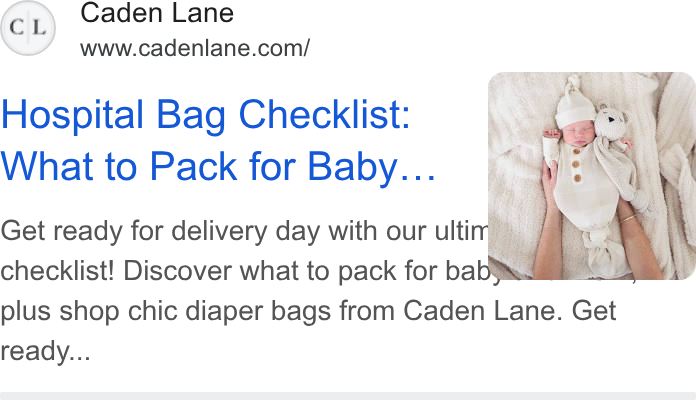
- Running
- 722 days (longevity = it's converting)
- Hook
- "Hospital Bag Checklist: What to Pack for Baby..." with an image of a sleeping baby in a white outfit being held by two hands.
- Audience
- Expectant parents, indicated by the 'Hospital Bag Checklist' and 'What to Pack for Baby' content, and the image of a newborn.
Why it works. Uses a hospital-bag checklist as a content hook to reach expectant parents mid-planning, then folds product placement into genuinely useful information.
Headline as a direct question: "Hospital Bag Checklist: What to Pack for Baby..." Turn a specific pre-purchase task your customer faces into a checklist-style headline, then place your product as the answer within it.
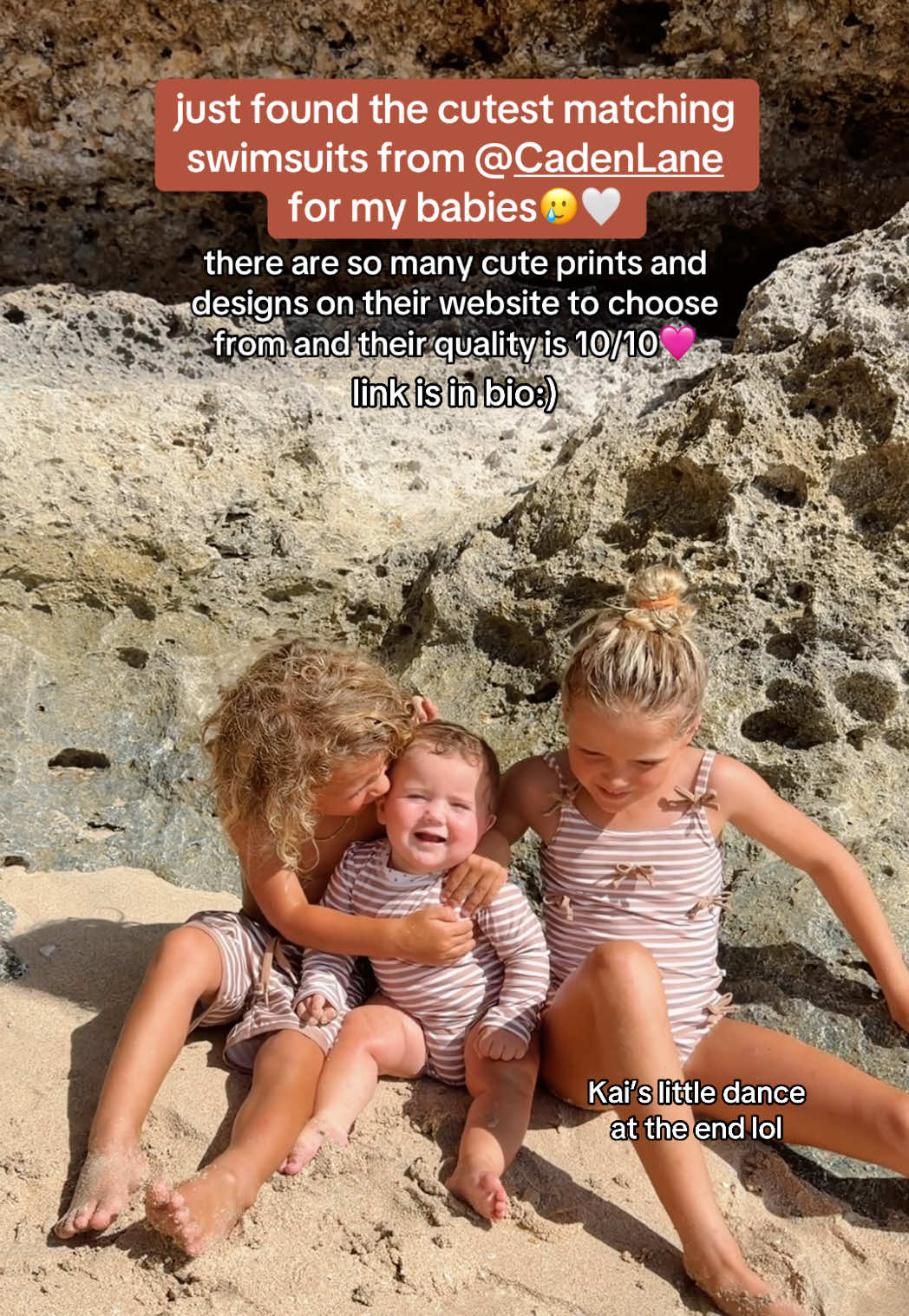
- Hook
- just found the cutest matching swimsuits from @CadenLane for my babies🥺🤍" + visual: Three children, two older and one baby, are sitting on sand in front of rocks. The two older children are wearing striped swimsuits, and the baby is wearing a striped long-sleeved swimsuit.
- CTA / offer
- link is in bio:)
- Audience
- Parents or guardians looking for matching swimwear for their children. The text "for my babies" and the visual of children of different ages in swimsuits signal this.
Why it works. UGC-style testimonial where a parent frames matching swimsuits as a personal discovery, using real-looking kids to make the purchase feel low-risk.
Displaying children in matching swimsuits in a natural, joyful setting (0:00-0:09). Have a relatable parent post your product as a personal find they're excited to share, tagging your brand casually rather than pitching it.
- Hook
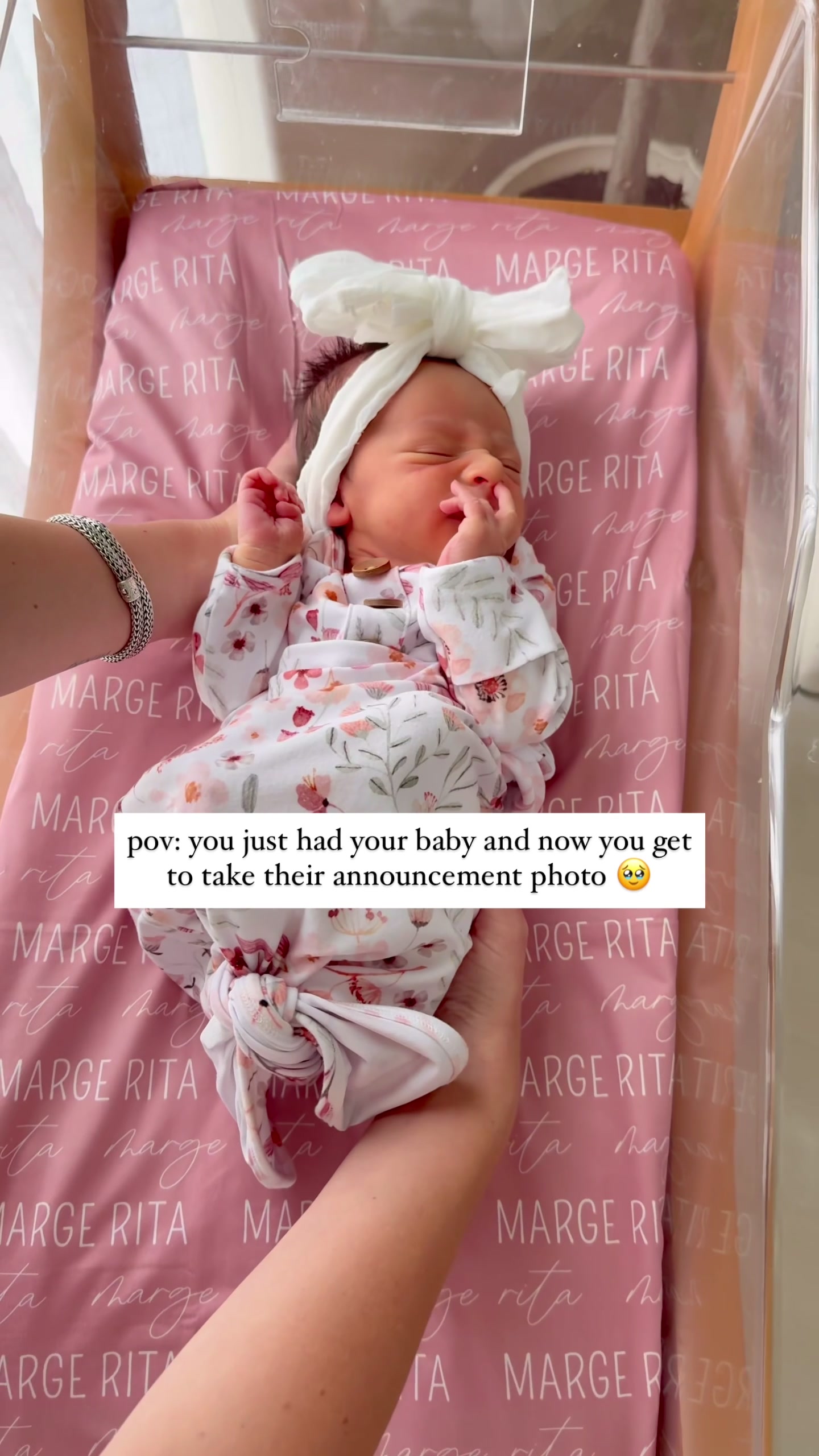
- Visual: A person's hands are placing a pink blanket with the name 'MARGE RITA' printed repeatedly on it into a clear baby bassinet. On-screen text: "pov: you just had your baby and now you get to take their announcement photo 🥴". Audio: Soft, melodic instrumental music plays.
- Audience
- New or expecting parents, particularly mothers, who are interested in personalized baby items and capturing special moments. The pink color and floral pattern suggest a target audience interested in feminine baby products.
Why it works. Personalization is shown solving a concrete need, a name-printed blanket for the birth announcement photo, tying the product to a moment every new parent stages.
Uses 'POV' text overlay at 0:00: "pov: you just had your baby and now you get to take their announcement photo 🥴". Attach your product to one specific, widely-recognized life milestone your buyer photographs, and use POV text to place them inside that moment.
- Reach
- 39 upvotes · 22 comments · r/BabyBumps
A community is already discussing this in r/BabyBumps. Show up there authentically and answer the thread before a competitor does.
Who amplifies them
Caden Lane's amplification runs almost entirely through unpaid creator content rather than its own dormant X account or founder Katy Mimari's small personal following. The largest posts come from parenting-lifestyle creators wearing or gifting the product: Megan Call's swim-matching video pulled 124,045 engagements ("MEGANC for 20% off of the cutest matching swimmies"), TikTok creator Lyss🦋Okada's clip tagging @Caden Lane drew 81,175, and micro-influencer 1designerdon's PR-package post ("Momtok has been such a fun outlet") drew 4,491. Below that tier, a wide bench of smaller creators, including simplyitsy, torey, kpehefaith, Arabella, kiarra.hillman, and hailiebarber, post matching-pajama hauls, swim-launch try-ons, and newborn-outfit reveals in the roughly 100-2,000 engagement range. One notable presence posts under the TikTok handle @britneyspears (not the singer), tagging a girl-mom matching-pajama post with a personal code.
Its sister store, Nursery Couture in San Antonio, gives Caden Lane a physical amplifier too, a 50%-off event there was covered on TikTok by creator Arabella. Community mentions on Reddit stay confined to the complaint threads named earlier in this report; there is no subreddit where the brand gets organically recommended the way it does on TikTok and Instagram.
07 Organic & video
The organic content engine: the videos, creator posts, and community presence earning attention without paid spend.
Caden Lane's brand-owned video output runs on a near-weekly YouTube cadence that alternates big-budget commercials with low-cost how-to and behind-the-scenes content, while its TikTok and Instagram accounts post far less often but lean on a recurring comment-to-win giveaway mechanic to spike engagement between drops. The channel's biggest swings come from seasonal commercials: its "Christmas at Caden Lane" spot pulled 224,481 views, while the steady output sits in the low thousands, a step-by-step "Valentine Box Ideas for School" video drew 13,695 views, and routine how-to content like stain-removal or hospital-bag-packing guides sits well under 1,000.
Read the full breakdown+1▾
Between the giveaway spikes, single posts land far lower, its most recent brand TikTok post, a product reveal for a new ballerina-themed print, drew just 171 engagements, a reminder that the giveaway and commercial formats carry the reach, not the day-to-day product posts. The format that performs consistently across both owned channels and the creator clips feeding it is the same one: a hands-on product reveal (unboxing a print, laying out a matching set) paired with a personal, first-person hook rather than a studio-shot ad.
08 Affiliate & partners
How the brand turns creators and partners into a tracked, variable-cost acquisition channel, and how the program is structured.
Caden Lane runs a decentralized, per-creator affiliate motion rather than a formal platform. Its homepage offers a $20 credit for referring a friend whose first order tops $80, a threshold that filters for gift-sized purchases rather than casual browsing. On the creator side, posters carry personal discount codes instead of one shared program code, simplyitsy's SIMPLYITSY, torey's TOREY20, kpehefaith's Faithk, and Megan Call's MEGANC each appear in individual captions, the signature of a per-creator commission arrangement rather than a centralized ambassador program. Creator torey also points to a ShopMy link in her bio, ShopMy being a third-party creator-affiliate link tool, showing at least one seller routes purchases outside any Caden Lane-built system entirely.
Read the full breakdown+1▾
Beyond the DTC site, Caden Lane also runs a business-to-business distribution layer: it lists on the wholesale marketplace Faire for baby boutiques and gift shops, and secured a spot in Target's curated Target Plus third-party marketplace through Shopify's integration, giving it two retail surfaces that don't depend on Meta or Google spend at all.
09 The playbook
The channels are not separate. They are one system where each stage feeds the next. Here is the read, then the plays to run tomorrow.
The inferred playbook
Caden Lane's growth engine runs on evergreen search capture, a personalization-driven repeat-gifting loop, and a widening retail footprint, with its newest Meta ad wave still an unproven bet layered on top.
Its evergreen Google search library and branded-keyword ownership give Caden Lane a low-cost demand floor that doesn't need to be rebid every season, while the fresh Meta fleet stacked on top of it hasn't yet proven it can match that longevity.
The occasion-driven repeat-purchase pattern compounds through a $20 refer-a-friend credit that pushes the same gifting behavior into the buyer's own network rather than just their own family.
Dig deeper+3▾
Its Faire and Target Plus listings give Caden Lane two distribution surfaces that don't depend on paid spend at all, a hedge against ad-platform volatility that many single-channel DTC brands lack.
Engagement from creators like Megan Call and Lyss🦋Okada arrives through personal codes and a ShopMy link rather than a centralized program, so Caden Lane captures organic creator reach without yet owning the relationship or the attribution data behind it.
blended paid CAC across the Google and Meta fleets, the repeat-purchase rate behind the occasion-gifting loop, the Subscribe & Save opt-in rate on personalized one-time goods, and what share of revenue now comes from the Faire and Target Plus wholesale channels versus the DTC site.
Recruit creators with a personal code, not a program
The proofCaden Lane's biggest creator posts, Megan Call's 124,045-engagement swim video and Lyss🦋Okada's 81,175-engagement clip, both ran on individual codes or a personal ShopMy link rather than a centralized ambassador platform.
The adaptationPick five to ten creators already posting organically in your product category, and offer each one their own first-name discount code plus free product instead of a flat fee, the same MEGANC-style personal-code pattern. Track redemptions by code in your storefront's own discount reports rather than waiting on a third-party affiliate dashboard, and start with whichever platform your buyers already post unboxings on.
Cost: $0 · Time to signal: days · Works pre-PMF: yes, provided you have inventory to gift and a way to track code redemptions.
Build one page per buying occasion, not per product
The proofCaden Lane's Christmas matching-pajamas collection page out-earns most of its other collection pages in organic search because it pairs a holiday occasion with a fabric term instead of a generic product category.
The adaptationInstead of a blog post about your product category, build a single page that pairs your product with a specific occasion and a material or format detail your buyer would actually type into search, for example "[material] [product] for [occasion]." Publish it two to three months ahead of that occasion so it has time to index, then route your own paid or social traffic to it once the season starts.
Cost: $0 · Time to signal: months, since organic search pages typically need a season to rank · Works pre-PMF: yes.
Gate the referral credit behind a real basket size
The proofCaden Lane's refer-a-friend program pays $20 only when the referred friend's first order clears $80, a threshold that filters for buyers who are actually gifting rather than just browsing.
The adaptationSet your own referral credit to trigger only above your typical gift-size order value, not your average cart, so the incentive rewards the higher-intent purchase you actually want more of. Add it to your post-purchase and welcome email flows first, since that's the cheapest place to surface it without building new landing pages.
Cost: $0 · Time to signal: weeks · Works pre-PMF: conditional, it needs an existing base of repeat or gifting buyers to refer from.
Run a weekly low-cost video series alongside your paid creative
The proofCaden Lane's YouTube channel posts behind-the-scenes and how-to videos, DIY seasonal baskets, stain-removal guides, HQ tours, on a near-weekly cadence between its bigger-budget commercial shoots, quietly picking up thousands of views without ad spend.
The adaptationCommit to one recurring, low-production video format shot on a phone, a how-to, a behind-the-scenes look, or a customer-question answer, and post it on that same weekly rhythm regardless of whether that week's paid creative is ready. Treat it as the content engine that keeps posting when the paid team is busy, not as a one-off.
Cost: $0 · Time to signal: weeks to months for view growth to compound · Works pre-PMF: yes.
List your product on a wholesale marketplace before you build a B2B sales team
The proofCaden Lane distributes through the Faire wholesale marketplace and a Target Plus marketplace slot, neither of which required spending on Meta or Google to reach that buyer.
The adaptationIf your product is physical, list your bestselling SKU on a wholesale marketplace like Faire before investing in outbound retail sales, so boutique and gift-shop buyers can discover and reorder you without a sales call. Keep the initial listing to one or two hero SKUs so fulfillment doesn't outrun the channel.
Cost: under $500 for marketplace listing fees and sample stock · Time to signal: months, wholesale reorder cycles are slow · Works pre-PMF: no, retailers want proof of DTC sell-through first. Not transferable at an earlier stage: the wholesale-marketplace play and the scale of Caden Lane's Meta testing both assume a working, revenue-generating product and inventory to back reorders. A pre-revenue founder should start with the creator-code and occasion-page plays above and add the retail layer only once DTC demand is proven.
You just read how Caden Lane does it. Tomorrow it is someone else.
Every morning we take one company that is actually growing and break down where its customers come from: the ads still running after a year, the channel doing the real work, and the play you can run this week.
Systemaic · directional intelligence. Traffic, spend, and reach figures are SimilarWeb-style estimates and qualitative reads of public data, not audited numbers. Built on real public receipts.
// teardowns with a similar GTM motion
sources & receipts (20)
Live ad libraries: meta ad library · google ad library
Researched facts: Founding year: Caden Lane was founded in 2004 (company's own About Us page) by Katy Mimari · Founder education/background: Katy Mimari is a University of Texas (Moody College of Commu · Funding status: Caden Lane appears to be bootstrapped/privately held with no recorded vent · Inc. 5000 recognition, 2022: Caden Lane appeared on the 2022 Inc. 5000 fastest-growing pri · Revenue growth via email (Klaviyo): Caden Lane grew Klaviyo-attributed revenue 157.3% YoY, · International sales growth via Shopify Managed Markets: After enabling Shopify Managed Mar · Revenue growth via inventory/demand planning: Caden Lane credited Inventory Planner (conne · Product line expansion timeline: Caden Lane launched baby clothes in 2020 and later expand · Wholesale/boutique distribution channel: Caden Lane runs a wholesale program allowing baby · Personalized product pricing — swaddle blankets: Personalized baby-name swaddle blankets a · Personalized product pricing — toddler blankets: Custom solid color & font personalized to · Headquarters location: Caden Lane is headquartered at 724 State Highway 46 East, Boerne, T
Milestone sources: 2022-09: Caden Lane named 4th-fastest-growing brand in the US baby & toddler category on B · 2023-08: Ranked No. 223 on the Inc. 5000 2023 list of America's fastest-growing private co · 2024-06: Target announced a partnership with Shopify naming Caden Lane among the curated b · 2025-01: Caden Lane went live selling on Target's Target Plus digital marketplace via the
Community threads: Trustpilot: Grandmother describes stocking a grandchild's wardrobe entirely with Caden Lan · Better Business Bureau: BBB complaint describes a split shipment where the infant piece of
Traffic, spend, and revenue figures are estimates as noted in the report; the links above are the primary public artifacts.