- 01Cold-call your own supply chain before writing any marketing copy
- 02Pitch one beat-matched journalist for a launch-day exclusive
- 03Build your origin story around a verifiable flaw in your category, not a taste claim
- 04Ask for the smallest possible retail pilot, then let sell-through do the pitching
01 Snapshot
The one-glance read on who they are and how they grow. Each point is verifiable from the receipts above.
A design-forward DTC olive oil and pantry brand (EVOO, vinegars, honey), now expanding beyond gifting into everyday-use retail lines, with third-party estimates putting brightland.co revenue near $13M in 2025.
Paid-led, amplified by unpaid creator UGC and a growing wholesale footprint.
~86,600 monthly site visits (+2.8% in the latest measured window); 126 combined Google and Meta ads collected as of July 29, 2026 (71 Google, 25 active; 55 Meta); 165+ Whole Foods store doors as of 2025.
Meta's "Mediterranean Duo" bundle wave, live since June 18, 2026, running alongside fresh Google text and image tests from two outside ad accounts, as of July 29, 2026.
Brightland's paid engine doesn't chase fresh creative, it reuses one earned-media line (an Oprah Winfrey "Favorite Things" mention) as a 600-plus-day-old evergreen search ad instead of retiring it after the press cycle ended.
02 How it unfolded
The order the channels came online. Sequence is strategy: what they did first, and what they layered on once demand existed.
03 Traffic & channel mix
Estimated demand, the channel split behind it, and the keywords and referrers doing the work. Directional modeling, not audited analytics.
Brightland's own domain draws an estimated ~86,600 monthly visits, up 2.8% in the latest measured window. No channel, keyword, or referrer breakdown was captured alongside that total, so the growth read here leans on the other signals in this report: a 126-ad combined paid library, heavy retail distribution through Whole Foods, and organic creator activity on TikTok and Instagram. Given the brand's flagship price point ($37+ per bottle) and gifting positioning, the modest visit count is consistent with a brand whose volume runs disproportionately through wholesale doors and repeat/gift-occasion buyers rather than pure top-of-funnel search traffic.
04 Channel map
Not traffic share. How much weight the growth system actually puts on each channel, with a one-line read on the role it plays.
What drove growth
05 The creative doing the work
Each exhibit shows the actual asset, an X-ray of why it works, a status, and a play you can adapt. This is the heart of the teardown.
The Google library holds 71 ads total, 25 active as of July 29, 2026, and its oldest active ad has been running 695 days, a genuine proven winner by any longevity bar. The Meta library holds 55 ads as of the same date, but every dated active Meta ad in the evidence started no earlier than June 18, 2026 (27-41 days old), so that visible wave counts as a current push, not a proven winner, even where the underlying campaign concept (a Kalamata olive oil launch) appears to predate it.
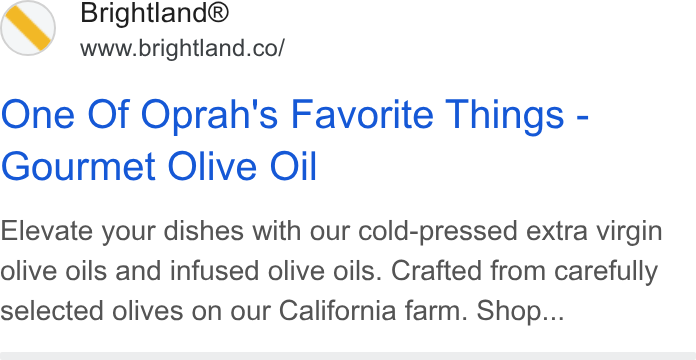
1. Hook: "Brightland® www.brightland.co/ One Of Oprah's Favorite Things - Gourmet Olive Oil" (Google search text ad). Why it works: It borrows a third-party celebrity endorsement as the entire value proposition, a social-proof hook that needs no new creative and doesn't decay the way a lifestyle photo does. Run this play: Any brand sitting on one credible, on-record mention should test it as a standing search-ad headline rather than letting it disappear after a day of social sharing.
2. Hook: "Kalamata is now an olive oil." paired with "Sold out 2x." (Meta product-shot ads). Why it works: Scarcity language does the persuasion instead of a discount, signaling demand has already outpaced supply twice, which reads as proof rather than a sales pitch. Run this play: Pair a real sellout count with limited-quantity framing ("this season's harvest") in headline copy before ever discounting.
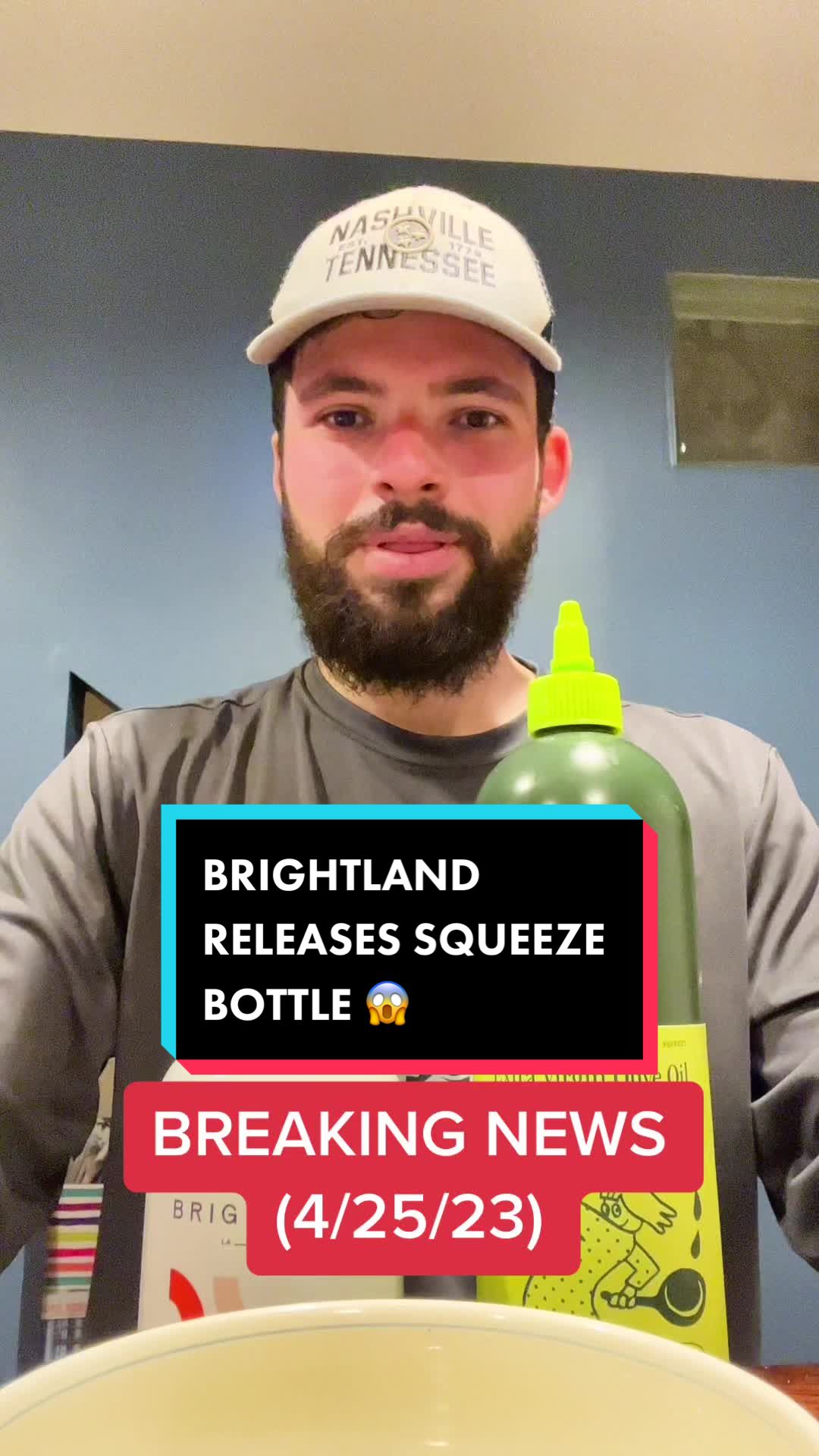
3. Hook: "Brightland www.brightland.co/olive-oil Brightland.co - Gourmet Pizza Oil" (Google search text ad), running alongside the organic pizza-oil moment described above. Why it works: The paid ad and the unpaid creator conversation about the same new SKU (squeeze-bottle pizza oil) reinforce each other. Someone who saw the TikTok comparison and then searches the product name meets a matching paid ad on the same claim. Run this play: Launch new-SKU ad copy on the same day organic buzz is expected, so paid and earned traffic reinforce the same message instead of running on separate timelines.
The Mediterranean Duo ad wave lands on a matching "The Mediterranean Duo" product page carrying a sitewide free gift threshold (a free Parasol Champagne Vinegar on orders $99+), a 20% bundle discount, and price points from $74 to $160 across single bottles, duos, and sets. The scarcity messaging in the ad ("selling out 2x") continues on the landing page itself, reinforcing urgency at the point of purchase rather than just in the hook.
A second lander, "The Artist Series Flavored Olive Oil Collection," receives traffic from the creator-testimonial-style ad quoting a buyer who "never thought I'd be the type to get excited about olive oil." That page runs the same $74-$160 price ladder, 20% off on sets and duos, and free shipping, showing Brightland uses one consistent bundle-and-discount architecture across its different product-line ad campaigns rather than building custom offers per SKU.
- Running
- 7 days (new — still being tested)
- Hook
- Visual: Three white bottles with colorful labels and gold spouts are lined up on a wooden surface, with orange flowers in the background. On-screen text: "SAVE 20% WITH THE SET". Audio: "If you want to get someone a gift they'll actually use, get them this."
- CTA / offer
- SAVE 20% WITH THE SET
- Audience
- Individuals who enjoy cooking but seek convenience, those looking for unique and practical gifts, and people who appreciate high-quality, flavorful ingredients. This is signaled by showing various dishes being enhanced with the oils and emphasizing ease of use and fresh flavors.
Why it works. Positions the product against the real problem of gifts that go unused, turning a set purchase into a solution for the buyer's own gifting anxiety.
Problem-solution hook with a clear value proposition at 0:00-0:03: "If you want to get someone a gift they'll actually use, get them this." On-screen text: "SAVE 20% WITH THE SET." Open your gift-focused ad by naming the specific reason most gifts disappoint before you show the product that avoids it.
- Running
- 7 days (new — still being tested)
- Hook
- "the garlic oil alone changed my dinner routine." A hand dips a piece of bread into a plate of olive oil. Two white bottles with colorful labels are in the background.
- CTA / offer
- SAVE 20% WITH THE SET
- Audience
- Home cooks who value quality ingredients, convenience, and aesthetic appeal in their kitchen products. Evidenced by the focus on 'changed my dinner routine,' 'instantly add real flavor,' and the visually appealing bottles and food presentation.
Why it works. Uses a first-person food testimonial anchored to one SKU (garlic oil) so shoppers see a concrete daily-use case, not a lifestyle claim.
Start with a bold, relatable claim about a common problem and solution: "the garlic oil alone changed my dinner routine." (0:00-0:03) Have a real customer name your single most distinctive SKU and say exactly how it changed one daily habit, on camera.
- Running
- 14 days (longevity = it's converting)
- Hook
- Visual: Two white bottles with 'BRIGHTLAND.' labels are superimposed over a scenic view of a coastal town with colorful buildings, lush green hills, and clear blue water with people swimming. Audio: Upbeat, light instrumental music begins.
- Audience
- Individuals who value high-quality, artisanal food products and are drawn to a luxurious, Mediterranean-inspired lifestyle, indicated by the scenic coastal backdrops and the premium packaging of the olive oil bottles.
Why it works. Pairs the product bottles with real Mediterranean coastal footage so the origin story is shown visually instead of claimed in text.
Superimposing product bottles over diverse, idyllic Mediterranean coastal scenes throughout the entire video (0:00-0:09). Film or source footage of your product's actual sourcing region and open on that scenery before revealing the product.
Show 7 more exhibits
- Running
- 14 days (longevity = it's converting)
- Hook
- Visual: A silver fork with a red handle holds four green olives against a light background. On-screen text: "POV: it's an olive girl summer"
- Audience
- Individuals who appreciate Mediterranean aesthetics, fresh ingredients, and a relaxed, stylish summer lifestyle, indicated by visuals of olives, fresh food, coastal scenes, and curated product shots.
Why it works. Plugs the product into a recognizable seasonal aesthetic format so it surfaces as native content rather than an ad, for younger DTC shoppers.
Use of 'POV' and a trending phrase: "POV: it's an olive girl summer" at 0:00. Take a trending core or girl-season format in your niche and swap in your product as the punchline.
- Running
- 650 days (longevity = it's converting)
- Hook
- Brightland® www.brightland.co/ One Of Oprah's Favorite Things - Gourmet Olive Oil
- CTA / offer
- Shop...
- Audience
- Individuals interested in high-quality food products, gourmet cooking, and celebrity-endorsed items, indicated by the 'Oprah's Favorite Things' mention and the focus on 'gourmet' and 'cold-pressed extra virgin olive oils'.
Why it works. Puts Oprah's Favorite Things list front and center as the headline, borrowing her audience's trust to justify a premium olive oil price point.
Prominent display of celebrity endorsement: 'One Of Oprah's Favorite Things - Gourmet Olive Oil' Put your single strongest, checkable endorsement (name the person or outlet) as the literal headline of your search ad, not buried in body copy.
- Running
- 595 days (longevity = it's converting)
- Hook
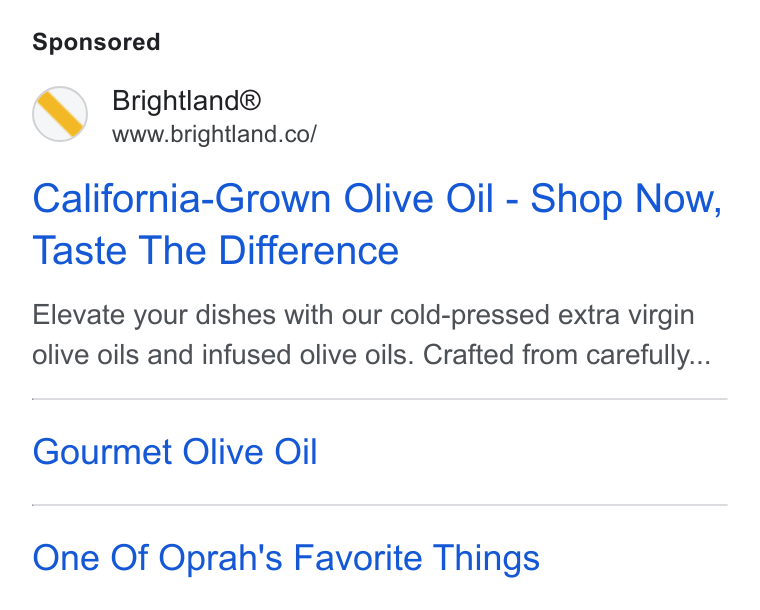
- Sponsored. Brightland® www.brightland.co/ California-Grown Olive Oil - Shop Now, Taste The Difference. Visual: A yellow and white circular logo with the text 'Brightland®' and 'www.brightland.co/' next to it, followed by a blue headline.
- CTA / offer
- Shop Now
- Audience
- Individuals interested in gourmet food products and celebrity endorsements, indicated by 'Gourmet Olive Oil' and 'One Of Oprah's Favorite Things'.
Why it works. Combines provenance and a blunt call to action, giving price-sensitive search shoppers both the differentiator and the next step in one headline.
Lead with a clear product benefit and call to action in the headline: 'California-Grown Olive Oil - Shop Now, Taste The Difference'. Follow your key differentiator with an explicit action phrase like 'Shop Now' in the same headline, not as a separate button only.
We have Mediterranean summer at home with @wearebrightland Mediterranean Duo. Marinated Olives, fluffy focaccia and a crisp spritz with Brightland’s Castelvetrano Olive Oil. For the main course, an Olive and Date Grilled Chicken with Brightland’s bold and lush Kalamata Olive Oil. The perfect olive girl summer meal to transport you to the Mediterranean coast. #BrightlandPartner #MediterraneanSummer #hostinginspo #easyrecipes #olivegirlsummer
- Hook
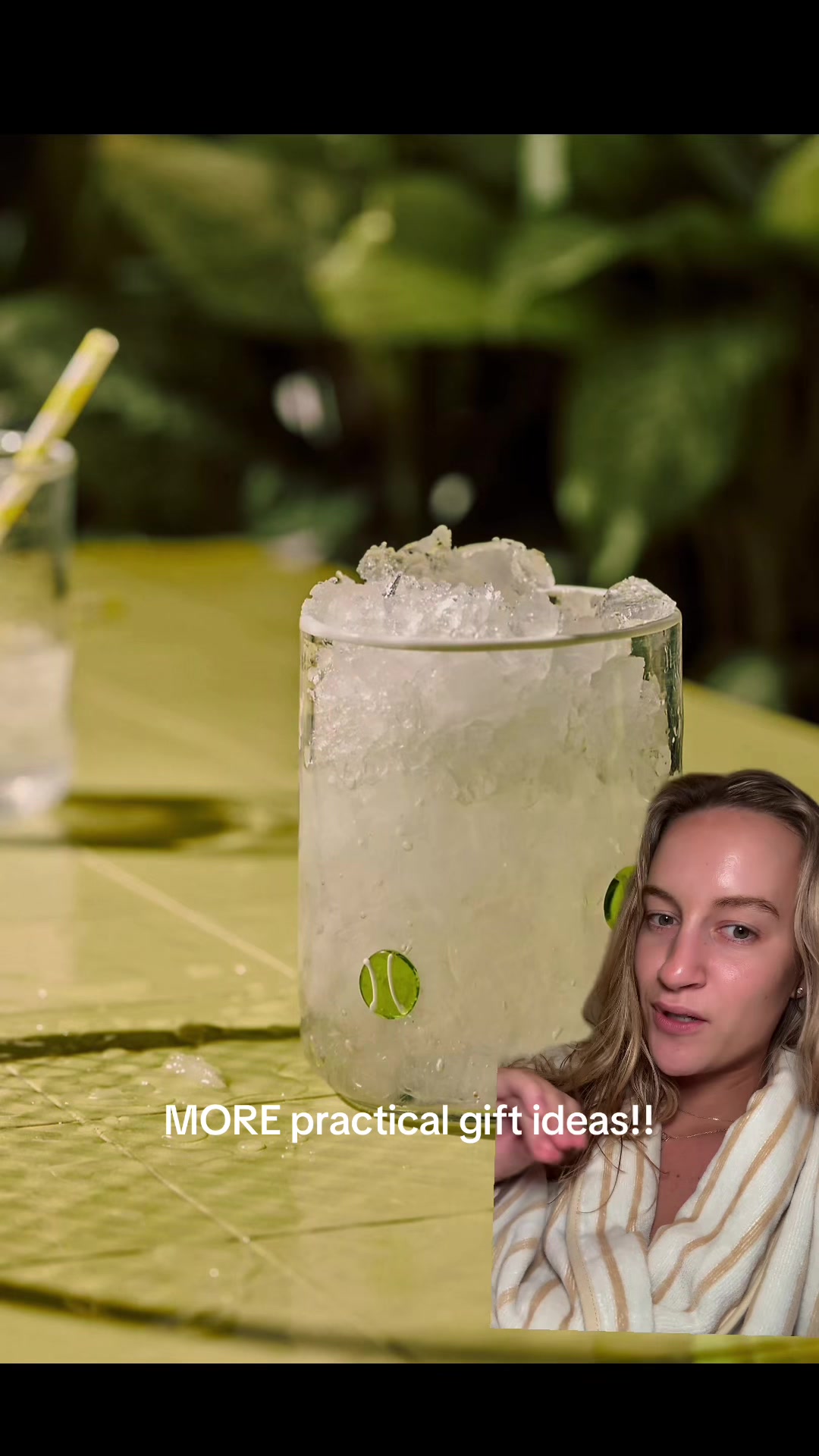
- "MORE practical gift ideas!!" + A woman with blonde hair in a striped robe points at the camera.
- Audience
- People looking for gift ideas that are both practical and luxurious, as indicated by the repeated phrase "practical gift ideas" and the focus on high-quality, aesthetically pleasing products.
Why it works. Uses a trusted gift-guide creator to slot premium olive oil into a 'practical but elevated' gift slot, reaching shoppers who want to upgrade a staple rather than buy something novel.
Personal endorsement and relatable problem-solving at 0:00-0:11, where the creator states, "my biggest goal is to get them something that they're going to use, but that they wouldn't necessarily get for themselves." Have a creator frame your product inside an ongoing gift-guide series ('more ideas') so it borrows credibility from installments viewers haven't seen yet.
- Reach
- 23 upvotes · 7 comments · r/GroceryOutlet
A community is already discussing this in r/GroceryOutlet. Show up there authentically and answer the thread before a competitor does.
Who amplifies them
The clearest amplifiers are unaffiliated creators reacting to specific product launches: @extravirginguy (100,660 engagements on the pizza-oil comparison), food creator @kristenfaith_eats (5,485 engagements styling the Mediterranean Duo), and @thebrandblueprint_ / "THE BRAND BLUEPRINT," who ran matched Instagram and TikTok posts explicitly contrasting Brightland's "premium beauty brand" positioning against Graza's "everyday accessible" approach. Founder Aishwarya Iyer appears once on the brand's own Instagram, personally narrating the Mediterranean Capsule launch story under the tag @helloaishwarya, distinct from the @wearebrightland brand account that runs day-to-day posting. When Graza CEO Andrew Benin publicly accused Brightland of copying Graza's squeeze-bottle format in a 2023 LinkedIn post, commenters largely pushed back on Benin (noting squeeze bottles long predate Graza) and he apologized the same day, a rare case of a public dispute generating favorable community sentiment for the accused rather than backlash.
06 Organic & video
The organic content engine: the videos, creator posts, and community presence earning attention without paid spend.
Brand posting cadence on TikTok and Instagram is sparse and seasonal (roughly monthly in the most recent window), tied to product drops and gift-guide moments rather than a daily content operation. Standout organic hits both revolve around gifting and rivalry framing: a food creator's Mediterranean-styling reel for the brand pulled 5,485 engagements, and a TikTok gift-guide roundup featuring Brightland alongside Weezie, Crown Affair, and Anthropologie hit 1,363 engagements. The single biggest organic moment in the evidence, extravirginguy's 100,660-engagement pizza-oil-vs-Graza video, wasn't posted by the brand at all. The format that performs is third-party comparison and gift-context UGC, not the brand's own product photography.
07 Affiliate & partners
How the brand turns creators and partners into a tracked, variable-cost acquisition channel, and how the program is structured.
No structured referral platform or TikTok Shop tag appears in the evidence, but there is an informal creator-discount motion: creator Chelsea Laurèn shared a personal code ("miss_c_lauren") for 10% off, the kind of ad hoc affiliate arrangement brands run before building a formal program. At this stage, that points to a hand-managed relationship with a handful of creators rather than an open, scalable affiliate infrastructure.
08 The playbook
The channels are not separate. They are one system where each stage feeds the next. Here is the read, then the plays to run tomorrow.
The inferred playbook
Brightland converts attention earned from press, gifting occasions, and unpaid creator rivalry content into wholesale distribution, while a static, long-running paid search library does the steady-state demand capture.
A single Los Angeles Whole Foods pilot store, agreed to in 2022 after Brightland had twice turned Whole Foods down, expanded to 165-plus store doors by 2025 once the pilot proved sell-through, making wholesale door count the real scale metric rather than DTC site traffic alone.
Google search ads reusing the Oprah endorsement and category claims have run 592 to 695 days without visible refresh, letting the brand skip the constant creative cycling most DTC paid accounts require.
Dig deeper+3▾
A $15M Series A that closed in fall 2024 funded a sub-$22 "Everyday" line and pizza oil, explicitly modeled on a premium-versus-diffusion fashion-brand structure, built to convert one-time $37+ gift buyers into repeat, habitual kitchen customers.
Brightland's biggest organic wins, the pizza-oil comparison video and the Graza-versus-Brightland breakdowns, are unpaid third-party commentary the brand didn't seed, meaning its most viral moments happen to it rather than being run as a repeatable program.
DTC-versus-wholesale revenue split, blended acquisition cost across the 126-ad combined paid library, and reorder rate on the new sub-$22 Everyday line that the tiering strategy depends on.
Cold-call your own supply chain before writing any marketing copy
The proofFounder Aishwarya Iyer personally cold-called roughly 40 California olive farms while developing the product, most of which never responded.
The adaptationBuild a list of roughly 40 real, named candidates in your own supply chain (manufacturers, growers, fabricators, whoever makes the physical thing) and contact each one directly before drafting a single ad or landing page. Expect most to go unanswered. The handful of real conversations that do happen usually surface the specific, verifiable detail (a sourcing standard, a rejected batch, an industry norm) that becomes your actual founding story instead of a generic mission statement. First step: write the list of 40 today, set it aside, and start dialing or emailing this batch directly.
Cost: $0 · Time to signal: weeks · Works pre-PMF: yes.
Pitch one beat-matched journalist for a launch-day exclusive
The proofBrightland's launch day landed a New York Times Style section feature, which the brand credits as an early visibility unlock, notably a style/design beat rather than a straight business or tech outlet.
The adaptationIdentify the one section or reporter whose beat matches your product's cultural angle, not the obvious trade press, and offer that single person first access before your public launch date in exchange for an exclusive. First step: find the specific journalist covering that adjacent beat and send a personal, embargoed pitch rather than a mass press-release blast.
Cost: $0 · Time to signal: weeks · Works pre-PMF: yes.
Build your origin story around a verifiable flaw in your category, not a taste claim
The proofBrightland's founding thesis came from Iyer's own research into widespread olive oil rancidity and adulteration, a specific, citable flaw in the category, not a subjective quality claim.
The adaptationResearch one factual, checkable problem with the incumbents in your category (a hidden defect, an accepted-but-bad industry norm, a misleading standard) and write your "why we exist" content around exposing it with real specifics. First step: find one citable, verifiable flaw in your category's status quo and write it up as your first piece of founding content.
Cost: $0 · Time to signal: weeks · Works pre-PMF: yes.
Ask for the smallest possible retail pilot, then let sell-through do the pitching
The proofBrightland turned Whole Foods down twice before agreeing to a single-store pilot in Los Angeles; that pilot's own sales results, not a projection deck, drove expansion to 25 then 60-plus stores.
The adaptationWhen pitching any retail or wholesale partner, ask for the smallest possible single-location test with an explicit, agreed-upon sales threshold for what earns expansion, rather than pitching a multi-store rollout up front. First step: find one local or regional store willing to carry a small trial batch and agree on the specific number that triggers the next tier before you deliver product.
Cost: $0-under $500 · Time to signal: months · Works pre-PMF: yes.
Split a validated premium product into a cheaper, habitual-use tier
The proofBrightland used Series A capital to launch a sub-$22 "Everyday" line and pizza oil alongside its $37+ flagship bottles, explicitly modeled on a premium-versus-diffusion fashion-brand structure to convert gift recipients into repeat kitchen buyers.
The adaptationOnce you have a validated premium SKU, design a stripped-down, roughly half-priced version built for habitual rather than gift use, and route every gift-recipient touchpoint (packaging insert, post-purchase email) toward that cheaper repeat-purchase item. First step: define the single most habitual use case for your flagship product and price a simplified version at about half its cost.
Cost: under $5k · Time to signal: months · Works pre-PMF: conditional, this only works once you already have one validated, selling premium product to diffuse from. Not transferable at an earlier stage: the 600-plus-day evergreen search-ad library and the 165-store wholesale footprint are outcomes of years of compounding, not starting moves. A reader at an earlier stage should adapt the underlying mechanics (reuse one strong headline for the long run, start retail with one store) rather than expect to replicate the scale of either.
You just read how Brightland does it. Tomorrow it is someone else.
Every morning we take one company that is actually growing and break down where its customers come from: the ads still running after a year, the channel doing the real work, and the play you can run this week.
Systemaic · directional intelligence. Traffic, spend, and reach figures are SimilarWeb-style estimates and qualitative reads of public data, not audited numbers. Built on real public receipts.
// teardowns with a similar GTM motion
sources & receipts (14)
Live ad libraries: meta ad library · google ad library
Researched facts: Series A funding round: Brightland closed a previously unreported Series A round in fall 2 · Bootstrapped period before raising capital: Founder Aishwarya Iyer self-funded and ran Bri · Product sourcing legwork before launch: Iyer spent months cold-calling roughly 40 Californ · Team size growth: Brightland's staff grew to 16 people, up from three or four in its early · Flagship product pricing: Brightland's flagship Alive and Awake extra virgin olive oils (3
Community threads: Thingtesting (community reviews): First-time buyer praises Brightland's oil as noticeably · Thingtesting (community reviews): Repeat customer calls Brightland consistently excellent · Blog (The Stripe by Grace Atwood): Blogger Grace Atwood describes going from indifferent t · CNN Underscored (editorial review): CNN Underscored reviewer flags the clearly printed smo · America's Test Kitchen (editorial taste test): America's Test Kitchen's blind panel was un · News coverage of LinkedIn/social reaction (Today.com): When Graza's CEO publicly accused B · My Subscription Addiction (editorial review): Subscription-box reviewer frames Brightland
Traffic, spend, and revenue figures are estimates as noted in the report; the links above are the primary public artifacts.