- 01Lead every first-impression touchpoint with the "it's not your fault" reframe.
- 02Pursue one institutional credential that no "clean" or "safe" marketing claim can match.
- 03Seed your hero product to 10-20 people whose exact condition you address, then follow with a direct testimonial ask.
- 04Build a DTC-exclusive free gift to pull retail-aware buyers onto your own site.
01 Snapshot
The one-glance read on who they are and how they grow. Each point is verifiable from the receipts above.
Clean makeup and skincare formulated to avoid roughly 28 common irritants per National Eczema Association guidelines, priced $12-$40 (lip jellies at $16, most items $20-$34), sold direct and through Sephora US/Canada, Sephora UK, Sephora Middle East, and Sephora at Kohl's, generating an estimated $943K-$2.1M/mo in revenue per third-party estimators.
Creator-led and retail-anchored, with paid search as the conversion capture layer.
an estimated 284,000-369,000 monthly visits (growth estimates ranging +16.7% to +27.8% depending on source), 570,379 Instagram followers, 200 active Google ads as of 2026-06-24, and a $28M Series A at a $228M valuation closed December 2023.
"I think other people can outspend us, but we can be thoughtful and we can be clever" is founder Amy Liu's stated operating principle for how Tower 28 competes against bigger-budget beauty brands (source).
Tower 28's entire acquisition loop rests on one clinical credential (National Eczema Association compliance) that converts skeptical sensitive-skin buyers across Sephora's physical shelf, TikTok creator content, and branded Google search, creating a compounding trust moat that generic "clean beauty" competitors cannot fast-follow.
02 How it unfolded
The order the channels came online. Sequence is strategy: what they did first, and what they layered on once demand existed.
03 Traffic & channel mix
Estimated demand, the channel split behind it, and the keywords and referrers doing the work. Directional modeling, not audited analytics.
Traffic sources
Top search keywords
| Keyword | Volume | Weight | CPC |
|---|---|---|---|
| tower 28 | 23k | $0.62 | |
| tower28 | 7.3k | $0.71 | |
| tower 28 concealer | 8.8k | $0.57 | |
| tower 28 spray | 6.0k | $0.59 | |
| tower 28 beauty | 2.7k | $0.68 |
Top referring sites
Closest competitors by audience
The estimated 284,000-369,000 monthly visits (growth estimates ranging +16.7% to +27.8%) break across channels in a pattern that reveals a brand where TikTok and Sephora create the awareness, Google captures the conversion: organic search leads at 44.7%, followed by direct at 24.1% and paid search at 15.2%. Together these three channels account for 84% of all traffic. Email (4%), affiliate (3.8%), display ads (3.3%), social paid (2.4%), Gen AI (1.1%), social organic (0.9%), and referrals (0.4%) make up the rest.
The 44.7% organic-search share is almost entirely branded capture. Tower 28 holds the #1 ranking for their own product-specific search terms: tower 28 sees 23,150 monthly web-wide searches, tower 28 concealer 8,820, tower28 7,330, tower 28 spray 5,980, and tower 28 beauty 2,660. These figures are total search volumes across the entire web, not visits to tower28beauty.com, but the #1 rankings mean Tower 28 captures the overwhelming share of that intent when it converts. Social organic at just 0.9% of traffic, despite strong TikTok engagement numbers, confirms the brand's social presence drives search behavior rather than direct link clicks.
Paid search (15.2%) reflects a sustained investment: Google text ads have been running continuously, with proven-winner formats active for approximately 427 days as of 2026-06-24. Top referral source is feishu.cn. Closest traffic competitors include credobeauty.com, kosas.com, iliabeauty.com, rmsbeauty.com, and glossier.com, all serving overlapping clean-beauty and sensitive-skin audiences.
04 Organic content
The specific pages earning their organic search traffic, and the pattern behind why they rank. Adapt the format, not the topic.
Tower 28's top organic pages are entirely their homepage and direct product pages for their four hero SKUs, with no editorial, blog, or comparison content visible among the top earners. The pattern is brand-demand capture, not category-demand creation: visitors landing on these pages already know Tower 28 from TikTok, Sephora, or earned media and arrived at Google to transact on a specific product they already have in mind. The brand does not appear to rank for unbranded category terms like "best concealer for sensitive skin." Their organic search is the downstream conversion layer for awareness generated elsewhere, not a top-of-funnel discovery engine in its own right.
Top pages by organic traffic
05 Channel map
Not traffic share. How much weight the growth system actually puts on each channel, with a one-line read on the role it plays.
What drove growth
06 Who they’re hiring
Open roles read like a roadmap: the functions they’re staffing show where the company is investing next and what stage it’s at.
2 open roles
07 The creative doing the work
Each exhibit shows the actual asset, an X-ray of why it works, a status, and a play you can adapt. This is the heart of the teardown.
Google is running 200 active ads as of 2026-06-24; TikTok is running 18 active ads as of the same date, though active-day duration data is not available for TikTok's inventory. On Google, all proven-winner formats are text ads with sensitive-skin positioning running approximately 427 days. On Meta, Tower 28 runs a high-volume mix of DPA, DCO, carousels, and video, with individual proven-winner creatives running as long as ~177 days.
- Running
- 33 days (longevity = it's converting)
- Hook
- "Compact but packed" text overlay with hands holding an orange mesh pouch with a white "TOWER 28" label.
- CTA / offer
- "FREE Tower 28 Mini Pouch with Purchase"
- Audience
- Beauty consumers interested in travel-sized products or organization, signaled by the 'mini' product focus and the compact pouch.
Why it works. Uses a size-versus-contents tension to sell a free gift with purchase, making a bundled freebie feel like the main event.
ASMR sound design from 0:00-0:14 featuring sprays, pops, and zips. Open with a phrase that contrasts your product's small size against how much it delivers, then reveal the contents on camera.
- Running
- 32 days (longevity = it's converting)
- Hook
- "A peak inside my Tower 28 Mini Pouch" shown with hands holding an orange mesh pouch against a bright blue sky.
- CTA / offer
- "FREE Tower 28 Mini Pouch with Purchase"
- Audience
- Beauty consumers interested in travel-sized products and 'clean' aesthetics, signaled by the 'SOS' skin spray and SPF products.
Why it works. Positions the gift-with-purchase pouch as something worth showing off, using a first-person unboxing angle to build perceived value.
Trend-based hook: "A peak inside my Tower 28 Mini Pouch" (0:00) Frame your product reveal as a personal peek inside rather than a formal product showcase to feel less like an ad.
- Running
- 32 days (longevity = it's converting)
- Hook
- "Bringing my Tower 28 favs everywhere I go now" + hands holding an orange mesh pouch with a white "TOWER 28" label.
- CTA / offer
- "FREE Tower 28 Mini Pouch with Purchase"
- Audience
- Skincare and beauty enthusiasts who value portability and travel-sized products, signaled by the "SOS Minis" kit and the bag-clip demonstration.
Why it works. Makes portability the selling point for the mini pouch gift, showing minis fitting into daily life rather than sitting in a drawer.
ASMR Sound Design (0:00-0:11) Show your product's small format being packed and carried in a real bag to make portability tangible instead of just stating it.
Show 7 more exhibits
- Running
- 96 days (longevity = it's converting)
- Hook
- "What is Hypochlorous Acid?" shown as on-screen text while a woman in black scrubs and glasses holds a red bottle of Tower 28 SOS spray.
- Audience
- People experiencing skin "inflammation" or "redness" looking for a dermatological solution.
Why it works. Answers a specific ingredient question on camera to establish expertise before pitching the product, useful for skeptical skincare shoppers.
Authority Signaling (0:00-0:16) Open your video by asking and then answering the exact question your target customer would type into Google about your product's key ingredient.
- Running
- 8 days (new — still being tested)
- Hook
- "I just got back from my workout... I need to reapply my SPF." + Woman in white tank top holding a red tube with text "post workout non-negotiable for healthy glowy skin"
- Audience
- Active women who value skincare; evidenced by the mention of "workout", "hot girl walk", and the desire to avoid a "white cast".
Why it works. Ties SPF use to a concrete daily trigger, post-workout, and shows a no-white-cast application on camera, addressing the top objection to mineral sunscreen.
Direct objection handling at 0:14 ("a lot of SPFs end up with that like white cast on your skin") Name the exact moment in your customer's day when they'd use your product and put that trigger word in your opening line.
- Running
- 8 days (new — still being tested)
- Hook
- "My go to lately: Tower 28 SunnyDays SPF 30" + Woman applying a dot of beige tint to her cheek from a lavender tube.
- Audience
- Women seeking a natural, glowy makeup base with sun protection, indicated by the 'no-makeup' application style and SPF 30 product name.
Why it works. Frames the SPF as an organic personal favorite rather than a sponsored plug, applying it on camera to prove texture and finish.
Immediate product-to-skin contact (0:00) with text "My go to lately: Tower 28 SunnyDays SPF 30". Open with a casual my go-to lately framing and show the product being applied and blended on skin in the same shot.
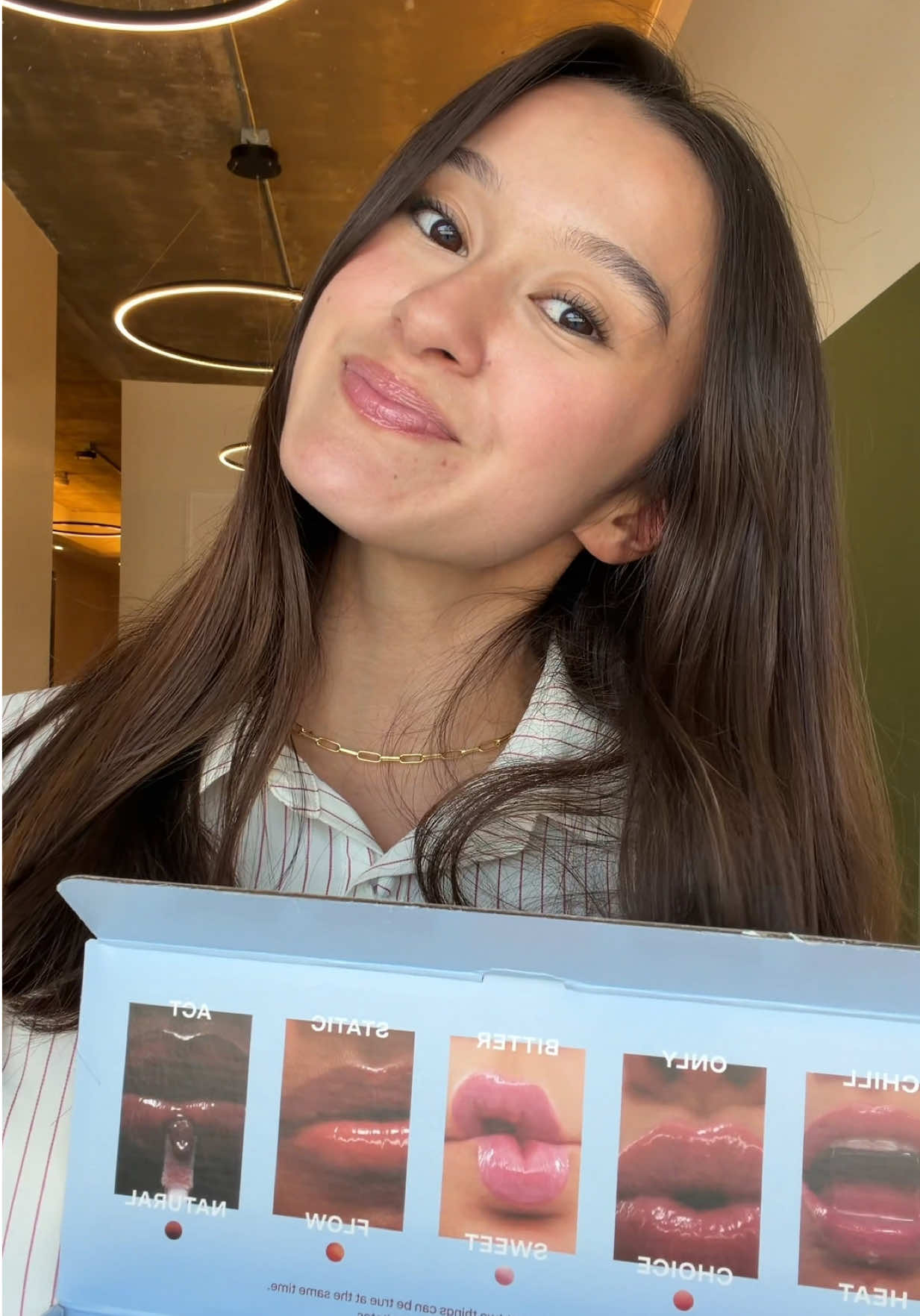
- Hook
- "We just dropped our new lip plumper and we're giving away the full PR box with all five shades." A young woman with long brown hair, wearing a striped shirt, holds an open light blue box containing five small bottles of lip plumper. She is smiling and looking at the camera.
- CTA / offer
- Giveaway of the full PR box with all five shades of the new lip plumper.
- Audience
- Individuals interested in beauty products, particularly lip plumpers, and those who engage with social media giveaways. The product names and aesthetic suggest a younger, trend-conscious demographic.
Why it works. Combines a product launch with a giveaway of the complete five-shade set, turning a routine drop into something worth commenting on to win.
Direct product announcement and giveaway at 0:00-0:03, "We just dropped our new lip plumper and we're giving away the full PR box with all five shades." When launching a new SKU line, open by giving away the full set rather than one unit to turn the drop into a shareable event.
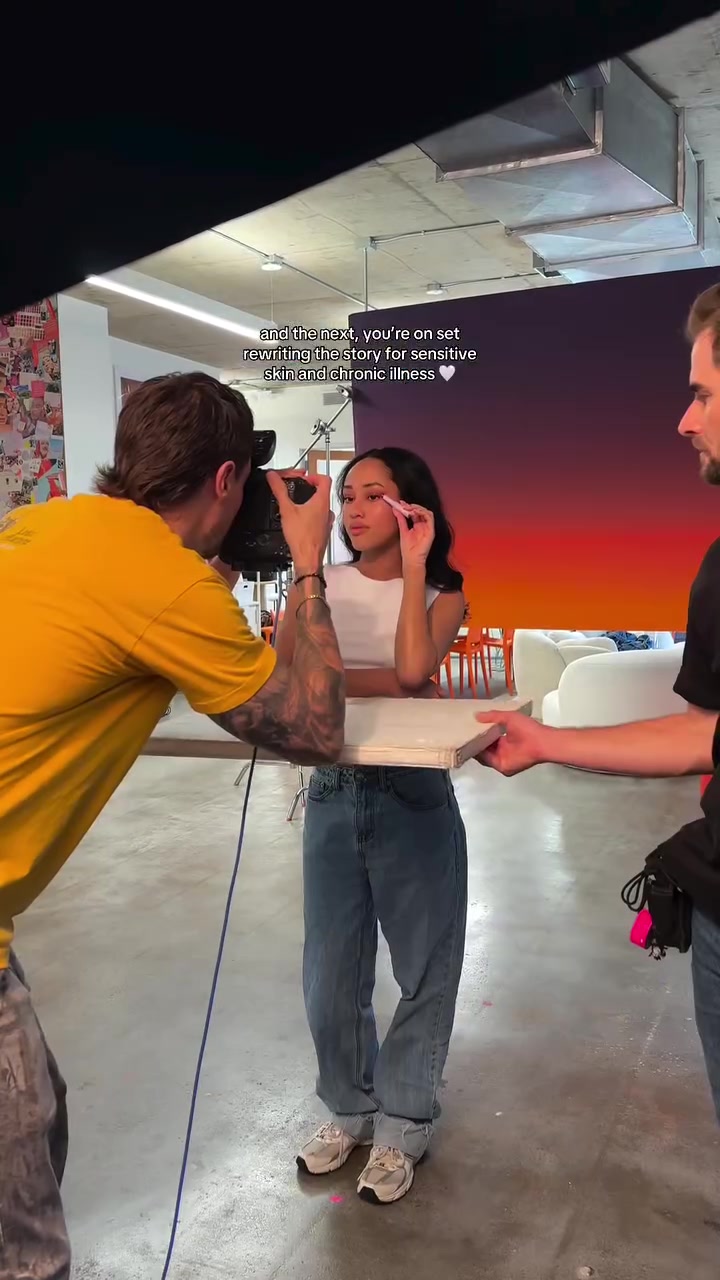
- Hook
- "one day you're fighting for your life wondering if you'll ever get to pursue your dreams again..." A woman with red skin and dark sunglasses is sitting on a beach, looking at the camera.
- CTA / offer
- FREE travel SOS Cream when you spend $60+
- Audience
- Individuals with sensitive skin or chronic illness, and those who value authenticity and inspiring personal stories. This is signaled by the on-screen text 'rewriting the story for sensitive skin and chronic illness' and the visual transformation of the woman's skin.
Why it works. Opens on raw, high-stakes language about a personal crisis before the product ever appears, so people with sensitive-skin struggles see themselves first.
Opening with a raw, vulnerable personal struggle as on-screen text and visual ('one day you're fighting for your life wondering if you'll ever get to pursue your dreams again...' at 0:00-0:05, showing a woman with visible skin issues). Open your UGC ad with the emotional low point of the customer's story and hold the product reveal until after the viewer is already invested.
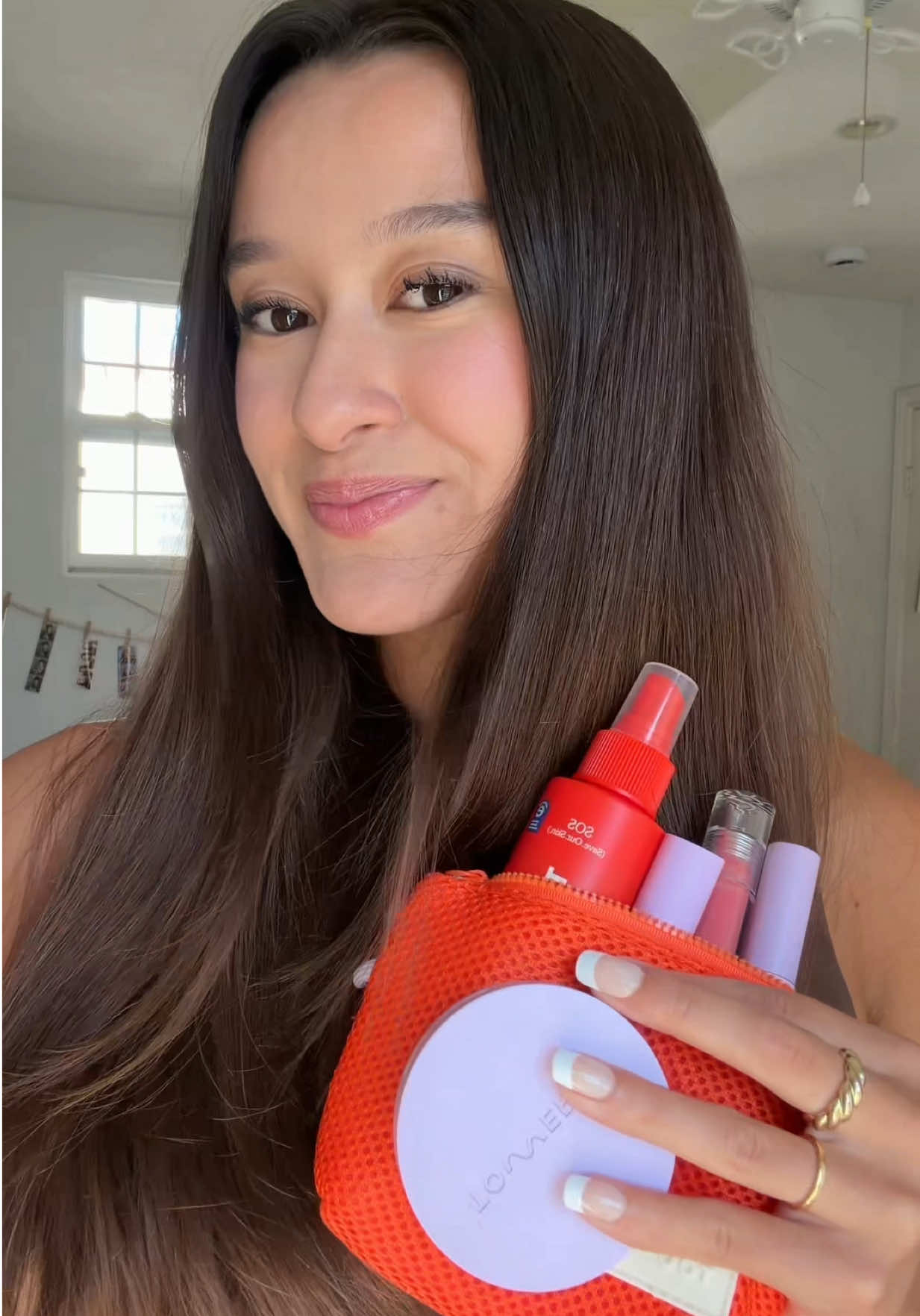
- Hook
- "POV: You just found your entire makeup routine for only $79" - A woman with long brown hair, wearing a gold chain necklace and a brown top, looks directly at the camera and speaks. On-screen text reads: "POV: You just found your entire makeup routine for only $79".
- CTA / offer
- entire makeup routine for only $79, free mini pouch with purchase
- Audience
- Individuals looking for an affordable, complete, and simple makeup routine, indicated by the direct address of "your entire makeup routine" and the emphasis on value and ease of use.
Why it works. Frames a bundle price as a POV discovery moment, letting the seventy-nine dollar figure do the selling for shoppers weighing a routine bundle.
Bold claim and price anchoring at 0:00-0:04 with the on-screen text and spoken line: "POV: You just found your entire makeup routine for only $79". State your bundle's exact all-in price in a POV-framed opening line so shoppers can judge the deal without doing math.
- Reach
- 92 upvotes · 17 comments · r/Sephora
A community is already discussing this in r/Sephora. Show up there authentically and answer the thread before a competitor does.
Who amplifies them
Named third-party TikTok amplifiers in the evidence include: @bobdylan (GoGo Shimmer campaign featuring Jada Jones's topical-steroid-withdrawal story, 44,916 engagements), @Sofya (lip product review with stolen-phone humor, 3,277 engagements), @jordan smikle (NYC in-person event promotion for a June 22, 2026 Tower 28 event at 6th Ave and Grand St, 2,074 engagements), @cyndilauper (Get Ready With Me (GRWM) routine featuring Tower 28 products, 1,330 engagements), and @Tarana A (concealer shade-finder guide shot at Sephora, 1,284 engagements). On Instagram, @luanabarbours (4,691 engagements, clean-beauty review) and @perri_leroy (3,286 engagements) are the named third-party amplifiers. @bluebannister was featured in the brand's own Instagram reel as a winner of the Clean Beauty Summer School creator program.
The brand account itself generates the majority of TikTok posts in the evidence. The creator roster documented in public data is real but thin, and the full depth of Tower 28's paid-creator program is not visible.
08 Organic & video
The organic content engine: the videos, creator posts, and community presence earning attention without paid spend.
Tower 28's @tower28beauty TikTok account posts multiple times per week across giveaways, product demos, cultural moment tie-ins, and humor-forward slice-of-life content. The highest-engagement brand post in the evidence is a lip plumper giveaway with 142,216 engagements, using a simple enter-to-win mechanic (like, repost, comment a shade, follow) timed to a new product launch. A creator posting from @bobdylan produced a post featuring Jada Jones's journey healing from topical steroid withdrawal, shot as part of the brand's GoGo Shimmer product launch campaign, and it reached 44,916 engagements; the specific skin-condition narrative drove shares that a product-feature post would not. A TikTok Shop bundle post during Super Brand Day (June 2026) generated 7,740 engagements with a direct "This bundle has everything! Limited time only! Get it now" hook.
Read the full breakdown+1▾
On Instagram, @tower28beauty averages 1,454 engagements per post across 2,601 posts. Third-party creator @luanabarbours earned 4,691 engagements on a clean-beauty review reel, and a brand-run "Guess the Tower 28 product" interactive format reached 2,790 engagements. The creative format that over-indexes across both platforms: real skin-condition narratives paired with the product as resolution, not aesthetics-first content. Giveaway mechanics consistently amplify reach when timed to a product launch moment.
09 Affiliate & partners
How the brand turns creators and partners into a tracked, variable-cost acquisition channel, and how the program is structured.
Tower 28 has an active TikTok Shop presence, confirmed by a Super Brand Day promotion (June 8-15, 2026) explicitly calling out TikTok Shop alongside tower28beauty.com for exclusive savings. Affiliate traffic accounts for 3.8% of total visits, a meaningful share that is larger than both social paid (2.4%) and social organic (0.9%) combined. No dedicated third-party affiliate program page via affiliate management platforms such as Rewardful or PartnerStack was detected in the evidence. A "Clean Beauty Summer School" creator program, referenced in Instagram content with @bluebannister as a documented participant, suggests a structured creator-to-ambassador pipeline, but the commission structure and public enrollment path are not visible in public data.
10 In their own words
Pulled from interviews and community sessions. The quotes are the angle; the takeaway is what to do with it.
How Amy Liu Launched Tower 28 and Changed the Beauty Game After 40 (Ep 38) ↗LADIES WHO LAUNCH · 14k views · 69 min▶ View source“The customer told us what the product was and how to market it and what to use it for.”
Expand
Amy Liu grew Tower 28 by seeding 100 hand-labeled prototype units to friends and letting customer responses define the product's use cases and marketing before any paid channels. She launched directly into all Sephora doors in March 2020, leaning on 20 years of retail relationships, and accelerated during COVID by seeding essential workers and nurses for mask-related skin issues. Putting her own eczema story at the center of brand messaging was the turning point that made the brand resonate.
“It wasn't until I put myself in the story that I really felt like I could see like the light bulb turn on and that people could relate to it and understand it a little bit more.”
“I had put it out there for so many years and I didn't even know it. And I think so often we have hopes and dreams and we keep them to ourselves because we're afraid to share them... when I went to go do it, so many people were like, 'You've been saying you wanted to do this. We've been waiting for you to do this.'”
“We would seed essential workers. We would seed nurses and this was just being online.”
“I really thought the need gap was in makeup because there are a lot of skincare brands that have sensitive skin kind of products... I really wanted to cover my skin imperfections but I really worried that when I used complexion products that it was making my skin worse.”
Make 100 units of your product, send them to people you know with no formal brief, and let their unscripted use cases and testimonials write your marketing — Tower 28's SOS spray positioning came entirely from beta users, not the founder.
Tell people your startup idea for years before you launch: your informal network becomes your first investor pool and your launch evangelists, as Amy raised $500K in 30 days purely from people who had heard her say 'one day I'm going to do this.'
Put the founder's lived problem at the center of the brand story as early as possible — Amy only started seeing real traction when she stopped separating herself from the brand and openly led with her own eczema.
Find the underserved format within a crowded category rather than competing head-on: sensitive-skin skincare was crowded, so Tower 28 planted the flag in sensitive-skin makeup, a gap with far less competition.
Seed into a relevant community during an unexpected moment to surface product-market fit fast — Tower 28 gave SOS spray to nurses and essential workers during COVID mask mandates and used the influx of before/afters to validate positioning before any paid spend.
How to Build a Viral Beauty Brand Beloved by Celebrities and Sephora ↗Shopify Masters · 7.0k views · 45 min▶ View source“we would literally just go through the YouTube channels for people and they had like an info tab where they would put a lot of a PO box...And we just cold sent products”
Expand
Amy Liu built Tower 28 through scrappy, personalized influencer outreach (cold-sending PR with handwritten notes to YouTubers whose PO boxes she scraped manually), leveraging 20 years of retailer relationships to land Sephora within months of launch, and aggressively amplifying organic social moments rather than outspending competitors. Her operating principle was 'out clever' over outspend: each individual community interaction (a before/after from an essential worker, a celebrity mention) was captured and scaled into broader press and social proof.
“I would write to Chriselle Lim, be like, 'Chriselle, I think you would love this product because your daughters or whatever it is and I know you're a mom and you're busy, so I think that you'll love this'”
“Haley Bieber talked about us organically, which I almost fell down. I was like, 'How did this happen?'”
“somebody can outspend us, but can we out clever them? Is there a way that we can just be more thoughtful about what we're putting out there?”
“great marketing is a short-term solution. Great product is a long-term thing”
Manually scrape creator PO boxes from YouTube info tabs and cold-send small, personalized PR packages with handwritten notes that name a specific reason the product fits that creator's life or audience — not a generic mailer
Move into retail as fast as your relationships allow; Amy was on Sephora.com within 5 months of launch by activating 20 years of industry contacts, not waiting to prove scale first
Do social listening for unexpected use cases, then gift product directly to that community (she sent spray to hospital charge nurses during COVID) and ask for before/afters with explicit permission to repost — this builds credible UGC that converts
When an organic celebrity mention hits, treat it as a launchpad: send a thank-you gift immediately, proactively feed editors the story with supporting assets (before/afters, ingredient explainers), and stitch your own content on top of the original post
Get a respected third-party validator for your core claim — Amy used National Eczema Association certification so 'safe for sensitive skin' wasn't self-reported; find the equivalent credibility signal in your category
Amy Liu: “I Became The Breadwinner” Starting Over at 40, Working w/ Your Husband & Building Tower 28 ↗Hot Smart Rich · 3.6k views · 52 min▶ View source“I really want to build up the organic community first and understand who really loves our products. We have had the luck of having people like Haley Bieber has talked about us. Khloe Kardashian's talked about us like organically.”
Expand
Amy Liu built Tower 28 by prioritizing organic community over paid influencer spend, using a social listening audit to discover and double down on her actual over-indexing audiences (acne-prone, Latin, and athlete consumers). She formed brand and product collaborations only when there was genuine product-audience fit and real personal relationships, and relied on earned media desk-sides to surface the founder story that drove early press.
“We did a social listening study recently where we had someone come in and literally just scrub the entire internet for like social comments, for reviews, for anything that we could to try to understand who our customer is. And what we found is that we overindex in people who have acne, who are Latin, and specifically who play sports and are athletes.”
“The best collaborations are the ones that speak to the audience in a way that feel really organic.”
“I've also had celebrities come to me and say, 'I'd like to be your chief creative officer.' And I'm like, I've never seen you post or talk about us, so why would — if you don't truly love it, like why would we do it?”
“It wasn't until we started doing desk sides with editors and talking about the brand and they were like, 'Why didn't you tell us that?' And that was when I realized, oh, people actually care about like the story behind the story.”
Run a social listening audit before committing to any channel — scrape reviews and social comments to find which audiences actually over-index for your product, then build partnerships and content that reinforce those segments.
Hold off on paid influencer or celebrity deals until organic love exists first; require that any partner has already publicly used and talked about the product before signing anything.
Give equity (not cash) to expert advisers — Tower 28 gave a makeup artist equity in exchange for advisory work, buying authentic credibility and word-of-mouth without upfront spend.
Only do product collaborations when there is a genuine product-use fit between the two audiences (e.g., post-workout skin relief spray + a women's track series), not just a brand-awareness swap.
Use press desk-sides to surface the 'story behind the story' — founder-personal angles (e.g., having eczema) often resonate more with editors than product features, and you may not discover them until editors push back.
“I knew we had something with the SOS daily rescue facial spray because we gave it to actually 100 people in unmarked bottles and they had a myriad of different issues whether it was blemishes for me it's eczema other people it could be anything from like sweat after exercising a sunburn tattoo and we just saw the most amazing testimonials and that's how I knew we had to launch it.”
Expand
Amy Liu built Tower 28 around her personal pain point (eczema + 22 years in beauty) and validated the hero product by seeding 100 unmarked bottles to real users with sensitive skin before launch. Her brand identity is rooted in an authentic LA/beach lifestyle, though she initially hid her own face from the website because she doubted customers would connect her identity to that aesthetic.
“I've had eczema my entire adult life and the combination of those two things is actually kind of hard because I really felt like I was the person trying to sell beauty products to you know the retailers and to the customer but yet my own skin was so problematic.”
“One of the things I really wanted to do with Tower 28 is to make products that were not only clean but also safe for sensitive skin.”
“In the very beginning when I launched Tower 28 I intentionally did not show my own picture on our website because we have this very beachy concept and growing up I really thought that people felt like that was associated with like a blond hair blue-eyed girl.”
“I truly do believe that our products are that crosshair between being good for your skin safe and also high performance.”
Seed 100 units in unmarked packaging before launch — blind testimonials from real problem-havers validate product-market fit without brand bias inflating results.
Build the brand around a specific, underserved customer pain point (sensitive/eczema-prone skin) rather than broad appeal; the constraint becomes the positioning.
Anchor brand identity to an authentic personal lifestyle detail (the actual lifeguard tower the founder texts friends to meet at) — concrete origin stories travel better than invented concepts.
Name and package products to reinforce the brand world at the SKU level (SOS spray in 'Sunset red' lifeguard-buoy color, beach-referenced shade names) so every product does brand-building work.
Audit your own assumptions about who your customer thinks you are — Liu hid her face early because she assumed her identity didn't match the brand vibe, a bias worth pressure-testing rather than accepting.
11 The playbook
The channels are not separate. They are one system where each stage feeds the next. Here is the read, then the plays to run tomorrow.
The inferred playbook
Tower 28 runs a trust-first acquisition loop where one clinical credential earns permission to buy across three separate demand-capture channels: Sephora's physical shelf, TikTok creator content, and branded organic search.
National Eczema Association compliance, the standard that Tower 28 is built around, is a clinical threshold no competitor can match by simply reformulating or adopting a "clean" marketing claim; Amy Liu anchored every pitch, packaging decision, and SKU expansion to this single ownable standard from launch (source).
500+ Sephora doors provide mass in-store discovery at no direct paid media cost; encounters on the shelf convert to branded search, which product pages ranking #1 then capture at 44.7% organic-search share. The Sephora relationship was earned through 20 years of retail network, not an open pitch (source).
Dig deeper+2▾
Skin-condition narratives (eczema, topical steroid withdrawal, acne) generate organic TikTok reach that paid retargeting then recycles into performance creative; the brand's response to organic viral moments has consistently been to amplify rather than produce.
Social organic is just 0.9% of total traffic despite strong TikTok engagement numbers, meaning the TikTok-to-site direct path is underdeveloped relative to the awareness being generated. The DTC-versus-Sephora revenue split within the estimated $943K-$2.1M/mo revenue range is not visible in public data, which means the true leverage of their DTC paid investment versus retail shelf presence cannot be confirmed.
Lead every first-impression touchpoint with the "it's not your fault" reframe.
Tower 28's longest-sustaining Meta creative opens with "Your sensitive skin isn't the problem. Most products are." Right away, write a direct version of this reframe for your own audience's primary frustration and test it as the first line of your top-of-funnel paid creative. The mechanism is blame-transfer: it validates the buyer before asking them to try again, which is the specific emotional barrier that skeptical, burned-before customers carry into every new product decision.
Pursue one institutional credential that no "clean" or "safe" marketing claim can match.
Amy Liu chose NEA compliance because no competitor could fast-follow it by reformulating; the badge converts the exact buyer who has heard every other clean-beauty promise and stopped trusting them. If you solve a problem in health, wellness, or skin, identify the credentialing body for your specific outcome (a dermatology association, an allergy certification body, a clinical testing protocol), contact them right away about formal compliance or endorsement requirements, and make the resulting credential the central claim on every product page and ad.
Seed your hero product to 10-20 people whose exact condition you address, then follow with a direct testimonial ask.
Amy Liu seeded 100 unlabeled prototype units before launch and let user responses define the marketing language; she later seeded essential workers and nurses during COVID for mask-related skin issues and turned their organic posts into brand proof. Right away: search TikTok or Instagram for people publicly documenting the specific condition your product addresses, send product with a handwritten note, and follow up one week later asking directly for their honest experience. Do not prime the testimonial in the initial note; an unsolicited positive response carries more credibility than a coached one.
Build a DTC-exclusive free gift to pull retail-aware buyers onto your own site.
Tower 28's mini pouch Meta creative (approximately 33-day proven winner as of 2026-06-24) exists to give Sephora-familiar buyers a reason to buy direct rather than in-store. If you have retail distribution, design a branded low-cost physical item available only at your DTC domain, offer it as a first-order free gift, and use Meta DPA to target audiences likely to have Sephora or retail-category intent. The item itself is secondary; the outcome is first-party data and a direct customer relationship your retail partner cannot give you.
Convert your sales velocity into your top-of-funnel ad hook.
Tower 28 runs "1 SOLD EVERY 11 SECONDS" (their own ad copy, not independently verified) as a Meta creative that leads with peer consensus before any product feature. If you have meaningful sales volume, check your data for the most striking velocity framing (per day, per hour, per minute), adapt the format to "1 [unit] delivered every X," and test it as an opener right away. Caveat: this hook works specifically because risk-averse buyers weight peer adoption heavily in high-stakes purchase decisions; it fails if the velocity you quote is unremarkable for your category, so only run numbers that would genuinely impress a skeptical first-time buyer.
You just read how Tower 28 Beauty does it. Tomorrow it is someone else.
Every morning we take one company that is actually growing and break down where its customers come from: the ads still running after a year, the channel doing the real work, and the play you can run this week.
Systemaic · directional intelligence. Traffic, spend, and reach figures are SimilarWeb-style estimates and qualitative reads of public data, not audited numbers. Built on real public receipts.
// teardowns with a similar GTM motion
sources & receipts (8)
Live ad libraries: meta ad library · google ad library
Founder interviews: How Amy Liu Launched Tower 28 and Changed the Beauty Game After 40 (Ep · How to Build a Viral Beauty Brand Beloved by Celebrities and Sephora · Amy Liu: “I Became The Breadwinner” Starting Over at 40, Working w/ Yo · Behind The Beauty with Amy Liu of Tower 28 · How Amy Liu Built Tower 28 Into A Cult-Favorite Brand | SOCIAL CURRENC · How Tower 28 Became the Go-To Brand for Sensitive Skin – Amy Liu
Traffic, spend, and revenue figures are estimates as noted in the report; the links above are the primary public artifacts.