- 01Build the audience before the product
- 02Turn your own workflow into a free embedded tool
- 03Publish your revenue milestones where builders gather
- 04Restructure your best post to get cited by AI, not just ranked
01 Snapshot
The one-glance read on who they are and how they grow. Each point is verifiable from the receipts above.
An 80+ tool AI blogging and SEO suite (article writing, keyword research, autoblogging for WordPress, Webflow, and Ghost) that reached $29K MRR (~$350K ARR run-rate) per the founder's own Indie Hackers milestone post.
Founder-led and audience-first, converting an existing 500,000-reader blog into paying software users rather than buying cold traffic.
~65,686 monthly visits (+2.9% over the last 3 months), 50,832+ bloggers on the site's live user counter as of a 2026-07 crawl, and 13 total Google ads with 1 still active as of 2026-07-28.
Co-founder Ryan Robinson spent roughly a decade building a 500,000-reader blog and an 80,000-subscriber YouTube channel before launching the product, then converted that existing audience into $2,000 MRR within its first week.
02 How it unfolded
The order the channels came online. Sequence is strategy: what they did first, and what they layered on once demand existed.
03 Traffic & channel mix
Estimated demand, the channel split behind it, and the keywords and referrers doing the work. Directional modeling, not audited analytics.
RightBlogger draws an estimated ~65,686 monthly visits, up 2.9% over the last 3 months, a modest but growing base for a two-person, bootstrapped operation. No channel-mix breakdown, keyword list, or referrer data is available for this domain, so the more informative read on how that traffic actually arrives sits in the content and affiliate mechanics below rather than in a SimilarWeb split.
04 Channel map
Not traffic share. How much weight the growth system actually puts on each channel, with a one-line read on the role it plays.
What drove growth
05 The motions doing the work
For founder-led SaaS the breakdown shifts from ads to traction: where the first users came from, how the founder grows it in the open, and the compounding organic surface.
RightBlogger's early traction came entirely from converting an existing blog audience, not a coordinated launch-platform push.
Co-founders Ryan Robinson and Andy Feliciotti launched the product the same week generative AI "burst onto the scene" in 2023, with Robinson funneling his roughly 500,000-monthly-reader blog, ryrob.com, straight into the new product from day one.
The product reportedly reached $2,000 in MRR within its first week, an unusually fast start made possible by an existing, warmed-up readership rather than paid acquisition or a launch-platform spike.
Dig deeper+2▾
There is no visible platform-driven launch surge in the record. The traction curve reads as a direct audience handoff instead, evidence that an existing audience can substitute for a splashy public debut.
A later founder update reconfirmed the MRR milestone cited in the snapshot above, still crediting the audience-first approach; the company remains self-funded with no outside investors.
Ryan Robinson's build-in-public motion runs through milestone revenue posts and his own on-camera product use, not a high-follower social feed captured in this evidence.
Robinson has shared MRR updates publicly, from the initial $2,000-in-week-one figure to the later $29K MRR milestone, each time crediting the pre-existing ryrob.com audience over paid growth.
On the brand's own YouTube channel, Robinson appears as presenter demoing RightBlogger's tools on his own blog, including a video titled "How THIS Autoblogging AI Tool Runs My Blog (500k Readers/Mo)" that turns his readership into a live case study for the autoblogging feature.
Dig deeper+1▾
The homepage's social links (X, LinkedIn, Instagram, TikTok) are brand accounts distinct from Robinson's personal blog and YouTube audience, the asset that actually seeded the company and still supplies its content pipeline.
RightBlogger's real growth system is a content-to-tool funnel that turns Robinson's existing audience into signups, with search and affiliates as secondary amplifiers.
Tool Studio, RightBlogger's feature for building embeddable AI tools, lets Robinson place free tools directly on ryrob.com; Cloudflare's WAF and Turnstile (bot-filtering tools) protect that funnel from abuse, per co-founder Andy Feliciotti's own account, turning his existing readership into a continuous lead source rather than a one-time audience dump.
The YouTube library doubles as a content map, from tactical how-tos to reference pages like its canonical-tag glossary entry, plus a dedicated Answer Engine Optimizer video pushing a newer motion, structuring content so large language models cite it, extending the funnel from classic Google ranking into AI-answer surfaces.
Dig deeper+2▾
RightBlogger's sole LinkedIn ad (active as of 2026-07-28) pitches the same idea as an ad itself: "aim for a top 5-10 spot in search results... place key numbers at the top and update your content often," positioning ordinary SEO ranking as the actual path to getting cited by AI answer engines like ChatGPT.
Of 13 total Google ads on record, only two are attributed to RightBlogger, LLC itself, including the single ad still active as of 2026-07-28 (a text ad running 77 days). The rest of the historical ads were bought by individual advertisers rather than the company's own account, most likely affiliates or resellers buying their own paid traffic against the product (though some could be competitors bidding on the brand term), rather than RightBlogger running a brand ad-spend program.
06 Paid ads
This founder-led SaaS also runs paid acquisition. Here are the live ads doing the work, each with the X-ray and a play you can adapt.

- Running
- 77 days (longevity = it's converting)
- Hook
- RightBlogger www.rightblogger.com/ AI Prompt Improver - ChatGPT, Claude, Gemini & more
- CTA / offer
- Our free AI Prompt Improver helps you write clear, useful, better prompts for ChatGPT, Claude, Gemini & more Write clear, useful, better...
- Audience
- Content creators, marketers, or anyone using AI tools like ChatGPT, Claude, and Gemini, indicated by the direct mention of these platforms and the focus on 'prompts'.
Why it works. Directly address a common pain point for AI users (writing effective prompts) with a free solution to drive traffic and establish brand authority.
Headline clearly states the product and its benefit: "AI Prompt Improver - ChatGPT, Claude, Gemini & more" Use a headline that explicitly names your product/service and the specific problem it solves for your target audience.
- Running
- 307 days (longevity = it's converting)
- Hook
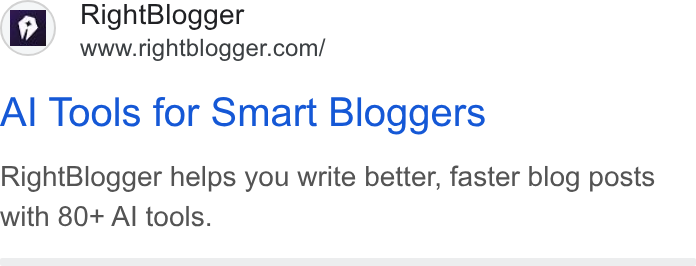
- RightBlogger www.rightblogger.com/ AI Tools for Smart Bloggers
- Audience
- Bloggers and content creators, indicated by the text 'AI Tools for Smart Bloggers' and 'RightBlogger helps you write better, faster blog posts'.
Why it works. Directly state the product's name, website, and primary benefit to attract bloggers seeking efficiency.
Displaying the company name and website prominently at the top, 'RightBlogger www.rightblogger.com/'. Ensure your brand name and website are the first elements visible in your ad creative to build immediate recognition and direct traffic.
- Running
- 14 days (longevity = it's converting)
- Hook
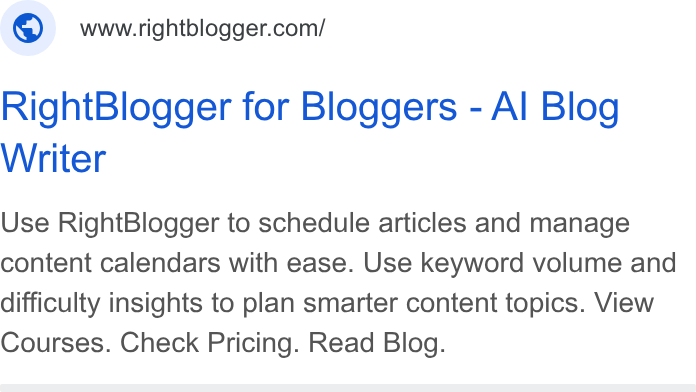
- www.rightblogger.com/ RightBlogger for Bloggers - AI Blog Writer
- CTA / offer
- View Courses. Check Pricing. Read Blog.
- Audience
- The headline 'RightBlogger for Bloggers' and the description mentioning 'schedule articles', 'content calendars', 'keyword volume and difficulty insights' clearly target bloggers and content creators.
Why it works. This creative uses a direct response approach by clearly stating the product's purpose and benefits, followed by multiple calls to action to engage potential users further.
Headline: "RightBlogger for Bloggers - AI Blog Writer" Ensure your ad's headline directly names your target audience and the primary benefit or solution your product offers within the first few words.
Show 2 more ads
- Running
- 5 days (new — still being tested)
- Hook
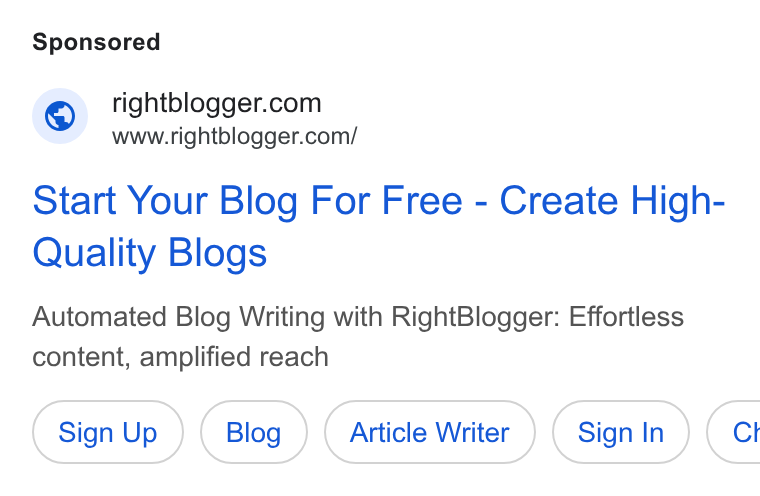
- Sponsored rightblogger.com www.rightblogger.com/ Start Your Blog For Free - Create High- Quality Blogs
- CTA / offer
- Start Your Blog For Free - Create High-Quality Blogs
- Audience
- Individuals interested in blogging or content creation, indicated by the phrases "Start Your Blog For Free" and "Automated Blog Writing with RightBlogger."
Why it works. Direct response ad highlighting a free entry point and automated solution to attract new users to a blogging platform.
Headline promise: The ad prominently features the headline "Start Your Blog For Free - Create High-Quality Blogs." Lead with your core value proposition and a key benefit in the main headline of your ad creative, ensuring it's clear and concise.
- Running
- 79 days (longevity = it's converting)
- Hook
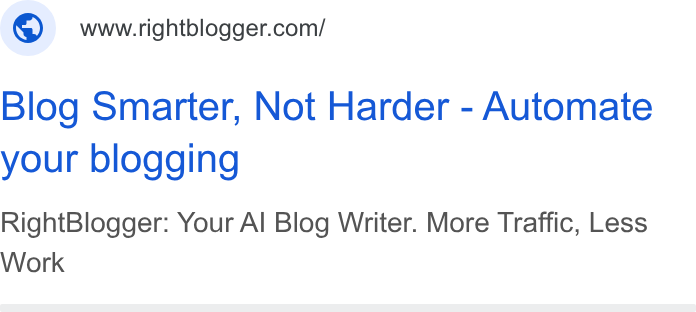
- "www.rightblogger.com/" with a globe icon next to it, followed by "Blog Smarter, Not Harder - Automate your blogging"
- Audience
- Bloggers and content creators are targeted, indicated by phrases like "Automate your blogging" and "AI Blog Writer."
Why it works. This creative uses a direct response headline and a clear value proposition to attract bloggers seeking efficiency and better results.
Headline with a clear benefit: "Blog Smarter, Not Harder - Automate your blogging" Craft your primary headline to directly address a key pain point of your target audience and immediately offer your product as the solution.
07 The playbook
The channels are not separate. They are one system where each stage feeds the next. Here is the read, then the plays to run tomorrow.
The inferred playbook
The loop runs from Robinson's owned audience through a free-tool bridge into a seat-priced product, with affiliates and search as compounding extensions rather than the primary engine.
Robinson's blog and YouTube presence remain the top-of-funnel layer, pre-dating and outperforming any paid acquisition the evidence shows.
Tool Studio's embedded tools on ryrob.com, covered above, hand warm leads directly into signup, with Cloudflare's bot-filtering keeping that funnel usable at scale.
Dig deeper+3▾
Pricing runs Free (2,000 words/month) through Solo at $59/mo, Pro at $89/mo (3 seats), and Agency at $299/mo (5 seats, 10+ sites), with annual billing cutting each to $49/$69/$199; the seat-and-site structure is built to expand as agencies add clients and sites.
The loop still depends heavily on one person's personal audience. Only a handful of affiliates and a mostly third-party-funded paid layer show up in this evidence, leaving little visible diversification beyond Robinson's own reach.
free-to-paid conversion off the 2,000-word tier, seat-expansion rate as Pro/Agency accounts add team members, and the true scale of the affiliate program beyond the handful of creator posts in this evidence.
Build the audience before the product
The proofRobinson spent roughly a decade growing ryrob.com to 500,000 monthly readers before launching RightBlogger, converting that readership into $2,000 MRR in the product's first week.
The adaptationPick one channel in your own niche (blog, newsletter, or YouTube) and start publishing in-depth, tactical how-to content aimed at your future buyer before you build the paid product. Match Robinson's format specifically: one tutorial-style post or video per week, each solving one concrete task your audience pays someone else to solve, so that by the time you have something to sell, the audience already trusts you to solve that exact problem.
Cost: $0 · Time to signal: months · Works pre-PMF: yes, provided you actually ship a product once the audience exists; an audience with nothing to convert monetizes nothing.
Turn your own workflow into a free embedded tool
The proofRightBlogger's Tool Studio lets Robinson embed free AI tools directly on ryrob.com, which feed warm, pre-qualified leads into the paid product, protected from bot abuse by Cloudflare's WAF and Turnstile.
The adaptationIdentify the single highest-intent question your audience already searches for or messages you about, and build a one-input, one-output free version of the answer this week using any no-code AI tool builder. Embed it on your own site or landing page, and gate the deeper or repeatable version behind an email or account signup, exactly the bridge Tool Studio provides between content and product.
Cost: under $500 · Time to signal: weeks · Works pre-PMF: yes.
Publish your revenue milestones where builders gather
The proofRobinson's own milestone posts, from the $2,000-in-week-one figure to the later $29K MRR update, kept his build-in-public loop visible and credited the audience-first approach over paid growth.
The adaptationWrite one paragraph stating your exact current number, whether that's $200 or 5 users, and the single channel that actually produced it, and post it in the community or forum where founders in your category already gather. Repeat this every time you hit a new milestone, using the same "here's the number and the one thing that drove it" framing Robinson uses.
Cost: $0 · Time to signal: days · Works pre-PMF: yes.
Restructure your best post to get cited by AI, not just ranked
The proofRightBlogger's LinkedIn ad advises placing key stats at the top of a page and updating content often so large language models pull from it, the same logic behind its dedicated Answer Engine Optimizer tool.
The adaptationTake your single highest-traffic existing post and add a top-of-page summary block with your most citable statistic, plus FAQ-style headers, this week, rather than writing new content from scratch. Update that page's numbers whenever you have a fresher one, following the exact "key numbers at the top, updated often" mechanic from the ad copy.
Cost: $0 · Time to signal: weeks · Works pre-PMF: yes.
Let partners run their own paid traffic instead of you
The proofOf RightBlogger's 13 total Google ads, only two came from the company's own ad account; the rest were bought by individual advertisers, a strong signal that affiliates or resellers are funding their own paid traffic against the product rather than RightBlogger buying ads itself.
The adaptationSet up a simple tracked referral or affiliate link, even a manual coupon code, this week, and tell your two or three most engaged partners or power users they can promote it however they like, including with their own ad spend, since they keep the margin. This shifts paid acquisition risk onto people who already believe in the product instead of onto your own budget.
Cost: $0 · Time to signal: weeks to months · Works pre-PMF: conditional, this only works once there is a real commission or margin worth a partner spending their own money to chase. Not transferable at an earlier stage: the decade Robinson spent building a 500,000-reader audience before launch is the one asset here that cannot be compressed into a week or a quarter; a founder without that runway should expect the free-tool and revenue-milestone plays above to take much longer to convert than they did for RightBlogger.
You just read how RightBlogger does it. Tomorrow it is someone else.
Every morning we take one company that is actually growing and break down where its customers come from: the ads still running after a year, the channel doing the real work, and the play you can run this week.
Systemaic · directional intelligence. Traffic, spend, and reach figures are SimilarWeb-style estimates and qualitative reads of public data, not audited numbers. Built on real public receipts.
// teardowns with a similar GTM motion
sources & receipts (8)
Live ad libraries: linkedin ad library · google ad library
Researched facts: RightBlogger was co-founded in 2023 by Ryan Robinson (ryrob.com) and Andy Feliciotti: Foun · Ryan Robinson describes founding RightBlogger with Andy Feliciotti right as generative AI · No outside investors — company is bootstrapped by its two founders: $0 raised, self-funded · RightBlogger's homepage displays a live running counter of its user base: 50,832+ bloggers · Current (2026) pricing tiers are Solo, Pro, and Agency, replacing the older Free/Lite/Pro/ · RightBlogger positions itself as the only content-tool suite literally built by working bl
Traffic, spend, and revenue figures are estimates as noted in the report; the links above are the primary public artifacts.