- 01Turn your origin story into the launch
- 02Relaunch until it lands
- 03Publish the marketing tactics that failed
- 04Let your free tier carry your logo
01 Snapshot
The one-glance read on who they are and how they grow. Each point is verifiable from the receipts above.
An open-source DocSend/data-room alternative for founders, VCs, and dealmakers to share pitch decks and confidential documents with link-level analytics, now around $2M ARR as of May 2026 per the co-founders' own posts (unaudited).
Founder-led, launch-led: almost all public distribution runs through the two co-founders' personal accounts and the open-source repo, not a brand marketing team.
Roughly 179,500 monthly visits (-4% over the last 3 months) as of 2026-07-18, 8.2K GitHub stars per co-founder Marc Seitz's May 2026 Reddit AMA, and 1,032 paying customers reported at the one-year incorporation mark in May 2025.
"2.5 years to look like an 'overnight success'... $0 → $1M ARR: 18 months, $1M → $2M ARR: 6 months," Seitz wrote in March 2026, framing the slow-then-fast curve as the actual lesson, not a growth hack.
Papermark's biggest traffic spikes come from public conflicts over its own open-source code, a 2024 Dropbox legal threat over a DocSend comparison page and a 2026 Hacker News firestorm over an alleged copycat, not from any repeatable paid or content channel.
02 How it unfolded
The order the channels came online. Sequence is strategy: what they did first, and what they layered on once demand existed.
03 Traffic & channel mix
Estimated demand, the channel split behind it, and the keywords and referrers doing the work. Directional modeling, not audited analytics.
Traffic sources
Top search keywords
| Keyword | Volume | Weight | CPC |
|---|---|---|---|
| papermark | 8.3k | $5.52 | |
| confidential document processing | 22k | - | |
| paper mark | 970 | $0.86 | |
| aktensystem open source | 0 | - | |
| best ai deck exampes | 0 | - |
Top referring sites
Closest competitors by audience
Papermark draws roughly 179,500 estimated monthly visits, down 4% over the last 3 months. Direct traffic dominates at 63.6% of the mix, consistent with a product used mostly via saved links and habitual return visits rather than discovery. Search organic (16.1%) and referrals (7.2%) trail direct; social organic (6.8%) and email (4.6%) each add mid-single digits, while the rest, AI-referral traffic, paid social, and display, totals under 2%.
The keyword footprint splits between brand terms, "papermark" (~8,300 searches/month) and "paper mark" (~970/month), and a broad category term, "confidential document processing" (~22,000 searches/month), that represents demand they're chasing through content rather than traffic already captured. Top referrers include github.com, a direct line from the open-source repo to the site; dynadot.com, a domain registrar that reads as a low-signal, non-partnership referrer; and glassnode.com, an unrelated crypto-analytics site with no evident tie to Papermark. Named competitors include docsend.com, the incumbent Papermark was built to unseat and the subject of a comparison page covered below, alongside enterprise-grade data-room players datasite.com and caplinked.com, signaling some of their traffic overlaps with buyers evaluating up-market virtual data room (VDR) tools, not just DocSend switchers.
04 Organic content
The specific pages earning their organic search traffic, and the pattern behind why they rank. Adapt the format, not the topic.
Papermark's top organic pages split between practical office-workflow how-to guides (linking a PDF in Google Sheets, sending a password-protected email in Outlook) and incumbent-comparison pages (a DocSend pricing breakdown, a PandaDoc alternatives page), pulling roughly 3,500 organic visits a month in aggregate across its top pages. The pattern reads as a deliberate content strategy: generic productivity searches bring in people who aren't yet looking for "papermark" by name, while the comparison pages intercept buyers actively shopping alternatives to the category leader. It's a small but efficient surface, closer to a handful of well-targeted pages than a broad content farm.
Top pages by organic traffic
05 Channel map
Not traffic share. How much weight the growth system actually puts on each channel, with a one-line read on the role it plays.
What drove growth
06 The motions doing the work
For founder-led SaaS the breakdown shifts from ads to traction: where the first users came from, how the founder grows it in the open, and the compounding organic surface.
Papermark's first users came from a single founder tweet turned open-source repo, and its largest traffic event to date came almost three years later from a public dispute, not from the original launch.
Seitz posted the "Papermark 1.0" launch tweet on May 30, 2023 (475 likes, over 110,000 views), framing the product from day one as an open-source alternative to DocSend with built-in analytics.
Two low-traction Hacker News posts by an outside submitter in September 2023 (4 points, then 1 point) preceded the founders' own October 2023 Show HN post, "the open-source DocSend alternative with custom domains," which broke through at 35 points and 15 comments.
Dig deeper+2▾
In June 2026, a Hacker News post titled "Hey Nico, you didn't vibe code your data room but stole it from Papermark" hit 620 points and 291 comments, tied to Seitz publicly accusing YC-backed competitor Corgi of copying Papermark's open-source data-room code, a dispute TechCrunch also covered.
Around the one-year incorporation mark in May 2025, Seitz reported 1,032 paying customers and roughly 560,000 secure document visits in a single public recap, the clearest outside view of how far the open-source launch had carried the business.
Papermark's founders are the entire public-facing marketing function, posting nearly every meaningful update from personal accounts rather than a brand channel.
Marc Seitz (5,695 X followers, ~10,288 posts) tends to carry origin-story and conflict narratives, the 2023 launch tweet and the 2024 Dropbox legal-threat thread, while Iuliia Shnai (5,240 X followers, ~7,299 posts) owns growth-metrics and SEO-experiment posts.
In a December 2024 recap, Shnai graded 16 marketing tactics tried that year, marking SEO, "Powered by" branding, freemium, Hacktoberfest, building in public, and an email newsletter as wins, and cold email, phone calls, sponsored posts, partnerships, G2 reviews, and Reddit posts as failures.
Dig deeper+2▾
Recurring ARR and customer-count posts, 1,032 paying customers at the one-year mark, "$1M to $2M ARR in 6 months" in March 2026, double as growth updates and social proof, with the March 2026 post alone pulling over 6,000 views.
Seitz ran a single AMA in r/ExperiencedFounders in May 2026 (21 upvotes, 24 comments) restating the $2M ARR and star-count figures, notable since Reddit posts were one of the tactics the couple's own retro marked a failure.
Search organic is a real but secondary engine, 16.1% of total traffic per the mix above, fed by comparison content, how-to guides, and the open-source repo itself.
Shnai documented a live SEO push in April 2024 that took monthly traffic from 100 to 2,300, booked 3x more enterprise calls, but lifted signups by 0%, explicitly reframing the goal from raw visitors to higher-intent traffic.
The DocSend pricing page referenced above drew multiple takedown demands from Dropbox's (DocSend's parent company) IP counsel in June 2024, which Seitz posted publicly, turning a compliance threat into a small-open-source-startup-versus-Dropbox narrative that itself drove attention.
Dig deeper+3▾
The dual-licensed GitHub repo (AGPL outside its commercially-licensed enterprise directory) sits around 8.2K stars and functions as both a top referrer and the credibility asset behind repeated press and launch moments, including the copying dispute covered above.
The site runs a partner program at papermark.com/partners recruiting affiliates to refer customers, a structured layer on top of the organic and open-source motion.
The one ad record surfaced in the data destines to papermark.com but shows creative for an unrelated red-light-therapy product, an evident data mismatch rather than a genuine Papermark ad, so there is no verified paid channel to report.
07 Paid ads
This founder-led SaaS also runs paid acquisition. Here are the live ads doing the work, each with the X-ray and a play you can adapt.
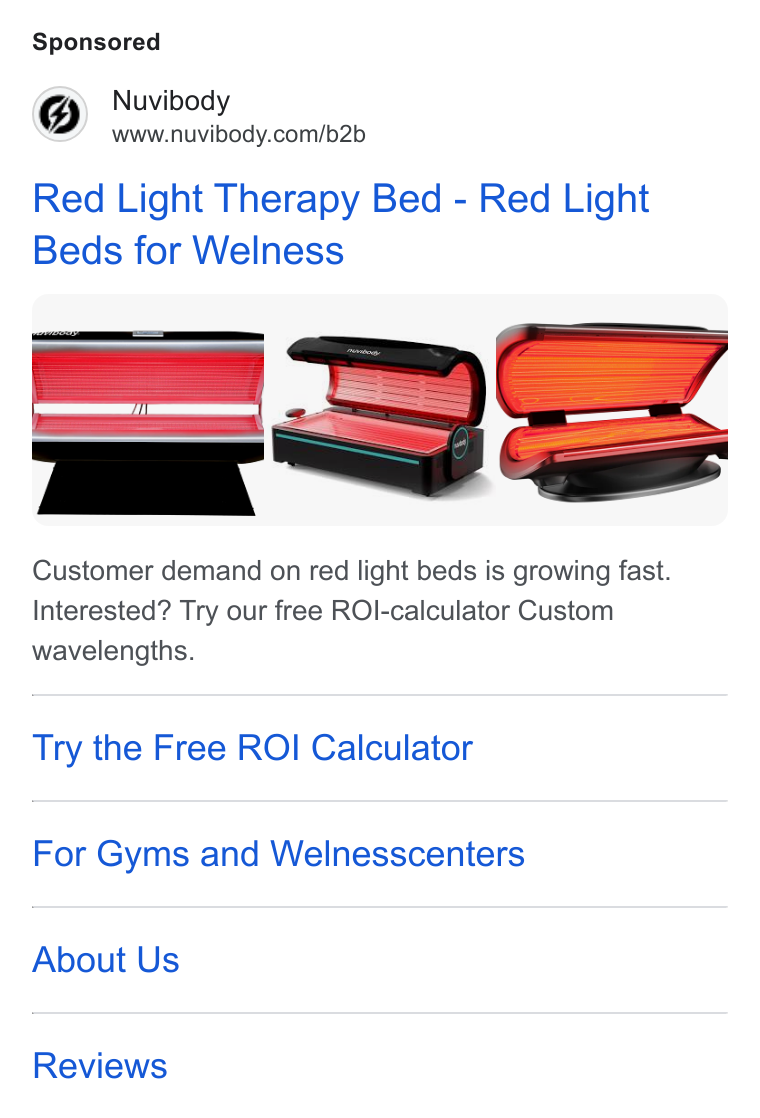
- Running
- 398 days (longevity = it's converting)
- Hook
- Sponsored Nuvibody www.nuvibody.com/b2b Red Light Therapy Bed - Red Light Beds for Welness
- CTA / offer
- Try our free ROI-calculator
- Audience
- The text 'For Gyms and Welnesscenters' directly targets business owners or managers in the fitness and wellness industry.
Why it works. A direct-response ad targeting B2B customers in the wellness industry, aiming to generate leads through a free ROI calculator.
Headline with product and benefit: 'Red Light Therapy Bed - Red Light Beds for Welness' Use a clear, benefit-driven headline that immediately tells your target audience what your product is and what it does for them.
08 The playbook
The channels are not separate. They are one system where each stage feeds the next. Here is the read, then the plays to run tomorrow.
The inferred playbook
The loop starts with founder-authored proof, a tweet, a metrics thread, a legal skirmish, that recruits open-source stargazers and press, and it converts through a generous free and self-hosted tier, not through purchased demand.
Founder-authored content (X threads, the Reddit AMA, comparison blog pages) and the open-source repo generate awareness at zero media spend; the June 2026 copying dispute above shows how large a single earned moment can dwarf any steady channel.
The freemium and self-host tier plus visible "Powered by Papermark" branding on shared links turn usage into inbound signups, a tactic the founders' own 2024 retro flagged as one of the few clear wins.
Dig deeper+3▾
The GitHub repo and the comparison and how-to pages keep earning search and referral traffic long after any single launch or controversy fades, unlike the one-time Hacker News spikes.
There is no verified paid-acquisition channel and no creator-affiliate program beyond the nascent partners page, so growth still depends on the two founders' personal reach and the next earned-media moment rather than a purchasable channel.
free-to-paid conversion rate on the freemium tier, blended ARPU across the five pricing tiers, seat-expansion revenue within Business and Data Room accounts, and the enterprise-versus-self-serve split behind the reported $2M ARR.
Turn your origin story into the launch
The proofPapermark's growth traces to Seitz's May 2023 tweet committing to build an open-source DocSend alternative, which became the "Papermark 1.0" launch tweet itself and the story he retold on Hacker News.
The adaptationPublicly commit to building your thing before it exists, in the exact channel your buyers already use, naming the incumbent you're an alternative to in the first sentence. When it ships, post the "it's live" follow-up in the same thread so it inherits the audience the commitment post built, rather than starting a new thread from zero.
Cost: $0 · Time to signal: weeks · Works pre-PMF: yes
Relaunch until it lands
The proofTwo September 2023 Hacker News posts about Papermark drew almost no response (4 points, then 1 point) before the founders' own October attempt, sharpened to name a specific differentiator ("custom domains"), broke through at 35 points.
The adaptationTreat your first launch post anywhere as a draft, not a verdict. Resubmit a few weeks later with a sharper one-line differentiator than the first attempt, and always post it from the founder's own account rather than a third party, since Papermark's winning post only landed once Seitz posted it himself.
Cost: $0 · Time to signal: weeks · Works pre-PMF: yes
Publish the marketing tactics that failed
The proofShnai's December 2024 recap graded 16 tactics she and Seitz tried, killing ten (cold email, phone calls, sponsored posts, Reddit posts, among others) in public and keeping SEO, freemium, and "Powered by" branding.
The adaptationRun the same experiment-and-report cadence: pick five or six concrete channels, test each for a defined stretch, then publish a scored retro of what worked and what didn't on your own account. The retro itself becomes a shareable artifact other founders pass around, the same mechanic that pulled Shnai's post to roughly 20,000 views.
Cost: $0 · Time to signal: months (needs a full test cycle across channels first) · Works pre-PMF: conditional, only once you have enough runway to try several channels before reporting
Let your free tier carry your logo
The proofPapermark's freemium plan and "Powered by Papermark" branding on shared document links were two of the few tactics the founders marked as wins in their own retro.
The adaptationAdd a small, non-removable brand credit to whatever your free tier outputs, an email footer, an exported file, a shared link's landing page, pointed back at your signup page. Every share becomes an impression on a recipient who already trusts the sender, compounding without any added spend.
Cost: $0 · Time to signal: months · Works pre-PMF: yes
Confront a copycat in public, carefully
The proofThe June 2026 Hacker News post accusing Corgi of copying Papermark's open-source code drew 620 points, 291 comments, and TechCrunch coverage, the largest traffic event in Papermark's history.
The adaptationIf you spot a competitor cloning distinctive, provable specifics of your product (exact UI, a named feature, code), document the similarities precisely before saying anything, and let the evidence do the talking rather than leading with accusation. This only works once you already have a public reputation and a legitimate claim behind it; it is a one-time trigger, not a channel to plan a strategy around.
Cost: $0 · Time to signal: days to weeks · Works pre-PMF: conditional, only once you have existing public credibility and a genuine, documentable claim Not transferable at an earlier stage: Play 5 depends on already having enough audience and reputation for a public accusation to land credibly, something a pre-launch founder with no following or clear IP claim doesn't yet have. Every other play here runs on $0 from day one.
You just read how Papermark does it. Tomorrow it is someone else.
Every morning we take one company that is actually growing and break down where its customers come from: the ads still running after a year, the channel doing the real work, and the play you can run this week.
Systemaic · directional intelligence. Traffic, spend, and reach figures are SimilarWeb-style estimates and qualitative reads of public data, not audited numbers. Built on real public receipts.
// teardowns with a similar GTM motion
sources & receipts (15)
Live ad libraries: google ad library
Launch archives: Hacker News: Hey Nico, you didn't vibe code your data room but stole it f · Hacker News: Show HN: Papermark – the open-source DocSend alternative wit · Hacker News: Papermark – The Open-Source Docsend Alternative · Hacker News: Show HN: Papermark – A web app that helps you decide what to · Hacker News: Show HN: Papermark – Curated collections of the best books y · Hacker News: Papermark – Open-Source Docsend Alternative with Custom Doma
Researched facts: Papermark's origin story began as a public tweet: Marc Seitz (@mfts0) tweeted on May 23, 2 · Papermark's core codebase is dual-licensed: Code outside the /ee directory is AGPL-3.0; co · Papermark's stated customer base: Trusted by 60,000+ companies across 100+ countries, from · Papermark holds SOC 2 Type II attestation: SOC 2 Type II audited; also supports GDPR, HIPA · Papermark's current paid pricing tiers (2026): Business €59/mo (3 seats); Data Rooms €99/m · Papermark launched an AI-agent product line: 'Papermark Agents' shipped an MCP server (std · Papermark co-founder publicly accused a YC-backed startup of copying its product: On/aroun · Papermark founders: Co-founded by Marc Seitz (@mfts0, based in Munich, Germany, previously
Traffic, spend, and revenue figures are estimates as noted in the report; the links above are the primary public artifacts.