- 01Turn your packaging into a content funnel
- 02Seed your single best-performing content format to micro creators
- 03Turn earned press into a founder-voiced clip within days
- 04Treat points of distribution as your core growth metric
01 Snapshot
The one-glance read on who they are and how they grow. Each point is verifiable from the receipts above.
Premium, non-GMO "better-than-homemade" boxed cookie mixes at $7.99 a box or $29.99 for a 4-box variety pack, sold DTC and through expanding national grocery retail.
Organic, founder-led content built the audience first; scale comes from retail distribution and press, not a visible paid-social engine.
400%+ year-over-year growth as of a June 25, 2026 company update; 3,000+ new points of distribution added in Q1 2026 alone, on track for 6,000 by that quarter's end; estimated $2-5M revenue as of the same June 25, 2026 reporting.
The cookie box itself is a content-distribution vehicle, a QR code on the packaging routes buyers back to founder Lindsay Hancock's recipe library, so every new retail door doubles as a new entry point into the organic content flywheel that started on YouTube in 2023.
02 How it unfolded
The order the channels came online. Sequence is strategy: what they did first, and what they layered on once demand existed.
03 Traffic & channel mix
Estimated demand, the channel split behind it, and the keywords and referrers doing the work. Directional modeling, not audited analytics.
SimilarWeb does not publish a traffic estimate for this domain yet, which is normal for a newer or smaller site below its tracking threshold. The growth read here leans on the other public signals in this teardown rather than modeled traffic.
SimilarWeb does not publish a traffic estimate for this domain yet, which is normal for a site this size, so the growth read here leans on the other public signals below.
04 Channel map
Not traffic share. How much weight the growth system actually puts on each channel, with a one-line read on the role it plays.
What drove growth
05 The creative doing the work
Each exhibit shows the actual asset, an X-ray of why it works, a status, and a play you can adapt. This is the heart of the teardown.
As of July 18, 2026, the Google Ads library shows just 1 active ad: a text ad live for roughly 118 days since March 21, 2026. It reads as a "proven winner" only by default, it's the sole ad in the account, so there's no shorter-running test to contrast it against, and no ad copy was captured to deconstruct a hook or angle from. Despite the company profile describing an active Meta and TikTok ad presence, no Meta or TikTok ad-library evidence surfaced in this pull, so paid social can't be assessed here. At this snapshot, retail distribution and organic content are carrying the acquisition load, not paid media; Plays 1 through 3 below show how a reader can adapt that motion without an ad budget.
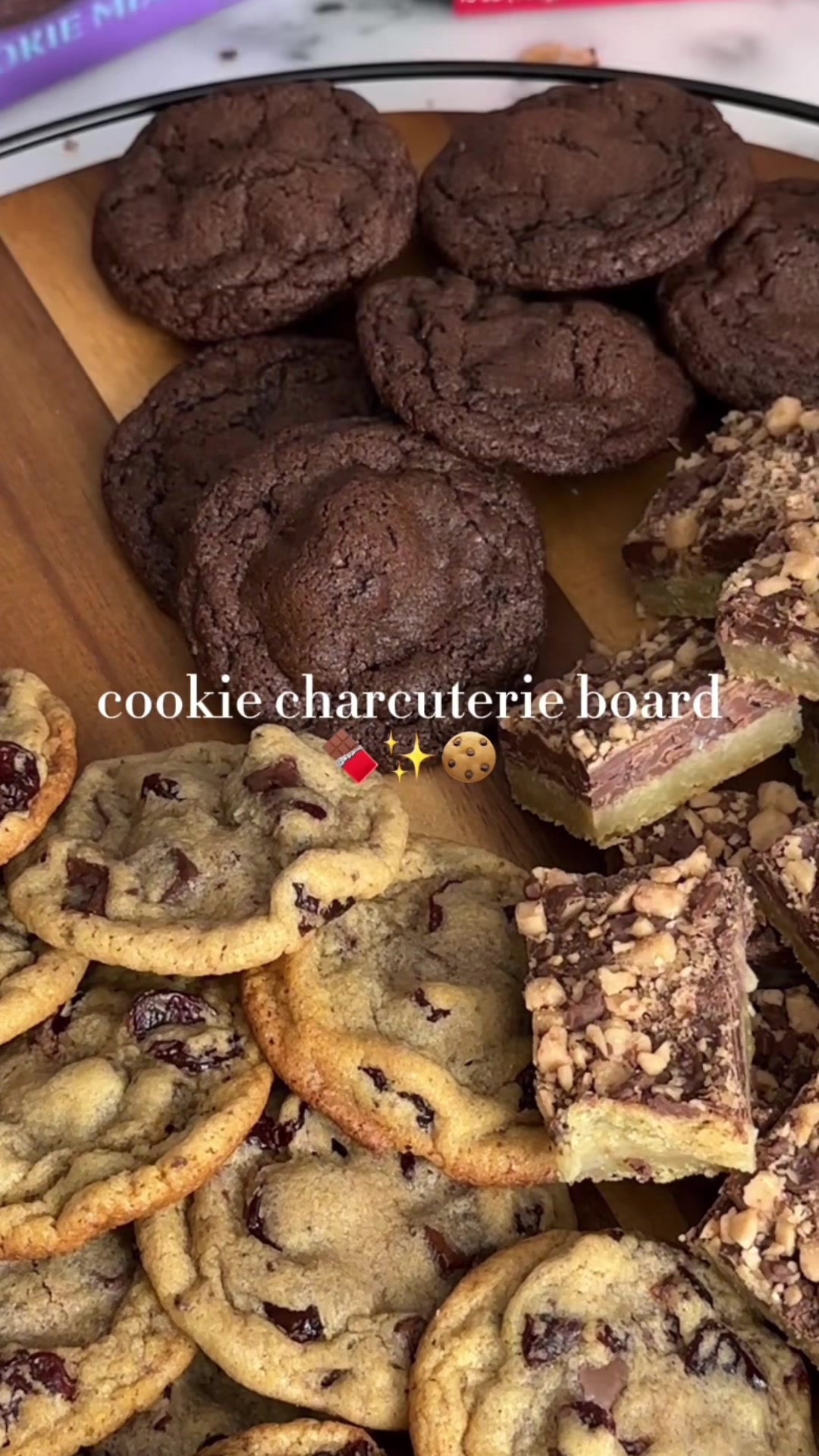
- Hook
- Visual: A close-up shot of a wooden charcuterie board filled with various cookies and dessert bars. Audio: "You always let your emotions get in the way."
- Audience
- Individuals who enjoy baking, entertaining, or nostalgic pop culture references (Gilmore Girls dialogue). The variety of cookies suggests a target audience that appreciates dessert and sharing.
Why it works. Nostalgia-driven content marketing to build brand affinity and inspire product usage, aiming to increase organic reach and engagement.
Juxtaposition of unexpected audio with visual content (0:00-0:03, "You always let your emotions get in the way." over cookies). Pair a visually appealing product demonstration or arrangement with a popular, slightly dramatic, or humorous audio clip that is unrelated to the product but recognizable to a broad audience.
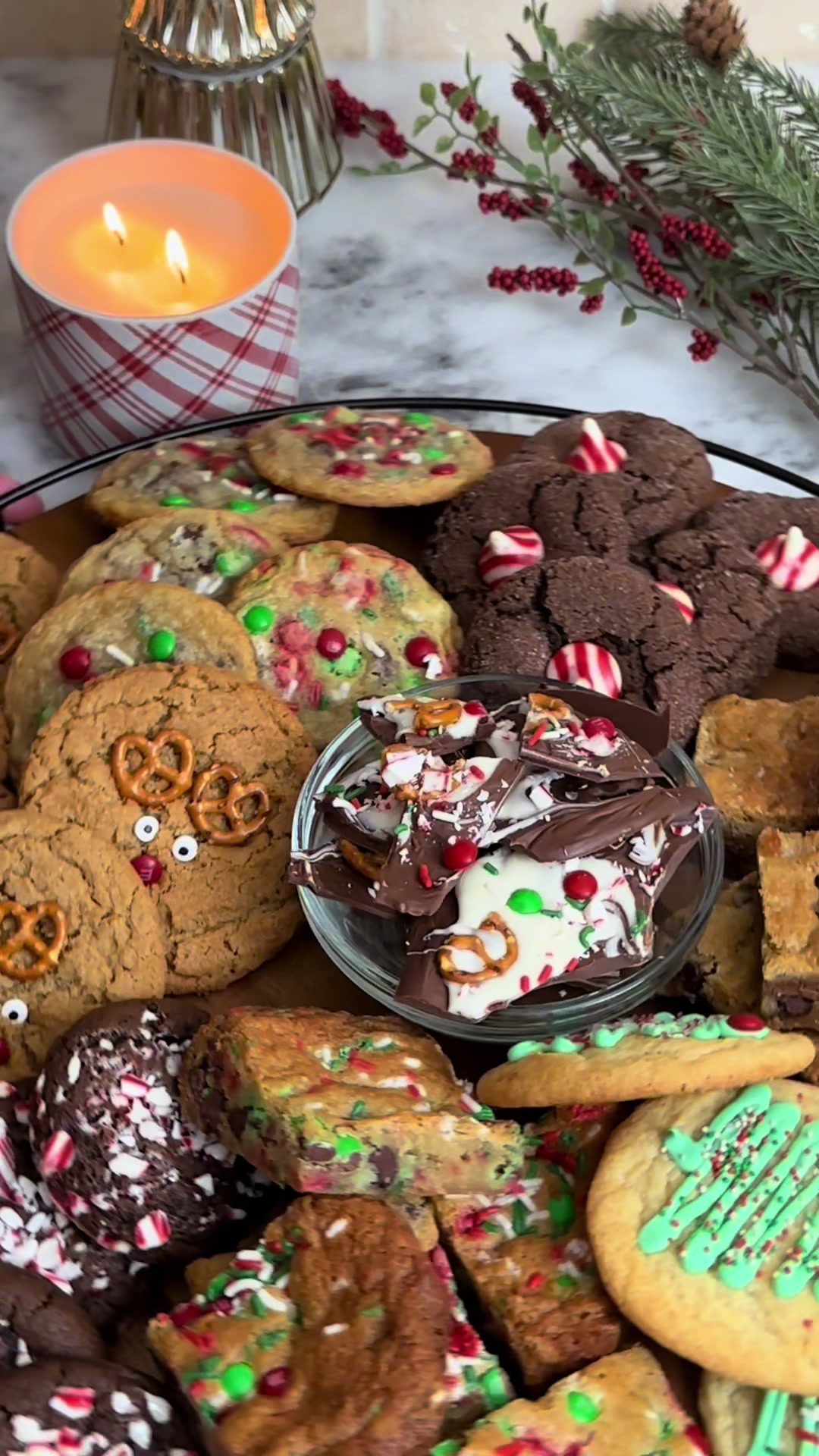
- Hook
- Visual: A wooden dessert board filled with various Christmas-themed cookies and brownies, with a lit candle and pine branches in the background. On-screen text: "christmas dessert board". Audio: A male voice begins singing "Chestnuts roasting on an open fire."
- Audience
- The festive Christmas theme, classic holiday song, and variety of homemade-looking desserts target individuals who enjoy holiday baking, hosting, or festive treats, likely during the Christmas season.
Why it works. This creative uses a time-lapse assembly of a festive dessert board, set to a classic Christmas song, to inspire holiday baking and showcase the variety of treats that can be made or purchased for seasonal gatherings.
Visual progression of assembly (0:03-0:23) with a voiceover of a classic Christmas song. For a product that is assembled or used in a sequence, create a sped-up video showing the process. Pair it with a well-known, emotionally resonant song that aligns with the product's use case or target season.
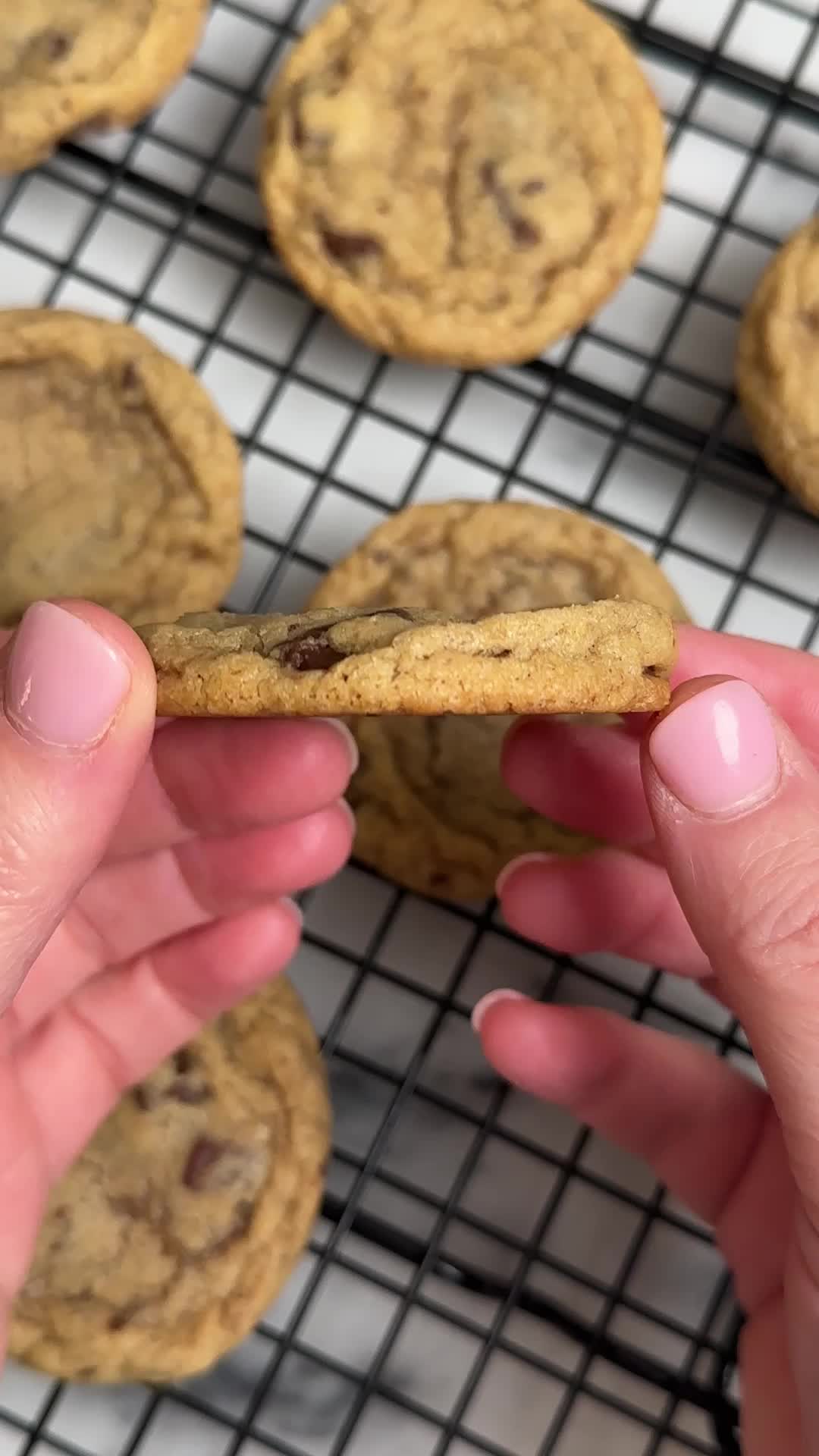
- Hook
- "What's America's favorite dessert? Chocolate chip cookies, of course." A close-up of a hand holding a freshly baked chocolate chip cookie, with other cookies on a cooling rack in the background.
- Audience
- Home bakers who want the taste of homemade cookies without the effort, indicated by the emphasis on 'better than homemade' and 'grandma's secret recipe' from a box mix.
Why it works. This creative runs a product demonstration and benefit-driven narrative to position a cookie mix as a superior, convenient alternative to traditional baking or other box mixes, aiming to drive purchases.
Visual demonstration of the finished product and key ingredients at 0:00-0:03 and 0:15-0:19, combined with the audio: "What's America's favorite dessert? Chocolate chip cookies, of course. But we've leveled up with huge chunks of semi-sweet chocolate..." For food products, always lead with and frequently show the most appealing visual aspects of the finished product. Use close-ups to highlight key ingredients or textures that differentiate your product.
Who amplifies them
Third-party creators posting under #mybetterbatch without any visible formal partnership include @natkingcole, @brendaleeofficial, @ellafitzgerald, @jayz30, @tommyrichman, @natashabedingfield, @jungle4eva, and @_beginners, most tying a recipe or board post to a specific My Better Batch mix. @GreenerGrass (Jeb Brooks) is the one named cross-niche YouTube collaborator. Press amplification is a real secondary channel: an Entrepreneur.com feature (Feb 2026), a Good Housekeeping 2025 Snack Award, and founder Lindsay Hancock's placement on Inc. Magazine's 2026 Female Founders 500 all extend reach beyond owned social. On the retail side, national grocery placements at Kroger, Albertsons, H-E-B, Hy-Vee, Target, and Costco function as amplifiers in their own right, each a new discovery surface rather than a paid channel.
06 Organic & video
The organic content engine: the videos, creator posts, and community presence earning attention without paid spend.
The founder's own voice is the throughline: one clip opens "Hi, I'm Lindsey, founder of My Better Batch and I am so excited to finally share our secret," a direct-to-camera format used to build trust ahead of a product reveal. The YouTube channel's highest performers are technique comparisons rather than pure recipes, "To Drop, To Shape, or To Scoop" (23,682 views) turns a baking mechanic into a hook, and a July 2023 sugar-cookie video hit 23,164 views on the same premise. A cross-promotional collab with Jeb Brooks of @GreenerGrass (a travel-content creator) pulled 7,201 views on a cookie-butter-cookie video, showing the channel reaching outside its own baking niche.
Read the full breakdown+1▾
On TikTok, the "board" format is the clear winner: the brand's own cookie charcuterie board post (June 2024) hit 4,787 engagements, and independently, creator @natkingcole's Christmas dessert board pulled 1,608 engagements using the same visual layout, and a handful of other creators (@brendaleeofficial, @ellafitzgerald) posted their own board variations. Seasonal cadence tracks the calendar tightly: Christmas boards in November-December 2023, Valentine's cookies in January-February 2024, St. Patrick's and Easter content in March 2024. A press mention on The Megyn Kelly Show (April 2025), comparing the brand to a celebrity-founded competitor, was repurposed into a founder-voiced TikTok recap rather than just linked.
07 Affiliate & partners
How the brand turns creators and partners into a tracked, variable-cost acquisition channel, and how the program is structured.
No affiliate program detected, the homepage links only to TikTok, Instagram, and YouTube profiles, with no referral, affiliate, or partner-program link surfaced. At this stage, that means growth is running on retail buyer relationships, press, and unpaid creator goodwill rather than a formalized, trackable partner layer, consistent with a bootstrapped, friends-and-family-funded operation.
08 The playbook
The channels are not separate. They are one system where each stage feeds the next. Here is the read, then the plays to run tomorrow.
The inferred playbook
The engine is a content-to-shelf flywheel: founder-made recipe content builds trust and demand before a retail door opens, and every new door becomes a fresh discovery point for that same content via the QR code on the box.
Lindsay Hancock's YouTube channel predates the company's April 2024 DTC launch by nearly a year, giving the brand an owned audience and a recipe library before it needed to sell anything.
the company's own reporting frames growth in points of distribution, not traffic or ad spend, growing from under 1,000 points in 2024 to over 5,000 by the end of 2025, then adding 3,000+ more in Q1 2026 alone, on track for 6,000 total additions by that quarter's end.
Dig deeper+3▾
unaffiliated creators posting under a shared hashtag extend reach at effectively no cost, but with no affiliate program to formalize or scale that behavior.
paid social evidence is essentially absent despite the brand's public description as a Meta and TikTok advertiser, so the acquisition engine leans entirely on retail relationships and earned press, channels that are harder to scale predictably than a funded ad account.
DTC repeat-purchase or subscription rate, blended customer acquisition cost across DTC versus retail, and per-door sell-through velocity at the new Kroger, Albertsons, H-E-B, and Hy-Vee placements.
Turn your packaging into a content funnel
The proofMy Better Batch prints a QR code on its box that routes buyers to Lindsay Hancock's recipe library, and its top-performing videos are technique comparisons like "To Drop, To Shape, or To Scoop" (23,682 views) rather than generic recipes.
The adaptationPut a link or QR code on your own product's packaging, receipt, or delivery box pointing to a short library of "how to get the most from this" content, and make the first video a head-to-head comparison of two ways to use the product, the same curiosity mechanic that drove My Better Batch's best view counts, rather than a straight tutorial.
Cost: under $500 · Time to signal: weeks · Works pre-PMF: yes, provided the product is physical enough to carry packaging.
Seed your single best-performing content format to micro creators
The proofindependent creators like @natkingcole and @brendaleeofficial posted their own versions of the same "cookie board" visual that was already My Better Batch's top organic TikTok format, with no formal affiliate program behind it.
The adaptationIdentify the one content format that already outperforms everything else you post (a specific visual layout, unboxing angle, or before/after), then send free product and a one-line format brief to 10-20 micro creators who already post adjacent content, tracked with a single branded hashtag instead of building affiliate tooling first.
Cost: under $500 · Time to signal: weeks · Works pre-PMF: yes.
Turn earned press into a founder-voiced clip within days
The proofa Megyn Kelly Show podcast mention comparing the brand to a celebrity-founded competitor was repurposed into a founder-to-camera TikTok recap rather than just a link, sitting alongside a separate direct-to-camera founder introduction clip.
The adaptationWhenever you land a press mention, podcast shoutout, or award, film a short direct-to-camera reaction within 48 hours of publication and post it natively rather than sharing the article link, using the founder's own face and voice to convert third-party validation into owned reach.
Cost: $0 · Time to signal: days · Works pre-PMF: yes.
Treat points of distribution as your core growth metric
The proofthe company frames its growth narrative around points of distribution (under 1,000 in 2024 to 5,000+ by the end of 2025, plus 3,000+ more in Q1 2026) rather than traffic or ad spend.
The adaptationIf your product has any kind of placement surface (retail shelf, marketplace listing, integration directory, partner storefront), track "number of places a stranger can discover this" as a primary KPI alongside revenue, and run weekly outreach to add one new placement, the way a CPG broker works a call list, rather than pouring all effort into a single owned funnel.
Cost: dedicated budget or hire · Time to signal: months · Works pre-PMF: conditional, requires a genuinely placeable product and buyer relationships, so it fits better once you have initial traction to point to.
Attach to an existing values-aligned campaign instead of building your own
The proofa July 2025 post tying the brand to Ryan and Haley's 50 States in 50 Days fundraiser for St. Jude pulled 592 engagements by riding an existing creator audience and cause rather than running a paid campaign.
The adaptationFind one values-aligned campaign or fundraiser already active in your community or niche and contribute product or a small sponsorship for a genuine mention, instead of manufacturing your own cause-marketing moment from scratch.
Cost: under $500 · Time to signal: weeks · Works pre-PMF: conditional, only when a real values fit exists; a forced tie-in reads as inauthentic and can backfire. Not transferable at an earlier stage: the retail-broker-style distribution play depends on the certifications (Non-GMO Project Verified, Kosher) and buyer relationships that take time to build, and the press pipeline (Entrepreneur, Good Housekeeping, Inc. 500) leans on founder Lindsay Hancock's decade-plus CPG operator network from Creative Snacks and KIND, a network a first-time founder cannot replicate on day one.
You just read how My Better Batch does it. Tomorrow it is someone else.
Every morning we take one company that is actually growing and break down where its customers come from: the ads still running after a year, the channel doing the real work, and the play you can run this week.
Systemaic · directional intelligence. Traffic, spend, and reach figures are SimilarWeb-style estimates and qualitative reads of public data, not audited numbers. Built on real public receipts.
// teardowns with a similar GTM motion
sources & receipts (5)
Live ad libraries: google ad library
Researched facts: Company founding / first shipment: Lindsay Hancock shipped My Better Batch's first order i · Funding status: Fully bootstrapped; raised only a friends-and-family round at 2024 launch, · Product lineup and launch: Launched with four flavors (Classic Sugar, Chocolate Chunk, Dou · Direct-to-consumer pricing: Website SRP is $7.99 per box, $29.99 for a 4-box variety pack
Traffic, spend, and revenue figures are estimates as noted in the report; the links above are the primary public artifacts.