- 01Relaunch Until It Sticks
- 02Turn Ops Specifics Into Founder Content
- 03Stage A Pricing Change As A Launch Event
- 04Seed A Lightweight Affiliate Link
01 Snapshot
The one-glance read on who they are and how they grow. Each point is verifiable from the receipts above.
An AI-native design tool that turns prompts, screenshots, and Figma files into production-ready React UI for product teams, backed by a $6M Series A (November 2025).
Founder-led, launch-driven, an engine built on the two co-founders' personal accounts and a big Product Hunt/Hacker News launch rather than paid media.
~239,000 monthly visits as of 2026-07-12, 1,500+ product teams and $1M ARR reported at the November 2025 Series A, and founder Alex Danilowicz's X following at 7,612.
Google Ads carries a minimal footprint as of 2026-07-12, with only 1 of 3 total ads active and the current one live for roughly 7 days.
61.2% direct traffic against just 0.1% paid social and 3.8% paid search shows growth still rides founder virality and unpaid creator reviews, not ad spend.
02 How it unfolded
The order the channels came online. Sequence is strategy: what they did first, and what they layered on once demand existed.
03 Traffic & channel mix
Estimated demand, the channel split behind it, and the keywords and referrers doing the work. Directional modeling, not audited analytics.
Traffic sources
Top search keywords
| Keyword | Volume | Weight | CPC |
|---|---|---|---|
| magic patterns | 18k | $11.68 | |
| magicpatterns | 4.0k | $17.77 | |
| tailwind | 241k | $0.94 | |
| magic pattern | 2.5k | $24.02 | |
| claude design | 2.1M | $2.74 |
Top referring sites
Closest competitors by audience
Magic Patterns draws an estimated 239,000 monthly visits, down 25.7% over the last three months. Direct traffic dominates the mix at 61.2%, typical of a product with a logged-in, repeat-use base and strong brand recall from past signups. Search Organic follows at 13.1% and Referrals at 7.8%, together forming a real but secondary discovery layer beneath the direct funnel. The rest, Social Organic (6.9%), Search Paid (3.8%), Gen AI referrals (3.5%, visits arriving through AI answer engines like ChatGPT and Perplexity), Email (2.8%), Display Ads (0.9%), and Social Paid (0.1%), totals under a fifth of traffic, underscoring how little of the growth engine sits in paid channels.
On keywords, "magic patterns" carries 17,830 monthly searches across the web, a direct read on branded demand size. "Tailwind" pulls 240,990 monthly searches, a category-adjacent term they're positioned to catch since the product outputs Tailwind CSS code, though that volume reflects total web demand, not visits to Magic Patterns. "Claude design" shows 2,098,680 monthly searches, a scale marker for how large the AI-design category's demand pool is, not a Magic Patterns-specific figure, and a number likely inflated by broad keyword-tool bucketing around the AI model 'Claude' rather than pure design-tool intent.
Referrers point to a mixed bag: dimadart.com looks like a design-tool discovery/directory site sending curious designers; upwork.com suggests freelance designers and developers finding the tool through project or profile links; yopmail.com is a disposable-email service, so its presence likely reflects signup-flow testing or bot traffic rather than a genuine editorial referral. Named competitors include v0.app, Vercel's AI-to-UI generator and the closest head-to-head rival for the "prompt to interface" wedge; figma.com, the incumbent tool Magic Patterns positions itself against directly in its own ad copy ("Magic Patterns killed Figma"); and lovable.dev, a broader AI app-builder chasing the same idea-to-production audience.
04 Organic content
The specific pages earning their organic search traffic, and the pattern behind why they rank. Adapt the format, not the topic.
Their organic footprint is almost entirely branded: the homepage alone accounts for 87.2% of their tracked organic-entry pages, and the top three ranking keywords, magicpatterns, magic patterns, and magic pattern, are all variations of their own name sitting at position #1. The only non-branded terms in their top rankings are "ai prototype generator" (#2) and "ai product design generator" (#4), category phrases more likely earned through backlink authority (YC and press coverage) than a deliberate content program. This reads as a name-recognition and product-page SEO footprint rather than a blog-driven engine: despite running a blog, none of the top five organic pages are blog posts, they're the homepage, pricing, a designer-persona landing page, and the signup/login flow.
Top pages by organic traffic
05 Channel map
Not traffic share. How much weight the growth system actually puts on each channel, with a one-line read on the role it plays.
What drove growth
06 The motions doing the work
For founder-led SaaS the breakdown shifts from ads to traction: where the first users came from, how the founder grows it in the open, and the compounding organic surface.
Magic Patterns took nearly two years and several relaunch attempts before a launch actually broke through.
Their first Hacker News submission on 2023-11-14 drew just 2 points, a non-event, while a founder X post four months later already claimed a viral spike, MRR up 105%, gross volume up 157%, and active users up 750% month over month, evidence that early pull came from product-led virality rather than a launch moment.
In December 2024 they staged a dedicated "Launch Week," unveiling a free tier ("we didn't have a free tier for months") alongside a new Figma export integration and a Product Hunt launch, bundling a pricing change into a multi-day announcement rather than shipping it quietly.
Dig deeper+2▾
Their Launch HN post on 2025-04-21, titled "Launch HN: Magic Patterns (YC W23) - AI Design and Prototyping for Product Teams" and posted by co-founder Alex Danilowicz, landed 185 points and 114 comments, the single largest traction spike in the record.
By their own framing, it took "nearly ~2 years of grinding" before they went "LIVE on Product Hunt" and won Product of the Day on 2025-07-29, a separate moment from the April Hacker News breakout, not a coordinated same-day launch, underscoring that they relaunched on multiple surfaces on different timelines until each one landed.
Magic Patterns' growth story is narrated almost entirely in the co-founders' own voice, with their best material running as paid content instead of hiding behind brand copy.
Co-founder Alex Danilowicz posts from a personal account with 3,250 total posts, while co-founder Teddy Ni runs a separate account with 1,365 posts, for example Teddy's December 2024 post unveiling the free tier ("Today, our infinite canvas... is now free to try") drew 68 likes and 15,128 views.
Their most distinctive move is running founder narrative posts, the $3,000 mispronounceable domain name swapped for "Magic Patterns" (bought for $10), and the "do things that don't scale" era of a personal cell number and an 8-minute average support response time, as paid LinkedIn promotions rather than only organic posts.
Dig deeper+1▾
A "~3 years out of YC" retrospective post and a screenshot naming Y Combinator's Garry Tan as a hunter on their Product Hunt listing both lean on the YC alumni network for credibility, a distribution asset tied to their seed-stage batch rather than a broad personal following.
Organic search plays a supporting role behind direct traffic, and the layer built to compound over time is a partner/affiliate program more than a content library.
Organic search's minority share of the channel mix (covered above) skews almost entirely branded, so it reads as demand capture from press and word-of-mouth rather than a keyword-content flywheel, and the blog isn't among the top traffic pages.
The site links out to a partner program hosted on partners.dub.co/magic-patterns, a formal referral lever distinct from the informal TikTok creator affiliate links covered above, recruiting outside promoters to send signups for a cut.
Dig deeper+1▾
The Google footprint (covered above) leans on generic brand-forward copy like "Your Next Big Idea, Now" and "Build UI with AI," consistent with defensive brand-term capture rather than demand generation, while the heavier paid weight sits in the LinkedIn founder-story ads covered above.
07 Paid ads
This founder-led SaaS also runs paid acquisition. Here are the live ads doing the work, each with the X-ray and a play you can adapt.
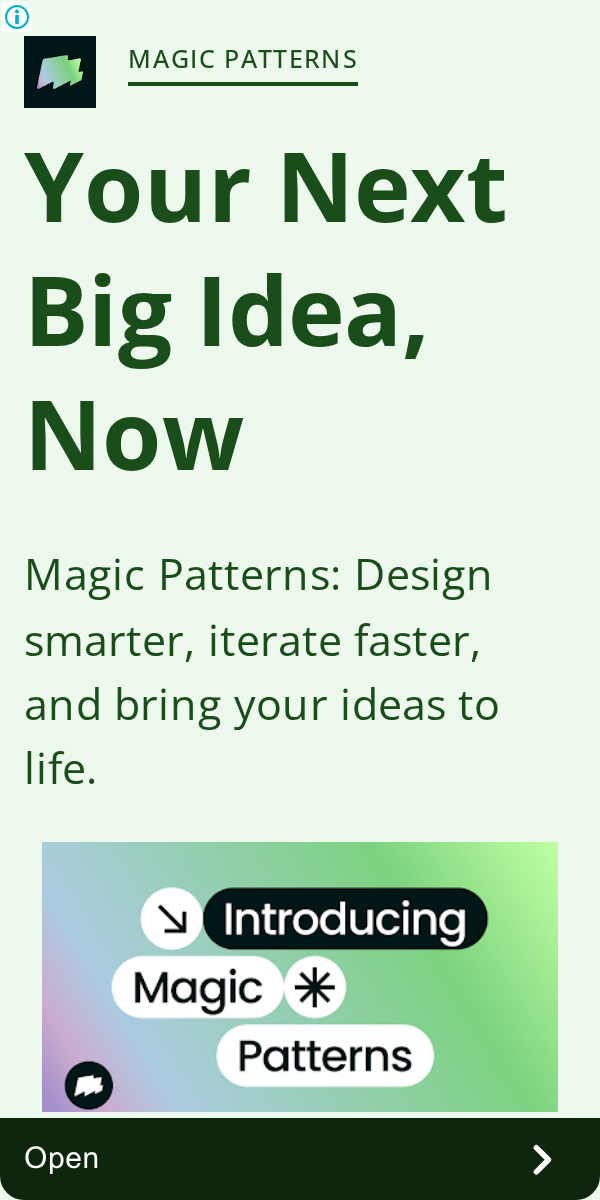
- Running
- 23 days (longevity = it's converting)
- Hook
- Visual: A logo with a stylized lightning bolt shape in green and purple, next to the words "MAGIC PATTERNS" underlined in green. Text: "Your Next Big Idea, Now"
- CTA / offer
- Open
- Audience
- Entrepreneurs, designers, or innovators looking for tools to streamline their creative process, indicated by phrases like "Your Next Big Idea" and "Design smarter, iterate faster."
Why it works. Leads with an aspirational outcome instead of a feature list, targeting searchers who already have an idea but are stuck on execution speed.
Prominent, aspirational headline: The largest text on the screen reads "Your Next Big Idea, Now". Write a headline that names the outcome your user wants, an idea, a launch, a fix, plus a time-compressing word like 'now' or 'today'.
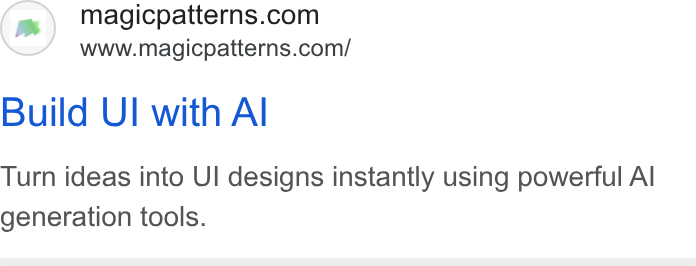
- Running
- 4 days (new — still being tested)
- Hook
- Visual: A circular icon with a green, blue, and purple abstract pattern. Text: "magicpatterns.com" and "www.magicpatterns.com/" followed by "Build UI with AI".
- Audience
- Individuals interested in UI design and AI, indicated by the phrases "Build UI with AI" and "Turn ideas into UI designs instantly using powerful AI generation tools."
Why it works. Matches high-intent search terms directly in the headline so clicks come from people already looking for an AI UI tool, not cold browsers.
Headline with a direct benefit: The headline reads "Build UI with AI". Write your Google ad headline as action plus output plus mechanism, mirroring the exact phrase your buyer would type into search.
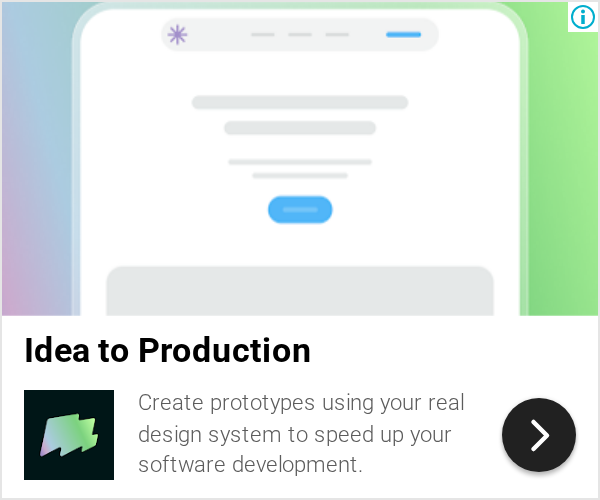
- Running
- 7 days (new — still being tested)
- Hook
- Visual: A white rectangular shape resembling a mobile phone screen with abstract light blue and purple shapes on the left and light green on the right. Inside the screen, there's a purple asterisk, several light gray horizontal lines, and a light blue horizontal oval. On-screen text: "Idea to Production"
- Audience
- Software developers or product managers, indicated by terms like "prototypes," "design system," and "software development."
Why it works. Pairs an abstract product-screen mockup with a concise before/after phrase to sell the end-to-end speed of going from concept to a working build.
Headline stating a clear benefit: "Idea to Production" Frame your headline as a two-step journey, start state to end state, rather than a single feature name.
08 The playbook
The channels are not separate. They are one system where each stage feeds the next. Here is the read, then the plays to run tomorrow.
The inferred playbook
The loop starts with founder-authored posts, converts through a free homepage signup, and compounds through account-level lock-in rather than a content or paid engine.
Co-founder Alex Danilowicz's X posts and the boosted LinkedIn narrative content (covered above) generate attention, punctuated periodically by a Hacker News or Product Hunt spike (covered above) rather than sustained ad spend.
Nearly all of that attention funnels through the homepage, which alone accounts for 87.2% of tracked organic entries (covered above), into a free 100-credit signup that self-serve upgrades to a $20/mo Starter plan or a $100/mo-per-seat Business plan as usage and team size grow, with Enterprise handled off-platform on custom pricing.
Dig deeper+3▾
Growth expands inside existing accounts more than through new-logo hunting: teams reportedly grow from a handful of seats to 50+, with enterprise sales outreach automatically triggered once an account crosses 20 seats (source), reinforced by product lock-in, 18,000+ design systems were reported connected to the platform as of April 2026, raising switching costs the deeper a team integrates.
Organic content stays thin outside the homepage and total traffic is trending down (covered above), so the loop leans on founder-post virality and periodic launch spikes more than a durable, always-on acquisition surface.
free-to-paid conversion rate, churn, CAC.
Relaunch Until It Sticks
The proofTheir first Hacker News submission barely registered in 2023; it took a Launch HN post 18 months later to break through, and a Product Hunt debut landed months after that (covered above).
The adaptationTreat your first submission to any launch surface as a rehearsal, not your only shot. Resubmit with a sharper title and a fresh demo at each real milestone, a new feature, a funding close, a flagship customer, instead of burning your one attempt early. First step: pick the next milestone worth announcing and draft the post title around it before building anything else.
Cost: $0 · Time to signal: days · Works pre-PMF: yes
Turn Ops Specifics Into Founder Content
The proofTheir most engaging founder posts mine operational specifics, the support-response time and the domain-name story covered above, not feature announcements.
The adaptationPull a real number or a mistake from your own operations log and post it in your own voice. First step: write down the three most concrete, slightly embarrassing operational facts from recent weeks, a response time, a cost, a customer message, and publish the most specific one first.
Cost: $0 · Time to signal: days · Works pre-PMF: yes, provided you have genuine operational specifics; a founder with no customers yet has no war stories to tell.
Stage A Pricing Change As A Launch Event
The proofTheir free-tier rollout wasn't quiet, it anchored a named "Launch Week" alongside a new integration announcement (covered above).
The adaptationWhen you loosen pricing or unlock a feature, bundle it into a named event with a specific date, a short video, and a second announcement released the same week, rather than shipping it silently. First step: hold your next pricing or feature change until you can pair it with a companion announcement to launch together.
Cost: under $500 · Time to signal: weeks · Works pre-PMF: conditional, this only works once you already have an audience watching for the announcement.
Seed A Lightweight Affiliate Link
The proofTheir partner program and informal creator affiliate links (both covered above) run outside-promoter distribution without an internal sales team.
The adaptationSet up one trackable referral link through a free tool and offer a flat commission or credit to anyone who sends signups through it. First step: create the tracked link, message five people who already talk about your product, and offer them a cut of anyone they bring in.
Cost: under $500 · Time to signal: weeks · Works pre-PMF: conditional, needs a few genuine fans willing to promote before it produces real volume.
Automate Your Own Expansion Signal
The proofTheir reported 20-seat enterprise-outreach trigger (covered above) turns account growth into a sales signal without manual account review.
The adaptationPick one usage metric in your own product, seats, API calls, active projects, that correlates with a team getting serious, and wire a simple alert, even a spreadsheet check or a Slack webhook, that flags you the moment an account crosses it. First step: choose that metric and write the one query that surfaces it.
Cost: $0 · Time to signal: weeks · Works pre-PMF: conditional, only useful once you have enough usage data to set a meaningful threshold. Not transferable at an earlier stage: boosting founder narrative posts with paid LinkedIn spend and leaning on a Y Combinator alumni network for amplification both assume funding and a network most readers won't have starting out. The relaunch, war-story, launch-event, affiliate-seeding, and expansion-signal motions above work without either.
You just read how Magic Patterns does it. Tomorrow it is someone else.
Every morning we take one company that is actually growing and break down where its customers come from: the ads still running after a year, the channel doing the real work, and the play you can run this week.
Systemaic · directional intelligence. Traffic, spend, and reach figures are SimilarWeb-style estimates and qualitative reads of public data, not audited numbers. Built on real public receipts.
// teardowns with a similar GTM motion
sources & receipts (5)
Live ad libraries: linkedin ad library · google ad library
Launch archives: Hacker News: Launch HN: Magic Patterns (YC W23) – AI Design and Prototypi · Hacker News: Magic Patterns · Hacker News: Series A and Magic Patterns 2.0
Traffic, spend, and revenue figures are estimates as noted in the report; the links above are the primary public artifacts.